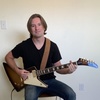
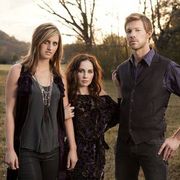
Joe Don Rooney
American guitarist and vocalist
Genre
Group
Credits
Genre
Group
Credits
Joe Don Rooney's Gear



As mentioned on this website. Rooney's Les Paul had his wife's lips painted on it.
Find it on:


Joe Don Rooney’s guitar tech, David Graef, describes the guitarist’s rig as “a fun one. It’s a dry/wet/dry rig with a center 4x12 cabinet, with just the dry amp and two Mathers 1x12 cabinets for the effect left and right signals. We start with two dual Shure UR4D wireless units that go into a line selector made by RJM Technology. From the selector, the signal goes to my pedal board, where I do the majority of his patch changes, and then returns to an amp selector that feeds signal to one of two Bogner Ecstasy 101B heads [miked with three Shure SM57s and a Royer ribbon, pictured], a Blackstar Series One 200 head and a Diamond Decada head, and then out to the 4x12 dry cabinet. I take a line-level signal and feed the outboard effects [TC Electronic D-Two, Fireworx and Reverb 4000]. They return to and are blended through a Midas Venice 160 console and sent to a VHT 292 amp that powers the two Mathers 1x12 cabinets onstage for the wet signal.
Find it on:
-m.webp?v=1782917884)
There are two pedalboards, one of which Graef uses to control the rig through most of the show. On his board are the Ground Control Pro for all MIDI program switching, an RJM Technology Amp Gizmo for amp channel changes (via MIDI), a Micro POG, Diamond Tremolo, Xotic EP Booster, Boss AW-1 and an Ernie Ball VP Jr. Rooney’s pedal board onstage sees another Ground Control Pro, a tuner, Earnie Ball VP Jr. and a Dunlop Wah controller—all connected to the Dunlop Rack Wah for onstage control of volume and wah.
Find it on:

In a discussion on the Seymour Duncan blog, Rascal Flatts' guitar tech, David Graef, mentions that Joe Don Rooney uses the Hiwatt DG-103 Custom 100 David Gilmour Signature amplifier.
Find it on:


In an interview with Seymour Duncan, Rascal Flatts' guitar tech, David Graef, discusses Joe Don Rooney's use of the Ernie Ball Music Man John Petrucci 6 guitar.
Find it on:

Joe Don Rooney’s guitar tech, David Graef, describes the guitarist’s rig as “a fun one. It’s a dry/wet/dry rig with a center 4x12 cabinet, with just the dry amp and two Mathers 1x12 cabinets for the effect left and right signals. We start with two dual Shure UR4D wireless units that go into a line selector made by RJM Technology. From the selector, the signal goes to my pedal board, where I do the majority of his patch changes, and then returns to an amp selector that feeds signal to one of two Bogner Ecstasy 101B heads [miked with three Shure SM57s and a Royer ribbon, pictured], a Blackstar Series One 200 head and a Diamond Decada head, and then out to the 4x12 dry cabinet. I take a line-level signal and feed the outboard effects [TC Electronic D-Two, Fireworx and Reverb 4000]. They return to and are blended through a Midas Venice 160 console and sent to a VHT 292 amp that powers the two Mathers 1x12 cabinets onstage for the wet signal.
Find it on:

The current rig – three Bogner Ecstasy 101 B Heads, one Hiwatt DG103 head, TC Electronics D-Two, Fireworx, Reverb 4000, Fractal Audio Axe-FX II, RJM IS-8 Amp Gizmo and Rack Gizmo, DLS RotoSIM and Versa Vibe, Exotic EP Boost, Dunlop Rack Wah, Earnie Ball Volume Pedals, Shure UR4D wireless, Fryette power amps, Midas Venus 160 mixing console. Bogner 4×12 an 1×12 speakers, and VooDoo Lab Ground Control Pro controllers.
Find it on:

The current rig – three Bogner Ecstasy 101 B Heads, one Hiwatt DG103 head, TC Electronics D-Two, Fireworx, Reverb 4000, Fractal Audio Axe-FX II, RJM IS-8 Amp Gizmo and Rack Gizmo, DLS RotoSIM and Versa Vibe, Exotic EP Boost, Dunlop Rack Wah, Earnie Ball Volume Pedals, Shure UR4D wireless, Fryette power amps, Midas Venus 160 mixing console. Bogner 4×12 an 1×12 speakers, and VooDoo Lab Ground Control Pro controllers.
Find it on:

The current rig – three Bogner Ecstasy 101 B Heads, one Hiwatt DG103 head, TC Electronics D-Two, Fireworx, Reverb 4000, Fractal Audio Axe-FX II, RJM IS-8 Amp Gizmo and Rack Gizmo, DLS RotoSIM and Versa Vibe, Exotic EP Boost, Dunlop Rack Wah, Earnie Ball Volume Pedals, Shure UR4D wireless, Fryette power amps, Midas Venus 160 mixing console. Bogner 4×12 an 1×12 speakers, and VooDoo Lab Ground Control Pro controllers.
Find it on:

As mentioned on this website, Rooney owned 2 SGs, one red and one white.
Find it on:


In an interview on the Seymour Duncan blog, Rascal Flatts' guitar tech, David Graef, discusses Joe Don Rooney's use of the PRS SC-58 electric guitar.
Find it on:

Joe Don Rooney is mentioned as using the PRS Modern Eagle II in a discussion with Rascal Flatts' guitar tech, David Graef, on the Seymour Duncan blog.
Find it on:

In an interview with Seymour Duncan, Rascal Flatts' guitar tech, David Graef, discusses Joe Don Rooney's use of the PRS 305 guitar.
Find it on:

In an interview featured on Seymour Duncan's blog, Rascal Flatts' guitar tech, David Graef, discusses Joe Don Rooney's use of the Flaxwood 2HB-H Rautia electric guitar.
Find it on:

In a Seymour Duncan article featuring Rascal Flatts' guitar tech David Graef, it is revealed that Joe Don Rooney uses the Flaxwood 290-H Liekki electric guitar.
Find it on:

In the Seymour Duncan article "Shop Talk With Rascal Flatts Guitar Tech David Graef," it is noted that Joe Don Rooney uses a Martin M-36 guitar.
Find it on:

Joe Don Rooney uses the Taylor 714ce acoustic-electric guitar, as detailed in the Seymour Duncan article "Shop Talk With Rascal Flatts Guitar Tech David Graef."
Find it on:


In this concert video of Rascal Flatts, you can see Joe Don Rooney playing his Candy Red Ghost Flame Les Paul GT. You can also see is in many concert photos, and many different concert videos. It is possible that he has a Candy Red version as well, because the color looks different in some photos. Joe Don's guitar has some modifications like different knobs. Joe Don Rooney has been playing this guitar in live shows for many years. It can be hard to tell, but if you look closely at photos and videos, you can see the iconic flames on the body of the guitar, which tells you that it is a Ghost Flame Les Paul. These guitars are hard to find, there were only 300 made in this color.
Find it on:

According to joe don Rooney’s guitar tech David Graef , Joe dons favorite guitar to use on the road is his 2006 wine red Les Paul studio. This guitar has been used on 8 of Rascal Flatts major tours. (Me and my gang tour, still feels good tour, nothing like this tour, changed tour, live and loud tour, rewind tour, riot tour, back to us tour) It appears in the music videos for “life is a highway “ and “every day”. The guitars truss rod cover has joe dons wedding date on it instead of the usual “studio” wording on it. So far the only noticeable modifications that have been done to this guitar is that at some point in recent years the tuners were upgraded and the truss rod cover was actually removed. The guitar is most of the time tuned a half step down from standard tuning, and is often played on songs like “life is a highway”, “what hurts the most”, “fast cars and freedom” and many more.
Find it on:

In January of 2012, Joe don Rooney started using a white Gibson Flying V on stage when performing rascal Flatts newest single at the time “banjo”. The guitar was tuned to drop D. The white color was chosen to match the all white theme of rascal Flatts “thaw out” tour. After the tour ended, the guitar made no more tour appearances. It did however appear on the 2012 ACM awards, the Ellen degeneres show, and the rascal flatts documentary “the making of changed and beyond”.
Find it on:


In 2014 joe don Rooney had James Tyler guitars build him a burning water studio elite 2k for rascal Flatts 2014 rewind tour. The guitar has been used on two tours, the 2014 rewind tour, and the 2015 riot tour. It also made a appearance in the music video for rascal flatts 2015 single “riot”. On the two tours it appeared on, it was used on the songs “these days” and “riot”. During the last night of rascal Flatts 2015 Vegas riot residency, It was used on “kickstart my heart” with Vince Neil from Mötley Crüe on vocals.
Find it on:

UHF-R systems on the tour use UR4D receivers for both lead vocalist Gary LeVox's UR2/SM58 handheld transmitter and Joe Don Rooney and Jay DeMarcus' wireless guitars. With Rooney and DeMarcus both noting that "The new UR4D has given back what we've been missing in our tone," monitor engineer Stuart Delk unabashedly admits that "UR4D wireless technology excels above all others. The self-scan and sync features, combined with higher output levels and audio quality, can only be matched by using a cable. These qualities alone say a lot about why Shure is in this show." "The sound going into the beltpacks is exactly what we get back out," FOH engineer Jon Garber says, getting his own two cents worth in on the guitar wireless systems. "It's like the same energy we get out of the guitar cabinets."
Find it on:

Joe Don Rooney’s guitar tech, David Graef, describes the guitarist’s rig as “a fun one. It’s a dry/wet/dry rig with a center 4x12 cabinet, with just the dry amp and two Mathers 1x12 cabinets for the effect left and right signals. We start with two dual Shure UR4D wireless units that go into a line selector made by RJM Technology. From the selector, the signal goes to my pedal board, where I do the majority of his patch changes, and then returns to an amp selector that feeds signal to one of two Bogner Ecstasy 101B heads [miked with three Shure SM57s and a Royer ribbon, pictured], a Blackstar Series One 200 head and a Diamond Decada head, and then out to the 4x12 dry cabinet. I take a line-level signal and feed the outboard effects [TC Electronic D-Two, Fireworx and Reverb 4000]. They return to and are blended through a Midas Venice 160 console and sent to a VHT 292 amp that powers the two Mathers 1x12 cabinets onstage for the wet signal.
Find it on:

Joe Don Rooney’s guitar tech, David Graef, describes the guitarist’s rig as “a fun one. It’s a dry/wet/dry rig with a center 4x12 cabinet, with just the dry amp and two Mathers 1x12 cabinets for the effect left and right signals. We start with two dual Shure UR4D wireless units that go into a line selector made by RJM Technology. From the selector, the signal goes to my pedal board, where I do the majority of his patch changes, and then returns to an amp selector that feeds signal to one of two Bogner Ecstasy 101B heads [miked with three Shure SM57s and a Royer ribbon, pictured], a Blackstar Series One 200 head and a Diamond Decada head, and then out to the 4x12 dry cabinet. I take a line-level signal and feed the outboard effects [TC Electronic D-Two, Fireworx and Reverb 4000]. They return to and are blended through a Midas Venice 160 console and sent to a VHT 292 amp that powers the two Mathers 1x12 cabinets onstage for the wet signal.
Find it on:

Joe Don Rooney’s guitar tech, David Graef, describes the guitarist’s rig as “a fun one. It’s a dry/wet/dry rig with a center 4x12 cabinet, with just the dry amp and two Mathers 1x12 cabinets for the effect left and right signals. We start with two dual Shure UR4D wireless units that go into a line selector made by RJM Technology. From the selector, the signal goes to my pedal board, where I do the majority of his patch changes, and then returns to an amp selector that feeds signal to one of two Bogner Ecstasy 101B heads [miked with three Shure SM57s and a Royer ribbon, pictured], a Blackstar Series One 200 head and a Diamond Decada head, and then out to the 4x12 dry cabinet. I take a line-level signal and feed the outboard effects [TC Electronic D-Two, Fireworx and Reverb 4000]. They return to and are blended through a Midas Venice 160 console and sent to a VHT 292 amp that powers the two Mathers 1x12 cabinets onstage for the wet signal.
Find it on:

Joe Don Rooney’s guitar tech, David Graef, describes the guitarist’s rig as “a fun one. It’s a dry/wet/dry rig with a center 4x12 cabinet, with just the dry amp and two Mathers 1x12 cabinets for the effect left and right signals. We start with two dual Shure UR4D wireless units that go into a line selector made by RJM Technology. From the selector, the signal goes to my pedal board, where I do the majority of his patch changes, and then returns to an amp selector that feeds signal to one of two Bogner Ecstasy 101B heads [miked with three Shure SM57s and a Royer ribbon, pictured], a Blackstar Series One 200 head and a Diamond Decada head, and then out to the 4x12 dry cabinet. I take a line-level signal and feed the outboard effects [TC Electronic D-Two, Fireworx and Reverb 4000]. They return to and are blended through a Midas Venice 160 console and sent to a VHT 292 amp that powers the two Mathers 1x12 cabinets onstage for the wet signal.
Find it on:

Joe Don Rooney’s guitar tech, David Graef, describes the guitarist’s rig as “a fun one. It’s a dry/wet/dry rig with a center 4x12 cabinet, with just the dry amp and two Mathers 1x12 cabinets for the effect left and right signals. We start with two dual Shure UR4D wireless units that go into a line selector made by RJM Technology. From the selector, the signal goes to my pedal board, where I do the majority of his patch changes, and then returns to an amp selector that feeds signal to one of two Bogner Ecstasy 101B heads [miked with three Shure SM57s and a Royer ribbon, pictured], a Blackstar Series One 200 head and a Diamond Decada head, and then out to the 4x12 dry cabinet. I take a line-level signal and feed the outboard effects [TC Electronic D-Two, Fireworx and Reverb 4000]. They return to and are blended through a Midas Venice 160 console and sent to a VHT 292 amp that powers the two Mathers 1x12 cabinets onstage for the wet signal.
Find it on:

Joe Don Rooney’s guitar tech, David Graef, describes the guitarist’s rig as “a fun one. It’s a dry/wet/dry rig with a center 4x12 cabinet, with just the dry amp and two Mathers 1x12 cabinets for the effect left and right signals. We start with two dual Shure UR4D wireless units that go into a line selector made by RJM Technology. From the selector, the signal goes to my pedal board, where I do the majority of his patch changes, and then returns to an amp selector that feeds signal to one of two Bogner Ecstasy 101B heads [miked with three Shure SM57s and a Royer ribbon, pictured], a Blackstar Series One 200 head and a Diamond Decada head, and then out to the 4x12 dry cabinet. I take a line-level signal and feed the outboard effects [TC Electronic D-Two, Fireworx and Reverb 4000]. They return to and are blended through a Midas Venice 160 console and sent to a VHT 292 amp that powers the two Mathers 1x12 cabinets onstage for the wet signal.
Find it on:

Joe Don Rooney’s guitar tech, David Graef, describes the guitarist’s rig as “a fun one. It’s a dry/wet/dry rig with a center 4x12 cabinet, with just the dry amp and two Mathers 1x12 cabinets for the effect left and right signals. We start with two dual Shure UR4D wireless units that go into a line selector made by RJM Technology. From the selector, the signal goes to my pedal board, where I do the majority of his patch changes, and then returns to an amp selector that feeds signal to one of two Bogner Ecstasy 101B heads [miked with three Shure SM57s and a Royer ribbon, pictured], a Blackstar Series One 200 head and a Diamond Decada head, and then out to the 4x12 dry cabinet. I take a line-level signal and feed the outboard effects [TC Electronic D-Two, Fireworx and Reverb 4000]. They return to and are blended through a Midas Venice 160 console and sent to a VHT 292 amp that powers the two Mathers 1x12 cabinets onstage for the wet signal.
Find it on:

There are two pedalboards, one of which Graef uses to control the rig through most of the show. On his board are the Ground Control Pro for all MIDI program switching, an RJM Technology Amp Gizmo for amp channel changes (via MIDI), a Micro POG, Diamond Tremolo, Xotic EP Booster, Boss AW-1 and an Ernie Ball VP Jr. Rooney’s pedal board onstage sees another Ground Control Pro, a tuner, Earnie Ball VP Jr. and a Dunlop Wah controller—all connected to the Dunlop Rack Wah for onstage control of volume and wah.
Find it on:
This is a community-built gear list for Joe Don Rooney.
- Find relevant music gear like Microphones, Guitars, Amplifiers, Effects Pedals, and other instruments and add it to Joe Don Rooney.
- The best places to look for gear usage are typically on the artist's social media, YouTube, live performance images, and interviews.
- To receive email updates when Joe Don Rooney is seen with new gear, follow the artist.
Album Credits
-
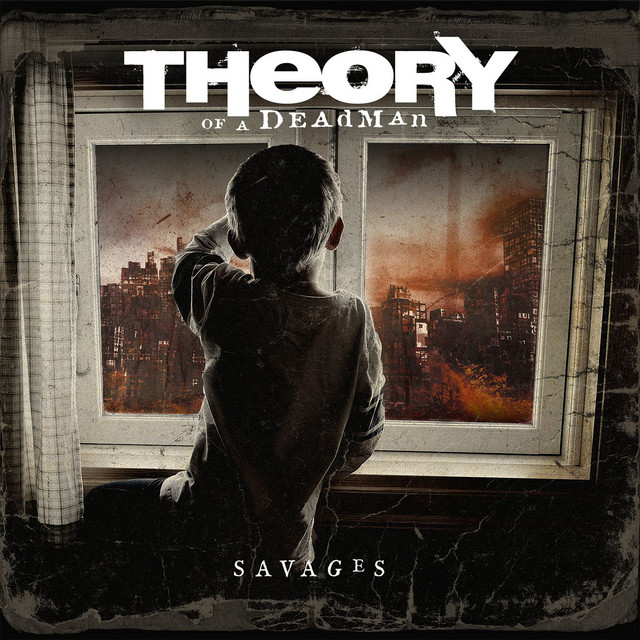
Theory of a Deadman · 2014
Producer




.webp)