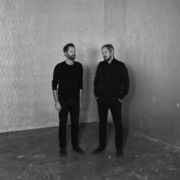
Max Richter
German pianist and score composer
Role
Group
Role
Group
Max Richter's Gear


“I use a trashcan Mac, which does all the heavy lifting, but the central writing environment is done using Logic and Sibelius".
Find it on:

The heart of Max Richter's current system is formed by his Apple Mac G5, with dual 2GHz processors and 4GB of RAM. "I dislike OS X, because it's much less stable than OS 9," says Richter, "but in order to run the VSL library, I have to run OS X. Logic is sequencer-wise the way to go. It's really very evolved. You can set it up any way you want, it's very quick and very easy to use, and it's pretty stable. Melodyne is by far the best pitch and time tool out there — massively better than, er, the one everybody uses, which sounds phasey and nasty. I don't really like messing with people's pitch and timing — I'd rather get good takes — so I don't use it for that, more for abstract type stuff like changing the tempo of audio from say 80bpm to 0.003bpm.
Find it on:


"I don't have many plug-ins in my new system, because I've only just migrated to it, but one that I use a lot is Altiverb, which is an amazing-sounding convolution reverb. Another great plug-in is the TC Master X5, which is fantastic for doing things for film and TV, because it makes everything sound huge, and TV and film people love things to sound huge. Also, [Camel Audio's] Supercamel Phat is a lovely compressor/EQ/band-pass filter plug-in that is cheap and sounds great on everything, especially bass and kick drums. I love the GRM Tools band-pass filter, and the Camel complements it nicely."
Find it on:

“I use a trashcan Mac, which does all the heavy lifting, but the central writing environment is done using Logic and Sibelius...Sibelius is really good at getting clean notation out of musicians."
Find it on:


In a studio video for Wallpaper* magazine, Max Richter can be seen using the Anamod Audio ATS-1, positioned beneath the Thermionic Culture Vulture.
Find it on:

"I don't have many plug-ins in my new system, because I've only just migrated to it, but one that I use a lot is Altiverb, which is an amazing-sounding convolution reverb. Another great plug-in is the TC Master X5, which is fantastic for doing things for film and TV, because it makes everything sound huge, and TV and film people love things to sound huge. Also, [Camel Audio's] Supercamel Phat is a lovely compressor/EQ/band-pass filter plug-in that is cheap and sounds great on everything, especially bass and kick drums. I love the GRM Tools band-pass filter, and the Camel complements it nicely."
Find it on:

Can be seen with one in his studio here.
Find it on:

In a MusicRadar feature on Max Richter's Oxfordshire studio, the Thermionic Culture The Culture Vulture is visible among his recording gear, highlighting its role in his studio setup.
Find it on:


"My audio interface is provided by a MOTU 24I/O, and I have a 16-fader Mackie Logic Control and the Samson C-control, which is just a monitor controller and talkback. The Mackie is fantastic for orchestral mixing, when you need to move lots of faders at once. If I had more space, I'd have more of these, because they're brilliant. My master clock is a Rosendahl Nanosyncs, which makes a huge difference for digital playback. I used to have a Yamaha 02R, and it made it sound like a desk five times the price, because the clocking got so much better, all the jitter was gone, and imaging was razor-sharp."
Find it on:

"Outboard gear is a TLA Indigo EQ2012 parametric EQ, which is very nice, SPL Vitalizer and Transient Designer, which is fantastic for shaping the front of the note; if you want things to sound a little further away you just make the attack a bit softer. The TC Gold Channel is a nice mic preamp; my TC M3000 is a beautiful reverb, very true. The FAT PCP330 vocoder is something I use all the time, and I like the FAT Resonator. The Electro-Harmonix Hot Tubes is very cool, as well as my Bob Moog Moogerfooger. I use the Hot Tubes as a kind of mastering box, for pianos, anything digital that sounds a bit plasticky goes through it. It's a fuzzbox, it adds a bit of grit. If you listen to the final track on Memoryhouse, 'Quartet Fragment', you'll hear it on a 60-piece string section. The drums on the track 'Arboretum' on the Notebooks also went through this."
Find it on:

“I’ve got a Doepfer MAQ16/3 MIDI analogue sequencer, which is just a straightforward sequencer for controlling any of the synths I’ve got."
Find it on:

“I’ve also got Doepfer’s Dark Energy, which is a monophonic synth in a little box.”
Find it on:

In a MusicRadar feature on his Oxfordshire studio, Max Richter mentions using the Grendel Drone Commander synthesizer.
Find it on:

”If I have time, the reverb I use most is the TC Electronic Reverb 6000, which I think is the best reverb ever in the universe".
Find it on:

"I also use Altiverb a lot, which is a game changer."
Find it on:

In a feature on MusicRadar showcasing Max Richter's Oxfordshire studio, the Native Instruments KOMPLETE KONTROL S88 is visible in the background, indicating its presence in his setup.
Find it on:


"Outboard gear is a TLA Indigo EQ2012 parametric EQ, which is very nice, SPL Vitalizer and Transient Designer, which is fantastic for shaping the front of the note; if you want things to sound a little further away you just make the attack a bit softer. The TC Gold Channel is a nice mic preamp; my TC M3000 is a beautiful reverb, very true. The FAT PCP330 vocoder is something I use all the time, and I like the FAT Resonator. The Electro-Harmonix Hot Tubes is very cool, as well as my Bob Moog Moogerfooger. I use the Hot Tubes as a kind of mastering box, for pianos, anything digital that sounds a bit plasticky goes through it. It's a fuzzbox, it adds a bit of grit. If you listen to the final track on Memoryhouse, 'Quartet Fragment', you'll hear it on a 60-piece string section. The drums on the track 'Arboretum' on the Notebooks also went through this."
Find it on:

"More outboard boxes: the Emagic AMT interface, Sony VHS player — short films are sent to me via broadband, but longer films on VHS — Tascam DA45 HR DAT machine, HHB compact disc player. The Kawai K5000R is a wonderful additive synth that can be very analogue-sounding — you can tune every bit of the sound, so you can build up partials and move them around, and get it to be slightly out of tune, so that it drifts, just like the Moogs and ARP synths, giving it more of a perceived analogue feel. My three Emu E4 samplers are in storage at the moment. My main keyboard is the Yamaha P300 MIDI keyboard."
Find it on:
-m.webp?v=1784094409)
"Reaktor and the Virus Pro Tools plug-in are my main synths, and particularly Reaktor 3 is my synth of choice. It's grittier than Reaktor 4. The washy sound you hear on 'Shadow Journal' is the shredded viola loop I spoke about. It's a viola player playing the chord sequence in arpeggios, and I've treated it, cutting off the low end below 400Hz and the top end above 1500Hz, using a GRM band-pass filter plug-in that's very dirty and very brutal. This left only the inner harmonics of the viola part, so it gets this nice whooshy, rather mysterious analogue feel."
Find it on:

The composer calls the VSL library "a huge leap forward sound-wise, even though I still can't get it to work properly." He also uses the orchestral libraries of Peter Siedlaczek and of Miroslav Vitous ("great all-rounder, but a little too clean sometimes"), as well as Kirk Hunter's string library ("great sound, but very scrappy programming"). While these libraries are good enough for string and orchestral mock-ups in demos and for most film and TV work, Richter prefers to use real instruments on his albums. Similarly, few of the samples that make it onto his albums are canned. All outdoor environmental recordings on The Blue Notebooks are the real thing, recorded by him using DACS in-ear binaural mics.
Find it on:

“I use a trashcan Mac, which does all the heavy lifting, but the central writing environment is done using Logic and Sibelius".
Find it on:

“I use a big mix of stuff. Kontakt is the mothership and that hosts a lot of different things. For orchestral music I’ll mostly use Spitfire Audio, because it’s mostly recorded at Air Studios. They use the same musicians in that room that I often record with, so it has the same sonic fingerprint.
“Then there’s all the Native Instruments stuff running within Kontakt, and I also use Reaktor. In terms of plugins, it’s mostly the UAD stuff like Soundtoys and some of the Sonnox products.”
Find it on:

The heart of Max Richter's current system is formed by his Apple Mac G5, with dual 2GHz processors and 4GB of RAM. "I dislike OS X, because it's much less stable than OS 9," says Richter, "but in order to run the VSL library, I have to run OS X. Logic is sequencer-wise the way to go. It's really very evolved. You can set it up any way you want, it's very quick and very easy to use, and it's pretty stable. Melodyne is by far the best pitch and time tool out there — massively better than, er, the one everybody uses, which sounds phasey and nasty. I don't really like messing with people's pitch and timing — I'd rather get good takes — so I don't use it for that, more for abstract type stuff like changing the tempo of audio from say 80bpm to 0.003bpm.
Find it on:

"My audio interface is provided by a MOTU 24I/O, and I have a 16-fader Mackie Logic Control and the Samson C-control, which is just a monitor controller and talkback. The Mackie is fantastic for orchestral mixing, when you need to move lots of faders at once. If I had more space, I'd have more of these, because they're brilliant. My master clock is a Rosendahl Nanosyncs, which makes a huge difference for digital playback. I used to have a Yamaha 02R, and it made it sound like a desk five times the price, because the clocking got so much better, all the jitter was gone, and imaging was razor-sharp."
Find it on:

"My audio interface is provided by a MOTU 24I/O, and I have a 16-fader Mackie Logic Control and the Samson C-control, which is just a monitor controller and talkback. The Mackie is fantastic for orchestral mixing, when you need to move lots of faders at once. If I had more space, I'd have more of these, because they're brilliant. My master clock is a Rosendahl Nanosyncs, which makes a huge difference for digital playback. I used to have a Yamaha 02R, and it made it sound like a desk five times the price, because the clocking got so much better, all the jitter was gone, and imaging was razor-sharp."
Find it on:

"My audio interface is provided by a MOTU 24I/O, and I have a 16-fader Mackie Logic Control and the Samson C-control, which is just a monitor controller and talkback. The Mackie is fantastic for orchestral mixing, when you need to move lots of faders at once. If I had more space, I'd have more of these, because they're brilliant. My master clock is a Rosendahl Nanosyncs, which makes a huge difference for digital playback. I used to have a Yamaha 02R, and it made it sound like a desk five times the price, because the clocking got so much better, all the jitter was gone, and imaging was razor-sharp."
Find it on:

"Outboard gear is a TLA Indigo EQ2012 parametric EQ, which is very nice, SPL Vitalizer and Transient Designer, which is fantastic for shaping the front of the note; if you want things to sound a little further away you just make the attack a bit softer. The TC Gold Channel is a nice mic preamp; my TC M3000 is a beautiful reverb, very true. The FAT PCP330 vocoder is something I use all the time, and I like the FAT Resonator. The Electro-Harmonix Hot Tubes is very cool, as well as my Bob Moog Moogerfooger. I use the Hot Tubes as a kind of mastering box, for pianos, anything digital that sounds a bit plasticky goes through it. It's a fuzzbox, it adds a bit of grit. If you listen to the final track on Memoryhouse, 'Quartet Fragment', you'll hear it on a 60-piece string section. The drums on the track 'Arboretum' on the Notebooks also went through this."
Find it on:

"More outboard boxes: the Emagic AMT interface, Sony VHS player — short films are sent to me via broadband, but longer films on VHS — Tascam DA45 HR DAT machine, HHB compact disc player. The Kawai K5000R is a wonderful additive synth that can be very analogue-sounding — you can tune every bit of the sound, so you can build up partials and move them around, and get it to be slightly out of tune, so that it drifts, just like the Moogs and ARP synths, giving it more of a perceived analogue feel. My three Emu E4 samplers are in storage at the moment. My main keyboard is the Yamaha P300 MIDI keyboard."
Find it on:

"More outboard boxes: the Emagic AMT interface, Sony VHS player — short films are sent to me via broadband, but longer films on VHS — Tascam DA45 HR DAT machine, HHB compact disc player. The Kawai K5000R is a wonderful additive synth that can be very analogue-sounding — you can tune every bit of the sound, so you can build up partials and move them around, and get it to be slightly out of tune, so that it drifts, just like the Moogs and ARP synths, giving it more of a perceived analogue feel. My three Emu E4 samplers are in storage at the moment. My main keyboard is the Yamaha P300 MIDI keyboard."
Find it on:
This is a community-built gear list for Max Richter.
- Find relevant music gear like Software Plugins and VSTs, Keyboards and Synthesizers, Instruments, and other instruments and add it to Max Richter.
- The best places to look for gear usage are typically on the artist's social media, YouTube, live performance images, and interviews.
- To receive email updates when Max Richter is seen with new gear, follow the artist.
Discography

Memoryhouse
2002
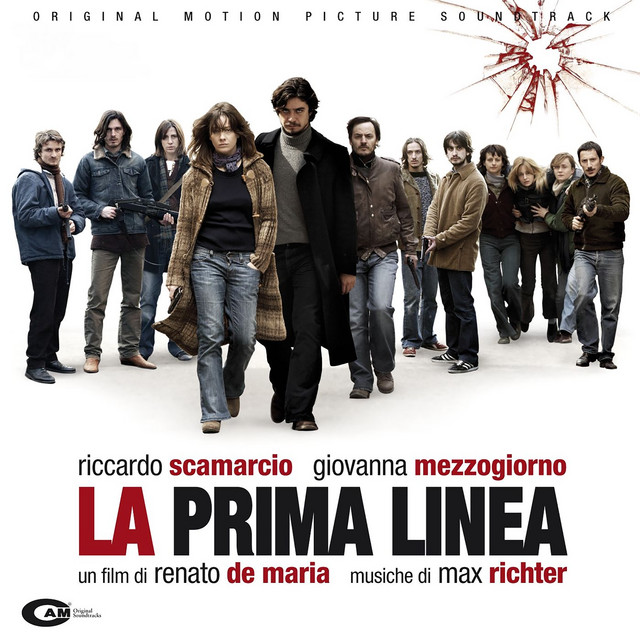
La Prima Linea (Original Motion Picture Soundtrack)
2009
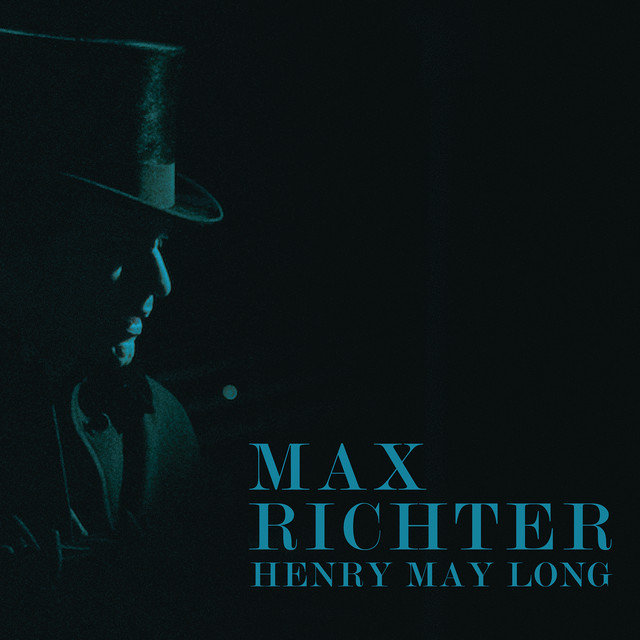
Henry May Long (Original Motion Picture Soundtrack)
2009
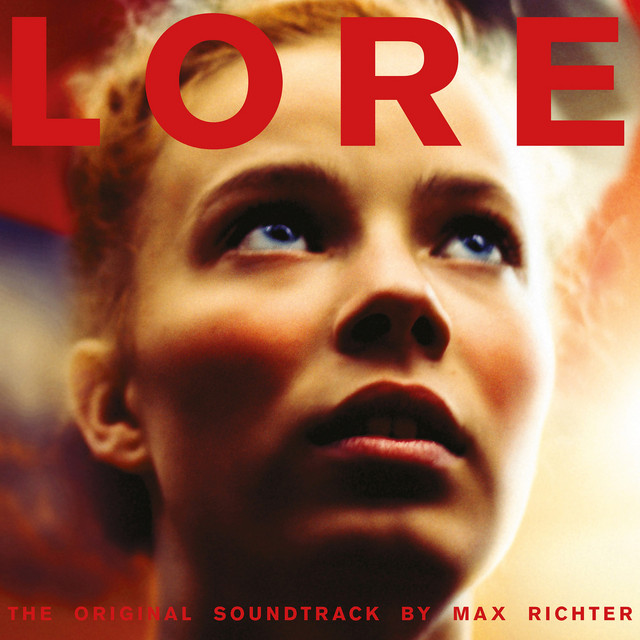
Lore
2012
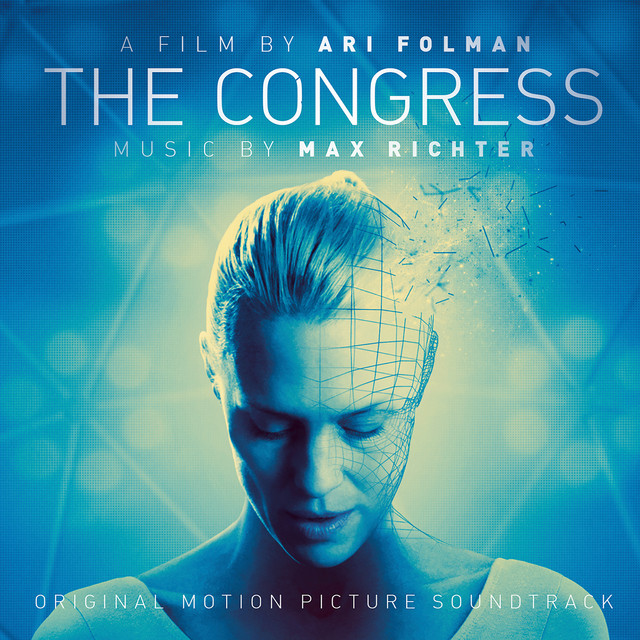
The Congress
2013
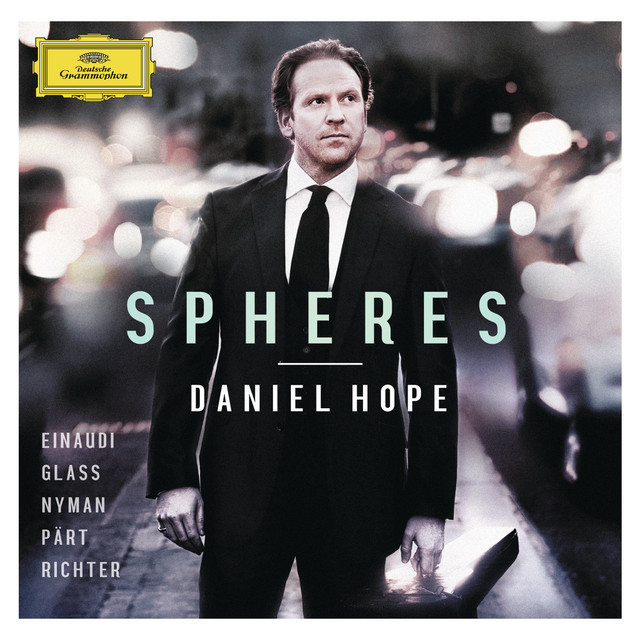
Spheres - Einaudi, Glass, Nyman, Pärt, Richter
2013
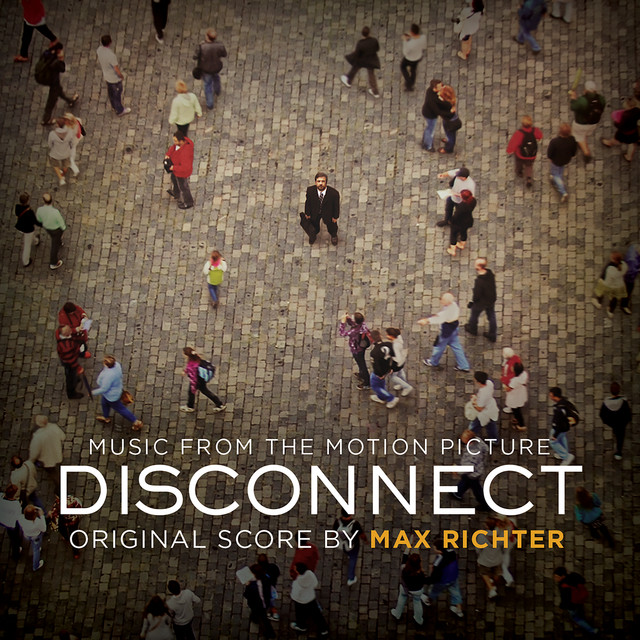
Disconnect (Original Motion Picture Soundtrack)
2013
Wadjda (Original Motion Picture Soundtrack)
2013
Songs From Before
2014
Recomposed By Max Richter: Vivaldi, The Four Seasons - Commentary
2014
Recomposed By Max Richter: Vivaldi, The Four Seasons
2014
Infra
2014
Album Credits
-
Max Richter · 2025
Mixing Engineer Producer Programmer -
Max Richter · 2024
Producer Recording Engineer -
The New Four Seasons - Vivaldi Recomposed
Max Richter · 2022
Producer -
Max Richter · 2021
Producer -

Max Richter · 2021
Mixing Engineer Producer -

Max Richter · 2020
Mixing Engineer -

Max Richter · 2020
Mixing Engineer -
Voyager - Essential Max Richter
Max Richter · 2019
Mixing Engineer Producer Programmer -
Ad Astra (Original Motion Picture Soundtrack)
Max Richter & Lorne Balfe · 2019
Producer -
Never Look Away (Original Motion Picture Soundtrack)
Max Richter · 2018
Producer -
Three Worlds: Music From Woolf Works
Max Richter · 2017
Mixing Engineer Producer -
Max Richter · 2015
Mixing Engineer Producer