
Pricing and availability


* Product prices and availability are updated by Equipboard every 24hrs and are subject to change. Equipboard may receive compensation for purchases made at participating retailers linked on this site. This compensation does not affect what products or prices are displayed, or the order of prices listed. For more information, please refer to our affiliate disclosure.
Description
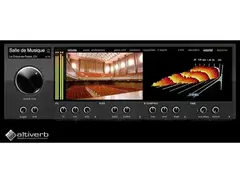
Audio Ease Altiverb 7 is a sonic powerhouse designed for musicians and audio engineers who crave authentic acoustic emulation. As a leading convolution reverb plugin, it offers an immersive experience by replicating real-world acoustic spaces with meticulous detail. Whether you're looking to transport your sound to a grand concert hall or a cozy studio, Altiverb 7 has you covered with its expansive library of impulse responses.
What sets Altiverb 7 apart is its user-friendly interface paired with advanced sound-shaping tools. Adjust parameters such as reverb time, attack, and brightness, while the stage positioning feature allows you to place instruments or vocalists precisely within the acoustic space. This level of control ensures that your mix sounds exactly as you envision it.
For those who love to experiment, Altiverb 7 includes special effects like reverse and modulated reverbs, adding a creative edge to your projects. The built-in mixer and EQ options provide additional flexibility, making it easier than ever to craft the perfect soundscape. Backward compatibility ensures seamless integration with previous sessions, allowing you to build on past work without a hitch.
Key Features:
- Industry-leading convolution reverb plugin
- Extensive library of real-world impulse responses
- Advanced sound-shaping controls: reverb time, attack, brightness, and more
- Stage positioning feature for precise spatial placement
- Special effects: reverse, modulated, and gated reverbs
- User-friendly mixer and EQ for detailed sound crafting
- Backward compatibility with previous plugin versions
Product specs
| Software Type | Reverb |
| Platform | Mac |
| Upgrade/Full | Full |
| Download/Boxed | Download |
| Bit Depth | 64-bit |
| Format | AAX, AU, VST3 |
| Authorization Type | iLok Account Required |
| Hardware Requirements - Mac | Intel Quad-core or higher (Apple Silicon support), 8GB RAM minimum |
| OS Requirements - Mac | OS X 10.15 or later |
FAQs
-
What is Audio Ease Altiverb 7 used for?
-
Audio Ease Altiverb 7 is a convolution reverb plugin that allows users to add the acoustics of real-world spaces to their audio, making it sound as if it was recorded in those environments.
-
Is Audio Ease Altiverb 7 compatible with my DAW on Mac?
-
Altiverb 7 is compatible with Mac DAWs that support AAX, AU, and VST3 plugin formats, such as Logic Pro, Pro Tools, and Ableton Live, provided your system meets the OS and hardware requirements.
-
What are the system requirements for running Altiverb 7 on a Mac?
-
To run Altiverb 7 on a Mac, you need at least a quad-core Intel processor, 8GB of RAM, and macOS 10.15 or later. Apple Silicon support is also included.
-
Does Audio Ease Altiverb 7 require an iLok for authorization?
-
Yes, Altiverb 7 requires an iLok account for authorization, though a physical iLok dongle is not necessary.
-
Can I use Altiverb 7 for live audio processing?
-
Yes, Altiverb 7 can be used for live audio processing, allowing you to apply realistic reverb effects to live sound as if it were played in various acoustical environments.
Videos

audioease
Altiverb 7 guided tour
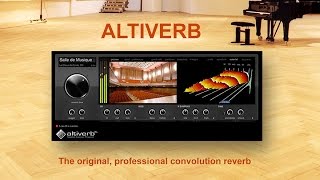
Altiverb 7 guided tour
audioease
Altiverb 7 - Dialogue matching
audioease
Plugin Breakdown! Altiverb 7

Jonathan Roye
Altiverb 7 manual - Automation and presets
audioease
Altiverb 7 der High-End Reverb Review von Audioease - Test

musotalk
Audio Ease Altiverb 7 - NAMM 2010

Sound On Sound magazine
Audio Ease Altiverb 7 - MVP Of The Week

MyMixEngineer
Reviews
Owner Insights
We analyzed real musician discussions from forums and Reddit to find what players love, question, and tweak about Audio Ease Altiverb 7.
Features and functionality
-
Altiverb's strength lies in its vast collection of impulse responses and minimal controls, making it efficient for quick setup without extensive tweaking.
Source -
It’s noted that Altiverb handles multiple reverb treatments efficiently, speeding up workflow compared to other plugins.
Source -
Altiverb's "Nextdoor" convolutions are praised for believability, despite Indoor offering more detailed manipulation for similar effects.
Source
Comparisons
-
Space and Revibe are notable alternatives included with Pro Tools, though they require more effort to match Altiverb's results.
Source -
Exponential Audio Stratus is highlighted for surround and atmos effects, offering a robust alternative to Altiverb for certain applications.
Source -
Altiverb is often used for "through the wall" effects, whereas Indoor excels at natural response and is ideal for dialog and ADR.
Source
Use cases and applications
-
Altiverb is favored for its ability to handle complex reverb needs in movie dialogue and foley with ease.
Source -
Altiverb is favored for use in deeply reverberant spaces like tunnels, while Cinematic Rooms Pro has become a preferred choice for such environments.
Source -
Altiverb sees use for specific interior scenes like ships and emergency vehicles in TV shows like "For All Mankind" and "Chicago Fire".
Source -
Indoor is praised for its ability to maintain dry signal focus while Altiverb provides expansive reverb without retaining the dry anchor.
Source
Value and pricing
-
Altiverb 7XL, used for surround mixing, is priced around $900, reflecting its comprehensive IR library.
Source
User experience
-
Users find Altiverb indispensable in professional mix stages, often citing its absence as a notable gap in other setups.
Source
5.0 out of 5
Based on 1 Review and 21 Ratings

Artist usage
Add artist

Audio Ease Altiverb is included in the "Software Effects" list.


Used by producer John Cuniberti on Professor Satchafunkilus and the Musterion of Rock:
"Satriani and crew spent three weeks mixing at The Plant, where Cuniberti bypassed the SSL altogether to mix exclusively 'in the box.' After three weeks, they moved to his home studio, affectionately dubbed Digital Therapy Labs, which offers a Pro Tools HD3 system and enough plug-ins to allow him to use the same techniques as he would during a traditional mix session.
'I haven't changed the way I mix,' he says. 'I use the Waves API bundle for most of the EQ, the Altiverb reverbs — with those I can get my EMT plates, my echo chambers, my halls — and various compressors depending on what's called for. All of that is bused to a Neve 8-in/2-out summing box I built and then to an SSL stereo compressor. Joe and I have grown up with Neve, API and SSL consoles, so we couldn't divorce ourselves from them.'"


He used the "Notre Dame" patch in the song "Moon River" because he collected the Moon intros videos on the same day than the Notre Dame fire happend. Visible around 7:44 in the video linked above.


In a livestream titled "4.5.20 - Quick CoronaJam!" on the Shinoda Livestreams YouTube channel, Mike Shinoda is seen using the Audio Ease Altiverb 7 reverb plugin.


Used on Lamar's vocals for "All the Stars" as stated by producer Matt Schaeffer in this May 2018 Sound on Sound interview.
Kendrick Lamar’s vocal audio tracks, named after his teenage stage name K.Dot, consist of his first verse rap track, ‘VS 1 LD’, and 10 tracks for three moments in the track where he sings the pre-hook in a robotic voice. The verse rap track only has the AIR Flanger on it, and is sent to the ‘Dot VS LD’ aux track, which has eight inserts and five sends. Nine of the 10 pre-hook tracks have Auto?Tune, while the top four have a number of plug-ins on the inserts, including the EQ3 seven-band, Waves RVox, UAD Galaxy Tape Echo, SoundToys Little AlterBoy, SoundToys MicroShift and Valhalla Vintage Verb. These four are sent to a ‘Hook Ref’ aux track higher up in the session with another four plug-ins on the inserts and five sends. The other six are backing vocals to the four other pre-hook tracks and have no other plug-ins, other than a Trim, and are sent to a ‘Hook Background’ aux, just below them, which itself also is sent to the ‘Hoof Ref’ track. It’s a pretty complicated vocal signal chain, as Schaeffer admits.
“The ‘Dot VS LD’ aux indeed has a lot of stuff on it! I did most of the processing on that bus. On the inserts there are the SSL E-Channel, Waves RComp, Waves Q10 EQ, Waves DeEsser, UAD LA2A, UAD Pultec EQP1A, SoundToys Decapitator and Pro?Q2. The SSL channel strip, Q10 and RCompressor remain from the tracking, and maybe the DeEsser as well, but I most likely messed with the settings more during mixing. The Q10 has a high-pass at 50Hz and I notched out a frequency that was bothering me around 8.5kHz with the Q2. I added the other plug-ins during mixing, and they all add something a bit different. I’m boosting 100Hz and 16kHz with the EQP1A. As I said, I like using several EQs on one thing.
“The sends go to a ‘FlangeVerb’ track, on which I put the RVerb and the UAD MXR Flanger, then the ‘Huge Verb’ with the [Audio Ease] Altiverb and EQ3, ‘Hook Valhalla’ with the Vintage Verb, and the SoundToys EchoBoy, the ‘EMT250’ aux with the UAD EMT250, Valhalla Plate and MicroShift, and then finally a send to the ‘Dot VS Delay’ track, with the EchoBoy, set to quarter note, the Reel Tape Flanger and the RCompressor. The EchoBoy is the main delay you can hear in the verse. The EMT250 is not set to a reverb, but to a phaser effect, which gives a cool stereo effect. The Valhalla adds a bit of reverb here, though it’s set to -12, so it only gives a tiny bit of ambience, and the MicroShift makes the whole thing a little wider. It probably still sounded a bit dry, which is why I sent the track to the ‘Huge Verb’ aux with the Altiverb, again taking out low end with the EQ3.
“In the pre-hook, Kendrick wanted that robotic sound with tons of effects. The main robotic effect comes from the iZotope VocalSynth, which gives it a vocoder-like sound. There also are some instances of the Little AlterBoy on the lead vocals in the pre-hook, with some formant adjusting and pitch-shifting. I think one of them is set to +12, so that’s an octave up, and another has a lower formant so it sounds pitched down, even though it remains in the same key. All that adds up to make the vocals sound robotic.”
Adding all inserts on audio and aux tracks together, Lamar’s verse rap is treated with a whopping 22 plug-ins! The ‘Hook Background’ aux, meanwhile, has the EQ3 seven-band, RCompressor, SoundToys Panman, a chorus, the MicroShift, the UAD MXR Flanger and the Valhalla Plate on the inserts and has sends to an aux track with the Waves Kramer Tape plug-in as well as the aforementioned ‘Hook Valhalla’ aux with the Vintage Verb, and Echoboy, and it then is routed to the ‘Hook Ref’ track, which has another four inserts and five sends. Phew.


Used for the vocals on "Sex on Fire", as stated by Only by the Night producer Jacquire King in this December 2008 Sound on Sound interview. An image for the vocal settings can be found here.
- Vocals: Sound Toys Echoboy, Audio Ease Altiverb, Massenburg DesignWorks EQ, Neve 1099, Urei 1176, Dbx 902, Dolby A encoder, Teletronix LA3A
"I had a Sound Toys Echoboy delay and an Altiverb reverb, set to the EMT 140 plate, on the vocals. In fact, there are two or three delays and two or three reverbs in total, different amounts in different sections of the song. I had a Massenburg plug–in EQ on the vocal bus, and underneath it you can see my insert signal chain: Neve 1099 EQ/Urei Blue Stripe 1176/Dbx 902 de–esser. I pre-mix in my computer and things are coming out in stems, and going out into the desk and the Folcrom mixer for mixdown to stereo. The 1099/1176/902 were inserted in the analogue realm and daisy-chained. There's also a distant lead double in the chorus. I call that a performed effect. Instead of using a delay and modulation to get something in the background, you record a second performance in a different space and with a different microphone. You get something more deliberate and unique that way. Finally, once it came to summing, I also added some Dolby A to the vocals, which gives an excited high-frequency sound that I sent through an LA3A and blended back in."


I don't use Reflektor, but I do use Altiverb, which is another kind of Impulse Response reverb. Everything in general has a lot of reverb, especially the leads.


Used for the electric guitar on "Sex on Fire", as stated by Only by the Night producer Jacquire King in this December 2008 Sound on Sound interview. The 6 XL is specified by images of the settings for the vocals and the settings for the drums.
"We had five or six guitar amplifiers available for each guitar, and again, we picked the ones that were most appropriate for the song. Angelo and I would listen to the guitar parts and mix and match amplifiers. Sometimes we'd put reverb on one amp and a delay on another, or effect pedals on both. We had all kinds of combinations, although we kept it to two amplifiers per performance for each player. I'd put an SM57 in front of one amp and a U67 in front of the other. The guitars went through API mic pres, an API 550A EQ, and I also used some APSI parametric EQs. Occasionally I'd put an 1176 in the signal chain, but in general I don't use much compression on distorted electric guitars going to tape, because there's not a lot of dynamic range to them as it is. The synth–like reverb you can hear on the guitar was done at Blackbird on an Eventide DSP4000 and added during the transfer to Pro Tools.
(...) Guitars: Massenburg DesignWorks EQ, Sound Toys Echoboy, Cooper Time Cube, Digidesign delay, Audio Ease Altiverb
"Using a guitar amp, I added a short slap delay on Matt's guitars. I also used an Echoboy for delay on certain sections, like in the choruses. There was a little bit of bus compression on the guitars and a little bit of EQ, all very minor stuff, because I had already recorded what I wanted. (...) The Altiverb on Matt's guitar is a very small room at Cello Studios, for a little bit more space."

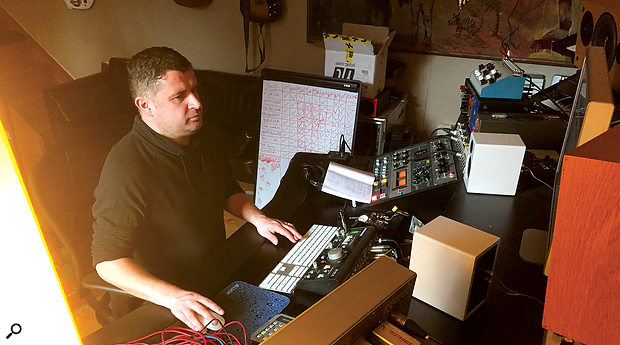
Used on vocals and piano for the Take Me to Church EP, as stated by mix engineer Rob Kirwan in this March 2015 Sound on Sound interview.
“And finally, a lot of people, including artists, have been asking me for the nature of the reverb on Andrew’s vocals. It’s a combination of my Knas Moisturizer that I already mentioned, and the Altiverb [plug–in]. I used a Wendy Carlos EMT plate [preset], from which I removed all the top end, and to which I added a pre–delay.”
(...) * Guitars & keyboards: TL Labs TL Aggro, Avid Trim, Waves Puigtech EQP1A, Eventide H3000, Focusrite Red EQ & Audio Ease Altiverb.
“Below the ‘Kit Plate’ aux track are four organ tracks. The top two were recorded through an amplifier via my 57 and Delta mics, and below that is a distorted organ track, with the Trillium Lane Labs TL Aggro compression plug–in on it and a Pultec EQ. The ‘Organ 3000’ track is probably me putting one of Andrew’s Logic organs through my Eventide H3000. Further down are six guitar tracks without any treatments — the ‘T’ on one of them is a Trim — and below that are the piano tracks, some of which are again heavily edited. Andrew wasn’t as good yet at playing the piano. He’s very good now, though! I got him to do the left hand separately, which are the ‘New Piano’ tracks. I once again had the Focusrite Red EQ plug–in on the piano, and there’s a ‘Piano Verb’ aux track, which also has the Wendy Carlos EMT plate from Altiverb, just with a different pre–delay. In general I like to create a sense of everything coming from the same space, so the Wendy Carlos plate is on many things in this song. There’s more piano below that, again with just Focusrite EQ. In all there’s a lot of piano, it was one of the most important elements of the song.”
- Vocals: Bomb Factory 1176, Focusrite Red EQ, SoundToys Echo Boy, Line 6 Echo Farm, Knas Ekdahl Moisturizer, Waves Renaissance Compressor, Avid Trim & Audio Ease Altiverb.
“The two ‘tele’ voices at the top are backing vocals. I think they were ‘oohs’ and ‘aahs’ that came from the demo. They don’t sound like telephone voices at all, so I’m not sure why they’re called that. Instead they almost sound like church voices. Below are two aux tracks for those vocals, with Bomb Factory compression, Focusrite EQ and an Echo Boy delay. The backing vocals below that — ‘BV1–4’ — are the ones with the signature Leslie effect on them, and they again have some Focusrite EQ and Bomb Factory compression, and I gave them some Echo Farm slap delay to add depth to the reverb.
“The next tracks are the verse lead vocals from his Logic session, called ‘Male Creamy Lead Vocals’, on which I put some Renaissance compression and a Trim, and ‘Vox Verb’ is the Moisturizer track, plus two Trim plug–ins, one being +1dB and the other –0.5dB. I hate automating in Pro Tools, so I will often use the Trim to bypass it. Writing automation is a tedious task. Below this are the chorus vocals, called ‘New Vocal’, so we obviously recorded these again at my studio. In order to make them sound like the demo vocal I stuck them through the same chain and EQ’d them heavily. ‘Vox Plate’ is the Altiverb, and there’s a delay track below it which again has the Echo Farm, on a delay setting. Finally there are several more double–tracked chorus vocals, and they also have the Renaissance and Focusrite, and the Moisturizer and Echo Farm aux tracks below them.”
.jpeg?v=1784399641)
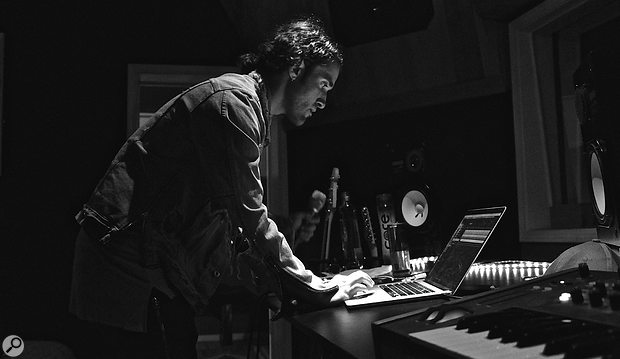
In an article from Sound on Sound titled "Inside Track: The Weeknd," it is mentioned that The Weeknd uses the Audio Ease Altiverb 7 plugin to create reverb effects in his music production.



Album Usage
The Audio Ease Altiverb 7 has been featured on the following albums:
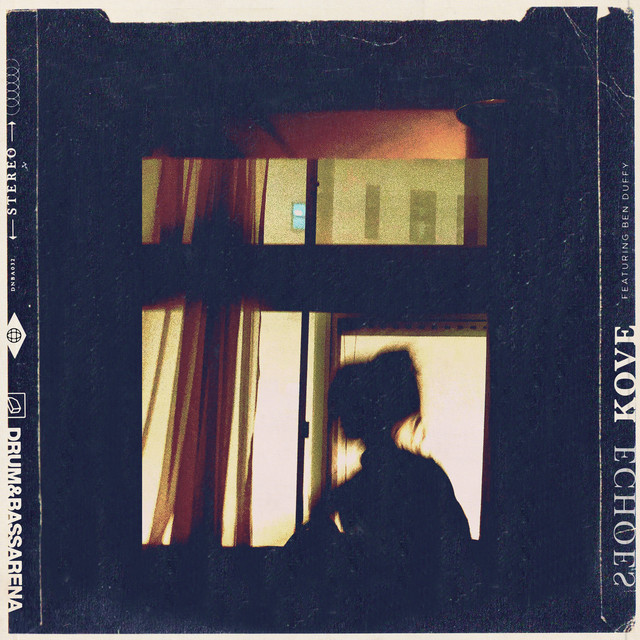
Echoes
Ben Duffy & Kove (2019)
Moon River
Jacob Collier (2019)
All The Stars (with SZA)
Kendrick Lamar & SZA (2018)
Cinema
Andrea Bocelli (2015)
Take Me to Church EP
Hozier (2013)
Pink Friday ... Roman Reloaded
Nicki Minaj (2011)
The Fall
Norah Jones (2009)
Sex On Fire
Kings of Leon (2009)
Professor Satchafunkilus and the Musterion of Rock
Joe Satriani (2008)
Only By The Night
Kings of Leon (2008)
Third
Portishead (2008)
Genre Usage
Based on how artists on Equipboard use this gear, it is most commonly found in the following genres.
Used With
Based on how musicians on Equipboard use Audio Ease Altiverb 7, it is most commonly used with the following gear.
-s.webp?v=1784383270)


More Audio Ease Reverb Plugins


$37.00 - $349.00
in Reverb Plugins Rank


$29.99 - $49.00
in Reverb Plugins Rank


$179.00 - $199.00
in Reverb Plugins Rank


$37.00 - $39.99
in Reverb Plugins Rank


$0.00
in Reverb Plugins Rank


$33.00 - $39.99
in Reverb Plugins Rank


$149.00
in Reverb Plugins Rank


-m.webp?v=1783581851)

$75.00 - $282.00
in Reverb Plugins Rank


$29.99 - $30.00
in Reverb Plugins Rank

$58.00 - $69.00
in Reverb Plugins Rank


$139.00 - $149.00
in Reverb Plugins Rank


$62.00 - $69.00
in Reverb Plugins Rank

$0.00
in Reverb Plugins Rank

$49.00 - $199.00
in Reverb Plugins Rank


$47.00 - $49.00
in Reverb Plugins Rank

$0.00
in Reverb Plugins Rank

$37.00 - $39.99
in Reverb Plugins Rank


$95.00 - $99.00
in Reverb Plugins Rank


$29.00 - $38.00
in Reverb Plugins Rank

$34.99
in Reverb Plugins Rank


$99.00
in Reverb Plugins Rank


$33.00 - $39.99
in Reverb Plugins Rank


$94.00 - $99.00
in Reverb Plugins Rank

$93.00 - $99.00
in Reverb Plugins Rank

$69.00 - $169.00
in Reverb Plugins Rank

$47.00 - $199.00
in Reverb Plugins Rank
-m.webp?v=1784332693)

$99.00 - $104.00
in Reverb Plugins Rank

$99.00
in Reverb Plugins Rank


$32.00 - $249.00
in Reverb Plugins Rank


$43.00 - $45.00
in Reverb Plugins Rank


$59.00
in Reverb Plugins Rank

$59.00
in Reverb Plugins Rank


$68.00 - $299.00
in Reverb Plugins Rank

$29.99 - $94.00
in Reverb Plugins Rank
Accessories & Related Items


Community setups


Similar


Gear Guides







Most Popular Reverb Plugins
Most Popular Brands
-
Added to Equipboard on by
 shaunwinston
GearIQ 645
-


