

Pricing and availability
We compare 600+ stores and found this item at 10 stores. Prices updated .
Store
Reviews
Price









Average Price: $237
Standard/Professional
$100
$401+
Price Tier
Budget
Standard
High-end
Price History
Based on price data from 6 merchants for "Rode VideoMic NTG". Prices shown reflect NEW condition. Tracking began Apr 2, 2026.
* Product prices and availability are updated by Equipboard every 24hrs and are subject to change. Equipboard may receive compensation for purchases made at participating retailers linked on this site. This compensation does not affect what products or prices are displayed, or the order of prices listed. For more information, please refer to our affiliate disclosure.
Description
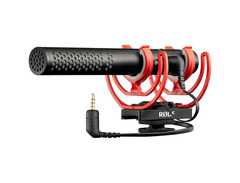
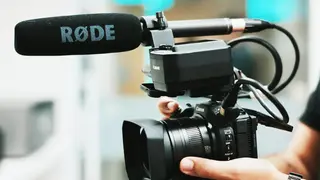
The Rode VideoMic NTG is a versatile and compact microphone that brings the acclaimed broadcast-quality sound of the NTG series to content creators, filmmakers, and podcasters alike. This feature-packed shotgun mic features the same annular line tube technology as the NTG5, promising unmatched transparency and a natural, uncolored sound. Designed for flexibility, the VideoMic NTG includes digital switching with a high-pass filter, high-frequency boost, and switchable pad, making it adaptable to any recording scenario.
What sets the VideoMic NTG apart is its infinitely variable gain control, allowing you to precisely tailor the output level from mic to line to headphone level. Alongside its auto-sensing 3.5mm output, which seamlessly interacts with cameras and mobile devices, this microphone also functions as a USB mic for direct recording on computers and tablets. Its rugged, lightweight aluminum construction and internal rechargeable lithium-ion battery, boasting over 30 hours of runtime, ensure reliability and ease of use for even the longest shoots.
Whether you're mounting it on a camera, using it as a boom mic, or employing it for podcasting, the VideoMic NTG provides exceptional audio quality with intuitive controls. Its built-in peak warning light and safety channel recording further enhance its usability, making it a perfect audio solution for both amateurs and professionals.
Key Features:
- Annular line tube technology for transparent and natural sound
- Supercardioid polar pattern for focused audio capture
- Infinitely variable gain control for precise output adjustment
- Auto-sensing 3.5mm output for easy switching between devices
- USB functionality for direct recording to digital devices
- High-pass filter, high-frequency boost, and -20dB pad
- Internal rechargeable battery with 30+ hours of use
- Lightweight and durable aerospace-grade aluminum construction
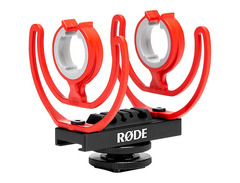
- Rycote Lyre shockmount for reduced vibrations and cleaner audio
Product specs
| Microphone Type | Shotgun Condenser |
| Mono/Stereo | Mono |
| Polar Pattern | Supercardioid |
| Frequency Response | 35Hz-18kHz, ±3dB |
| Frequency Range | 20Hz-20kHz |
| Max SPL | 120dB SPL |
| Output Impedance | 10 ohms |
| Signal to Noise Ratio | 79dB A weighted |
| Self Noise | 15dB A weighted |
| Sensitivity | 50mV/Pa (-26dB) |
| Low Cut Filter | 75Hz, 150Hz |
| Pads | -10dB |
| Power | USB / Rechargeable Lithium-ion Battery (30 hours use time) |
| Connector | 1/8" TRRS (auto-sensing output), USB-C |
| Dimensions | 6.73" x 0.85" |
| Weight | 0.2 lbs. |
| Included Accessories | Rycote Lyre Shockmount, Foam Shield, SC Cable, USB Cable |
FAQs
-
What is the primary use of the Rode VideoMic NTG?
-
The Rode VideoMic NTG is designed as an on-camera shotgun microphone ideal for video recording, podcasting, and live streaming. It also functions as a USB microphone for direct connection to computers for voice-overs and gaming.
-
How does the Rode VideoMic NTG connect to devices?
-
The Rode VideoMic NTG connects via a USB-C port for use with computers or via its 1/8" TRRS auto-sensing output for cameras and mobile devices with the appropriate cables.
-
Is the Rode VideoMic NTG suitable for outdoor recording?
-
Yes, the Rode VideoMic NTG is suitable for outdoor recording with its supercardioid polar pattern, which helps in focusing on the subject while minimizing background noise.
-
Does the Rode VideoMic NTG require an external power source?
-
The Rode VideoMic NTG features a rechargeable lithium-ion battery that provides up to 30 hours of use, eliminating the need for an external power source.
-
What accessories are included with the Rode VideoMic NTG?
-
The Rode VideoMic NTG comes with a Rycote Lyre Shockmount, foam shield, SC cable, and a USB cable, providing everything needed for immediate use.
Videos

Curtis Judd
RODE VideoMic NTG Review
RODE VideoMic NTG Review
Curtis Judd
Fantastic On Camera Microphone! RODE VIDEOMIC NTG Review

Dunna Did It
Rode VideoMic NTG Camera Shotgun Mic Review / Test

Podcastage
Rode VideoMic NTG - Full Features Demo with Real World Samples | MIC REVIEW

Audio for Content Creators
Das BESTE On-Camera Mikrofon!? - RODE VideoMic NTG Review

DAVISION
RODE Videomic NTG - Review & Test deutsch

FullFilm
Rode VideoMic NTG im Test - Kamera- und USB Mikrofon in einem - Das Universalmikrofon!

Obli
Rode VideoMic NTG - Wireless Mikrofon mit Sennheiser XSW-Digital
FullFilm
Reviews
Owner Insights
We analyzed real musician discussions from forums and Reddit to find what players love, question, and tweak about Rode VideoMic NTG.
Features and functionality
-
The safety channel feature is appreciated for reducing the need for frequent gain adjustments during recording.
Source -
Avoid auto gain in favor of using a safety track for post-production flexibility, particularly in recording environments.
Source -
High gain on the mic paired with low camera gain reduces noise effectively.
Source -
The Rode VideoMic NTG's USB capability is highlighted as a rare and valuable feature, allowing easy connectivity to devices like the Rode Wireless Go for a wireless boom setup.
Source
User experience
-
Different microphones respond uniquely to voices; trial and error is often required to find the best mic for specific vocal characteristics.
Source -
One user describes using the Rode VideoMic NTG effectively for voiceovers, natural sound, and talking head footage, emphasizing its utility in varied recording scenarios.
Source
Use cases and applications
-
Pop filters are crucial for minimizing plosive sounds during close mic setups in podcasts and interviews.
Source -
Mounting an H1n recorder next to the mic and coiling the headphone cable down the boom pole can effectively address cable length concerns.
Source -
When used indoors as a boom mic, the Rode VideoMic NTG can pick up reverb; placing a blanket under the subject can help mitigate this issue.
Source -
While some prefer lav mics for interviews, the Rode VideoMic NTG is often used for run-and-gun documentary filming due to its versatility.
Source -
Owners report effective performance when boomed overhead for YouTube videos, offering clean sound for talking head and corporate projects.
Source
Setup and maintenance
-
Positioning the mic 4-6 inches from the mouth is ideal for podcasting, with an overhead boom preferred to avoid desk noise.
Source -
Monitoring audio is crucial due to potential interference with long 3.5mm cables; using a magic arm to attach a recorder to the boom pole can minimize cable length issues.
Source
Comparisons
-
Some users prefer the Audio-Technica AT875R over the Rode VideoMic NTG, citing better quality at a lower price point.
Source -
The Rode VideoMic NTG and Deity D3 Pro are noted as top choices for 3.5mm on-camera mics, with anything superior requiring XLR connections.
Source -
The Rode VideoMic NTG is frequently compared to the Sennheiser MKE400 v2 for its size, with the latter noted for its built-in windjammer.
Source
Critic Reviews
3.0 out of 5
Based on 1 Review and 1 Rating

983
More than just a video mic
On the hunt for a mic to use on my mirrorless camera to shoot some documentary video and with little time to read reviews I stumbled upon the VideoMic NTG. I was very reluctant to spend 260€ on this mic however, recently before I've bought the Line Audio CM4 small condenser mic which is an outstanding mic for only 130€, and surely this Rode mic couldn't match the CM4... But the guys at the store did their job and convinced me that "it's actually quite cheap considering its quality and features"...
The mic survived mildly rough 15 days, tossed in and out of bags, operated from temperature between 35ºC to -10ºC and very dusty environments through Bolivia, Chile and Peru. When I got home I was completely wowed with the audio quality of my video clips, so I decided to try it on classical guitar, vocals, some percussion and melodica (USB out straight into computer) and compare it with the CM4 mic (plugged into the Motu M2). To my surprise the noise floor was the same, and through my headphones (Sony MDR-7506) the differences were very subtle, of course there were different preamps and polar patterns (wide cardioid vs supercardioid). I'm not really a "mic connoisseur", but I am picky about a flat frequency response, and honestly the VM-NTG sounds as flat as the CM4. The latency figures I got were also impressive... Well, the VM-NTG impressed so much that I just finished selling my Motu M2 and both CM4's... Not saying the VM-NTG is a better mic, but really it's not worse in any way I tested. I feel this mic optimized all my audio capture needs (music and video).
It packs very nice features, for camera use the auto-sensing input was marvelous, no need to turn it on or off, it just knows wether the camera is on or off, every single time. The dual output (where only one of the two channels has the -20db applied) is also a very clever feature for video work, definitely saved a couple of takes where the gain was not set correctly. There are the usual Lo Cut filters, -20dB pad and also a high frequency boost to sparkle the top end a bit. Rode confirmed to me all these filters are being applied BEFORE digital conversion, which is nice to know. They also confirmed me the size of the capsule, which is just under 3/4" at approximately 1,7 cm.
Build quality is very nice, all metal build, nice rubbery buttons with firm clicks, smooth gain knob, included quality rycote lyre and adjustable hot shoe (to adjust for viewfinder or lens obstruction), a bunch of cables (including one for Iphone) and foam shield... The hot shoe adapter also has some cable management slots and 3/8 thread under for tripod or boom usage.
Final note, the 3.5mm output is an unbalanced one (that also doubles as headphone out) measuring 10 ohms. So if you plan using really long cables it's advisable to get the VXLR Pro adapter, which balances the signal and also downconverts phantom power to 3-5V.
Overall, even if you don't need a camera microphone, this is a serious option to consider in the realm of usb mics, highly recommend it.
EDIT:
So, I went from 5 stars to 3 stars, because: - I found out for close miking the max SPL of 120dB is a big limitation - So the "gain knob" is not really a gain knob. It's just more like an output level or volume control. Gain is fixed, only way to change it is via -20dB pad, but.... - For some reason the mic started developing a hissing sound when -20dB pad is engaged. The hiss comes on when sound hits the mic. Feels like some mysterious noise gate is kicking, not good. - The -20dB pad sometimes clips and distorts even when the peak light is not actuating, seems like some internal switching/relay problem, as when I cycle the options sometimes it behaves as it should, but only for a couple of minutes, then it goes berserk and... - Sometimes the mic will just introduce crazy interference/noise - USB C interface is a bit unreliable, the Led goes from blue to green and there's a shift in sound, this happened sometimes mid recording with no apparent reason - Given its high price point and these unpredictable behaviors I'm selling it and cannot really recommend it anymore unless you find it really cheap.
Artist usage
Add artist
Genre Usage
Based on how artists on Equipboard use this gear, it is most commonly found in the following genres.
Used With
Based on how musicians on Equipboard use Rode VideoMic NTG, it is most commonly used with the following gear.


More Røde Condenser Microphones

$159.00 - $251.08
in Condenser Microphones Rank


$303.00 - $419.00
in Condenser Microphones Rank


.png?v=1784328078)

$177.19 - $269.00
in Condenser Microphones Rank


$565.00 - $829.00
in Condenser Microphones Rank


$159.00 - $251.08
in Condenser Microphones Rank


$517.00 - $619.00
in Condenser Microphones Rank


$137.75 - $864.99
in Condenser Microphones Rank
.jpeg?v=1785047582)


$109.00 - $139.00
in Condenser Microphones Rank


$193.00 - $449.00
in Condenser Microphones Rank


$150.00 - $570.00
in Condenser Microphones Rank


$294.50 - $339.00
in Condenser Microphones Rank
.jpg?v=1785048584)


$143.00 - $190.97
in Condenser Microphones Rank


$458.00 - $619.00
in Condenser Microphones Rank


$303.00 - $398.98


$479.00 - $569.00


$224.47 - $419.00


$559.00 - $729.00


$193.00 - $449.00


$171.00 - $319.99

$85.00 - $149.00

$159.00 - $864.99


$176.19 - $569.00
Accessories & Related Items


Community setups


Similar


Gear Guides







Most Popular Condenser Microphones
Most Popular Brands
-
Added to Equipboard on by
 ken_pierre
GearIQ 81
-


