Best Expression Pedals: From Studio Stars to Hidden Gems

By Gear Experts

By Gear Experts
Table of Contents

Equipboard
Equipboard is the world's largest community of artists and their gear. Read our review process.
We are reader-supported. When you buy through links on our site, we may earn an affiliate commission. Learn more.
Our Picks

Boss EV-30 Dual Expression Pedal
Boss combines dual-expression functionality with a compact footprint in the EV-30, creating an exceptionally versatile controller that's equally at home in professional rigs and space-conscious pedalboards.
Read more


-l.webp?v=1783942090)
Moog brings their legendary analog expertise to the expression pedal world with the EP-3, delivering exceptional build quality and pure, transparent control for discerning musicians.
Read more
Source Audio Dual Expression Pedal
Source Audio reimagines the expression pedal for the modern era, offering unprecedented programming flexibility and dual-pedal control in a feature-rich package that bridges analog feel with digital precision.
Read more
Mission Engineering EP-1 Expression Pedal
Mission Engineering's EP-1 sets the standard for professional expression pedals, combining exceptional build quality with carefully considered design features that make it the go-to choice for working musicians.
Read more

The M-Audio EX-P proves that quality expression control doesn't have to break the bank, offering reliable performance and essential features in an affordable package that's perfect for beginners and budget-conscious musicians.
Read more
Lehle brings German engineering precision to expression control, creating a dual pedal that sets new standards for accuracy, durability, and control sophistication.
Read more
Dunlop Volume X Mini Pedal DVP4
Dunlop shrinks their renowned expression pedal design into a pedalboard-friendly format without compromising functionality, creating an ideal solution for space-conscious players who refuse to sacrifice quality.
Read moreFrom subtle volume swells to dramatic filter sweeps, expression pedals are powerful tools that bring real-time control to your fingertips - well, actually, to your feet. Whether you're a guitarist crafting immersive soundscapes, a keyboardist shaping synthesizer textures, or a producer adding motion to your tracks, expression pedals are essential for expanding your creative palette. This guide dives into everything you need to know, from how they work to the features and types available, ensuring you can make an informed decision when selecting the perfect expression pedal for your setup.
How Expression Pedals Work: The Basics Explained
At their core, expression pedals are control devices that allow you to manipulate specific parameters on your gear. Unlike volume pedals, which directly alter the audio signal, expression pedals send a variable control signal - essentially a changing voltage- to an effects unit, synthesizer, or other equipment.
This voltage translates into real-time changes to parameters like volume, filter cutoff, or delay feedback, depending on your device’s configuration. Think of them as dimmer switches for your sound, offering smooth and expressive transitions.
Most expression pedals connect using a standard 1/4" TRS (Tip-Ring-Sleeve) cable, which facilitates the variable control signal along with a ground connection. It's a straightforward yet elegant system that forms the foundation of all expression pedals.
Key Factors to Consider When Choosing an Expression Pedal
1. Compatibility: Critical for Success
Compatibility is the most crucial factor when selecting an expression pedal. Connecting an incompatible pedal can result in limited functionality, erratic behavior, or even damage to your equipment. To avoid these pitfalls, consider these aspects:
- Voltage Range: Most modern pedals operate in a 0–5V range, but older synthesizers, vintage gear, or boutique effects may use alternative ranges like 0–3.3V or 0–10V. If the voltage ranges don’t align, your pedal may not work correctly or could offer a limited control range.
- Impedance Matching: Impedance is like the width of a pipe through which your signal flows. Matching the output impedance of the pedal to the input impedance of your device ensures optimal performance. Mismatched impedance can weaken the control signal or cause distortion. Modern pedals typically have low output impedance (~10k ohms), which is compatible with most devices, but always double-check your gear’s specs.
- Polarity: Some devices require the voltage to increase as the pedal moves forward (positive polarity), while others require it to decrease (negative polarity). A polarity mismatch may cause the pedal to work in reverse. Many pedals include a polarity switch to resolve this issue.
- TRS Wiring: Expression pedals use TRS cables, but there are rare exceptions to the standard wiring. Confirm your device’s requirements to avoid compatibility headaches.
2. Taper: The Feel of Control
The taper of an expression pedal describes how the resistance of its potentiometer changes as you move the treadle. This affects both the feel of the pedal and its responsiveness to your movements. Different tapers suit different applications:
- Linear Taper: Resistance changes in direct proportion to the pedal’s position, providing a consistent and even response. This is ideal for controlling parameters like filter cutoff, where small movements translate into predictable changes. Adjusting a synthesizer’s filter cutoff frequency with a linear taper ensures smooth and precise transitions across the entire range.
- Logarithmic (Audio) Taper: Designed to mimic the way humans perceive changes in volume, this taper provides finer control at lower volumes and coarser control at higher volumes. It creates a more natural-sounding volume sweep, making it the go-to choice for volume control. A logarithmic taper prevents sudden jumps in loudness when making subtle adjustments at lower volumes.
- Other Tapers: Some pedals offer reverse logarithmic or custom tapers for unique applications. For instance, a reverse logarithmic taper could prioritize finer control at the higher end of the range, which may be useful in specialized setups.
Choosing the right taper depends on the parameter you’re controlling and your personal preferences. Linear tapers work best for consistent, proportional changes, while logarithmic tapers provide a more natural feel for dynamic controls like volume.
Types of Expression Pedals
Expression pedals come in various forms, each catering to specific needs and setups. Here’s an overview:
Basic Analog Expression Pedals
These are the simplest and most reliable types, consisting of a potentiometer, treadle, and TRS output jack. Premium models use conductive plastic potentiometers, which last longer and operate more smoothly than cheaper alternatives. They’re perfect for straightforward applications like wah-wah effects, delay feedback, or tremolo depth.
Enhanced Analog Pedals
These pedals build on the basics with added functionality:
- Minimum/Maximum Range Controls let you limit the pedal’s sweep to avoid unwanted extremes or focus on specific sweet spots.
- Polarity Switching ensures compatibility with a broader range of devices.
- Buffer Circuits preserve signal integrity in larger setups, preventing tone degradation over long cable runs.
Dual/Multi-Output Pedals
For advanced setups, these pedals allow control of multiple devices simultaneously. Each output is typically independently adjustable for range and polarity, ensuring seamless operation across your gear.
MIDI-Enabled Expression Pedals
MIDI pedals translate treadle movement into MIDI Continuous Controller (CC) messages, enabling precise control over digital effects, synthesizers, and DAWs. Features like programmable response curves, custom MIDI channel assignments, and high-resolution MIDI (14-bit) make these pedals a powerful addition to any modern setup.
Specialty Pedals: CV and Optical
- CV (Control Voltage) Pedals: Designed for modular synthesizers, offering extended voltage ranges (0–10V).
- Optical Pedals: Replace mechanical potentiometers with optical sensors for unparalleled smoothness and durability.
Miniature Expression Pedals
Ideal for compact pedalboards, mini pedals maintain full functionality in a smaller footprint. While they may sacrifice some control precision due to shorter treadle movement, high-quality mini pedals offset this with carefully engineered tapers and gearing systems.
Expression pedals are essential tools for musicians seeking dynamic, real-time control of their sound. Whether you need precise parameter manipulation or dramatic effect sweeps, understanding these factors will ensure you find the perfect pedal for your needs. Choose wisely, and an expression pedal will become a powerful extension of your creative voice.
Boss EV-30 Dual Expression Pedal
4.5 (12)
The Space-Saving Dual-Control Powerhouse









Average Price: $120
Standard/Professional
$70
$251+
Budget
Standard
High-end
- Allows control of two effects simultaneously with dual outputs
- Compact design conducive to crowded pedal boards
- Robust build quality ensures durability
- Smooth treadle action from heel to toe
- See 6 more
- Some users find the transition from larger pedals challenging
- Limited functionality with non-BOSS pedals for some users
- Color may not appeal to all (subjective preference)
- Requires careful setup with dual outputs for optimal use
The Boss EV-30 is a compact yet powerful dual expression pedal, combining Boss's renowned durability with the versatility of controlling two parameters simultaneously. Its small footprint makes it ideal for crowded pedalboards without sacrificing professional features. The EV-30 boasts a robust, all-metal chassis that feels solid underfoot. The treadle action is consistently smooth thanks to the FV-500L-style mechanism and reinforced pivot point, minimizing wobble and ensuring long-term reliability.
The EV-30's dual outputs are a standout feature, allowing simultaneous control of two separate effects or parameters, such as wah and volume, or delay time and feedback. Even better, the independent minimum level controls allow you to set the heel-down position for each output, effectively tailoring the expression range for different effects. This is particularly useful for preventing unwanted extremes or focusing the sweep on a specific "sweet spot." While the shorter treadle travel compared to full-size pedals might take some getting used to, Boss has optimized the taper to provide precise control.
Compatibility is well-addressed with the inclusion of a polarity switch, ensuring the pedal works correctly with a wide range of devices. This includes Boss pedals, third-party effects, synthesizers, and other MIDI controllers that accept expression input.
The compact size, while a major advantage for pedalboard real estate, does result in that shorter treadle throw compared to full-size pedals, a point some players might find less than ideal. Also, the small size of the minimum level knobs can make fine adjustments challenging in dimly lit environments.
The EV-30 effectively provides two high-quality expression pedals in a single, space-saving unit. This makes it an excellent value for players who need dual control but are limited by pedalboard space. The Boss EV-30 is a well-designed and robust dual expression pedal that excels in providing precise control in a compact format. It's an ideal choice for players with complex pedalboards, those who want to control multiple parameters simultaneously, or anyone looking for a reliable and space-saving expression solution.
See how artists use this










Moog EP-3 Expression Pedal
4.5 (66)
The Analog Purist's Choice
-s.webp?v=1783942090)


Average Price: $64
Budget/Beginner
$70
$251+
Budget
Standard
High-end
- Built tough and heavy, stays put on the floor
- Versatile, easily used with multiple devices
- Polarity switch for reverse-polarization compatibility
- Non-powered, simple operation
- See 6 more
- Size may be too large for some setups
- Some users find it uncomfortable due to height
- External knob functionality may be limited for certain uses
- Plastic construction, though sturdy, feels less premium to some
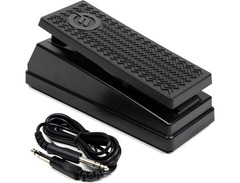
The Moog EP-3 is a testament to Moog's dedication to classic analog design principles. This expression pedal prioritizes signal purity and precise control, offering a straightforward yet robust solution for manipulating effects and synthesizer parameters. While it forgoes modern digital frills, its exceptional build quality and smooth, accurate response make it a compelling choice for musicians who value tactile feel and reliable performance.
The EP-3's construction immediately conveys its quality. The heavy-duty cast aluminum housing provides substantial weight, ensuring the pedal stays firmly planted on the floor, even during energetic performances. The treadle mechanism operates with a "buttery" smoothness - a result of carefully designed pivot bearings and precise machining. This smooth action translates to incredibly accurate and predictable parameter control.
In practical use, the EP-3 distinguishes itself with its remarkably linear and consistent sweep. Unlike some pedals that exhibit "dead spots" or sudden jumps in response, the EP-3 provides a smooth, even transition across its entire range of motion. This linearity is crucial for musical applications, whether you're performing subtle filter sweeps on a Moog synthesizer, controlling delay time on a guitar pedal, or modulating any other assignable parameter. This precise control makes the EP-3 particularly well-suited for expressive playing styles.
Compatibility is generally excellent, thanks to the inclusion of a polarity switch. This simple but essential feature ensures the EP-3 works correctly with a wide variety of equipment, from Moog synthesizers and other analog gear to modern digital effects processors and third-party synthesizers. The included extra-long, high-quality cable is a welcome addition, ensuring optimal signal transfer and providing ample length for various stage and studio setups.
However, the EP-3's focus on analog simplicity means it lacks some features found in more modern expression pedals. *There are no minimum/maximum range adjustments, dual outputs for controlling multiple devices simultaneously, or preset storage. *The pedal has a fixed taper, which is well-suited for most common applications but cannot be customized for specialized uses. Its substantial weight, while contributing to its stability, could be a consideration for musicians with lightweight pedalboards.
Despite its higher price point compared to some other expression pedals, the EP-3's exceptional build quality, precise control, and focus on analog purity make it a worthwhile investment for musicians who prioritize these qualities. Its robust construction and timeless design suggest it's built to last, offering reliable performance for years to come. The Moog EP-3 isn't about bells and whistles; it's about delivering a pure, unadulterated connection between your foot and your sound. It's a benchmark of analog expression pedal design, particularly well-suited for synthesizer enthusiasts and players who demand the utmost in reliability and control precision.
See how artists use this







Source Audio Dual Expression Pedal
4.5 (2)
Bridging Analog Feel with Digital Power


Average Price: $114
Standard/Professional
$70
$251+
Budget
Standard
High-end
- Dual outputs, one with adjustable Pot for versatile expression control
- Compatible with various pedals, enhancing their functionality
- Lightweight and articulates well, offering precise control
- Adjustable internal resistance for customized feel
- See 5 more
- Placement of jacks on sides may require longer TRS cables
- Some pedals may not fully utilize its multi-expression capabilities
- Mechanics may wear out over time, affecting pedal's stability
| Power | passive |
The Source Audio Dual Expression Pedal redefines what an expression pedal can be, blending traditional analog control with sophisticated digital capabilities. Unlike purely analog designs, this pedal offers unprecedented flexibility through programmable parameters, multiple output options, and even wireless control, making it a powerful tool for modern musicians seeking maximum expressive potential.
The pedal’s build quality doesn’t suffer in the pursuit of innovation. It features a robust metal chassis designed to withstand the rigors of stage use. The treadle mechanism operates smoothly and consistently thanks to sealed bearings, ensuring reliable performance over time. A securely bonded, non-slip rubber pad provides excellent traction, even under demanding playing conditions.
In practice, the Dual Expression Pedal truly shines in its ability to handle complex control scenarios. Its dual outputs can be configured independently, allowing musicians to control two different effects or parameters simultaneously. For example, one output could be used for traditional expression control of a wah pedal, while the second sends MIDI CC messages to a digital effects unit or DAW, opening up creative possibilities previously unavailable with a single pedal.
Compatibility is a key strength. Beyond standard 1/4" TRS connections for traditional effects pedals, the inclusion of a USB port enables seamless integration with DAWs, virtual instruments, and other software. This allows for precise control of software parameters and opens up a wide range of creative possibilities in a digital environment. Furthermore, the pedal’s compatibility with Source Audio’s Hot Hand wireless sensor adds another unique dimension of control, allowing for gestural manipulation of effects - a feature particularly appealing to experimental performers.
This wealth of features does come with a learning curve. While basic operation is straightforward, fully harnessing the pedal’s potential, such as programming custom sweep curves or configuring MIDI messages, requires some time spent with the configuration software. Some users have also noted that the default settings may require tweaking to achieve optimal response with certain devices.
Despite its premium price point, the Source Audio Dual Expression Pedal provides exceptional value for musicians who can leverage its advanced capabilities. The combination of dual outputs, extensive programmability, and forward-thinking design makes it a worthwhile investment for evolving setups and players who demand maximum control and flexibility. It’s a powerful tool for bridging the gap between traditional analog expression and the vast possibilities of digital control.
See how artists use this




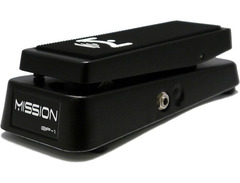
Mission Engineering EP-1 Expression Pedal
5.0 (15)
The Professional's Workhorse


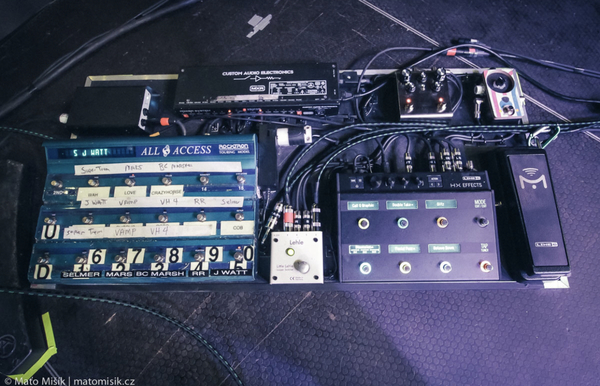
- Compatible with major guitar plugins like Neural DSP and Line 6 Helix
- Simple connectivity with just one cable
- Perfect 10k pot for specific gear setups, like Morningstar MC6-Pro
- Customizable input jack placement for convenience
- See 2 more
- May require workaround for specific effects like Wah in some setups
The Mission Engineering EP-1 is designed with a clear focus: to provide professional musicians with a robust, precise, and reliable expression pedal. It prioritizes essential functionality and exceptional build quality over modern features like multiple outputs or MIDI connectivity. This focused approach results in a straightforward, easy-to-use pedal that excels in its core purpose: providing smooth and accurate control.
From the moment you pick it up, the EP-1’s build quality is evident. The housing is machined from a solid block of aircraft-grade aluminum, making it incredibly durable and resistant to the wear and tear of regular use. The custom-designed potentiometer, rated for over a million cycles, features brass bushing and a steel shaft, ensuring smooth and consistent operation for years. The treadle mechanism utilizes self-lubricating bearings, further contributing to its smooth action and long-term reliability.
In practice, the EP-1 delivers consistent, noise-free performance in any setting, whether on stage or in the studio. Its substantial weight provides excellent stability, eliminating the need for Velcro or other fastening methods. The carefully calibrated taper provides a natural and musical response across the entire range of motion, allowing for precise control over the connected parameter. The adjustable tension system is a welcome feature, allowing players to fine-tune the pedal’s resistance to their personal preference.
Compatibility is another area where the EP-1 shines. Mission Engineering has meticulously researched the requirements of various manufacturers, ensuring seamless integration with a wide range of devices, from boutique effects pedals to mainstream digital processors. The inclusion of an optical isolation circuit effectively eliminates ground loop issues, a common problem with less sophisticated designs, ensuring a clean and noise-free signal.
While the EP-1 excels in its core functionality, its singular focus does mean it lacks some features found in more modern expression pedals. There are no dual outputs for controlling multiple devices simultaneously, no MIDI capability, and no adjustable taper. While the fixed taper is well-suited for most applications, it may not be ideal for highly specialized setups.
The EP-1’s professional-grade construction and unwavering reliability justify its higher price point. It’s built to withstand the demanding conditions of professional use, making it a sound long-term investment for musicians who prioritize performance and durability. The Mission Engineering EP-1 isn’t about flashy features; it’s about providing a rock-solid, dependable tool that delivers precise and musical control, making it a true workhorse for professional musicians.
See how artists use this




.jpg?v=1783828865)


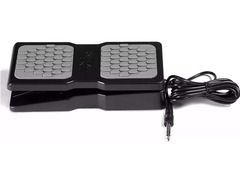
M-Audio EX-P Expression Pedal
4.0 (19)
Affordable Expression for Every Musician


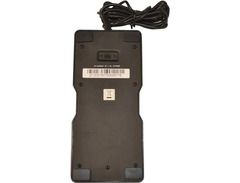
Average Price: $23
Budget/Beginner
$70
$251+
Budget
Standard
High-end
- Works with a wide range of devices including guitar processors and keyboards
- Cost-effective option for those on a budget
- Easy to use, plug and play functionality
- Features a polarity switch for compatibility
- See 4 more
- Plastic construction may feel flimsy or toylike to some users
- Limited dynamic range reported with certain instruments
- Minimum level knob is touchy and can shift easily
- Prone to coming unhooked from the mechanism
- See 3 more
The M-Audio EX-P is designed to meet the needs of musicians seeking a functional and affordable expression pedal. Drawing on M-Audio's experience in MIDI controller design, the EX-P offers a straightforward, practical solution for controlling various effects and parameters. While it forgoes the premium materials and advanced features found in higher-priced models, it delivers reliable performance and consistent control at a budget-friendly price.
The EX-P’s construction, while primarily plastic composite, demonstrates thoughtful design choices. The reinforced plastic housing is surprisingly resilient and capable of withstanding regular use. The pedal mechanism provides smooth operation, exceeding expectations for its price range. While it lacks the robust feel of all-metal designs, it’s built to last for typical home studio and practice use.
In practice, the EX-P performs admirably in various settings. The pedal action feels natural and predictable, with a well-chosen taper that’s particularly well-suited for volume swells and filter sweeps. Its lightweight design makes it highly portable and easy to transport, while the non-slip rubber base pad provides adequate stability on most surfaces, though some users may prefer the added security of Velcro, especially on uneven stages.
Compatibility is generally good, thanks to the inclusion of a basic polarity switch. This simple but important feature ensures compatibility with most common effects units and synthesizers. The standard 10kΩ potentiometer value is compatible with the majority of modern equipment. However, users with vintage gear or less common setups should verify compatibility beforehand.
The EX-P’s limitations are primarily related to its budget-conscious design. The plastic construction, while durable enough for most users, doesn’t offer the same level of ruggedness as premium metal pedals. The lightweight design can sometimes necessitate the use of Velcro for added stability, especially during energetic performances. Some users have reported minor play developing in the mechanism over extended use, although this rarely impacts functionality.
Considering its remarkably affordable price point, the EX-P offers exceptional value. It provides reliable and consistent expression control at a fraction of the cost of more expensive models, making it an ideal entry point for musicians new to expression pedals or those seeking a reliable backup solution. The M-Audio EX-P delivers solid performance and essential functionality without breaking the bank, making it a great choice for beginners, budget-conscious musicians, or anyone needing a reliable, no-frills expression pedal.
See how artists use this








Lehle Dual Expression Pedal
5.0 (1)
The Engineering Marvel




Average Price: $248
Standard/Professional
$70
$251+
Budget
Standard
High-end
- Quality build, solid and durable design
- Unique magnet and sensor system eliminates wear parts
- Can control 2 effect parameters, saving board space
- USB connectivity for direct computer interface
- See 6 more
- Initial setup can be challenging without detailed guidance
- High price point compared to other expression pedals
- Limited information available online for USB connectivity setup
- May require firmware updates for full functionality with some devices
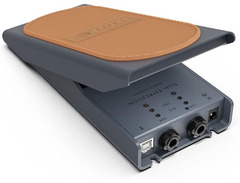
The Lehle Dual Expression stands apart in the world of expression pedals, not just for its dual functionality, but for its innovative use of magnetic sensor technology. Departing from traditional potentiometer-based designs, Lehle employs a contactless Hall effect sensor system, resulting in unprecedented precision, exceptional longevity, and the complete elimination of mechanical wear - a common source of problems in conventional expression pedals.
Lehle’s dedication to build quality is immediately apparent. The chassis is precision-machined from aircraft-grade aluminum, finished with a durable black anodized coating. This robust construction ensures the pedal can withstand the rigors of professional use. More importantly, the contactless magnetic sensor system, combined with stainless steel bearings in the treadle mechanism, provides an incredibly smooth and precise feel underfoot, while also guaranteeing long-term reliability by eliminating physical contact and wear.
In practice, the Lehle Dual Expression delivers exceptional performance. Every movement of the treadle is translated with remarkable accuracy, offering a level of precision that traditional potentiometers simply can’t match. This translates to incredibly nuanced control over any assigned parameter. The inclusion of LED position indicators provides valuable visual feedback, particularly useful on dark stages or in dimly lit studios, allowing you to quickly and easily see the pedal’s current position. The digital calibration system, while initially requiring some study of the manual, provides powerful tools for perfectly matching the pedal’s response to any connected device.
Compatibility is comprehensively addressed through sophisticated onboard electronics. Each of the two outputs can be independently configured for different voltage requirements and response curves, making the Lehle Dual Expression compatible with a vast range of devices. Furthermore, true galvanic isolation per channel completely eliminates ground loop issues - a significant benefit in complex rigs where maintaining signal integrity is crucial.
The Lehle Dual Expression is undeniably a sophisticated piece of equipment, and this sophistication does come with a learning curve. Fully realizing its potential requires some time spent familiarizing yourself with the digital calibration system and its various settings. The price point, while justified by the innovative technology, exceptional build quality, and long-term reliability, places it firmly in the professional category, making it a significant investment.
However, for professional musicians and serious gear enthusiasts who demand the absolute best and are willing to invest in unparalleled quality and longevity, the Lehle Dual Expression is a true masterpiece of engineering. Its innovative technology and robust construction suggest an exceptionally long lifespan, making it a “buy once, cry once” investment that will likely outlast many other components in a rig. It’s a statement piece that redefines what an expression pedal can be.
See how artists use this


Dunlop Volume X Mini Pedal DVP4
4.5 (46)
Big Control in a Small Package



Average Price: $127
Standard/Professional
$60
$161+
Budget
Standard
High-end
- Compact design saves space on pedalboards
- Solid build quality
- Does not color or weaken sound
- Aesthetically pleasing
- See 2 more
- Volume reduction is too aggressive at the start of pedal travel
- Heel-down position does not stay without pressure, affecting volume kill
- Sweep not as smooth as competitors, affecting volume swells
- Some units have inconsistent sweep tension and develop squeaks
- See 2 more
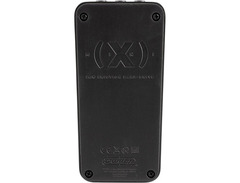
The Dunlop DVP4 Volume X Mini addresses a common problem for modern guitarists: limited pedalboard real estate. By packing Dunlop’s renowned expression and volume pedal technology into a compact, half-sized housing, the DVP4 offers a space-saving solution without sacrificing performance or build quality. This mini pedal is designed to provide precise control and reliable operation, making it a valuable addition to any rig, regardless of size.
Despite its diminutive size, the DVP4 boasts impressive build quality. The durable aluminum chassis provides ample protection against the rigors of gigging and transport, while keeping the overall weight manageable. Dunlop’s patented Band Drive system replaces traditional rack and pinion mechanisms, resulting in exceptionally smooth and quiet operation while significantly reducing mechanical wear and tear. The pedal’s pivot points are fitted with sealed bearings, further ensuring consistent feel and long-term reliability.
In practical use, the DVP4 excels in situations where space is at a premium. While the shortened treadle length may initially feel different for players accustomed to full-size expression pedals, the carefully calibrated throw and smooth action quickly become intuitive. The pedal’s ability to switch between volume and expression modes via a dedicated switch significantly enhances its versatility. This dual functionality effectively provides two pedals in one, allowing you to control volume swells or effect parameters without needing to dedicate separate spaces on your board.
Compatibility is well-considered. The DVP4’s auxiliary output allows for simultaneous control of two devices, such as an amplifier’s volume and an effect pedal’s parameter. The dedicated AUX/EXP switch ensures proper operation with both expression-compatible effects units and amplifiers that accept volume pedal control. The pedal’s standard impedance values ensure compatibility with most modern gear.
The DVP4’s miniaturized format does present a few minor trade-offs. Players with larger feet might find it slightly more challenging to achieve the same level of precise control as with a full-sized pedal. The shorter throw also means slightly less fine control over parameter changes. However, in most real-world applications, this difference is minimal and rarely presents a significant issue.
Considering its versatility, robust construction, and space-saving design, the Dunlop DVP4 Volume X Mini offers excellent value. The ability to function as both a volume and expression pedal in a single compact unit makes it a highly practical and cost-effective solution. It’s a great choice for guitarists who prioritize pedalboard efficiency without compromising on performance.
See how artists use this



.jpg)


.jpg)
Frequently Asked Questions
Can any pedal be used as an expression pedal?
No. While volume pedals and expression pedals may look similar, they serve different functions and are not interchangeable. Expression pedals use a specific wiring configuration with three conductors (TRS) to provide a variable control voltage, while volume pedals typically use a different circuit designed specifically for audio signals. Using the wrong type of pedal could potentially damage your equipment.
How do you connect an expression pedal to your setup?
Expression pedals require a TRS (Tip-Ring-Sleeve) cable for proper connection. Connect the TRS cable from your expression pedal's output jack to the expression input on your target device. Many modern effects units and synthesizers label their expression inputs clearly. Always check your device's manual for specific connection requirements, as some equipment may have unique wiring configurations.
What's the difference between an expression pedal and a volume pedal?
While both pedals offer continuous control, they operate differently. A volume pedal is an audio device that directly attenuates your instrument's signal. An expression pedal, on the other hand, sends a control voltage to modify parameters on another device. Volume pedals handle your actual audio signal, while expression pedals only transmit control information.
Can I use an expression pedal with any effects unit?
Not necessarily. The effects unit must have an expression pedal input. Additionally, check the compatibility requirements:
- Voltage specifications
- Required impedance values
- Polarity requirements
- TRS configuration
Do expression pedals require power?
Most basic expression pedals are passive devices that don't require external power. However, advanced models with features like MIDI output, programmable curves, or LED indicators will need power. Always check the specific requirements of your chosen model.
How do I troubleshoot an expression pedal that's not working?
Start with these common solutions:
- Verify you're using a TRS cable, not a standard instrument cable
- Check the polarity switch if your pedal has one
- Ensure compatibility between pedal and controlled device
- Test with different cables to rule out cable issues
- Verify the controlled parameter is assigned correctly on your device
Can one expression pedal control multiple devices?
Yes, with the right pedal. Dual or multi-output expression pedals are specifically designed for this purpose. However, ensure each output is properly calibrated for its target device, as different equipment may have different voltage or impedance requirements.
How long do expression pedals typically last?
The lifespan varies significantly based on construction quality and usage. High-end pedals using sealed potentiometers or magnetic sensors can last decades with proper care. Less expensive models might need replacement after a few years of regular use. The most common point of failure is the potentiometer, which can wear out or become noisy over time.
Can I adjust the resistance or sweep of my expression pedal?
Some advanced models offer customizable sweep curves or range controls. However, basic models have fixed response curves determined by their potentiometer taper. If you need adjustable response, look for pedals with dedicated range controls or programmable curves.
Does cable quality matter for expression pedals?
Yes. Since expression pedals transmit control voltages, using high-quality shielded TRS cables helps prevent interference and ensures reliable operation. Poor quality cables can introduce noise or cause intermittent connection issues, particularly in live performance environments. Also, while expression pedals are typically low-impedance devices, longer cables can introduce signal loss.
Conclusion
The world of expression pedals represents a fascinating intersection of engineering precision and musical creativity. From basic volume swells to complex parameter manipulation, these devices have become essential tools in modern music-making. As we've explored throughout this guide, choosing the right expression pedal involves carefully considering your specific needs, setup requirements, and future aspirations.
Whether you opt for the straightforward reliability of the Boss EV-30, the engineering excellence of the Lehle Dual Expression, or the budget-friendly functionality of the M-Audio EX-P, remember that the best expression pedal is the one that seamlessly integrates with your setup and playing style. The market offers options for every need and budget, from simple analog controllers to sophisticated digital interfaces.
Key takeaways from this guide:
- Quality matters: The expression pedal is a precision control device that benefits from solid construction and reliable components
- Compatibility is crucial: Always verify voltage requirements, impedance matching, and connection standards before making a purchase
- Consider the future: Investing in a more capable pedal might save money in the long run as your setup evolves
- Space efficiency: Modern pedalboards often demand careful consideration of size and placement
- Feature requirements: While advanced features are impressive, don't pay for capabilities you won't use
As musical technology continues to evolve, expression pedals remain a vital link between musician and instrument. Whether you're crafting subtle ambient textures or dramatic sonic sweeps, the right expression pedal can transform your effects from static sound processors into dynamic, expressive instruments.
Ultimately, an expression pedal is more than just a control device – it's an extension of your musical voice. Choose wisely, and it will serve as a reliable partner in your creative journey.
Top Ranked Expression Effects Pedals on Equipboard
-m.webp?v=1783942090)


About the authors
Juan Spinelli is a multi-instrumentalist musician, but more of a guitarist than anything else. Based in Buenos Aires, Argentina, he started playing at a very early age and learned various instruments such as flute, clarinet, percussion, didjeridoo, cavaquinho, bass and more. Today, he also works as a music producer and sound engineer, collaborating in several projects in his city and with artists from all over the world. Read more
New in Expression Effects Pedals

$105.00 - $1,050.00
in Expression Effects Pedals Rank






.webp)


.webp)

.jpg)