4 Best Reverb Delay Combo Pedals: Perfect Pairings


By Gear Experts

By Gear Experts
Table of Contents

Equipboard
Equipboard is the world's largest community of artists and their gear. Read our review process.
We are reader-supported. When you buy through links on our site, we may earn an affiliate commission. Learn more.
Our Picks

Amazing delay and reverb in one pedal. Switch between shimmer, spring, and modulated reverb. Competitive price. Adjusting controls can be tricky but worth it for top-notch sound and flexibility.
Read more


EarthQuaker Devices Avalanche Run V2
Amazing reverb and delay with tap tempo. Six knobs for precise control. High price but excellent sound quality and build. Great ergonomics.
Read more
Strymon El Capistan dTape Echo
Best for vintage tape delay and reverb sounds. Replicates classic effects without noise. Nine base settings with extensive control. High-quality, compact, but pricey. Great for classic tones, versatile with tweaking.
Read more

Industry workhorse, primarily a reverb pedal with basic delay. Compact, sturdy, and great sound. Perfect for budget-conscious players needing occasional delay.
Read moreWhat is Delay?
Delay is like an electronic version of the type of echo you experience in an empty auditorium or church. Just as specific conditions allow us to hear clear echoes in everyday life, there are specific conditions to produce that type of echo with a delay pedal. The most significant condition is that there needs to be a difference of at least 30 milliseconds between sounds for our ears and our brain to distinguish those successive sounds. With less time between sounds, you will hear a mixture of both sounds instead of two distinct sounds.
Why Use a Delay Pedal?
A popular reason to use a delay pedal is to achieve drifting and ethereal qualities during a guitar solo. Using a delay pedal, you can give the sound a fading effect by causing each subsequent note to be slightly less loud than the first one. With a dedicated delay pedal, you control the number of times the note repeats, how long it rings out and other parameters. With the right settings on your delay pedal you can even make a single note ring out forever.
The Difference Between Reverb and Delay
The main difference between delay and reverb is that the time between successive sounds is shorter with a reverb pedal. Reverb has less than 30 milliseconds between sounds, where delay has more than 30 milliseconds between sounds.
With reverb, the short amount of time between sounds means we can’t distinctly identify each sound the way you can with delay. We typically experience this reverb effect in large rooms like churches or auditoriums, where we can hear our voice ringing out but the ringing isn't distinct as a regular echo.
Guitarists often use reverb to get a fuller tone and larger sound. Too much reverb, however, will make the sound muddy and unappealing. With reverb, a minimalistic approach often gets the best results.
Bringing Reverb and Delay Together In One Pedal
A pedal that combines reverb and delay makes sense because both effects share the fundamental principle of repeating sounds. Both effects are often used when you want a fuller sound.
Reverb Delay Pedals in the Signal Chain
Reverb and delay are typically used toward the end of a signal chain. Replacing individual pedals for a combo pedal does not change the way the signal is processed. Since you can get the same (or even better) end result while also saving space and power, using a delay-reverb combo pedal is almost a no-brainer.
Top Reverb and Delay Combination Pedals
With more and more manufacturers producing combination Reverb-Delay pedals, we had to get our hands on them and plug in to hear for ourselves how they stack up against some of our favorite individual reverbs and delays. We were not disappointed.
We tested a dozen combination pedals and were so impressed we immediately replaced some pedals on our personal pedalboards. The space savings, potential cost savings, and signal chain simplicity are great reasons to look to a combo pedal. If you’re looking for a reverb-delay, these are our favorites.
How We Tested
We rounded up our 12 favorite reverb-delay combination pedals and played them through a Fender ’98 California Series Stratocaster, ’18 Squier Affinity Series Tele, Fender ’78 Telecaster Custom, Gibson ES-325, and Gibson Explorer (Yes, we wanted to test them both with single coils and humbuckers). We ran these guitars into a Fender Twin.
We walked away very impressed with all the options. What really struck us, aside from the benefits that are apparent on paper we discussed earlier, is that purchasing a combo pedal takes the guesswork out of the interplay between pedals. We’ve been surprised in the past with pedals we love individually sounding plain wrong when used in conjunction with other pedals. With the combo pedals, the manufacturer has done the work for you to make sure the voicing of the effects mesh well.
Keeley Caverns V2
4.5 (32)






Average Price: $191
Standard/Professional
$100
$251+
Budget
Standard
High-end
- No need to download anything for full functionality
- Easy-to-use controls and simple adjustments
- Offers both high-quality reverb and delay in one pedal
- Versatile reverb settings including spring, shimmer, and modulated
- See 6 more
- Delay may sound flat and stale to some users
- Reverb can feel unnatural and poorly integrated with delay
- Lack of preset memory for quick sound changes
- Modulated delay options considered limited by some users
- See 1 more
| Bypass | true bypass, buffered bypass |
| Analog/Digital | digital |
| Mono/Stereo | mono |
| Power | 9V |
| Effects | delay, reverb |
| Current Draw | 75ma |
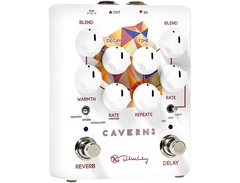
The Keeley Caverns V2 has separate controls for the delay and reverb sections respectively. The Reverb section has a three-way toggle switch that allows you to switch between shimmer, spring, and modulated types of reverb. You can use shimmer for light reverb effects, spring for that characteristic classic sound and modulated to create vast and mesmerizing soundscapes. There are four dials associated with Reverb to control the warmth, rate, decay, and blend parameters.
The delay section layout is similar with a three-way toggle switch that switches between off, deep, and light respectively. The four knobs control repeats, rate, time, and blend. You can add a delay of up to 650 milliseconds. The sounds that this pedal can generate are amazing and this pedal is in no way a compromise as compared to individual delay and reverb pedals. The price is also competitive considering you are getting two effects from a premier pedal manufacturer.
It requires a some dexterity to change the setting on one knob without accidentally turning the others when you have this many tone controls in a small footprint. We know this is a compromise worth living with to get this level of adjustability in a small package, but we did notice it.
The Caverns V2 from Keeley is an excellent pedal that can replace individual pedals without any compromises on the sound quality or features.
Pros:
- Full control over the various settings
- Individual control over both sections
- True Bypass
- Great looks
- Great price
Cons:
- The layout of the knobs could have been slightly better
See how artists use this

.jpg)








EarthQuaker Devices Avalanche Run V2
4.5 (26)



Average Price: $367
High-end/Boutique
$100
$251+
Budget
Standard
High-end
- Wide stereo image for reverb offers three-dimensional sound
- Versatile, suitable for both subtle and experimental sounds
- Can produce warm tones and organic sounding tones
- Tap tempo feature enhances usability
- See 6 more
- Delay is mono, lacking a ping pong effect
- Can sound compressed with too hot input signals
- Some users may find it not suitable for "gain" kind of tones
- Requires an expression pedal for full functionality
- See 6 more
| Bypass | true bypass, buffered bypass |
| Analog/Digital | digital |
| Mono/Stereo | stereo |
| Power | 9V |
| Effects | delay, reverb |
| Current Draw | 425ma |
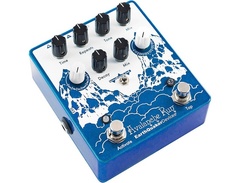
The EarthQuaker Devices Avalanche Run V2 has two footswitches; One activates the entire unit while the other is for tap tempo. The pedal can be run in three modes - normal, reverse and swell. Normal mode gives you all the standard sounds, swell creates a lot of grandiose sounds while the reverse is ideal for more experimental stuff. There are six knobs that control the various parameters of reverb and delay. The tone knob allows you to really dial in the sound to your specific needs.
The Avalance Run can also be connected to an expression pedal which can then be assigned to one of the six parameters and can be used in hands-free mode in live situations.
Jumping from a traditional individual reverb and delay pedal onto the Avalanche Run V2 can take some time to get used to. The sound and build quality is excellent. The reverb in particular is amazingly lush. The ergonomics are also great.
The biggest issue is the relatively high price, but considering you are getting two effects from a boutique manufacturer we still love this thing.
Although it draws 425mA and isn't exactly inexpensive, the Avalanche Run V2 is a lush reverb with delay that sounds amazing.
Pros:
- Excellent sound quality
- Delay of up to 2 seconds offering plenty of versatility
- Great ergonomics
- True Bypass
Cons:
- Pricey, but you get what you pay for
- Power requirements
See how artists use this

.jpg)

.jpg)






Strymon El Capistan dTape Echo
5.0 (152)


Average Price: $294
High-end/Boutique
$100
$251+
Budget
Standard
High-end
- Excellent for a wide range of delay effects from slapback to ambient
- Intuitive and simple to use, ideal for quick setup and adjustments
- Replicates tape echo sounds convincingly with adjustable tape age and bias
- Versatile secondary functions for in-depth sound customization
- See 6 more
- Some users find it doesn't perfectly replicate the nuances of real tape echo
- Secondary functions can be confusing, with adjustments not visually indicated
- Decay and tone of repeats may feel too linear and digital for purists
- Lacks the ability to easily switch between presets in live settings
- See 1 more
| Bypass | true bypass, buffered bypass |
| Analog/Digital | digital |
| Mono/Stereo | stereo |
| Power | 9V |
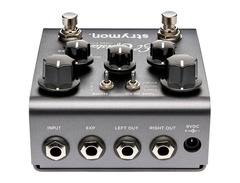
Right off the bat, we will let you know that the Strymon El Capistan dTape Echo isn't an all-purpose combo pedal that can create a myriad of delay and reverb effects. It is a digital reproduction of the vintage tape-based delay and reverb effects from the past. If you are looking to recreate some of the magical sounds from the era of tape delays and reverb then you are in luck. This is the closest we have come to a digital pedal sounding like a vintage tape-based effects unit. It achieves all of this without carrying over the defects from that era such as noise. Vintage tape machines could create a whole range of effects based on how worn the tape was or how close to a servicing the machine was. The El Capistan replicates all of this while giving you plenty of control over the final sound.
There are two three-way toggle switches. One controls the type of tape head - fixed, multi, and single. The other controls the modes for each of these tape heads giving you a total of nine base settings. These can then be infinitely tweaked with the five knobs that control time, tape age, mix, repeats, and wow & flutter. There are two footswitches. One controls tap tempo and the other can be used for bypassing this unit. While the Strymon El Capistan dTape Echo is primarily aimed at those looking to emulate classic reverb and delay sounds, modern sounds can also be dialed in with the right amount of tweaking proving that it can be versatile too.
If you really want that classic sound then the El Capistan is the best delay and reverb combo pedal out there.
Pros:
- Terrific reproduction of vintage reverb and delay effects
- Compact size
- Low noise
- Legendary Strymon build quality
- Bypass mode is True Bypass
Cons:
- Pricey
- Takes effort to dial in modern tones
- Requires 250mA so may not work with all power supplies
See how artists use this




Boss RV-6 Reverb
4.5 (175)






Average Price: $146
Standard/Professional
$100
$276+
Budget
Standard
High-end
- Superior shimmer setting with tone control for versatile soundscapes
- Durable build quality, typical of Boss products
- Wide variety of reverb types for different musical styles and needs
- Offers both reverb and delay, saving space on pedal boards
- See 6 more
- Consumes batteries quickly; power supply recommended
- Limited to one setting in live situations without external switching
- Lacks MIDI control for preset management
- Some users find the tone control range from hissy to dull
- See 4 more
| Analog/Digital | digital |
| Mono/Stereo | stereo, mono |
| Power | 9V |
| Effects | reverb |
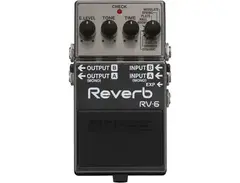
The Boss RV-6 is the workhorse of the industry and another winner from the strong Boss line-up. Its looks and name can be a bit deceiving as it looks like a regular reverb pedal but is, in reality, a combo pedal. There are some caveats though which come with the low price but there are no cut corners when it comes to sound or build quality. This is a well-made unit that produces some excellent tones. The catch though is that it is primarily a reverb pedal with a special combo mode that adds certain capabilities of a delay pedal. It is more than adequate as a reverb pedal but as a delay pedal, it is only capable of producing sounds of the simple analog delay nature. This is perfectly suited for someone who uses delay sparingly and therefore does not want to invest in a dedicated delay pedal.
There are 8 modes with 7 of them being different types of reverbs and the 8th being the combo mode. The types of reverb available are spring, plate, hall, room, modulate, dynamic, and shimmer. The combo effect is a bit unintuitive to use at first but it is very easy to get the hang of after a few uses. When this mode is selected, the Tone knob works as the intensity control for the repeated notes and a bit of hall reverb is added to the final output to create a standard delay effect. As we mentioned earlier, it is not as capable as a dedicated delay pedal but if you want a basic delay system and have a limited budget then this will do the trick.
Despite a very limited delay, the Boss RV-6 offers an inexpensive way in to a legendary pedal that pairs 7 types of reverbs with basic delay capabilities.
Pros:
- Excellent price
- Compact form factor
- Sturdy build quality
- Great sound quality
Cons:
- Limited delay functionality
See how artists use this




.jpeg?v=1784583898)



Top Ranked Delay Effects Pedals on Equipboard
-m.webp?v=1784905089)


About the authors
Michael R. Pierce is the co-founder of Equipboard and a lifelong musician with over 25 years of experience as a guitarist and gear enthusiast. He blends solid music theory chops (thanks to formal training in guitar, piano, and trumpet) with real-world experience, always exploring and experimenting across genres like rock, blues, and hip-hop. Michael launched Equipboard in 2013 after graduating from The University of Texas at Austin, leveraging his unique blend of musical passion, technological acumen, and community building. His current go-to rig features a Fender American Original ‘50s Telecaster, Analogman King of Tone, Strymon Flint, and a Fender ‘57 Custom Champ. Read more
Giulio Chiarenza is the co-founder of Equipboard and a lifelong multi-instrumentalist with a deep passion for music gear. Born in Italy and raised in the U.S., he holds a Computer Science degree from The University of Texas at Austin and blends technical acumen with decades of hands-on experience across guitar, piano, drums, and electronic production. Early in his career, Giulio was signed to a San Francisco-based EDM label, releasing both remixes and original tracks. These days, he helps steer Equipboard’s vision while personally testing and reviewing gear. He's never too far from his go-to guitar: a vintage 1978 Fender Telecaster Custom. Read more
New in Delay Pedals and Reverb Effects Pedals


$259.00 - $288.00


.jpg?v=1784922068)



.jpg)


.jpg)