Table of Contents

Equipboard
Equipboard is the world's largest community of artists and their gear. Read our review process.
We are reader-supported. When you buy through links on our site, we may earn an affiliate commission. Learn more.
Our Picks


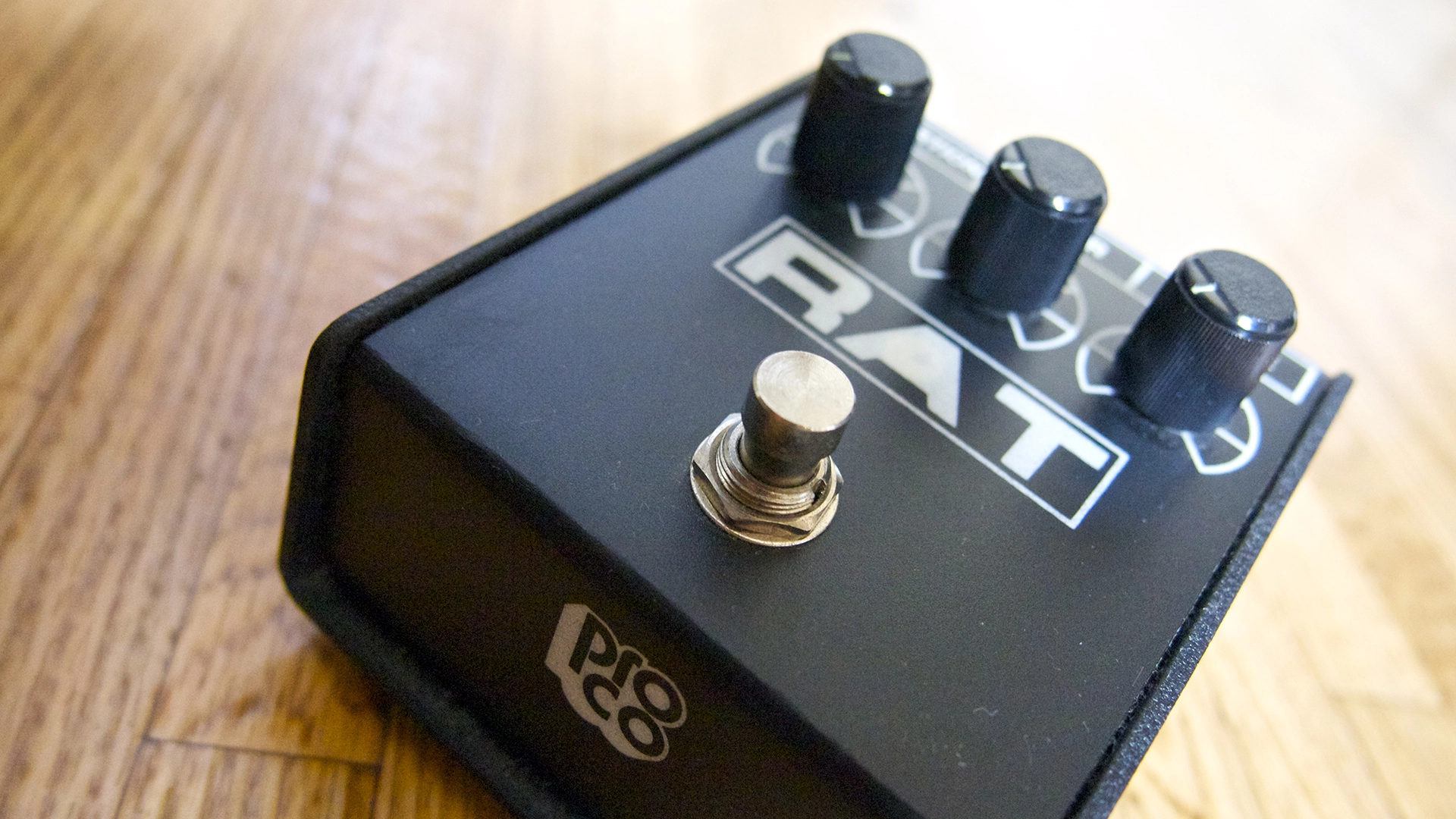
The Pro Co RAT occupies a unique place in guitar history. Alongside the Tube Screamer and Big Muff, it forms the Holy Trinity of dirt pedals, shaping the sound of rock, grunge, and alternative music for over four decades. Unlike its smoother, mid-focused cousin or its thick, sustaining sibling, the RAT offers something different: a raw, aggressive voice that can morph from chewy overdrive to near-fuzz saturation with a simple twist of a knob.
What makes the RAT special isn't just its sound. It's the versatility packed into three simple controls and a circuit that punches well above its weight class. From David Gilmour's soaring leads to Kurt Cobain's wall of distortion, the RAT has proven itself across genres and generations.
The Origin and Evolution of the RAT
The RAT's story starts not in some legendary guitar shop, but in a modest repair facility in Kalamazoo, Michigan. Pro Co Sound, founded by Scott Burnham, began as a company making direct boxes and sound reinforcement equipment. The RAT distortion pedal was almost an accident, born from Burnham's tinkering with op-amp circuits in the late 1970s.
In the Beginning
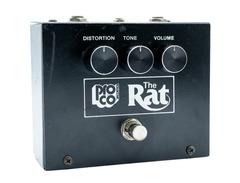
The earliest RAT prototypes were called Bud Box RATs because they were housed in Bud electrical enclosures. These hand-built units featured a simple but effective circuit: an op-amp gain stage, hard clipping diodes, and a unique filter control. When Pro Co began mass production in 1979, the pedal came in a sloped wedge enclosure with white labeling, and it quickly caught the attention of working guitarists looking for something grittier than a Tube Screamer but more controlled than a Big Muff.
The circuit's modest beginnings belied its impact. Unlike the carefully engineered Tube Screamer or the deliberately fuzzy Big Muff, the RAT was a straightforward design that happened to sound fantastic. Its aggressive midrange and touch-sensitive response made it perfect for everything from classic rock to the emerging punk and new wave scenes.
The Chip That Defined the Sound
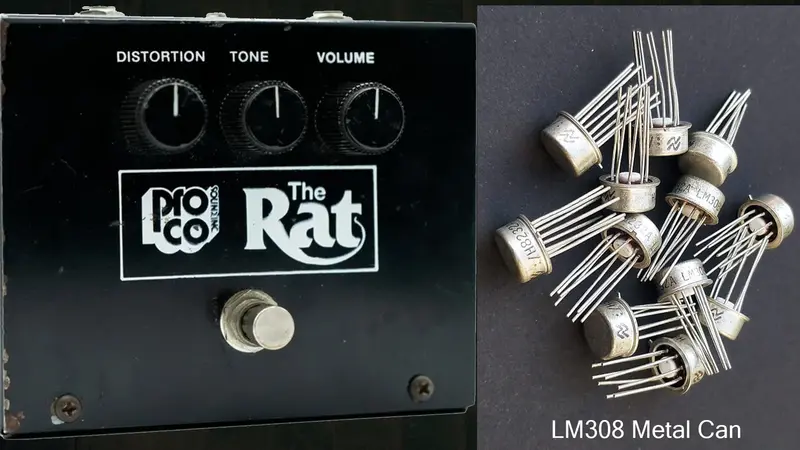
At the heart of the original RAT sits the LM308 op-amp, a chip that wasn't designed for audio applications but turned out to be perfect for distortion. The LM308 has a slow slew rate, meaning it can't reproduce extremely fast signal changes. In practical terms, this softens the top end and adds a smooth, almost compressed sustain that players love.
But here's where the myths need debunking. The LM308 matters, absolutely. However, the entire circuit works together to create the RAT sound. The compensation capacitor that interacts with the op-amp shapes how the clipping behaves. The diode configuration determines compression and output level. Swap the LM308 for an OP07 or TL071, and yes, the sound changes. But it's not night and day, and later RAT versions with different chips still sound undeniably like RATs.
The Major Eras

The White Face RAT from the early 1980s featured the LM308 and had a brighter, more open character. These early units are now highly collectible, with clean examples fetching $300 to $500 or more. The Big Box RAT from the mid-1980s maintained a similar circuit but came in a larger enclosure with a slightly darker voice.
.webp)
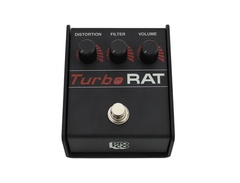
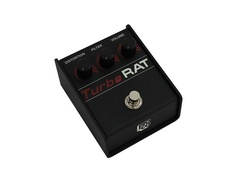
The RAT 2 modernized the design with an LED power indicator and typically used the OP07 chip. This became the standard RAT for decades and remains in production today. The Turbo RAT uses LED clipping for a louder, less compressed tone. The You Dirty RAT employed germanium diodes for vintage warmth, while the FAT RAT brought switchable LM308/OP07 op-amp options plus a bass boost.
The RAT Signature Sound
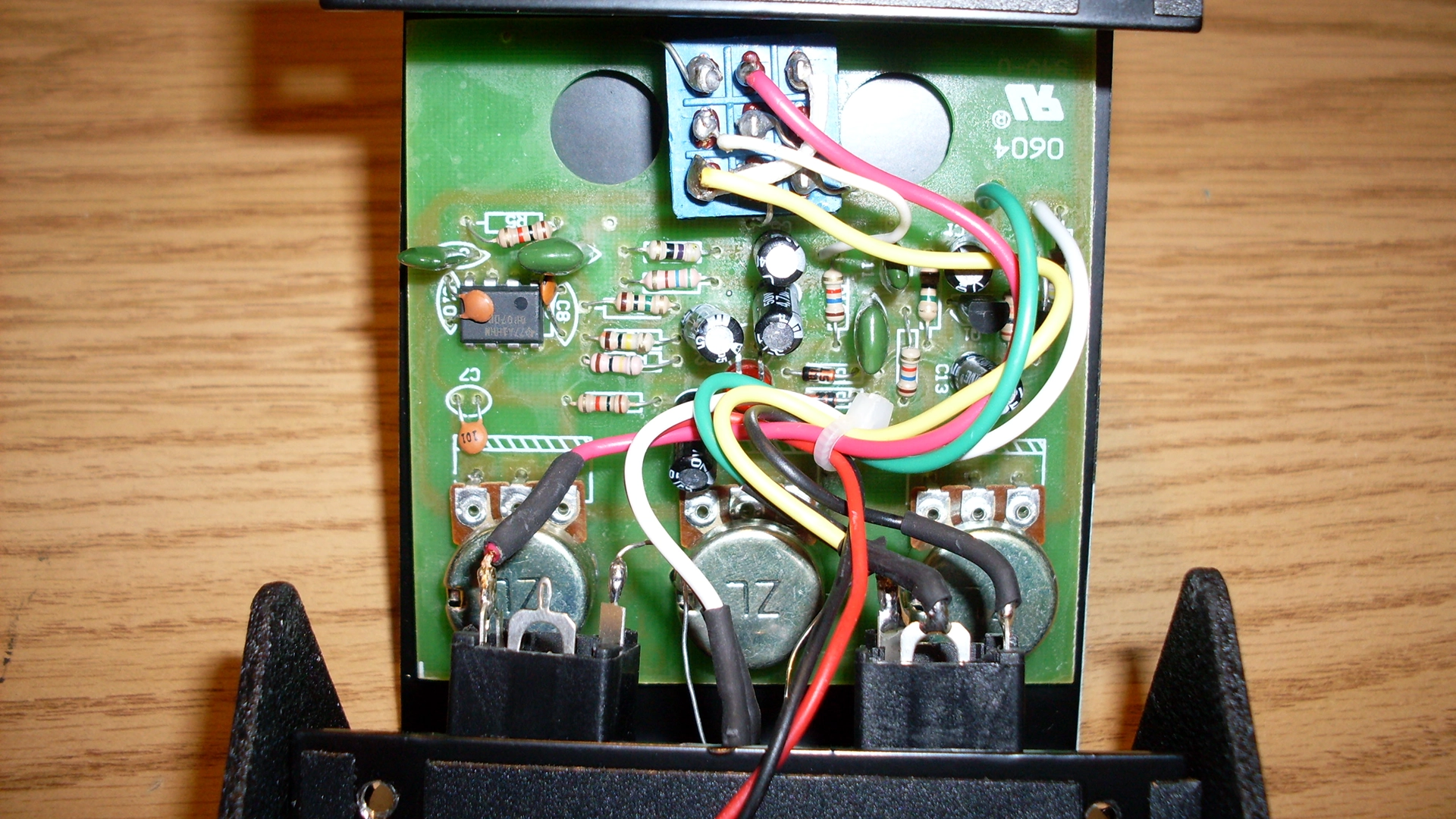
Understanding how the RAT works helps you dial it in correctly and choose the right variant for your needs. Unlike many pedals that hide their engineering behind marketing speak, the RAT's circuit is relatively simple. That simplicity is the key to its effectiveness.
Hard Clipping and Op-Amp Gain
The RAT combines two types of distortion in its circuit. First, the op-amp provides gain, pushing the signal into overdrive. Then, hard clipping diodes clip the signal symmetrically, creating the RAT's characteristic distortion texture. This differs from pedals like the Tube Screamer, which use soft clipping, or the Big Muff, which cascades multiple gain stages.
Silicon diodes (standard RAT 2) produce a compressed, moderately hot output with a distinctive midrange bite. LED diodes (Turbo RAT) have higher forward voltage, meaning more headroom, less compression, and more output volume. Germanium diodes (You Dirty RAT) create the softest, most vintage-flavored clipping with a rounder, warmer character.
The Filter Knob
Here's where the RAT gets interesting. The Filter control is a low-pass filter, not a traditional tone knob. As you turn it clockwise, it cuts more treble. Counter-clockwise adds brightness by allowing more high frequencies through. This operates opposite to most tone controls.
The Filter doesn't just adjust treble in a simple way. It interacts with the entire frequency response, affecting how the distortion feels under your fingers. At extreme counter-clockwise settings, the RAT can sound almost fizzy. At maximum clockwise settings, it becomes thick and almost woofy. Most usable tones live between 10 o'clock and 3 o'clock.
Tonal Range
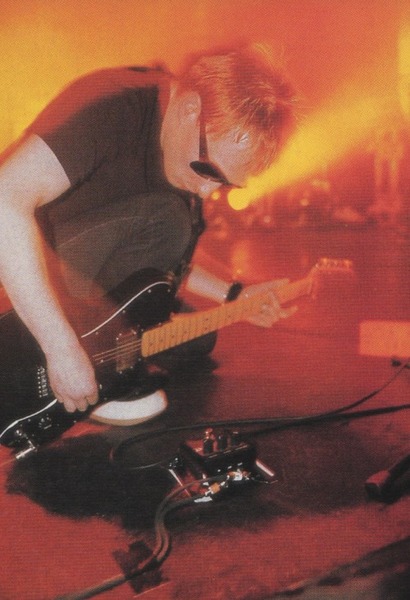
With the Distortion knob at lower settings (9 to 11 o'clock), the RAT delivers a chewy, dynamic overdrive that responds beautifully to your picking attack. Push the Distortion to medium settings (12 to 2 o'clock), and you enter classic rock and grunge territory where Jeff Beck and Graham Coxon from Blur found their tones. Crank it past 3 o'clock with the Filter rolled back, and the RAT transforms into something approaching fuzz. This is Nirvana territory, perfect for massive sustain and aggression.
The Ruetz Mod
Named after a modification popularized by Analog Man, the Ruetz mod involves removing or altering a specific resistor in the RAT circuit. This reduces overall gain and tightens the low end, giving players more headroom and less compression. The midrange becomes clearer and more defined, making it easier to sit in a mix. Many boutique RAT-style pedals incorporate Ruetz-inspired voicing.
Rig Interactions
Single-coil pickups into Fender-style amps tend to sound bright and aggressive. Set the Filter higher (more clockwise) to cut treble and keep the Distortion on the lower side. Humbuckers into Marshall-style amps create a thicker foundation, so the Filter should sit lower (more counter-clockwise) to maintain brightness, and LED clipping variants often work better. Vox-style amps with their prominent upper midrange need the Filter around noon with moderate Distortion settings.
Stacking and Pedal Order
The RAT belongs after your wah and boost pedals but before modulation and time-based effects. Placing a clean boost before the RAT increases saturation and compression. Placing an EQ or boost after the RAT increases volume without changing the distortion character, perfect for solos.
Famous Users
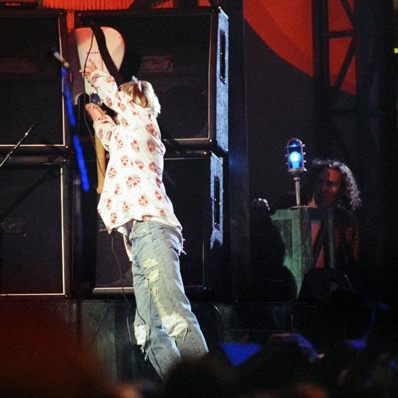
David Gilmour used RATs for smooth, singing lead tones, favoring moderate gain with the Filter rolled to taste. Kurt Cobain cranked the Distortion high, creating the massive wall of sound that defined grunge. Jeff Beck and Graham Coxon both found the RAT could deliver smoothness and aggression for their distinctive styles.
The Modern RAT Family

Today's market offers more RAT options than ever. Whether you want the authentic Pro Co experience, a boutique refinement, or a pedal that captures multiple RAT eras, there's something for every player and budget.
Multi-RAT Masters
These pedals take the RAT concept and expand it into a single box containing multiple circuits or clipping options. The JHS PackRat is as the most comprehensive option, offering nine selectable RAT circuits spanning the pedal's entire history. The Black Mass 1312 takes a more aggressive approach with eight clipping options, skewing toward modern, high-gain tones. The PastFX Mischief offers four-way clipping alongside additional "Sizzle" and "Bass" controls for more tonal shaping while keeping the vintage-accurate core intact.
Boutique RAT Evolutions
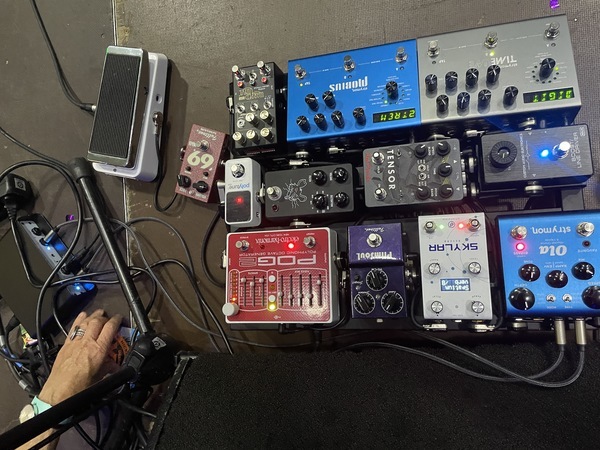
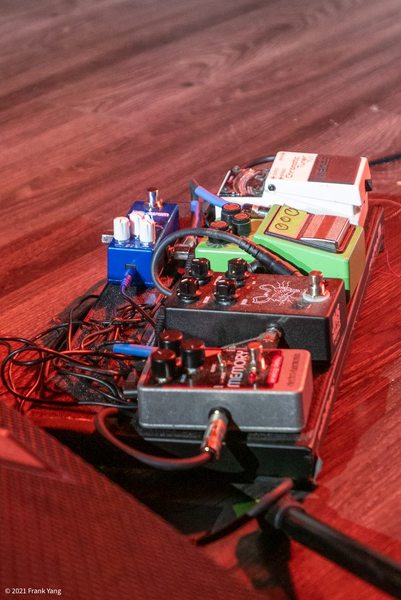
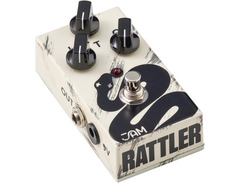
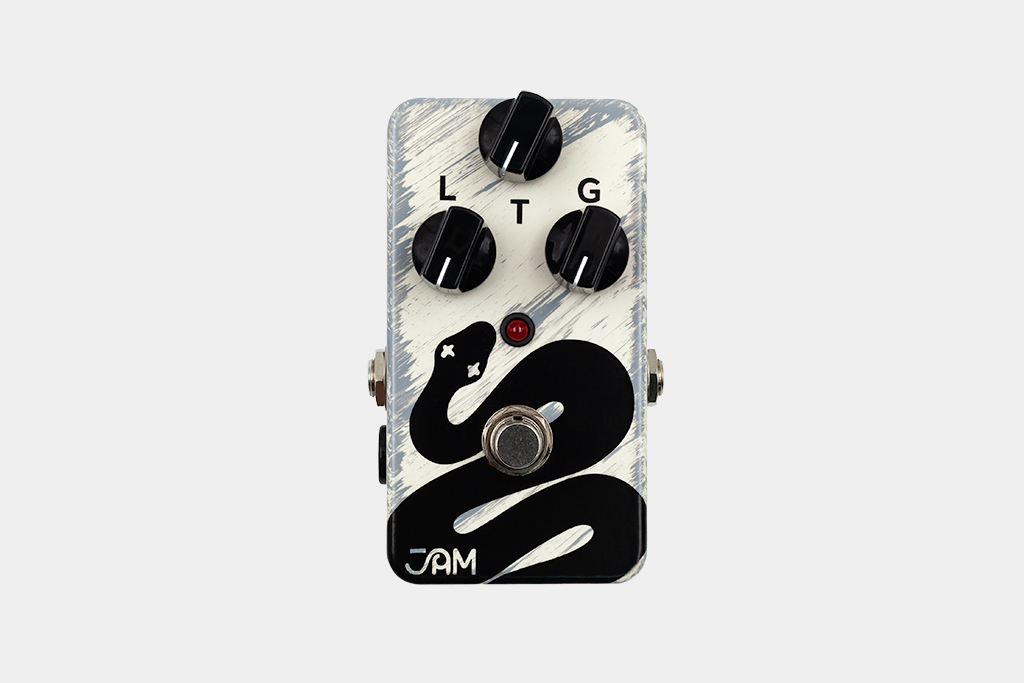
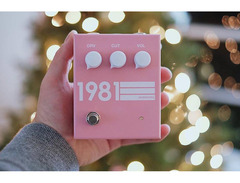
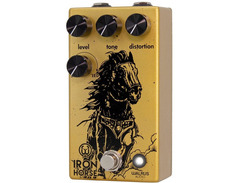
The 1981 Inventions DRV takes the RAT foundation and smooths it out, creating a higher-fidelity distortion that excels at low-gain clarity and responds beautifully to playing dynamics. The JAM Pedals Rattler stays closer to the vintage LM308 sound while incorporating boutique build quality and premium components. The Walrus Audio Iron Horse V3 offers three-way clipping and a tweakable tone section, making it adaptable without straying too far from the core sound. The EarthQuaker Devices Life Pedal combines a RAT-style distortion with an octave fuzz and boost, designed for massive, wall-of-sound tones.
The Original and Budget Options
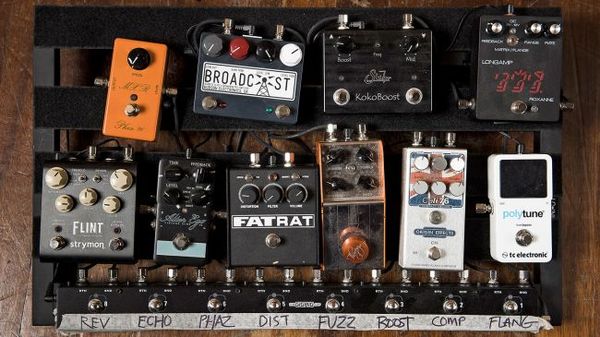
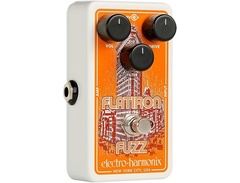
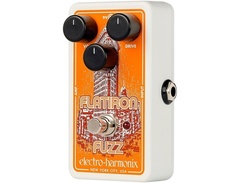
The Pro Co RAT 2 remains the standard-bearer, offering the classic circuit at under $100 street price. The Pro Co Turbo RAT gives you LED clipping at a similar price point for more output and aggression. The Pro Co FAT RAT provides switchable op-amp selection (LM308/OP07) plus a bass boost, making it the most versatile official RAT. The Electro-Harmonix Flat Iron Distortion offers a budget-friendly RAT alternative, while the Wampler Ratsbane puts RAT-style distortion in a compact, space-saving enclosure.
RAT Pedal Comparison Table

| Pedal | Category | Clipping Type | Key Features | Best For |
|---|---|---|---|---|
| JHS PackRat | Multi-RAT | 9 Selectable Modes | Complete RAT history in one pedal | Tone explorers, studio work |
| Black Mass 1312 | Multi-RAT | 8 Clipping Options | Modern aggressive voice | High-gain players |
| PastFX Mischief | Multi-RAT | 4-Way with Sizzle/Bass | Vintage-accurate with extra controls | Classic tone with flexibility |
| 1981 Inventions DRV | Boutique | Silicon (Refined) | Higher fidelity, low-gain clarity | Professional recordings, dynamic playing |
| JAM Pedals Rattler | Boutique | Silicon (LM308 Style) | Vintage voice, boutique build | Classic RAT tone with refinement |
| Walrus Audio Iron Horse V3 | Boutique | 3-Way Switchable | Tweakable tone, versatile | Modern rock, versatile gigging |
| EarthQuaker Devices Life Pedal | Boutique | Silicon + Octave Fuzz | RAT core with massive fuzz | Doom, sludge, extreme tones |
| Pro Co RAT 2 | Original | Silicon (OP07) | Classic circuit, accessible price | Everyone, best value |
| Pro Co Turbo RAT | Original | LED | Louder, less compressed | Cutting through mixes |
| Pro Co FAT RAT | Original | Silicon (Switchable Op-Amp) | LM308/OP07 switch, bass boost | Versatility, vintage/modern options |
| Electro-Harmonix Flat Iron | Budget | Silicon | Affordable RAT alternative | Budget-conscious players |
| Wampler Ratsbane | Budget | Silicon | Compact, studio-friendly | Space-saving pedalboards |
Pro Co RAT
4.5 (244)




- Vintage sound quality, suitable for bass and guitar
- Clarity with ample gain and volume
- Consistent sound across different versions
- Versatile for various music genres and instruments beyond guitar
- See 6 more
- Original versions preferred, suggesting variability in newer models
- Non-standard power supply requires an adapter
- Some units may sound shrill, fizzy, or thin at high settings
- Can be too fizzy for some, less versatile for others
- See 2 more
See how artists use this






Pro Co RAT 2
4.5 (473)
-s.webp?v=1784804432)


-l.webp?v=1784804432)




Average Price: $85
Standard/Professional
$80
$181+
Budget
Standard
High-end
- Versatile, from smooth overdrive to full distortion
- Works well with both single-coil and humbuckers
- Flexible tone control with low-pass filter
- Doesn't alter tone when adjusting output volume
- See 5 more
- Tone control extremes can be too harsh or muffled
- Not all units consistently deliver the preferred sound
- Doesn't play well with some other pedals
- Can be noisy, especially with older circuit designs
- See 6 more
See how artists use this







Pro Co Turbo RAT
4.5 (63)
-s.webp?v=1784805283)

-l.webp?v=1784805283)
Average Price: $147
Standard/Professional
$80
$181+
Budget
Standard
High-end
- Superior clarity and aggression in distortion compared to other models
- Versatile: functions as overdrive, distortion, and fuzz
- High headroom and volume, suitable for loud performances
- Solid metal construction with sturdy knobs
- See 6 more
- Might develop input issues after extensive use
- Sound quality heavily depends on the guitar used; less suited for humbuckers
- Filter knob functionality might be confusing for some users
- Some users may find the pedal not entirely distinct from other RAT models
See how artists use this




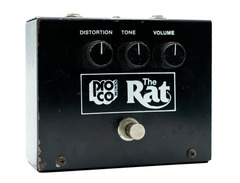
Pro Co The Rat
4.5 (32)


Average Price: $409
High-end/Boutique
$80
$181+
Budget
Standard
High-end
- Ideal for bassists, enhancing lead performances significantly
- Versatile sound from slight crunch to full-on Santana-like singing tone
- Legendary with the LM308N chip for warmer tone
- Simple, effective controls for tone and output level adjustment
- See 2 more
- Original models with the LM308N chip can be pricier
- Basic design lacks fancy features like LED indicators
- Sound quality may vary if not equipped with LM308 chip
See how artists use this




Pro Co Fat Rat
5.0 (4)



Average Price: $178
Standard/Professional
$80
$181+
Budget
Standard
High-end
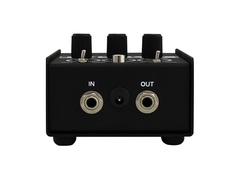
- Less compression, more clarity at 18V
- MOSFET option provides open, big-amp sound
- Fat switch adds bass and tames harsh highs
- Handmade in the USA, quality craftsmanship
- See 6 more
- Price higher than some competitors and clones
- Larger size than some players prefer
- Some users find the MOSFET and Fat modes underwhelming
- European price significantly higher than US price
See how artists use this

.jpg)


JHS Packrat
5.0 (2)


Average Price: $226
High-end/Boutique
$80
$181+
Budget
Standard
High-end
- Eliminates need for chaining multiple drive/distortion pedals
- Offers a wide range of sound options and huge flexibility
- Features multiple RAT circuit voicings for varied tones
- Compatible and enhances other pedal setups (e.g., with Keeley Dark Side, Catalinbread Echorec)
- See 5 more
- Higher price point compared to some other pedals
See how artists use this






JAM Pedals Rattler
5.0 (5)



- Delivers open, gritty, fuzzy, loud distortion without excessive noise
- Modern hardware with classic "Rat" sound for enthusiasts
- Versatile: smooth overdrive to intense distortion, suitable for both bass and guitar
- Superior tone sculpting through tube amps, cuts through mixes well
- See 5 more
- Might not reach the fizzy extreme some desire from a RAT pedal
- Lacks additional features like fatrat, turbo mode, or high gain switch
- Boutique price point may be a con for budget-conscious musicians
See how artists use this

.jpg)


.jpg)




EarthQuaker Devices Sunn O))) Life Pedal V1
5.0 (6)

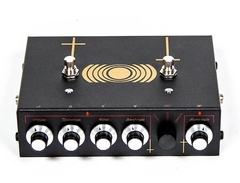
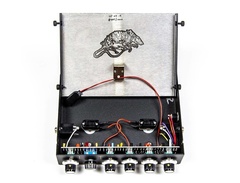
- Offers massive boost and thick distortion
- Unique sounds, especially suited for fans of SUNN O)))
- Maintains impressive headroom for expansive sound exploration
- Can push tube amps significantly for enhanced performance
- See 4 more
- Octave control lacks blendability, essentially functioning as an on/off switch
- May result in low end loss when used with bass, affecting full band context
- Pricey relative to other fuzz and distortion pedals on the market
See how artists use this







Electro-Harmonix Flatiron Fuzz
4.5 (3)



Average Price: $78
Standard/Professional
$60
$181+
Budget
Standard
High-end
- Versatile: covers a wide range from almost clean to heavy distortion
- User-friendly: yields usable tones in almost all settings
- Modern circuitry: offers the range of tones like the Rat 2 but without unwanted noise
- Compact design: smaller than similar pedals, easy to fit on pedalboards
- See 6 more
- Single "filter" knob: makes precise tone dialing challenging
- Unity gain is fairly low: might be an issue for some users seeking higher volume without adjusting the pedal


Wampler Ratsbane
4.5 (4)


Average Price: $126
Standard/Professional
$80
$181+
Budget
Standard
High-end
- Versatile distortion range, from overdrive to fuzz
- Compact size fits any pedal board
- Maintains classic Rat sound with additional modern mode
- High-quality build and durable knobs
- See 6 more
- Not suitable for players seeking exclusively modern sounds
- Small knobs and switches can be tricky to adjust
- Labeling is difficult to read
- Clipping character not fitting all styles, described as one-dimensional
- See 4 more
1981 Inventions DRV
5.0 (9)

- Wide range of tones, from smooth drive to heavy distortion
- Provides more usable tones than similar pedals like the Rat
- Allows for nuanced, articulate sounds
- Glorious low gain breakup tone even at zero drive
- See 3 more
- Requires volume crank for preamp effect, lacks internal trim
- Might not suit modern metal tones well
- Learning curve due to interactive knobs
See how artists use this




.jpg)
Walrus Audio Iron Horse V3
4.5 (2)



Average Price: $183
High-end/Boutique
$80
$181+
Budget
Standard
High-end
- More versatile than other OD/Dist pedals
- Improved control range over previous versions
- Tight bass suitable for heavy rhythm playing
- Distinct blend of fuzz and distortion tones
- See 6 more
- Some may find the low end too intense
- Volume adjustment needed when switching clipping modes
- Not suited for modern high gain sounds
- Some users report noise issues (though customer service is responsive)
- See 1 more

Playing Tips, Settings, and Troubleshooting
Getting the most from your RAT means understanding how its controls interact and how to adapt to different guitars, amps, and musical contexts. These practical tips will help you dial in great tones quickly and solve common problems.
Quick-Start Settings
Classic Alt-Rock Rhythm: Set Distortion to 10 or 11 o'clock for moderate crunch. Turn Filter to 1 or 2 o'clock to tame brightness while keeping clarity. Adjust Volume to match your bypass level. This delivers the chunky, driving rhythm tone heard in countless '90s alternative tracks.
Smooth Lead Sustain: Push Distortion to 1 or 2 o'clock for singing sustain. Roll Filter to 2 or 3 o'clock to smooth out the top end. Set Volume slightly above unity for solos that jump out of the mix without harshness.
Fuzz-Like Wall of Sound: Max out the Distortion for maximum saturation. Set Filter between 12 and 1 o'clock to maintain brightness. Keep Volume at unity and consider stacking a clean boost before the RAT for even more intensity.
Guitar and Amp Pairing
Single-coil pickups through Fender-style amps can sound bright and cutting. Turn the Filter higher (more clockwise) to reduce treble and keep Distortion relatively low. Humbuckers through Marshall-style amps create a naturally thick foundation. Use LED clipping if possible to prevent mud, and set the Filter near noon or slightly counter-clockwise. Digital rigs and IR loaders need attention around 100 to 150 Hz, where the RAT can add low-mid buildup. Apply a gentle post-EQ cut in this range to tighten things up.
Troubleshooting Common Issues
Too bright at gig volume: Turn the Filter clockwise to cut more high frequencies. Stage volume and room acoustics can make settings that worked at home sound harsh in a live context.
Muddy at high gain: Reduce Distortion rather than adding more. The RAT's low-mid thickness can become overwhelming, especially with humbuckers. A Ruetz-style EQ cut around 800 Hz can also help clear congestion.
Lost in the mix: Add midrange after the RAT using an EQ pedal, or switch to LED clipping mode. Boosting 400 to 800 Hz helps the guitar sit in the mix without competing with vocals or cymbals.
Excessive noise: Use isolated power supplies rather than daisy chains. Avoid stacking high-gain boosts into a maxed-out RAT, as this amplifies noise along with signal.
Frequently Asked Questions
Is the LM308 chip essential for "real" RAT tone?
The LM308 shapes the feel and response, but it's not the only factor. Diode type, capacitor values, and overall circuit layout contribute equally to the sound. Many excellent RATs use different op-amps and still sound fantastic.
How should I set the Filter knob?
Counter-clockwise adds brightness by allowing more high frequencies through. Clockwise cuts treble, making the tone darker. Start around noon and adjust by ear based on your guitar, amp, and desired tone.
Can a RAT do both overdrive and fuzz?
Absolutely. Low Distortion settings (9 to 11 o'clock) deliver chewy, dynamic overdrive. High Distortion settings (3 o'clock and beyond) create fuzz-like sustain and saturation. The RAT covers a huge tonal range with just one knob.
Where should the RAT go in my pedal chain?
Place it before modulation and time-based effects like chorus, delay, and reverb. Put it after boosts, compressors, and wah pedals. This order keeps your distortion focused and your modulation effects clean.
What's different between the Turbo RAT and RAT 2?
The Turbo RAT uses LED clipping instead of silicon diodes. This provides more output volume, less compression, and a slightly different harmonic character. The RAT 2 is darker and more compressed, while the Turbo is louder and more open.
Conclusion
The Pro Co RAT endures because it does something simple exceptionally well. It takes your guitar signal, adds aggression and sustain, and gives you intuitive controls to shape the result. From its accidental origins in a Michigan repair shop to its status as a modern classic, the RAT has proven that great tone doesn't require complexity.
Nearly every modern distortion pedal owes something to the RAT's straightforward design. Its combination of hard clipping, op-amp gain, and unique filter control created a template that builders still reference today. Whether you choose an original Pro Co, a boutique evolution, or a multi-circuit explorer, you're tapping into four decades of rock history.
From low-gain grit that responds to your pick attack to fuzz-like saturation that fills every corner of the sonic spectrum, the RAT adapts to your needs. Don't be afraid to experiment with the controls in unconventional ways. Try maximum Distortion with the Filter rolled all the way counter-clockwise, or minimal gain with the Filter at noon. Stack it with other pedals in different orders. The RAT rewards curiosity.
Whether you're chasing the smooth sustain of David Gilmour, the aggressive wall of Kurt Cobain, or something entirely your own, the RAT provides a timeless foundation. It's not the only distortion pedal you'll ever need, but it might be the one you keep coming back to when everything else feels too polished or too predictable.
Top Ranked Distortion Effects Pedals on Equipboard
-m.webp?v=1784804432)

-m.webp?v=1784805283)
-m.webp?v=1784804561)
-m.webp?v=1784732463)
About the authors

S. Jino is an accomplished multi-instrumentalist and music producer based in Kolkata, India, distinguished by his self-taught mastery and unique blend of technical acumen and musical performance. His extensive experience was forged through hands-on dedication, starting with the full restoration of a broken guitar. Jino's capabilities span keyboards, pedals, and advanced digital production, reflecting a comprehensive skill set developed independently. As a significant contributor to the music scene, Jino regularly performs with worship bands and college ensembles. He has also established himself as a reliable and authoritative professional in freelance mixing, mastering, and original music creation. Inspired by the innovative sounds of Brian May and David Gilmour, and influenced by Kolkata's vibrant metal community, Jino is committed to the intricate art of vintage gear restoration and the continuous exploration of music and technology fusion. His current professional setup, featuring a meticulously restored nameless guitar, a Fender Player Strat, and a Boss Katana 50. Read more
New in Distortion Effects Pedals


$248.00 - $249.00
in Distortion Effects Pedals Rank


$164.89 - $246.00


.webp)


.jpg)


.jpg)


.jpg)