.webp)
Table of Contents

Equipboard
Equipboard is the world's largest community of artists and their gear. Read our review process.
We are reader-supported. When you buy through links on our site, we may earn an affiliate commission. Learn more.
Our Picks

Pro Co Rat 2 (Kinnatone Mischief 3x3 Mod LM308)
Takes the classic RAT circuit and adds nine distinct flavors while keeping the heart of the LM308 intact.
Read more


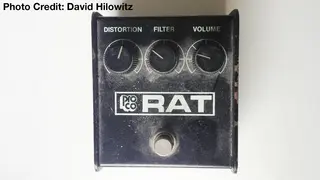
A painstakingly authentic recreation of the classic RAT circuit that captures both the sound and feel of the original LM308-equipped units.
Read more


A super-charged RAT that takes the LM308N chip to new places, packed with controls that let you shape your tone exactly how you want it.
Read more
WHITE Ikebe Kinnatone Mischief ™ Extra LM308n MODDED Proco Rat
A souped-up RAT made specifically for the Japanese market, taking the Mischief mod even further with premium parts and extra tweaks.
Read more
Nine legendary RAT circuits spanning four decades of tone, packed into a single, meticulously engineered pedal.*
Read more
If you've ever wondered how some of rock's most distinctive guitar tones were created, you might be surprised to learn that one of them comes down to a tiny electronic component that was never meant to make music at all in the first place. Inside countless pedalboards and recording studios, nestled within a black box called the ProCo RAT, sits a humble operational amplifier - the LM308. This small piece of silicon, originally designed for measuring equipment, would accidentally become one of the most revered components in music history, helping shape the sound of bands from Nirvana to Radiohead.
The Making of a Legend
The 1970s were a fascinating time for guitar gear. While most guitarists were familiar with the warm glow of tube amps and the classic fuzzes built with transistors, a new revolution was brewing in the electronics world. Companies had figured out how to pack entire circuits onto tiny chips called integrated circuits (ICs). Imagine taking all the individual electronic components inside a pedal and miniaturizing them onto something smaller than a fingernail - that's what an IC does.
These ICs were designed for things like calculators and industrial equipment. But innovative pedal builders saw an opportunity: these tiny chips could process guitar signals in new and interesting ways, while making pedals more reliable and affordable than ever before.
The Birth of the Op-Amp

At the heart of many of these chips was something called an operational amplifier, or "op-amp." Think of an op-amp as a tiny electronic butler for your guitar signal. Its main job is to take your guitar's weak electrical signal and make it stronger, but it can also shape and manipulate the sound in various ways. It's similar to how a tube preamp in your amplifier takes your guitar's signal and makes it powerful enough to hear, but op-amps do this job in a much smaller package.
Early guitar pedals were built using individual transistors - like the original Fuzz Face that Jimi Hendrix made famous. But op-amps could do the job of multiple transistors while adding their own unique character to the sound. The LM308 was a particular type of op-amp that, due to its unique characteristics, would end up shaping the sound of rock music for decades to come.
An Accidental Star: The ProCo RAT Development Story
The development of the RAT distortion can be traced back to the late 1970s at ProCo Sound in Kalamazoo, Michigan. Scott Burnham and Steve Kiraly were the key figures in the RAT's development, though the exact sequence of events that led to choosing the LM308 has been documented differently in various sources.
What we know with certainty is that the LM308's key specifications played a crucial role in shaping the RAT's sound:
Slow slew rate of 0.3V/μs: Think of a slew rate like the speed at which something can react to change. Imagine you're driving a car - some cars can go from 0 to 60 mph very quickly (like a sports car), while others take longer to reach that speed (like a heavy truck). The LM308's slew rate (0.3V/μs) is like having a "slower" car. When your guitar string vibrates, it creates rapid changes in electrical signal - like quickly pressing and releasing the gas pedal. Most op-amps of that time were like sports cars - they could respond to these quick changes almost instantly. But the LM308 was more like that heavy truck - it couldn't keep up with the fastest changes in your guitar signal. This is interesting because when you play a note on your guitar, that "slowness" actually does something pleasant to the sound. It's like how a truck's slower acceleration can feel smoother than a jerky sports car. The LM308 smooths out the harsh edges of your guitar signal because it can't react to them instantly. This creates a natural compression effect - imagine the chip saying "Hold on, I need a moment to catch up!" to the fastest parts of your playing. So what was technically a limitation - being "slower" than other chips - ended up creating a desirable effect that musicians loved: notes that bloom and swell slightly after you play them, rather than hitting you all at once. It's similar to how a vintage tube amp responds when you push it hard, which is part of why this "slow" chip ended up sounding so musical.
Its high open-loop gain of 200,000: The open-loop gain is analogous to a volume multiplier. The LM308 chip can make a signal 200,000 times stronger when running at full power - way more than it would ever actually need. This massive reserve of power means that when the chip is handling your guitar signal, it has plenty of "headroom" to work with, allowing it to amplify the sound smoothly and musically rather than struggling to keep up. It's like having a car with 500 horsepower - you'll never need all that power for a regular drive, but having it available means the car handles everyday tasks effortlessly.
Excellent DC precision with very low input offset voltage: A clean, quiet recording studio - that's what the LM308's precision delivers. The chip excels at rejecting unwanted electrical noise and interference, ensuring that when you're not playing, there's virtual silence, and when you are playing, only your pure guitar signal comes through.
The RAT's circuit implemented the LM308 in a specific way that took advantage of these characteristics. The chip was configured in a non-inverting gain stage with clipping diodes in the feedback path - a common approach for distortion pedals. However, the LM308's slow slew rate combined with this configuration created a natural compression effect that became part of the pedal's signature sound.
The original "large box" RAT went into production in 1979. ProCo priced it at $119.95, positioning it as a premium effect at a time when many distortion pedals sold for under $100. The pedal's success would prove this was the right decision - it found immediate acceptance among professional musicians who appreciated its versatility and studio-quality sound.
Early RAT pedals used the LM308N metal can version of the chip, though later units would switch to the plastic DIP-8 package LM308AN. Both versions maintained identical electrical specifications. This detail becomes important for modern collectors and builders trying to authenticate vintage units.
The Technical Implementation
The RAT's circuit design made specific use of the LM308's characteristics in several key ways:
The Filter Control System
The RAT's filter control is a seemingly simple component - a potentiometer (variable resistor) - but its implementation is far more sophisticated. As you turn the filter knob, this potentiometer works together with carefully chosen capacitor values to create what engineers call a single-pole low-pass filter. Imagine this filter as a gate that becomes increasingly selective about which frequencies can pass through as you turn the knob clockwise.
What makes this design particularly clever is how it interacts with the LM308's natural frequency response limitations. The chip naturally begins to roll off high frequencies due to its relatively slow response time. Rather than fighting this characteristic, ProCo's engineers embraced it. The filter control essentially "stacks" its filtering effect on top of the chip's natural behavior.
The Gain Architecture
The RAT's distortion control works through an elegantly simple yet effective mechanism. At its core, it varies a resistance value in the feedback loop around the LM308 chip. This resistance determines how much the chip amplifies the incoming guitar signal. As you turn up the distortion knob, you're asking the LM308 to amplify the signal more and more until it can't keep up - that's when the magic happens.
The result is a gain structure that remains musical even at extreme settings. Unlike many other distortion circuits that can become harsh or fizzy when pushed hard, the LM308-based circuit in the RAT maintains a certain smoothness and cohesion to the sound, even while delivering massive amounts of distortion. The natural compression of high frequencies helps prevent the sort of ice-pick treble that plagues many high-gain designs, while ensuring notes sustain richly.
These design choices weren't arbitrary - they were carefully tuned to work with the LM308's specific behavior. When ProCo later had to switch to different op-amps due to the LM308's discontinuation, they found that even chips with similar specifications couldn't perfectly replicate this behavior.
Understanding the Magic
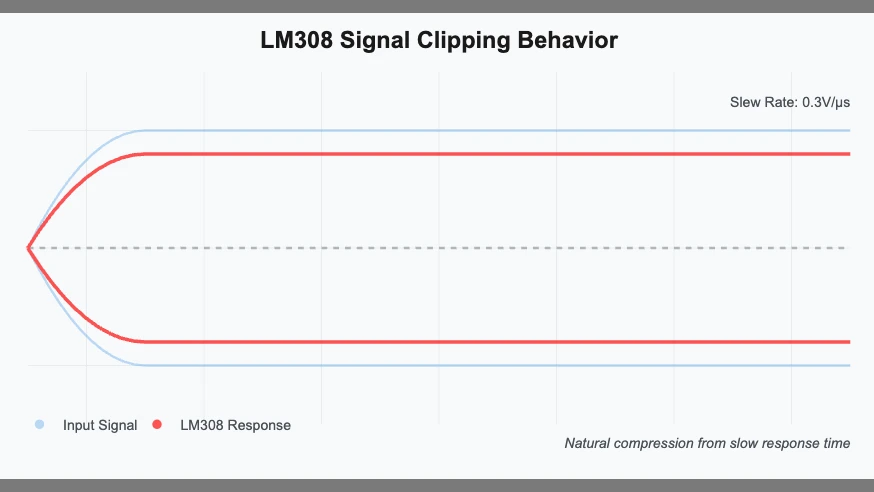
For guitarists, the real magic of the LM308 lies in how it shapes their sound. But to understand why this particular chip became so revered, we need to look at what happens to your guitar signal when it hits this circuit.
The Science of Sound
When you plug your guitar into any pedal, you're sending an electrical version of your string's vibrations through the circuit. Different components clip in different ways, which is why a Big Muff doesn't sound like a Tube Screamer, even though they're both distortion pedals.
The LM308's particular way of clipping adds specific harmonics to your sound. Think of harmonics like the difference between a poorly made acoustic guitar and a high-end one - they're both playing the same notes, but the pro-grade guitar has richer overtones that make it sound more complex and pleasing.
Standing Apart
The chip had another unique feature - an external "compensation" pin that affected how it handled different frequencies. This allowed pedal designers to fine-tune exactly how the distortion behaved, helping them dial in that sweet spot between aggressive attack and smooth sustain. It was like having an extra tone control that worked on a deeper level, shaping the character of the distortion itself rather than just filtering frequencies.
When ProCo used the LM308 in the RAT, they created a pedal that could deliver everything from light overdrive to full-on distortion while maintaining a musical quality that players loved. The result was a pedal that could sit perfectly in a mix, cutting through without being harsh, and sustaining without turning to mush - qualities that made it a studio favorite as well as a stage staple.
The LM308 Icons That Made History
While the ProCo RAT might be the most famous application of the LM308, several other legendary pieces of gear used this chip's unique characteristics. Each manufacturer used the LM308 in their own way, creating distinct sounds that would define various genres of music. Here's how different gear makers implemented this accidental audio star.
ProCo RAT (1978)

The RAT's journey began with ProCo's first distortion offering - the RAT Fuzz. This early pedal used a relatively conventional transistor-based circuit typical of the era. However, when gigging musicians began requesting modifications for more gain and better tonal control, these custom-modified units caught the attention of ProCo's engineering team.
This experimentation led to their groundbreaking implementation of the LM308. The production version used this chip in a way nobody had tried before, pushing it well beyond conventional design parameters. The result was a tight, focused distortion that could cut through any mix - a significant departure from the woolier, less controlled sound of the original RAT Fuzz.
BOSS HM-2 Heavy Metal (1983)

Before BOSS switched to different components in later productions, early versions of the HM-2 featured the LM308 in its circuit. Unlike most distortion pedals of the era that used simpler op-amps, BOSS's engineers chose the LM308 for its unique characteristics in high-gain applications. The pedal's production run from 1983 to 1991 can be divided into two distinct periods: the early LM308-equipped "Made in Japan" models (1983-1988) and the later Taiwan-produced units that used different op-amps (1988-1991).
The HM-2's implementation of the LM308 was radically different from the RAT. While the RAT used the chip in a classic non-inverting gain stage with diode clipping, the HM-2 employed a more complex circuit topology. BOSS engineers configured the LM308 in a multi-stage gain circuit with an active gyrator-based EQ network. This design pushed massive amounts of signal through specific frequency bands, particularly emphasizing the 1kHz and 6kHz ranges while simultaneously boosting the sub-100Hz frequencies.
The circuit's interaction with the LM308 created a distinctive type of clipping that, when combined with the pedal's innovative active EQ section, produced a wall of sound that became legendary in extreme metal circles. The EQ section was particularly noteworthy, featuring separate controls for two different frequency ranges: COLOR MIX I (100Hz and 1kHz) and COLOR MIX II (250Hz and 6kHz). When all these controls were maxed out - what would become known as the "Swedish setting" - the LM308's natural compression characteristics helped create a uniquely aggressive sound with massive low end and a chain-saw-like upper midrange bite.
This tone found its spiritual home in Stockholm, Sweden, where bands like Entombed, Dismember, and At The Gates made it their signature sound. The 1990 album "Left Hand Path" by Entombed particularly cemented this tone's place in metal history. Guitarist Leif Edling achieved the album's distinctive guitar sound by running multiple HM-2 pedals into already distorted Marshall amplifiers, pushing the LM308 chips to their absolute limits.
Later versions of the HM-2, particularly those manufactured in Taiwan without the LM308, never quite captured the same aggressive character that made the originals so sought after. This has led to the original Japanese HM-2s becoming highly prized collectors' items, often commanding prices several times higher than their original retail value.
The pedal's influence extends beyond just Swedish death metal. Modern boutique builders like Dunwich Amps, KMA Machines, and Lone Wolf Audio have created their own interpretations of the HM-2 circuit, often specifically trying to recreate the character of the LM308-equipped originals. These modern units frequently add additional features like expanded EQ controls or multiple clipping options while attempting to maintain the essential character that made the original HM-2 legendary.
DOD FX40B EQ (Early 1980s)

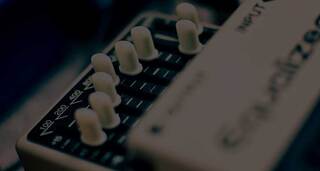
Perhaps the most unexpected use of the LM308 was in DOD's FX40B parametric equalizer. While not a distortion pedal, this EQ became legendary for its musical sound quality. The LM308's high accuracy and unique frequency response characteristics made it perfect for precise tonal shaping without destroying the fundamental character of the guitar signal.
The FX40B found its way onto countless professional pedalboards not just as an EQ, but as a tool for pushing amps into natural overdrive. Engineers and producers particularly loved how it could sculpt tone while maintaining the organic feel that other EQs often lost.
Early RAT Variants
Beyond the original RAT, ProCo themselves created several variants that employed the LM308. The Turbo RAT, introduced in the late 1980s, used the same chip but modified other parts of the circuit for a more modern, higher-gain sound. The You Dirty RAT variant took a different approach, aiming to capture more vintage-style tones while still utilizing the LM308's unique characteristics.
The Growing Scarcity of the LM308
As these pedals gained popularity throughout the 1980s, a looming supply crisis was developing behind the scenes. By the mid-1980s, newer, faster, and cheaper op-amps were entering the market. These chips offered better specifications on paper - lower noise, faster response times, and improved temperature stability. The company began gradually phasing out production, initially moving to cheaper plastic packaging (from the metal can LM308H to the plastic DIP-8 LM308N), before eventually discontinuing the chip entirely.
This created a complex situation for pedal manufacturers. Companies like ProCo and BOSS had built their flagship distortion pedals around the LM308's unique characteristics. The "superior" modern replacement chips, while technically more advanced, couldn't replicate the LM308's particular behavior that had become crucial to these pedals' signature sounds. This forced manufacturers to either stockpile remaining chips, modify their circuits to work with alternative components, or both.
The scarcity drove several market developments:
- Original LM308-equipped pedals began commanding premium prices on the used market
- Some boutique builders started hoarding new old stock (NOS) LM308 chips
- A cottage industry emerged around testing and authenticating vintage LM308 chips
- Pedal modifiers began offering services to retrofit newer pedals with authentic LM308s
- Various companies attempted to design modern equivalents that could replicate the LM308's behavior
Custom and Clone Builders
When the original LM308's scarcity began to bite, numerous boutique builders started creating their own interpretations of the RAT circuit. Many of these builders managed to source original LM308 chips specifically because musicians demanded that authentic component. This spawned an entire subgenre of boutique pedals that either modified the original RAT design or created new circuits around the LM308.
A Note About Historical Documentation
One of the fascinating aspects of the LM308's story is how its use in audio gear wasn't always well documented.
Tone Pioneers: How Artists Transformed the LM308

The true test of any piece of gear is in the hands of artists who push its boundaries. From 1979 onwards, musicians across various genres would discover the LM308's capabilities through different pedals, each finding their own voice within its silicon heart.
The Early Adopters (1979-1984)
The initial wave of LM308 users helped establish the chip's versatility across different circuit designs. While the RAT became Jeff Beck's weapon of choice for singing lead tones that cut through any mix, other artists were discovering the chip's potential in different contexts. Session guitarist Michael Landau used both the RAT and the DOD FX40B equalizer (with multiple LM308s) to sculpt his legendary studio tones, showing how the chip could excel in both distortion and precision filtering applications.
The Alternative Revolution (1985-1995)
The alternative rock revolution elevated LM308-based pedals from useful tools to cultural icons. Kurt Cobain's use of the RAT alongside his Mesa/Boogie preamp helped define the sound of grunge, while across the Atlantic, the early BOSS HM-2's distinctive sound was shaping a different revolution. Swedish death metal pioneers Entombed and Dismember used the LM308-equipped HM-2 to create what became known as the "Stockholm sound" - a distinctive tone that would influence extreme metal for decades.
The mid-1980s saw innovative applications across genres:
- Thurston Moore and Lee Ranaldo (Sonic Youth): Cascading multiple RATs for textural chaos
- Trent Reznor (Nine Inch Nails): Combining the RAT with synths for industrial textures
- Thomas Gabriel Fischer (Celtic Frost): Early adopter of the HM-2 in extreme metal
- Johnny Marr (The Smiths): Using the DOD FX40B's LM308-based EQ for his distinctive clean tones
Genre-Defining Tones (1986-1996)
The LM308's journey through different circuits created genre-defining moments. While James Hetfield was using the RAT to tighten Metallica's rhythm tone on "...And Justice for All," the early HM-2 was becoming a cornerstone of Swedish death metal:
- Leif Edling (Candlemass): Pioneered the "chainsaw" guitar tone with multiple HM-2s
- David Blomqvist (Dismember): Refined the HM-2 tone into a more articulate assault
- Anders Björler (At The Gates): Combined the HM-2 with precise technique for melodic death metal
- Billy Corgan (Smashing Pumpkins): Layered multiple RATs for the massive "Siamese Dream" sound
The Innovators (1990-Present)
As players became more familiar with different LM308 implementations, they began finding unconventional applications. Jonny Greenwood of Radiohead used both the RAT and various modded LM308 circuits on guitars and synthesizers. Robert Smith of The Cure demonstrated perhaps the most innovative approach, using the RAT's unique compression characteristics alongside chorus and delay to create atmospheric textures that would influence shoegaze and dream pop.
Modern Torchbearers
Today's artists continue exploring LM308-based circuits in new contexts. From Chelsea Wolfe's doom-laden soundscapes using vintage RATs to Nails' Todd Jones pushing modern HM-2 clones to their limits, the chip's influence spans multiple generations and subgenres. Even as original LM308 pedals become increasingly rare, modern players combine these vintage circuits with contemporary effects and recording techniques, proving that even after four decades, there are still new sounds to be discovered within this legendary chip's architecture.
The Studio Innovators
A parallel revolution was happening in recording studios, where engineers discovered that different LM308-based devices could interact in unique ways:
- Steve Albini: Combining RAT distortion with the DOD FX40B for drum processing
- Butch Vig: Using multiple RATs at different gain stages during the recording of "Nevermind"
- Bob Rock: Integrating the HM-2 into complex guitar chains for Metallica's "Black Album"
The Modern Market: Vintage Holy Grails & Modern Alternatives

The story of the LM308's scarcity has created one of the most fascinating narratives in guitar gear history. What began as three distinct pedals - the ProCo RAT, BOSS HM-2, and DOD FX40B - has evolved into something approaching vintage guitar folklore, complete with holy grails, hidden gems, and the occasional counterfeit controversy.
The RAT Race
The RAT's evolution tells perhaps the most dramatic story. Those early "big box" models, particularly the white-face versions, have become the stuff of legend. It's not just about having an LM308 chip inside - players chase these early units for their specific combination of components that created a perfect storm of tone. Studios often keep these vintage units under lock and key, treating them with the same reverence as a vintage Neumann microphone or Pultec equalizer.
The HM-2's Second Life
The BOSS HM-2's tale is equally compelling, though for different reasons. Those early "Made in Japan" black label versions have transcended their original purpose to become cornerstone pieces of music history. When a Swedish death metal band needs that authentic chainsaw guitar tone, nothing else quite cuts it. The pedal's rise from a relatively affordable mass-produced effect to a sought-after collector's piece mirrors the evolution of extreme metal itself.
The Sleeper Hit: DOD FX40B
Then there's the unexpected star - the DOD FX40B equalizer. While less famous than its distortion-dealing siblings, this precision tool found its way into countless professional studios. The grey box versions, with their multiple LM308 chips, offered a particular precision and musical quality that modern equivalents still struggle to replicate. Engineers who know what to listen for can spot these units' distinctive fingerprint on recordings from the early '80s through the '90s.
Modern Solutions and Market Response
The modern market's response to this scarcity has spawned its own fascinating developments. Some boutique builders treat their stockpile of original LM308 chips like a wine cellar, releasing small batches of pedals that combine vintage soul with modern reliability. Others have taken a more innovative approach, studying what made these circuits special and finding new ways to capture that magic.
The Community of Seekers
Perhaps most interesting is how this scarcity has created a community of seekers - players, collectors, and builders who share a passion for these specific tones. They trade stories about legendary units, debate the merits of different production eras, and collectively preserve the knowledge of what made these pedals special. In doing so, they're ensuring that the LM308's legacy lives on, whether through carefully preserved originals or thoughtfully designed modern interpretations.
The Journey Continues
For those looking to capture a piece of this history, the journey is as rewarding as the destination. Whether it's finding an original RAT that still has that perfect bloom to its distortion, an HM-2 that delivers that unmistakable Swedish tone, or an FX40B that makes everything running through it sound more musical, these pieces of silicon history continue to inspire and delight players decades after their creation.
Modern Clones: Capturing the Classic Tone
The quest to replicate the LM308 sound has produced some remarkable successes. Several modern pedal builders have managed to capture the essence of the original circuit through different approaches, each offering their own take on this legendary tone.
Pro Co Rat 2 (Kinnatone Mischief 3x3 Mod LM308)
The Nine-Faced RAT




The Mischief mod turns your standard RAT 2 into a tone-shaping powerhouse. The original LM308 chip still drives everything, giving you that famous slow response that makes notes bloom and sing. But now you get nine different ways to shape that sound, thanks to two clever switch systems that work together.
Each switch brings something different to the table. The input switch changes how your guitar hits the circuit - position one is pure RAT, position two adds punch in the mids where guitars need to cut through, and position three opens everything up for a bigger, fuller sound. The clipping switch then changes how the distortion behaves - you can choose between the tight original sound, a more open and dynamic feel, or a louder, more aggressive attack.
Mix and match these options, and you'll find tones for any style. Want classic rock? Use the standard input with silicon clipping for that vintage bite. Need modern metal? Switch to the third input position with LED clipping for tight, clear distortion that handles low tunings perfectly. Playing blues? The second position with asymmetrical clipping gives you rich, touch-sensitive drive that cleans up beautifully when you roll back your volume.
The real magic happens with your picking dynamics. Hit the strings hard, and the LM308 compresses in that special way that made the original RAT famous. Play softly, and you'll hear details that most distortion pedals miss. Palm muting stays tight and defined, while open chords ring out with all their notes clear and present.
Getting great sounds is simple, but you can dive deep if you want to. Each combination has its own character, from smooth overdrive to face-melting distortion. The input options help you match the pedal to different guitars - bright single coils, thick humbuckers, or anything in between. And unlike many modified RATs, this one never loses that essential "RAT-ness" that players love.
The build quality is rock-solid. Heavy-duty switches, quality jacks, and careful wiring mean this pedal will handle years of stomping. The true bypass switching keeps your signal clean when the pedal's off, and the whole thing plays nice with other pedals in your chain.

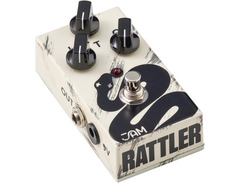
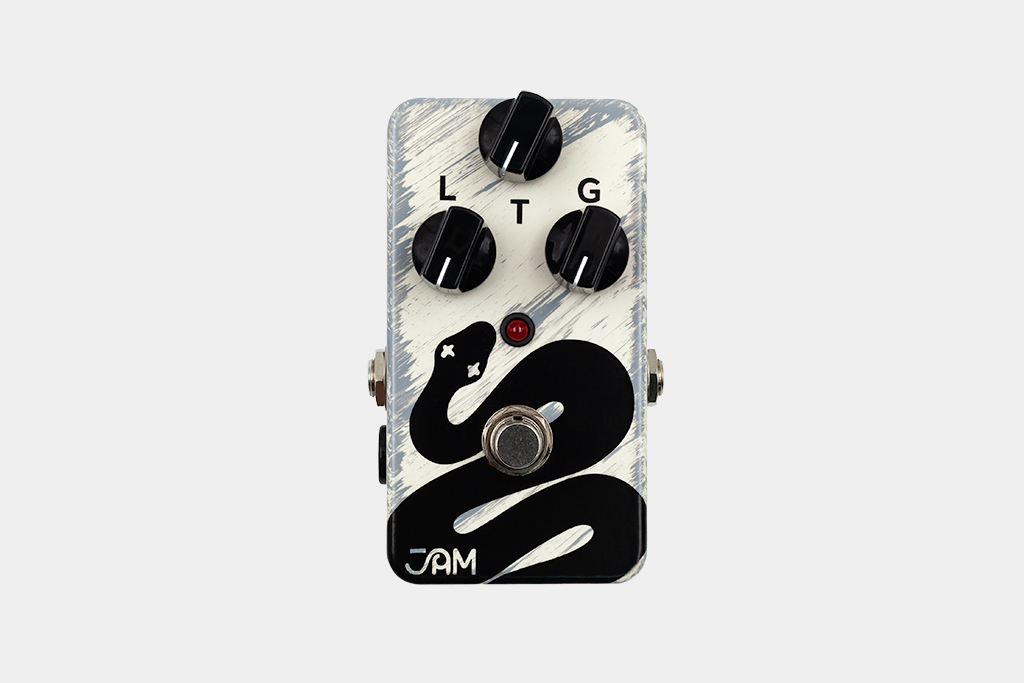
JAM Pedals Rattler
5.0 (5)
The Purist's Choice



- Delivers open, gritty, fuzzy, loud distortion without excessive noise
- Modern hardware with classic "Rat" sound for enthusiasts
- Versatile: smooth overdrive to intense distortion, suitable for both bass and guitar
- Superior tone sculpting through tube amps, cuts through mixes well
- See 5 more
- Might not reach the fizzy extreme some desire from a RAT pedal
- Lacks additional features like fatrat, turbo mode, or high gain switch
- Boutique price point may be a con for budget-conscious musicians
| Bypass | true bypass |
| Analog/Digital | analog |
| Power | 9V |
The Rattler V2 stands among the most faithful recreations of the original RAT's architecture. Rather than reimagining or modernizing the circuit, JAM Pedals focused on capturing the exact behavior that made the original legendary. Early production runs featured genuine LM308 chips, while current units employ a proprietary op-amp developed through extensive analysis of original components.
The input stage demonstrates exceptional attention to detail. Rather than simply matching component values, JAM analyzed how the original circuit's impedance characteristics affected different pickup types. The result is a pedal that responds authentically to everything from vintage single coils to modern high-output humbuckers. This careful engineering preserves the natural dynamics of your instrument before the signal hits the gain stage.
That signature LM308 compression shapes every aspect of the pedal's voice. At lower gain settings, subtle harmonics bloom gradually as notes decay. Push the gain past noon, and power chords develop a three-dimensional thickness that fills sonic space without becoming muddy. The careful gain staging maintains note separation even with complex voicings - extended jazz chords retain their character while acquired newfound sustain and grit.
The filtering network represents months of careful component selection. The treble response rolls off in a precisely calibrated curve that tames harsh frequencies without sacrificing presence. A carefully tuned midrange peak around 1kHz provides that essential "bark" that helps solos cut through dense mixes. The bass response remains tight and focused, preventing the low-end buildup that often plagues high-gain settings.
Modern refinements address practical limitations of the original design. An internal voltage doubler provides consistent headroom regardless of power supply, ensuring that the clipping characteristics remain musical even at extreme settings. The true-bypass switching implementation includes a brief fade-out when disengaging, preventing the abrupt cutoff that plagued vintage units.
The output buffer deserves special mention. Through careful component selection and board layout, it provides the necessary impedance matching for long cable runs without coloring the fundamental tone. This seemingly simple addition proves crucial in real-world applications, especially when driving long pedal chains or studio recording equipment.
Temperature stability receives particular attention. Premium metal film resistors and polypropylene capacitors ensure consistent performance across a wide range of environmental conditions. The PCB layout minimizes thermal coupling between components, preventing the drift that often affected vintage units during long performances.
Every aspect of the circuit path has been optimized. The gain pot's taper provides usable control throughout its range rather than concentrating all the action in the last few degrees of rotation. The tone control's response curve has been carefully calculated to maintain musical qualities at every setting. Even the choice of clipping diodes reflects countless hours of listening tests to match the asymmetrical characteristics of well-aged vintage components.
This isn't mere cloning - it's a masterclass in preserving analog magic while addressing real-world reliability concerns. The Rattler V2 demonstrates how thoughtful engineering can honor tradition while quietly solving the practical limitations that plagued the original design.
See how artists use this

.jpg)


.jpg)




VFE Pedals Alpha Dog
5.0 (2)
A RAT With A PhD

- Knobs instead of switches enhance tweakability
- Operates well at 18v for more headroom and less compression
- Fat knob effectively adjusts low bass tones
- Versatile in producing various dynamics and tones (from Van Halen to Rory Gallagher)
- See 4 more
- Rarity may make it hard to find
- May be daunting for players averse to many controls
VFE's take on the RAT circuit goes way beyond the basics. The LM308N chip is still the heart of the pedal, but they've surrounded it with controls that let you tweak every aspect of your sound. This isn't just another RAT clone - it's more like a professional sound-shaping tool.
The clipping section is like having three pedals in one. Regular silicon diodes give you that classic RAT bite. Switch to MOSFET mode, and your sound gets bigger and more open, perfect for complex chords. The germanium setting adds a different kind of dirt that responds incredibly well to how hard you play. Through all these changes, the LM308N's natural compression keeps everything sounding musical.
Before your signal even hits the LM308N, you've got switches that shape your tone. Six different frequency filters let you target specific parts of your sound. Want more low-end chunk? Click a switch. Need to cut through a mix? There's a switch for that too. These aren't just EQ changes - they affect how the distortion behaves, giving you tons of control over your sound.
The three-band EQ section is incredibly powerful. Bass control handles your low-end foundation, centered right where guitars need it. The mid control lets you sweep through the frequencies that define your tone's character. Treble adjusts the top end without getting harsh. There's even a presence control that adds life to your sound without making it piercing.
What sets this pedal apart is how it handles gain. Instead of just piling on more distortion, the Alpha Dog splits your signal into parallel paths, each with its own filtering. This means you can crank the gain without turning your sound to mush. Jazz chords stay clear even with tons of distortion. Single notes sing forever without getting thin or fizzy.
They've even thought about how this pedal works with your other gear. A special filter before the output keeps the low end from getting boomy when you're using other pedals. The controls are precise and stay right where you put them. It's built like a tank, with quality parts that'll last for years.
WHITE Ikebe Kinnatone Mischief ™ Extra LM308n MODDED Proco Rat
Japanese Hot Rod Rat

The WHITE Ikebe version takes everything great about the Mischief mod and kicks it up another notch. They've chosen a special LM308n chip and surrounded it with hand-picked components to create something truly unique. Every part inside has been selected for maximum sound quality - from the fancy resistors that reduce noise to the premium capacitors that keep your tone consistent no matter how long you play.
The input section has been completely reworkked to play nice with any guitar you plug in. Single coils sound full and rich, without any of the thinness that sometimes plagues RAT-style pedals. Humbuckers maintain clarity even with high gain, delivering thick distortion that doesn't turn to mud. The filtering options go beyond the standard Mischief mod, letting you shape your tone before it hits the distortion circuit.
Each clipping option has been fine-tuned for maximum impact. The stock setting nails that classic RAT sound, but with extra clarity thanks to premium components. Flip the switch to mode two, and you get a fatter sound with more mids - perfect for solos that need to cut through. The third mode opens everything up for a louder, clearer sound that works great with already-cranked amps.
The tone control has been carefully tweaked to be more usable across its whole range. Turn it down for thick, warm rhythm tones that still maintain note definition. Crank it up for cutting lead sounds that never get harsh or ice-picky. The distortion control is smooth and responsive - you can find great sounds everywhere, not just at certain sweet spots.
What makes this version special is how it builds on the Mischief mod's foundation. The basic switching matrix is there, but everything around it has been upgraded. The power filtering section keeps your sound clean and noise-free. The output buffer lets you use long cable runs without losing high end. Even the jacks are premium grade, ensuring solid connections gig after gig.
This isn't just another modified RAT - it's a premium take on an already great circuit. It nails every sound the original Mischief mod could make, but with better parts, less noise, and more consistent performance. Whether you're playing small clubs or big stages, this pedal delivers professional-grade tone that stays rock-solid reliable.
JHS Packrat
5.0 (2)
Nine Lives of the RAT (No LM308 Though)


Average Price: $226
High-end/Boutique
$80
$181+
Budget
Standard
High-end
- Eliminates need for chaining multiple drive/distortion pedals
- Offers a wide range of sound options and huge flexibility
- Features multiple RAT circuit voicings for varied tones
- Compatible and enhances other pedal setups (e.g., with Keeley Dark Side, Catalinbread Echorec)
- See 5 more
- Higher price point compared to some other pedals
| Bypass | true bypass |
| Analog/Digital | analog |
| Power | 9V |
| Effects | distortion, fuzz, overdrive |
| Current Draw | 100ma max |
The PackRat stands as JHS's most ambitious dive into RAT history. While it doesn't use the actual LM308 chip, years of careful research and advanced DSP programming have created something remarkable - a pedal that captures how RATs evolved across four decades. Each of its nine modes represents a different chapter in the RAT story.
The 'Bud' mode shows just how far digital modeling has come. It nails that famous White Face RAT feel - the way notes bloom and breathe, the natural compression that kicks in when you dig in, the rich harmonics that develop as notes sustain. Even hardcore analog fans might have trouble telling it apart from the real thing. Every quirk and characteristic of the original circuit has been carefully coded in.
Move through the modes, and you're essentially traveling through time. The 'OG' setting takes you back to 1979, capturing that huge, raw sound of the first big-box RATs. Flip to 'LA' mode, and you're getting that hot-rodded tone that ruled the Sunset Strip. Each mode feels and responds like a different pedal, down to how the controls interact and how it cleans up when you roll back your guitar's volume.
The standard controls - Distortion, Filter, and Volume - work just like they did on the originals, but their behavior changes with each mode. Want that thick, singing sustain of an early 80s RAT? Dial up 'Bud' mode with the filter around noon. Need more modern clarity? The 'Turbo' mode delivers tighter bass and smoother highs. The 'Dirty' mode nails that specialized germanium sound without the temperamental nature of vintage components.
What makes this pedal special is how it preserves the feel of each era. It's not just about matching tone - it's about capturing how each version of the RAT responded to your playing. Hit a power chord hard, and you get that signature compression. Play softly, and the pedal opens up. Every mode maintains this organic response, making the digital technology transparent to the player.
Modern appointments make this more practical than a vintage unit. The switching is silent, the power supply requirements are simple, and you don't have to baby it like you would an original. But when you're playing, none of that matters - you're just experiencing different flavors of RAT, each one authentic to its era.
For players who want to explore the complete RAT legacy without hunting down rare vintage pieces, the PackRat delivers. It proves that with enough care and attention to detail, digital modeling can capture the soul of analog classics. No, it's not using the real LM308 chip - but close your eyes and play, and you might forget that detail entirely.
See how artists use this






Beyond Distortion: The LM308's Hidden Legacy

While the LM308 is most famous for its role in guitar distortion and the ocassional Parametric EQ applications, its unique characteristics meant that it found its way into numerous other audio applications, each taking advantage of the chip's distinctive properties in creative ways.
Studio Applications
Professional Recording Preamps
In recording studios, the LM308 found an unexpected home in microphone preamps where its excellent DC precision made it ideal for the initial amplification stage. The chip's natural compression characteristics helped tame harsh transients when recording drums and vocals, similar to how expensive tube preamps behave. The UREI 1176 early revision microphone preamps incorporated the LM308, contributing to their sought-after sound.
Dynamic Processing
Compressor/Limiter Designs
Several notable compressor designs employed the LM308 in their detector circuits. The chip's natural limitations created what engineers call "program-dependent" response times - the compressor would react differently to different types of input signals, much like high-end analog compressors. This behavior helped create more natural-sounding compression compared to faster, more clinical-sounding chips.
Peak Limiters
In broadcast audio equipment, the LM308's slew rate limitations proved surprisingly beneficial for peak limiting. Its inability to track the fastest transients created a natural "look-ahead" limiting effect, helping protect transmission equipment from overload while maintaining a musical sound quality.
Synthesis and Electronic Music
Synthesizer Filter Design
Early polyphonic synthesizers often used the LM308 in their filter circuits. The chip's high open-loop gain allowed for very sharp filter resonance, while its slower response created subtle distortion characteristics that added warmth to the sound. The chip appeared in several Japanese synthesizers of the late 1970s, contributing to their distinctive character.
Envelope Followers
The LM308's precision and consistent behavior made it excellent for envelope follower circuits, which track a signal's amplitude to create control voltages. These circuits became crucial in early electronic music, allowing musicians to create dynamic, responsive sounds that would influence genres from funk to electronic dance music.
Test and Measurement Applications
Ironically, the LM308's original intended purpose - precision measurement - still proved valuable in audio applications. Recording studios used LM308-based circuits for:
- PPM (Peak Program Meters) where its precision enhanced metering accuracy
- Spectrum analyzers where its DC stability improved low-frequency analysis
- Phase alignment tools where its consistent behavior provided reliable measurements
Industrial Audio
The chip also found applications in:
- Public address systems where its compression characteristics helped prevent feedback
- Broadcast automation equipment where its reliability was crucial
- Professional audio distribution systems where its low offset voltage improved signal quality over long cable runs
Some Good News

While the discontinuation of the LM308 created a mystique around vintage pedals using this chip, the reality is more encouraging than many realize. You do not have to spend a ton to experience the unique characteristics of the LM308. The OP07, another operational amplifier that's currently in production, serves as a like-for-like replacement for the LM308, sharing many of its crucial characteristics. This includes the highly sought-after slow slew rate and high open-loop gain that made the LM308 famous.
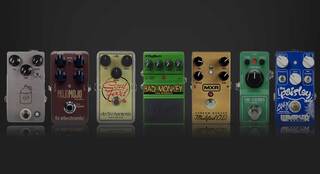
Several current production pedals successfully employ the OP07 to achieve that coveted vintage sound such as:
What's particularly important to understand is that the "magic" of classic pedals like the original RAT or HM-2 wasn't solely due to the LM308. While this chip played a huge role, the overall circuit design, including the choice of clipping diodes, filtering components, and power supply configuration, all contributed to the final sound. Modern pedal designers have developed deep understanding of these interactions, allowing them to create incredible sounds with either chip.
For example, the JHS PackRat, which recreates various RAT variants in a single pedal, demonstrates how careful circuit design can capture the essence of different eras, regardless of which op-amp is used. The Black Mass 1312 has earned praise for nailing the classic RAT character while adding modern flexibility, all with the OP07 at its heart.
Rather than chasing the mythical "perfect" vintage tone that may or may not have existed, it would be better to focus on getting to know the pedal you actually have intimately, whether it uses an LM308, OP07, or any other op-amp. Experiment with different settings, try it with different guitars and amps, and most importantly, use your ears rather than your eyes when dialing in your sound. The best tone isn't the one that uses the "right" chip - it's the one that inspires you to play and fits your music.
A Legacy That Lives On
The LM308's journey from precision measurement chip to legendary audio component perfectly illustrates how musical innovation often emerges from unexpected places. Its unique limitations transformed what engineers saw as flaws into qualities that musicians would treasure. That perfect blend of aggression and musicality proved impossible to replicate through conventional means, creating a legacy that continues to influence pedal design today.
While there are plenty of modern interpretations, from faithful recreations to innovative reimaginings, the original chip's accidental and unprecedented journey into audio electronics sparked a revolution in pedal design that continues to inspire innovation even today. This unlikely hero, originally meant for measurement equipment, showed designers that sometimes the most musical solutions come from thinking outside conventional audio design.
About the authors

S. Jino is an accomplished multi-instrumentalist and music producer based in Kolkata, India, distinguished by his self-taught mastery and unique blend of technical acumen and musical performance. His extensive experience was forged through hands-on dedication, starting with the full restoration of a broken guitar. Jino's capabilities span keyboards, pedals, and advanced digital production, reflecting a comprehensive skill set developed independently. As a significant contributor to the music scene, Jino regularly performs with worship bands and college ensembles. He has also established himself as a reliable and authoritative professional in freelance mixing, mastering, and original music creation. Inspired by the innovative sounds of Brian May and David Gilmour, and influenced by Kolkata's vibrant metal community, Jino is committed to the intricate art of vintage gear restoration and the continuous exploration of music and technology fusion. His current professional setup, featuring a meticulously restored nameless guitar, a Fender Player Strat, and a Boss Katana 50. Read more






.webp)