.jpg)


By Gear Experts
Table of Contents

Equipboard
Equipboard is the world's largest community of artists and their gear. Read our review process.
We are reader-supported. When you buy through links on our site, we may earn an affiliate commission. Learn more.
Our Picks

Electro-Harmonix Nano Big Muff Pi
Comes in at well under $100 and is one of the quintessential fuzz pedals. It works well for most genres, and is a great first fuzz or a lifetime keeper.
Read more


-l.webp?v=1784559889)
Based on a Green Russian Big Muff, but far from a mere clone - the Shift knob drastically affects the mids. Boutique, hand-made in the USA, and recommended by Dan Auerbach.
Read more

A fuzz unlike any other, capable of normal fuzz tones all the way to madness & noise. Less intuitive to use than other fuzz pedals, but once you learn it it might quickly become your favorite.
Read more
After the somewhat steep learning curve of the knobs, you'll be dialing in amazing fuzz tones with this boutique pedal.
Read more

Huge low-end & Pulse Width control are some of the unique features of this extremely versatile boutique silicon-based fuzz.
Read more

Based on the Big Muff, but really a different animal. Huge low-end & super versatile with tons of tone shaping options.
Read more
Delivers a 5 star fuzz tone with only one giant knob to control it (and your guitar's volume knob).
Read more
Emulates a Fuzz Face pushing an Marshall stack. BIG/TIGHT toggle makes this a perfect fuzz for those more comfortable in the distortion world.
Read more
Killer fuzz tone with gorgeous artwork, bass cut toggle, and 3 different voicings that take you from Big Muff to RAT/distortion territory.
Read more-l.webp?v=1784586901)
Larger than life fuzz pedal produces a bass-heavy wall of fuzz yet still somehow remains clear and articulate.
Read more
Based on a Big Muff with more pronounced mids. Great way to get Big Muff style fuzz on your pedalboard on a budget.
Read more
Sister pedal to the Honey Pot, based on a Silicon transistor Fuzz Face. Very wallet-friendly way to get that tone on your board.
Read more-l.webp?v=1784586322)
Some annoyances aside (bulky & only battery power), JDF2 Fuzz Face delivers an unmatched warm, creamy, 60s Hendrix Germanium-powered fuzz tone.
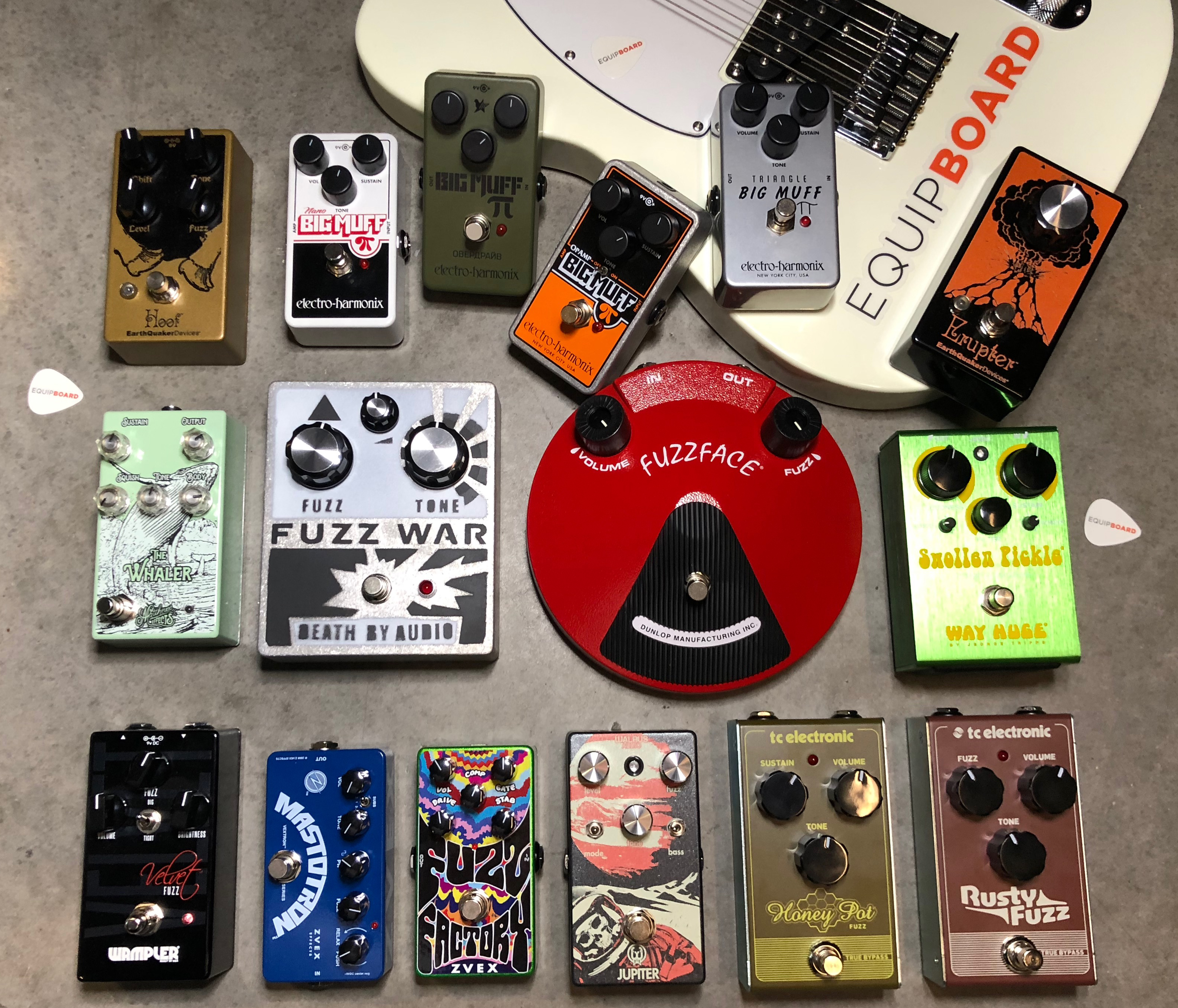
Read moreFrom Jimi Hendrix to Jack White, if you want that larger than life untamed sound you need a fuzz pedal. There’s no effect more luscious, gritty, and most importantly cool, than a good fuzz.
The only downside is, how do you choose a top fuzz pedal? There are hundreds of models from dozens of manufacturers.
In this guide we’ve gathered all the information you need to make an informed decision on which fuzz pedal is going to suit your needs the best.
A Little History - Where Did Fuzz Come From?
It's not always necessary to know the history of an effect before jumping in and using it, but in the case of fuzz, the history is fascinating.
It starts in 1961, when Marty Robbins recorded his track "Don't Worry" with a faulty preamp in producer Glenn Snoddy's console. They decided to keep the faulty recording, and here's how it sounded. It's a far cry from today's fuzz tones of Jack White or Muse, but this truly was the genesis of the effect.
Asked to recreate it as a standalone effect, together with Gibson Snoddy created the Maestro Fuzz Tone FZ-1. Way before YouTube was a thing, in 1962 Gibson released this video to market the Maestro Fuzz Tone, comparing the sounds it made from bass and electric guitar to those of a sousaphone or cello.
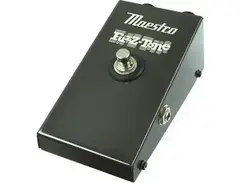
In 1965 Keith Richards put the Fuzz Tone on the map in a big way by using it to record the riff of the Stones' hit "Satisfaction".
From that point onwards, manufacturers went on to copy the relatively simple circuit of the Gibson Maestro Fuzz Tone, ending up with iconic fuzz units of their own:
- The Sola Sound Tone Bender MKI was based on the Fuzz Tone.
- The Arbiter Fuzz Face is a clone of the Tone Bender MK1.5, and was made famous by Jimi Hendrix's use of it. It continues to be a popular fuzz pedal today in the form of the Dunlop Fuzz Face.
- Mike Matthews founded Electro-Harmonix in 1968. Some of EHX's first offerings were fuzz pedals, including the first version of the Big Muff Pi which continues to be one of the most used fuzz pedals the world over.
What Exactly Is Fuzz? Overdrive vs. Distortion vs. Fuzz
In practical terms:
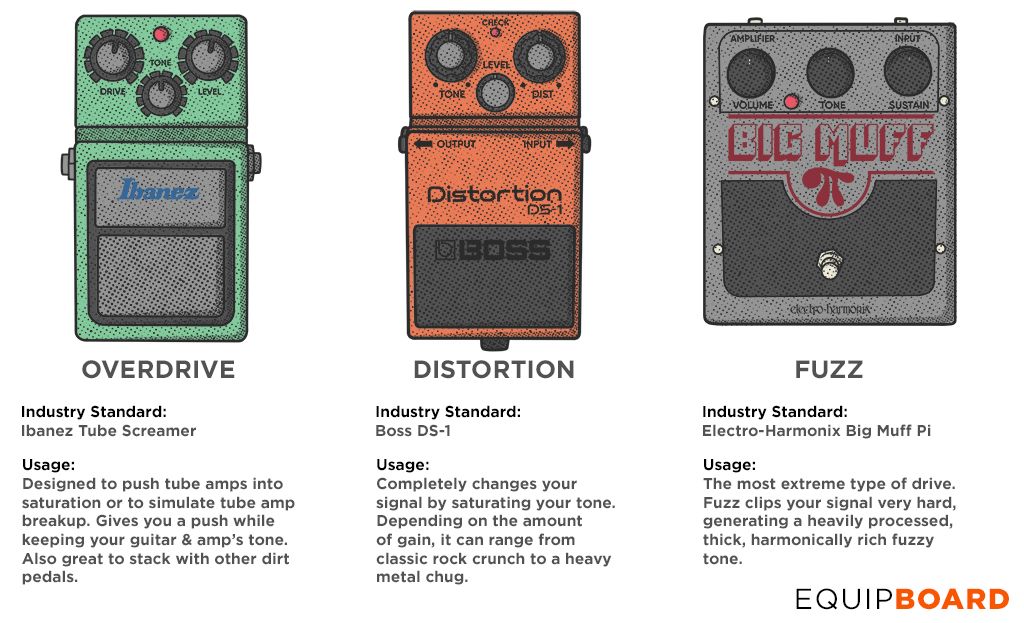
Overdrive, distortion and fuzz are all part of the "drive" pedal family. You can think of overdrive and distortion as two sides of the same coin; many pedals marketed as overdrive are able to cross over into distortion, and likewise many distortion pedals can be dialed back to more subtle overdrive.
Fuzz is a different beast altogether. The effect is achieved by clipping the signal extremely hard, also called square wave clipping. The sound of fuzz is raunchy and untamed. It's often described as a "velcro" sound, or "bumble bees," or "fuzzy" as the name itself implies.
What's great about fuzz is that it's very non-genre specific, meaning players of all types - and both electric and bass guitar - will enjoy it in their pedal arsenal. It's associated with Jimi Hendrix, Carlos Santana, Billy Corgan of The Smashing Pumpkins, 90s grunge, stoner rock, blues rock, punk, indi art rock... you name it.
Types of Fuzz Pedals
In technical terms:
With fuzz pedals being a pretty simple circuit, the main differentiation between different fuzz sounds comes down to what transistors are used - germanium vs. silicon.
Without getting too much into chemistry, both germanium and silicon are semiconducting materials and are found on the same row of the periodic table (meaning they have similar chemical behaviors).

Germanium transistors: Originally used in fuzz pedals like the Fuzz Face, and as such today we call them more "vintage-voiced." They produce a warmer, creamier, more mid-range-y tone. Germanium can be finicky as the tone changes depending on the ambient temperature.
In time, it was discovered that silicon could be used in place of germanium for 1) cost savings and 2) less variation between the quality of units (not to mention it solved the temperature issue).
Silicon transistors: Used in fuzz pedals like the Electro-Harmonix Big Muff Pi, and known as more "modern-voiced." They sound a little brighter (or harsher if you will), and offer a more compressed tone.
What to Look for in a Fuzz Pedal
Fuzz is a finicky effect. As you're reading reviews, watching demo videos, or testing them out for yourself, here are some things to consider when shopping for your fuzz pedal:
» Germanium vs. Silicon Transistors
As we discussed above, the transistor used greatly influences the character of the fuzz. Do you prefer more vintage (germanium) or more modern (silicon)? Manufacturers like ZVEX for instance make both - their Mastotron fuzz is silicon powered, and Fuzz Factory uses germanium.
» Lead vs. Rhythm Playing
A fuzz box can make take your lead playing to new levels of hugeness, but some fuzz pedals are ill-equipped for chords. In all honesty some fuzz pedals lose all articulation and sound like trash when you max them out and attempt to play more than one note at once.
» Dial It In
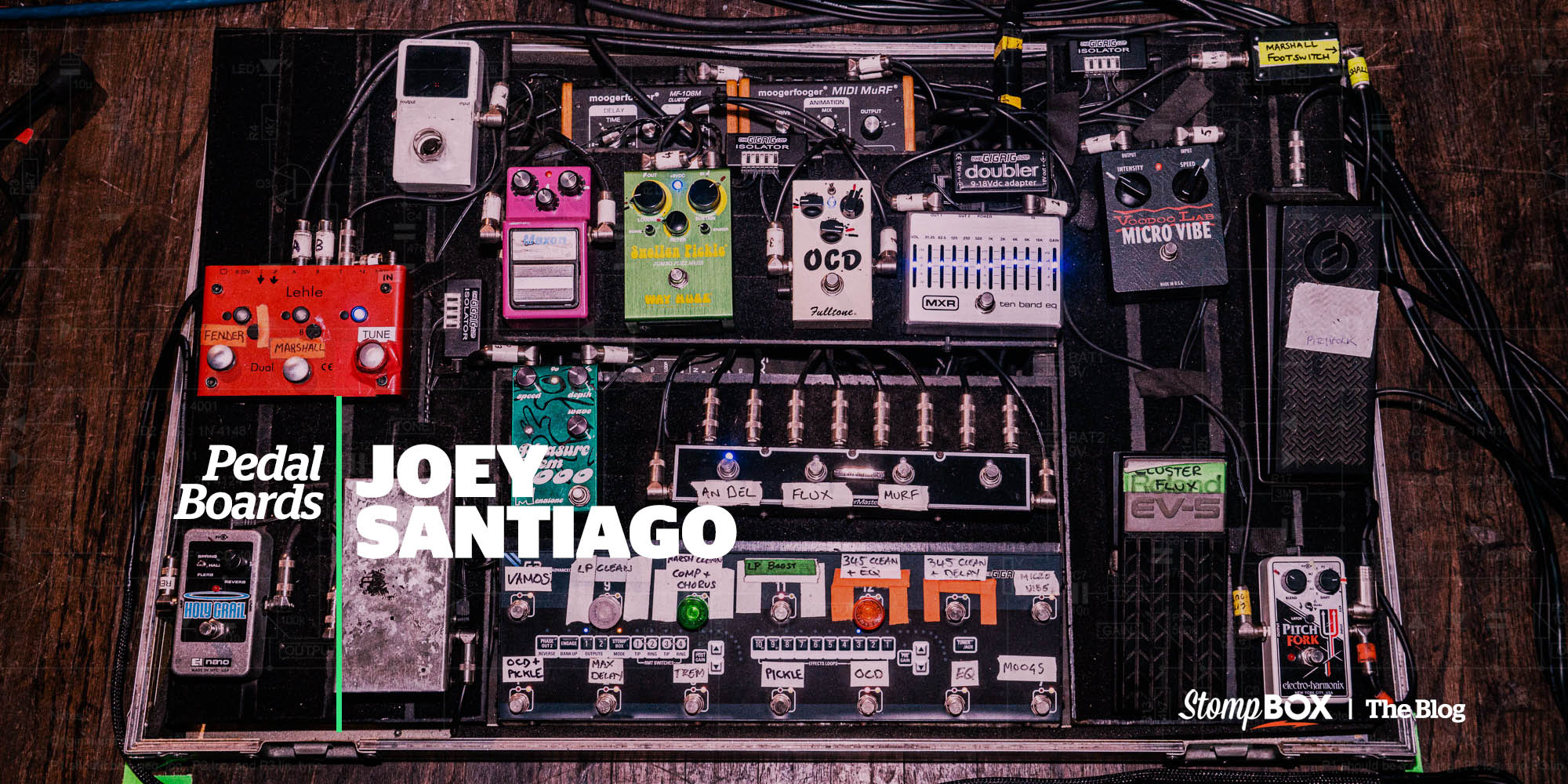
Really this is good advice for any type of pedal, but don't base a fuzz pedal's tone on what it sounds like maxed out to 11, since that result can be plain bad. Most fuzz pedals shine somewhere in between. Also related, how many tone-shaping options do you want? To give some examples, the classic Big Muff has 3 knobs, the Way Huge Swollen Pickle has a whopping 7, and the EarthQuaker Erupter has only one.
» True Bypass, Durability, Price, Etc.
The usual suspects. Make sure the fuzz pedal you choose can withstand whatever you put it through, and look for nice features like true bypass, and a pedalboard-friendly enclosure. Fuzz is such a unique effect that pedal manufacturers have a lot of fun with the name and graphics adorning their pedals. It's always important that the gear speaks to you! And finally, as you can see in our list, you don't have to break the bank to own a great fuzz.
How We Tested Fuzz Pedals
With any sort of drive pedal, the signal chain can greatly affect the tone. That's particularly true with fuzz, since it's an effect that can get a bit... unruly. The neck pickup of a Les Paul can make a fuzz tone coming out of the Big Muff unusable, while the bridge pickup of a Strat can make it sing.
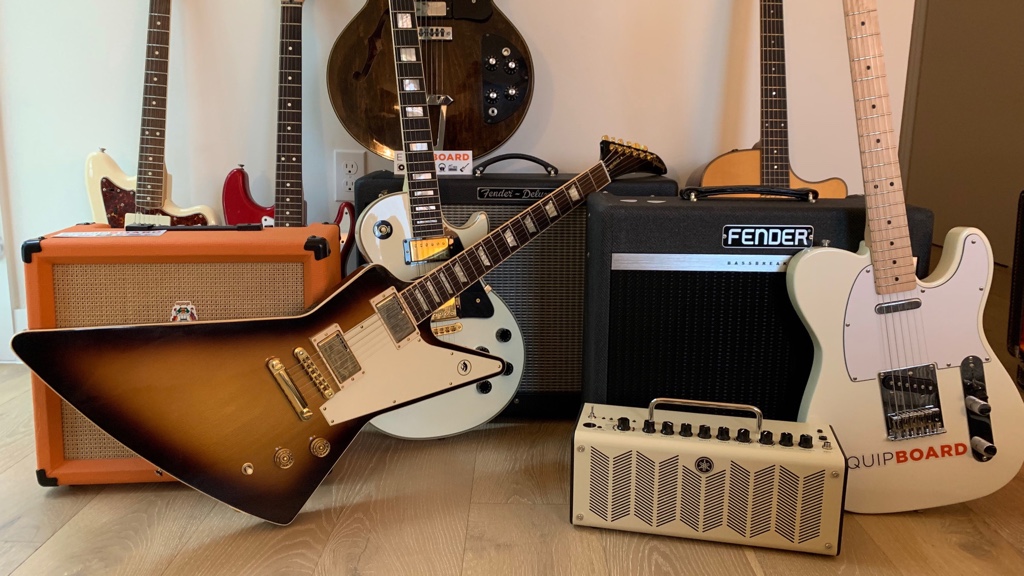
We tested our best fuzz pedal shootout with most of the guitars and amps available to us - from headphones to tubes, from single coils to humbuckers. When we talk about the tone each of these great fuzz pedals produces, we mostly refer to the pedal as it sounds running into a clean amp. Is that always the best way to use a fuzz? Certainly not. But for the purpose of keeping things on a level playing field and not introducing too many variables and permutations, we think guitar > fuzz > clean channel of amp is the best way to go about it.
You can read more about our review guidelines and testing rig here.
Electro-Harmonix Nano Big Muff Pi
4.5 (175)
Legendary mid-scooped fuzz tone with an affordable price tag.








Average Price: $80
Standard/Professional
$60
$181+
Budget
Standard
High-end
- Compact size saves pedalboard space
- Authentic Big Muff fuzz tones, comparable to the original
- Works well with both humbucker and single-coil pickups
- Excellent sustain capabilities
- See 6 more
- Noticeable low end hum difficult to dial out in mixes
- Lacks headroom when stacking with other pedals
- Can overpower effects earlier in the signal chain
- Sound may be too overwhelming for some uses
- See 4 more
| Bypass | true bypass |
| Analog/Digital | analog |
| Power | 9V |
| Effects | distortion, fuzz |
There are thousands of guitar pedals out there, but very few reach legendary status like the Electro-Harmonix Big Muff Pi. The Big Muff Pi is synonymous with fuzz pedal, and it’s no surprise it’s the most recommended pedal in nearly every "What fuzz pedal should I get?" online discussion. By owning a Big Muff Pi, you join a club of legendary musicians that have sculpted their sound around it.
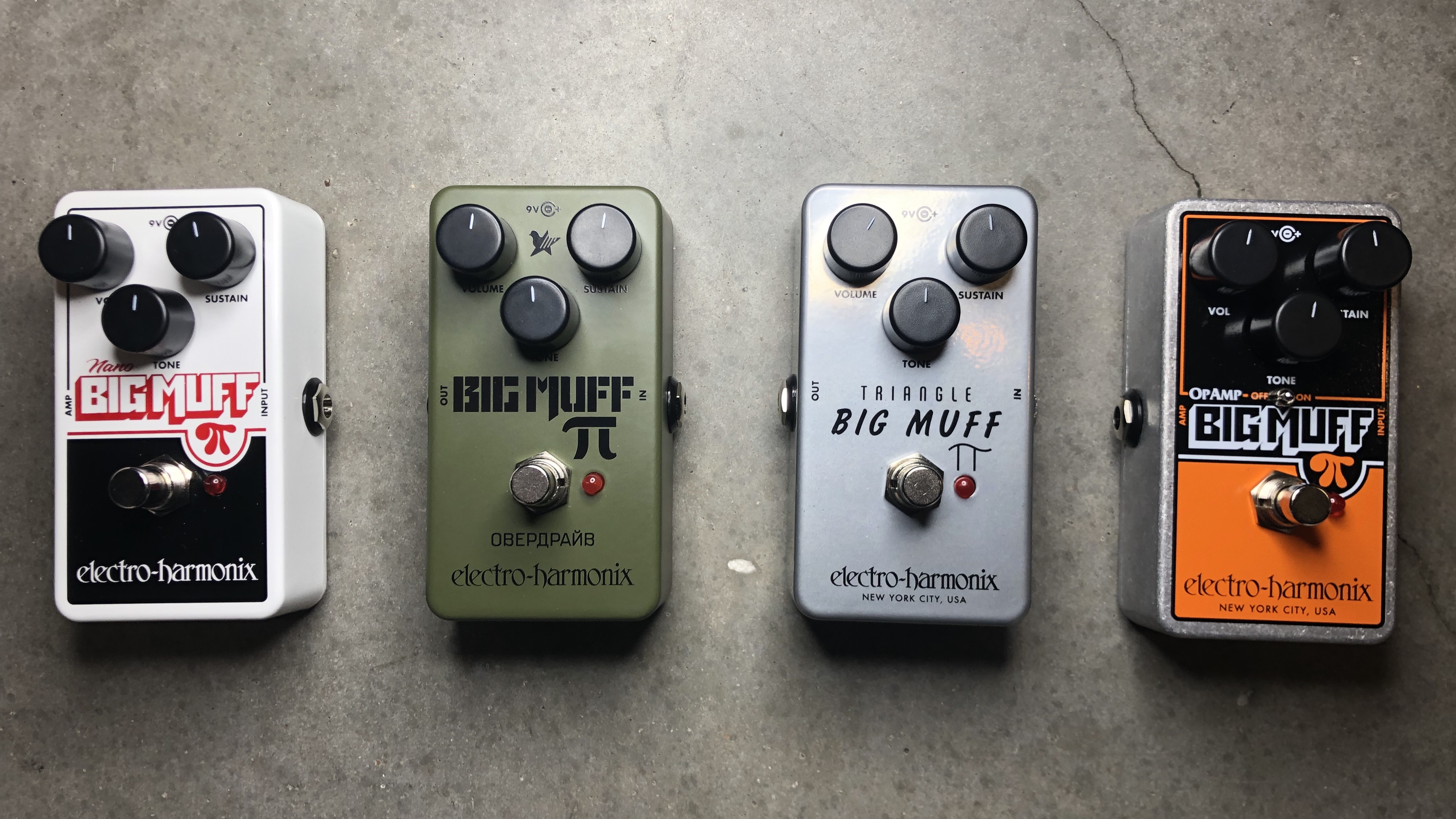
The "baseline" one we tested is the Electro-Harmonix Nano Big Muff Pi (same circuit as the Big Muff Pi in a pedalboard-friendly size). This pedal has undergone many incarnations and reissues since its inception in 1969. To the casual listener the differences in tone between models might seem minor, but communities of enthusiasts beg to differ. Here are the four versions we tested, and how they differ from each other:
BIG MUFF PI VERSIONS WE TESTED
» Electro-Harmonix Nano Big Muff Pi
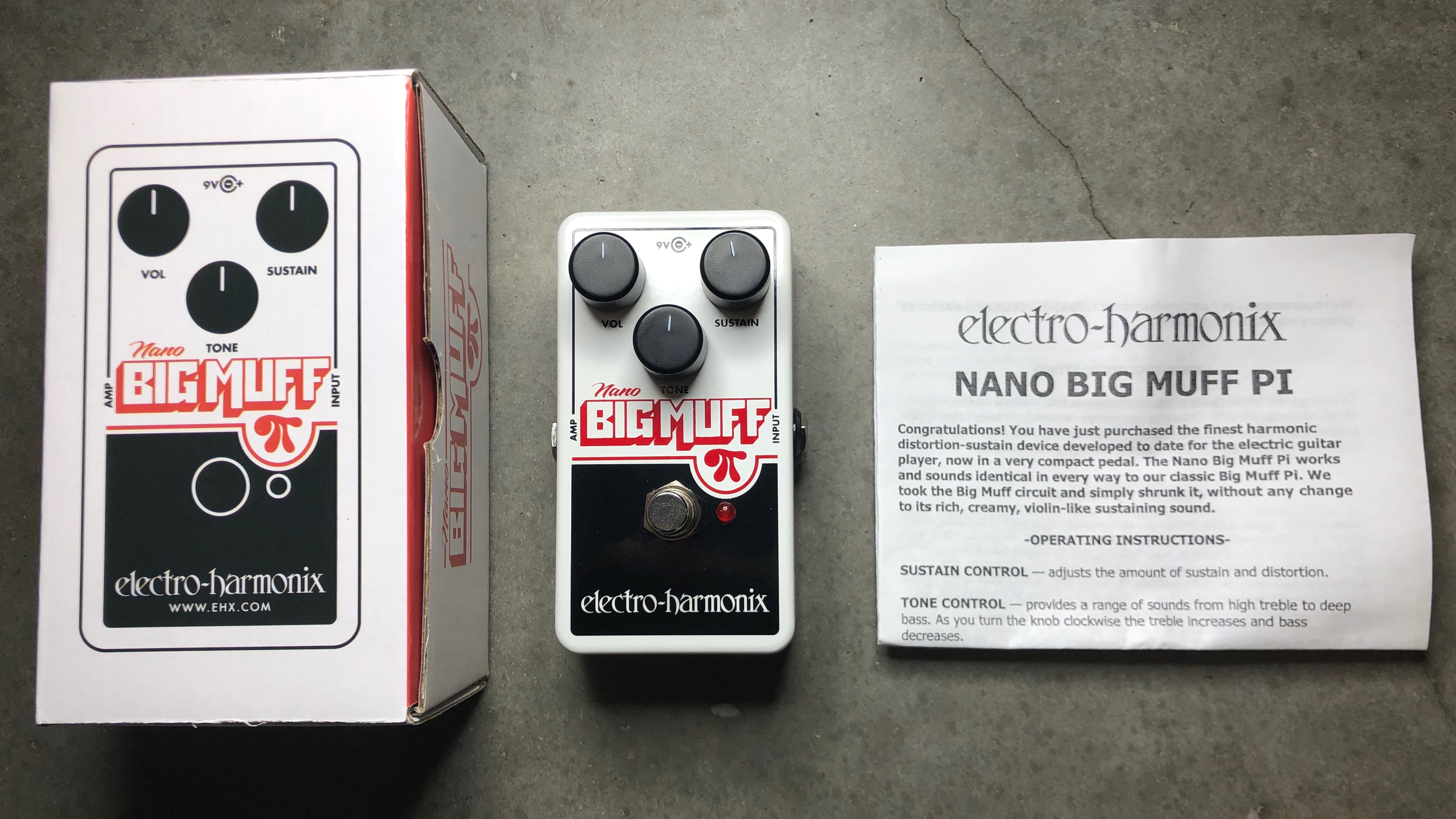
The EHX Nano Big Muff Pi has three knobs - Volume, Tone, and Sustain - and a stiff stomp-switch. While the original is a large pedal that takes up a lot of real estate on the pedalboard, the Nano Big Muff Pi fixes all that with a small enclosure that requires 9V of power to operate (if you want to use a 9V battery, simply unscrew the bottom plate). The pedal’s build quality is rock-solid and it’s true-bypass, meaning it won’t affect the guitar's natural tone when switched off.
So what does the triad of knobs actually do? You can roll back the Volume knob to tame the Big Muff’s huge fuzz sound, or use it to boost your sound above the level of your amp. The Tone knob drastically changes the brightness. Setting it all the way down darkens the tone and adds bass, almost giving it a low-fi growl quality to it (while maintaining great sustain). When playing chords, we particularly like using the tone knob to introduce harmonics which make chords sound relatively clear and defined (or at least as defined as possible given the Big Muff’s purpose). The Tone control helps to not get lost in the mix if playing with other musicians.
Last but not least the Sustain knob lets you adjust the amount of sustain and distortion. Actually, it’s worth mentioning that the Big Muff Pie gives you LOADS of sustain, meaning your notes will ring on and on and on for very David Gilmour-esque vibes.
In terms of how it sounds, while a lot depends on your guitar and amp setup, no matter how you set the knobs it’s unmistakingly the legendary Big Muff sound. Take a listen to The Smashing Pumpkins tune Rocket - Big Muff all the way. In fact, for Billy Corgan and The Smashing Pumpkins fans, this pedal is absolutely key to get that tone.
If you roll the Sustain all the way back, keep the Tone around 1 or 2 o’clock, and give it some volume, the Big Muff will sound rather tidy and lo-fi. Bring the Sustain to 9 o'clock, and things start getting interesting. The pickups in your guitar will noticeably change the results you get out of your Big Muff. Single coils, as opposed to humbuckers, will definitely bring out more clarity in the pedal. We slightly prefer the tone we get with a Strat/Tele through the Big Muff as opposed to a Les Paul. But if huge, fat fuzz is your thing, you certainly won’t be disappointed pairing humbuckers with it. Rolling back the volume knob on your guitar will clean up the sound a bit, while still maintaining that singing sustain.
» Electro-Harmonix Green Russian Big Muff Pi
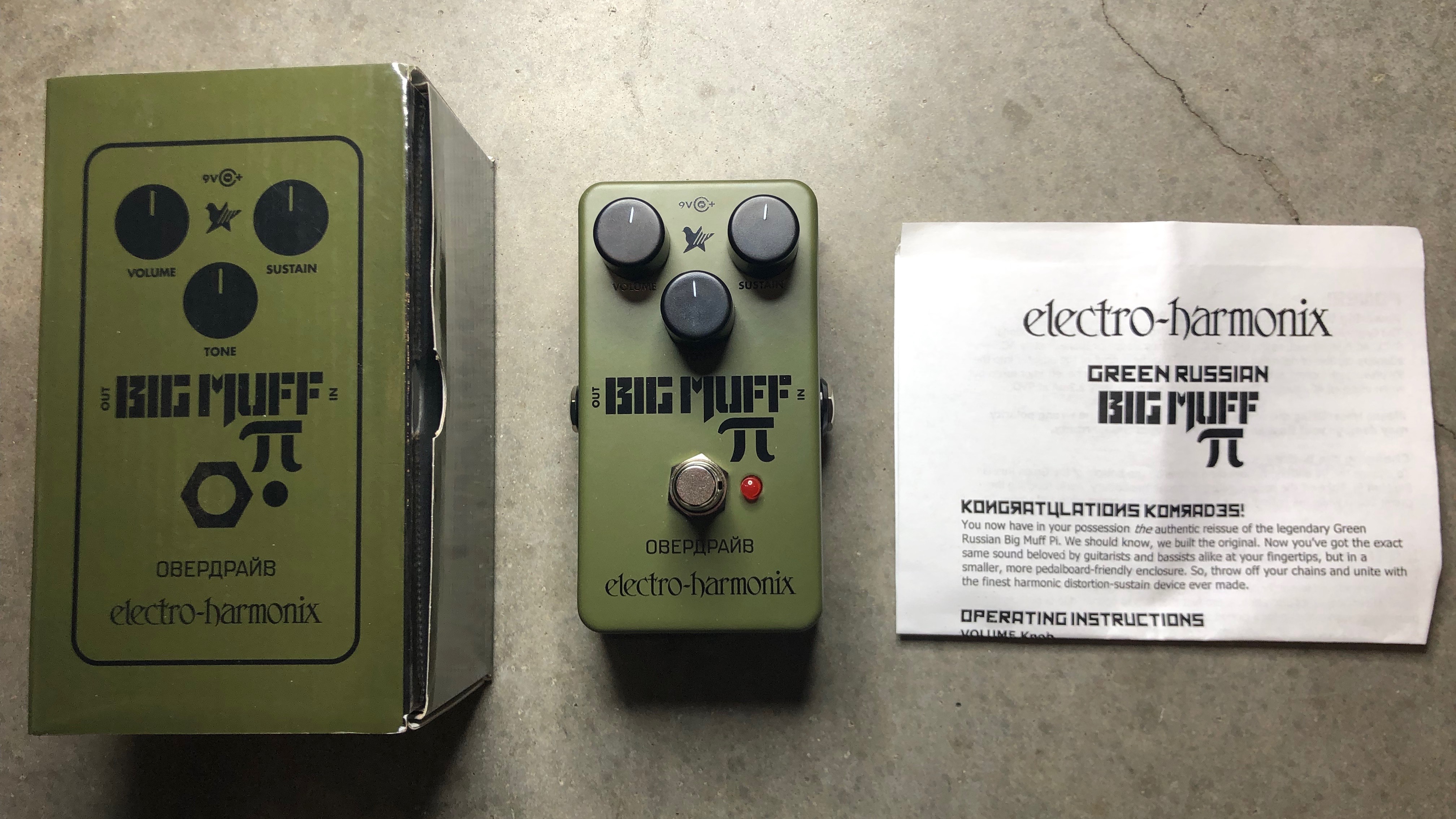
A reissue of the mid-1990s Green Russian Big Muff. We didn't have an original on hand for our review, but by all acounts a faithful recreation. Very close in sound to the Nano Big Muff Pi, but with a more booming low-end, and more warmth.
See reviews, pros & cons, prices, and more for the Green Russian Big Muff Pi
» Electro-Harmonix Triangle Big Muff Pi
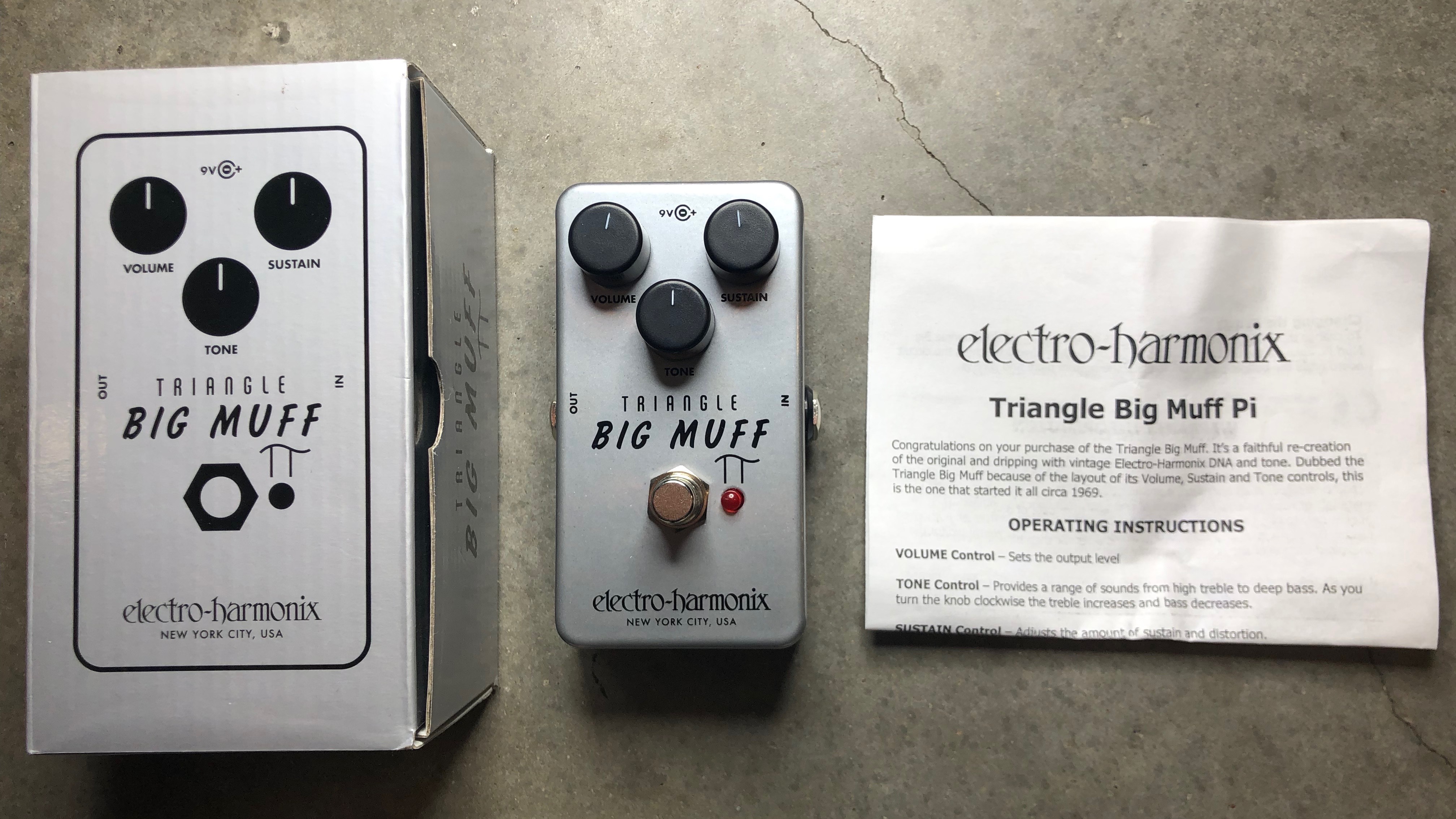
A reissue of the original 1969 Big Muff. The "Triangle" in the name refers to the layout of the knobs on the original unit. It's definitely louder, and more aggressive than the other Muffs. The knobs appear to have more range on this version. The Triangle would likely cut through a mix better than the other variants.
See reviews, pros & cons, prices, and more for the Triangle Big Muff Pi
» Electro-Harmonix Op-Amp Big Muff Pi
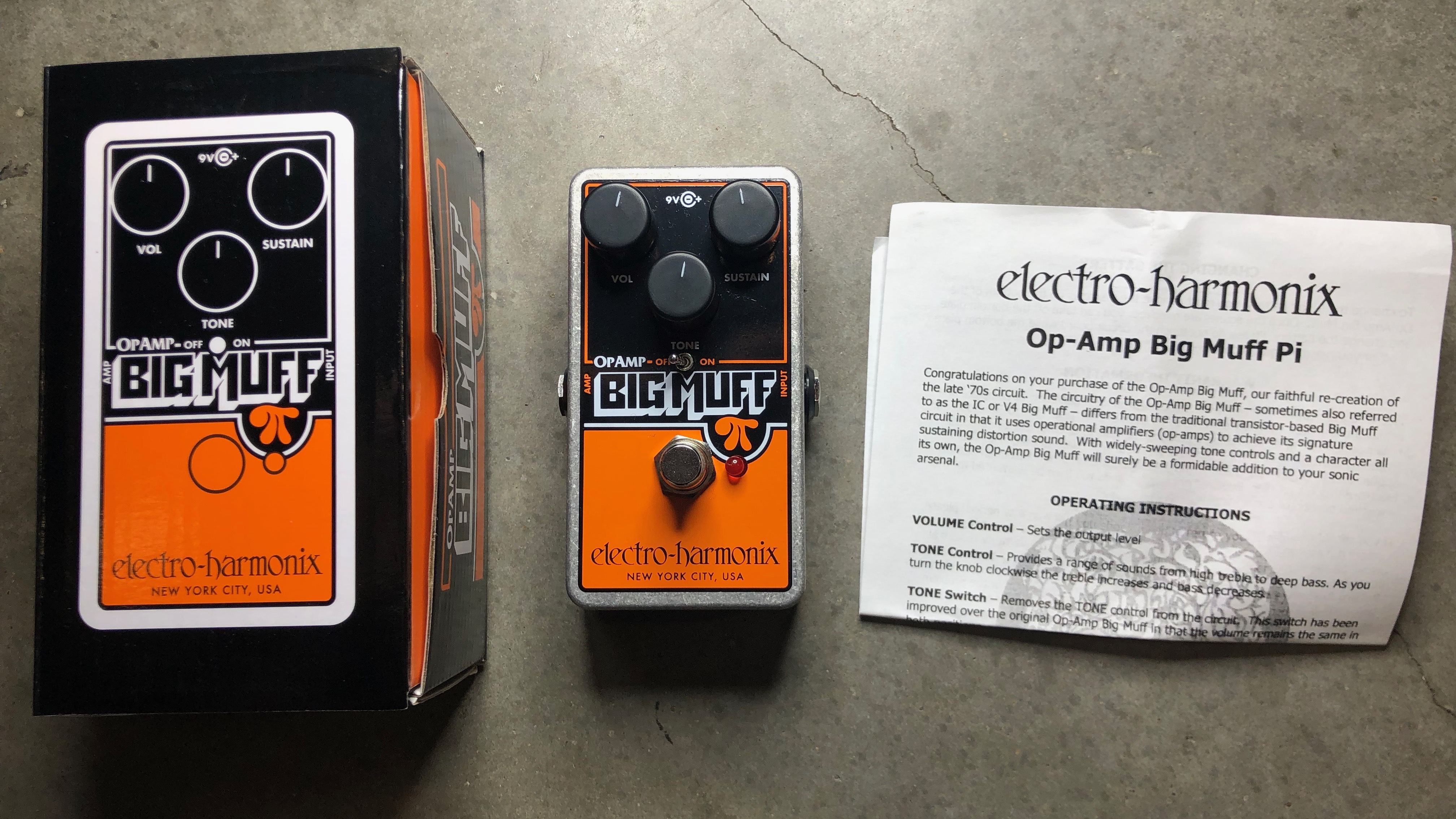
Billy Corgan (of Smashing Pumpkins fame) teamed up with EHX to recreate Corgan's op-amp equipped mid-'70s Big Muff. In addition to the 3 tone controls common to all the versions, the Op-Amp Muff has a toggle switch to bypass the tone circuit. It doesn't add low-end as compared to the Nano Big Muff, but it does sound a little more focused and present in the mid-range. You can watch Billy Corgan demo the Op-Amp Big Muff here. If getting as close as possible to the Smashing Pumpkins sound is what you're after, this is definitely the Big Muff Pi for you.
See reviews, pros & cons, prices, and more for the Op-Amp Big Muff Pi
Bottom Line: There are numerous reasons to make the EHX Big Muff Pi yours, regardless of version:
- It has a characteristically huge sound, and most importantly for lead playing it has loads of sustain. Of course if you play rhythm, you’ll love the chunky, angry chords it’ll help you produce.
- It’s used more by famous pro guitarists than probably any other pedal, and is absolutely key to replicating the sound of Billy Corgan and The Smashing Pumpkins , Jack White , David Gilmour , Slowdive , My Bloody Valentine , Modest Mouse , and countless others.
- It’s simply a great first fuzz pedal to start out with. As your guitar playing evolves and you want to explore more genres, having a Big Muff Pi in your arsenal alongside another fuzz is crucial so you can compare!
- And lastly, it’s a fantastic value. In this world of boutique and specialty pedals costing $200 and even more, it’s absolutely awesome that you can still pick up the legendary EHX Big Muff Pi for WELL under $100.
See how artists use this


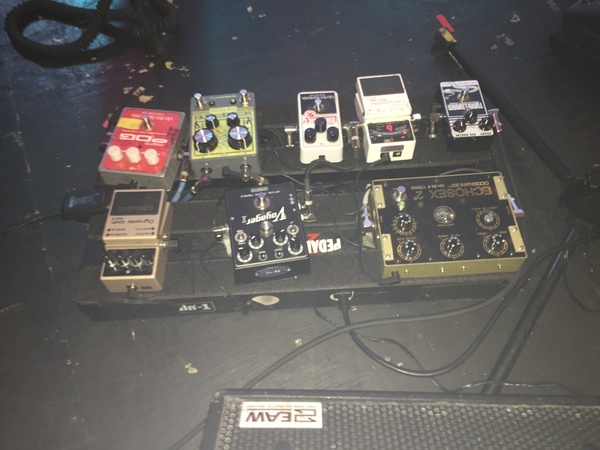

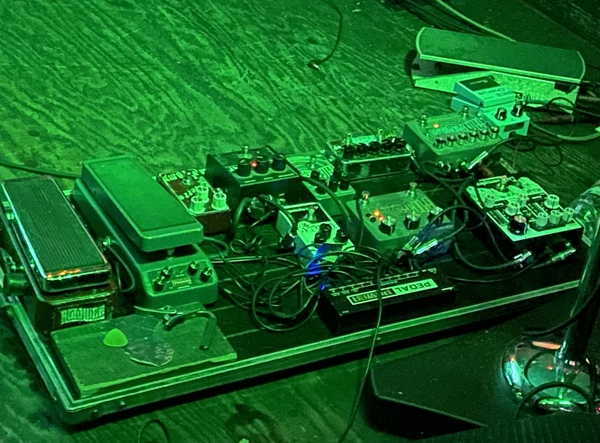


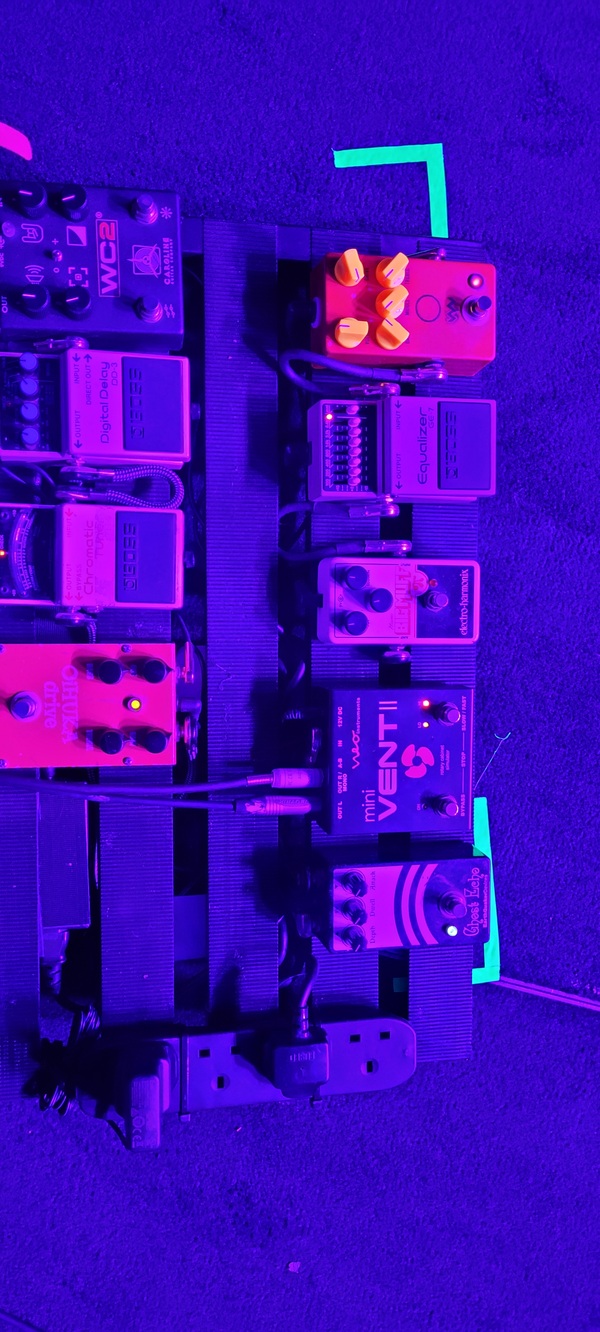
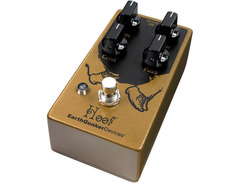
EarthQuaker Devices Hoof V2
4.5 (2)
Boutique fuzz based on a Green Russian Big Muff.
-s.webp?v=1784559889)


Average Price: $173
Standard/Professional
$60
$181+
Budget
Standard
High-end
- Most dynamic and organic Muff variant, easy to fit into the mix
- Massive, uncompressed output allows detailed character shaping
- EQ flexibility enhances tone versatility and natural growl
- Provides a wide range of fuzz tones, from light to heavy
- See 6 more
- Volume knob can be overly sensitive, risking excessive loudness
- Lacks an aspect of "fuzziness" akin to a dying battery sound
| Bypass | true bypass |
| Analog/Digital | analog |
| Power | 9V |
| Effects | fuzz |
| Current Draw | 15ma |
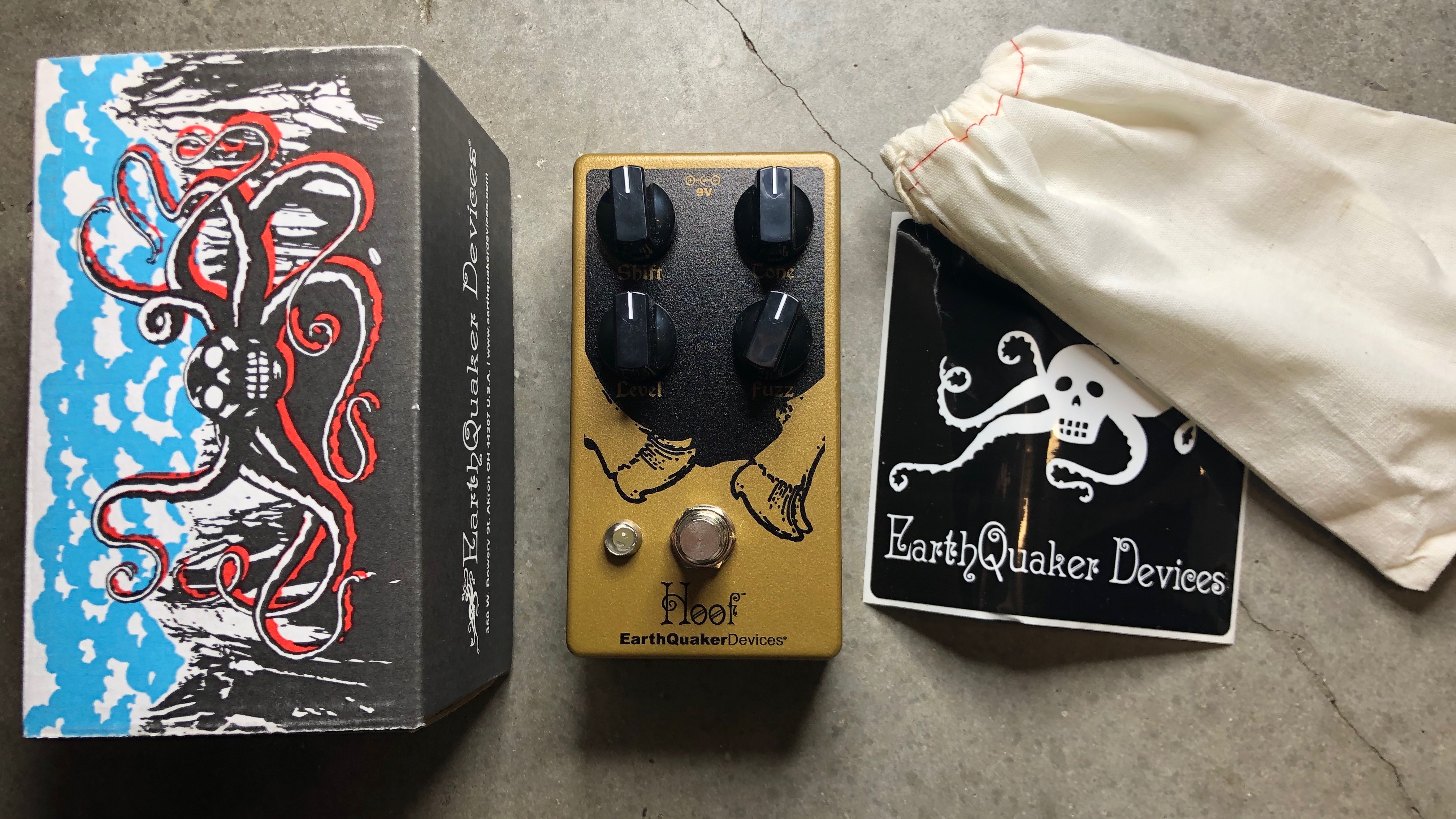
The EarthQuaker Devices Hoof has earned a place in any discussions about the best fuzz pedals. To borrow words from the creators, the Hoof is "loosely based on the classic green Russian fuzz circuit." We were able to A/B test it alongside a Green Russian Big Muff Pi reissue to see where the differences start and end.
It’s a very solidly-built pedal with an attractive gold & black color scheme. It's hand-made in Akron, Ohio, features a soft-click footswitch, true bypass, and requires 9V of power (15mA current draw).
Operation of the Hoof is straightforward - you have 4 knobs and no toggle switches or hidden settings. The Tone, Level, and Fuzz knobs are the same as what you’d find on a Big Muff, and they act accordingly.
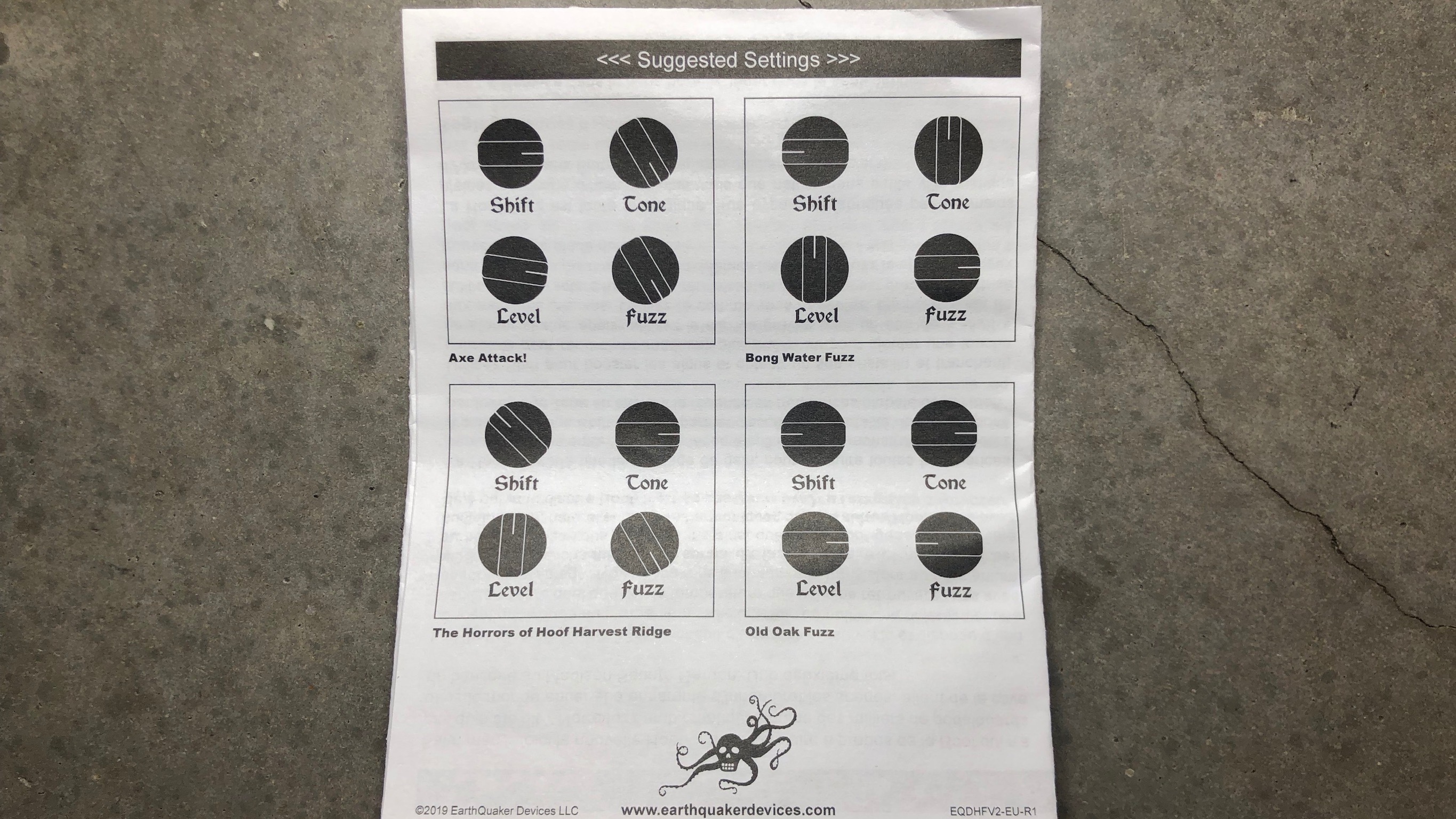
The Shift knob is the game-changer here. Like the Swollen Pickle and the Matthews Whaler, the Shift knob allows for adjusting the mid frequencies - all the way left for boosted mids, all the way right for scooped mids. It’s a very musical knob and drastically affects the character of the Hoof. Side by side with the Green Russian Muff, if you set the Shift knob at about 12 or 1 o'clock, you’ll more or less get the two pedals in the same tonal range. Rolling back the Shift knob gets you in "thick stoner rock sludge" territory.
It's not fair to only compare the Hoof to a Green Russian Muff. Even when we were able to dial them in very close to each other, it's still not the same sound. When you shape your sound with the Tone and Shift knobs, the Hoof will become its own thing altogether. After all, it's designed with a hybrid of Germanium and Silicon transistors, which is unique.
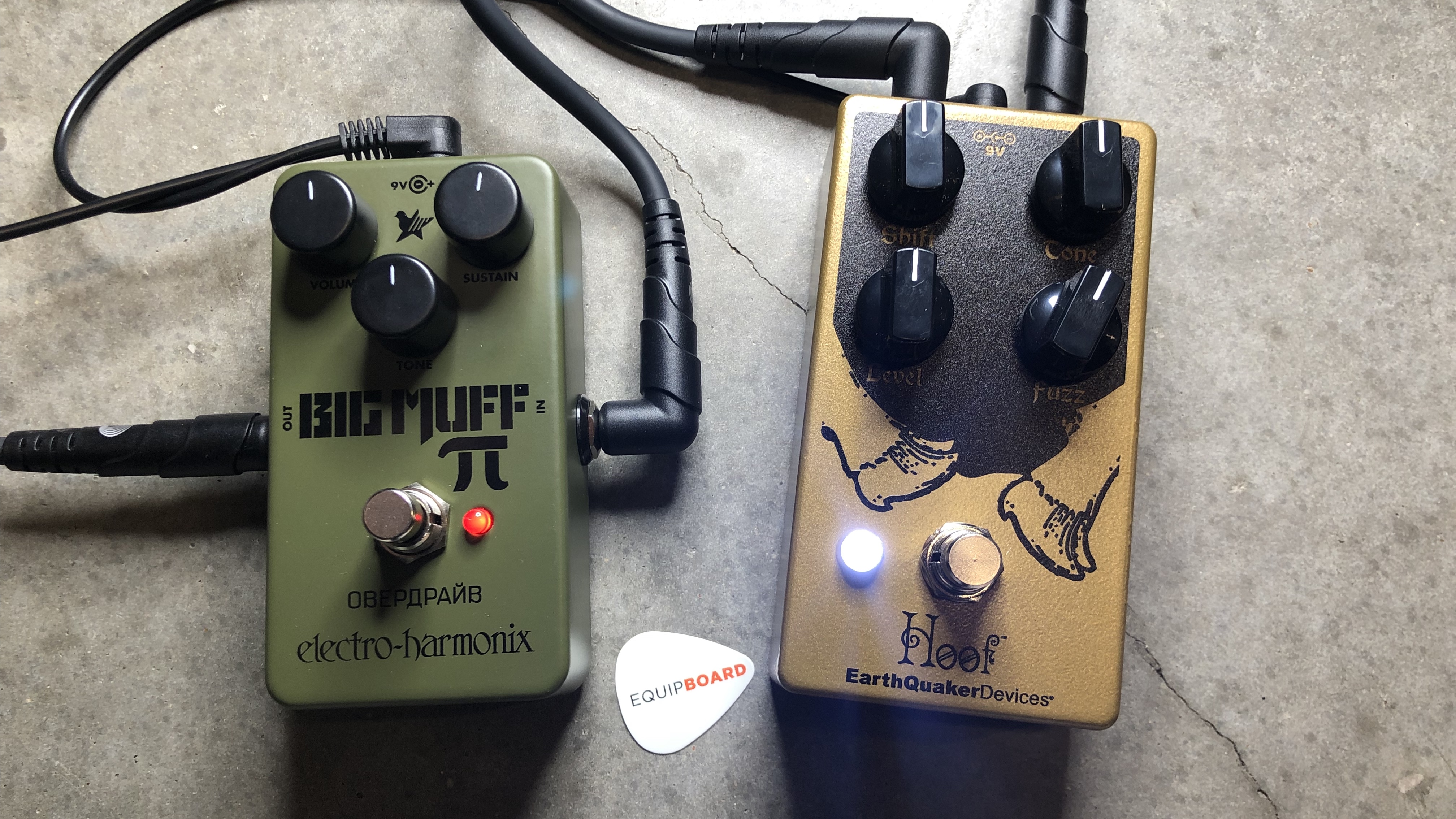
Bottom Line: The Hoof is one of those "modern classic" fuzz pedals. Being built on a Big Muff base means it's familiar and accessible, and the addition of the Shift knob takes it one step beyond, without getting as crazy as a ZVEX Fuzz Factory or Matthews Whaler. Sure, it’s a good bit pricier than a Big Muff, but the added control plus the fact that it’s a handmade boutique pedal justifies the higher price tag. The Hoof can do Gilmour, My Bloody Valentine, The Smashing Pumpkins, and if all that doesn’t convince you, Dan Auerbach of the Black Keys uses one of these bad boys on his pedalboard.
See how artists use this





ZVEX Fuzz Factory Vertical
5.0 (2)
A fuzz unlike any other, capable of normal fuzz all the way to madness & noise.

Average Price: $203
High-end/Boutique
$60
$181+
Budget
Standard
High-end
- Delivers velcro fuzz and perfect noise rock/shoegaze sound
- Offers the widest range of tones among fuzz pedals
- Unique abilities not found in other fuzz pedals
- Versatile; capable of being both a fuzz effect and a noise machine
- See 3 more
- Descriptions may lack clarity on manufacturing origin (Vexter series made in China)
- Requires reading the manual and experimenting for proper use
- Needs time to discover all possible sounds
- Recommended settings from the internet or Zvex are necessary to start
| Bypass | true bypass |
| Analog/Digital | analog |
| Power | 9V |
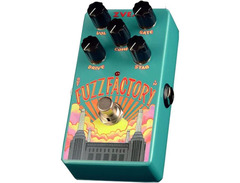
The ZVex Fuzz Factory has been described as “evil,” “crazy,” “brilliant,” “awful,” and “ridiculous” - sometimes all in the same sentence. This pedal is not content to merely be a straightforward fuzz. It's an unpredictable, always fun, great-sounding beast of a guitar fuzz pedal.
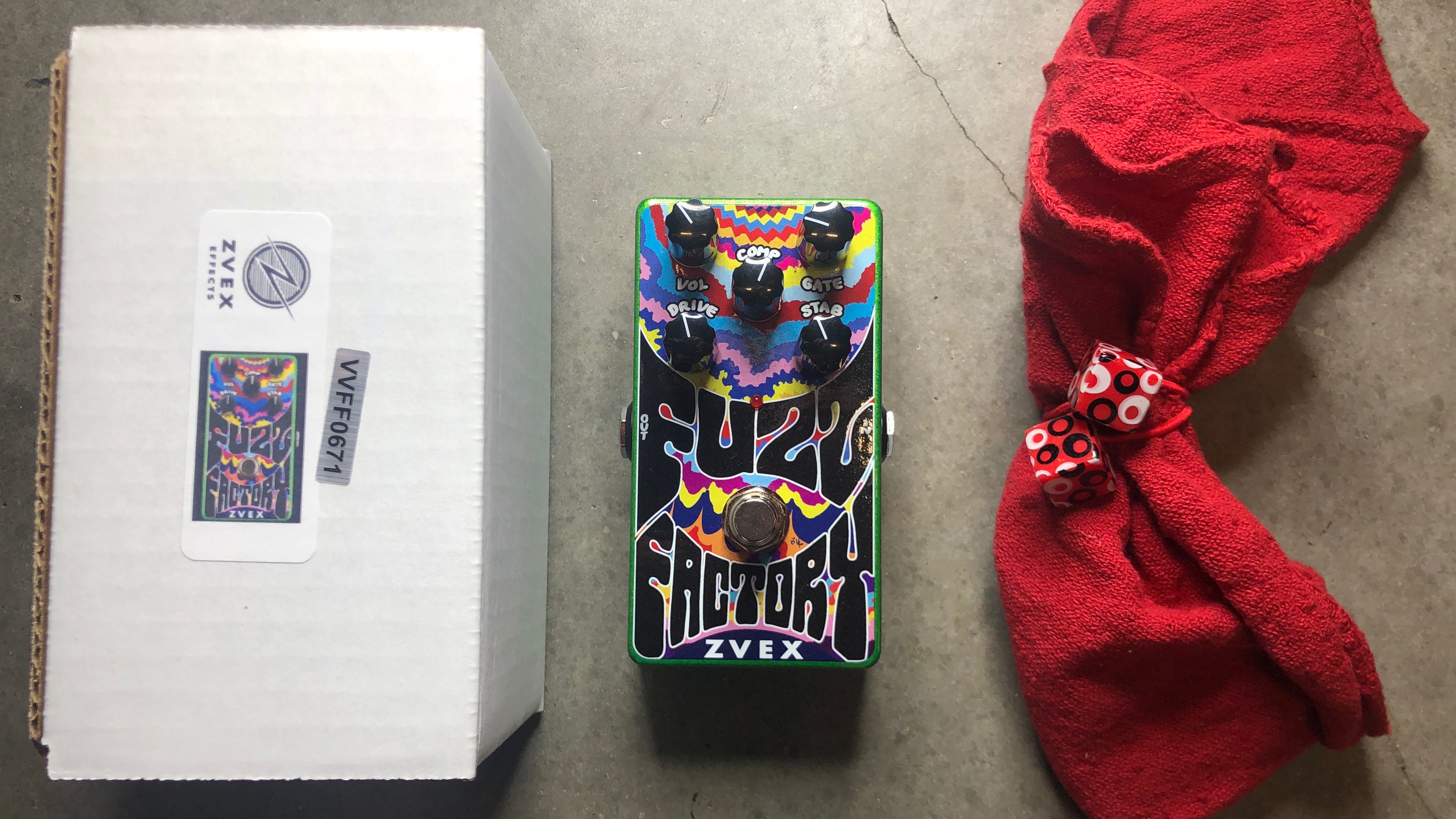
The Fuzz Factory is a germanium transistor based fuzz, and we tested the "Vertical" version which is a little more pedalboard friendly. The psychedelic graphics are cool and unique. The 5 knobs are rather small and grouped close together (which makes the labels a little hard to read from some angles). It wants 9V power, and has a very low 3mA current draw.
The one-page manual is highly recommended reading, not just because of the knob explanations and example settings, but mainly because it's hilarious. Right from the get-go, Zachary Vex says that while the knobs are named after parameters they control, "please don't hold me to it."
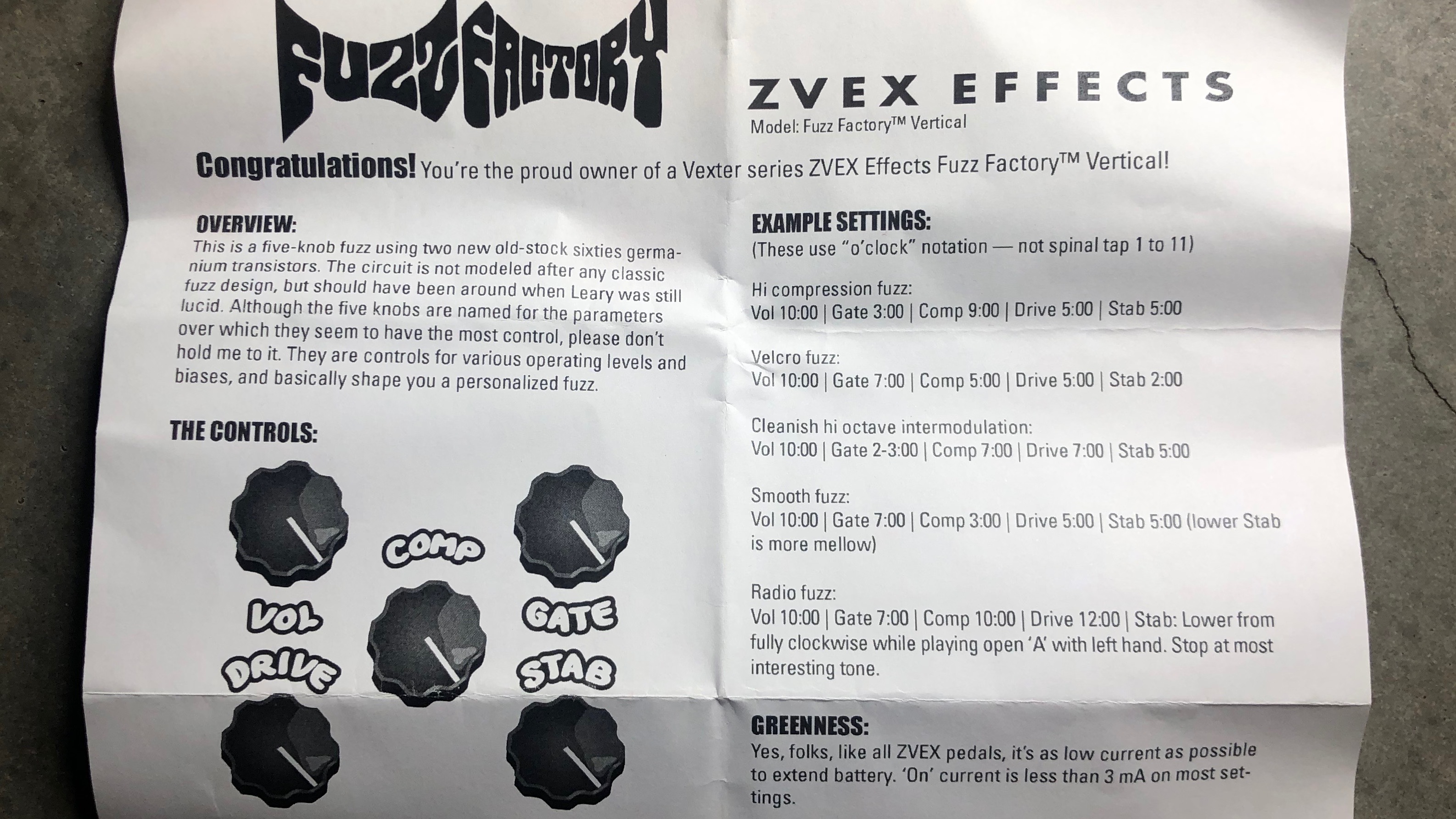
It quickly becomes obvious that this is not a "set it and forget it" type fuzz pedal. VOL and DRIVE are the most recognizable knobs. GATE is a noise gate, meaning as you turn this knob to the right it eliminates squeals, hiss, and buzz. COMP stands for Compress, and is a standard compressor (meaning it squashes the sound back down once it exceeds a certain threshold).
STAB is interesting, as ZVEX themselves warn, "Use all the way right. Do not adjust this control below 2:00, unless you like your fuzz soft and squishy."
The beauty of the Fuzz Factory comes once you've put in some time to learn the controls, and you start encountering the weirdness it's capable of. You can quickly go from an awesome fuzz tone, to an oscillating, glitchy, synth-like squeal. Some sounds you’ll produce from the Fuzz Factory are unusable for most genres aside from perhaps experimental and noise-rock. It can sound downright bizarre or even broken. To get an idea, listen to the following clip from ZVex:
Bottom Line: Once you put in some time to understand the controls and learn how the Fuzz Factory reacts to each parameter, you realize how powerful it is. Matthew Bellamy of Muse uses one (sometimes integrated inside his guitars). You can hear the effect at the start of the Muse song "Plug In Baby." John Frusciante and Josh Klinghoffer are also notable users of the Fuzz Factory, as is Nels Cline, Chris Allen of Neon Trees, and Jack Antonoff (and many, many more). Whether it’s your first fuzz or your fifth, get ready for an adventure. It’s pricey, but truly one of a kind.
See how artists use this





.jpg)


Matthews Effects The Whaler
5.0 (1)
Boutique fuzz that sounds amazing once you master the knobs.

| Bypass | true bypass |
| Analog/Digital | analog |
| Power | 9V |
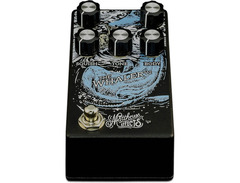
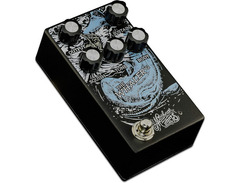
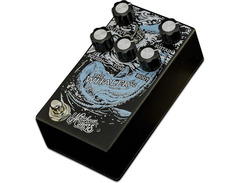
From Matthews Effects comes a great fuzz pedal called the Whaler, which once you come to understand what its controls do and how they interact, lets you conjure up fuzz tones you can't live without.
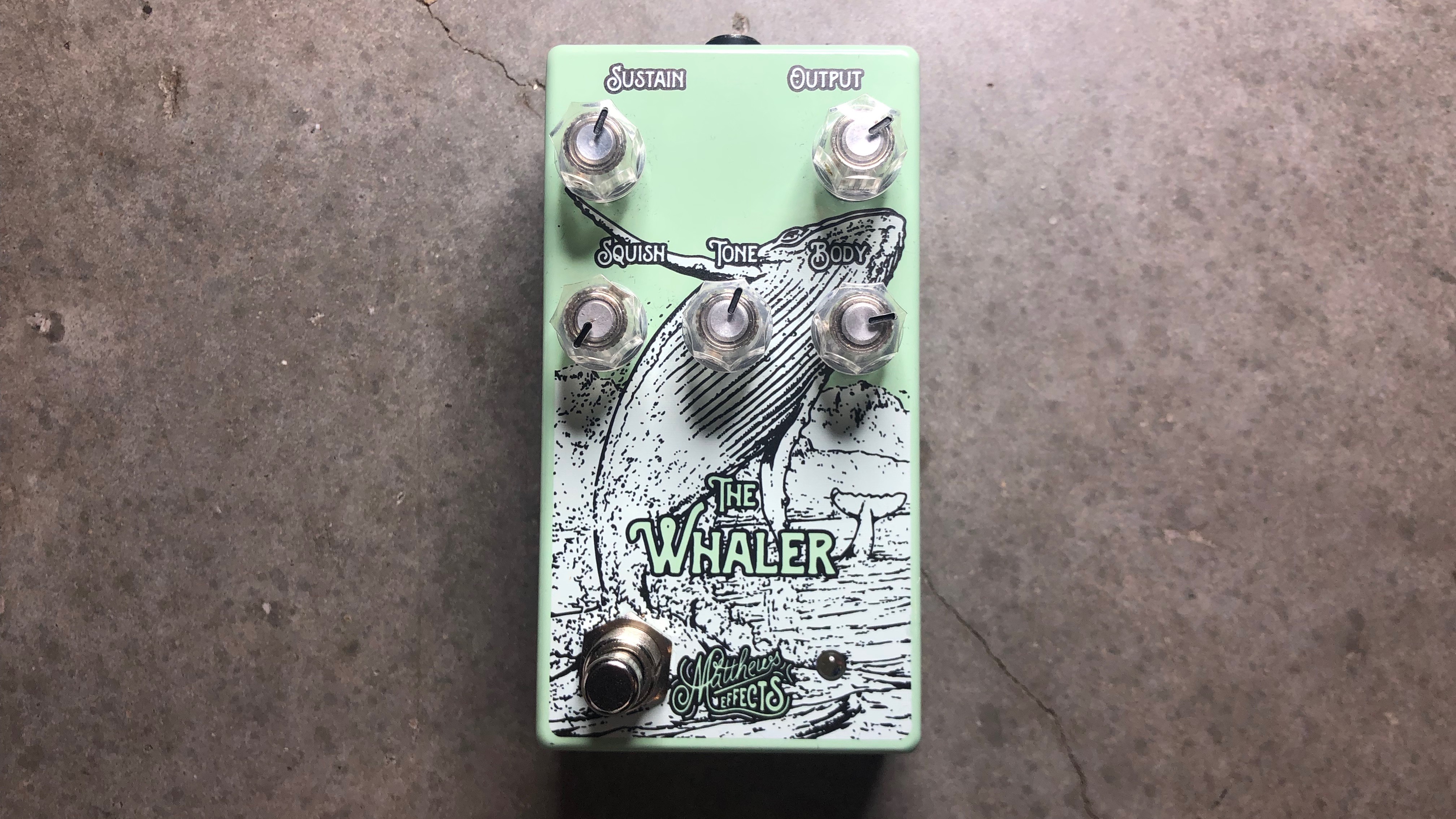
The Whaler's build quality is on par with any boutique pedal manufacturer. The case is adorned with awesome graphics and features top-mounted jacks, a soft-touch footswitch, and 5 knobs to sculpt your fuzz.
The OUTPUT knob is simply volume. The magic starts with the SUSTAIN and SQUISH knobs, so begin with those. SUSTAIN, just like on a Big Muff, controls the amount of fuzz. SQUISH dramatically changes the voicing of the Whaler, from a very narrow "velcro"-like "squished" sound to a much more wide-open, unrestrained fuzz. The TONE knob is where you should head next, which gives you more highs and less lows when turned clockwise, again like a Big Muff. The BODY knob lets you scoop the mids, though for us this was the least dramatic change out of all the knobs.
In terms of tone, this thing is so, so sweet. Just like other "based on the Muff" circuit designs, the Whaler does that and more. Initially, we only liked the SQUISH setting past 12 o'clock, but after 30 minutes we realized how much interplay there is between the knobs, and we found our favorite setting with the SQUISH all the way to the left and the SUSTAIN around 4 o'clock (with a Tele on the bridge pickup).
Bottom Line: We tested the Whaler extensively against the Nano Big Muff, Swollen Pickle, EQD Erupter, and more and time and time again we kept coming back to how good the Whaler sounded. It doesn't sound great at every setting, and we wish the BODY control scooped the mids more dramatically. You might need to study the manual and spend an hour fiddling with it, but if you give it a fair shake this has a high probability of becoming your favorite fuzz pedal.
ZVex Mastotron
4.5 (51)
Silicon-based fuzz with huge low-end & Pulse Width control.


Average Price: $162
Standard/Professional
$60
$181+
Budget
Standard
High-end
- Versatile across gain spectrum, maintaining clarity even at high gains
- Offers unique suboctave options for a thunderous sound
- Flexible for use with both guitar and bass
- Intuitive knobs make it hard to get a bad sound
- See 5 more
- Subs switch is difficult to access on the fly
- Power input placement can be inconvenient for pedalboard setup
| Bypass | true bypass |
| Analog/Digital | analog |
| Power | 9V |
From the mad tone scientists at ZVEX comes the Mastotron fuzz pedal. This is based on a silicon transistor, as opposed to germanium used in the Fuzz Factory. The Mastotron has some very unique controls, and a huge low-end.
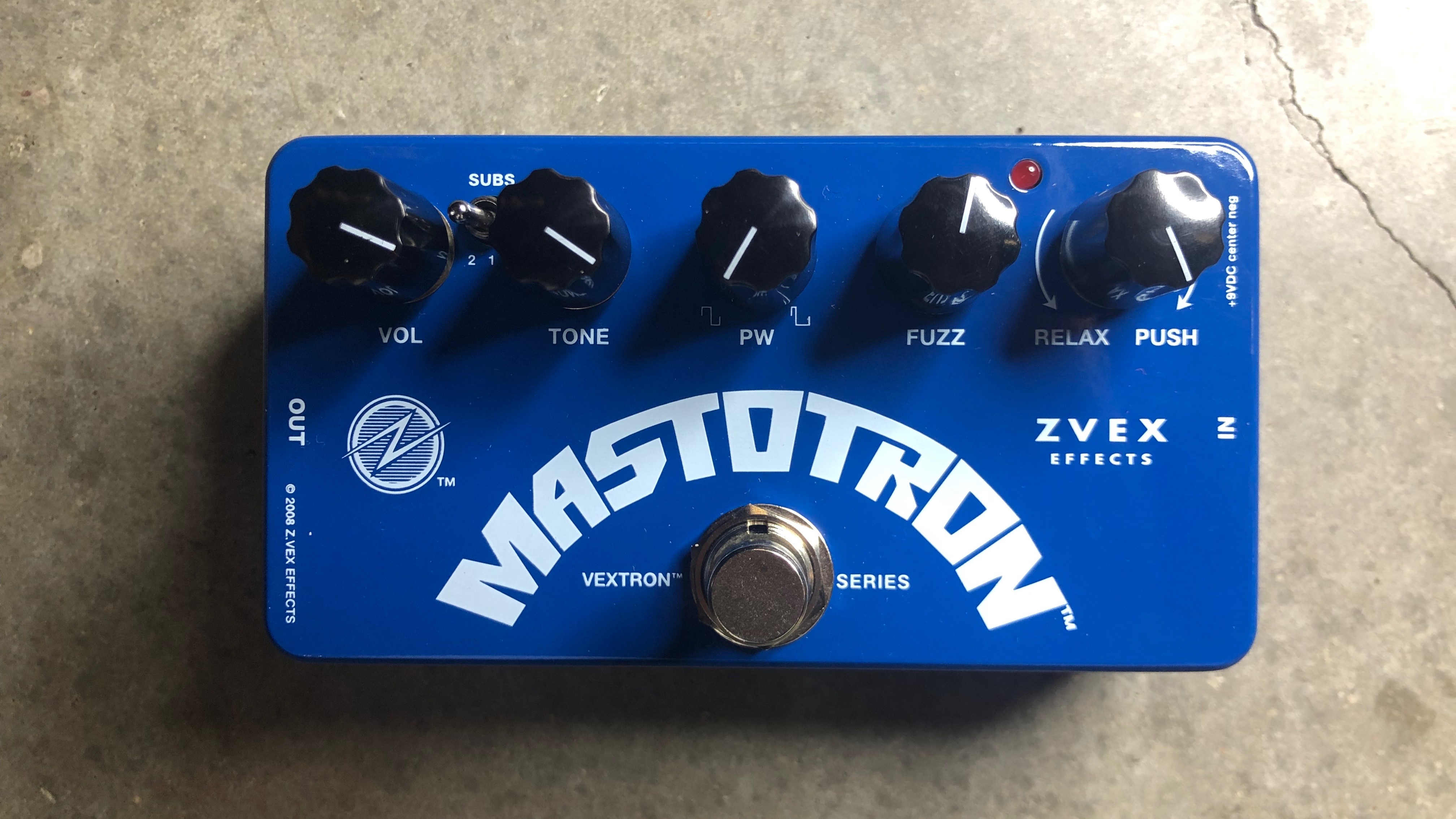
This pedal has a beautiful blue case, and while it's roughly the size of a Nano Big Muff it's oriented horizontally. If you're daisy chaining, the Mastotron has an extremely low 1mA current draw. Let's jump right into the controls, and the way it sounds.
The more familiar controls are VOL, TONE, and FUZZ. Unlike a Big Muff that simultaneously cuts lows and boosts highs as you turn TONE clockwise, the Mastotron only shapes the treble, retaining the bass. The FUZZ knob increases the fuzz intensity, as you can imagine.
The RELAX/PUSH knob is interesting - if your guitar has hot pickups, you can turn it towards RELAX which adds source impedance and mellows out the signal. To get the full-on sound of the Mastotron, set it all the way up to PUSH.
PW is Pulse Width, all the way to the left being square wave, and all the way to the right is narrow pulses. This makes your fuzz tone sound more gritty and lo-fi ; it sounds awesome but you lose chord articulation, almost like the pedal is running out of power.
Finally, there is a 3-way SUBS switch. While difficult to toggle (it’s tiny and wedged between two knobs), it’s one of the “key” features of this pedal since it lets you decide how much sub bass you want in your fuzz. To quote the manual, "3 is huge, 2 is medium, and 1 is absolutely none left."
In terms of sound the Mastotron is very versatile. Regardless of guitar/amp combo we were able to find some wicked tones. Having said that, playing it on the largest speaker available to you will allow you to truly feel the huge low-end the Mastotron is capable of. And in true ZVEX fashion, it's capable of some downright weird tones.
Bottom Line: The ZVEX Mastotron is comparable to the versatility of the Swollen Pickle and Matthews Whaler. It can do the classic fuzz tone range, with the added benefit of retaining a huge low-end across the range. With the PW and RELAX/PUSH knobs it's also quite capable of some synth-like experimental stuff.
See how artists use this





.jpg)


Way Huge Swollen Pickle MkIIS
4.5 (16)
Big Muff-based fuzz that offers plenty of bass & tons of tone shaping options.



Average Price: $151
Standard/Professional
$60
$181+
Budget
Standard
High-end
- Offers a wide range of fuzz tones, from dirty to smooth
- Versatile, suitable for various music styles and instruments
- Provides significant control over sound with multiple knobs
- Can clean up nicely when adjusting the guitar's volume knob
- See 5 more
- Has a steep learning curve for optimal pedalboard integration
- Sensitive knobs require time to dial in the perfect tone
- Internal trimpots are difficult to adjust frequently
- Can sound muddy if not adjusted correctly
| Bypass | true bypass |
| Analog/Digital | analog |
| Power | 9V |
| Effects | fuzz |
| Current Draw | 3.1ma |
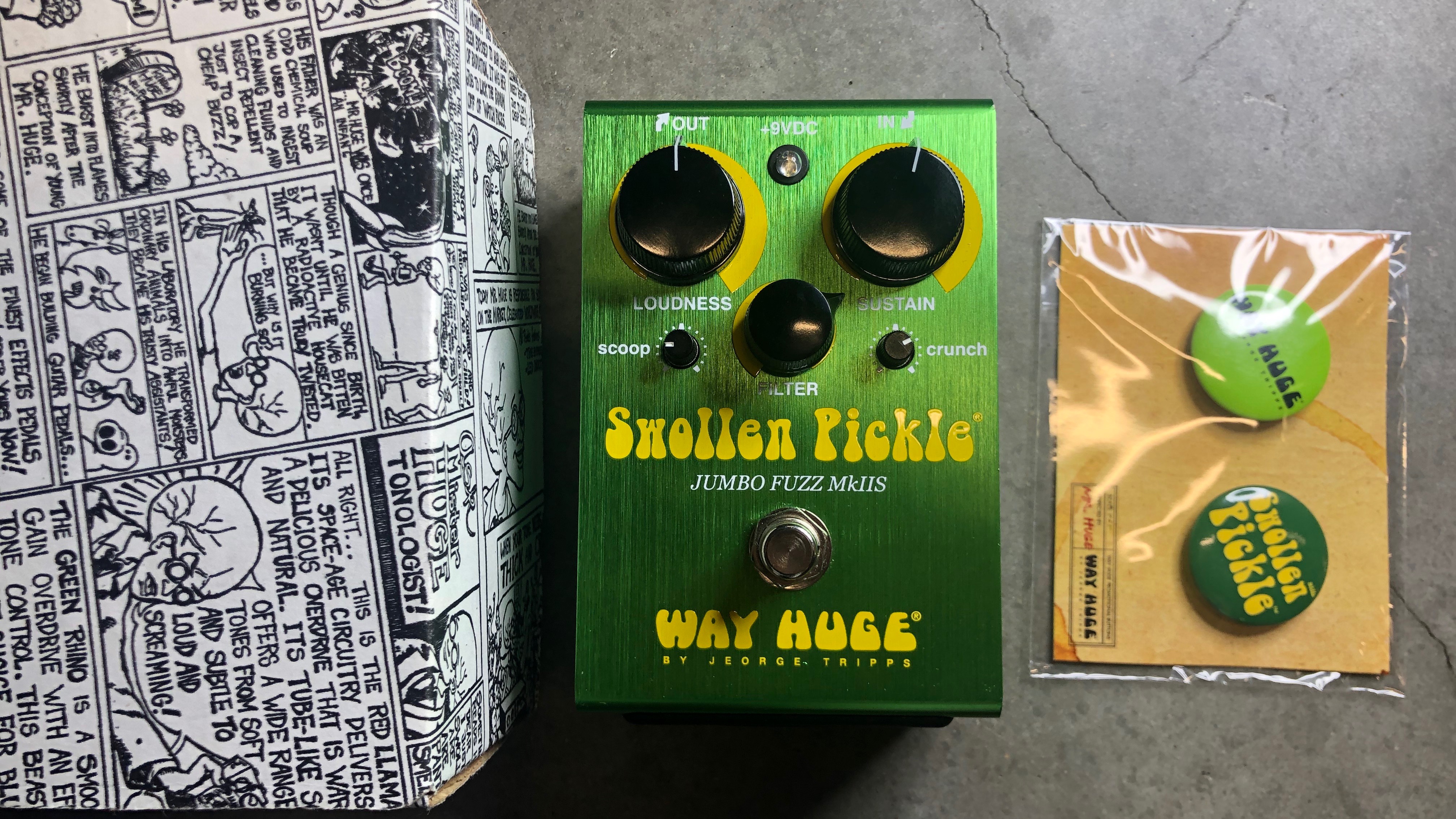
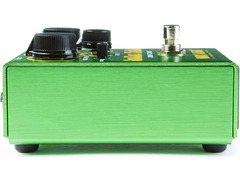
The serious pedal with the funny name, they don't call the Way Huge Swollen Pickle a "Jumbo Fuzz" for nothing. When it comes to fuzz boxes, this is arguably the most versatile one we got our hands on (for accuracy sake, we tested the MkIIS version of the pedal).
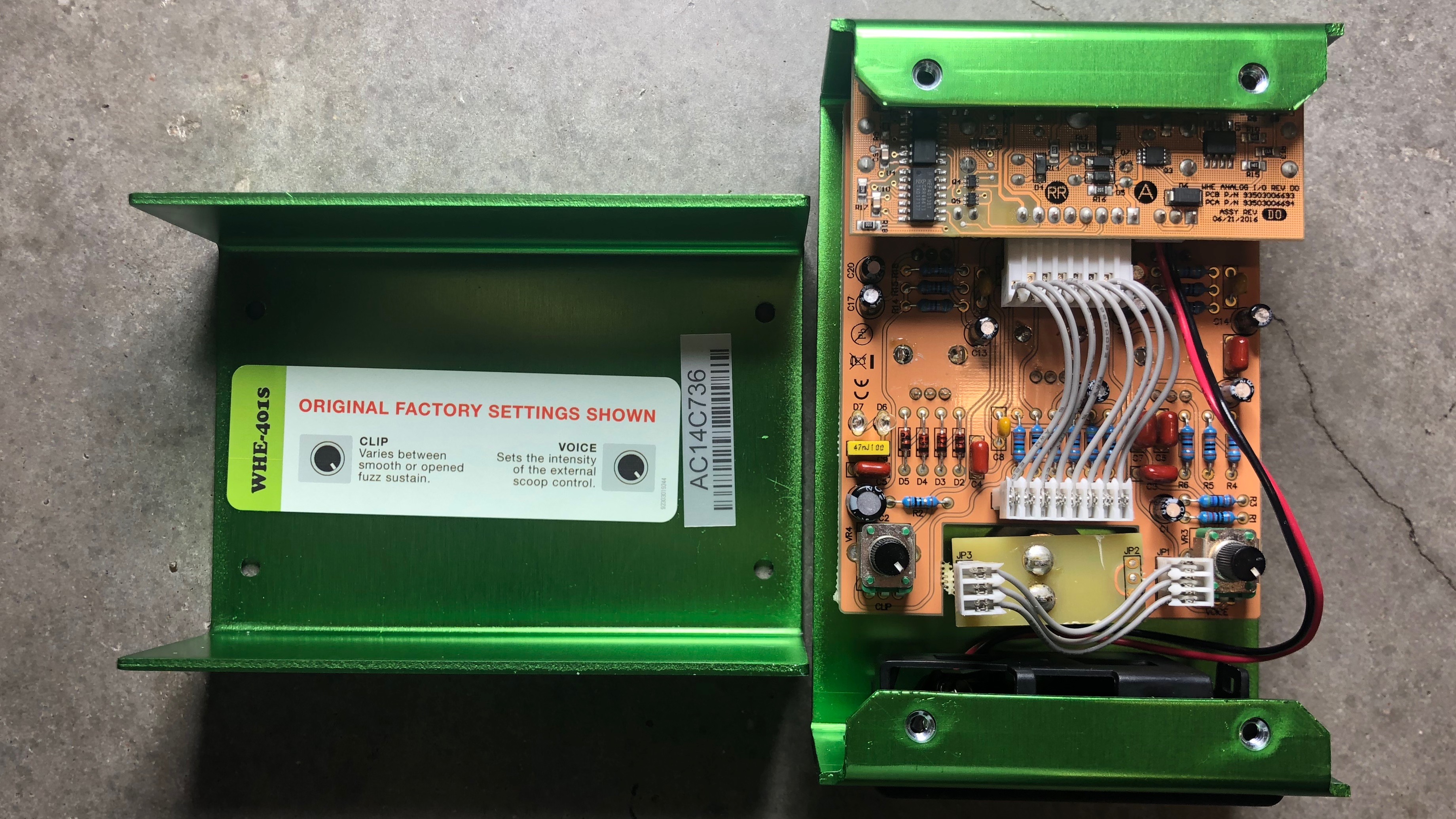
The pedal is a gorgeous and eye-catching metallic textured green, with white & yellow text. The three primary knobs are nice and big, and the foot switch requires a bit of force to press (it's true bypass). The battery door is mounted on the front of the pedal and is extremely easy to access. The pedal sits on 4 rubber feet that you can remove to access the inside (more on that shortly).
Let's get this out of the way - the Swollen Pickle sounds awesome , and it's become a modern classic fuzz for a reason. It's one of many "based on the Big Muff" type circuits, but with similar settings it has a tendency to sound "bigger" and more bass-heavy than a Muff.
The Swollen Pickle sounds less focused and constrained than a Big Muff, feeling almost a bit unwieldy depending on your settings. We're reminded of a RAT in some ways, and in that sense the Pickle can sound a bit like fuzz/distortion hybrid.
Where the Swollen Pickle stands out is the fine-tuning options you get with it. The LOUDNESS knob controls the volume, and SUSTAIN dials in the intensity of the effect, like a Big Muff. At low Sustain levels it's a dark muddy crunch, and all the way up it's a fuzz beast gone wild.
The FILTER knob is a band pass filter- at low settings you get a bassy growl (difficult to articulate chords), and as you turn the knob it really opens up.
As if that wasn't enough, you get small scoop and crunch knobs. Crunch alters the compression, and scoop alters the mid-frequencies which has a huge effect on the Pickle's tone (it can go from Muff-like to a totally different distortion-like beast). If you unscrew the feet and look inside the pedal, there are two more knobs - CLIP and VOICE.
Bottom Line: The only thing we can really knock the Swollen Pickle for is that because of all the tone trimmers available to you, it might take some time to dial in something for your desired style of music. It's not as "plug and play" and immediately pleasing as the Big Muff. Still, if you're considering a Big Muff and crave more controls and more low-end, the Swollen Pickle is probably for you.
See how artists use this

.jpg?v=1784480538)






.jpg)
EarthQuaker Devices Erupter
4.5 (15)
One-knob wonder delivers an awesome fuzz tone.

- Simple one-knob operation offers ease of use
- Vintage sounding fuzz adaptable to various tunings and instruments
- Internal trim pots allow for nuanced tone shaping
- Capable of producing both subtle overdrive/fuzz and intense, saturated fuzz tones
- See 1 more
- Lacks output volume control, making live band use challenging
- High output can be difficult to integrate with other pedals
- Adjusting internal trim pots for different setups is inconvenient
- Can produce undesirably harsh sounds at certain settings
- See 1 more
| Bypass | true bypass |
| Analog/Digital | analog |
| Power | 9V |
| Effects | fuzz |
| Current Draw | 15ma |
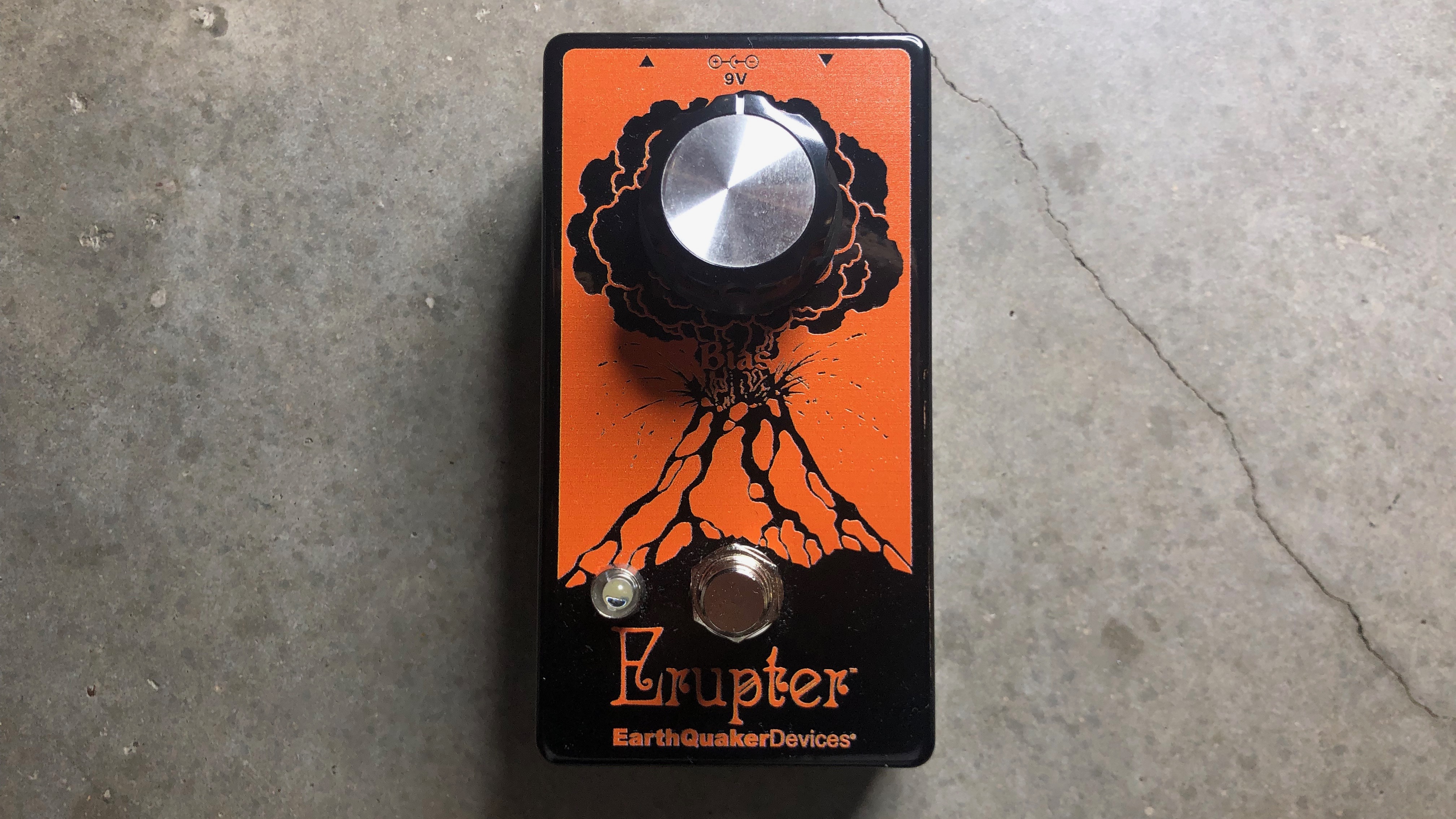
From the minds at EarthQuaker Devices comes a one-knob wonder fuzz pedal known as the Erupter. To quote the creator, "The Erupter fuzz started as something I wanted just for myself - the ultimate classic fuzz tone." A far cry from the Swollen Pickle's 7 knobs, it's amazing how good the Erupter sounds with just 1 giant knob.
In typical EarthQuaker fashion, the pedal's graphics look great. The Erupter features an exploding volcano with a pleasing Orange and black color scheme. The build quality is great, the true bypass footswitch is soft-click, and the super bright LED indicator doubles as a flashlight.
The controls couldn't be more simple - one giant knob labeled Bias. It "clicks" in at noon, which is sort of the default setting. We'll let the creator explain what it does:
As you turn the Bias counterclockwise (colder) the fuzz lowers in level and becomes more gated. As you turn the Bias clockwise (hotter), the fuzz becomes cleaner and more refined and the output level increases.
So, EarthQuaker set out to make the "perfect" fuzz. As unbiased reviewers we try and look past any marketing hyperbole, but we gotta say the Erupter is a kick-ass fuzz tone. The thing is, you HAVE to play with your guitar's controls - particularly the volume knob - to hear the Erupter's full range. You'd think the one-knob design would be limiting, but somehow EQD nailed it, it just works.
Compared to a Big Muff, it's more snarly and mean - not quite as velcro smooth. It's got a nice low-end that maintains even when you roll the guitar's volume off. Be aware that there is a volume jump when you kick it on, and there's not much you can do to compensate since there's no volume knob.
Bottom Line: EarthQuaker said, "ok here's the sound, we hope you like it" - and we very much do. If you can live with the volume jump, there's something very refreshing about plugging a fuzz pedal in and sounding awesome without having to mess with tons of knobs.
See how artists use this





.jpg)
Wampler Velvet Fuzz
4.5 (22)
Perfect fuzz for guitarists more comfotable in the distortion world.

Average Price: $175
Standard/Professional
$60
$181+
Budget
Standard
High-end
- Highly versatile, offers a range of fuzz, gain, and distortion levels
- Intense fuzz that can be tamed for subtler tones
- Works well without needing an overdriven amp
- Compatible with other pedals, enhancing pedalboard synergy
- See 6 more
| Bypass | true bypass |
| Analog/Digital | analog |
| Power | 9V |
| Effects | fuzz |
| Current Draw | 23ma |
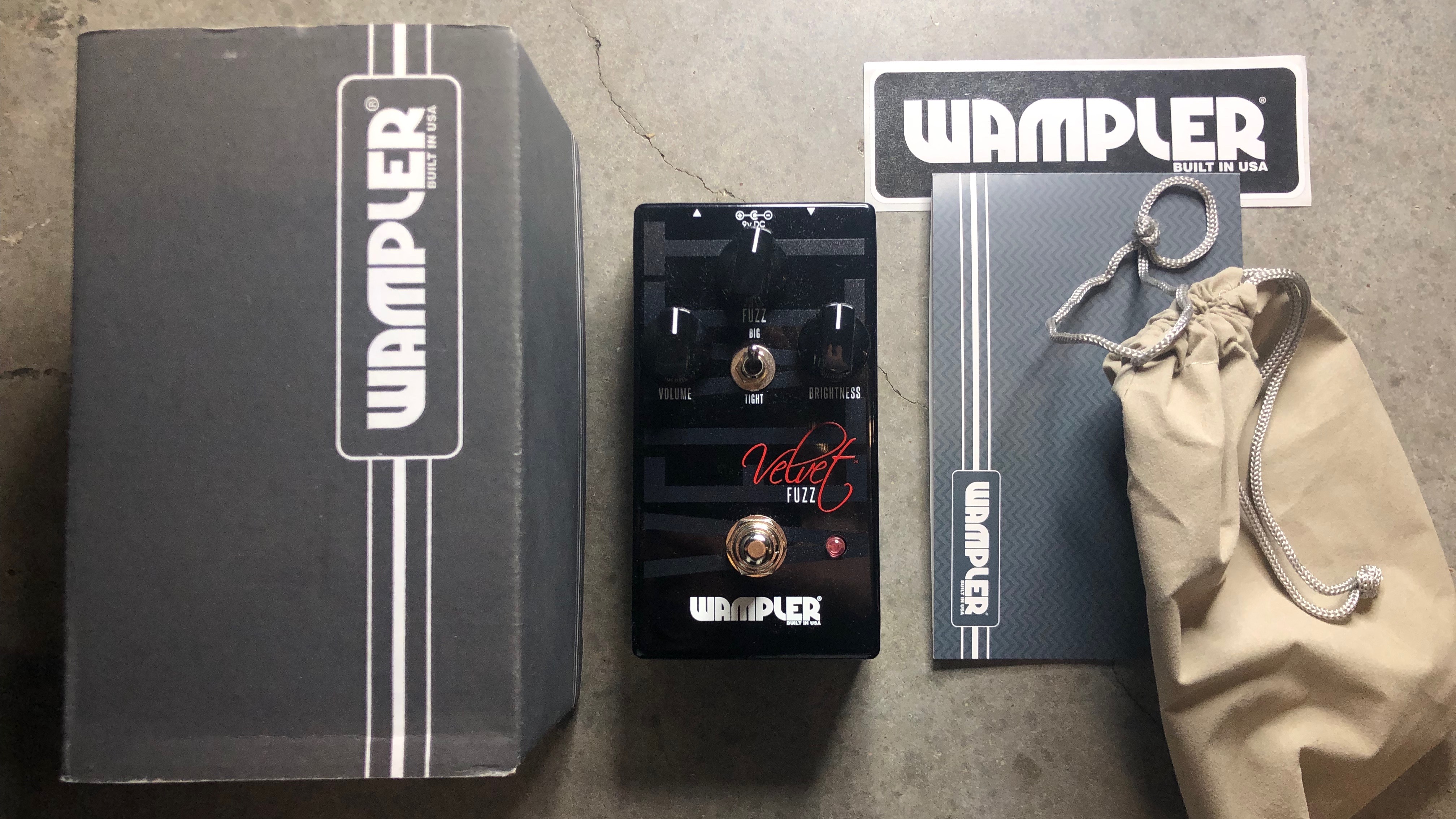
Brian Wampler designed the Velvet Fuzz so that anyone can have the tone of the legendary Fuzz Face pushing an EL34 driven Marshall stack, regardless of guitar/amp combo. The Wampler Velvet Fuzz is a fan favorite, and often the solution for people who simply cannot land on what fuzz pedal is right for them, or are more comfortable in the distortion world.
The enclosure is high quality and gorgeous. The footswitch is a soft-click style (thank you Wampler), the LED is bright red, and the color scheme is a cool black/red/white. You can use 9V or 18V DC power, but it'll sound its best with 9V. Current draw is 45mA.
The 3 knobs VOLUME, FUZZ, and BRIGHTNESS are very familiar and Big Muff-like. The FUZZ knob in particular has a huge range; the BRIGHTNESS knob, not so much (the Tone knob in a Big Muff is far more dramatic). However, the key thing in this pedal is the BIG/TIGHT toggle switch.
For a more traditional fuzz, set it to BIG. The Velvet will respond by sounding more rough and untamed. For those more comfortable with distortion pedals that are fuzz-curious, switch it to TIGHT mode, which is more of a distortion/fuzz blend.

We enjoyed the Velvet very much at both settings. We were not able to emulate an exact Big Muff sound or an exact Fuzz Face sound... but the Velvet isn't trying to recreate anything per se; it does its own thing. The low-end is nice and big in both modes.
Bottom Line: Don't get us wrong, the Wampler Velvet V2 is very much a fuzz pedal, and can go from Gilmour to Eric Johnson to Hendrix. It's just not a traditional buzzy, velcro fuzz. If you're uncomfortable with the mainstream offerings in the fuzz pedal world, the Wampler Velvet might just be your antidote.
See how artists use this


.jpg?v=1784519119)

.jpg)
.jpeg?v=1783467346)

Walrus Audio Jupiter V2
5.0 (4)
Gorgeous artwork, bass cut toggle, and 3 different voicings.


Average Price: $163
Standard/Professional
$60
$181+
Budget
Standard
High-end
- Versatile with three dials, mode switch, and bass boost for a range of fuzz tones
- Suitable for bassists, adding significant "oompf" to their sound
- Offers nearly infinite sustain when dialed in
- Adjustable noise gate enhances versatility
- See 4 more
- Some users find its range of sounds limited, calling it a "DistorFuzz" with little nuance
- Gain can be too aggressive, hard to achieve harmonic output with character
- Toggle switch considered not useful by some, questioning its practicality
| Bypass | true bypass |
| Analog/Digital | analog |
| Power | 9V |
| Effects | fuzz |
| Current Draw | 10ma |

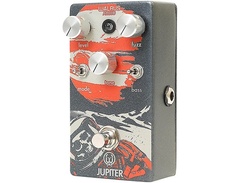
The Walrus Audio Jupiter V2 is a drop dead gorgeous fuzz pedal, with tone to match. It has some really interesting tone-sculpting features beyond the normal "Big Muff" triad of knobs.
The aesthetic of this pedal has to be pointed out; it looks awesome. It sports a graphic of an astronaut reduced to a skeleton on what seems to be one of Jupiter's moons, with Jupiter looming in the background. It's finished off with a coal sparkle powder coat. The knobs are a stunning brushed aluminum. The footswitch is true bypass and it requires 9V of power.
The usual suspects are there - Level, Fuzz, and Tone knobs. All have a nice response and wide range, letting you really brighten or darken the tone, and there's plenty of sweet fuzz on tap.
The Bass toggle switch is simply a bass cut. Toggled to the left, the pedal's solid low-end goes away. This added control is nice in a band of recording context, when you don't want to compete with other bass frequencies.
The Mode switch gives the Jupiter a ton of versatility. It's a 3-way toggle that, as the manual says, "switches between arrangements of clipping diodes." What does that mean for you? Way more tone choices, man.
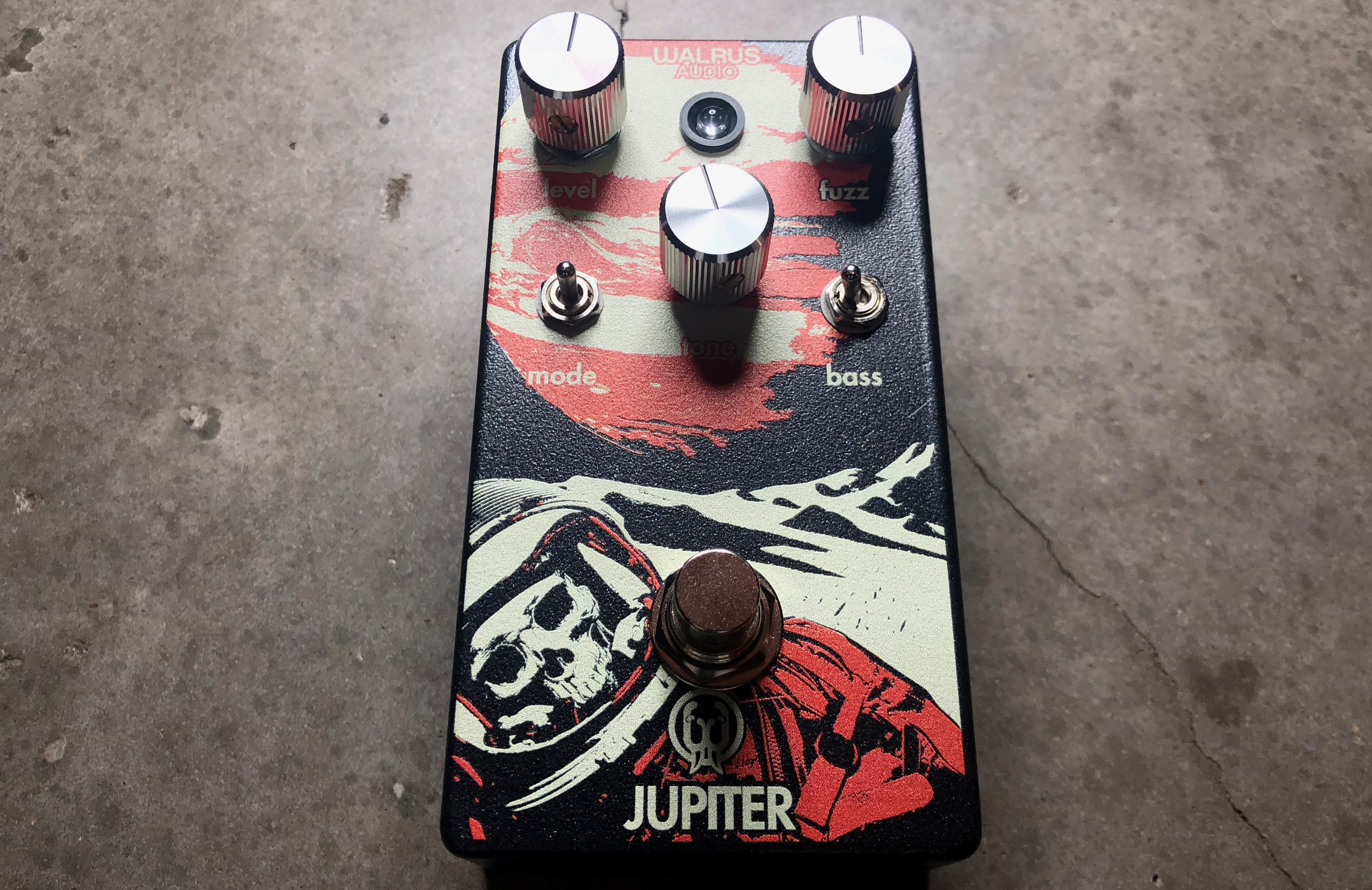
Set to the right position, the Jupiter sounds mid-scooped, a lot like a Green Russian or Triangle Big Muff (all other knobs being equal). In the middle position, it almost takes on a ProCo RAT-like quality , albeit with more "fuzz character" and more bass. The left position sounds like the middle position on steroids. It's big and it's messy, and more distortion-like.
It's a bit of a pain to get to, but internally there's a trim pot adjustment that's basically a noise gate. Dialed back all the way it gives the pedal a "dying battery" effect, which is kinda cool.
Bottom Line: Walrus hits one out of the park with the Jupiter V2 Multi-Clip Fuzz. Its "pure" fuzz tone is great, and right up there with the classics. On top of that you get a bass cut switch, and 3 voicings that take you into RAT distortion territory. As if that wasn't enough, it's got some of the nicest pedal artwork we've ever seen.
See how artists use this



.jpg)


.jpg)
Death By Audio Fuzz War
5.0 (79)
Larger than life pedal produces a bass-heavy yet articulate wall of fuzz.
-s.webp?v=1784586901)

Average Price: $177
Standard/Professional
$60
$181+
Budget
Standard
High-end
- Delivers very loud, intense fuzz without sacrificing clarity
- Unique, articulate fuzz tone; not a clone of typical models
- Works well with both guitar and bass, retaining low frequencies on bass
- Versatile tone control offers wide range of sounds
- See 6 more
- Large footprint may be problematic for pedalboard space
- Print on the pedal can be misaligned, minor quality issue
- Very loud output may not be suitable for low-volume home use
- Footswitch may occasionally not engage
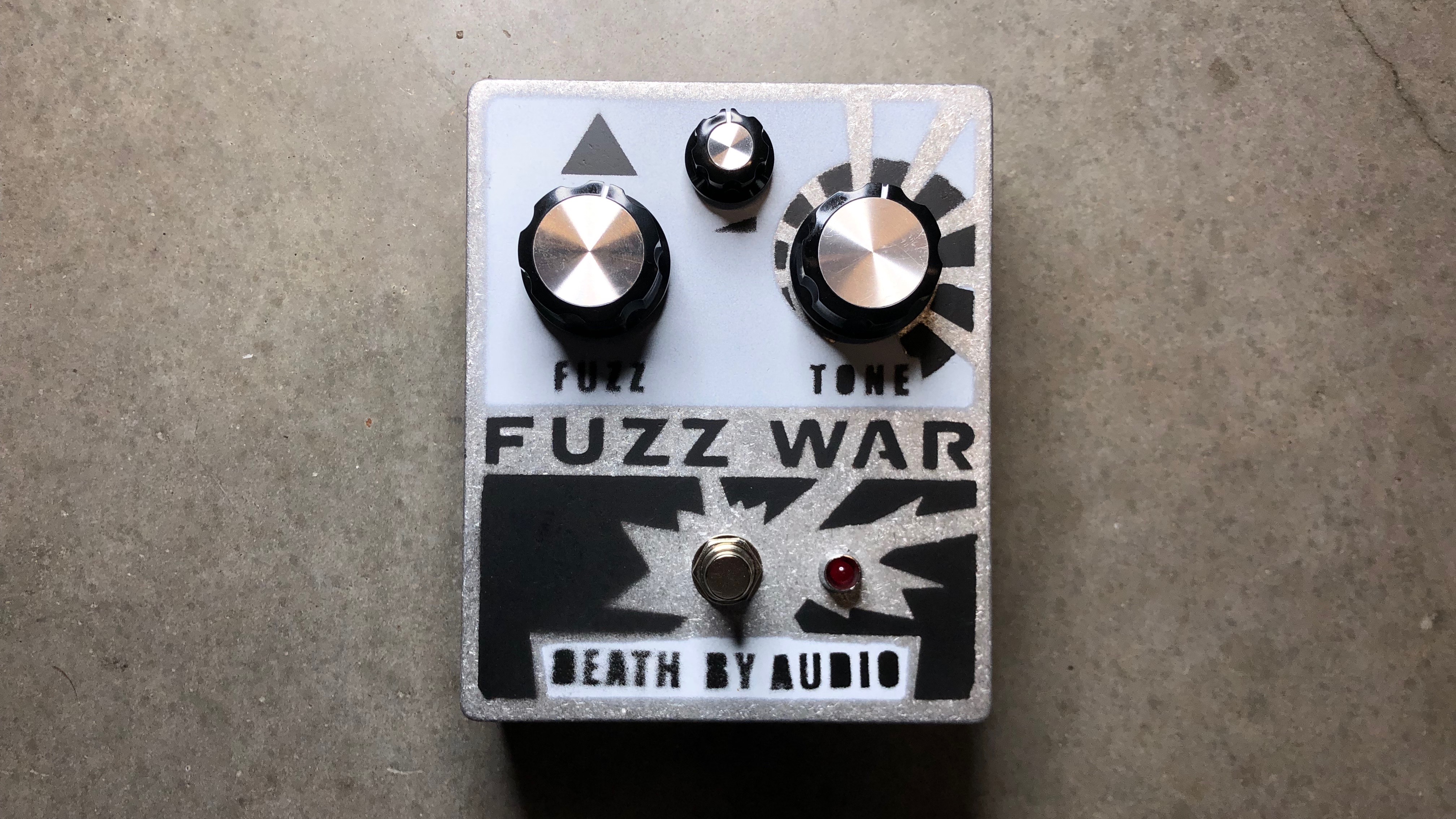
From the pedal's name, to its size, to its artwork, the Death By Audio Fuzz War comes in making a statement. This larger than life fuzz is actually amazingly articulate for how big and gnarly it can go.
The pedal's chassis is ready for battle. It's big hefty and metallic, and is adorned with graffiti-like graphics. Aside a footswitch and a red indicator light, 3 knobs are used to dial in your fuzz. Volume knob controls the output, FUZZ controls the gain, and TONE brightens or darkens the sound.
With the tone at 12 o'clock and the fuzz all the way down, it's surprisingly powerful. As you take the fuzz to about 8 o'clock it starts to get "buzzy," and around 12 o'clock it's got a mean growl that almost kind of flanges in the background. The Fuzz War's tone is deep and richly complex (you can really appreciate it via some open-back headphones). Past 12 o'clock the fuzz knob doesn't drastically alter the sound, but even around 3 o'clock where the tone is enormous, you can still articulate chords.
That's where the Fuzz War truly shines, is that somehow despite the "thick wall of fuzz" as the manual says, you can still hear the individual notes in a chord up and down the neck.
The Fuzz War is very bass-heavy compared to the likes of a Big Muff. It also has much more pronounced mid-frequencies. At equivalent volume knob settings it's also a bit louder.
Bottom Line: The Fuzz War's form factor makes it a bit of a pedalboard hog, but don't let that deter you. Death By Audio really dialed in the mixture of articulation and huge fuzz. Alongside the Swollen Pickle and ZVEX Mastotron, The Fuzz War is perfect for those looking for a very thick and full low-end.
See how artists use this





.jpg)
TC Electronic Honey Pot Fuzz
4.5 (14)
Budget option based on a Big Muff but with more mids.

Average Price: $36
Budget/Beginner
$60
$181+
Budget
Standard
High-end
- Unbelievable sustain at an affordable price
- Smooth low-gain tones, with versatility up to high-gain fuzz
- Enhances lead guitar work, improving clarity and volume
- Compatible with other pedals for expanded soundscapes
- See 6 more
- Not a direct Big Muff clone, which might disappoint some users
- Some users find it difficult to dial in the desired tone
- May produce a noticeable hum with certain guitar positions
- Tone control may offer a broader range than expected, affecting versatility
- See 2 more
| Bypass | true bypass |
| Analog/Digital | analog |
| Power | 9V |
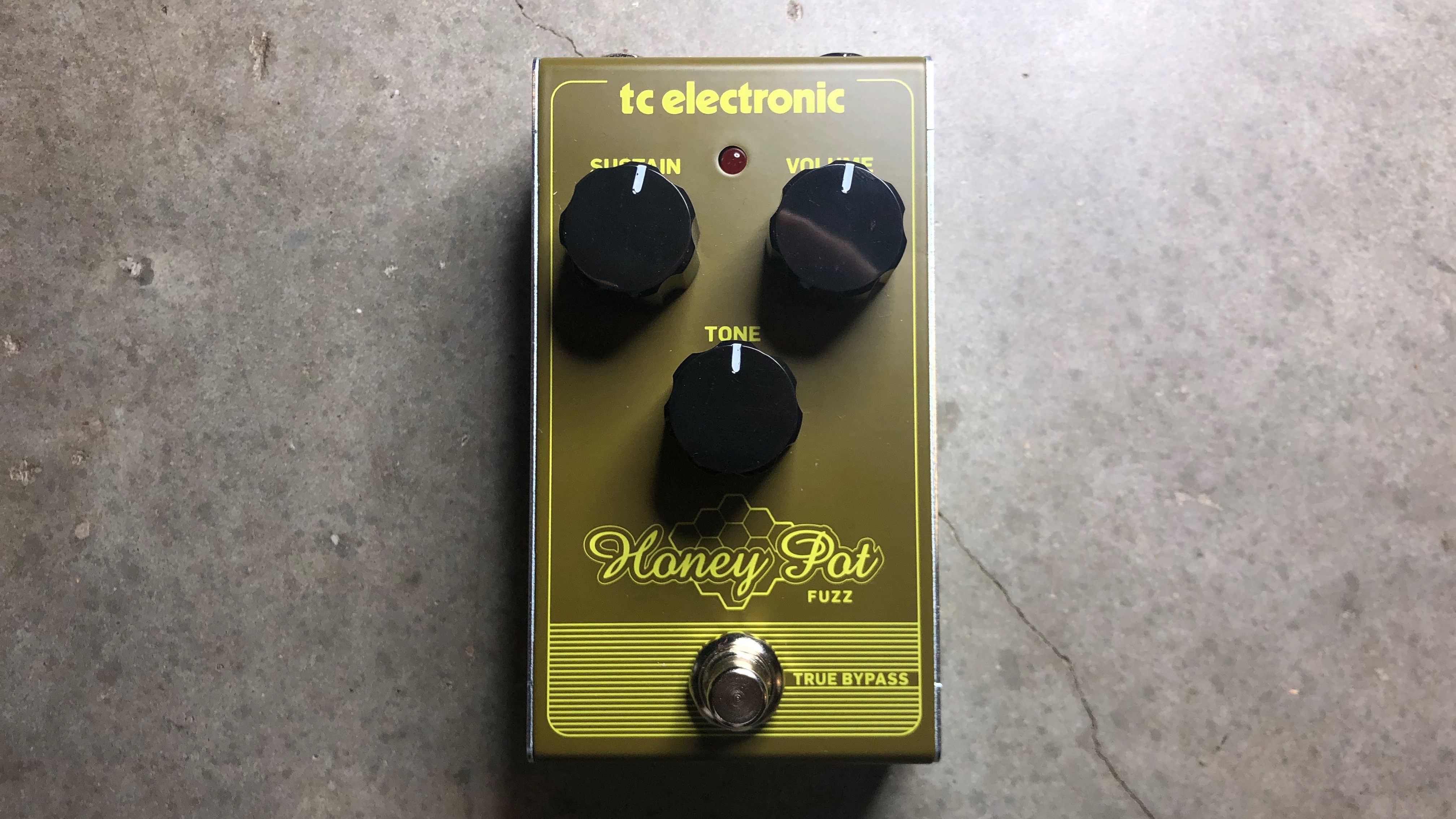
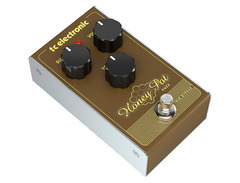
TC Electronic proves it doesn't have to be boutique or break the bank to be a very capable fuzz pedal. It's described as a fuzz that "blurs the lines between fuzz and distortion."
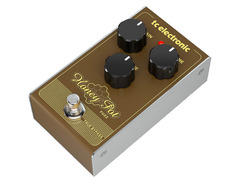
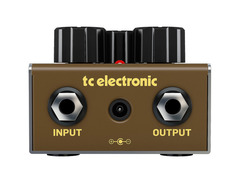
The TC Electronic Honey Pot is housed in a rather large and heavy enclosure, but the box feels like it could take a beating. The graphics are fairly minimal, 9V of power are required, and the footswitch is soft-click (true bypass when disengaged).
Operation is super simple, thanks to the 3 very familiar knobs - SUSTAIN, VOLUME, and TONE , exactly the same as a Big Muff (it's said that the Honey Pot's circuit is based on a Big Muff).
Side by side with a Nano Big Muff Pi, the sound is immediately more pronounced in the mid-range. That's probably what TC meant by "blurs the lines between fuzz and distortion." Turning the SUSTAIN all the way down gives you an extremely muffled "dying battery" type of sound. Set to noon, we found the amount of fuzz to be lacking a bit. It wasn't until we dialed SUSTAIN to 2 o'clock and up that the Honey Pot really started to sing.
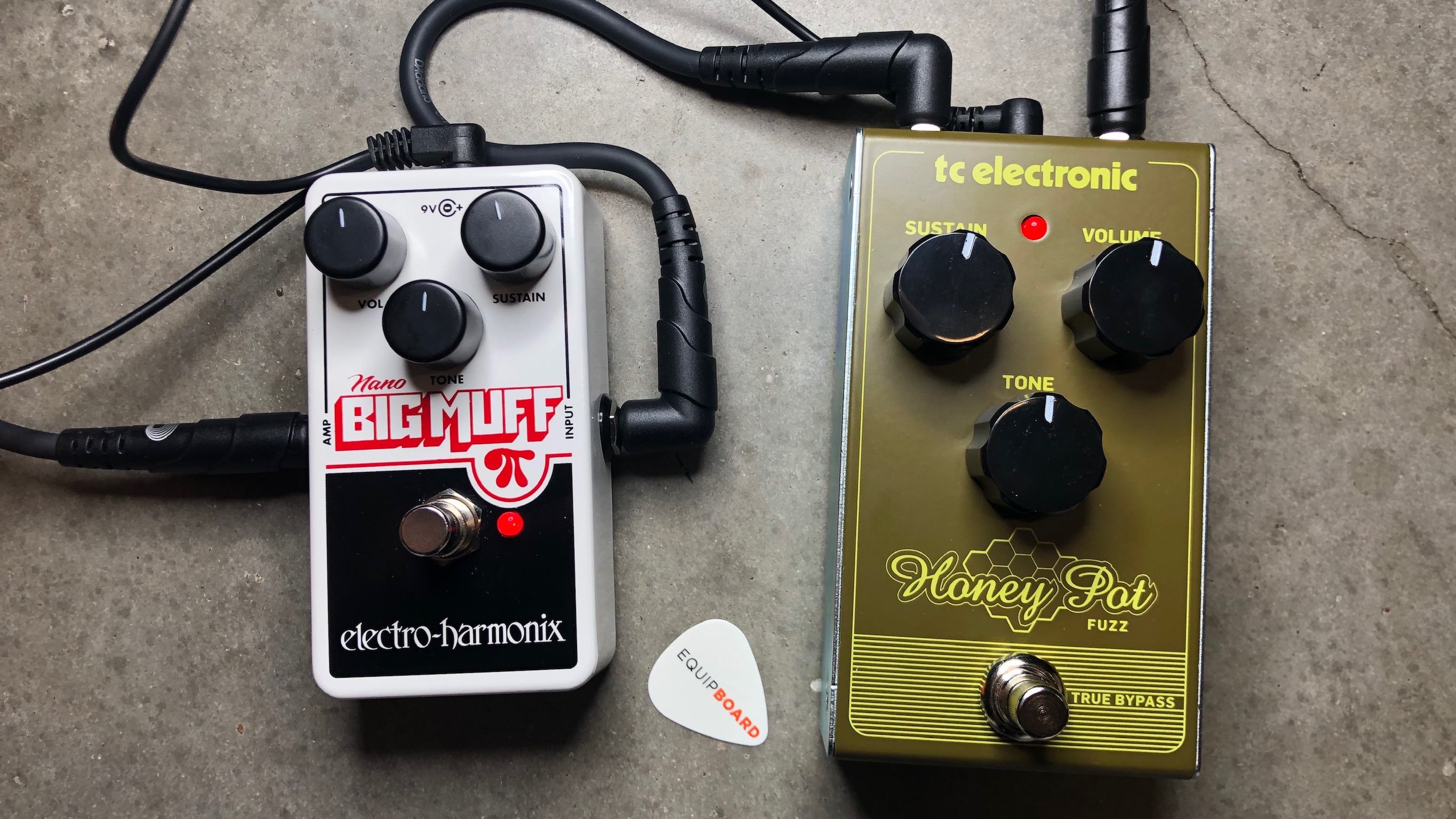
Bottom Line : The Honey Pot is a nice little fuzz pedal. It's an extremely affordable way to get fuzz on your board, and it features some nice touches like true bypass. We wish the knobs had a slightly greater range. It won't get you the exact tone of a Big Muff, but for this price range it's definitely close enough.
TC Electronic Rusty Fuzz
4.0 (38)
Budget option based on a silicon Fuzz Face.

Average Price: $44
Budget/Beginner
$60
$181+
Budget
Standard
High-end
- High-quality tone at an affordable price
- Versatile with both velcro-y and warm sounds
- Sturdy, bulletproof metal housing construction
- Works well with other gain pedals
- See 4 more
- Position of jacks and power supply inconvenient for some setups
- Fuzz sound described as mushy with no bite by some users
- Larger footprint than some competitors, might be an issue for crowded pedalboards
- The switch operation can be odd; turns on after foot is lifted
- See 1 more
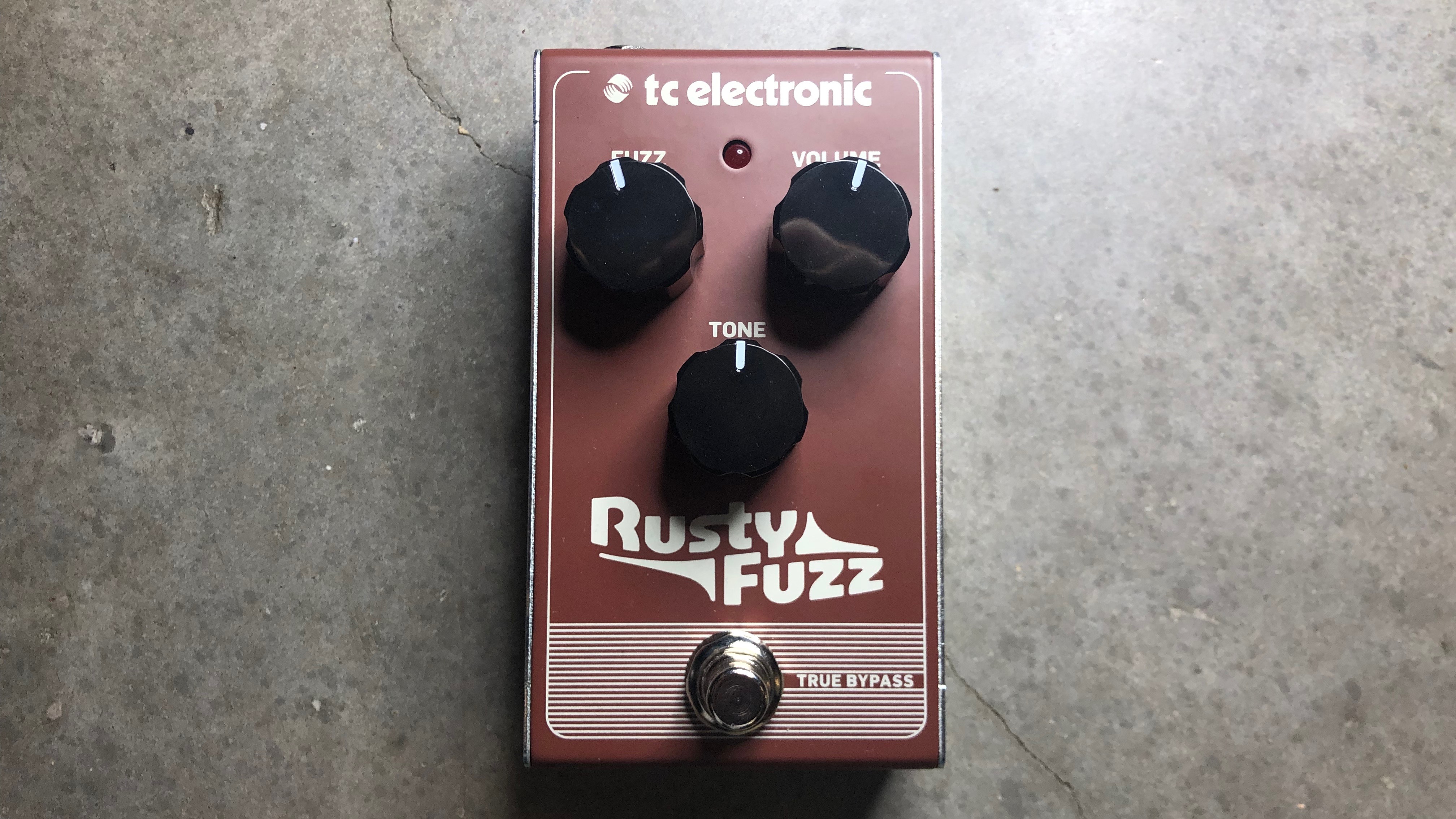
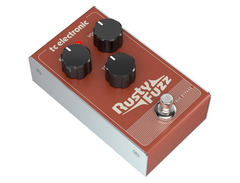
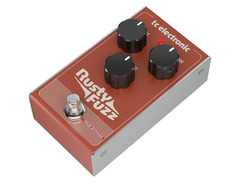
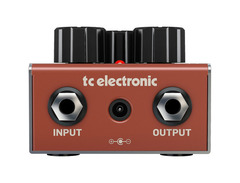
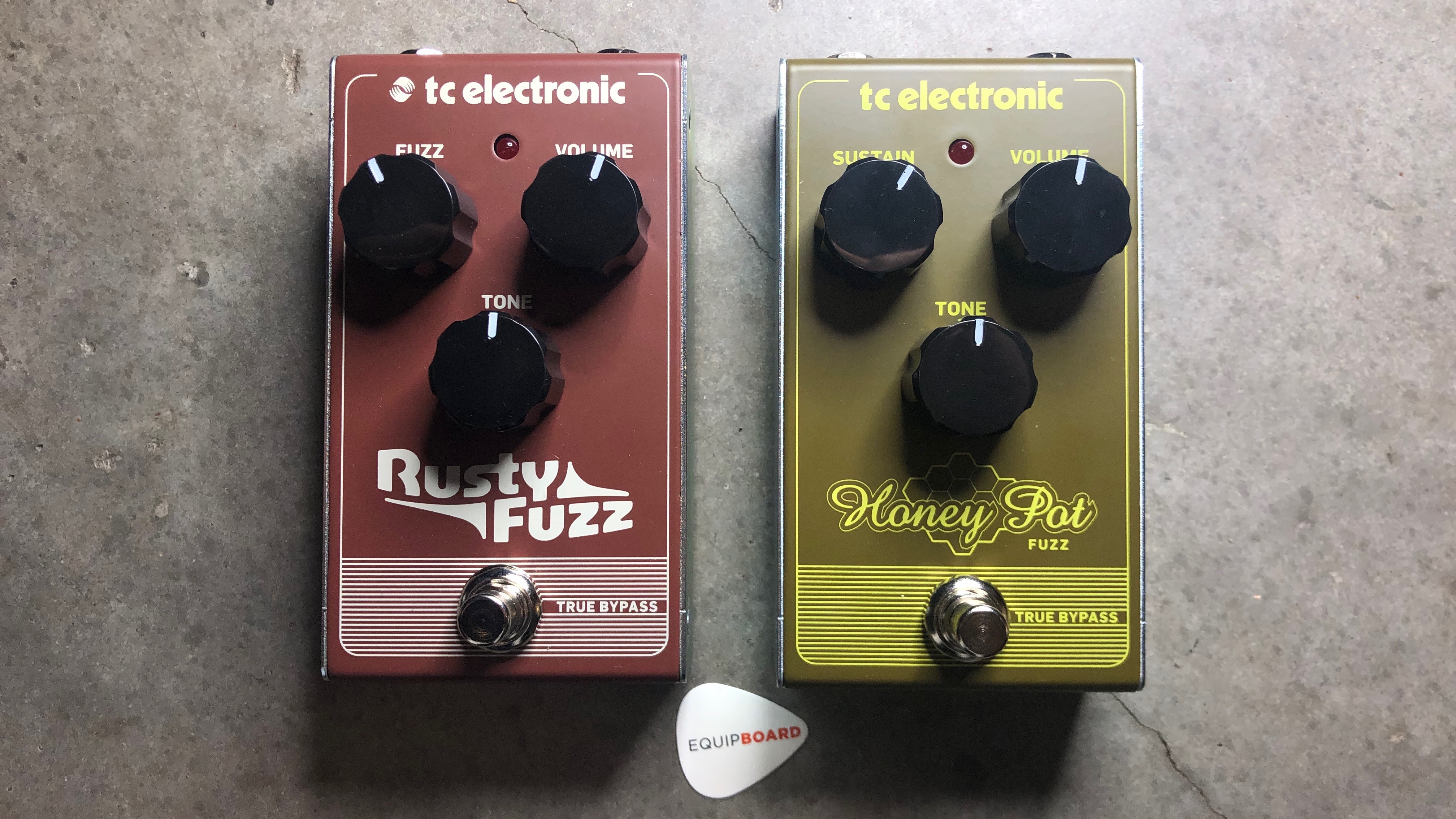
The TC Electronic Rusty Fuzz is the sister pedal to the Honey Pot, and while the Honey Pot is a Muff clone this is more of a Silicon-based Fuzz Face clone.
The enclosure is identical to the Honey Pot. It does away with a Sustain knob in favor of FUZZ (like a Fuzz Face), which as you'd expect controls the amount of Fuzz. The FUZZ knob has a nice range, going from subdued and muffled to extremely "growly" and biting. The TONE knob, just as in the Honey Pot, leaves something to be desired in terms of its range.
We didn't have a Silicon Fuzz Face to compare it side-by-side with, but compared to the Germanium-based JDF2 Fuzz Face, the Rusty Fuzz is quite different. The JDF2 has loads of low-end, and despite sounding aggressive maintains warmth. The Rusty Fuzz isn't as bass-heavy and sounds harsher and more aggressive, which is the Silicon thing to do.
Bottom Line: A budget fuzz option, but no doubt a good one. If you want a fuzz pedal that can take you from doom and sludge metal, to stoner rock, to the Black Keys, and are not keen on breaking the bank, the TC Electronic Rusty Fuzz is a solid option.
See how artists use this






Dunlop JDF2 Fuzz Face
4.5 (97)
Funky form factor that delivers an unmatched 60s Hendrix Germanium fuzz tone.
-s.webp?v=1784586322)


Average Price: $169
Standard/Professional
$60
$181+
Budget
Standard
High-end
- Personality-rich tones, from clean to nasty with guitar volume adjustments
- Highly tweakable for various tones
- Simple design with two knobs encourages exploration
- Compatible with both humbuckers and single coils
- See 6 more
- Requires significant time to dial in with amp and guitar settings
- May not perform well with solid state amps or when fuzz is maxed
- Placement of the board on the footswitch can be problematic
- Lacks modern conveniences like LED indicator and external power jack
- See 4 more
| Bypass | true bypass |
| Analog/Digital | analog |
| Power | 9V |
| Effects | fuzz |
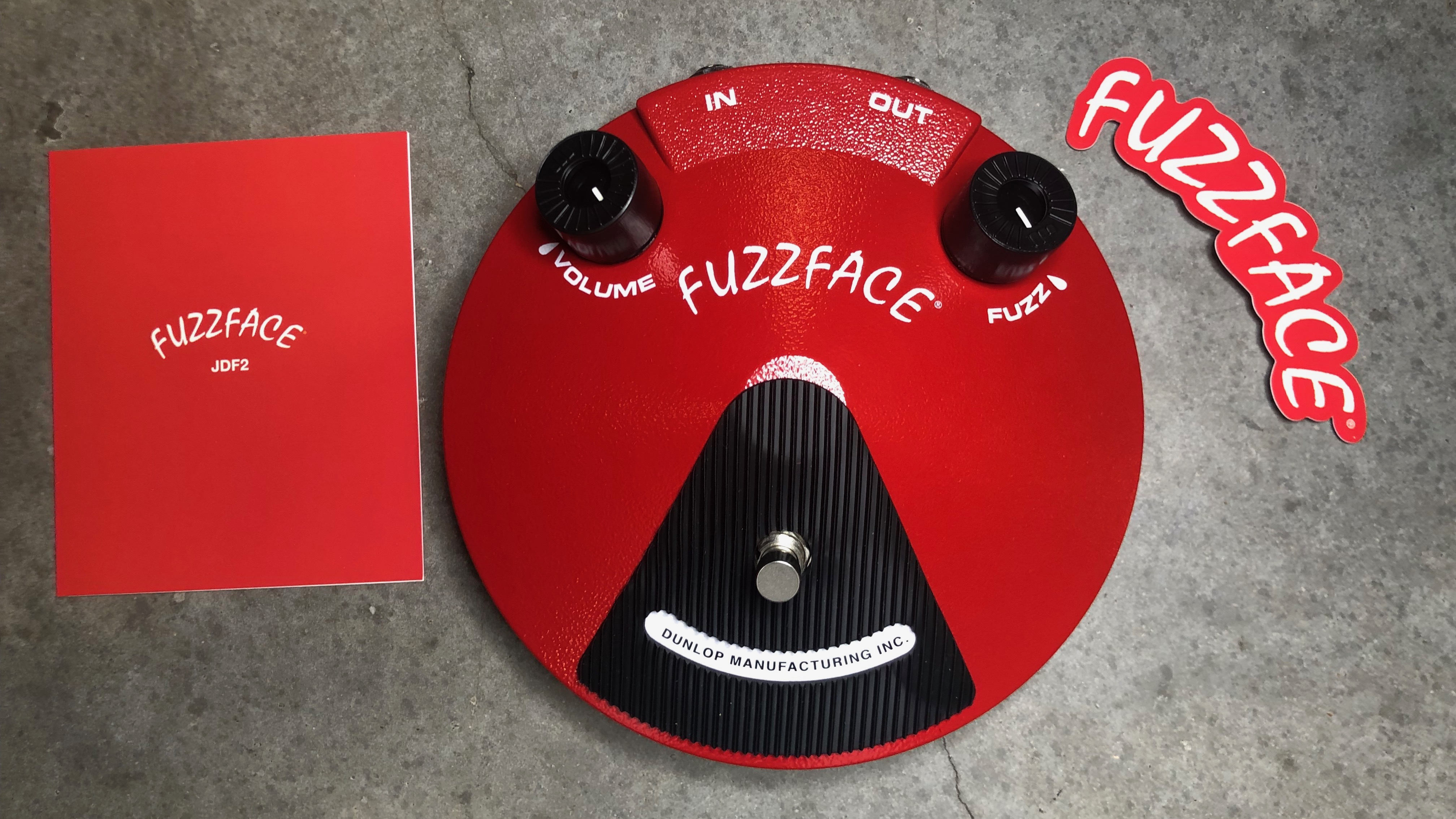
Introduced to the world and made famous by Jimi Hendrix, his Strat, and a Marshall stack, the Fuzz Face owns a place in the guitar pedal hall of fame. It has gone through dozens of incarnations, and in 1991 Dunlop secured the rights to manufacture it in its original style.
The Dunlop JDF2 Fuzz Face is built to the specs of the original '60s Dallas-Arbiter Fuzz Face, starting with the enclosure; it's bulky, round, and heavy. It's a bit annoying in that:
- Its form factor is a pedalboard organization nightmare.
- No place to plug in 9V power, battery power only, accessible by unscrewing one screw underneath.
- Unlike most pedals that flow input > output right-to-left, Fuzz Face's I/O is flipped.
- There's no light to indicate the pedal is on/off.
Just two knobs appear on the face - VOLUME and FUZZ. The knobs are made of rubber, which is nice for grip and tweaking them with your feet. The footswitch requires a lot of force to click, but luckily is true bypass.
The thing is, the gripes with the design fade into the background as soon as you plug the JDF2 in and let it rip. It features Germanium transistors like the original, making the Fuzz Face put out a warm, full, deep, creamy fuzz tone. A Big Muff Pi in comparison sounds much more "clinical" and harsh.
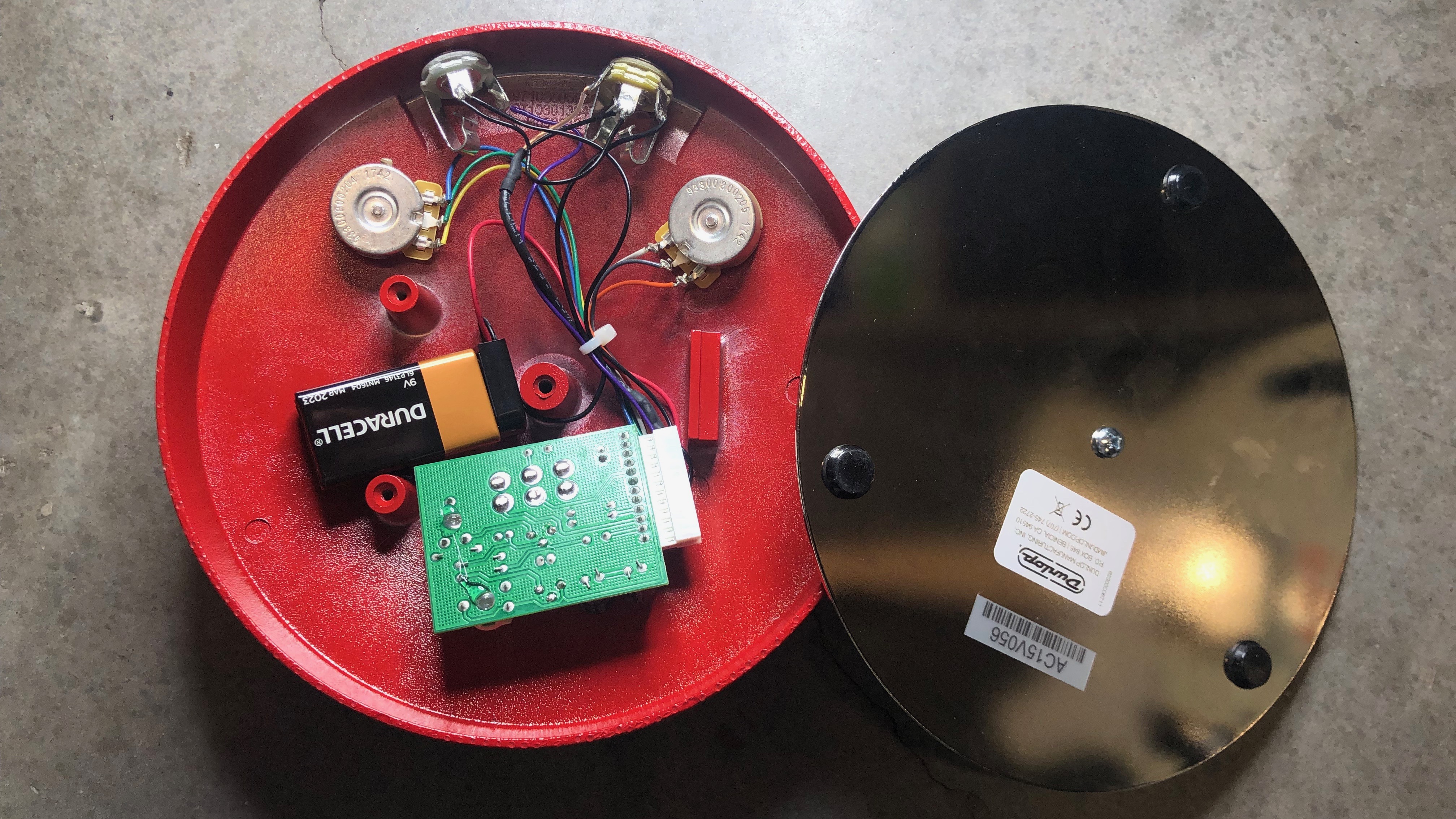
While most fuzz pedals sound their best somewhere in the middle of the range, the Fuzz Face wants to be dimed. Crank up the volume and fuzz, and then clean it up beautifully with the volume of your guitar. It almost makes you never want to turn this pedal off. In our test it sounded more pleasing with single coils going through the likes of a Bassbreaker and Blues Junior.
Bottom Line : The Fuzz Face is a legend, and Dunlop has done an outstanding job sticking to the specs of the original. The germanium transistors make for a very full and creamy fuzz tone. It's not extremely versatile, but for the full-on 60’s Jimi Hendrix tone, you won't do any better than this.
See how artists use this




Best Fuzz Pedals for...
Best Fuzz Pedals for Stoner Rock
The best fuzz pedal for stoner rock is the Electro-Harmonix Big Muff Pi, or some derivative of it. Luckily that's one of the most renowned, affordable, and widely available fuzz pedals, period.
As you can see in our guide, there are several Big Muff Pi versions available. For your stoner/doom/sludge needs, honestly, any version will do. We're partial to the Green Russian, since its tone has a little more heft.
Want to go boutique? Check out the Way Huge Swollen Pickle, which is based on the Muff but has way more tone shaping options. The EarthQuaker Hoof is also a good boutique option, as is the Death By Audio Fuzz War.
The JHS Cheese Ball, a Lovetone Big Cheese clone, is also a great option. Its designer's intention was to create "a mashup of a Big Muff and a Fuzz Face", it works great in a stoner rock setting. The Cheese Ball is lots of fun, and we did a video demo/review/tutorial you can check out here.
Best Fuzz Pedals for Blues
The best fuzz pedals for blues depends on what vibe you're after. If it's more classic Hendrix blues, then we recommend a warm, creamy germanium transistor based fuzz. The Dunlop JDF2 Fuzz Face will get you there. The Fuzz Face also cleans up very nicely with your guitar's volume control, which is desirable for blues.
A more boutique option is the ZVEX Fuzz Factory (also germanium based), which if you can tame it can definitely conjure up those vibes.
Of course, more modern blues rock players are all over the spectrum, and aren't afraid to use the nastiest, harshest fuzz pedals out there. The Black Keys' Dan Auerbach uses an EarthQuaker Hoof, and Black Pistol Fire's Kevin McKeown relies on his EHX Big Muff Pi for his huge sound.
A nice budget option for blues is the TC Electronic Rusty Fuzz, which is an emulation of a silicon transistor Fuzz Face.
Best Fuzz Pedals Under $100
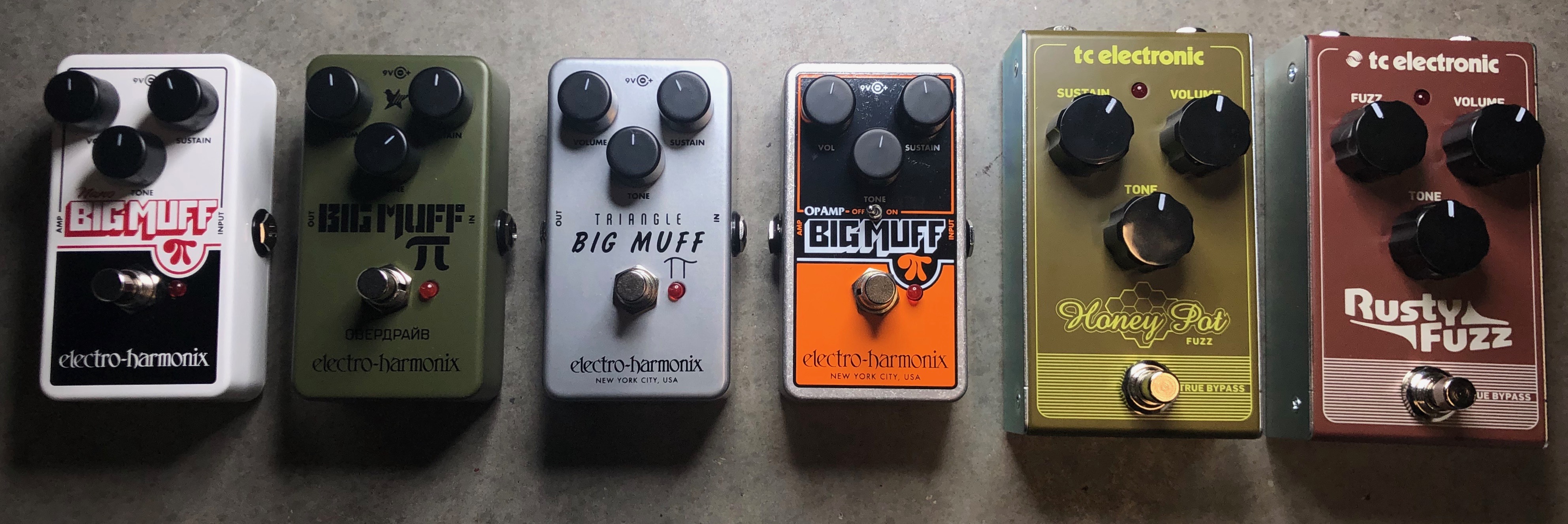
Luckily, the best fuzz pedal under $100 also happens to be one of the most famous ones: Electro-Harmonix Big Muff Pi. The Nano, Green Russian, Triangle, and Op-Amp versions of the Big Muff all come in right at or under $100.
This is great news for guitarists and bassists, since the Big Muff is a legend and pedalboard staple, and is also a great first fuzz pedal to learn the effect.
TC Electronic also makes two very solid fuzz pedals well under $100, the Honey Pot and Rusty Fuzz. They're different flavors of fuzz, the former being based on a Big Muff and the latter more on a Fuzz Face. They are even cheaper than a EHX Big Muff.
If you're unsure how fuzz will work in your signal chain and just want something to get started, we highly recommend the TC Electronic options. If you can stretch the budget another $20-30 beyond that, just go for the Nano Big Muff.
Fuzz Pedals That Didn't Make the Cut
As we test fuzz pedals, not all of them make the cut. We'll make notes of those here.
BIG EAR Pedals LOAF
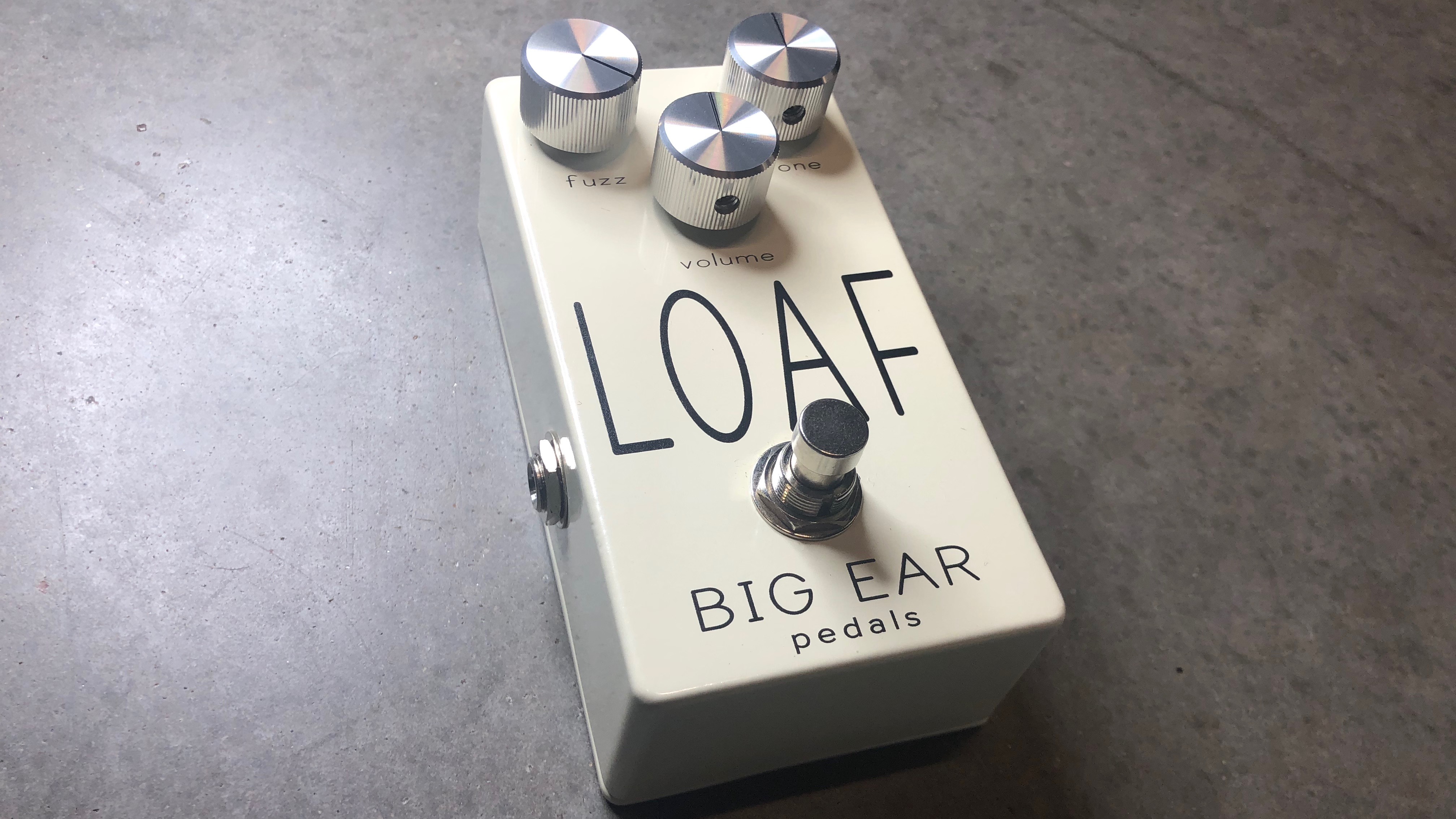
If the LOAF was marketed as a gnarly overdrive, we'd be all over it. Unfortunately it's not; they call it a "medium-gain fuzz," and unless you crank the fuzz knob all the way, it's just way too un-fuzzy for our taste. With all three knobs as 12 o'clock it has a distinct overdrive flavor to it.
With the fuzz cranked, the LOAF sounds pretty big. It's a bit of an acquired taste; it's very bassy, uncompressed, and and lacks the buzzy quality of a Big Muff. Still, with so many great fuzz pedal options at your disposal, we simply can't give it our strongest endorsement especially since it's not cheap. It's a shame too, because the LOAF's build quality is superb and it looks great.
Ramble FX Twin Bender V3
The Ramble FX Twin Bender V3 is a fuzz pedal that masterfully blends vintage authenticity with modern versatility. Inspired by the legendary Tone Bender MKII and MK1.5 circuits, it delivers a range of fuzz tones from thick, aggressive sustain to smoother, more open textures. Housed in a rugged metal enclosure, the Twin Bender V3 boasts exceptional build quality. Its intuitive layout features vintage-inspired knobs for easy control. Key features include a toggle switch for selecting between the MKII and MK1.5 circuits, a mid-boost toggle to cut through the mix, bias control for shaping the fuzz, and the use of NOS germanium transistors for authentic warmth and responsiveness.
True bypass switching ensures your signal remains pristine when the pedal is off. The MKII circuit delivers thick, saturated fuzz with a bold, vintage voice, while the MK1.5 offers a smoother, more dynamic tone that cleans up well with guitar volume. The bias control adds a layer of nuance, allowing you to dial in a wide range of fuzz textures. The Twin Bender V3 is a must-have for guitarists seeking authentic vintage fuzz tones with modern flexibility. Its robust build, versatile features, and exceptional sound quality make it a top contender in the fuzz pedal world. Whether you're chasing classic rock tones or exploring experimental soundscapes, the Twin Bender V3 delivers a dynamic and inspiring playing experience.
The reason this pedal is no longer included in the top selection is because it is no longer in production, and has become expensive on the seondary market. However, if you're looking for a top-tier Tone Bender style pedal, the meticulously designed and built Twin Bender should be on your list.
Top Ranked Fuzz Effects Pedals on Equipboard
-m.webp?v=1784586901)


Recent updates
Dec 24, 2024
The Ramble FX Twin Bender V3 has been moved to the consideration section because it is no longer in production. While it remains an excellent choice for those seeking a Tone Bender-style fuzz, its reduced availability and higher price make it a less accessible option.
About the authors
Giulio Chiarenza is the co-founder of Equipboard and a lifelong multi-instrumentalist with a deep passion for music gear. Born in Italy and raised in the U.S., he holds a Computer Science degree from The University of Texas at Austin and blends technical acumen with decades of hands-on experience across guitar, piano, drums, and electronic production. Early in his career, Giulio was signed to a San Francisco-based EDM label, releasing both remixes and original tracks. These days, he helps steer Equipboard’s vision while personally testing and reviewing gear. He's never too far from his go-to guitar: a vintage 1978 Fender Telecaster Custom. Read more
Mason is a freelance music gear writer that contributes to Equipboard, Reverb, TuneCore, Music Aficionado, and more. He plays the guitar and mandolin and resides in Wyoming. Read more
Comments
Sign Up or Log In to add comments

40
Good selection of pedals. Of these, I liked pedal Matthews Effects The Whaler more. But my favorite fuzz is MXR Super Badass VARIAC FUZZ M236, it is not on this list.

65
Look Buy the Original. May be higher in price but the Satisfaction is unbelievable.

4934
The Ramble FX Twin Bender V3 has been moved to the consideration section because it is no longer in production. While it remains an excellent choice for those seeking a Tone Bender-style fuzz, its reduced availability and higher price make it a less accessible option.
New in Fuzz Pedals

$171.00 - $188.20

$95.00 - $99.00
in Fuzz Effects Pedals Rank

$199.00
in Fuzz Effects Pedals Rank

$124.22 - $136.10

$148.00 - $149.00
in Fuzz Effects Pedals Rank


$119.00 - $149.00

$152.00 - $169.99


$156.22 - $179.00
in Fuzz Effects Pedals Rank


Related Articles



Equipboard Gear Guides
8 Best Boost Pedals: Top Picks and Reviews 2026

Paul Kinman
Updated June 2024
.jpg)
Equipboard Gear Guides
Best Distortion Pedals for Guitar

Michael Pierce + 1 more
Updated August 2025