.webp)
Table of Contents

Equipboard
Equipboard is the world's largest community of artists and their gear. Read our review process.
We are reader-supported. When you buy through links on our site, we may earn an affiliate commission. Learn more.
Our Picks
-l.webp?v=1784905094)
Analog Man King of Tone Overdrive
Best Overall: The Analogman King of Tone v4 remains the holy grail of dual overdrives, combining two Marshall Bluesbreaker inspired circuits that respond beautifully to playing dynamics. Its transparent character preserves your guitar's voice while adding harmonically rich gain that works with any amp.
Read more


Keeley Noble Screamer Overdrive Pedal
Best for Blues, Classic Rock, & Touch Sensitivity: The Keeley Noble Screamer combines the best elements of two iconic circuits: the legendary Tube Screamer and the Noble Klon-inspired boost. This hybrid approach delivers everything from subtle transparency to mid-forward punch that excels with vintage-voiced amplifiers.
Read more


Best for Modern Rock, Gain Sculpting, or Studio Use - 1: The JHS Sweet Tea V3 combines JHS's popular Moonshine overdrive with their Angry Charlie distortion for a remarkably versatile gain palette. From subtle breakup to aggressive British-style distortion, this pedal covers an impressive range of modern rock tones.
Read more
Best for Modern Rock, Gain Sculpting, or Studio Use - 2: The Strymon Sunset delivers six distinct analog-modeled overdrive circuits in a digital platform that offers unprecedented flexibility. With the ability to run drives in series or parallel plus powerful EQ options, it's a dream pedal for studio perfectionists.
Read more
EarthQuaker Devices Palisades V2
Best for Modern Rock, Gain Sculpting, or Studio Use - 3: The EQD Palisades v2 reimagines the classic Tube Screamer concept with unprecedented tonal options. With multiple clipping voices, bandwidth settings, and a dedicated boost circuit, it's less a pedal and more a complete gain-sculpting workstation.
Read more

Best Versatile Dual Drive - 1: The Keeley D&M Drive combines Daniel Steinhardt's transparent overdrive with Mick Taylor's higher gain circuit to create a pedal that can handle everything from subtle boost to saturated lead tones. Its intuitive controls and musical voice have made it a favorite among working guitarists.
Read more
Best Versatile Dual Drive - 2: The Wampler Dual Fusion combines smooth, compressed overdrive with a more aggressive British-inspired circuit for maximum flexibility. With two distinct voices that stack beautifully, this pedal excels at everything from country twang to hard rock crunch.
Read more
Best Versatile Dual Drive - 3: The Tone City King of Blues delivers remarkable quality in a compact, affordable package. Combining transparent and mid-forward overdrive circuits, this mini pedal offers much of what players love about boutique options at a fraction of the size and cost.
Read more
Source Audio L.A. Lady Overdrive
Best Versatile Dual Drive - 4: The Source Audio L.A. Lady offers unprecedented flexibility with its three-mode analog overdrive circuits plus additional options via Neuro app integration. With the ability to store presets and access dozens of drive types, it's an entire overdrive collection in a single pedal.
Read moreIn the ever evolving quest for the perfect guitar tone, players have discovered that sometimes one overdrive simply isn't enough. Enter the dual overdrive pedal: a space saving solution that offers two distinct flavors of gain in a single enclosure, often with the ability to run them simultaneously for new sonic territories.
What Is A Dual Overdrive Pedal
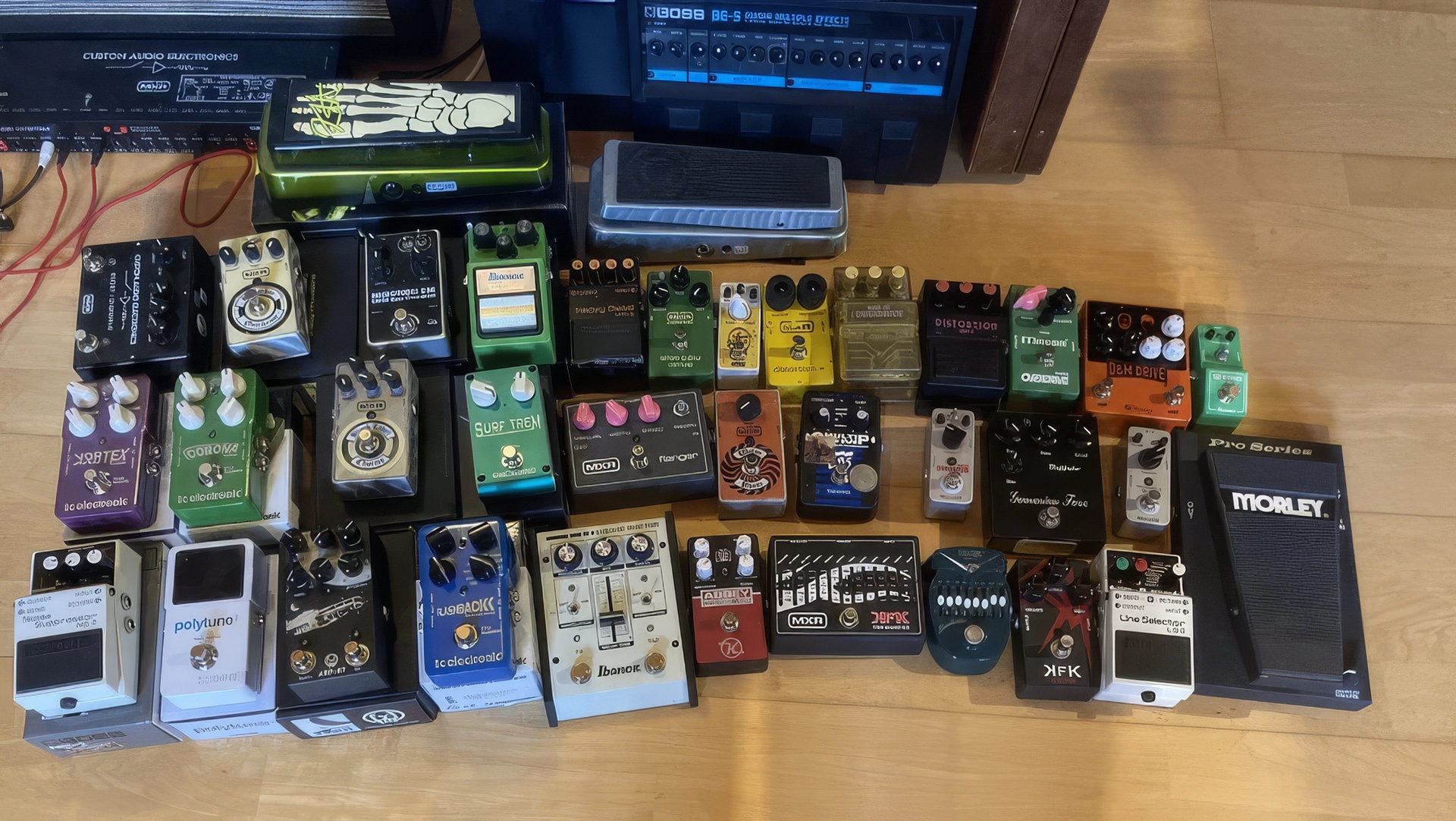
A dual overdrive pedal is exactly what it sounds like: a single pedal housing two separate overdrive circuits. These twin-engine tone machines typically feature independent controls for each side, allowing players to dial in two completely different gain sounds and switch between them (or stack them) with the tap of a foot.
Gain Stacking
The primary appeal lies in the concept of gain stacking. When one overdrive pushes into another, magic happens. The first pedal shapes your guitar's EQ and adds some compression and harmonics, while the second responds to this already colored signal by adding its own character. The result is often greater than the sum of its parts: thicker mids, smoother highs, more responsive dynamics, and a more complex harmonic profile than either circuit could achieve alone.
Versatility
Most dual overdrives fall into a few common categories. Some combine classic circuits like the Tube Screamer and Bluesbreaker for that familiar, mid-pushed sound that cuts through any mix. Others aim for transparency, preserving your guitar and amp's natural voice while adding body and sustain. Many modern options offer more amp-like tones, simulating the natural breakup of classic tube amplifiers pushed into saturation.
Best Dual Overdrive Pedals
The landscape of dual overdrive pedals features some legendary names that have set the standard for what these versatile tone tools can achieve. These are the pedals that combine incredible sound quality, thoughtful design, and the flexibility to handle virtually any musical situation you might encounter.
Analog Man King of Tone Overdrive
5.0 (84)
The Benchmark of Boutique Drives
-s.webp?v=1784905094)




Average Price: $733
High-end/Boutique
$50
$176+
Budget
Standard
High-end
- Transparent sound adapts to amp for authentic tone enhancement
- Offers both overdrive and distortion, effectively two pedals in one
- Toggle switch option allows easy mode switching without tools
- Exceptional clarity, particularly effective as a lead boost
- See 3 more
- High price point, especially on second-hand market
- Long waitlist can deter potential buyers
- Some users find it overhyped and not unique in saturated market
- Limited to low gain, may not satisfy those seeking more aggressive distortion
| Bypass | true bypass |
| Analog/Digital | analog |
| Power | 9V, 12V, 18V |
The King of Tone (KOT) has achieved mythical status in the guitar world, and for good reason. This handmade marvel from Mike Piera's Analogman workshop continues to command waiting lists approaching a decade (prospective buyers can join at analogman.com, with used units regularly fetching premium prices on the secondary market. The pedal's reputation stems from its remarkably transparent tone that enhances rather than colors your fundamental sound.
Circuit Design and Controls
Each side of the KOT features identical circuitry with independent Volume, Drive, and Tone controls, allowing you to dial in two complementary sounds. What sets the KOT apart is its internal DIP switches, which let you configure each channel for one of three modes: Overdrive (standard), Distortion (more gain), or Boost (cleaner with more output).
The magic happens when stacking both sides. The Yellow channel feeds into the Red, creating a cascade of gain that maintains clarity and articulation even at higher gain settings. The pedal's touch sensitivity is legendary, responding to the subtlest variations in pick attack and guitar volume adjustments.
Tone Profile
The KOT produces a sound that's often described as "amp-like" rather than "pedal-like." It preserves the critical midrange frequencies that help guitar cut through a mix without getting harsh or fizzy in the high end. Bass response stays tight and defined rather than flubby, even when pushing considerable gain.
While acknowledging its status as the benchmark, it's worth noting the lengthy wait time for a new unit. For players seeking something available now, pedals like the Browne Protein and Jackson Audio Golden Boy offer comparable quality with immediate availability, often at similar price points to what KOT units command on the used market.
See how artists use this





Keeley Noble Screamer Overdrive Pedal
Screaming Nobility for Vintage Tones

Average Price: $188
High-end/Boutique
$50
$176+
Budget
Standard
High-end
- Exceptionally versatile with rich, high-end tones
- Highly touch-sensitive, responsive to playing dynamics
- Compatible with various amps (Marshall, Fender, Vox)
- Offers both Nobles ODR-1 and Tube Screamer circuits
- See 6 more
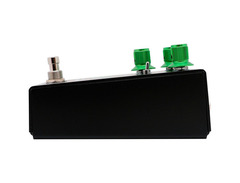
- Wedge shape can obstruct access to other pedals
- Some users find the tones lacking or overly specific
- Mid tones can be overly cut in dual OD mode
- Level adjustment needed when changing settings
| Bypass | true bypass |
| Analog/Digital | analog |
| Power | 9V |
| Current Draw | 26ma |
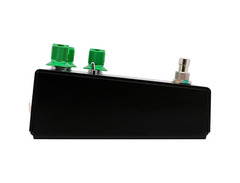
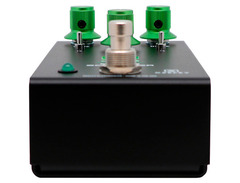
The Keeley Noble Screamer represents Robert Keeley's unique approach to combining classic circuits in new and useful ways. This pedal marries the best qualities of the iconic Ibanez Tube Screamer with Keeley's take on the transparent Klon Centaur circuit, resulting in a remarkably versatile tool for blues and classic rock players.
Classic Meets Contemporary
On one side, you get Keeley's refined version of the Tube Screamer circuit, complete with the characteristic midrange hump that has made this circuit a staple on countless professional pedalboards. This side excels at pushing tube amps into natural breakup or adding sustain and compression for expressive lead playing.
The Noble side offers a more transparent boost with just a touch of grit, preserving more of your guitar's inherent character while adding volume and presence. This circuit responds beautifully to playing dynamics, cleaning up exceptionally well when you back off your guitar's volume control.
Versatile Control Set
Each side features a three-knob layout with Volume, Drive, and Tone controls, allowing precise tonal shaping. What makes the Noble Screamer particularly effective is how these two circuits complement each other when stacked. The synergistic interaction creates rich harmonic content that exceeds what either circuit could produce independently.
The pedal works exceptionally well with both single coils and humbuckers, making it versatile enough for virtually any guitar. Blues players particularly appreciate how it can add sustain and compression to single coils without sacrificing their inherent sparkle and clarity, while also taming the sometimes overwhelming output of humbuckers into something more manageable and articulate.
See how artists use this









JHS Sweet Tea V3
5.0 (4)
Atlanta's Boutique Marvel



Average Price: $327
High-end/Boutique
$50
$176+
Budget
Standard
High-end
- Versatile, offers a range of overdrive/distortion tones
- Quality construction and durable design
- Two distinct overdrive styles in one pedal (Angry Charlie and Moonshine)
- Features clean blend options for nuanced tone shaping
- See 6 more
- High price point compared to some alternatives
- Lacks a three-band EQ on the Moonshine side for equal versatility
| Bypass | true bypass |
| Analog/Digital | analog |
| Power | 9V |
| Current Draw | 100ma |
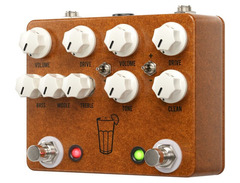
The JHS Sweet Tea V3 represents the evolution of one of Josh Scott's most popular dual drive concepts. This pedal combines two of JHS's best-selling circuits in one enclosure, offering everything from subtle overdrive to aggressive distortion in a thoughtfully designed package.
The Perfect Pairing
The Moonshine side provides JHS's take on the classic 808 circuit, featuring a unique clean blend control that lets you mix your clean guitar signal with the overdrive effect. This creates remarkably transparent sounds even at higher gain settings, preserving note definition and dynamics that pure overdrive circuits sometimes compress away.
The Angry Charlie channel delivers JHS's interpretation of a British-style distortion, reminiscent of a cranked JCM800 amplifier. This side can go from moderately driven classic rock tones all the way to aggressive modern rock distortion with substantial gain on tap.
Modern Enhancements
What sets the Sweet Tea apart for modern applications is its thoughtful design features. The order toggle switch allows you to determine which circuit comes first in the signal chain, dramatically expanding the tonal possibilities beyond what most dual drives offer. The versatile EQ controls on both sides let you precisely sculpt your tone to fit in complex mix arrangements.
The Moonshine side's clean blend is particularly useful in studio environments, where maintaining pick attack and note clarity is essential even with substantial gain. Meanwhile, the Angry Charlie's voice cuts perfectly through dense mixes, making it ideal for modern rock production where guitars need to maintain presence alongside keyboards, multiple vocal layers, and processed drums.
See how artists use this




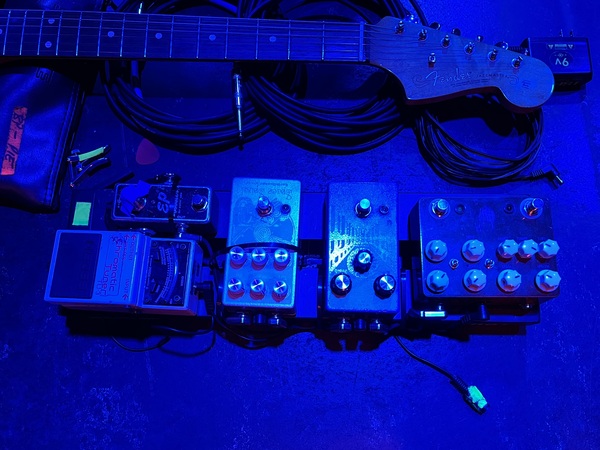

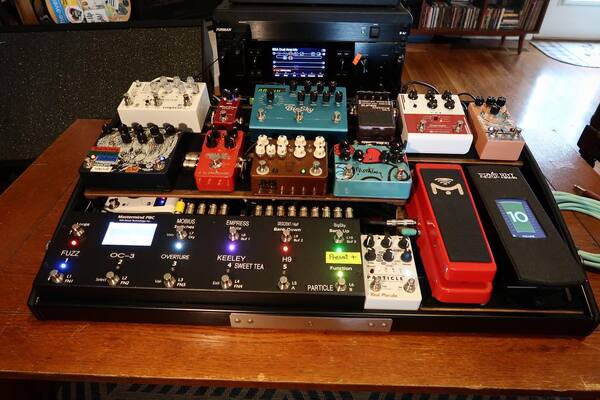
Strymon Sunset Dual Overdrive
5.0 (29)
Digital Precision With Analog Soul


Average Price: $287
High-end/Boutique
$50
$176+
Budget
Standard
High-end
- Replaces multiple pedals with its versatility
- Optional noise gate for high gain without noise
- Dynamic response with balanced mid frequencies
- Wide array of drive/gain/distortion tones
- See 6 more
- High pitch squeal at high settings for some units
- Input/output jacks too close for standard right-angle plugs
- Limited preset functionality compared to some competitors
- Some users may not like all available tone options
- See 1 more
| Bypass | true bypass, buffered bypass |
| Power | 9V |
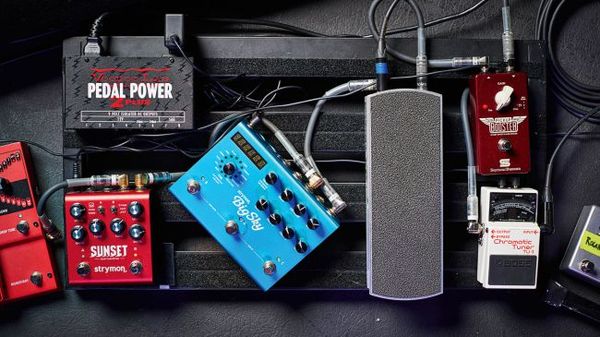
The Strymon Sunset represents a forward-thinking approach to overdrive design, leveraging digital technology to recreate multiple analog circuits with exceptional accuracy. This hybrid approach offers unprecedented flexibility while maintaining the touch-responsive feel that players demand from quality overdrive pedals.
Six Distinct Voices
The Sunset houses six different overdrive circuits, divided between two channels that can be used independently or together. The circuits range from transparent boosts and mild overdrives to more aggressive distortion tones, providing a comprehensive palette of gain options in a single pedal.
What distinguishes the Sunset for studio and modern applications is its routing options. The pedal allows you to run the two sides in either series (one into the other) or parallel (both simultaneously but independent), dramatically expanding the sonic possibilities beyond conventional dual drives.
Precision Control
Each side features Tone and Level controls, with the A side offering a smaller Drive knob and the B side providing a larger Drive control for its typically higher-gain circuits. Additional controls include a Bright switch for the A channel and a Mid control for the B channel, allowing for precise frequency sculpting that's invaluable in studio environments.
The Sunset's preset capability is particularly useful for modern players who need to access different gain stages quickly during complex arrangements. The pedal's immaculate noise floor also makes it ideal for high-gain recording applications where unwanted hiss can ruin otherwise perfect takes.
See how artists use this







EarthQuaker Devices Palisades V2
4.5 (15)
Two-Channel Tone Laboratory
- Highly versatile, suits various musical styles
- Solid boost feature for higher gain sounds
- Can mimic mild fuzz effects
- Maintains body and presence with different guitars
- See 3 more
- Lacks isolated control for all three channels
- Cannot stack two gains without engaging the far right switch
- Some presets may not be useful to all users
| Bypass | true bypass |
| Analog/Digital | analog |
| Power | 9V |
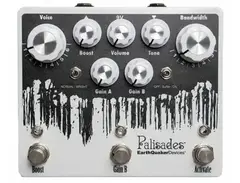
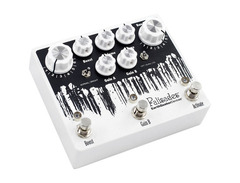
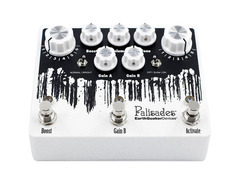
The EarthQuaker Devices Palisades v2 takes the familiar Tube Screamer circuit and expands it into a comprehensive tone-shaping system. This pedal offers a level of versatility that makes it particularly well-suited for modern rock applications and studio environments where precise control is essential.
Beyond the Green Standard
While based on the Tube Screamer architecture, the Palisades vastly expands on the original concept. The pedal features two gain stages: a standard overdrive circuit and a separate boost channel that can be used independently or stacked with the overdrive.
What truly sets the Palisades apart is its clipping options. With six different clipping voices ranging from soft and compressed to wide open and aggressive, plus five bandwidth settings that adjust the pedal's frequency response, the tonal possibilities are virtually limitless.
Studio-Ready Features
For modern recording applications, the Palisades offers exceptional control over your gain structure. The independent boost circuit can be set before or after the overdrive section, allowing you to either push the overdrive harder or boost your already distorted signal for solos without changing the fundamental character of your tone.
The pedal's extensive EQ capabilities make it perfect for fitting guitars into complex modern productions. The bandwidth control essentially acts as a presence knob, determining how much high-end content comes through. This allows you to carve out precise frequency spaces for guitars to sit alongside synths, samples, and heavily processed vocals in contemporary arrangements.
See how artists use this





Keeley D&M Drive
4.5 (11)
Signature Tones in a Box


Average Price: $223
High-end/Boutique
$50
$176+
Budget
Standard
High-end
- Dual-drive design offers versatile overdrive and boost options
- Ability to change order of drive and boost provides tonal flexibility
- Harmonically rich drive suitable for a wide range of music genres
- Boost side adds clear, mid-pushed enhancement without muddiness
- See 6 more
- Significant output difference between "drive first" and "boost first" settings might limit on-the-fly adjustments
- Some may find the pedal expensive compared to other drive pedals
- Switches can feel crowded for users with larger feet or when used in a cramped pedalboard setup
| Bypass | true bypass |
| Analog/Digital | analog |
| Power | 9V |
| Current Draw | 55ma |
The Keeley D&M Drive is the result of a collaboration between Daniel Steinhardt and Mick Taylor of That Pedal Show fame, combining their preferred overdrive characteristics into one exceptionally versatile unit. This pedal has developed a devoted following among professional guitarists for its musical tone and intuitive design.
Two Complementary Circuits
The "Daniel" side offers a more transparent, lower gain voice that excels at pushing tube amps into natural breakup or providing a slight edge to clean tones. With a relatively flat EQ response, this side preserves your guitar and amp's inherent character while adding just enough color to enhance rather than dominate.
The "Mick" side delivers a more aggressive, higher gain tone with additional midrange presence and saturation. This circuit provides singing sustain for lead work while maintaining excellent note definition and dynamic response. The balanced frequency response ensures it cuts through a mix without becoming harsh or abrasive.
Intuitive Control Layout
Each side features dedicated Volume, Drive, and Tone controls, allowing precise adjustments to match different guitars and amplifiers. What makes the D&M particularly user-friendly is its thoughtful control layout, with the two sides clearly distinguished and all knobs easily accessible even in live situations.
The pedal is arranged with the boost/lower gain Daniel side feeding into the higher gain Mick side when both are engaged, creating a natural gain staging that maintains clarity even with substantial gain. This arrangement, combined with independent footswitches for each circuit, gives players instant access to three distinct voices: boost/low gain, higher gain, or both stacked together.
See how artists use this


.jpg)

Wampler Dual Fusion V1
5.0 (6)
Classic American Meets British Crunch


Average Price: $208
High-end/Boutique
$50
$176+
Budget
Standard
High-end
- Excellent for higher gain overdrives and boosting
- Offers a wide range of tonal possibilities
- Responsive to pick attack, enhancing playing dynamics
- Can tighten up a dirty channel for additional tonal options
- See 6 more
- Can be noisy, requiring a good noise gate or suppressor for optimal use
- May take time to dial in desired tones
- Brightness may require adjustment to avoid harshness
| Bypass | true bypass |
| Analog/Digital | analog |
| Power | 9V |
The Wampler Dual Fusion represents Brian Wampler's approach to combining two distinct gain voices in one enclosure. This pedal has earned a reputation for exceptional versatility, making it a favorite among session players who need to cover multiple genres without switching pedals.
Transatlantic Tone Fusion
The Dual Fusion combines the smooth, compressed character of Wampler's Paisley Drive circuit with the more aggressive, British-inspired Euphoria overdrive. This pairing offers complementary tones that work well individually and create something special when combined.
The Paisley Drive side provides a compressed, mid-forward voice with a slight upper midrange emphasis that helps solos cut through dense mixes. The Euphoria side offers a more open, dynamic sound with greater touch sensitivity and a broader frequency response that works particularly well for rhythm playing.
Flexible Configuration
What makes the Dual Fusion especially versatile is its order toggle switch, allowing you to determine which circuit comes first in the chain. This effectively gives you four distinct sounds: Paisley alone, Euphoria alone, Paisley into Euphoria, or Euphoria into Paisley, each with its own unique tonal character.
Each channel features dedicated Volume, Tone, and Gain controls, plus a Voice switch on the Euphoria side that adjusts its character from smooth to crunchier textures. The pedal's wide gain range accommodates everything from subtle edge-of-breakup tones to saturated lead sounds without ever becoming muddy or losing definition.
See how artists use this

.jpg)


Tone City King of Blues
4.0 (8)
Budget Friendly Royal Treatment

- Surprisingly good quality for the price
- Provides a wide range of overdrive tones
- Offers warmth and grit without losing clarity
- Capable of achieving high-gain sounds comparable to more expensive pedals
- See 1 more
- Output can be erratic when adjusting the knob
- May not integrate well with other pedals or power supplies
- Some users find it lacking compared to higher-end models
The Tone City King of Blues has built a reputation as one of the most impressive values in the dual overdrive category. This mini-sized pedal delivers tones reminiscent of far more expensive units, making high-quality stackable drives accessible to players on tighter budgets.
Boutique Inspired Circuits
Despite its modest price, the King of Blues doesn't cut corners on tone. One side offers a transparent, low-gain circuit clearly inspired by the King of Tone, preserving your guitar's natural voice while adding subtle harmonics and sustain. The other provides a more mid-focused voice with additional gain on tap, perfect for cutting through busy mixes.
Each side features independent Volume and Drive controls, with a shared Tone knob that affects both circuits when they're engaged. While this represents a slight compromise compared to fully independent channels, the pedal's impressive sound quality makes this minor limitation easy to overlook, especially considering its accessible price point.
Compact Convenience
One of the King of Blues' most significant advantages is its miniature enclosure, occupying roughly half the pedalboard space of standard-sized alternatives. This compact footprint makes it an excellent option for crowded boards or players building mini rigs for grab-and-go situations.
Despite its small size, the pedal doesn't sacrifice durability, featuring a solid metal enclosure and quality footswitches that inspire confidence. The King of Blues works well with a wide range of amplifiers and guitars, offering versatility that belies its modest price point and diminutive dimensions.


Source Audio L.A. Lady Overdrive
4.5 (3)
Digital Flexibility in Analog Territory



Average Price: $184
High-end/Boutique
$50
$176+
Budget
Standard
High-end
- Versatile overdrive and fuzz options via digital modeling
- Analog-like sound and response feel
- Extensive tone customization through Neuro app
- Allows easy switching among presets for live use
- See 6 more
- Deep editing options can be overwhelming
- Full potential requires use of phone/computer app
| Bypass | true bypass, buffered bypass |
| Analog/Digital | digital |
| Power | 9V |
| Current Draw | 180 ma |
The Source Audio L.A. Lady represents a forward-thinking approach to overdrive design, combining analog-inspired circuits with digital control to create one of the most flexible dual drive options available. This pedal bridges the gap between traditional analog warmth and modern digital convenience.
Multiple Personalities
Out of the box, the L.A. Lady offers three distinct overdrive voices: a transparent clean boost, a mid-focused "808" style drive, and a heavier distortion reminiscent of British amplifiers. Each voice can be assigned to either of the pedal's two channels, effectively giving you six different combinations before even considering the stacking options.
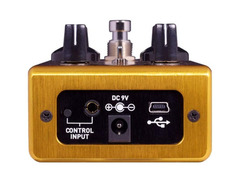
What truly sets the L.A. Lady apart is its integration with Source Audio's Neuro app. Through this connection, you can access dozens of additional overdrive, distortion, and fuzz algorithms, effectively transforming the pedal into virtually any drive type you might need.
Modern Conveniences
The pedal features standard Drive, Level, and Tone controls for each channel, plus a Bass and Treble control that allows for more precise EQ adjustments than typical overdrive pedals offer. The MIDI capabilities take versatility to another level, allowing you to recall saved presets and automate parameter changes in professional stage and studio environments.
Despite its digital architecture, the L.A. Lady delivers the touch sensitivity and dynamic response that players expect from quality overdrive pedals. The ability to store your favorite sounds as presets makes it particularly valuable for gigging musicians who need multiple, precisely dialed tones instantly available without adjusting knobs between songs.
See how artists use this

.jpg)

.jpg)

.jpg)
What to Look For in a Dual OD Pedal

Selecting the right dual overdrive pedal requires consideration of several key factors beyond just the basic sound. To find the perfect match for your playing style and rig, pay attention to these important features and design elements.
Independent Controls and Footswitches
The most versatile dual overdrive pedals offer completely independent control sets for each channel. Look for separate Volume, Drive, and Tone knobs for both sides, allowing you to dial in two distinct sounds without compromise. Some pedals economize by sharing certain controls between channels, which can limit flexibility but often results in a smaller footprint.
Independent footswitches are equally important, allowing you to activate each side separately or both together. This three-sound approach (Side A, Side B, or both stacked) maximizes versatility from a single pedal.
Stacking Behavior and Routing Options
How the two sides interact when used together significantly impacts a dual overdrive's versatility. Most pedals are wired in series, with one side feeding into the other in a fixed order. More advanced units offer order-switching capability, allowing you to determine which circuit comes first in the chain.
Some cutting-edge options even provide parallel routing, where both circuits process your signal independently before being mixed back together. This can create unique tones impossible to achieve with traditional series stacking.
Tonal Character and EQ Profile
Dual overdrive pedals generally fall into a few tonal categories. Transparent overdrives aim to preserve your guitar and amp's inherent character while adding sustain and harmonics. Mid-focused circuits like Tube Screamer variants push the midrange frequencies to help cut through dense mixes. Some pedals combine complementary voices, while others offer two similar circuits at different gain levels.
The EQ flexibility varies significantly between models. Basic tone controls offer simple treble adjustment, while more sophisticated options provide multi-band EQ or additional voicing switches.
Build Quality and Practical Considerations
For gigging musicians, durability is paramount. Look for solid metal enclosures, quality footswitches rated for thousands of operations, and secure jacks that can withstand repeated cable connections. Boutique options often feature hand-wired circuits and premium components that can contribute to better sound quality and longevity.
Pedalboard real estate is another important consideration. Dual overdrives range from compact mini pedals to substantial units with extensive control sets.
FAQ
What's the benefit of a dual overdrive pedal?
A dual overdrive pedal combines two separate drive circuits in a single enclosure, providing multiple gain stages accessible via individual footswitches. The primary benefits include pedalboard space efficiency, guaranteed circuit compatibility when stacking, and simplified power management.
How does overdrive stacking work?
Stacking overdrives means running one circuit into another to create a more complex gain structure than either could produce alone. When stacked, the first pedal shapes your guitar's EQ and dynamics before hitting the second drive, which then responds to this already colored signal. The result is typically more midrange focus, greater compression, higher gain, and richer harmonics than using either drive in isolation.
Is a dual overdrive better than using two individual pedals?
Dual overdrives offer several advantages over separate pedals, including guaranteed circuit compatibility, space efficiency, and simplified wiring. However, individual pedals provide maximum flexibility in signal chain placement and the ability to use your drives with other effects between them.
Is the King of Tone still worth the hype?
Despite its lengthy wait list and premium used market prices, the Analogman King of Tone v4 remains a benchmark for dual overdrives due to its exceptional dynamic response, transparency, and versatility. Its internal DIP switches for configuring each side (overdrive, distortion, or boost) provide flexibility that many competitors lack. That said, several excellent alternatives now exist that capture much of the KOT magic without the wait.
Conclusion
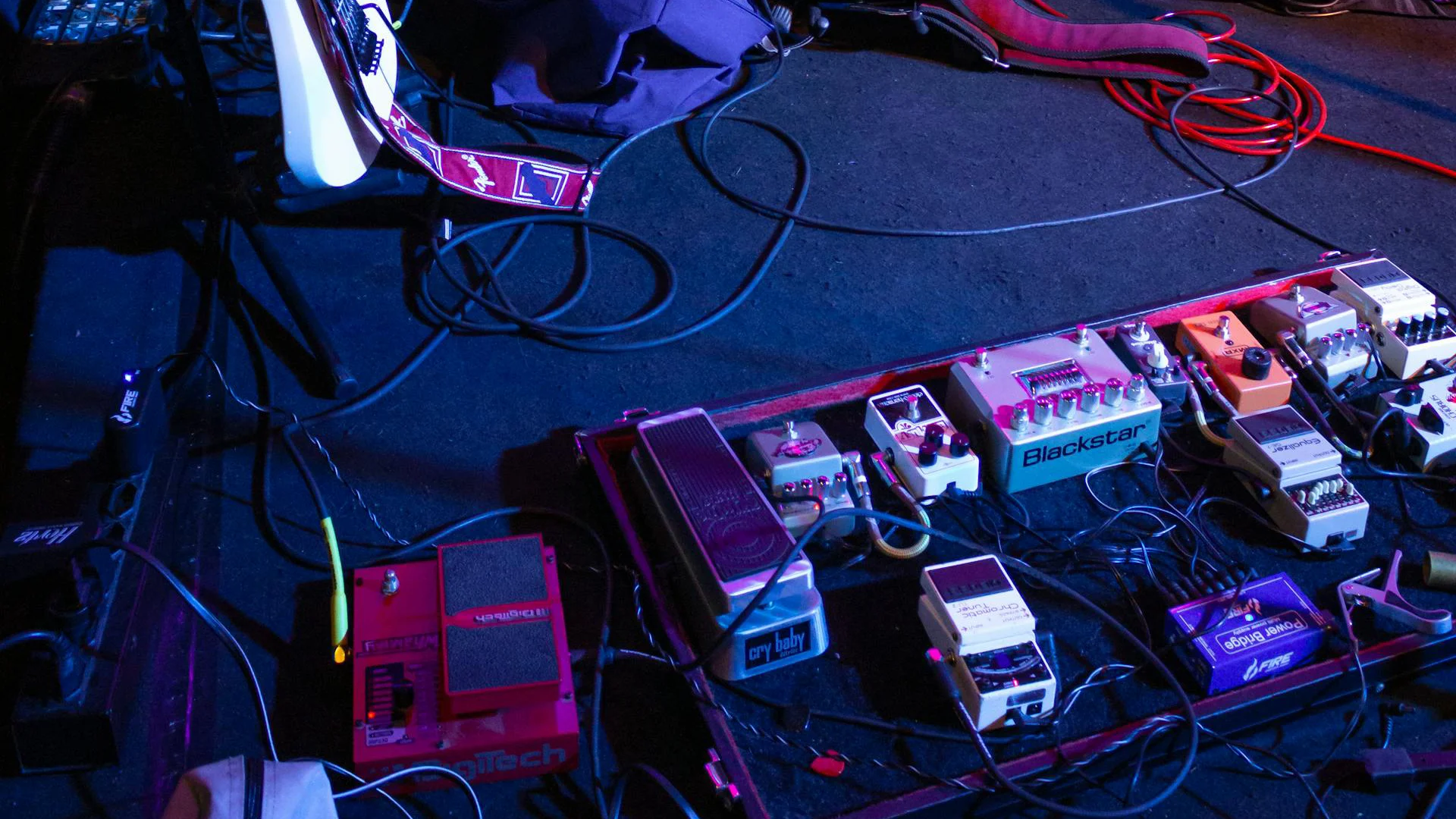
The dual overdrive pedal represents one of the most versatile and space-efficient tools in a modern guitarist's arsenal. From boutique handmade units to affordable mass-produced options, these 2-in-1 wonders offer exceptional tonal flexibility without consuming excessive pedalboard real estate. After examining the best options available in 2025, several standout choices emerge for different player needs.
For the ultimate in overdrive quality and touch sensitivity, the Analogman King of Tone v4 remains the benchmark by which all others are judged, though its lengthy wait list requires considerable patience. Blues and classic rock enthusiasts will find the Keeley Noble Screamer delivers exceptional vintage-inspired tones with modern reliability and versatility.
Those exploring more modern tones will find the JHS Sweet Tea V3, Strymon Sunset, and EQD Palisades v2 offer exceptional gain-sculpting capabilities for contemporary applications and studio environments where precise control is essential.
Players prioritizing versatility across multiple musical contexts should consider the Keeley D&M Drive, Wampler Dual Fusion, or the feature-packed Source Audio L.A. Lady, while those on tighter budgets will be pleasantly surprised by the performance of the Tone City King of Blues.
The magic of dual overdrives lies in their ability to provide three distinct sounds (Side A, Side B, or both stacked) from a single pedal, making them incredibly efficient additions to any signal chain. As manufacturers continue to innovate with improved routing options, greater tonal flexibility, and enhanced control capabilities, these versatile pedals will likely remain essential tools for discerning guitarists across all genres.
Whether you're a blues purist seeking transparent, touch-sensitive response or a modern rock player demanding precise gain staging with digital convenience, there's a dual overdrive pedal that can revolutionize your tone while simplifying your setup.
Looking to complete your pedalboard? Check out our guides to the best reverbs, delays, and power supplies to complement your new dual overdrive with other essential effects.
Top Ranked Overdrive Effects Pedals on Equipboard
-m.webp?v=1784977227)

-m.webp?v=1784905094)


About the authors

S. Jino is an accomplished multi-instrumentalist and music producer based in Kolkata, India, distinguished by his self-taught mastery and unique blend of technical acumen and musical performance. His extensive experience was forged through hands-on dedication, starting with the full restoration of a broken guitar. Jino's capabilities span keyboards, pedals, and advanced digital production, reflecting a comprehensive skill set developed independently. As a significant contributor to the music scene, Jino regularly performs with worship bands and college ensembles. He has also established himself as a reliable and authoritative professional in freelance mixing, mastering, and original music creation. Inspired by the innovative sounds of Brian May and David Gilmour, and influenced by Kolkata's vibrant metal community, Jino is committed to the intricate art of vintage gear restoration and the continuous exploration of music and technology fusion. His current professional setup, featuring a meticulously restored nameless guitar, a Fender Player Strat, and a Boss Katana 50. Read more
New in Overdrive Pedals

$285.00 - $299.00


$179.00 - $229.00


.jpg?v=1784891948)








.jpg)

.jpg)

.jpg)