
Table of Contents

Equipboard
Equipboard is the world's largest community of artists and their gear. Read our review process.
We are reader-supported. When you buy through links on our site, we may earn an affiliate commission. Learn more.
In an era when rock 'n' roll was still finding its voice, a seemingly simple innovation changed the course of music history. The PAF humbucker was so much more than just another guitar pickup. It was the spark that ignited the tones of countless legendary guitarists and shaped the foundation of modern rock music.
Before breaking down the technical brilliance and historical significance of the PAF humbucker, it's essential to understand why guitar enthusiasts and tone seekers still chase its magic more than six decades later. It's a story that blends engineering ingenuity with artistic expression, creating a legacy that resonates through generations of music.
What Are PAF Humbuckers?
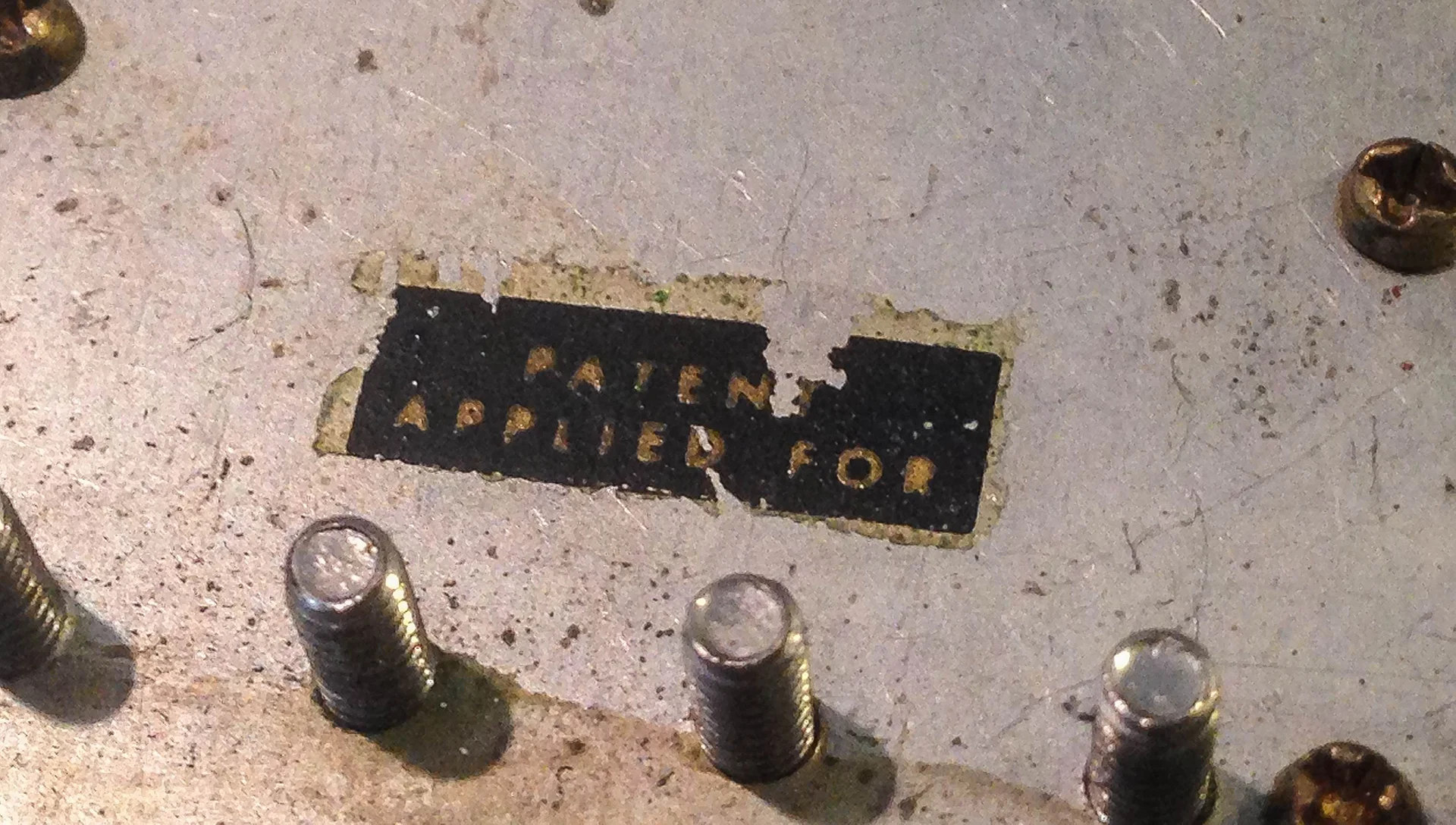
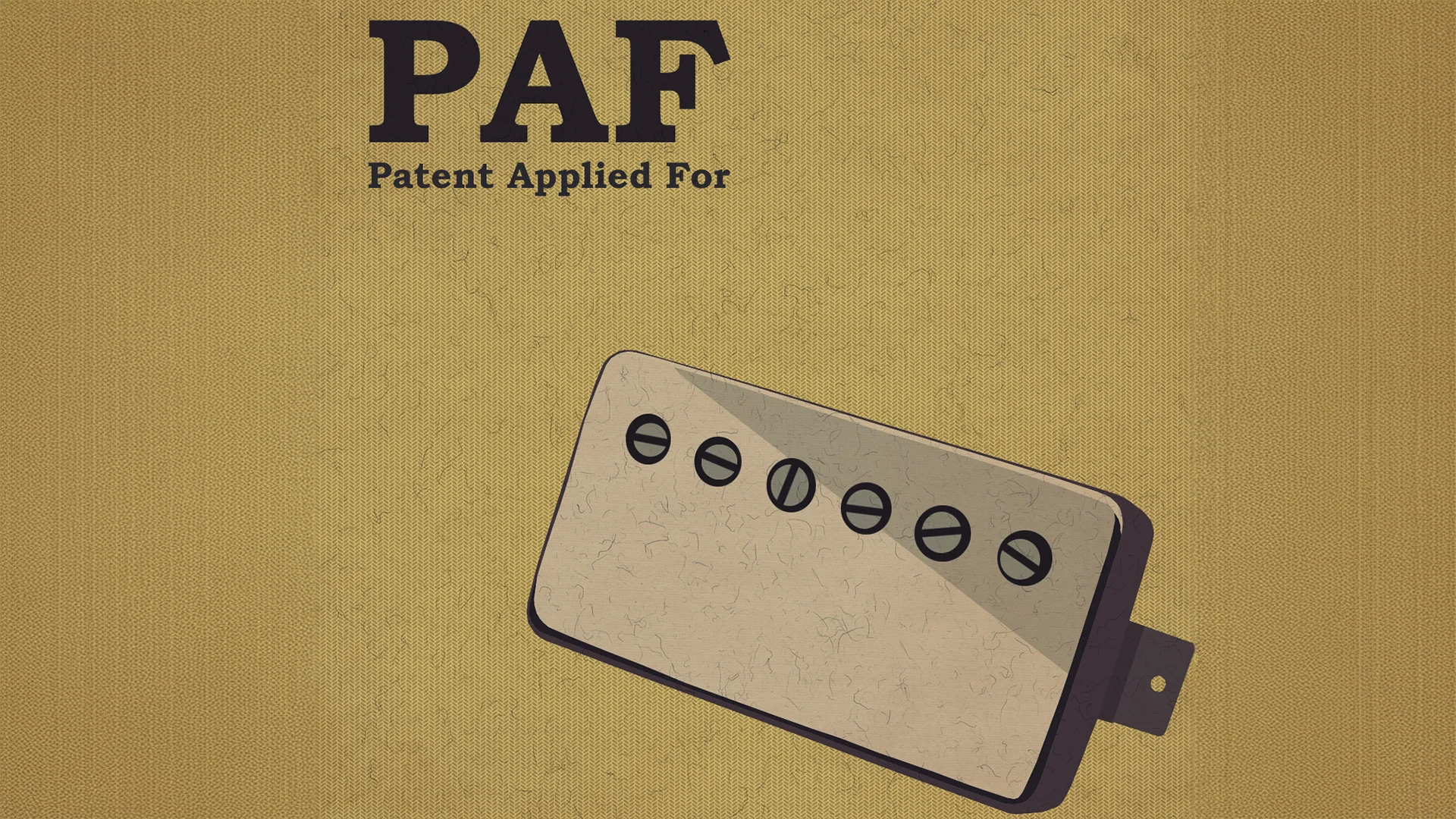
The PAF humbucker emerged from Gibson's workshops as a groundbreaking solution to the persistent problem of electrical interference in guitar pickups. Taking its name from the unassuming "Patent Applied For" sticker on its base, this dual-coil design did more than just eliminate unwanted noise. It created an entirely new sonic palette that would help define the sound of electric guitar for decades to come.
The Birth of a Legend
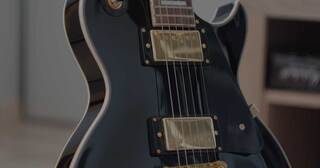
When Gibson introduced the PAF in 1957, they couldn't have known they were creating what would become one of the most revered components in guitar history. First appearing in the Les Paul Model, these pickups delivered a powerful, articulate voice that maintained its character even under heavy distortion. The hand-wound coils and inconsistent manufacturing methods of the era gave each pickup subtle variations in tone. These "imperfections" would later become prized characteristics, sought after by guitarists chasing that elusive vintage tone. The PAF became more than just a component. It became a benchmark for electric guitar tone, inspiring countless modern recreations and remaining a source of fascination for musicians and manufacturers alike.
History and Development
The journey of the PAF humbucker represents one of the most significant innovations in electric guitar history, transforming from a practical solution to an industry-defining standard. Understanding its evolution reveals why these pickups became legendary.
Seth Lover's Innovation
In 1955, Gibson engineer Seth Lover began working on a solution to combat the persistent 60-cycle hum plaguing single-coil pickups. Drawing from his experience with electronics and inspired by noise-canceling technology in telephone circuits, Lover developed a revolutionary design featuring two coils wired in series and reverse-wound.
The initial prototype used two single-coil units from Gibson's P-90 pickup, placed side by side. Through experimentation, Lover discovered that mismatched coils actually produced more musical results than perfectly matched pairs. He filed patent #2,896,491 on June 22, 1955.
While waiting for the patent application to be approved, Gibson attached a small sticker reading "Patent Applied For" to the base of each pickup to protect their design from competitors. This simple administrative marking, abbreviated by guitarists to "PAF," became the unofficial designation for these pickups.
Was PAF The World’s First Humbucker?
The PAF was not actually the first humbucker pickup. That distinction belongs to the Gretsch "Filter'Tron" humbucker, developed by Ray Butts in 1954.
However, the PAF became far more influential and is often mistakenly considered the first because:
- It was the first widely successful humbucker design
- It became the standard that most modern humbuckers are based on
- It was used on many iconic Gibson guitars
- Gibson's marketing and wider distribution helped establish it as the "classic" humbucker sound
Both Butts and Lover were working on solving the same problem - reducing electromagnetic interference/hum in guitar pickups - around the same time, but took slightly different approaches. The Filter'Tron has a slightly different internal design and typically produces a brighter, clearer tone compared to the warmer, thicker sound of the PAF.
The Golden Era
Production began in late 1956, with the first PAF-equipped guitars shipping in 1957. The early years saw numerous small manufacturing variations that would later become crucial to their mystique.
The first PAFs used black bobbins for both coils, but by 1959, Gibson switched to a combination of black and cream bobbins (zebra coils) due to material availability. This period also saw experimentation with different magnet types, transitioning between Alnico II, III, and V magnets, each imparting subtle tonal variations.
The winding process itself evolved during this period. Early PAFs were wound on Leesona coil winders, operated by Gibson employees who developed their own unique rhythms and techniques.
Iconic Instruments
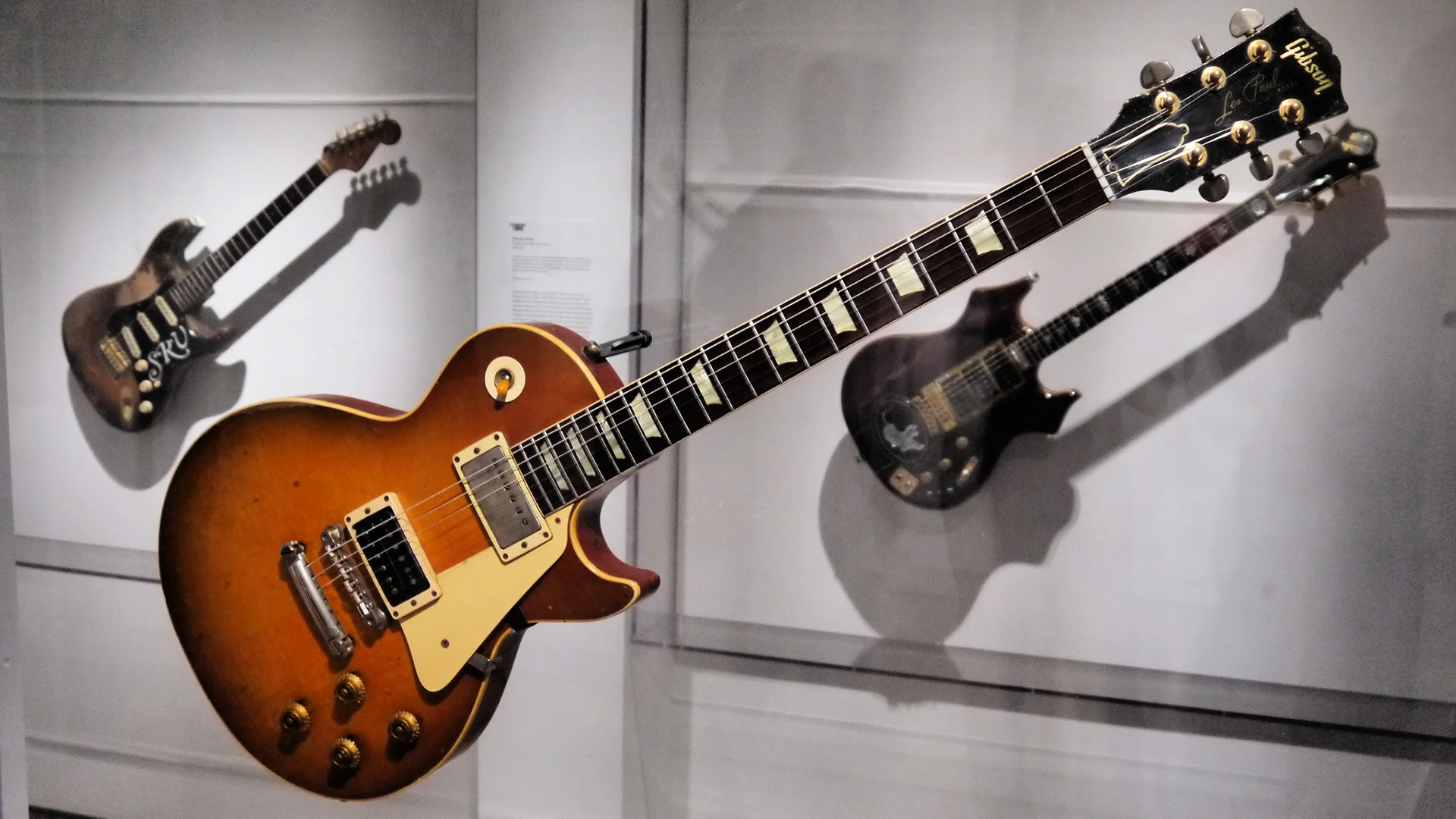
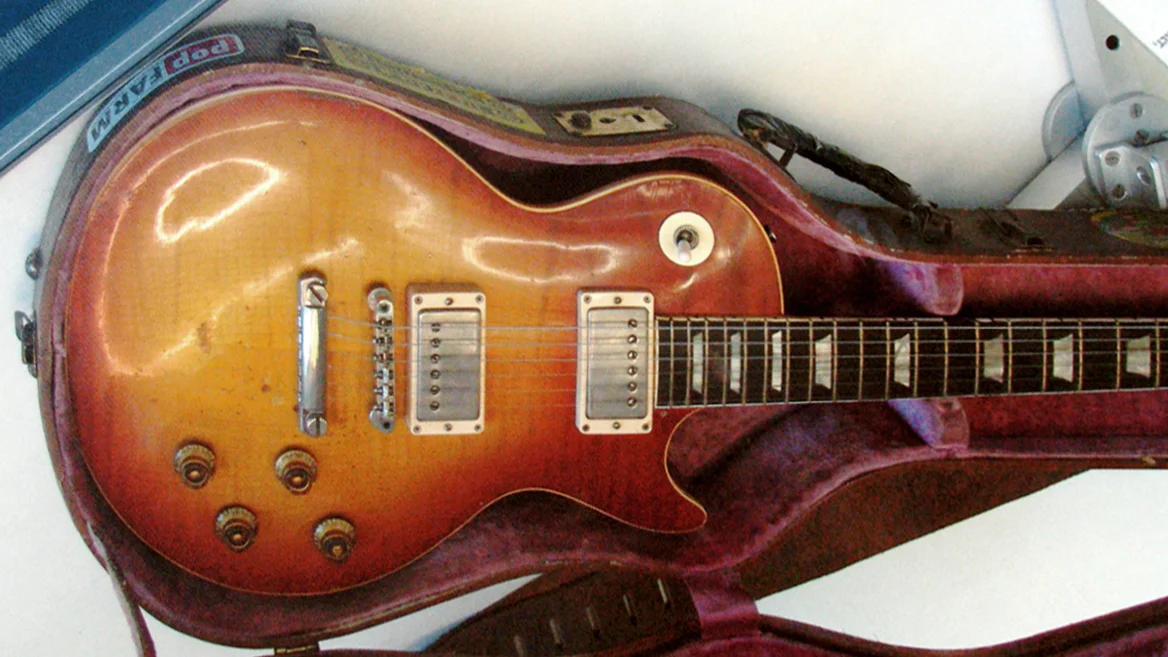
While PAFs appeared across Gibson's product line, certain instruments became particularly legendary. The 1958-1960 Les Paul Standards is perhaps the best known example of PAF implementation. These guitars, now known as "Bursts," paired PAF humbuckers with a mahogany body and maple top, creating an unparalleled tonal architecture.
Notable examples from this era include:
- The 1959 Les Paul Standard used by Eric Clapton during the Bluesbreakers period, defining the "woman tone"
- Jimmy Page's 1959 Les Paul Standard, featured on numerous Led Zeppelin recordings
- Peter Green's 1959 Les Paul with its famous "out of phase" neck pickup
- Billy Gibbons' "Pearly Gates" 1959 Les Paul, used on early ZZ Top recordings
Manufacturing Details
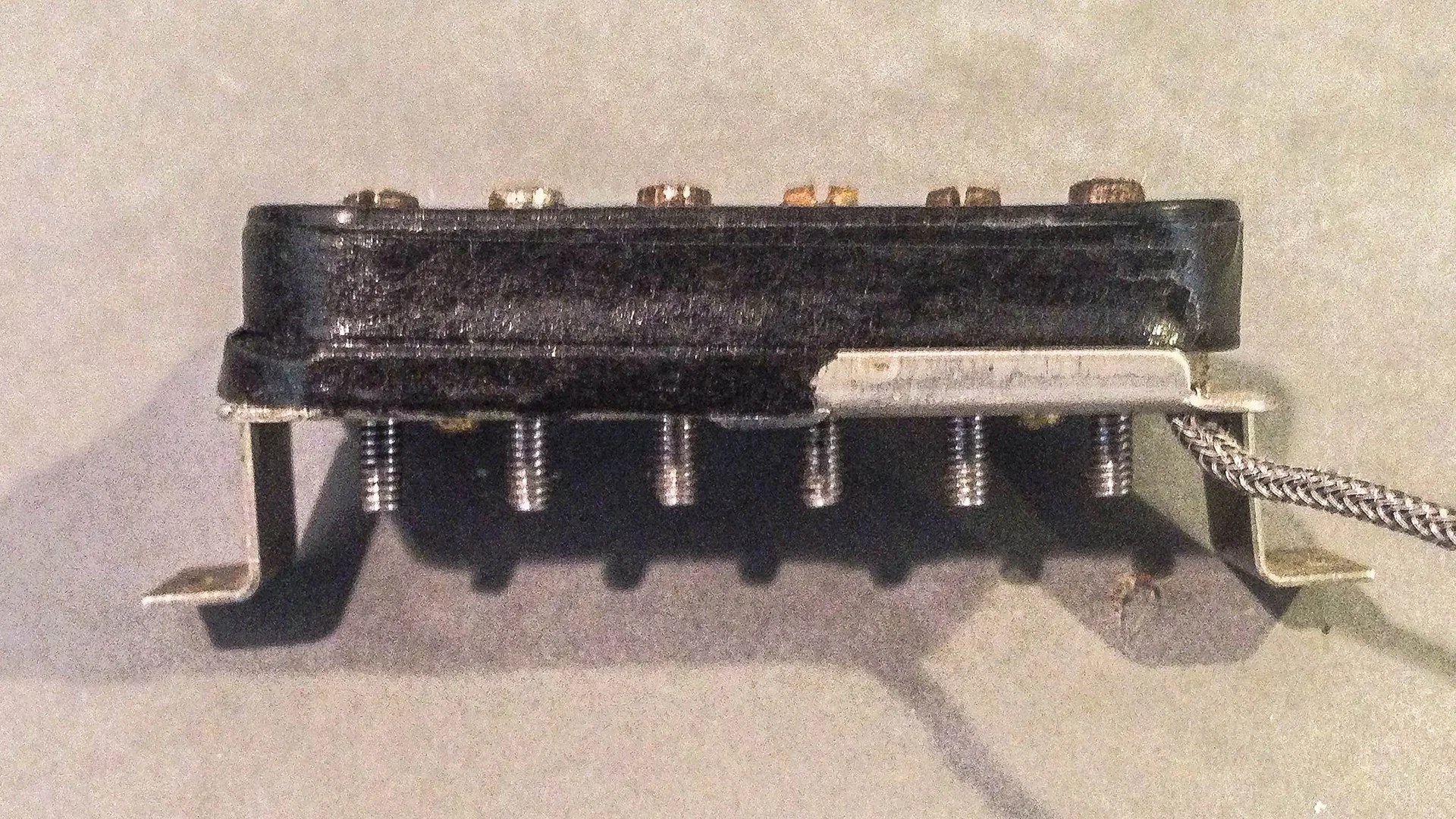
The construction process of original PAFs involved several key elements that contributed to their unique sound. Each pickup contained approximately 5000 turns of 42-gauge plain enamel wire per coil, though actual numbers varied due to hand-winding. The baseplate design featured specific dimensions that affected the magnetic field interaction with strings.
Gibson continued producing what collectors consider "true PAFs" until early 1962. By then, the patent had been granted, and Gibson switched to a new sticker reading "Patent No. 2,737,842," marking the end of the PAF era.
Understanding Winding Techniques
Among the most crucial aspects of PAF construction and sound is the winding technique. Original PAFs used what we now call scatter winding, a process integral to their distinctive tonal characteristics.
Scatter winding refers to a non-uniform layering of wire onto the pickup bobbin. Unlike modern machine-wound pickups, where wire is laid in perfectly even rows, scatter winding creates slight irregularities in the wire placement. This seemingly chaotic approach results in small air pockets between the wire layers and varying distances between adjacent winds.
These "imperfections" significantly impact the pickup's behavior. The irregular spacing between wire layers reduces the overall distributed capacitance of the coil. This lower capacitance results in higher resonant frequency and more pronounced harmonics, contributing to the PAF's famous airy top end and dynamic response.
Traditional scatter winding occurred naturally due to the limitations of early pickup winding machines and the manual control required to operate them.
Early Technological Impact
The success of PAFs sparked a technological revolution in pickup design. Other manufacturers began developing their own humbucking pickups, leading to innovations across the industry. The PAF's influence extended beyond just noise cancellation, establishing new standards for:
- Tonal balance and frequency response
- Output level and dynamics
- Construction methods and materials
- Magnetic circuit design
This period of rapid development laid the groundwork for modern pickup design, with the PAF serving as both inspiration and benchmark for generations of manufacturers.
The PAF Legacy
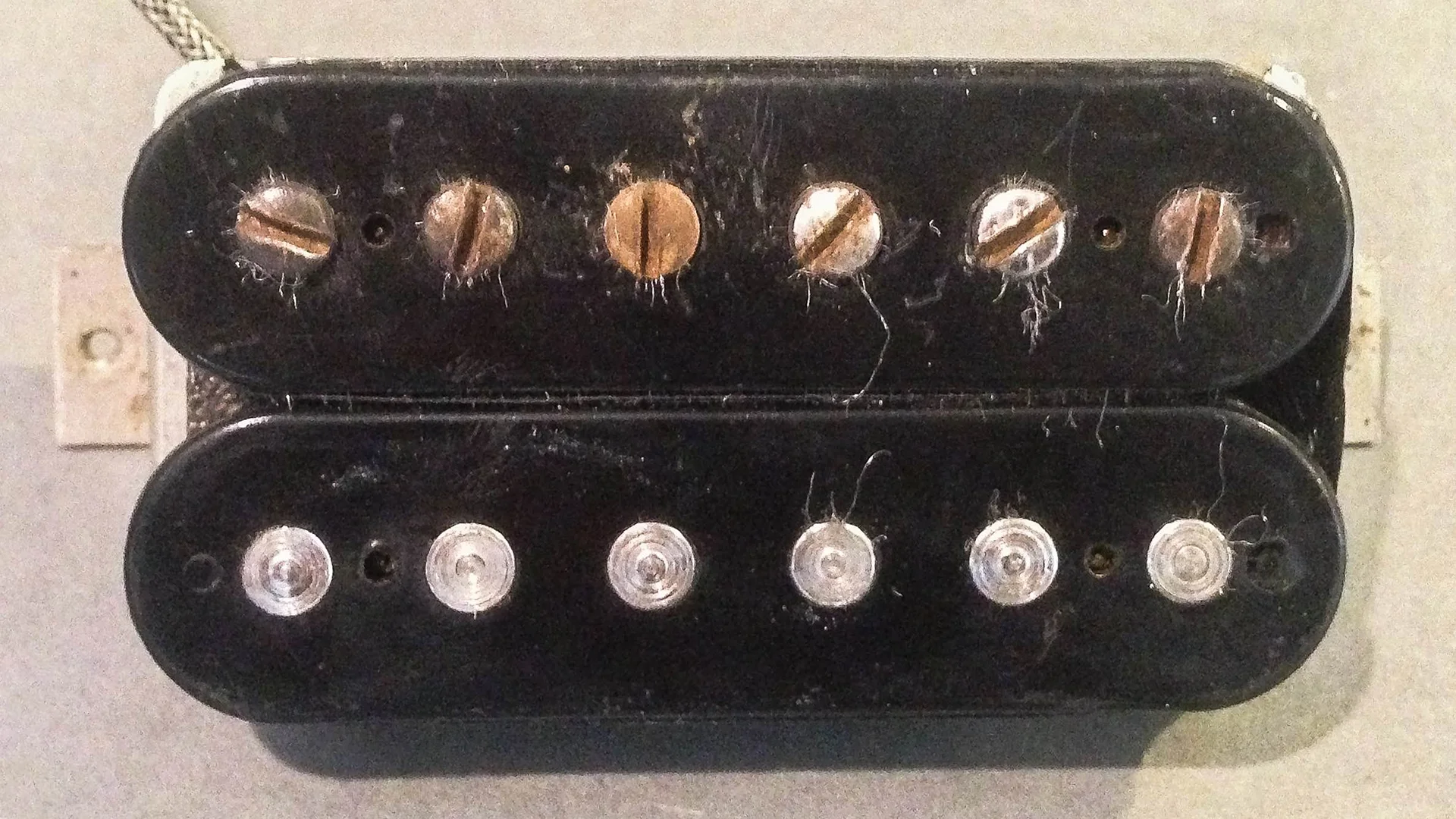
The enduring influence of PAF humbuckers extends far beyond their brief production period. Their impact on music, collecting culture, and modern pickup manufacturing has created a legacy that continues to shape how we think about electric guitar tone.
Influential Artists
The roster of musicians who helped cement the PAF's legendary status reads like a who's who of rock and blues. Eric Clapton's work with John Mayall's Bluesbreakers showcased the PAF's versatility, particularly in his famous "woman tone" achieved with a 1959 Les Paul. Jimmy Page's early Led Zeppelin recordings demonstrate the natural compression and sustain that made PAFs ideal for rock.
Peter Green's distinctive tone with Fleetwood Mac came from a uniquely modified PAF in his 1959 Les Paul, where a reversed magnet created a signature out-of-phase sound. Paul Kossoff of Free utilized the PAF's dynamic response to create singing lead tones that highlighted their touch sensitivity. Modern players like Joe Bonamassa continue to demonstrate why these pickups remain relevant, using vintage PAF-equipped guitars to achieve extraordinary tonal range.
Vintage Market
Original PAF humbuckers have become some of the most sought-after guitar components in existence. Their rarity stems from a relatively short production window and the fact that many were never separated from their original guitars. A well-preserved original PAF represents not just a pickup, but a piece of musical history.
Individual PAFs can command remarkable prices, particularly those with desirable traits like double-black bobbins or rare magnet types. The most valuable examples remain in their original guitars, especially 1958-1960 Les Paul Standards, where matching pairs of PAFs contribute significantly to the instruments' historical importance.
Construction Characteristics
What makes vintage PAFs special isn't just their age - it's the unique combination of manufacturing methods and materials that created their distinctive sound. The inconsistencies in hand-winding led to varying coil resistances and subtle differences in frequency response. Early PAFs used plain enamel wire with specific insulation properties that affected capacitance between windings.
The use of weaker magnets compared to modern designs contributed to their musical quality. These factors, combined with manufacturing variations in magnet strength and wire tension, meant that each pickup had its own voice. Rather than being viewed as flaws, these variations have become prized characteristics that modern manufacturers strive to replicate.
Modern PAF Alternatives
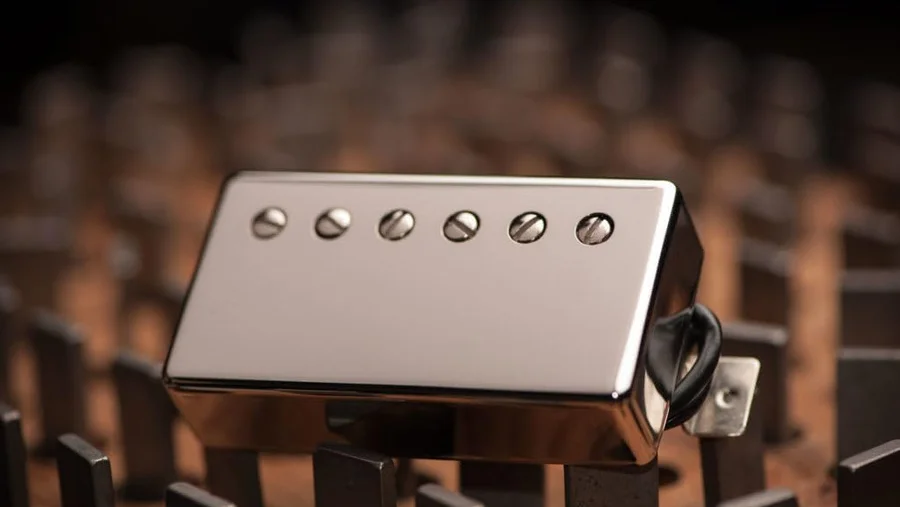
Understanding the historical significance and tonal characteristics of vintage PAFs is one thing - finding them is another matter entirely. Fortunately, several manufacturers have dedicated themselves to recreating these legendary pickups, each offering their own interpretation of the classic PAF magic.
Gibson Custom Shop
The offspring of the original creator delivers what many consider a worthy successor to the PAF legacy. Gibson's Custom Shop Custombuckers represent their most faithful attempt to recapture the original PAF formula. Using historically accurate materials and winding techniques, these pickups aim to recreate the inconsistencies and imperfections that made vintage PAFs special. Their emphasis on period-correct construction methods, including unmatched coils and careful magnet selection, produces a warm, open sound that captures the essence of late-1950s Les Pauls.
Seymour Duncan
Seymour Duncan's approach to PAF recreation combines historical accuracy with modern consistency. Their Seth Lover model, developed with input from the original PAF inventor, delivers authentic vintage character with remarkable consistency. The Antiquity PAF recreates the aged characteristics of well-preserved originals, including the subtle compression and warm midrange that defined the originals. Their manufacturing process incorporates deliberate inconsistencies in winding patterns to emulate hand-wound variations.
DiMarzio
The DiMarzio PAF 59 represents their historically informed tribute to the original PAF legacy. Using vintage-accurate materials and carefully refined winding techniques, these pickups deliver the warm, dynamic response characteristic of late-1950s humbuckers. Their approach focuses on capturing the musical sweetness of original PAFs while maintaining excellent string definition. The moderate output and carefully balanced coil windings produce an open, airy quality that works particularly well for classic rock and blues tones. Their manufacturing process emphasizes consistency while still retaining the essential character that made vintage PAFs legendary.
Bare Knuckle
The Mule is Bare Knuckle's take on the PAF formula, emphasizing the dynamic response and musical qualities that made the originals famous. Using period-correct materials and scatter-wound coils, these pickups capture the organic feel of vintage PAFs while maintaining excellent clarity. Their attention to detail extends to magnet selection and wire tensioning, resulting in pickups that respond beautifully to playing dynamics.
Lollar
The Imperial humbucker from Lollar offers a historically informed but subtly modernized interpretation of the PAF design. Their approach focuses on capturing the essential musicality of vintage PAFs while ensuring excellent consistency between pairs. Using carefully selected magnets and precise winding techniques, they achieve the warm, open sound characteristic of PAFs while maintaining excellent string definition.
Throbak
Throbak's MXV series is perhaps the most obsessive attempt to recreate vintage PAF specifications. Their research into original materials and construction methods has led to pickups that capture the elusive complexity of vintage PAFs with remarkable accuracy. Their attention to historical detail extends to every component, from the specific alloy of their magnets to the exact type of wire insulation used.
Selection Guide
Choosing the right PAF-style pickup involves understanding not just their historical significance, but how their characteristics align with your musical needs. Let's explore how to match these legendary pickups to your playing style and sonic goals.
Playing Style Considerations
Your approach to playing should heavily influence your PAF selection. Players focusing on clean tones will benefit from pickups with lower output and enhanced dynamic range, allowing subtle variations in touch to come through. For those playing with more gain, pickups with slightly higher wind counts offer more natural compression while maintaining clarity.
Traditional PAF-style pickups excel at representing subtleties in technique. Their moderate output means they won't mask playing inconsistencies, making them ideal for players who value expressiveness over raw power. The natural touch sensitivity makes them particularly suitable for blues and classic rock styles where dynamic control is essential.
Technical Specifications
Understanding key specifications helps narrow down your choices. Alnico magnets come in several varieties, each with distinct characteristics. Alnico II provides sweet, vintage-correct tones with softer attack, while Alnico V offers tighter bass and more aggressive midrange response. Wind count affects both output and frequency response - traditional PAF specs hover around 7.5k ohms for the neck and 8.2k ohms for the bridge.
Genre Applications
Different musical styles benefit from specific PAF characteristics. Blues players often prefer lower output pickups with Alnico II magnets for their smoother response and rich harmonics. Classic rock benefits from slightly hotter winds that push amplifiers naturally into overdrive while maintaining definition.
Jazz guitarists typically favor neck position PAFs with warmer tones and excellent note separation. Progressive or modern rock players might opt for PAF-style pickups with slightly higher output and Alnico V magnets, providing additional headroom while retaining vintage-style articulation.
Installation and Optimization
Installing PAF-style pickups involves creating an entire system that allows these pickups to perform at their best.
Installation Guidelines
The foundation of great PAF tone starts with proper installation. The most crucial component beyond the pickups themselves is proper potentiometer selection. Traditional PAF setups use 500k potentiometers for both volume and tone controls, which help maintain high-end clarity. The capacitor choice also plays a vital role - vintage-style paper-in-oil caps around .022µF complement PAF characteristics particularly well.
Proper wiring technique becomes especially important with PAF-style pickups. Their moderate output makes them sensitive to cable quality and length. Using braided shield wire helps maintain signal integrity, while keeping wire runs as short as possible preserves high-end response.
Tone Optimization
Once installed, several factors affect how your PAF-style pickups perform. Pickup height adjustment is particularly critical - these pickups respond differently to string proximity than modern high-output designs. The sweet spot typically lies between 1/8" to 3/16" from the strings when pressed at the last fret, but this varies based on your specific setup and playing style.
Individual pole piece adjustment can fine-tune your sound further. Unlike modern pickups, vintage-style PAFs often benefit from slight pole piece variations to balance string output. Consider your picking attack and playing style when making these adjustments - lighter players might prefer closer pickup positioning, while aggressive players might need more distance to prevent magnetic pull from affecting sustain.
The interaction between pickups also deserves attention. The relative height between neck and bridge pickups significantly affects their balance and blend.
Expert Insights
Understanding PAF humbuckers requires deep knowledge spanning electronics, manufacturing processes, and musical applications. Years of research and analysis by industry veterans have revealed crucial insights about what makes these pickups special.
Manufacturing Insight
The hand-winding process of original PAFs created significant variations between individual pickups. However, detailed analysis reveals these variations weren't entirely random. The winding patterns fell within specific ranges that consistently produced musical results albeit with some individuality.
Technical Understanding
Modern analysis of original PAFs has revealed subtle design elements that contribute to their distinctive voice. The specific metallurgy of original magnets played a crucial role in their behavior, particularly in how they responded to string movement. The plain enamel wire used in original PAFs had unique insulation properties that affected the capacitance between windings, contributing to their famous tone.
Recording Perspective
Studio experience with vintage PAF-equipped guitars has highlighted their unique behavior in professional recording environments. Their natural compression characteristics and frequency response complement traditional recording techniques, particularly with tube amplifiers. The moderate output and clear midrange presence allow these pickups to sit naturally in complex mixes without requiring extensive processing.
Restoration Knowledge
The specific components used in late-1950s Gibson guitars, from potentiometers to capacitors, worked together as a system. Understanding these relationships helps explain why simple pickup swaps often fail to fully capture vintage PAF tone.
Frequently Asked Questions
PAF humbuckers can be complex, and many questions arise when exploring these historic pickups. Here are answers to some of the most common queries.
Can original PAFs be identified by appearance alone?
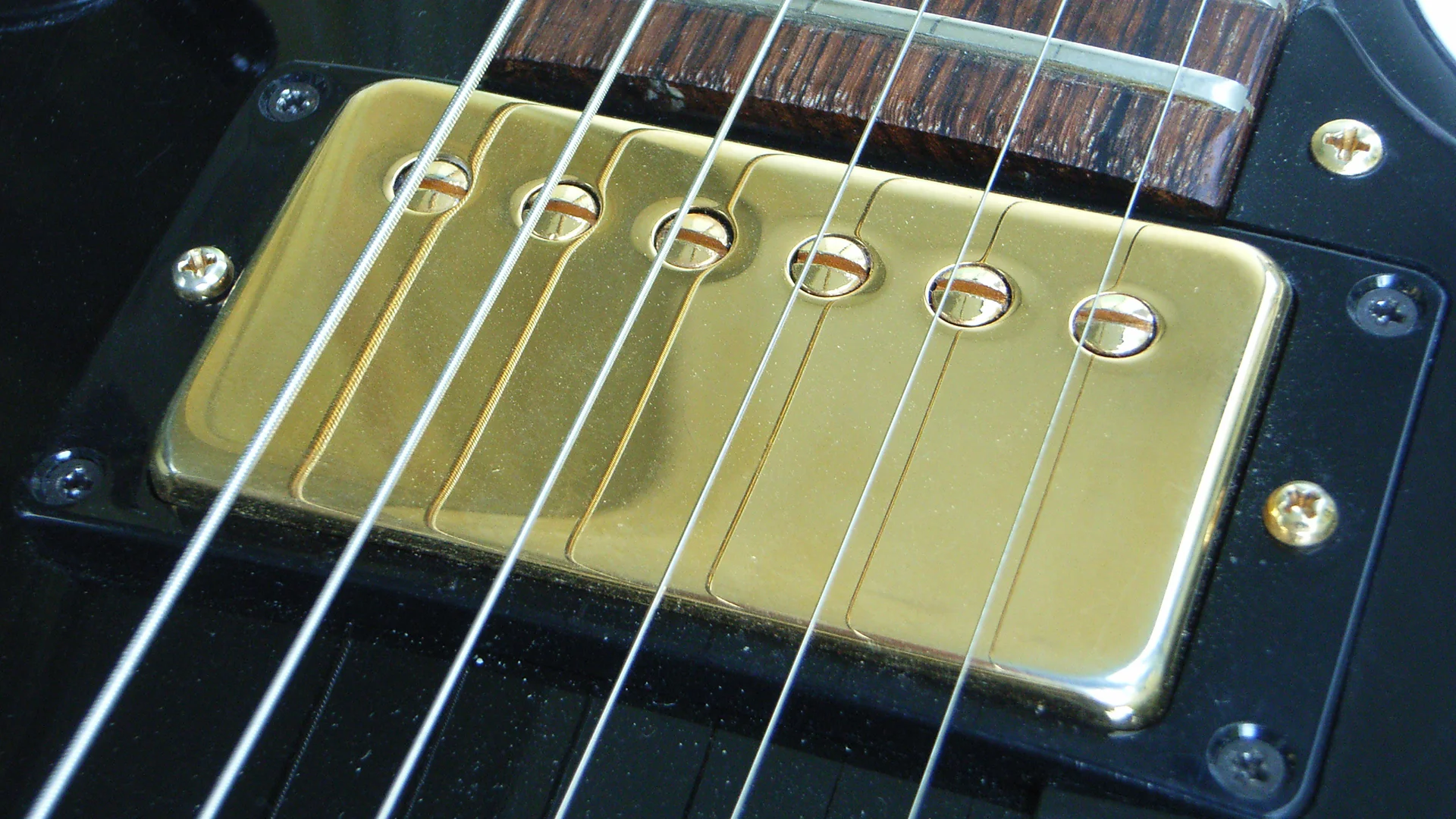
While certain visual cues like the "Patent Applied For" sticker, long-tail baseplate, and specific bobbin colors can indicate a potential PAF, authentic identification requires expert examination. Many vintage-style replicas accurately reproduce these visual elements. Professional authentication considers internal construction details and manufacturing marks unique to the 1957-1962 period.
Why do PAF pickups vary so much in output?
The hand-winding process used in original PAF production created natural variations in the number of wire turns and tension. This resulted in resistance measurements ranging from 7.5k to 8.5k ohms. These variations, combined with differences in magnet strength, contributed to each pickup's unique voice.
Do PAFs work well with modern high-gain amplifiers?
PAF-style pickups can excel with high-gain amps, though differently than modern high-output humbuckers. Their moderate output and clear midrange allow for excellent note definition even with heavy distortion. However, they won't push the amp's input stage as hard as contemporary high-output pickups.
What makes some PAFs more valuable than others?
Several factors influence value, including:
- Original condition and completeness
- Specific manufacturing period
- Bobbin color combination
- Measured specifications matching desirable characteristics
- Provenance and documentation
Can I replace my guitar's pickups with PAF-style units without modification?
Most PAF-style pickups are designed to fit standard humbucker routes. However, some vintage-accurate reproductions might require minor adjustments to mounting hardware or wiring schemes. Always verify physical dimensions and electrical specifications before purchase.
How important is pickup aging to the PAF sound?
While aging can affect magnetic strength and wire insulation properties, these changes are subtle. The core characteristics of PAF tone come from their fundamental design and construction. Modern manufacturers can accurately replicate these tonal qualities without artificial aging.
Are PAF-style pickups suitable for all playing styles?
PAFs are remarkably versatile, though their moderate output and dynamic response might not suit players seeking ultra-high gain or extremely compressed tones. They excel in situations where touch sensitivity and tonal clarity are priorities.
What's the difference between a PAF and a regular humbucker?
The main distinctions lie in construction details and output level. Traditional PAFs use specific magnet types, wire gauge, and winding techniques that create a more open, dynamic sound compared to typical modern humbuckers. They generally have lower output and different frequency response characteristics.
To Sum Things Up!
The story of the PAF humbucker extends beyond tales of legendary guitars and recording sessions. Its influence fundamentally shaped the evolution of electric guitar design and continues to influence modern music production.
When Seth Lover worked on his original design, he couldn't have anticipated that deliberate mismatching of coils would become a sought-after feature, or that the moderate output levels would prove ideal for pushing tube amplifiers into musical overdrive. The PAF's ability to maintain note definition even under high gain settings established new possibilities for guitar tone that are still being explored today.
Musicians like Billy Gibbons have demonstrated how these pickups respond uniquely to different playing techniques, from gentle fingerpicking to aggressive attack. The natural compression created by the interplay between PAF pickups and tube amplifiers shaped the signature sounds of countless classic recordings, from Peter Green's haunting leads to Jimmy Page's textured rhythms.
Modern pickup designers like Jason Lollar and Thomas White continue studying original PAFs, discovering new insights about the relationship between winding patterns, magnetic strength, and tonal response. Their research reveals that the complex harmonics of vintage PAFs stem from specific combinations of wire tension, coil geometry, and magnet placement that are difficult to replicate even with today's technology.
Rather than remaining frozen in amber as vintage artifacts, PAF-style pickups continue evolving. Contemporary builders incorporate historical understanding into designs that serve modern musical contexts, from high-gain metal to atmospheric post-rock. Some manufacturers have even developed specialized winding techniques that capture specific characteristics of famous vintage PAFs while improving consistency and reliability.
The PAF's greatest legacy might be how it demonstrates that technical limitations often drive innovation. The pickup's famous inconsistencies, born from manual winding processes and material variations, created a tonal palette that continues inspiring musicians to push creative boundaries.
About the authors

S. Jino is an accomplished multi-instrumentalist and music producer based in Kolkata, India, distinguished by his self-taught mastery and unique blend of technical acumen and musical performance. His extensive experience was forged through hands-on dedication, starting with the full restoration of a broken guitar. Jino's capabilities span keyboards, pedals, and advanced digital production, reflecting a comprehensive skill set developed independently. As a significant contributor to the music scene, Jino regularly performs with worship bands and college ensembles. He has also established himself as a reliable and authoritative professional in freelance mixing, mastering, and original music creation. Inspired by the innovative sounds of Brian May and David Gilmour, and influenced by Kolkata's vibrant metal community, Jino is committed to the intricate art of vintage gear restoration and the continuous exploration of music and technology fusion. His current professional setup, featuring a meticulously restored nameless guitar, a Fender Player Strat, and a Boss Katana 50. Read more







.webp)
.webp)