Billy Gibbons
Billy Gibbons' Gear


At 15.31 in this rig rundown video Billy's tech talks about his Peeler John Bolin telecaster style guitar.
Find it on:


"The other out goes to a new prototype Magnatone 50s watt amp with an English sounding bass tone like a Plexi. It's all handwired. Actually it's the first amp," says Billy Gibbons's guitar tech about the Magnatone Super 59 Amp.
Find it on:

"Here's a favorite. This is a faithful reproduction of the very first guitar that I ever layed my hands on back in Christmas day when I turned thirteen. I got a Gibson Melody Maker, and on that same day we took it over to the Axel Custom Shop where Fearless Fred put on these fine pinstripe lines down. This thing is outfitted with Seymour Duncan's Stack Humbucker, so it's a little bit different than the original but it sure does play and feel great. This is a good one," says Billy Gibbons about the Gibson Melody Maker Electric Guitar.
Find it on:

"After the two effects we have about six amplifier outs. Two of the outs go to my Voodoo Modified JMP1 Marshall heads. The Voodoo mods make these amps amazing. They sound so much better than they used to. We have two of them: the main one is setup for Billy's main dirty sound and goes to the Marshall 120-120 power amps; the second Marshall JMP1 has a clean sound that goes to a direct box straight to tape for recording purposes because they record every night," says Billy Gibbons's guitar tech about the Marshall JMP-1 Tube MIDI Guitar Preamp.
Find it on:
-m.webp?v=1785199181)
Visible as a label on Gibbons' pedal switcher in Fuzz: The Sound That Revolutionized the World at 1:20:18.
Find it on:


"Here it is. The faifthful reproduction of the famous Pearly Gates 1959 Sunburst. Once again, this instrument has got the feel, has got the flavor, has got the finery, and it's probably the one that is most easily associated to ZZ Top from the early days when Pearly Gates really carved up the cornestones. This is a faithful reproduction that does the job," says Billy Gibbons about the Gibson Custom Billy Gibbons "Pearly Gates" Les Paul Standard Electric Guitar.
Billy Gibbons's guitar tech says in a different rig rundown that, "There's two Les Pauls with really high action tuned to open E with heavier strings for Billy, which is a gauge of eight. This is the first Pearly Gates that Gibson prototyped. This is the first one and we use it actually as the spare because it's very heavy. The main guitar is a Pearly Gates that has been hollowed out and uses new old-stock Gibson parts, old Gibson pickups, and had the headstock redone to read 'Gibbons Lucky Mojo' instead of Gibson Les Paul. And it's extremely light, but it started life as a normal Pearly Gates model."
Find it on:

"Jim Dunlop picks. He's been using these for about 12 years. I can't get him to change. They're the gel picks. They also glow in the dark, which he really likes. So no more using coins as picks," says Billy Gibbons's guitar tech about the Jim Dunlop Glow Guitar Picks.
Find it on:

"In the effects loop this year I have the MXR Bass Octave pedal," says Billy Gibbons's guitar tech about the MXR M288 Bass Octave Deluxe Effects Pedal.
Find it on:

"The Voodoo mods make these amps amazing. They sound so much better than they used to. We have two of them: the main one is setup for Billy's main dirty sound and goes to the Marshall 120-120 power amps," says Billy Gibbons's guitar tech about the Marshall ValveState Pro 120/120 Power Amp.
Find it on:

"For slides he uses his Billy Gibbons brand Glass Slide," says Billy Gibbons's guitar tech about the Rev. Willy's Blues Bottle Mojo Glass Slide RWS11.
Find it on:

"This is the new Billy Bo Pros. You can’t really tell but about half of it's smaller all the way around. It'll fit in a regular Stratocaster or Telecaster case instead of the really big normal case. These are, once again, John Bolin-made with a flipflop finish and inspired artwork. This one is made to the stop-tell piece - the first one we've had like that just because of the graphics. Other than that, it's all new old start Gretch parts with a new TV Jones pickup. It's the same thing with the spare guitar: Billy Bo Pro, John Bolin made, Gretsch specs - different colors. It also has a pin strike that we don't use. It's just there to be sure it will be in tune. The era of the Bigsbys are over for us I think. We've been using Bigsbys for four or five years I think. I'm glad they're gone. They keep in tune because we use the gauge seven strings, and he doesn't change guitars all night. We have a tuner in the back so that if we did go out of tune we could tune it. We don't change guitars nightly; we change guitars a couple rounds a year. We change everything - except the fur. We'll get different things, different arrangements, different colors. Sometimes they'll be left-handed. There's always something new, so they just change them all because if we just want a new one then we need a spare and we need the encore. It's a process but we do it a couple times per year at least. When we swap them out they're all new. Billy is really consistent in what he wants. As long as the guitars are really light, we get them chambered - he's been into lately getting the neck chambered as well as the body - because he uses really light strings, 7-38s, so he's go this really light touch. He only uses the eights on the ones with open tuning - that's the heavy strings. He's up there and he's barely touching it. The settings are all heavy metal settings: bass all the way up, gain all the way up, no treble, all mids. I mean it's all muffled, but when he plays it he just barely hits the strings and that works for him. I have a hard time playing in tune because if I put the guitar on it's down to here, and it's got sevens on it so I have to bend over to hit a D chord for it just to be in tune," Billy Gibbons's guitar tech says in a different rig rundown that, says Billy Gibbons's guitar tech about the Gretsch Billy-Bo Electric Guitar.
Find it on:


Marshall official website puts class 5 as one of the amps Billy Gibbons uses.
Find it on:

In this interview with Guitarist Presents: Blues, Billy Gibbons says:
There is a new offering made by Paul Cochrane in Nashville, Tennessee, which is known as the "Timmy" pedal. It's got a bit of distortion available, but it is more of a proper, overall tone booster.
Find it on:


"The spare for the main is pretty much an identical guitar. Although this one is a Fender Esquire, it's still John Bolin made. It's Gibson scaled. The only difference is that it does not have Glendale saddles, it has six saddles and it's stringed through the body, not a top-loading bridge. It's firstly the same guitar I consider it the same guitar, and it's only used if something goes wrong with the main Tele guitar," says Billy Gibbson's guitar tech about the Fender '50s Esquire Electric Guitar.
Find it on:


Quote from "The History of Marshall" by Michael Doyle
"[…] Naturally there are many modern Marshalls that can come close to approximating the Bluesbreaker sound but the most surprising one is the old 5005 (Lead 12) solid-state combo so beloved by Billy F Gibbons. He recorded such guitar greats as "My Head's in Mississippi" with this amp, and I am eternally in his debt for bringing it to my attention!."
Find it on:

Used for ZZ Top's First Album, Rio Grande Mud, Tres Hombres, Fandango!, Tejas and Degüello, as recalled by Gibbons in this December 3, 2009 Guitar World article (reprinted from an interview in the November 1996 issue).
“La Grange”
Tres Hombres (1973)
“That is straight guitar into amp: a 1955 Strat with a stop tailpiece through a 1969 Marshall Super Lead 100. That fuzz sound in the lead and in the front and back end of the composition is just pure tube distortion. Pickup-setting differentials account for the different tones. The opening part was played on what we used to call ‘the mystery setting’ in the dark days before the existence of the five-way toggle switch, when finding that perfect ’tweener [in-between setting of a three-way pickup selector] required dedication.
“That Marshall amp, which was a trusted friend through the first six records, was an import brought over by Jeff Beck’s at-the-time tech. I had four of those babies, and they were my main road amps for years. I ran them through cabinets with those [Celestion] Greenback speakers. They still retain a distinctive, rich, enjoyable tone and are well worth owning. I must, however, advise anyone fortunate enough to find one to beware of the variable power plugs. The 220[-volt] setting doesn’t work very well outside of the 220 countries, as I can tell you from experience. We had more than a few paper-clip nights over the years [due to blown fuses].”
“Tush”
Fandango! (1975)
“The first three albums were recorded exclusively at the Robin Hood Studios outside of Dallas, and the special sound that always seemed to be accessible there was due in part to the fact that the equipment was nailed to the floor and nothing ever moved so you could always count on a sound. Quite a good sound, I must say.
“ ‘Tush’ was Pearly Gates, my beloved Les Paul, played through the same Marshall Super Lead, and we sure enough did stop and enjoy the G tuning for the composition’s slide element. This song was largely straight guitar to amp, but I also utilized a real odd, esoteric device called the Cooper Time Cube, which was a simplistic application of the complex world of physics. In a small rack-mounted can sits a small speaker, right up next to maybe 50 feet of one-inch rubber tubing, which is coiled, spring-like. The sound waves actually take longer to travel, having to make these corners, creating a type of delay which is quite unlike the familiar sound of a digital delay. That was a real left-field piece of gear which they had—and still have, I might add—in that studio. Some of the guitar sounds that appear to be doubled on the early albums are actually the byproduct of that oddball Cooper Time Cube.”
Find it on:



"In the effects loop this year I have…the Boss SE70 Modeling Effects unit that I'm using it for a flange. We use this multi purpose. I t has ring mods, slap-back echos, just anything utility type thing," says Billy Gibbons's guitar tech about the Boss SE-70 Super Effects Processor.
Find it on:

"The infamous fur guitars. So we have two rigs: A and B. The A rig... has the Gretsch Bo Diddley. The B rig Gibson guitar is a Gibson Explorer. This is a standard issue, and it's actually it's a John Bolin-made guitar, made to Gretsch's specs. It's your typical fur-covered guitar - everyone has one," says Billy Gibbons's guitar tech in reference to the Gibson Explorer Electric Guitar.
Find it on:

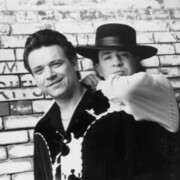
In the provided photo, Billy Gibbons is seen with a Gibson Moderne. While he claims to own a 1950s prototype, he has not provided proof, suggesting this may be a reissue.
Find it on:

"We use the Billy Gibbons brand Dunlop strings - extra small. He has never broken a string since I've been here - ever. He uses sevens. The full ine on sevens is 7, 9, 11, 20, 30, and 38. The eights are the same brand also. I think they make this up to a ten. I think you can get 7, 8, 9, and 10 in tens - don't think they make them in 11s," says Billy Gibbons's guitar tech about the Dunlop Rev. Willis's Lottery Electric Guitar Strings.
Find it on:

"For speakers we use Eminence the Governor," says Billy Gibbons's guitar tech about the Eminence Red Coat The Governor 12" 75W Guitar Speaker.
Find it on:


"This one has always brought some interesting and amusing attention inspired by Bo Diddley and his famous fur guitar. He showed us all of his tricks of course. We're never too far from featuring this on our song Legs. It's got a great sound and sure is comfortable and pillow-like," says Billy Gibbons about the Gretsch Bo Diddley Signature Electric Guitar. For reference, Billy Gibbons covers his Bo Diddley guitar with white fur.
Find it on:

Billy Gibbons talks about the Maestro Fuzz-Tone as one his first pedals, citing it as a pivotal starting point, in this video starting at 5:00.
Find it on:

Elwood Francis, BFG's guitar tech, starts off saying, "Okay, this is the main guitar. John Bolin. Cream T Pickup, which is a prototype that he is only doing for Billy at the moment." Billy Gibbons, starting at 0:51, adds, "Chambered body. Chambered neck. Chambered headstock. Bolin, John Bolin, out of Boise, Idaho, he is the officiated prototype builder for both Gibson and Fender. The playability of these things has proven to be a real bonus. And they've become the starters of the show. Only because we want a change of sound and a little change of pace do we have to crowbar these out of our hot little hands to go to the next one."
Find it on:

Mentioned by Elwood Francis (Gibbons' guitar tech) in Fuzz: The Sound That Revolutionized the World at 1:19:59.
The last time we moved on to the Foxx Tone Machines. He got into those heavy, you know, with his tone dog and lap dog and distortion. It went from the Expandoras, the six Expandoras to three Tone Machines.
Find it on:
-m.webp?v=1784334211)
Purchased sometime before Eliminator, as stated by engineer Terry Manning in this February 15, 2005 ProSoundWeb forum reply.
[Tue, 15 February 2005 09:20]
tenaciousJay wrote on Mon, 14 February 2005 12:05
Terry I wonder if you could comment on the guitar sound in Eliminator. What I always heard it was all Rockman - but was there an amp mixed in as well? And thoughts on the direction of that album as a whole - it certainly was a huge change in sound, even if there were hints of it on earlier albums.
The full story of the making of Eliminator (the politics, the chicannery, the technical aberrations, the high social drama, the exodus, the payback) is one that I cannot tell. Even if I could, there certainly wouldn't be room for it here! It probably won't even make it into "the book" (or the movie). Just don't forget that truth is often stranger than fiction!
However, I will address certain specific musical or technical issues, and I'll begin with your guitar amp question.
THERE WAS ABSOLUTELY NO ROCKMAN USED ON THIS RECORDING!
Not a little bit, not a tiny bit; NOT ANY. I don't know how these stories get started. Billy may indeed have used Rockman at a later date, after I left the situation, but I did not allow it when I was working with him. He did bring one in to try, but I was not satisfied with the sound, compared to an amplifier.
Find it on:

Billy uses a MXR Carbon Copy as seen in this rig rundown article.
Here is a direct link to the image.
http://www.premierguitar.com/ext/resources/images/content/2015-09/Rig-Rundown/10.jpg?1442424106
http://www.premierguitar.com/articles/23116-rig-rundown-zz-tops-billy-gibbons-and-dusty-hill-2015
Find it on:

Billy uses a GE-7 in conjunction with a Hendrix Octavio Fuzz.
Here is a direct link to the image.
http://www.premierguitar.com/ext/resources/images/content/2015-09/Rig-Rundown/10.jpg?1442424106
http://www.premierguitar.com/articles/23116-rig-rundown-zz-tops-billy-gibbons-and-dusty-hill-2015
Find it on:

Marshall claims that this iconic amp was used by Billy Gibbons of ZZ Top
Find it on:

In this interview with, Billy Gibbons talks about his use of the Bixonic Expandora:
"Guitar World: You use six Bixonic Expandora pedals for distortion, which would seem to create a muddy mess. Do you set the levels differently on each one to create the desired sustain while maintaining a cleaner distortion sound?
"You are correct. Combinations of multiple effects are manageable when using a slight edge from each, which avoids the unwanted collision of tones. However, at this point, sometimes the grind of excessive noise becomes its own thing! Experiment...just not with your medication."
Find it on:
This is a community-built gear list for Billy Gibbons.
- Find relevant music gear like Guitars, Amplifiers, Effects Pedals, and other instruments and add it to Billy Gibbons.
- The best places to look for gear usage are typically on the artist's social media, YouTube, live performance images, and interviews.
- To receive email updates when Billy Gibbons is seen with new gear, follow the artist.
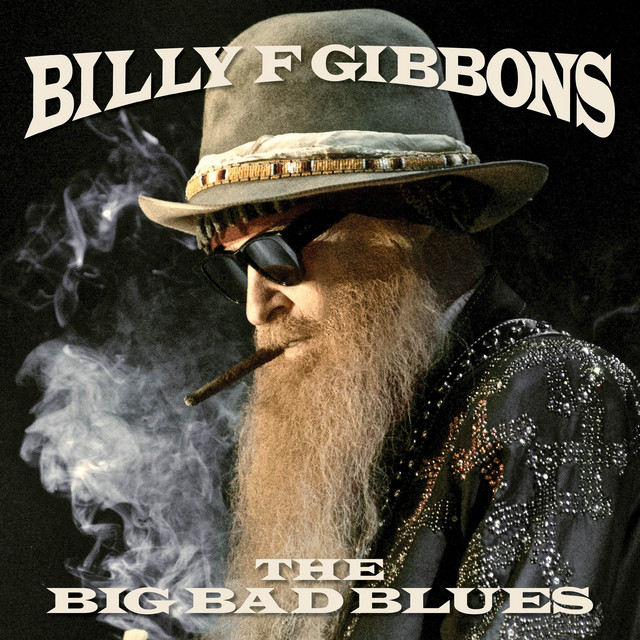
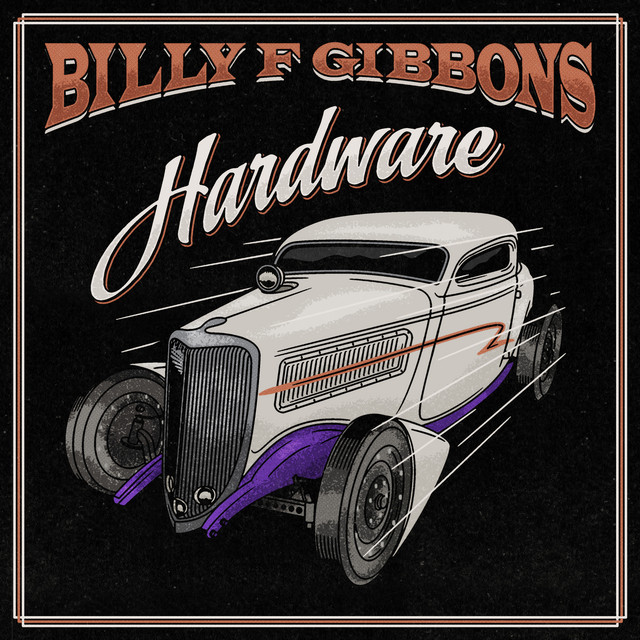
Discography



.jpg?v=1785199189)