
Avi Bortnick
guitarist
Avi Bortnick's Gear


Bortnick’s tone, “goes into DOD FX 17 Wah/Volume. Almost no one uses these things. Everyone thinks they suck, but I like them. I like it because you turn it on in the down position rather than the treble position. That's one of the reasons I like it. But I also think it sounds kinda cool. It sounds different than a Cry Baby. It's kind of not as dramatic or something,” (18:02)
Find it on:


On his web site Bortnick details the collection of pedals that he uses, including this one.
"Korg FLG-1 Flanger – a nice analog flanger"
Find it on:

John Scofield’s rhythm guitar player, Avi Bortnick show us his custom-made Stratocaster in this Premier Guitar video. “The body is one of those Highway One jobs which I got off eBay just because it was fairly lightweight and it had "LT" carved in the back, which, somehow, I liked,” he says at (11:23). It has EMG pickups, he says. “I think these are the SA 88s, I believe. I've had them for so long, you can see it's kind of worn down. It's a guitar I play with John. I hardly ever use this guitar for other things unless I'm doing a funk recording session. Because I think these pickups are really great for kind of Prince, almost '80s style funk. They're very clear. They're very even. Not super great for soloing somehow. I don't think they have a whole lot of character. But they work well for this band. I've actually tried a few other guitars and I always come back to this one. And it feels good and I'm used to it,” (11:48). For tuning machines and strings, Bortnick uses, “American Standard…locking tuners. These strings are a 10 set just a D'Addario 10 set. Really good. Been using D'Addario forever and they work well,” (12:28)
Find it on:


For drum samples, Bortnick uses a Korg Electrive ES-1 MK II. “OK, this thing is awesome,” he says at (21:15). “It's a sampling machine, meaning you’re putting in your own sounds. So a lot of the drum sounds in there. I put them in there or I found somewhere, frankly it's been so long I don't remember where all sounds come from. I don't use it on every song, but the computer always routes into the drum machine 'cause it has a stereo input. So, I sort of almost use it as a mixing board and effects processor for the computer, but it also has beats that I use. But the cool thing about this is kind of like an instrument, or any things up here and you can really play it. Everything's right there. It's really great. You feel very spontaneous. It's not like the computer, where you sort of have to stare at the screen and find where your pointer is, and then plan ahead. This is much more intuitive, which is great. So songs that are really beat intensive, I'll use this Korg drum machine.”
Find it on:

On his web site Bortnick details the collection of foot pedals that he uses for his guitar, such as the Electro-Harmonix Frequency Analyzer ring modulator, Univox Super Fuzz, Boss DD5 Digital Delay, DOD FX17 wah pedal, Boss Phase Shifter, Boss Blues Driver, and Ibanez AF9 Autofilter.
Find it on:


On his web site Bortnick details the collection of foot pedals that he uses for his guitar, such as the Electro-Harmonix Frequency Analyzer ring modulator, Univox Super Fuzz, Boss DD5 Digital Delay, DOD FX17 wah pedal, Boss Phase Shifter, Boss Blues Driver, and Ibanez AF9 Autofilter.
Find it on:

"The Dr. Sample and ES1 are really rudimentary samplers, but for me they really work live because, being aimed at DJs and so on, they are table-top devices with everything lighting up clearly and there being no intensive menus to scroll through. Everything is right up front. The Boss is almost like a toy, run off batteries and with a simple built-in mic. The fidelity is not that good, but I actually think it has a cool sound."
Find it on:

On top of this I used Propellerhead's Rebirth and Reason software on my Mac. I made some beats with the Rebirth software, and Reason is an amazing program, especially the completely automatable filters are very useful. I used this software on '1 Brake 4 Monster Booty' and 'Lucky For Her'
Find it on:

Fender Jazzmasters – I have two, red and blue, both assembled from parts. The red one has traditional Jazzmaster pickups, while the blue one has humbuckers. Both are upgraded with the Staytrem system, and one has the excellent Mastery bridge. Both have Squier J. Mascis necks.
Find it on:

On his web site Bortnick details the collection of amps that he uses, including this one.
"Reverend Kingsnake – a loud and lightweight 60 watt tube amp. Great for NYC."
Find it on:

On his web site Bortnick details the collection of pedals that he uses, including this one.
"Biyang Fuzz Star – Also killer, and cheap. I wish it’s output were lower, though."
Find it on:

On his web site Bortnick details the collection of pedals that he uses, including this one.
Find it on:



On his web site Bortnick details the guitars that he uses, including this one.
Find it on:

I start with a basic single-note line and then go into some chords. But all I’m doing is holding chords for a half-note or full measure—the software is doing all the rest. MIDI Guitar is routed to a TAL Software’s excellent TAL-U-NO-LX synth, and then getting chopped up, gated, delayed, and panned by the super-cool Audio Damage BigSeq2 plug-in.
Find it on:


I start with a basic single-note line and then go into some chords. But all I’m doing is holding chords for a half-note or full measure—the software is doing all the rest. MIDI Guitar is routed to a TAL Software’s excellent TAL-U-NO-LX synth, and then getting chopped up, gated, delayed, and panned by the super-cool Audio Damage BigSeq2 plug-in.
Find it on:

“I've got this foot controller, the Keith McMillen 12 step, which is nice,” Bortnick says, “because it's bus powered and light weight, and has 12 buttons on it rather than the normal ten.” Bornick uses the foot controller to command presets in Ableton Live.
Find it on:


Bortnick uses an Electroharmonix Frequency Analyzer. “That's a cool sound,” he says, “but it's even cooler if you can manipulate it a little bit,” (17:13)
Find it on:

Bornick uses the Wrightsounds Fuzz Stang pedal. “Fuzz Stang, very raunchy kind of '60s. Sometimes I'll use it for chords or just for like a big blast of noise, but mostly it's just for some single note occasions,” he says (17:13).
Find it on:

According to Bortnick, this is a “Nice, light overdrive. I use it just to fatten up single note lines and sometimes to thicken up chords and give a little grit.” (17:31)
Find it on:


-m.webp?v=1784386586)
The Fender Twin Reverb is one of two amps John Bortnick uses. “Normally, I just like it a little clean, but on the road we use rental amps mostly, and I put down what I want. I either use a Twin or a Blues DeVille, or something like that,” (18:50).
Find it on:

The Fender Blues DeVille is one of two amps John Bortnick uses. “Normally, I just like it a little clean, but on the road we use rental amps mostly, and I put down what I want. I either use a Twin or a Blues DeVille, or something like that.” (18:50)
Find it on:

After the wah, Bortnick’s sound goes through the, “to Boss CE-2 Chorus Pedal. Kinda’ set to the "Sco" sound... cause you know there's a couple of instants, where I'm emulating something he did in demo or on the record,” (19:10).
Find it on:

Bortnick’s signal, “goes into standard the Boss TR 2 Tremolo, which I think are great,” he says. (19:31)
Find it on:

For one of his delays, Bortick uses “ a MXR Carbon Copy Delay, which is awesome. Nice analog delay, and it has a little modulation button, I'm sure everyone knows.” (19:53)
Find it on:

Bortnick uses two delay pedals, one being the Strymon El Capistan Delay. “You know…it's basically a miniature computer. It's good sounding I don't think it's as good sounding as the Carbon Copy, but it's cool. I like having two delays to get more ambient stuff,” (20:34).
Find it on:


The guitar first goes through an A/B switcher that toggles between the pedals on his board and a Native Instruments Komplete Audio 6 USB interface. From the interface it goes to his Apple MacBook Air (running Ableton Live and MIDI Guitar) and the Korg Electribe.
Find it on:

Avi plays a 1983 Fender Squier Telecaster, a 1965 Gibson ES-330, and a 1990 American Standard Stratocaster.
Find it on:

Avi plays a 1983 Fender Squier Telecaster, a 1965 Gibson ES-330, and a 1990 American Standard Stratocaster.
Find it on:
-m.webp?v=1784386602)
On his web site Bortnick details the collection of foot pedals that he uses for his guitar, such as the Electro-Harmonix Frequency Analyzer ring modulator, Univox Super Fuzz, Boss DD5 Digital Delay, DOD FX17 wah pedal, Boss Phase Shifter, Boss Blues Driver, and Ibanez AF9 Autofilter.
Find it on:

On his web site Bortnick details the collection of foot pedals that he uses for his guitar, such as the Electro-Harmonix Frequency Analyzer ring modulator, Univox Super Fuzz, Boss DD5 Digital Delay, DOD FX17 wah pedal, Boss Phase Shifter, Boss Blues Driver, and Ibanez AF9 Autofilter.
Find it on:
This is a community-built gear list for Avi Bortnick.
- Find relevant music gear like Guitars, Amplifiers, Effects Pedals, and other instruments and add it to Avi Bortnick.
- The best places to look for gear usage are typically on the artist's social media, YouTube, live performance images, and interviews.
- To receive email updates when Avi Bortnick is seen with new gear, follow the artist.
-
Added to Equipboard on by
 michael
GearIQ 43045
-
Updated
Discography
Album Credits
-
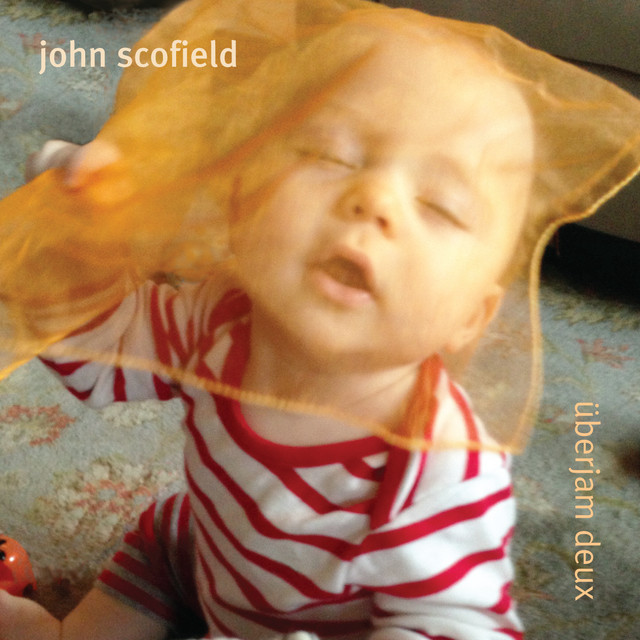
John Scofield · 2013
Producer





.webp)