David Gilmour
Pink Floyd
David Gilmour's Guitars


This has been David’s main guitar for many years now. He bought it at Manny’s guitar store in New York, in May 1970 during Pink Floyd’s North American tour, because he needed a new guitar after his old one was stolen along with the rest of Pink Floyd’s rig just couple of weeks earlier. This guitar has gone through many modifications. At this moment it is fitted with the Fender 1983 C shape maple neck, 1971 Fender pickups in the neck and middle, and a SSL-1C (SSL-5 Prototype) in the bridge. Original white pickguard has been replaced with a black one, and the body which is from 1969 has been repainted black (originally sunburst). The 3-way pickup switch has been replace with 5-way switch. Here’s a short interview with David Gilmour featuring his Black Strat (www.youtube.com/watch?v=TVjFJFEQ_OU). In the mid '80s David replaced all his strats with Fender 1957 reissue models. He donated this particular guitar to Hard Rock Cafe in Dallas where it was on display until 1997 when David requested it back. It was refitted by his technician Charlie Chandler, and David used it ever since it has been played for the first time upon repair at Pink Floyd reunion in 2005. Pink Floyd’s technician Phil Taylor wrote a book about David’s iconic Black Stratocaster. You can check it here (http://www.amazon.com/gp/product/1423492706/ref=as_li_qf_sp_asin_il_tl?ie=UTF8&camp=1789&creative=9325&creativeASIN=1423492706&linkCode=as2&tag=ground09-20).
Find it on:


David Gilmour can be seen using his Gretsch Duo Jet in this 2002 performance from the Royal Festival Hall.
"I’ve got an old black Duo Jet I’ve had for a very long time. I actually used it on a couple of tracks on my first solo album in 1978. It’s quite hard to play, but it’s a real beauty, and it’s a beautiful-sounding instrument that fits perfectly for some things. I played it on “Where We Start.”" - Guitar Player interview.
Find it on:


David Gilmour can be seen playing this 1954 Stratocaster guitar in this video.
"I'll use the old Number 1 once in awhile. It's a beautiful, beautiful guitar, but, you know, it's been about, and it feels quite delicate. You wouldn't want to thrash that around, especially not on the road. I actually don't like taking any of the older ones out on the road because there's always the possibility that things like that get stolen. The Strats that I do use, which are sort of early 1980s and '57 vintage Strats made in California, with one or two minor modifications to them, are so good that I'm comfortable with them and they're all I use most of the time, even in the studio." - guitar.com interview done in 2015.
Find it on:


David’s main acoustic during 2001 and 2002. One such instance of him using this guitar is on an Unplugged performance of "Wish You Were Here".
Find it on:


David first presented his black Steinberger GM-3T Transtrem on Dec. 1987 as the guest artist on Saturday Night Live. The GM-3T was used again with Brian May for the Rock Aid Armenia recording of “Smoke On The Water” in Aug. 1989. It was later sold at the Christie’s Auction in 2019.
Find it on:

In 2019, Gilmour's White Penguin was auctioned off for $447,000 as part of Christie's The David Gilmour Guitar Collection auction with the following item description:
THE FRED GRETSCH MANUFACTURING COMPANY, BROOKLYN, CIRCA 1958 A SOLID-BODY ELECTRIC GUITAR, WHITE PENGUIN, 6134 Inlaid at the headstock with the logo Gretsch and applied at the pickguard and engraved on the tailpiece Gretsch, with hardshell case bearing a label inscribed GRETSCH 6134 WHITE PENGUIN and SERIAL NO. 1070; accompanied by a candid color snapshot of David Gilmour playing this guitar in 2001 Length of back 17 7/8 in. (45.3 cm.)
Following the release of the White Falcon, Gretsch decided to target the established solid-body electric market by producing a solid-body companion to the Falcon as they had done with the 6120 Chet Atkins. The guitar would share all the gold-plated appointments and snow white finish of the 6136, but with a body built around the Duo Jet’s 13 ½ inch wide template. It would not be hyperbole to say that White Penguins are one of the rarest American vintage guitars to exist in the market. Gretsch guitar historian Edward Ball clarifies the rarity in his research on Gretsch production numbers during the 1950s. Gretsch produced these spectacular instruments intermingled within the batch numbers used for the White Falcon. Without solid numbers, he can only estimate the total output to be, at the very most, 50 guitars. Among the pantheon of rare and collectable guitars, a 1950s White Penguin would be comparable to a 1958 Gibson Korina Flying V or Explorer or a pre-war Martin D-45. As David Gilmour had coveted a Gretsch White Penguin for some time, he jumped at the chance when longtime guitar technician Phil Taylor received a tip off from friend and guitar maker Grover Jackson. Jackson led Taylor to the Georgia based guitar dealer Tut Campbell, who managed to track one down. The White Penguin was purchased for Gilmour’s collection in July 1980 and kept for home and studio use. Gilmour told us: At some point I heard there was a sister or brother guitar to the White Falcon and set around to find one of those. It’s a lovely instrument with something all of its own. These guitars can be so similar, same make, but they sing out in a different way. I’ve played it a lot, it’s a lovely, lovely thing.
Find it on:

David Gilmour is seen here playing his Fender NOS Signature Stratocaster named "Black Cat" during the recording of "Luck and Strange".
From gilmourish.com;
"David Gilmour playing his Fender NOS Signature Stratocaster named Black Cat due to it’s custom made cat sticker. This guitar has now replaced the original Black Strat that was sold at the 2019 Christie’s auction. The Black Cat Strat was David’s main guitar for the recording sessions."
Find it on:

"It has a stop tailpiece. For the last album, I wanted one with a Bigsby vibrato, but I didn’t want to change the old one I’d used to play, for example, the solo on “Another Brick In the Wall Part 2,” so I found another one. I suppose you could say that they are a little raunchier than Fenders."
Find it on:
-m.webp?v=1782327089)
David is seen with a blonde early 1960’s Fender with an ash body, white pickguard and rosewood neck. David told Guitarist in July 1995 how he got the guitar “(…) my parents gave me a Telecaster for my 21st birthday, which was when I was living and working in France.” This is the same guitar David brought with him when joining Pink Floyd in January 1968 and continued to use throughout the spring until an airline company lost the guitar on the band’s tour in the US in July.
Find it on:

This was a custom made guitar by Dick Knight with standard Fender necks. David wanted to be able to play both normal guitar and slide on the same instrument, so the both necks on the guitar were 6 strings, but the lower neck had higher action on the strings for slides. The guitar was used during the spring US tour in 1972 but later abandoned.
Find it on:

David Gilmour has a long history with the Gibson J-45, first seen using it during the "Atom Heart Mother" era in 1970, notably at a performance in San Francisco. He later brought this acoustic guitar back for his "On An Island" and "Rattle That Lock" tours. The YouTube video by Nino Woland captures him playing it live in 2015 during "Wish You Were Here."
Find it on:

When David joined Pink Floyd in early 1968, he played a blonde Fender Telecaster. The guitar had been a gift from his parents a year earlier.
The Telecaster was used on the Saucerful of Secrets recording sessions and on several live and TV-shows during the spring of 1968. However the guitar got lost on the band’s visit to the States later that summer.
Luckily, a couple of days prior to that same US tour, David received a mid 60’s white Fender Stratocaster as a gift from the band.
The guitar can be dated to 1966-67 when the first large headstock models appeared, but before the bullet truss rod. It has an olympic white body with a white pickguard and rosewood neck. The pickups were stock Fender late 1960s. The Stratocaster made its debut at the the free concert in Hyde Park, June 29 1968 and David brought it with him to his first US tour with the band some weeks later.
The guitar was used extensively throughout the latter part of 1968, the whole of 1969 and early months of 1970. Unfortunatley it got stolen in New Orleans, USA, on May 16th 1970, along with all of Pink Floyd’s backline.
Although most of the equipment was later returned to the band, David’s guitars were still missing. Later that same month, David stopped by Manny’s Music in New York and bought what is later known as his Black Strat.
Information from Gilmourish.com
Find it on:

This ’55 Esquire was used on the recording of David’s first solo album, and on the “The Wall” recording sessions. It has a custom fitted neck pickup which was installed by Seymour Duncan – who sold this guitar to David in the first place. David nicknamed this guitar “The Workmate” because of its worn color.
Find it on:
-m.webp?v=1781738646)
On the picture right we can see Gilmour playing a Gibson Es 355.
Find it on:

In this video of David Gilmour playing with Kate Bush, David can be seen playing a Steinberger GL model guitar. I’m unsure if it is a stock model or modified, as i haven’t been able to find much info on the HSS setup of his.
Find it on:

Mr. David Gilmour plays this guitar in his recent music video "Yes, I Have Ghosts".
Find it on:
-m.webp?v=1783249661)
"Gilmour used a prototype Martin D-28 with a cutaway for the Bonus Tracks from January 2002. The electronics are the same as the other acoustics except for a Seymour Duncan sound-hole pickup, which ran through the Cornish board for electric guitar tones. A 1956 Fender tweed Twin amp was used for the additional shows. This setup was used for 'Dominoes.'"
via Spare Bricks
Find it on:

Used from 1974 until 2019, when it was auctioned off for $531,000 as part of Christie's The David Gilmour Guitar Collection auction. The listing has the following item description:
C.F. MARTIN & COMPANY, NAZARETH, 1971 AN ACOUSTIC GUITAR, D12-28 Branded internally C.F. MARTIN & Co. / NAZARETH. PA. MADE IN U.S.A. D12-28 / 290452, the headstock bearing the logo C.F. Martin & Co / EST. 1833, with original hardshell case bearing a label inscribed MARTIN N D12-28 1971 #290452 and SERIAL NO. DG 1087; accompanied by a facsimile receipt for repairs carried out by Chandler Guitars, Kew, dated 8th January 2003 Length of back 19.15/16 in. (50.6 cm.)
DAVID GILMOUR’S PRIMARY STUDIO 12-STRING ACOUSTIC, USED TO WRITE AND RECORD WISH YOU WERE HERE Purchased from a friend in 1974, this guitar has served as David Gilmour’s chief 12-string studio acoustic for over forty years. Gilmour told us: It wasn’t my first 12-string. I had a 12-string when I was a teenager and some of those instruments, you know, what happened to them is murky. I didn’t have the funds to just buy another one, so they would often just be sold in order to buy something else, but I did have a 12-string. I always loved the 12-string, I used to listen to Lead Belly a lot, who was a great 12-string player, and there was another guy called Erik Darling who played a 12-string and I learnt some of his stuff. He was an American folk singing guy and he had an album that I was very, very fond of back in those days. He then joined, or formed, a little trio called the Rooftop Singers and had a big hit called Walk Right In, featuring a 12-string. So I always wanted to get another 12-string and I knew a guy who had a Martin 12-string and he wanted to get rid of it. I liked it, I bought it. It gave me Wish You Were Here, which was very generous of it. Playing around with his new guitar at London’s Abbey Road Studios during the making of Pink Floyd’s 1975 album Wish You Were Here between January and July 1975, Gilmour hit upon the notes that would become the enduring title track to the album. When asked by Paul Rappaport in September 2011 how he made the music for Wish You Were Here, Gilmour explained: I had recently bought a Martin 12 string from someone I knew and I was strumming it in the control room at No.3 at Abbey Road and that just started coming out, that riff …I started mildly obsessing with this riff that was slowly developing and, again, people’s ears – Roger’s [Waters] ears – pricked up. Reflecting on the final recording, Gilmour continued …every time I listen to the actual original recording I think God I should have really done that a little bit better, but the idea was that it was like a guitar playing on the radio and someone in their room at home …listening to it and joining in, so the other guitar was kind of supposed to be a kid at home joining in with the guitar he’s listening to on the radio, and therefore it wasn’t supposed to be too slick… and it wasn’t. Contributing to a collage of sound built up with the use of synthesizers, the Martin 12-string was also heavily featured on the album’s second track Welcome To The Machine, a scathing Roger Waters composition reflecting the band's disillusionment with the record industry. After his opening strums, Gilmour continues to accompany himself on the 12-string as he comes in with high pitched lead vocals, introducing an ascending acoustic riff in the instrumental section. The guitar next made an appearance on the band’s 1979 narrative concept album The Wall, recorded at Super Bear Studios in the South of France from April-July 1979 and Producer’s Workshop in Los Angeles from September to November 1979. Displaying his musical range, Gilmour played no less than five different types of guitar on Hey You, the opening song of the third act. Along with his Martin 12-string and Ovation hi-strung (lot 17), he also recorded fretless bass, six-string acoustic and electric lead and rhythm guitar parts. Gilmour next played the D12-28 on the melancholy Waters composition Paranoid Eyes for the band’s 1983 anti-war concept album The Final Cut, which would be the last Pink Floyd record to feature Roger Waters. It is almost certain that the Martin 12-string was employed during recording of the subsequent Gilmour-led Pink Floyd albums A Momentary Lapse of Reason (1987) and The Division Bell (1994) although there are no specific records to confirm its use. More recently, the 12-string appeared in Guitarist magazine, February 2015, photographed at Gilmour’s East Sussex studio for a feature on the instruments, amps and effects that the Pink Floyd legend used to summon up the rich soundscapes of “The Endless River.” Gilmour had used the Martin 12-string to record the track It’s What We Do for the last Pink Floyd album. Released in November 2014 as a tribute to keyboardist Richard Wright, who had passed away in 2008, the predominantly instrumental album The Endless River debuted at number one in the UK, France, Germany, Portugal, Ireland, the Netherlands, Belgium, New Zealand, and Canada.
The D12-28 was also mentioned by guitar tech Phil Taylor in this February 10, 2015 Music Radar interview about the contents of Astoria and Medina.
“David bought this 1971 Martin D-12-28 second-hand off a friend of his. I don’t know exactly when - ’73 or ’74 - but prior to Wish You Were Here, obviously.”
Note that Gilmour played the lead parts of the song Wish You Here on another six-string Martin.
Find it on:

In this video David appears to be using the Guild F-512 12 string except for in sunburst finish.
Find it on:

This image shows a guitar from the David Gilmour Guitar Collection, a 1987 Fender Stratocaster Plus in Dusty Rose finish.
Find it on:

"They made a run of only 90 of these particular guitars in 1984/85 and we've now obtained three. Dave just really likes them; they sound great and they're really lovely to play. I've had them modified, they've got EMG acoustic pickups in, but they've also got small Crown microphones in them too. So there are basically two outputs from each guitar, two separate radio transmitters on them with two different signals. Then there's a Gibson Chet Atkins electro-classical which he uses on High Hopes and the two steel guitars which we talked about earlier." - Phil Taylor, David Gilmour's guitar tech.
Find it on:

David Gilmour used the Gibson Les Paul Traditional Goldtop P90 Bigsby during his "Rattle That Lock" tour, as shown on his official Facebook page.
Find it on:

For the 1987-90 and 1994 world tours David would use a stock 52 Fender Telecaster, with a butterscotch body and maple neck. The guitar was used for Run Like Hell on both tours, with a drop D tuning. A second, identical guitar, was also used for Astronomy Dominé in 1994, with a standard tuning.
Find it on:

In this interview with Guitar World, David Gilmour's Martin D-35 is mentioned:
"David Gilmour is a renowned guitar collector. Over the years, with the help of his right-hand man, Phil Taylor, he has acquired such rare gems as a Gretsch White Falcon, a Gretsch Penguin, a Plexiglas Dan Armstrong, a '55 Fender Esquire, a Martin D-35 acoustic."
Find it on:

David Gilmour is using a Gibson Country Western guitar on stage, notably during his "On an Island" and "Rattle That Lock" tours. This video showcases him playing the guitar, which dates back to 1959.
Find it on:

In this photo, you can see David Gilmour sat using a Veleno guitar, not sure what era it is but if I had a guess it would be druing the recording of Obscured By Clouds because the photo is from 1972.
Find it on:

This guitar was used on the Comfortably Numb recording sessions.
Find it on:
-m.webp?v=1758450223)
David used it during Meddle and Dark Side of the Moon recording sessions.
Find it on:

In this interview with Guitar World, David Gilmour's Plexiglas Dan Armstrong is mentioned:
"David Gilmour is a renowned guitar collector. Over the years, with the help of his right-hand man, Phil Taylor, he has acquired such rare gems as a Gretsch White Falcon, a Gretsch Penguin, a Plexiglas Dan Armstrong, a '55 Fender Esquire, a Martin D-35 acoustic."
Find it on:

In this interview with Guitar World, David Gilmour's 1961 Fender Telecaster is mentioned:
"Gilmour also travels with a '61 Telecaster with a Charvel neck, which was pictured on the cover of his 1984 solo album, About Face, as well as a '52 vintage series re-issue Tele for the song 'Run Like Hell.'"
Find it on:
This is a community-built gear list for David Gilmour.
- Find relevant music gear like Guitars, Amplifiers, Effects Pedals, and other instruments and add it to David Gilmour.
- The best places to look for gear usage are typically on the artist's social media, YouTube, live performance images, and interviews.
- To receive email updates when David Gilmour is seen with new gear, follow the artist.
Discography

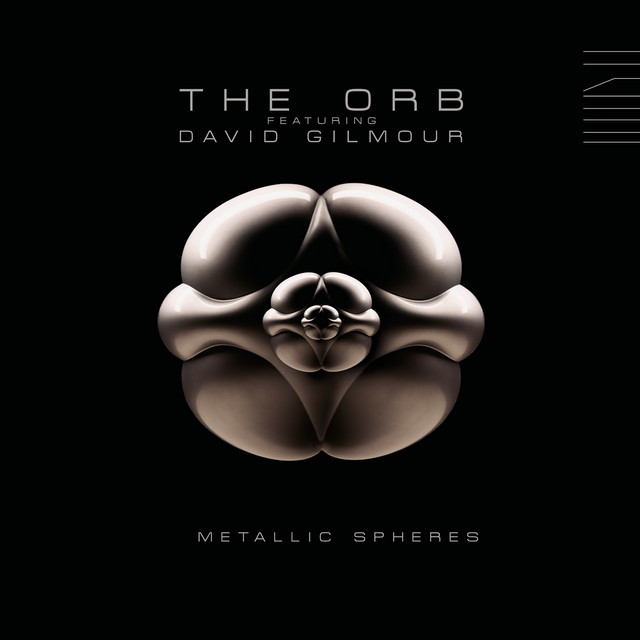
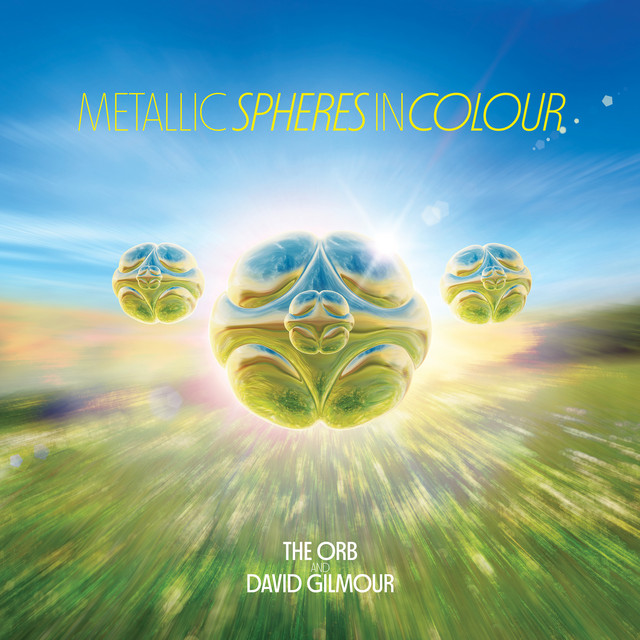
Album Credits
-

Between Two Points (Live from the Luck and Strange Concerts)
David Gilmour · 2025
Mixing Engineer Producer -

Wish You Were Here (Live from the Luck and Strange Concerts)
David Gilmour · 2025
Mixing Engineer Producer -

Luck and Strange (Live from the Luck and Strange Concerts)
David Gilmour · 2025
Mixing Engineer Producer -

Sorrow (Live from the Luck and Strange Concerts)
David Gilmour · 2025
Mixing Engineer Producer -

David Gilmour · 2025
Mixing Engineer Producer -
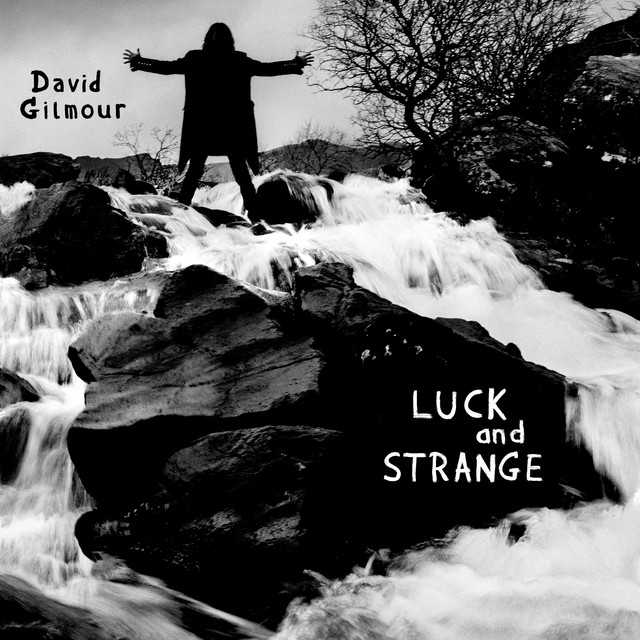
David Gilmour · 2024
Mixing Engineer Producer Programmer -
David Gilmour · 2024
Mixing Engineer Producer -
David Gilmour · 2024
Mixing Engineer Producer -
The Dream Academy · 2021
Producer -
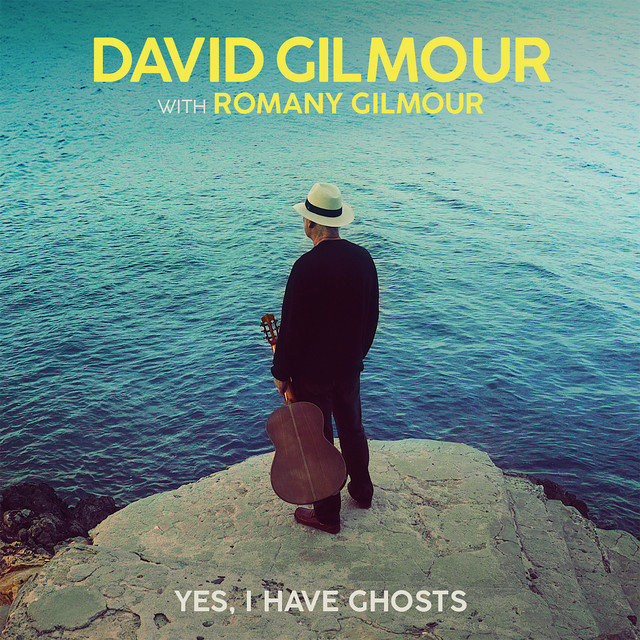
David Gilmour · 2020
Mixing Engineer Programmer -
David Gilmour · 2017
Mixing Engineer Producer -
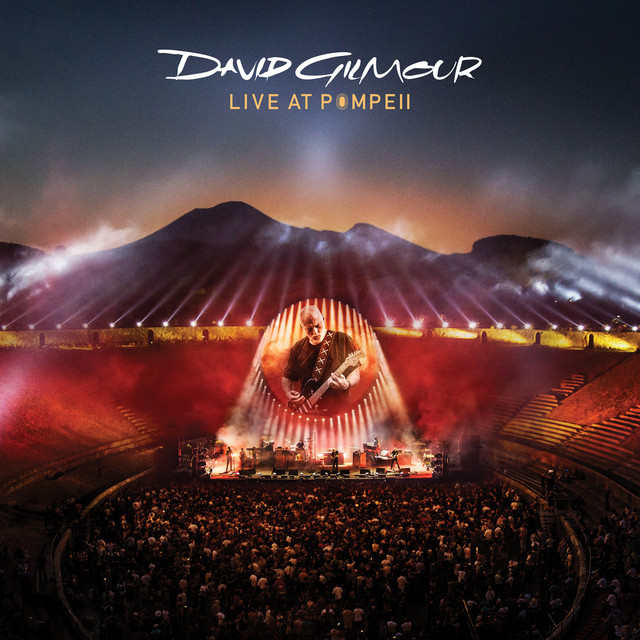
One of These Days (Live At Pompeii 2016)
David Gilmour · 2017
Mixing Engineer Producer
.jpeg?v=1783313150)

.jpeg?v=1783065966)