
Pricing and availability
We compare 600+ stores and found this item at 1 store. Prices updated .
Store
Reviews
Price




Average Price: $1,975
High-end/Boutique
$200
$601+
Price Tier
Budget
Standard
High-end
* Product prices and availability are updated by Equipboard every 24hrs and are subject to change. Equipboard may receive compensation for purchases made at participating retailers linked on this site. This compensation does not affect what products or prices are displayed, or the order of prices listed. For more information, please refer to our affiliate disclosure.
Description
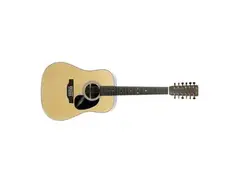
Crafted for both seasoned musicians and eager beginners, the Martin D12-28 is a 12-string acoustic guitar that embodies the rich tradition and superior craftsmanship Martin Guitars is renowned for. This guitar is perfect for those seeking a full, resonant sound that fills the room with its complex tonal palette. The D12-28 features a solid Sitka spruce top paired with East Indian rosewood back and sides, providing a balanced and dynamic range of sound that suits a variety of playing styles. Its dreadnought body shape enhances volume and projection, making it ideal for both studio recordings and live performances.
The Martin D12-28 is not just about sound; it’s also designed with player comfort in mind. The low-profile neck ensures smooth playability, while the ebony fingerboard provides a sleek surface for effortless navigation across frets. This guitar includes a standard 20-fret construction and a 25.4-inch scale length, allowing for a comfortable reach and easy chord transitions. Whether you're strumming softly at home or performing on stage, the Martin D12-28 offers a reliable and enriching musical experience.
Key Features:
- 12-string configuration for a fuller, richer sound
- Solid Sitka spruce top for dynamic tonal range
- East Indian rosewood back and sides for warmth and resonance
- Low-profile neck for comfortable playability
- Ebony fingerboard for smooth fret transitions
- Dreadnought body shape for enhanced volume and projection
Product specs
| Brand | Martin |
| Model | Standard Series D12-28 |
| Finish | Natural |
| Year | 2005 - 2017 |
| Made In | United States |
| Categories | 12-String Acoustic Guitars, Dreadnought Acoustic Guitars |
| Active Preamp | No |
| Back Material | Rosewood |
| Body Shape | Dreadnought |
| Color Family | Natural |
| Finish Style | Gloss |
| Fretboard Material | Ebony |
| Model Family | Martin D-28 |
| Model Sub-Family | Martin D-12-28 |
| Neck Material | Mahogany |
| Number of Frets | 20 |
| Number of Strings | 12-String |
| Pickup | None |
| Right / Left Handed | Right Handed |
| Series | Martin Standard Series |
| Sides Material | Rosewood |
| String Type | Steel |
| Top Material | Spruce |
| Wood Top Style | Plain |
FAQs
-
What type of sound can I expect from the Martin D12-28 12-string acoustic guitar?
-
The Martin D12-28 delivers a rich, full-bodied sound typical of dreadnought guitars, with enhanced resonance and sustain from its rosewood back and sides. The 12-string configuration adds shimmering overtones, making it ideal for genres like folk, rock, and country.
-
Is the Martin D12-28 suitable for fingerstyle playing?
-
While the Martin D12-28 is primarily known for its robust strumming capabilities, its wide fretboard and responsive spruce top also make it suitable for fingerstyle playing, providing a balanced tone across all strings.
-
Does the Martin D12-28 come with a built-in pickup?
-
No, the Martin D12-28 does not come with a built-in pickup. It's designed as a purely acoustic instrument, allowing the natural sound of the guitar to shine without electronic amplification.
-
What is the neck profile of the Martin D12-28 like?
-
The Martin D12-28 features a low profile neck, crafted from mahogany, which offers comfortable playability and smooth transitions along the fretboard, especially beneficial for players transitioning between chords on a 12-string guitar.
-
How does the Martin D12-28 compare to other models in the Martin D-28 family?
-
The Martin D12-28 shares the classic dreadnought body shape and high-quality materials of the D-28 family but distinguishes itself with its 12-string configuration, providing a more complex harmonic texture and a fuller sound.
Videos

N Stuff Music
Martin D12-28 12-String Acoustic | N Stuff Music Product Review

Martin D12-28 12-String Acoustic | N Stuff Music Product Review
N Stuff Music

Petrilli Picks: 2004 Martin D-12-28 | Angela Petrilli

Normans Rare Guitars

Martin D12-28 acoustic 12-sttring guitar with Ambertone Sunburst demo by Paul Jacobs

GryphonStrings

Martin D12-28 demonstrated by Paul Jacobs
GryphonStrings

1986 Martin D12-28 East Indian/Sitka at Dream Guitars

Dream Guitars

Martin D-12-28 | 1972 at The Fellowship of Acoustics

The Fellowship of Acoustics

I Bought A Mystery Guitar! Vintage Martin D12-28

Zach Oswald
Reviews
Owner Insights
We analyzed real musician discussions from forums and Reddit to find what players love, question, and tweak about Martin D12-28.
Setup and maintenance
-
The action height of 5mm at the 12th fret is seen as excessively high, affecting playability and requiring a professional setup to lower it.
Source -
Reducing the action from 5mm to around 2.5mm is suggested to improve playability without significantly altering the guitar’s tonal qualities.
Source -
Many 1970s Martins, including this model, often require a neck reset as part of maintenance due to aging.
Source -
Bridge cracks and potential neck reset are common repair needs for 1970s Martin guitars, with repairs costing several hundred dollars.
Source
Comparisons
-
Taylor guitars are noted for their factory setups that provide easier playability compared to Martins, which often ship with higher action preferred by bluegrass players.
Source -
The Martin D12E features fancier appointments like binding, with Koa wood providing a slightly louder and brighter tone compared to the warmer, softer sound of Sapele.
Source -
The D12E Koa is likened to the D10E Spruce for those seeking a classic D18-like sound, with spruce tops offering a brighter tone.
Source
User experience
-
Owners report that a proper setup does not negatively affect the guitar's tone and can significantly improve playability, making the guitar feel more personalized.
Source -
Some users have switched from 13 to 12 gauge strings to improve playability, though this change can result in a noticeable loss of tone quality.
Source -
A well-maintained D12-28 can fetch between $2,000 and $2,500, though the market for 12-string guitars is smaller.
Source -
Owners value the historical and sentimental significance of this model, often viewing it as a cherished heirloom.
Source -
Owners emphasize the importance of playing both the D12E and higher-end models like the D28 to determine personal preference before purchasing.
Source
Build quality
-
The Martin D12-28 from the 1970s is noted for its solid Indian Rosewood back and sides, Sitka Spruce top, and mahogany neck.
Source
Features and functionality
4.5 out of 5
Based on 1 Review and 7 Ratings
Artist usage
Add artist

John is seen using a Martin 12 string during a cover of George Harrison's "My Sweet Lord" in this video.

.jpg?mode=max)
Used from 1974 until 2019, when it was auctioned off for $531,000 as part of Christie's The David Gilmour Guitar Collection auction. The listing has the following item description:
C.F. MARTIN & COMPANY, NAZARETH, 1971 AN ACOUSTIC GUITAR, D12-28 Branded internally C.F. MARTIN & Co. / NAZARETH. PA. MADE IN U.S.A. D12-28 / 290452, the headstock bearing the logo C.F. Martin & Co / EST. 1833, with original hardshell case bearing a label inscribed MARTIN N D12-28 1971 #290452 and SERIAL NO. DG 1087; accompanied by a facsimile receipt for repairs carried out by Chandler Guitars, Kew, dated 8th January 2003 Length of back 19.15/16 in. (50.6 cm.)
DAVID GILMOUR’S PRIMARY STUDIO 12-STRING ACOUSTIC, USED TO WRITE AND RECORD WISH YOU WERE HERE Purchased from a friend in 1974, this guitar has served as David Gilmour’s chief 12-string studio acoustic for over forty years. Gilmour told us: It wasn’t my first 12-string. I had a 12-string when I was a teenager and some of those instruments, you know, what happened to them is murky. I didn’t have the funds to just buy another one, so they would often just be sold in order to buy something else, but I did have a 12-string. I always loved the 12-string, I used to listen to Lead Belly a lot, who was a great 12-string player, and there was another guy called Erik Darling who played a 12-string and I learnt some of his stuff. He was an American folk singing guy and he had an album that I was very, very fond of back in those days. He then joined, or formed, a little trio called the Rooftop Singers and had a big hit called Walk Right In, featuring a 12-string. So I always wanted to get another 12-string and I knew a guy who had a Martin 12-string and he wanted to get rid of it. I liked it, I bought it. It gave me Wish You Were Here, which was very generous of it. Playing around with his new guitar at London’s Abbey Road Studios during the making of Pink Floyd’s 1975 album Wish You Were Here between January and July 1975, Gilmour hit upon the notes that would become the enduring title track to the album. When asked by Paul Rappaport in September 2011 how he made the music for Wish You Were Here, Gilmour explained: I had recently bought a Martin 12 string from someone I knew and I was strumming it in the control room at No.3 at Abbey Road and that just started coming out, that riff …I started mildly obsessing with this riff that was slowly developing and, again, people’s ears – Roger’s [Waters] ears – pricked up. Reflecting on the final recording, Gilmour continued …every time I listen to the actual original recording I think God I should have really done that a little bit better, but the idea was that it was like a guitar playing on the radio and someone in their room at home …listening to it and joining in, so the other guitar was kind of supposed to be a kid at home joining in with the guitar he’s listening to on the radio, and therefore it wasn’t supposed to be too slick… and it wasn’t. Contributing to a collage of sound built up with the use of synthesizers, the Martin 12-string was also heavily featured on the album’s second track Welcome To The Machine, a scathing Roger Waters composition reflecting the band's disillusionment with the record industry. After his opening strums, Gilmour continues to accompany himself on the 12-string as he comes in with high pitched lead vocals, introducing an ascending acoustic riff in the instrumental section. The guitar next made an appearance on the band’s 1979 narrative concept album The Wall, recorded at Super Bear Studios in the South of France from April-July 1979 and Producer’s Workshop in Los Angeles from September to November 1979. Displaying his musical range, Gilmour played no less than five different types of guitar on Hey You, the opening song of the third act. Along with his Martin 12-string and Ovation hi-strung (lot 17), he also recorded fretless bass, six-string acoustic and electric lead and rhythm guitar parts. Gilmour next played the D12-28 on the melancholy Waters composition Paranoid Eyes for the band’s 1983 anti-war concept album The Final Cut, which would be the last Pink Floyd record to feature Roger Waters. It is almost certain that the Martin 12-string was employed during recording of the subsequent Gilmour-led Pink Floyd albums A Momentary Lapse of Reason (1987) and The Division Bell (1994) although there are no specific records to confirm its use. More recently, the 12-string appeared in Guitarist magazine, February 2015, photographed at Gilmour’s East Sussex studio for a feature on the instruments, amps and effects that the Pink Floyd legend used to summon up the rich soundscapes of “The Endless River.” Gilmour had used the Martin 12-string to record the track It’s What We Do for the last Pink Floyd album. Released in November 2014 as a tribute to keyboardist Richard Wright, who had passed away in 2008, the predominantly instrumental album The Endless River debuted at number one in the UK, France, Germany, Portugal, Ireland, the Netherlands, Belgium, New Zealand, and Canada.
The D12-28 was also mentioned by guitar tech Phil Taylor in this February 10, 2015 Music Radar interview about the contents of Astoria and Medina.
“David bought this 1971 Martin D-12-28 second-hand off a friend of his. I don’t know exactly when - ’73 or ’74 - but prior to Wish You Were Here, obviously.”
Note that Gilmour played the lead parts of the song Wish You Here on another six-string Martin.


Clapton played the song Motherless Child on this guitar tuned to Open G with a capo on the fourth fret. The guitar shows significant playing wear on the pickguard. Clapton's former guitar technician previously commented that it had been necessary to get Eric to use a lighter pick on this song as he strums his 12 string guitar so hard that he would otherwise shred the strings.


Johnny Marr gave a quote that he is using a Martin D12-28.


In the Premier Guitar article "Dot Hacker: Psychic Friends Network," Josh Klinghoffer is shown using the Martin Standard Series D12-28 guitar in the gear section.


At 4:43 of this "Rig Rundown" with Premier Guitar, Rush's Alex Lifeson's tech Scott Appleton shows us his 12-string Martin Dreadnought that he uses on the intro for "Closer To the Heart."
.jpg?v=1784469515)

"His other acoustic guitars are a pair of Breedloves, a Martin 00-21 from the 1930s, and a 1972 Martin D-12. Plus he’s got three Telecasters and a prized 1965 Jazzmaster." - Ted Drozdowski, Gibson.


According to Premier Guitar, Isbell uses the Martin D12-28, even though he is not a really a fan of 12-strings. This guitar is tuned to "Nashville tuning."


Adrianne is seen using a Martin D12 in multiple performances, including this performance of Cradle.


Used for only one song, but brilliant tone anyway. This is a venture from his Oasis days of using a beautiful Taylor 12-string.
Further, the Gem Archer Gear site says that this guitar was used for "For Anyone". The Taylor 12-string was used for "Songbird", most notably for Oasis Manchester 2005 concert.


Klaus uses Martin 12-string


Album Usage
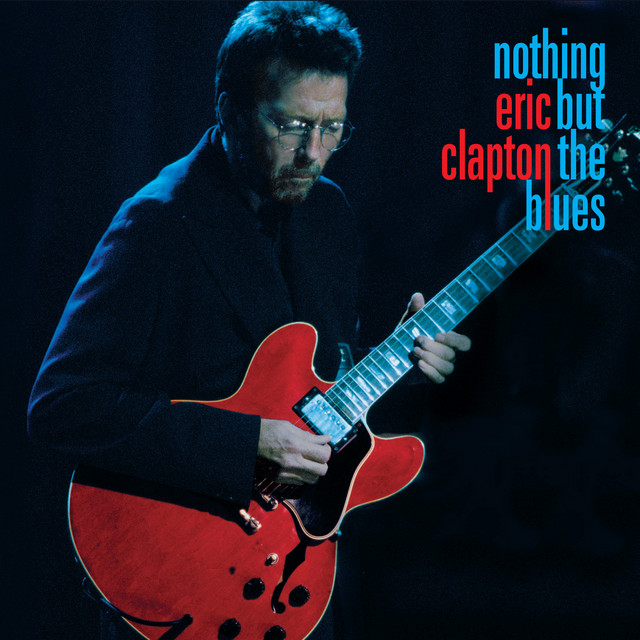
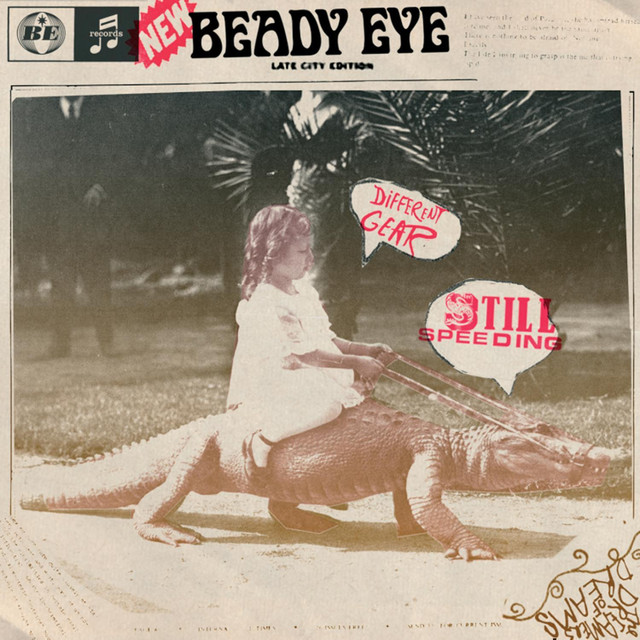
The Martin D12-28 has been featured on the following albums:

Genre Usage
Based on how artists on Equipboard use this gear, it is most commonly found in the following genres.
Used With
Based on how musicians on Equipboard use Martin D12-28, it is most commonly used with the following gear.



Similar
Add recommendation1 alternative for Martin D12-28, curated by the Equipboard community.

$2,999.00 - $3,899.00
More Martin Steel-string Acoustic Guitars

$1,649.00 - $2,069.00
in Steel-string Acoustic Guitars Rank
.jpg?v=1784510867)


-m.webp?v=1784545658)
$2,549.00 - $3,499.99
in Steel-string Acoustic Guitars Rank


-m.webp?v=1784585441)
$2,149.99 - $3,333.00
in Steel-string Acoustic Guitars Rank


$3,399.00 - $4,111.00
in Steel-string Acoustic Guitars Rank


-m.webp?v=1784559488)
$299.00 - $378.64
in Steel-string Acoustic Guitars Rank


.png?v=1784579347)
-m.webp?v=1784586718)
$3,199.00 - $4,111.00
in Steel-string Acoustic Guitars Rank
.jpeg?v=1784591665)


$1,598.00 - $1,829.00
in Steel-string Acoustic Guitars Rank


-m.webp?v=1784585106)
$2,749.99 - $3,055.00
in Steel-string Acoustic Guitars Rank


$1,699.00 - $2,399.00
in Steel-string Acoustic Guitars Rank


$3,519.99 - $4,799.00
in Steel-string Acoustic Guitars Rank


$9,099.00 - $10,290.00
in Steel-string Acoustic Guitars Rank


$1,799.00 - $1,825.00
in Steel-string Acoustic Guitars Rank


$2,800.00 - $3,650.00
in Steel-string Acoustic Guitars Rank


$2,379.00 - $2,799.00
in Steel-string Acoustic Guitars Rank


$3,999.99 - $5,399.00
in Steel-string Acoustic Guitars Rank


$2,599.00 - $2,999.00
in Steel-string Acoustic Guitars Rank

.jpg?v=1784556311)


$5,119.00 - $6,599.00
in Steel-string Acoustic Guitars Rank


$3,399.00 - $4,190.00
in Steel-string Acoustic Guitars Rank

.jpg?v=1784469515)
-m.webp?v=1784586298)
$1,599.00 - $2,099.99
in Steel-string Acoustic Guitars Rank


$399.00 - $573.00
in Steel-string Acoustic Guitars Rank


$250.00
in Steel-string Acoustic Guitars Rank


$2,460.87
in Steel-string Acoustic Guitars Rank


$2,699.00 - $3,666.00
in Steel-string Acoustic Guitars Rank


$1,799.00 - $2,150.00
in Steel-string Acoustic Guitars Rank


$595.00 - $599.00
in Steel-string Acoustic Guitars Rank


$1,799.00 - $1,825.00
in Steel-string Acoustic Guitars Rank


$3,199.00 - $4,111.00
in Steel-string Acoustic Guitars Rank


$5,299.00 - $6,499.00
in Steel-string Acoustic Guitars Rank


$20,327.13 - $70,000.00
in Steel-string Acoustic Guitars Rank


$425.00 - $449.99
in Steel-string Acoustic Guitars Rank


$3,849.00
in Steel-string Acoustic Guitars Rank

$2,200.00
in Steel-string Acoustic Guitars Rank


in Steel-string Acoustic Guitars Rank


$299.00 - $349.00
in Steel-string Acoustic Guitars Rank


$2,700.00 - $3,958.80
in Steel-string Acoustic Guitars Rank


$1,692.00 - $2,150.00
in Steel-string Acoustic Guitars Rank


$1,089.00 - $1,829.00


$6,399.00 - $7,699.00


Accessories & Related Items
-s.webp?v=1784387329)

Community setups


Gear Guides







Most Popular Steel-string Acoustic Guitars
Most Popular Brands
-
Added to Equipboard on by
 julianwolf2
GearIQ 13060
-


