DJ Shadow
US hip hop producer, DJ & instrumentalist
Role
Genre
Role
Genre
DJ Shadow's Gear


This clip from a 2008 Crate Kings article talks about how DJ Shadow ditched the Akai MPC 60 and MPC 3000 as his main production tools. Shadow said:
"At the time, in 2002, I felt as though ‘The Private Press’ was the best record I could ever make on the MPC, and I was eager for a change. It was also important to me that I not get stagnant and start repeating things I had done in the past. So I switched it up and forced myself to "go back to school," in a sense. I felt that if I refused to rely on the MPC and learn new techniques my music would change, for better or worse, and change was what I craved most."
Find it on:


Around 2012 was when I finally decided, okay, I've heard about this Ableton, I'm gonna sit down and read the manual front-to-back. Everybody's mind works differently, but to me Ableton solved so many issues about my workflow and the way I think about music.
Find it on:


Used on The Private Press and Unkle's Psyence Fiction, as mentioned in this October 2017 Sound on Sound interview.
Davis’ trusty old MPC60, though, is sadly long gone from his setup. Over successive DJ Shadow albums, however, he has progressed through variations on it: upgrading to an MPC2000 for his production of Unkle’s 1998 album Psyence Fiction, then MIDI’ing two of them together for the second DJ Shadow album The Private Press, released in 2002.
“I basically had nearly unlimited sample power and chop power,” he says. “But after The Private Press, I felt like it was important to switch things up. I had purchased Pro Tools so I was fully up and running on that. There’s probably two or three songs on [2006’s] The Outsider where the initial ideas or sketches were done on an MPC. It’s been I’d say 13, 14 years since I used one.
“I will say though that in I think about 2008, I got whatever was new at that time [the MPC5000], thinking, ‘Oh I kinda miss it, let me see what the new version’s like.’ But I just couldn’t go back. It seemed a bit silly to me, knowing what was possible within stuff like Maschine. Once you go into the software synth world, it’s really hard to legitimise going back into the box.”
Find it on:

Mentioned in this October 2017 Sound on Sound interview.
Davis’ trusty old MPC60, though, is sadly long gone from his setup. Over successive DJ Shadow albums, however, he has progressed through variations on it: upgrading to an MPC2000 for his production of Unkle’s 1998 album Psyence Fiction, then MIDI’ing two of them together for the second DJ Shadow album The Private Press, released in 2002.
“I basically had nearly unlimited sample power and chop power,” he says. “But after The Private Press, I felt like it was important to switch things up. I had purchased Pro Tools so I was fully up and running on that. There’s probably two or three songs on [2006’s] The Outsider where the initial ideas or sketches were done on an MPC. It’s been I’d say 13, 14 years since I used one.
“I will say though that in I think about 2008, I got whatever was new at that time [the MPC5000], thinking, ‘Oh I kinda miss it, let me see what the new version’s like.’ But I just couldn’t go back. It seemed a bit silly to me, knowing what was possible within stuff like Maschine. Once you go into the software synth world, it’s really hard to legitimise going back into the box.”
Find it on:

Mentioned in this October 17, 2016 Music Radar interview.
"Getting into Pro Tools, and eventually getting my own Pro Tools rig, was a five-year process, and it was another six years before I was using it exclusively to make music. I guess that's why it wasn't an abrupt change; it was more a case of not needing the MPC because I could do anything I wanted in Pro Tools. I remember making an album on Pro Tools and enjoying it, and using a lot of other Native Instruments stuff like Battery and Absynth to texturise; then at a certain point I decided I missed the MPC and would go back to using it, but that lasted about a day and a half. Once you learn, you can't unlearn."
Find it on:

Mentioned in this October 17, 2016 Music Radar interview.
"I bought the Korg suite of synths, used a lot of Ableton instruments and some Max for Live stuff. As you get new laptops, you have to migrate everything over, but I still use Native Instruments suites. Check out Nice Nightmares. There's a sound near the end of the track that sounds like this majestic Fairlight-style '80s sound, and I'm super proud of that because I built it from nothing out of this massive chain of plug-ins.
"I don't have the ability to do that a lot. I mean, I'll do whatever it takes to make something sound right, but if there's a synth sound in my music it's not something you can just go and find - it's either something unusual or there's something about it that's not quite what it used to be. But that sound is one of my proudest sound design moments."
Find it on:

”When I first started using my MPC-60 Mach II back in early '92 it was so new. No one was using them.”
Find it on:
-m.webp?v=1781279664)
This photo of DJ Shadow in his studio, found on his official website, shows the main near-field studio monitors he uses are a pair of Genelec 1031A.
Find it on:

The MXR Pitch Transposer. It was something that Mario Caldato Jr. from the Beastie Boys introduced me to. That's one of the few pieces of outboard gear that I've ever sought out and bought. I used it a lot during my DJ set when I was touring Europe with Radiohead.
Find it on:

Used on The Mountain Will Fall, as mentioned in this October 17, 2016 Music Radar interview.
"There's a couple of photos on the inside of the album of me with the EMS Synthi 100; I think there's only about four in existence. Jack Dangers from Meat Beat Manifesto bought it from the University of Adelaide - it's one of these modular synths that takes up a whole wall and you look like you need to wear a lab coat just to operate it. So I had several sessions at his place. Much in the same way as sampling and synths have a vocabulary and a feel, Ableton and doing things in the box has a precision, and when you merge all of those that's when good things happen."
Find it on:

”Endtroducing was recorded to ADAT because that was all that we could afford back then.”
Find it on:

Mentioned in this October 17, 2016 Music Radar interview.
"Getting into Pro Tools, and eventually getting my own Pro Tools rig, was a five-year process, and it was another six years before I was using it exclusively to make music. I guess that's why it wasn't an abrupt change; it was more a case of not needing the MPC because I could do anything I wanted in Pro Tools. I remember making an album on Pro Tools and enjoying it, and using a lot of other Native Instruments stuff like Battery and Absynth to texturise; then at a certain point I decided I missed the MPC and would go back to using it, but that lasted about a day and a half. Once you learn, you can't unlearn."
Find it on:

DJ Shadow uses the Akai Professional APC40 MKII during his live performances, as shown in a user-uploaded photo.
Find it on:


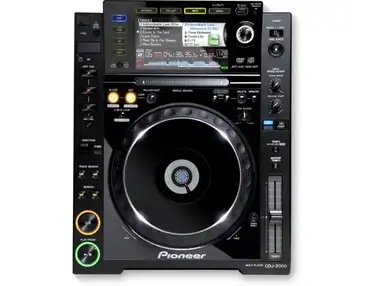
the next big development was the CDJ. So in 2002, that was my first big world tour and we had the CDJ and we also had visuals.
Find it on:


*The other important piece of gear in Shadow's setup is a Roland VP-9000, which he uses for its time-stretching and internal effects to morph a mediocre sound into a great one. * “What the drums on ‘Walkie Talkie’ are now and what they were on the record are totally different,” he says. “On the original record, it's just sort of average-sounding, and it actually isn't even a drum break. It just goes, pssssshhh, kuh-boom-boom, and then the vocalists start singing again. So I took that, put it into the MPC, made a fake pattern, put that into the VP, gave it all this huge weight and distortion with the internal effects, plugged it back into the MPC, re-chopped it and made it sound completely different.”
- 2002
Find it on:

Mentioned in this October 2017 Sound on Sound interview.
Davis’ trusty old MPC60, though, is sadly long gone from his setup. Over successive DJ Shadow albums, however, he has progressed through variations on it: upgrading to an MPC2000 for his production of Unkle’s 1998 album Psyence Fiction, then MIDI’ing two of them together for the second DJ Shadow album The Private Press, released in 2002.
“I basically had nearly unlimited sample power and chop power,” he says. “But after The Private Press, I felt like it was important to switch things up. I had purchased Pro Tools so I was fully up and running on that. There’s probably two or three songs on [2006’s] The Outsider where the initial ideas or sketches were done on an MPC. It’s been I’d say 13, 14 years since I used one.
“I will say though that in I think about 2008, I got whatever was new at that time [the MPC5000], thinking, ‘Oh I kinda miss it, let me see what the new version’s like.’ But I just couldn’t go back. It seemed a bit silly to me, knowing what was possible within stuff like Maschine. Once you go into the software synth world, it’s really hard to legitimise going back into the box.”
It is also mentioned in this October 17, 2016 Music Radar interview.
"After that, I went to Pro Tools. I always feel like it's important to break out of your comfort zone a little bit, but I'll say that Ableton Live is the most intuitive music-making program I've used since the MPC - much more so than Pro Tools or Maschine, but that might just be the way my brain works.
Find it on:

The item can be seen in the picture. http://backtorockville.typepad.com/photos/uncategorized/2008/02/06/djshadow1_blog_020508_spf_0100_3.jpg
Find it on:

In the Youtube video titled "DJ Shadow Live @ La Route Du Rock 2002" by julfra76, DJ Shadow can be seen using two Pioneer EFX-500 modules as part of his live setup during "The Private Press" tour in 2002.
Find it on:

During a live performance, DJ Shadow is seen using Sony MDR-7506 Professional Headphones, as evidenced by a photograph available on Wikimedia Commons.
Find it on:
This is a community-built gear list for DJ Shadow.
- Find relevant music gear like Studio Equipment, Software Plugins and VSTs, Headphones, DJ Setup, and other instruments and add it to DJ Shadow.
- The best places to look for gear usage are typically on the artist's social media, YouTube, live performance images, and interviews.
- To receive email updates when DJ Shadow is seen with new gear, follow the artist.
Discography
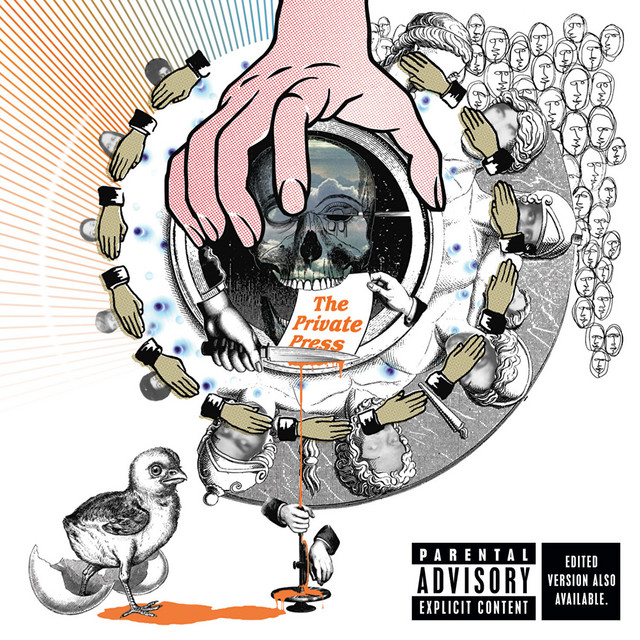
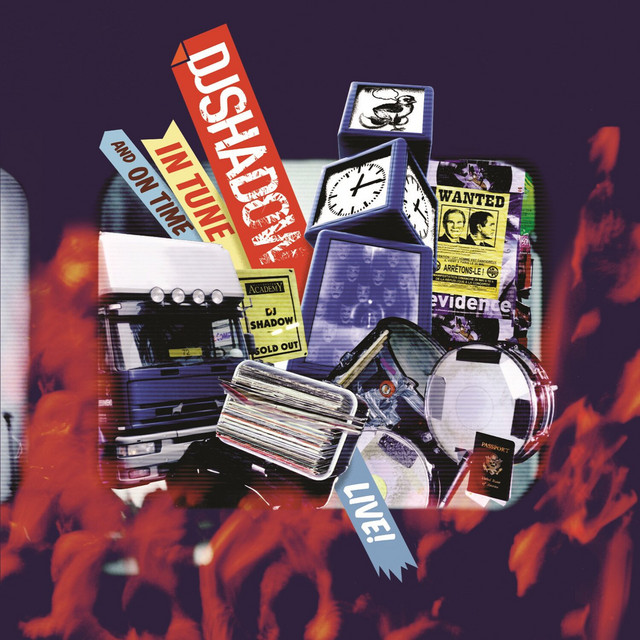
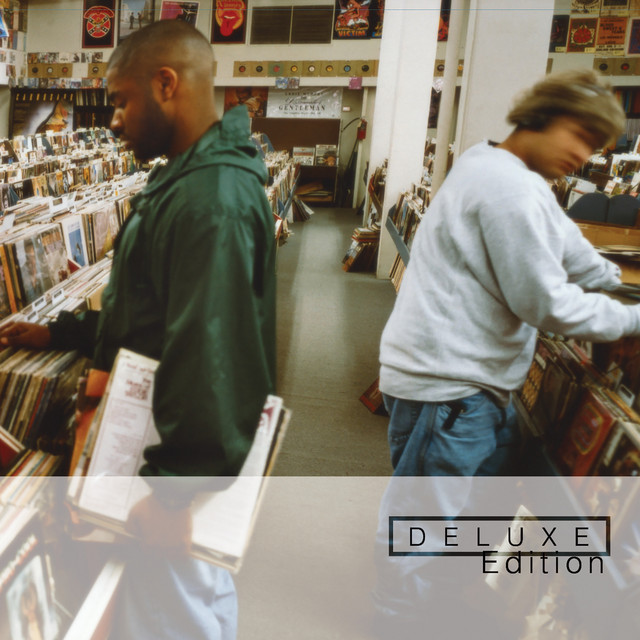
Album Credits
-
DJ Shadow · 2023
Mixing Engineer Producer Programmer -
DJ Shadow · 2023
Mixing Engineer Producer Programmer -
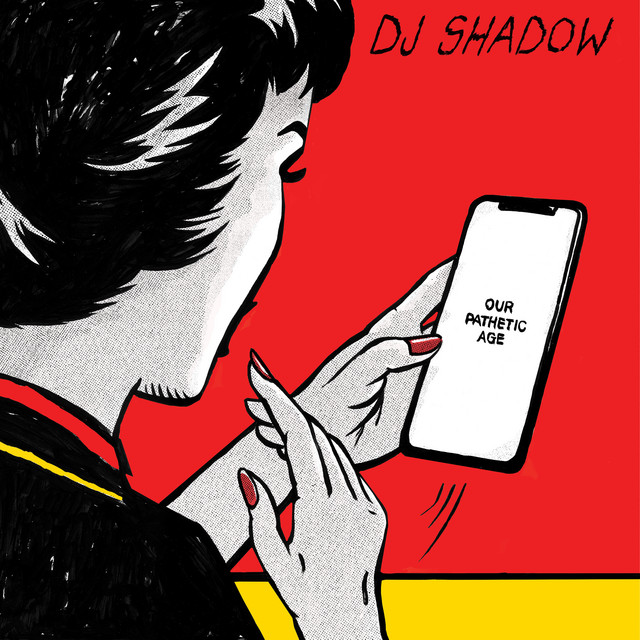
DJ Shadow · 2019
Mixing Engineer Producer Programmer -
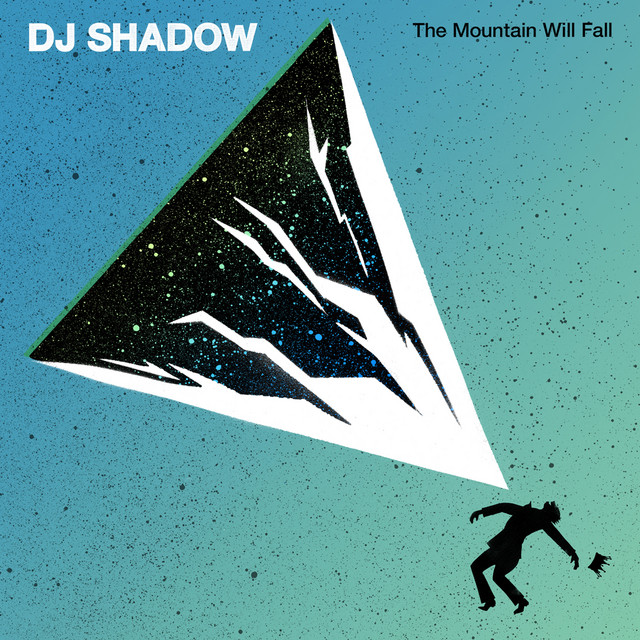
DJ Shadow · 2016
Mixing Engineer Producer Programmer -
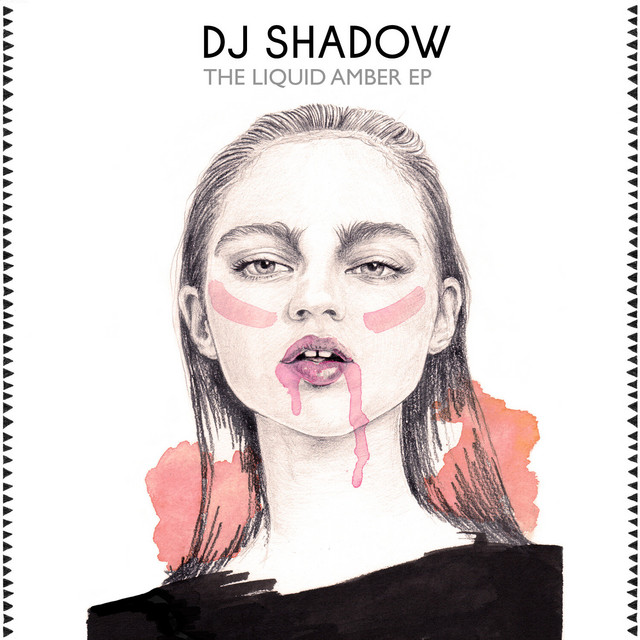
DJ Shadow · 2014
Mixing Engineer Producer Programmer -
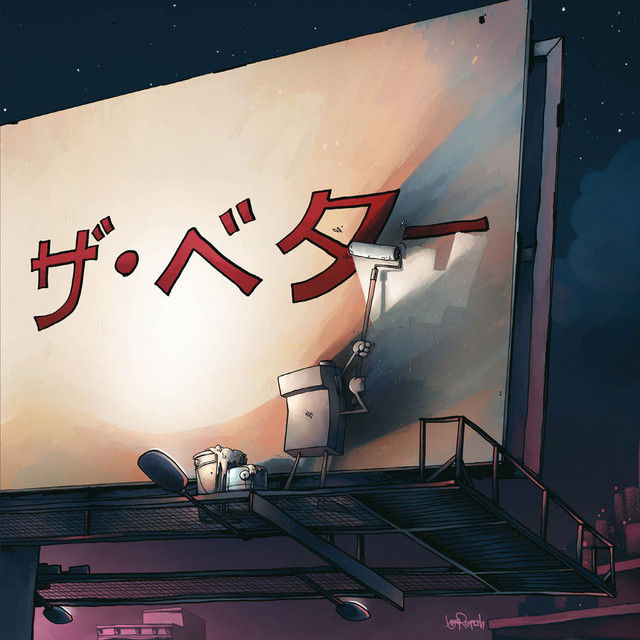
DJ Shadow · 2011
Mixing Engineer Producer -
Little Dragon & DJ Shadow · 2011
Mixing Engineer Producer -
DJ Shadow · 2011
Mixing Engineer Producer -
The Temper Trap · 2009
Programmer -
DJ Shadow · 2006
Mixing Engineer -
DJ Fresh · 2006
Producer -
Keane · 2005
Producer