Gary Louris
Genre
Group
Credits
Genre
Group
Credits
Gary Louris' Gear



Gary Louris of The Jayhawks is seen playing a Gibson SG Original, equipped with a vibrola and full pickguard, in the band's 1991 performance of "Waiting for the Sun" on Letterman. This guitar has been a staple in many of their live appearances and music videos, contributing to Louris' distinctive rock sound. Notably, the "witch-hat" bridge pickup volume knob appears to have been broken since at least 2009, as depicted in a Wikipedia illustration of The Jayhawks.
Find it on:


Gary Louris, a member of The Jayhawks, is associated with Bad Cat Amps, as evidenced by photos of live performances on the Bad Cat Amps website. The specific amplifier head featured is the Judah 20 from their custom shop, identifiable by its unique dual switches for on/off and standby, located on the right side of the head.
Find it on:

AMEN!!! HUGE Gary/Jayhawks fan, have spoken with Gary a few times. His setup has varied a bit, and have not seen them live in the past few weeks so I can't say what he's got now, but on the Smile tour it was definitely a Fulldrive II, vintage Fuzz Face, Script Phase 90, and a Buddha Wah into the DC30. [http://www.musictoyzforums.com/showthread.php?24721-All-hail-Gary-Louris]
Find it on:
-m.webp?v=1783809086)
The photo comes from jayhawksfanpage.com. It shows the Louris' pedalboard at a Chicago shows on 07/26/1998. This red pedal is an original Dallas Arbiter Fuzz Face from the 70's equiped with germanium diodes helping Gary to get this harsh sound during solos.
Find it on:


"When I saw the Jayhawks open for Matthew Sweet a number of years ago (could it have been 10? ) Gary was using nothing but an SG through a Fuzz Face into a Fender Blackface Deluxe (non-reverb model). Amazing tones out of that simple set-up!! He did some amazing behind-the-nut bends that would make most Telecaster players envious! It proved to me that the most simple of set-ups in the right hands can be used to make some fantastic tones."
Find it on:


Gary Louris is listed on Fulltone's website as an artist who uses the Fulltone Full-Drive2 Mosfet overdrive pedal.
Find it on:
-m.webp?v=1783813841)
Used for "some tracks" XOXO, as stated by engineer Nick Tveitbakk in this October 28, 2020 Mix Online interview.
On some tracks, Louris played what KJ says is “the most heaviest Telecaster; it’s like a boat, but it sounds great and Gary loves it. He used that most often through a ’65 reissue Twin Reverb from the late ’90s. We also had an early Vox AC30 and a really cool Selmer Zodiac Twin. He also did some fun stuff where we put a Super Reverb in the large room and played some loud feedback with every knob on 10.
“Each amp had its own recording chain,” KJ continues. “The AC30 might go to a Black AKG 414EB. We have an SSL AWS 900, which I used as a channel for that, and on the Twin we used a Sennheiser 409, and that would have gone through either a Neve 3104 channel or one of the Calrec 1061s that we have—they’re laser-beam focused.”
Find it on:

Used for the electric guitar on XOXO, as stated by engineer Nick Tveitbakk in this October 28, 2020 Mix Online interview.
On some tracks, Louris played what KJ says is “the most heaviest Telecaster; it’s like a boat, but it sounds great and Gary loves it. He used that most often through a ’65 reissue Twin Reverb from the late ’90s. We also had an early Vox AC30 and a really cool Selmer Zodiac Twin. He also did some fun stuff where we put a Super Reverb in the large room and played some loud feedback with every knob on 10.
“Each amp had its own recording chain,” KJ continues. “The AC30 might go to a Black AKG 414EB. We have an SSL AWS 900, which I used as a channel for that, and on the Twin we used a Sennheiser 409, and that would have gone through either a Neve 3104 channel or one of the Calrec 1061s that we have—they’re laser-beam focused.”
The amplifier list on Flowers Studio's website specifies "Vox AC30 / 6 TB (1992 UK made)".
Find it on:

Used for the electric guitar on XOXO, as stated by engineer Nick Tveitbakk in this October 28, 2020 Mix Online interview.
On some tracks, Louris played what KJ says is “the most heaviest Telecaster; it’s like a boat, but it sounds great and Gary loves it. He used that most often through a ’65 reissue Twin Reverb from the late ’90s. We also had an early Vox AC30 and a really cool Selmer Zodiac Twin. He also did some fun stuff where we put a Super Reverb in the large room and played some loud feedback with every knob on 10.
“Each amp had its own recording chain,” KJ continues. “The AC30 might go to a Black AKG 414EB. We have an SSL AWS 900, which I used as a channel for that, and on the Twin we used a Sennheiser 409, and that would have gone through either a Neve 3104 channel or one of the Calrec 1061s that we have—they’re laser-beam focused.”
Find it on:
-m.webp?v=1783808469)
A photo from jayhawksfanpage.com that shows the Gary's pedalboard on a Chicago show on 07/26/98. This small simple orange pedal is a MXR Phase 90 that can be heard in parallel with distortion in order to get a particular rythm sound.
Find it on:

Gary Louris of The Jayhawks is shown using a Gibson J-45 in a user-uploaded photo on Wordpress. This iconic acoustic guitar is known for contributing to the band's electric/acoustic sound and is also played by fellow band member Mark Olson and other touring guitarists.
Find it on:

In this photo, Louris is seen performing with the Gibson Hummingbird Pro.
Find it on:
-m.webp?v=1783695660)
A Rickenbacker 360 (60's classification) with 12 strings Ruby Red painted. It can be seen in few recent shows of The Jayhawks when the timeless "jangle" sound is required
Find it on:

"AMEN!!! HUGE Gary/Jayhawks fan, have spoken with Gary a few times. His setup has varied a bit, and have not seen them live in the past few weeks so I can't say what he's got now, but on the Smile tour it was definitely a Fulldrive II, vintage Fuzz Face, Script Phase 90, and a Buddha Wah into the DC30."
Find it on:

Used for lead vocals on XOXO, as stated by engineer Nick Tveitbakk in this October 28, 2020 Mix Online interview.
“We cut 90 percent of the lead vocals through a Wunder CM7 mic, which I really love,” KJ says. “That went through a Neve 1066 preamp, and then a Revision H 1176. Also, in the big room we had a Neumann M149 tube mic, which we used for group vocals. Sometimes all three of them would be singing around one mic.”
Find it on:

Used for the electric guitar on XOXO, as stated by engineer Nick Tveitbakk in this October 28, 2020 Mix Online interview.
On some tracks, Louris played what KJ says is “the most heaviest Telecaster; it’s like a boat, but it sounds great and Gary loves it. He used that most often through a ’65 reissue Twin Reverb from the late ’90s. We also had an early Vox AC30 and a really cool Selmer Zodiac Twin. He also did some fun stuff where we put a Super Reverb in the large room and played some loud feedback with every knob on 10.
“Each amp had its own recording chain,” KJ continues. “The AC30 might go to a Black AKG 414EB. We have an SSL AWS 900, which I used as a channel for that, and on the Twin we used a Sennheiser 409, and that would have gone through either a Neve 3104 channel or one of the Calrec 1061s that we have—they’re laser-beam focused.”
Find it on:

Used for the electric guitar on XOXO, as stated by engineer Nick Tveitbakk in this October 28, 2020 Mix Online interview.
On some tracks, Louris played what KJ says is “the most heaviest Telecaster; it’s like a boat, but it sounds great and Gary loves it. He used that most often through a ’65 reissue Twin Reverb from the late ’90s. We also had an early Vox AC30 and a really cool Selmer Zodiac Twin. He also did some fun stuff where we put a Super Reverb in the large room and played some loud feedback with every knob on 10.
“Each amp had its own recording chain,” KJ continues. “The AC30 might go to a Black AKG 414EB. We have an SSL AWS 900, which I used as a channel for that, and on the Twin we used a Sennheiser 409, and that would have gone through either a Neve 3104 channel or one of the Calrec 1061s that we have—they’re laser-beam focused.”
Find it on:

In a close-up of a Wikimedia Commons photo from 2009, Gary Louris can be seen using Planet Waves PW-GRA-20 Jack to Jack Cables during a performance with The Jayhawks.
Find it on:

Gary Louris can be often seen during live performances with a Flying V korina giutar, but when you look on the headstock with care, it's not Gibson but Hamer you can read.
Find it on:

Used with Pro Tools HDX to track XOXO, as stated by engineer Nick Tveitbakk in this October 28, 2020 Mix Online interview.
Tveitbakk tracked to his Studer A827 2-inch tape machine and Pro Tools HDX. “Because we have a very large and very nice [48-channel] API console, we can track to tape and run it into Pro Tools simultaneously,” he says.
The equipment list of Pachyderm Studios specifies three 16x16 converters.
Find it on:



Used to track XOXO, as stated by engineer Nick Tveitbakk in this October 28, 2020 Mix Online interview.
Tveitbakk tracked to his Studer A827 2-inch tape machine and Pro Tools HDX. “Because we have a very large and very nice [48-channel] API console, we can track to tape and run it into Pro Tools simultaneously,” he says.
Find it on:

Used for the acoustic guitar on XOXO, as stated by engineer Nick Tveitbakk in this October 28, 2020 Mix Online interview.
Acoustic guitars were miked with an AKG C414EB and a Coles 4038 side by side, and vocals went into Neumann U47 and Shure SM7 mics, also side by side, to provide a range of textures.
Find it on:

Used for the acoustic guitar on XOXO, as stated by engineer Nick Tveitbakk in this October 28, 2020 Mix Online interview.
Acoustic guitars were miked with an AKG C414EB and a Coles 4038 side by side, and vocals went into Neumann U47 and Shure SM7 mics, also side by side, to provide a range of textures.
Find it on:


Used for vocals on XOXO, as stated by engineer Nick Tveitbakk in this October 28, 2020 Mix Online interview.
Acoustic guitars were miked with an AKG C414EB and a Coles 4038 side by side, and vocals went into Neumann U47 and Shure SM7 mics, also side by side, to provide a range of textures. Acoustic guitars were miked with an AKG C414EB and a Coles 4038 side by side, and vocals went into Neumann U47 and Shure SM7 mics, also side by side, to provide a range of textures. “We’re always going for keeper vocals, so the option is there,” Tveitbakk says.
Find it on:

Used for vocals on XOXO, as stated by engineer Nick Tveitbakk in this October 28, 2020 Mix Online interview.
Acoustic guitars were miked with an AKG C414EB and a Coles 4038 side by side, and vocals went into Neumann U47 and Shure SM7 mics, also side by side, to provide a range of textures. Acoustic guitars were miked with an AKG C414EB and a Coles 4038 side by side, and vocals went into Neumann U47 and Shure SM7 mics, also side by side, to provide a range of textures. “We’re always going for keeper vocals, so the option is there,” Tveitbakk says.
Find it on:


Used for lead vocals on XOXO, as stated by engineer Nick Tveitbakk in this October 28, 2020 Mix Online interview.
“We cut 90 percent of the lead vocals through a Wunder CM7 mic, which I really love,” KJ says. “That went through a Neve 1066 preamp, and then a Revision H 1176. Also, in the big room we had a Neumann M149 tube mic, which we used for group vocals. Sometimes all three of them would be singing around one mic.”
Find it on:
-m.webp?v=1775900829)
Used for lead vocals on XOXO, as stated by engineer Nick Tveitbakk in this October 28, 2020 Mix Online interview.
“We cut 90 percent of the lead vocals through a Wunder CM7 mic, which I really love,” KJ says. “That went through a Neve 1066 preamp, and then a Revision H 1176. Also, in the big room we had a Neumann M149 tube mic, which we used for group vocals. Sometimes all three of them would be singing around one mic.”
Find it on:
-m.webp?v=1783778572)
Used for group vocals on XOXO, as stated by engineer Nick Tveitbakk in this October 28, 2020 Mix Online interview.
“We cut 90 percent of the lead vocals through a Wunder CM7 mic, which I really love,” KJ says. “That went through a Neve 1066 preamp, and then a Revision H 1176. Also, in the big room we had a Neumann M149 tube mic, which we used for group vocals. Sometimes all three of them would be singing around one mic.”
Find it on:
-m.webp?v=1783812462)
Used for the electric guitar on XOXO, as stated by engineer Nick Tveitbakk in this October 28, 2020 Mix Online interview.
On some tracks, Louris played what KJ says is “the most heaviest Telecaster; it’s like a boat, but it sounds great and Gary loves it. He used that most often through a ’65 reissue Twin Reverb from the late ’90s. We also had an early Vox AC30 and a really cool Selmer Zodiac Twin. He also did some fun stuff where we put a Super Reverb in the large room and played some loud feedback with every knob on 10.
“Each amp had its own recording chain,” KJ continues. “The AC30 might go to a Black AKG 414EB. We have an SSL AWS 900, which I used as a channel for that, and on the Twin we used a Sennheiser 409, and that would have gone through either a Neve 3104 channel or one of the Calrec 1061s that we have—they’re laser-beam focused.”
The amplifier list on Flowers Studio's website specifies a 30 watt MKII.
Find it on:

Used for the electric guitar on XOXO, as stated by engineer Nick Tveitbakk in this October 28, 2020 Mix Online interview.
On some tracks, Louris played what KJ says is “the most heaviest Telecaster; it’s like a boat, but it sounds great and Gary loves it. He used that most often through a ’65 reissue Twin Reverb from the late ’90s. We also had an early Vox AC30 and a really cool Selmer Zodiac Twin. He also did some fun stuff where we put a Super Reverb in the large room and played some loud feedback with every knob on 10.
“Each amp had its own recording chain,” KJ continues. “The AC30 might go to a Black AKG 414EB. We have an SSL AWS 900, which I used as a channel for that, and on the Twin we used a Sennheiser 409, and that would have gone through either a Neve 3104 channel or one of the Calrec 1061s that we have—they’re laser-beam focused.”
The amplifier list on Flowers Studio's website specifies a 1966 blackface Super Reverb.
Find it on:
This is a community-built gear list for Gary Louris.
- Find relevant music gear like Microphones, Guitars, Amplifiers, Effects Pedals, Software Plugins and VSTs, Keyboards and Synthesizers, Instruments, and other instruments and add it to Gary Louris.
- The best places to look for gear usage are typically on the artist's social media, YouTube, live performance images, and interviews.
- To receive email updates when Gary Louris is seen with new gear, follow the artist.
Discography
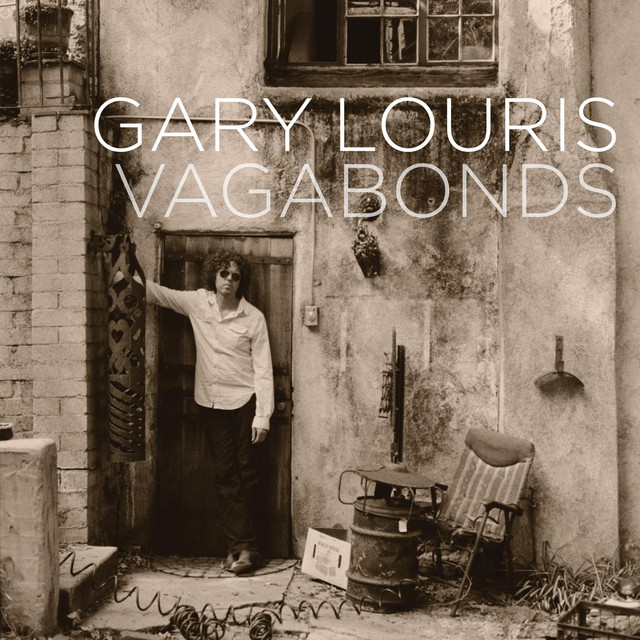
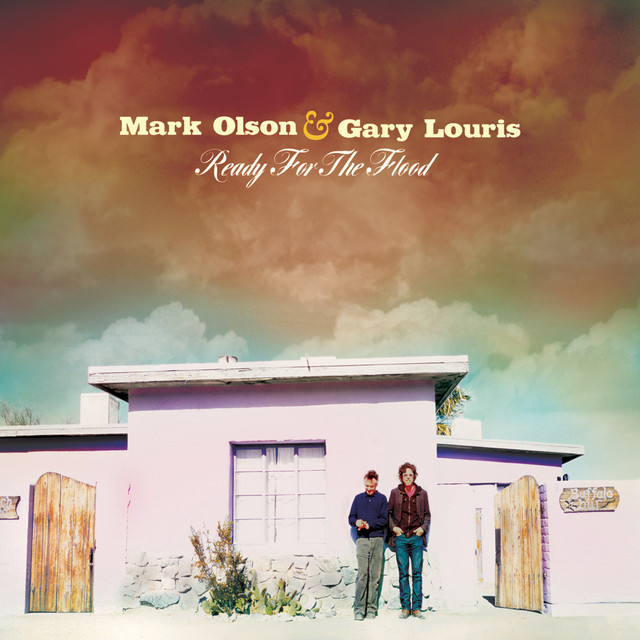
Album Credits
-
Gary Louris · 2025
Producer