Richard Lloyd
American guitarist and singer, Television
Richard Lloyd's Amplifiers

-m.webp?v=1783090740)
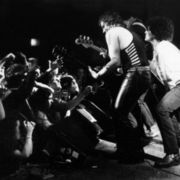
In this early photo of Television Richard Lloyd and Tom Verlaine can both be seen plugged into blackface Fender Super Reverb amplifiers. While there is a slight chance they are using the unpopular and short-lived 4x10 blackface Fender Concert it is highly unlikely due to the rarity of that amp compared with the ubiquitous (and superb sounding) Super Reverb.
Find it on:





During an interview on thewonder.co.uk during the first Television reunion tour in the 2000's, Richard Lloyd revealed the elements of his tone both live and in the studio. "Richard Lloyd still plays the same '61 Stratocaster with jumbo frets that he played on Marquee Moon and Adventure, although he takes a '62 reissue Strat and Tele on the road. On the new album's "Rhyme", he played a rare black f-hole Gretsch. Lloyd tends a stable of vintage Fender amps, including a '50 Deluxe, a '52 Pro, a '55 Tremolux, and a '56 Princeton. He also uses a '59 Ampeg Jet, a Vibraverb reissue, and a '65 Supro. Live, he relies on Vox AC30s: "You can change the current wherever you are without a transformer, so they're good the world over, and they have a nice high-end bite." Save for a few dinosaur pedals, Lloyd avoids effects, citing the dangers of "processors that make your guitar sound like Velveeta." And though he's a die-hard fan of amp distortion, he admits, "I'm always fighting to get a combination that won't really distort the tonality of the guitar, but will just give you the edge you're looking for."
Find it on:


An interview originally published in a 1993 issue of Guitar Player magazine states that, 'Richard Lloyd still plays the same '61 Stratocaster with jumbo frets that he played on Marquee Moon and Adventure, although he takes a '62 reissue Strat and Tele on the road. On the new album's "Rhyme", he played a rare black f-hole Gretsch. Lloyd tends a stable of vintage Fender amps, including a '50 Deluxe, a '52 Pro, a '55 Tremolux, and a '56 Princeton. He also uses a '59 Ampeg Jet, a Vibraverb reissue, and a '65 Supro. Live, he relies on Vox AC30s: "You can change the current wherever you are without a transformer, so they're good the world over, and they have a nice high-end bite." Save for a few dinosaur pedals, Lloyd avoids effects, citing the dangers of "processors that make your guitar sound like Velveeta." And though he's a diehard fan of amp distortion, he admits, "I'm always fighting to get a combination that won't really distort the tonality of the guitar, but will just give you the edge you're looking for." '
The reissue vibroverb mentioned can only be a garbled reference to the Fender Custom Shop hand-wired Vibrolux Reverb of the 90s which were very much in the spirit of the vibrolux and vibroverb amps of the original backface era though not precisely a reissue of either.
Find it on:


In '03 Lloyd told Vintage Guitar Magazine that "Mostly, I’ve been playing through a Vox AC-30 live and a blackface Fender Deluxe. "
Find it on:

In this photo from the Punk Turns 30 page hosted on Flickr you can clearly see Lloyd plugged into an ampeg V4 guitar amp with tis matching V series 4x12 cabinet. Wow that must have been loud!
Find it on:

During an interview with Guitar Player magazine in the 90s Richard Lloyd revealed some of his gear refrences live and in the studio. 'Richard Lloyd still plays the same '61 Stratocaster with jumbo frets that he played on Marquee Moon and Adventure, although he takes a '62 reissue Strat and Tele on the road. On the new album's "Rhyme", he played a rare black f-hole Gretsch. Lloyd tends a stable of vintage Fender amps, including a '50 Deluxe, a '52 Pro, a '55 Tremolux, and a '56 Princeton. He also uses a '59 Ampeg Jet, a Vibraverb reissue, and a '65 Supro. Live, he relies on Vox AC30s: "You can change the current wherever you are without a transformer, so they're good the world over, and they have a nice high-end bite." Save for a few dinosaur pedals, Lloyd avoids effects, citing the dangers of "processors that make your guitar sound like Velveeta." And though he's a diehard fan of amp distortion, he admits, "I'm always fighting to get a combination that won't really distort the tonality of the guitar, but will just give you the edge you're looking for." '
Find it on:

In this photo of Lloyd's rig from a solo tour you can't miss the Supro 1x15" combo amplifier next to one of his distinctively painted 62RI Stratocasters. Additionally, a Guitar Player Magazine interview in 1993 stated "Lloyd tends a stable of vintage Fender amps, including a '50 Deluxe, a '52 Pro, a '55 Tremolux, and a '56 Princeton. He also uses a '59 Ampeg Jet, a Vibraverb reissue, and a '65 Supro." That would be the 1x15" pictured here which, if it is genuinely a 65, can only be the notorious Thunderbolt Bass Amplifier. The amplifier is explicitly confirmed, however, by the following sources:
Guitar Player, December 2009, "'Scuse me while I hit this guy: Why Jimi Hendrix punched Television's Richard Lloyd – and why he didn’t mind" by Charles M. Young (published online on May 13, 2024)
The four of us—me, Richard, drummer Billy Ficca and bassist Keith Hartel—were riding in a Honda compact SUV. Even with the clubs furnishing the “backline” (bass amp and most of the drum kit), the car was dangerously overloaded, with two Stratocasters, two Precision basses, an ancient Supro Thunderbolt amplifier, Billy’s snare and cymbals and kick-drum pedal, all our bags, souvenirs that Richard bought in every truck stop, half-consumed bottles of prescription and nonprescription medicine that Richard bought in every drug store, half-consumed bottles of herbal elixirs that Richard bought in every New Age emporium, and a boggling array of books on occult weirdness, brain science and the sexual habits of tribal peoples around the world.
[...]
The Jamie Neverts Story is a great album. All the guitars were recorded through Richard’s Supro Thunderbolt, which is turned up to 10 for a taste of distortion, though most of the tones are pretty clean. You can hear the lyricism that sometimes gets buried in the guitar wash on Jimi’s own albums. There are minimal overdubs, just Jimi’s slashing style married with Richard’s slashing style.
Facebook, Supro, September 21, 2017
Richard Lloyd from legendary NYC band Television (band), with his trusty Supro Thunderbolt!
Premier Guitar, "Richard Lloyd: The Alchemist" by Tzvi Gluckin (December 25, 2018)
**Do you get your gain from letting the amp break up naturally?
Yeah. I mean, I am using some pedals live and I have been for a number of years. Lately, I’ve been using a Supro reissue. For a while I was using a Thunderbolt, and now I’m using a Black Magick. They break up pretty good, pretty early. You can pretty much get your tone out of the amp. I had about eight of them at one time. I sold a bunch off in the ’90s, but I kept my ’65 Thunderbolt. I’ve kept a number of others. They’re numbered; I don’t know the names of them. I am a big fan of Supro.
That’s what you’re using on those first two Television records?
On the third one [1992’s Television]. For instance, the solo on “Call Mr. Lee”—that’s through my Supro ’65 Thunderbolt, straight in, turned all the way up.
Find it on:

In a 2003 interview with Vintage Guitar magazine Lloyd commented that his currently "I’ve been playing through a Vox AC-30 live and a blackface Fender Deluxe. The AC-30 is from about 1980, and the Deluxe is a ’65. I use the same thing with Television. I’ve been using a TS-808 Tube Screamer and a Boss SD-1 for years."
Find it on:

Used live and on The Countdown, as stated in December 25, 2018 Premier Guitar interview and in this 2019 (republished February 23, 2023) Guitar Player interview.
Premier Guitar, "Richard Lloyd: The Alchemist" by Tzvi Gluckin (December 25, 2018)
Do you get your gain from letting the amp break up naturally?
Yeah. I mean, I am using some pedals live and I have been for a number of years. Lately, I’ve been using a Supro reissue. For a while I was using a Thunderbolt, and now I’m using a Black Magick. They break up pretty good, pretty early. You can pretty much get your tone out of the amp. I had about eight of them at one time. I sold a bunch off in the ’90s, but I kept my ’65 Thunderbolt. I’ve kept a number of others. They’re numbered; I don’t know the names of them. I am a big fan of Supro.
Guitar Player, "Electric Lloydland" / "“People Talk About the Good Old Days, but the Good Days Are Today”: Television Guitarist Richard Lloyd Reflects on His Highly Influential Career in Music" by Richard Bienstock (2019, republished February 23, 2023) (about The Countdown)
His main guitars were a Supro Black Holiday, a Vintage Guitars Strat-style model and an Epiphone Casino, which he plugged into a Vox AC30 and a Supro Black Magick.
Find it on:


-m.webp?v=1783177284)
Used on Field of Fire, as stated in this December 1986 Musician interview
"On Field Of Fire there's eleven different amps, mostly Ampegs—the JT 22 and the JT 40. There's a Peavey Heritage, a Peavey Studio Pro 40. [...]
Find it on:

Used on Field of Fire, as stated in this December 1986 Musician interview
"On Field Of Fire there's eleven different amps, mostly Ampegs—the JT 22 and the JT 40. There's a Peavey Heritage, a Peavey Studio Pro 40. [...]
Find it on:
-m.webp?v=1783204500)
Used for Real Time, as stated in the January 1988 Guitar Player interview "Richard Lloyd: The 6 String Alchemy of Richard Lloyd" by Mark Dery.
"Real Time was recorded at CBGB on weekday nights. It was open to the public, and we just set up and played. We took everything D.I. [direct input] so that we were able to run the signal into new amplifiers in the studio if we didn't like the sound that we were getting. For instance, the rhythm guitar had the wrong reverb on certain things, so we just sent the signal out to a Marshall JCM-800. It's the same performance, but the sound is cleaner. We mixed the album and didn't really do that much – hardly any overdubbing."
Find it on:
-m.webp?v=1783177131)
Used live and for Real Time, as stated in this December 1986 Musician interview and in this January 1988 Guitar Player interview.
Musician, December 1986, "Richard Lloyd" by Bill Flanagan, pg. 26
"Onstage I use my Stratocaster and my JC 120 with a Boss Super Overdrive distortion device and a Korg SDD 2000 digital delay. I just traded an acoustic guitar for this little Acoustic amp to play at home and I've lately been using that onstage, too. Because the JC 120 is not giving me what I need. When we're in Europe we use Marshall amps, because they do something with the electronics of Fender amps in Europe and they're not as good. I'm probably going to switch to either Fenders or Marshalls, because the JC 120 has transistors and it's driving me crazy. It doesn't contain enough threat—it's too damn stable. Very pretty color tone. I mean, Adrian Belew swears by it—but he uses so many boxes he doesn't know what it sounds like anyway."
Guitar Player, January 1988, "Richard Lloyd: The 6 String Alchemy of Richard Lloyd" by Mark Dery
Richard's stripped-down approach to mixing applies to his guitar gear on Real Time, as well. No souped-up signal processors or pawnshop oddities here – just a few scuffed-up pedals, that trusty '61 Strat, and some workhorse amps. "Television used Fender Super Reverbs almost exclusively, with no effects at all," he notes. "I tried a number of different amps. Everybody was hawking this Roland Jazz Chorus JC-120 for its color and tone, so I got one. The JC isn't giving enough of the midrange 'honk' that I need, but financially I'm in the position where, if I buy something, I have to use it [laughs]. I have this cube-shaped Acoustic amp that I stick on top of the JC-120, and I run into that, too. The Acoustic's reverb has a lot of midrange. It has a lot more of what I call 'nose' – that quality your voice gets when you have a cold. I like the tone that's created when something's almost going to feed back, but just doesn't quite. It's very colorful. Occasionally, I turn the JC's distortion on – but not up – because it just gives a little boost, makes the speakers jump a little."
Switching effects on but not turning the dials up has become something of a Lloyd trademark. "Yeah," he nods, "I'm using a wah-wah pedal now, and when I put the wah on, I don't want to hear the phasing. I just want to use it as a tone control. That way, you can get tenacity, starting a passage in the bass frequencies and slowly moving it toward the treble. A lot of times, I use it to get extra midrange."
Lloyd runs his Strat into a Cry Baby wah-wah and then a Boss Super Overdrive with the tone set at three o'clock and the overdrive at one o'clock. That feeds into a Korg SDD-2000 digital delay set at 400 milliseconds: "I keep it at about eight repeats, to get that old Echoplex-type effect. That goes into the high channel of the Roland JC-120, and there's a small cable going into the Acoustic, which has its own overdrive, preamp thing, which I use. I like to have things so they're just at the point of bursting – just this side of overload – but I get quite a clean signal. The Boss Super Overdrive is not that dirty an effect, and the wah-wah pedal doesn't overdrive. I tried different orders, but the signal-to-noise ratio was the cleanest this way, with the digital delay closest to the amp."
Find it on:
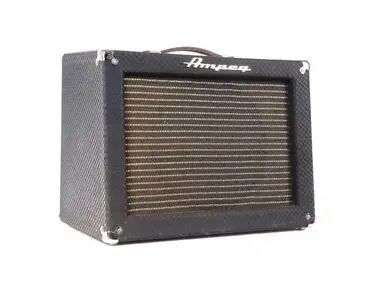
Known from the following sources:
Musician, December 1986, "Richard Lloyd" by Bill Flanagan, pg. 26
"I'm getting some little Ampeg amps, like the Jet. You don't need a pedal or anything for it—it's just a beautiful sound."
Guitar Player, January 1993, "Back on the Air: The Return of Television" by James Rotondi
Lloyd tends a stable of vintage Fender amps, including a '50 Deluxe, a '52 Pro, a '55 Tremolux, and a '56 Princeton. He also uses a '59 Ampeg Jet, a Vibraverb reissue, and a '65 Supro. Live, he relies on Vox AC30s: "You can change the current wherever you are without a transformer, so they're good the world over, and they have a nice high-end bite."
Premier Guitar, "Richard Lloyd: The Alchemist" by Tzvi Gluckin (December 25, 2018)
Do you get your gain from letting the amp break up naturally?
Yeah. I mean, I am using some pedals live and I have been for a number of years. Lately, I’ve been using a Supro reissue. For a while I was using a Thunderbolt, and now I’m using a Black Magick. They break up pretty good, pretty early. You can pretty much get your tone out of the amp. I had about eight of them at one time. I sold a bunch off in the ’90s, but I kept my ’65 Thunderbolt. I’ve kept a number of others. They’re numbered; I don’t know the names of them. I am a big fan of Supro.
That’s what you’re using on those first two Television records?
On the third one [1992’s Television]. For instance, the solo on “Call Mr. Lee”—that’s through my Supro ’65 Thunderbolt, straight in, turned all the way up.
What were you using earlier?
We started with Fender Supers and then we switched. In the studio, I was using Danelectro/Sears/Silvertone amps. We had a number of amps. One song had an Ampeg Jet. It’s a small amp, but you don’t need a large amp to sound big in the studio.
Find it on:
This is a community-built gear list for Richard Lloyd.
- Find relevant music gear like Guitars, Amplifiers, Effects Pedals, and other instruments and add it to Richard Lloyd.
- The best places to look for gear usage are typically on the artist's social media, YouTube, live performance images, and interviews.
- To receive email updates when Richard Lloyd is seen with new gear, follow the artist.



.jpg?v=1770759918)