Tom Petty
Tom Petty's Gear


In this photo, one can see a Fender Super Reverb behind Tom Petty.
Find it on:


In this photo, we can see Sabre Reverb I behind Petty.
Find it on:


The Tube Tape Echo is part of Petty's setup, as stated on the Fulltone website.
Find it on:

Tom Petty can be seen playing an ES-335 bass on the Traveling Wilburys' clip of She's my baby. The Gibson logo is pretty clearly readable on the headstock, however the tunings seem to have been replaced by banjo-like tuning mechanicals.
Find it on:

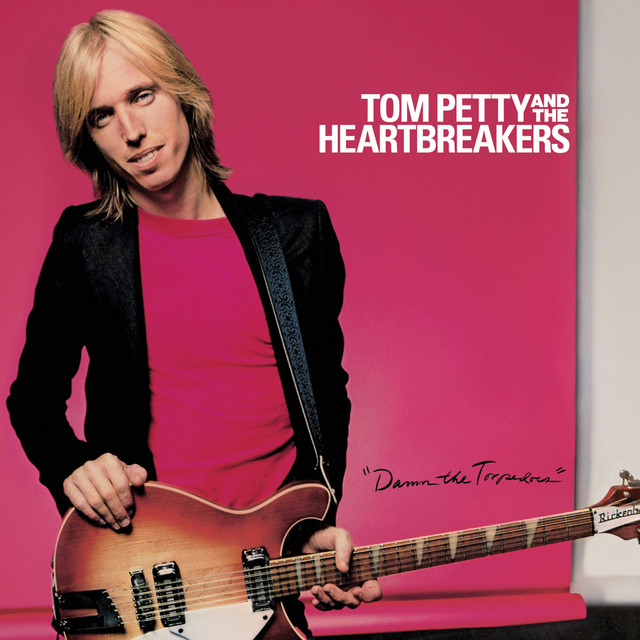
The guitar Tom Petty holds in the cover for "Damn the Torpedoes"
Find it on:

Producer Steve Hoffman has stated his use of the LA-2A for Petty.
My Teletronix LA-2A, ganged for stereo or mono reproduction via the handy toggle switch in the center of the two units. (...) I've used it on countless projects, Nat "King" Cole, Frank Sinatra, Beach Boys, Doors, Eagles, Ringo, McCartney, Fleetwood Mac, Bob Dylan, Ray Charles, Peggy Lee, Jethro Tull, Chuck Berry, Creedence Clearwater Revival, Van Morrison, White Stripes, Tom Petty, Red Hot Chili Peppers, Ella Fitzgerald, Yes, Sonny Rollins, John Coltrane, Steely Dan, Steppenwolf, Bad Company, Jim Croce, Elvis Presley, Billie Holiday, Judy Garland, Dave Mason, Paul Simon, America, The Band, Crosby, Stills & Nash, The Cars, ZZ Top, James Taylor, Art Pepper, Steve Miller Band, Queen, Rod Stewart, Duke Ellington, John Lee Hooker, Al Jolson, Roy Orbison, Bing Crosby, Sammy Davis, Jr., The Who, Lightnin' Hopkins, Bill Haley & his Comets, Miles Davis, Mamas and Papas, Blue Öyster Cult, The Byrds, Eric Clapton, Bill Evans Trio, Blood, Sweat & Tears, Phil Collins, Alice Cooper, Deep Purple, Jeff Beck, Doobie Bros., Faces, Grand Funk, Heart, Billy Joel, Linda Ronstadt, Ten Years After, Grant Green, Wes Montgomery, Pat Benetar, Elton John, Leon Russell, Metallica. etc.
Find it on:


Tom Petty is associated with the Martin HD-12/40 Tom Petty Signature Model guitar, as detailed in the November 2006 issue of Vintage Guitar, featured on The Petty Archives by Webmaster Aimee.
Find it on:

Petty plays Bass in music video for Lover Of The Bayou
Find it on:
-m.webp?v=1783173690)
“We use the Neumann M150 to record Tom’s vocals at the Clubhouse, because it has a tight pattern which diminishes the amount of bleed. You can see the verse lead vocal track, and immediately below it two vocal fix overdubs, because Tom changed a couple of lines, and below that the ‘Voc Amb’ track, which is the ambient mic that I always have set up close to Tom, pointed away from him. If I have to drop in a line, I can add some of the ambience that was on the original vocal mic. I also put that ambience at the beginning of the song before the vocal comes in. The verse vocal has a substantial effect on it, coming from the Decapitator, set on the ‘Old Radio Voice’ preset. Tom has this character in his lyrics, and he felt that it enhanced it to make it more lo-fi. It also meant that his voice sounds bigger in the choruses, when the effect disappears. The verse vocal goes through the 1176 and the MDW, with which I’m just rolling off some low end and adding at 8kHz.
“The chorus vocal is from the same live take, moved to a different track because I applied different processing. It also had the 1176 and MDW. I pushed a lot of 3kHz, to get it to cut through more. Tom sang the chorus part rather softly, because it fit his character, so it needed EQ to come out more in the track. All the vocal harmonies in the track were recorded at Tom’s place. Below the vocals there’s the ‘Vox slap delay’ aux track, which has the Digi Long Delay set at 150ms, and I ran it through the Decapitator, at the same setting as the snare drum.”
Find it on:


Given Ryan Ulyate’s long-standing involvement with a handful of old rockers, it’s perhaps surprising to find that he works entirely ‘in the box’. However, the fact that he “froze” his system in 2006 means that until very recently he worked with Quad G5 Power PC Macs from that year, running Mac OS 10.4 and Pro Tools HD version 7.4cs11, and 95 percent of his processing was applied with just two plug-ins. All the Tom Petty-related albums he’s engineered were recorded on this system.
“I’ve been very happy using the same Pro Tools system for seven years, because everything works, and I don’t spend my time chasing down the latest upgrades. Once Pro Tools got to version 7.4, all the main really important mix features had been integrated, and any new developments since then have not really been that important for our process. In any case, I value stability over being cutting edge. The two plug-ins I use for most of my processing are the Massenburg DesignWorks Hi-Res Parametric EQ, and the TDM version of the UA 1176, which is not compatible with Macs that run on Intel. I love that plug-in so much that it’s one reason I froze my system in 2006, as well as Tom’s system, which is exactly the same system as mine.
Find it on:

Given Ryan Ulyate’s long-standing involvement with a handful of old rockers, it’s perhaps surprising to find that he works entirely ‘in the box’. However, the fact that he “froze” his system in 2006 means that until very recently he worked with Quad G5 Power PC Macs from that year, running Mac OS 10.4 and Pro Tools HD version 7.4cs11, and 95 percent of his processing was applied with just two plug-ins. All the Tom Petty-related albums he’s engineered were recorded on this system.
“I’ve been very happy using the same Pro Tools system for seven years, because everything works, and I don’t spend my time chasing down the latest upgrades. Once Pro Tools got to version 7.4, all the main really important mix features had been integrated, and any new developments since then have not really been that important for our process. In any case, I value stability over being cutting edge. The two plug-ins I use for most of my processing are the Massenburg DesignWorks Hi-Res Parametric EQ, and the TDM version of the UA 1176, which is not compatible with Macs that run on Intel. I love that plug-in so much that it’s one reason I froze my system in 2006, as well as Tom’s system, which is exactly the same system as mine.
Find it on:

The Fulltone website states Petty uses a Custom Shop Tube Tape Echo.
Find it on:

“We use the Neumann M150 to record Tom’s vocals at the Clubhouse, because it has a tight pattern which diminishes the amount of bleed. You can see the verse lead vocal track, and immediately below it two vocal fix overdubs, because Tom changed a couple of lines, and below that the ‘Voc Amb’ track, which is the ambient mic that I always have set up close to Tom, pointed away from him. If I have to drop in a line, I can add some of the ambience that was on the original vocal mic. I also put that ambience at the beginning of the song before the vocal comes in. The verse vocal has a substantial effect on it, coming from the Decapitator, set on the ‘Old Radio Voice’ preset. Tom has this character in his lyrics, and he felt that it enhanced it to make it more lo-fi. It also meant that his voice sounds bigger in the choruses, when the effect disappears. The verse vocal goes through the 1176 and the MDW, with which I’m just rolling off some low end and adding at 8kHz.
“The chorus vocal is from the same live take, moved to a different track because I applied different processing. It also had the 1176 and MDW. I pushed a lot of 3kHz, to get it to cut through more. Tom sang the chorus part rather softly, because it fit his character, so it needed EQ to come out more in the track. All the vocal harmonies in the track were recorded at Tom’s place. Below the vocals there’s the ‘Vox slap delay’ aux track, which has the Digi Long Delay set at 150ms, and I ran it through the Decapitator, at the same setting as the snare drum.”
Find it on:

In this picture you can see Tom Petty with his white Les Paul.
Find it on:

Tom Petty can be seen using Vox Escort in his home in 1977
Find it on:
-m.webp?v=1783090741)
In an overview of Tom Petty’s Mojo Tour rig on frontman.cz there’s a photo of his pedalboard, which show a Boss RV-3 Digital Reverb/Delay before his gain stages.
Find it on:

In an overview of Tom Petty’s Mojo Tour rig on frontman.cz there’s a photo of one of his pedalboards, which shows a Boss CE-2 Chorus before his gain stages.
Find it on:
-m.webp?v=1783162819)
In an overview of Tom Petty’s Mojo Tour rig on frontman.cz there’s a photo of one of his pedalboards, which shows a Ibanez TS9 Tubescreamer.
Find it on:

On frontman.cz, in an overview of Tom Petty’s Mojo Tour rig, one of his pedalboards has a Demeter TRM-1 Tremulator before his gain stages.
Find it on:

In the Wildflowers documentary, Tom Petty is seen using a harmonica resembling a Hohner Special 20, which is actually identified as a vintage Hohner Pro Harp MS model from the 90s. This is further corroborated by various live performances featuring Tom Petty and Scott Thurston, where they typically use the modern version of this harmonica. The distinctive black covers and branded lettering serve as concrete evidence confirming the use of the Hohner Pro Harp MS, as shown in the provided image.
Find it on:
This is a community-built gear list for Tom Petty.
- Find relevant music gear like Microphones, Guitars, Amplifiers, Effects Pedals, and other instruments and add it to Tom Petty.
- The best places to look for gear usage are typically on the artist's social media, YouTube, live performance images, and interviews.
- To receive email updates when Tom Petty is seen with new gear, follow the artist.
Discography

Album Credits
-
Complete Studio Albums & Rarities
Stevie Nicks · 2023
Producer -
Finding Wildflowers (Alternate Versions)
Tom Petty · 2021
Producer -
Tom Petty · 2020
Mixing Engineer Producer Recording Engineer -
![There Goes Angela (Dream Away) [Home Recording]](https://images.equipboard.com/uploads/album/image/274541/there-goes-angela-dream-away-home-recording.jpg)
There Goes Angela (Dream Away) [Home Recording]
Tom Petty · 2020
Producer Recording Engineer -

You Don't Know How It Feels (Home Recording)
Tom Petty · 2020
Producer Recording Engineer -
The Shelters · 2016
Producer -

Tom Petty · 2015
Producer -
Tom Petty · 2006
Producer -
Tom Petty · 1994
Producer -
Tom Petty · 1989
Producer -
Bob Dylan & Robert Zimmerman · 1986
Producer -
Del Shannon · 1981
Producer




.jpeg?v=1783110491)