
Tom Waits
Role
Genre
Group
Role
Genre
Group
Tom Waits' Condenser Microphones


Used for the acoustic guitar on Mule Variations, as stated by producer Jacques King in this interview from issue 9 of Audio Technology Magazine.
Acoustic guitars were miked with a Neumann KM84 or AKG 451, guitar amps were either a Shure SM57 or Sennheiser 421, bass amp with a Neumann U47, and acoustic bass with an Neumann M49, U47 or 582, routed via a Neve 2254 compressor.
Find it on:


-m.webp?v=1783346562)
Used for the piano on Nighthawks at the Diner and "the orchestral track recordings" of Foreign Affairs, as is visible in producer "Bones Howe's original layout diagram for the live recording that would become Nighthawks At The Diner" (pictured) and Howe's "[d]iagram for the Foreign Affairs sessions at Wally Heider Studio 4 showing the layout used for the orchestral track recordings" from this February 2004 Sound on Sound interview. The microphone later would be used for Waits' vocals on the soundtrack of One from the Heart and the electric guitar on Bone Machine, the latter stated by engineer Biff Dawes in this February 26, 2015 Mix Online interview.
Dawes describes what he recalls about placing those mics in 1992: “Usually I would take Tom’s guitar direct and I would close mike his amp [either a Princeton Tweed or a Fender Deluxe Reverb],” he says. “Sometimes I would tape mics to the guitar, and then we would add in the more distant mics from the room. Prairie Sun has a wide selection, so we used a lot of Neumanns: U 67s, U 87s, M 49s, that kind of thing."
Find it on:


Used for the piano on "the orchestral track recordings" of Foreign Affairs, as is visible in producer "Bones" Howe's "[d]iagram for the Foreign Affairs sessions at Wally Heider Studio 4 showing the layout used for the orchestral track recordings" from this February 2004 Sound on Sound interview. Howe specifies a Telefunken version while recounting the sessions for Ornette Coleman's The Shape of Jazz to Come and Change of the Century.
"I set them up in a square, one in each corner of an imaginary room in the studio, close together, all facing the centre of the square. I had set up the microphones before they got there: I had an RCA 77 on Ornette's alto sax — the white plastic one he was notorious for playing — and a 77 on Don Cherry's pocket trumpet, a Telefunken U47 on Charlie's bass, and the drums were miked with a U47 as an overhead and a 77 over the hat and snare. We were recording live to mono and two-track at the same time. I liked this setup so much that I made sure I wrote it down, and I still have that setup sheet to this day. I would use it to record a lot of albums."
Find it on:


Used for the electric guitar and some vocals on Bone Machine, as stated by engineer Biff Dawes in this February 26, 2015 Mix Online interview.
Dawes describes what he recalls about placing those mics in 1992: “Usually I would take Tom’s guitar direct and I would close mike his amp [either a Princeton Tweed or a Fender Deluxe Reverb],” he says. “Sometimes I would tape mics to the guitar, and then we would add in the more distant mics from the room. Prairie Sun has a wide selection, so we used a lot of Neumanns: U 67s, U 87s, M 49s, that kind of thing. (...) Rennick says that Waits used one main vocal mic pretty consistently at Prairie Sun: “He gave every vocal on one Neumann that we still own, an M 49,” Rennick says.
However, Dawes remembers switching things up more: “It depended on the song,” he says. “A ballad, we would have a nice warm condenser, and sometimes the louder pieces we might use a [Sennheiser MD] 421, a dynamic to cut through. There was no standard. On ‘I Don’t Wanna Grow Up,’ it probably would have been something like a 421 close to him, but there also would have been a 67 or something like that, two or three feet away."
Find it on:

Used for the electric guitar and most vocals on Bone Machine, as stated by engineer Biff Dawes in this February 26, 2015 Mix Online interview.
Dawes describes what he recalls about placing those mics in 1992: “Usually I would take Tom’s guitar direct and I would close mike his amp [either a Princeton Tweed or a Fender Deluxe Reverb],” he says. “Sometimes I would tape mics to the guitar, and then we would add in the more distant mics from the room. Prairie Sun has a wide selection, so we used a lot of Neumanns: U 67s, U 87s, M 49s, that kind of thing. (...) Rennick says that Waits used one main vocal mic pretty consistently at Prairie Sun: “He gave every vocal on one Neumann that we still own, an M 49,” Rennick says.
However, Dawes remembers switching things up more: “It depended on the song,” he says. “A ballad, we would have a nice warm condenser, and sometimes the louder pieces we might use a [Sennheiser MD] 421, a dynamic to cut through. There was no standard. On ‘I Don’t Wanna Grow Up,’ it probably would have been something like a 421 close to him, but there also would have been a 67 or something like that, two or three feet away."
The microphone would later be used for vocals on Mule Variations, as stated by producer Jacquire King in this interview from issue 9 of Audio Technology Magazine.
"Tom’s vocals were always recorded with an Neumann M49, through a Neve mic pre and Teletronic LA2A tube limiter – although we often altered the sound of it afterwards."
Find it on:

Used as a room mic for Mule Variations, as stated by producer Jacquire King in this interview from issue 9 of Audio Technology Magazine.
"Prairie Sun has three separate buildings. There’s Studio A, which has a Trident TSM desk, Studio B with a Neve Custom 80 desk from the early ‘70s that came from Pete Townshend’s Eel Pie Studios and that has 1073-style EQ and mic pre modules. Then there’s a converted barn that contains three live rooms. We only used Studio B and the converted barn, which had a huge room that we used as an echo chamber, a medium-sized room of 35ft by 20ft, and a small room of 12ft by 15ft and a 15ft high ceiling – that was called the Waits Room, because Tom likes to record in there a lot. There is no acoustic treatment, just a concrete floor, and big double doors that open right into the driveway by which you enter the ranch. Almost all of Tom’s parts, including the vocals, were recorded in that room. In all, 90% of the recording took place in the barn, which is about 50 yards from the control room, so we needed to have a good communication set-up. We had about 20 Neve 1073/1272-style outboard mic preamps in the barn, so that the mic signal could bridge the 50 yards and come into the desk at line level. (...) Room mics for the drums were a pair of Neumann U87s and a pair of Neumann 582s, and often we’d open the doors from the live area into the echo chamber and put a Shure SM69 there. Another room mic that we used in the medium-sized room was the Neumann 582.
The reason for all the room mics is that Waits is not a fan of digital reverbs or delays. In some cases plate or spring reverbs were used, but preference was always given to the natural ambience of the room mics, which included the method of sending a signal back to the speakers in the live room and re-recording them."
Find it on:

Used for the piano on Mule Variations, as stated by producer Jacquire King in this interview from issue 9 of Audio Technology Magazine.
The upright piano was recorded with an AKG 414 or a 451, and often put through the Sony reel to reel ‘mic preamp’. Acoustic guitars were miked with a Neumann KM84 or AKG 451, guitar amps were either a Shure SM57 or Sennheiser 421, bass amp with a Neumann U47, and acoustic bass with an Neumann M49, U47 or 582, routed via a Neve 2254 compressor.
One may note that Prairie Sun Studios' equipment list has two C414 models, the C414EB and the C414B-ULS, offering confusion as to which version was used. Yet, this March 28, 2006 Pro Sound Network feature on Prairie Sun Studios offers an equipment list with only the C414EB, evincing that this was the microphone Waits used.
Find it on:

Used as a vocal mic, as mentioned in this interview from the October 1987 issue of Musician Magazine, as documented in this page from the website Tom Waits Library.
Microphones of choice include a Ribbon ("Dave Garroway") and RCA high-impedance mikes; Waits usually sings through a Shure Green Bullet (used mostly by harmonica players). Also an Altec 21D vocal mike- "because Sinatra used it."
Find it on:

Used for the piano on the "jazz band recordings" of Foreign Affairs, as is visible in "Bones Howe's layout diagrams for the Foreign Affairs sessions at Wally Heider Studio 4, showing the layout for the jazz band recordings" (pictured) from this February 2004 Sound on Sound interview with producer "Bones" Howe.
Find it on:

Used for the piano and acoustic guitar on Mule Variations, as stated by producer Jacquire King in this interview from issue 9 of Audio Technology Magazine.
The upright piano was recorded with an AKG 414 or a 451, and often put through the Sony reel to reel ‘mic preamp’. Acoustic guitars were miked with a Neumann KM84 or AKG 451, guitar amps were either a Shure SM57 or Sennheiser 421, bass amp with a Neumann U47, and acoustic bass with an Neumann M49, U47 or 582, routed via a Neve 2254 compressor.
The lack of specification suggests an original E version (given that the rest of the microphones are XLR, the 451 would be, too, most likely, as opposed to the DIN-based C version).
Find it on:
This is a community-built gear list for Tom Waits.
- Find relevant music gear like Microphones, Guitars, Amplifiers, Effects Pedals, Pianos, Keyboards and Synthesizers, and other instruments and add it to Tom Waits.
- The best places to look for gear usage are typically on the artist's social media, YouTube, live performance images, and interviews.
- To receive email updates when Tom Waits is seen with new gear, follow the artist.
-
Added to Equipboard on by
.jpg?v=1783370835) gchiaren
gchiarenGear IQ 37552
-
Updated
Discography
Closing Time (Remastered)
1973
The Heart Of Saturday Night (Remastered)
1974
Nighthawks At The Diner (Remastered)
1975
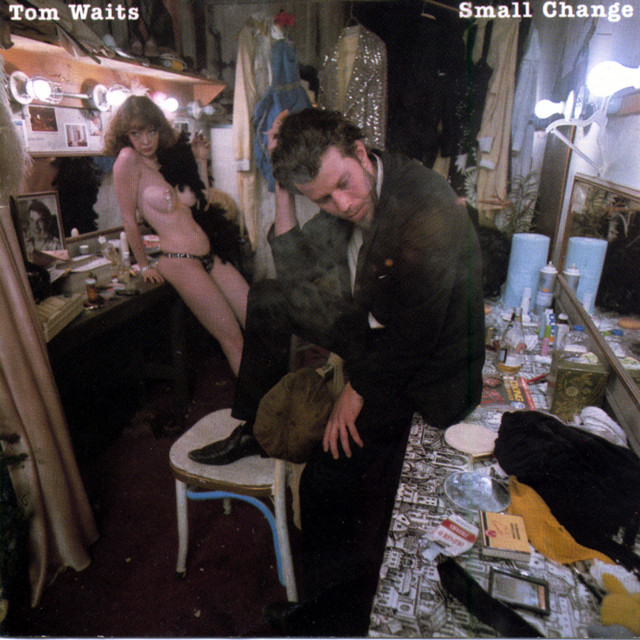
Small Change (Remastered)
1976

Foreign Affairs (Remastered)
1977
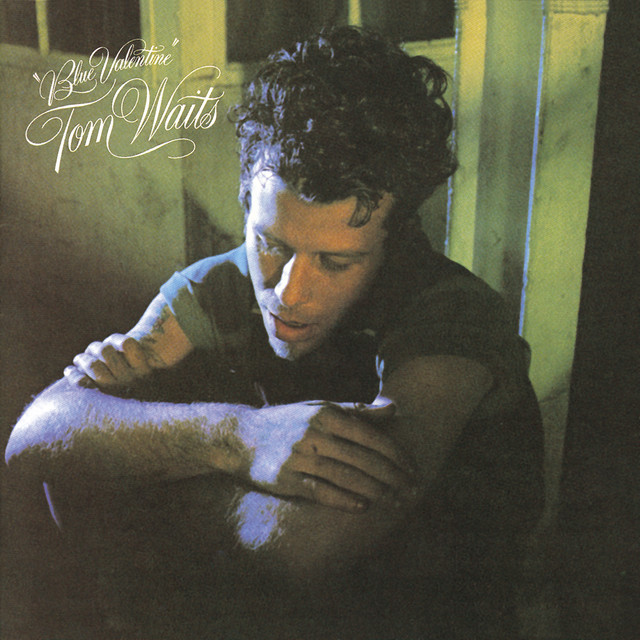
Blue Valentine (Remastered)
1978
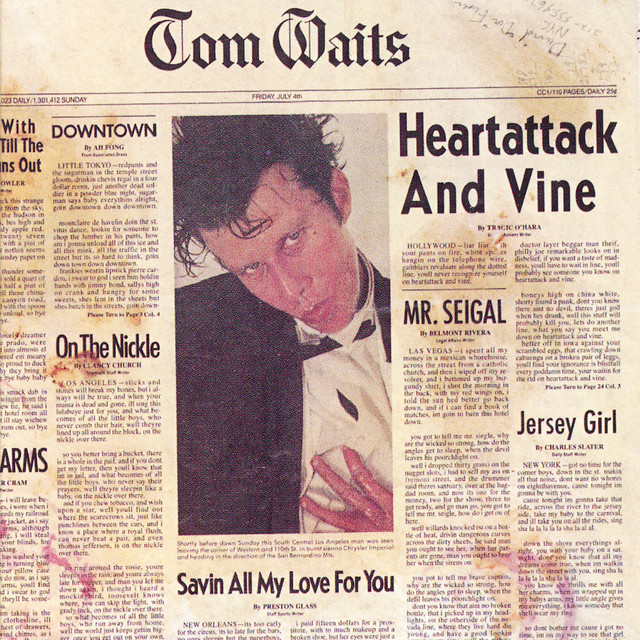
Heartattack And Vine (Remastered)
1980

Music From The Original Motion Picture "One From The Heart"
1982
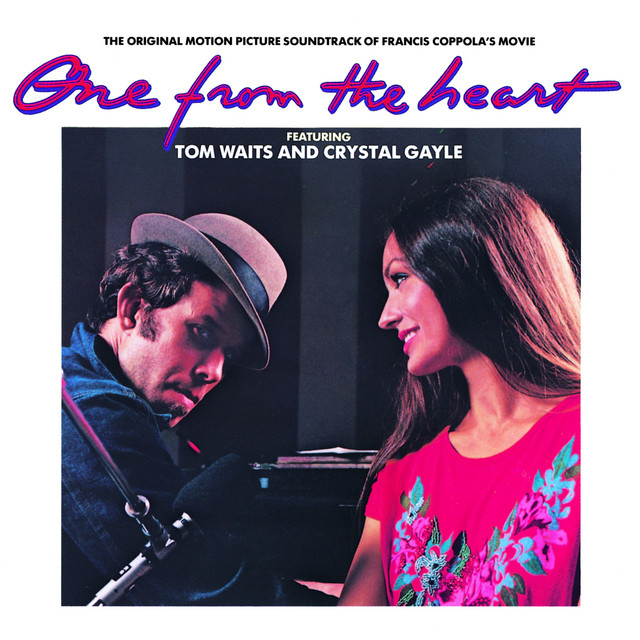
The Original Motion Picture Soundtrack of Francis Coppola's Movie ONE FROM THE HEART
1982
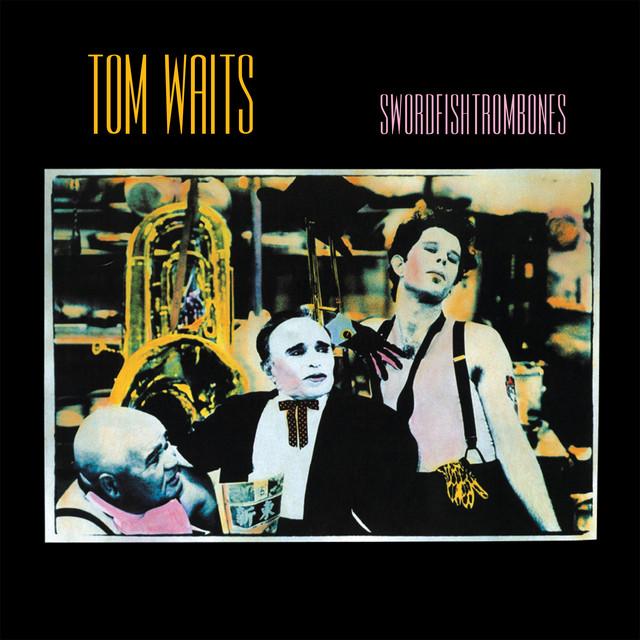
Swordfishtrombones (2023 Remaster)
1983

Rain Dogs (2023 Remaster)
1985

Anthology Of Tom Waits
1985
Album Credits
-
Tom Waits · 2022
Producer -

Metric · 2012
Producer -

Primus · 2006
Producer -
Tom Waits · 1991
Producer -

Tom Waits · 1988
Producer



.jpeg?v=1783265544)



.webp)

