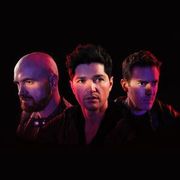
Adam Levine
Maroon 5’s lead vocalist
Adam Levine's Gear


In a performance on The Howard Stern Show, Adam Levine uses a Shure SM7B microphone while covering Bill Withers’ “Ain’t No Sunshine.”
Find it on:


Adam has a few Custom Shop Stratocasters he uses, they usually have floyds and a humbucker on them. A close look at the guitar can be had at 4:08 into this video.
Find it on:


At 0:56 you can see Adam Levine tracking vocals with a ELA M 251 Microphone.
Find it on:


On the First Act product page for Adam Levine's custom designed guitars, shows a First Act Custom Gold Top.
Find it on:
-m.webp?v=1782917873)
According to Jim Ebdom, front-of-house engineer on tour with Maroon 5, "Adam Levine sang through a regular Shure SM58 wireless mic, which actually worked out well."
Find it on:

Adam Levine used an Ernie Ball Music Man Axis guitar during Maroon 5's performance on "The Ellen Show," as featured on Ernie Ball's official Instagram.
Find it on:

This screenshot from Adam Levine's Instagram stories shows his Universal Audio Apollo Twin X audio interface.
Find it on:

At 4:25 in this tour of Adam Levine's home, a Yamaha THR10 amp is visible.
Find it on:

Adam Levine discusses his Fender Eddie Van Halen Stratocaster beginning at 4:28 in this video.
When you're a ten year-old, eleven year-old kid and you're learning how to play guitar, Eddie Van Halen, it's just like, c'mon you know. And he passed recently, tragically and I wanted to try and find an old 5150 like completely jerry-rigged bad, not original, not fancy or... I wanted to have one because the way he did it was so cool and so I just wanted to mess around on one and see what Ain't Talkin' bout Love sounded like.
Find it on:



According to the Shure website, this is the vocal mic Maroon 5 frontman Adam Levine uses.
Find it on:

In a live performance of Maroon 5's "Sugar" on The Voice 2015, Adam Levine is seen using the Ibanez Steve Vai JEM/UV Signature Guitar during the intro.
Find it on:

This guitar was used by Adam during his performance of Maroon 5's Sugar on The Voice.
Find it on:

Adam Levine is seen here playing a Gibson ES-335 with Maroon 5 at the Grammy Salute to The Beatles
Find it on:
-m.webp?v=1782327089)
Used for "Makes Me Wonder", as stated by mix engineer Mark Endert in this September 2007 Sound on Sound interview.
"I realised that there was one guitar part that worked particularly well with the bass and drums. It was played by Adam and had a clean Telecaster sound, and so I looped that through the track." (...) “Upon determining that Adam’s clean Tele part worked the best with the drums and bass, it was looped so that it did the same thing throughout the whole track. It sounded great being mixed loudly. When I have a loop like that without change, they way I can achieve contour is by changing the amounts of effects. So at the beginning of the song there are minimal effects on the guitar loop, then when it hits the first verse there are more delays, when it hits the chorus there is chorusing and delay and reverb on it — these are all outboard effects: PCM42s, AMS 1580S, and Eventide Orville. All the delays from the Lexicon PCM42 were timed, everything from eighth to dotted eighth to 16th notes. I love delays far more than reverb and I have eight discrete delays — five PCM42s and three Roland SDE3000s — and they are in use on every mix. In the verses it’s more like a 16th slap feel, and when it gets to the choruses, I harmonised with an AMS 1580S, pitch–changing and fattening the guitars. You can get a lot of contour out of a track that lacks dynamics just by changing the acoustic space around it."
Find it on:

Visible throughout Levine's September 15, 2020 interview with Howard Stern. It was released on YouTube the next day.
Find it on:


Adam Levine and Matt McAndrew performs "Lost Stars" at The Voice. And Adam sings on the stage with Taylor 714ce Rosewood/Spruce Grand Auditorium Acoustice-Electric Guitar.
Find it on:


Used for the lead vocals on "Makes Me Wonder", as stated by mix engineer Mark Endert in this September 2007 Sound on Sound interview.
Lead vocal: Waves De–esser, Sony Oxford EQ, Tube–Tech CL1B, Lexicon PCM42, Lexicon 480L
“I love using digital de–essing on the lead vocals. On about every track I mix, the first plug–in insert is probably the Waves De–esser. From there I will do fine–tuning with the EQ. If there’s a narrow band that I want to eliminate or boost, I often use the Sony Oxford EQ immediately after the de–esser. In this case I boosted a little bit around 300Hz, made a small cut around 2500Hz and rolled off some extreme high end. I really like the Oxford EQ for pinpointing frequencies, but as far as sonic shaping is concerned, I prefer the outboard, like the SSL EQ, the GML, or my Neve 1073 modules. You are never going to pinpoint a perfect frequency on a three–band Neve EQ.
“After being treated with the De–Esser and the Oxford EQ, the lead vocals came to the SSL desk, on which I also used EQ, and inserted a compressor. In this case it was a Tube–Tech CL1B, set to a ratio of 5:1. For some reason I like 5:1 on vocals. I added delays on the lead vocals in the choruses — PCM42, eighth note or something like that — and there’s a reverb, most likely a 480L, set to a short reverb time.”
Find it on:

In this Instagram posted by Adam Levine, his headphones are plugged into the Redco Little Red Cue Box four-channel passive headphone mixer.
Find it on:


In this Instagram posted by Adam Levine, he can be seen playing an Ernie Ball Music Man EVH electric guitar live.
Find it on:

Used for the guitar loop on "Makes Me Wonder", as stated by mix engineer Mark Endert in this September 2007 Sound on Sound interview.
"I realised that there was one guitar part that worked particularly well with the bass and drums. It was played by Adam and had a clean Telecaster sound, and so I looped that through the track." (...) “Upon determining that Adam’s clean Tele part worked the best with the drums and bass, it was looped so that it did the same thing throughout the whole track. It sounded great being mixed loudly. When I have a loop like that without change, they way I can achieve contour is by changing the amounts of effects. So at the beginning of the song there are minimal effects on the guitar loop, then when it hits the first verse there are more delays, when it hits the chorus there is chorusing and delay and reverb on it — these are all outboard effects: PCM42s, AMS 1580S, and Eventide Orville. All the delays from the Lexicon PCM42 were timed, everything from eighth to dotted eighth to 16th notes. I love delays far more than reverb and I have eight discrete delays — five PCM42s and three Roland SDE3000s — and they are in use on every mix. In the verses it’s more like a 16th slap feel, and when it gets to the choruses, I harmonised with an AMS 1580S, pitch–changing and fattening the guitars. You can get a lot of contour out of a track that lacks dynamics just by changing the acoustic space around it."
Find it on:

Used for the lead vocals on "Makes Me Wonder", as stated by mix engineer Mark Endert in this September 2007 Sound on Sound interview.
Lead vocal: Waves De–esser, Sony Oxford EQ, Tube–Tech CL1B, Lexicon PCM42, Lexicon 480L
“I love using digital de–essing on the lead vocals. On about every track I mix, the first plug–in insert is probably the Waves De–esser. From there I will do fine–tuning with the EQ. If there’s a narrow band that I want to eliminate or boost, I often use the Sony Oxford EQ immediately after the de–esser. In this case I boosted a little bit around 300Hz, made a small cut around 2500Hz and rolled off some extreme high end. I really like the Oxford EQ for pinpointing frequencies, but as far as sonic shaping is concerned, I prefer the outboard, like the SSL EQ, the GML, or my Neve 1073 modules. You are never going to pinpoint a perfect frequency on a three–band Neve EQ.
“After being treated with the De–Esser and the Oxford EQ, the lead vocals came to the SSL desk, on which I also used EQ, and inserted a compressor. In this case it was a Tube–Tech CL1B, set to a ratio of 5:1. For some reason I like 5:1 on vocals. I added delays on the lead vocals in the choruses — PCM42, eighth note or something like that — and there’s a reverb, most likely a 480L, set to a short reverb time.”
Find it on:

Used for the lead vocals on "Makes Me Wonder", as stated by mix engineer Mark Endert in this September 2007 Sound on Sound interview.
Lead vocal: Waves De–esser, Sony Oxford EQ, Tube–Tech CL1B, Lexicon PCM42, Lexicon 480L
“I love using digital de–essing on the lead vocals. On about every track I mix, the first plug–in insert is probably the Waves De–esser. From there I will do fine–tuning with the EQ. If there’s a narrow band that I want to eliminate or boost, I often use the Sony Oxford EQ immediately after the de–esser. In this case I boosted a little bit around 300Hz, made a small cut around 2500Hz and rolled off some extreme high end. I really like the Oxford EQ for pinpointing frequencies, but as far as sonic shaping is concerned, I prefer the outboard, like the SSL EQ, the GML, or my Neve 1073 modules. You are never going to pinpoint a perfect frequency on a three–band Neve EQ.
“After being treated with the De–Esser and the Oxford EQ, the lead vocals came to the SSL desk, on which I also used EQ, and inserted a compressor. In this case it was a Tube–Tech CL1B, set to a ratio of 5:1. For some reason I like 5:1 on vocals. I added delays on the lead vocals in the choruses — PCM42, eighth note or something like that — and there’s a reverb, most likely a 480L, set to a short reverb time.”
Find it on:


Adam Levine's Fender Stratocaster is visible at 4:25 in this video tour of his home.
Find it on:

Starting at 3:53 in this Architectural Digest video, Adam Levine's Gibson SJ-200 is visible in the corner of the room.
Find it on:

Used for the guitar loop and lead vocals on "Makes Me Wonder", as stated by mix engineer Mark Endert in this September 2007 Sound on Sound interview.
"I realised that there was one guitar part that worked particularly well with the bass and drums. It was played by Adam and had a clean Telecaster sound, and so I looped that through the track." (...) “Upon determining that Adam’s clean Tele part worked the best with the drums and bass, it was looped so that it did the same thing throughout the whole track. It sounded great being mixed loudly. When I have a loop like that without change, they way I can achieve contour is by changing the amounts of effects. So at the beginning of the song there are minimal effects on the guitar loop, then when it hits the first verse there are more delays, when it hits the chorus there is chorusing and delay and reverb on it — these are all outboard effects: PCM42s, AMS 1580S, and Eventide Orville. All the delays from the Lexicon PCM42 were timed, everything from eighth to dotted eighth to 16th notes. I love delays far more than reverb and I have eight discrete delays — five PCM42s and three Roland SDE3000s — and they are in use on every mix. In the verses it’s more like a 16th slap feel, and when it gets to the choruses, I harmonised with an AMS 1580S, pitch–changing and fattening the guitars. You can get a lot of contour out of a track that lacks dynamics just by changing the acoustic space around it."
(...) Lead vocal: Waves De–esser, Sony Oxford EQ, Tube–Tech CL1B, Lexicon PCM42, Lexicon 480L
“I love using digital de–essing on the lead vocals. On about every track I mix, the first plug–in insert is probably the Waves De–esser. From there I will do fine–tuning with the EQ. If there’s a narrow band that I want to eliminate or boost, I often use the Sony Oxford EQ immediately after the de–esser. In this case I boosted a little bit around 300Hz, made a small cut around 2500Hz and rolled off some extreme high end. I really like the Oxford EQ for pinpointing frequencies, but as far as sonic shaping is concerned, I prefer the outboard, like the SSL EQ, the GML, or my Neve 1073 modules. You are never going to pinpoint a perfect frequency on a three–band Neve EQ.
“After being treated with the De–Esser and the Oxford EQ, the lead vocals came to the SSL desk, on which I also used EQ, and inserted a compressor. In this case it was a Tube–Tech CL1B, set to a ratio of 5:1. For some reason I like 5:1 on vocals. I added delays on the lead vocals in the choruses — PCM42, eighth note or something like that — and there’s a reverb, most likely a 480L, set to a short reverb time.”
Find it on:
-m.webp?v=1782917898)
Used for the guitar loop on "Makes Me Wonder", as stated by mix engineer Mark Endert in this September 2007 Sound on Sound interview.
"I realised that there was one guitar part that worked particularly well with the bass and drums. It was played by Adam and had a clean Telecaster sound, and so I looped that through the track." (...) “Upon determining that Adam’s clean Tele part worked the best with the drums and bass, it was looped so that it did the same thing throughout the whole track. It sounded great being mixed loudly. When I have a loop like that without change, they way I can achieve contour is by changing the amounts of effects. So at the beginning of the song there are minimal effects on the guitar loop, then when it hits the first verse there are more delays, when it hits the chorus there is chorusing and delay and reverb on it — these are all outboard effects: PCM42s, AMS 1580S, and Eventide Orville. All the delays from the Lexicon PCM42 were timed, everything from eighth to dotted eighth to 16th notes. I love delays far more than reverb and I have eight discrete delays — five PCM42s and three Roland SDE3000s — and they are in use on every mix. In the verses it’s more like a 16th slap feel, and when it gets to the choruses, I harmonised with an AMS 1580S, pitch–changing and fattening the guitars. You can get a lot of contour out of a track that lacks dynamics just by changing the acoustic space around it."
Find it on:

Used for the lead vocals on "Makes Me Wonder", as stated by mix engineer Mark Endert in this September 2007 Sound on Sound interview.
Lead vocal: Waves De–esser, Sony Oxford EQ, Tube–Tech CL1B, Lexicon PCM42, Lexicon 480L
“I love using digital de–essing on the lead vocals. On about every track I mix, the first plug–in insert is probably the Waves De–esser. From there I will do fine–tuning with the EQ. If there’s a narrow band that I want to eliminate or boost, I often use the Sony Oxford EQ immediately after the de–esser. In this case I boosted a little bit around 300Hz, made a small cut around 2500Hz and rolled off some extreme high end. I really like the Oxford EQ for pinpointing frequencies, but as far as sonic shaping is concerned, I prefer the outboard, like the SSL EQ, the GML, or my Neve 1073 modules. You are never going to pinpoint a perfect frequency on a three–band Neve EQ.
“After being treated with the De–Esser and the Oxford EQ, the lead vocals came to the SSL desk, on which I also used EQ, and inserted a compressor. In this case it was a Tube–Tech CL1B, set to a ratio of 5:1. For some reason I like 5:1 on vocals. I added delays on the lead vocals in the choruses — PCM42, eighth note or something like that — and there’s a reverb, most likely a 480L, set to a short reverb time.”
Find it on:

The E6 was used for the backing vocals on "Makes Me Wonder", as stated by mix engineer Mark Endert in this September 2007 Sound on Sound interview.
Backing vocals: SSL channel compressors, McDSP Filterbank
“I compressed the backing vocals with the SSL channel compressors, also set to a 5:1 ratio. When I tried to blend the backing vocals into the chorus, they immediately sounded too slick and too good and too adult. This often happens when the harmonies are lower than the lead vocal; they tend to weigh the track down. In trying to keep the track fresh and young, I combined all the background vocals into two outs from the master output of Pro Tools, and then I put one plug–in EQ on that. I sucked out all the frequencies that made it full, using the McDSP E6 Filterbank, cutting radically at 79.1Hz and 211.2Hz. This made the backing vocals sound transitory and thin, and when I blended them back into the track it sounded much better. In this way the backing vocals could cut through the track, and not weigh it down."
Find it on:



Can be seen in the background of this Letterman performance.
Find it on:

Can be seen in the bacground of this Letterman performance.
Find it on:
This is a community-built gear list for Adam Levine.
- Find relevant music gear like Microphones, Guitars, Amplifiers, Effects Pedals, and other instruments and add it to Adam Levine.
- The best places to look for gear usage are typically on the artist's social media, YouTube, live performance images, and interviews.
- To receive email updates when Adam Levine is seen with new gear, follow the artist.