Geoff Downes
Role
Genre
Group
Credits
Role
Genre
Group
Credits
Geoff Downes' Gear


"With careful manipulation you can use the latest technology to drive the old stuff anyway; for instance, I use a Fairlight CMI to drive the Minimoog, because I still don't think there's been a better lead synthesizer than the Minimoog in terms of actual solo synth playing."
Find it on:



"But I soon graduated to a Farfisa Compact Duo and then eventually bought my first Hammond when I was 16, a J122."
Find it on:


At 0:09 of this video showing Yes - Live 2011 keyboards rig the MC-80 can be seen.
Find it on:

At :37 of this video, Downes states he uses a Roland VP-770 and then demonstrates it.
Find it on:

Article describes Geoff Downes live rig and lists every piece of gear in the rig
Find it on:

At 1:29 of this video, Downes demonstrates his Roland JP-8000.
Find it on:

At :29 of this live performance of "Into the Lens" by Yes, Downes can be seen with a Mellotron M400 to his right.
Find it on:

Article has a picture of Geoff Downes in front of his live keyboard rig with Asia in 1983
Find it on:

"That's when I got the Fender Rhodes, which I still use occasionally. At the time that was the standard setup: Hammond and Fender Rhodes."
Find it on:


"Of course, when the Prophet 5 came out that was a whole new thing. The sort of changes you could make to a Minimoog patch you could now do polyphonically. The Polymoog was really quite rigid in its tonal alterations, but the 5 was a dream machine in terms of flexibility. It was like five Minimoogs plus a programmable memory, which was really revolutionary."
Find it on:


"The next thing must have been the Solina. I got that around 1978, and it was the string machine to beat all string machines. At that time, on sessions, I was using that, the Clavinet D6 (bear in mind that when I got that in the late '70s, funky disco music was in demand), the Hammond, the Rhodes and the Minimoog."
Find it on:

"The Polysix and the Mono/Poly in particular have a warmth you don't find in most Japanese stuff, although with the Poly 61 it was back to the cold Japanese digital sound."
Find it on:

"I use Apple’s Mainstage which is a development from Logic. Logic Pro X is the main program and it is great because you can create all these virtual layers of keyboards. It is a very powerful piece of design."
Find it on:

At :10 of this video, Downes states he uses a Roland Fantom G8, and then demonstrates it.
Find it on:

At 2:24 of this video, Downes demonstrates his Roland Juno-Di.
Find it on:

At 3:55 of this video, Downes demonstrates his Roland V-Synth GT.
Find it on:

At 5:57 of this video, Downes demonstrates his Roland Gaia SH-01 Synth.
Find it on:


At :29 of this live performance of "Into the Lens" by Yes, Downes can be seen with a pair of Minimoogs to his right.
Find it on:


Downes can be seen in a photo on this site playing a Kurzweil PC-88.
Find it on:

Geoff Downes use the Studiologic Sledge in his keyboard rig. In the video he tells us why Studiologic Sledge is an essential part of his rig.
Here is what he says about Studiologic Sledge on Studiologics website:
"Having just completed another major USA TOUR with the band, YES, I can’t begin to say how great it’s been having the addition of the mighty Sledge as part of my keyboard rig. I first saw this baby at the NAMM Show earlier in the year, and was hugely impressed by it, and I consider it to be one of the finest additions to the keyboard world for some time. Words to express: deep, powerful, reliable, sweet-sounding, intuitive – the Sledge has got it all. If you haven’t got one by now, wise up – you won’t regret it, I promise you! The addition of the Sledge to the keyboard rig has been a real innovation. It's a very intuitive device. The Sledge really blew me away. It's great for lead lines. In addition to great analog mono sounds you get really fat, rich, polysynth stuff as well. It's been very useful having something as comprehensive as this. The Sledge has a lot of multi-purpose operational things that as a programmer I find to be very intuitive. You have a very detailed, instant way of editing parameters with a control panel; rather than scrolling through countless windows. It means it's an all encompassing synth with sufficient knobs to be able to create new sounds very quickly. It's a great machine!"
Find it on:

In this photo, Downes is seen playing the Moog Liberation keytar.
Find it on:

In this photo, Downes is visible with the OSC OSCar synthesizer.
Find it on:

"I've also got an OSCar which is basically styled on the Minimoog, but it's not quite the same being digital. When the Polymoog came out it was pretty revolutionary in terms of what had gone before, but now it is one of my least used instruments. "
Find it on:
-m.webp?v=1784845593)
"One of my favourite layering instruments is the Sequential Prophet 10 because it's instant in that you can put one sound on one side, or the same sound on each of its two keyboards and then play it like a two manual instrument."
Find it on:

"No, before that there was a Vox Jaguar, which cost me £60 when I was 13. That was an absolute fortune in those days."
Find it on:

"Well, there was actually one other keyboard I sold, a Hohner Pianet, which was the first electric piano I had. Of course, I'd been playing piano for years, but acoustic piano was a bit inconvenient for gigs."
Find it on:

"I was at college at the time and we were "studying synthesiser" on that early EMS thing, the VCS3, which Floyd and Roxy were using. But no-one at the college knew how to get a decent sound out of it. We were always experimenting with it, waggling the joystick, but all it made was horrible noises. It's difficult to believe that was only 12 years ago, but that was the leading edge of synthesiser technology."
Find it on:

"The next thing must have been the Solina. I got that around 1978, and it was the string machine to beat all string machines. At that time, on sessions, I was using that, the Clavinet D6 (bear in mind that when I got that in the late '70s, funky disco music was in demand), the Hammond, the Rhodes and the Minimoog."
Find it on:

"I think that came along about '82. That was another one I got because it had a sound all of its own. It was away from the normal analogue synths, yet away from the samplers as well. It was such a good idea to have a machine with the variability and sharpness of digital sound, but still with the warmth of filters and envelopes. There wasn't a need to learn a completely new way of working, but you got a completely new sound. Even today, there's nothing that sounds quite like the PPG. You can hear its individual quality no matter how much other stuff you MIDI in with it."
Find it on:

"It's great for basslines, using the Stack mode to get lots of different elements and then combining them to make one big sound. I know on its own each voice sounds a bit thin, but you can't argue with six oscillators all going at once. It's actually better for bass sounds than the Prophet 5, because Stack mode gives you different sounds combined together, whereas Unison mode - which is what the Prophet had - only gives you five identical voices on top of each other."
Find it on:
This is a community-built gear list for Geoff Downes.
- Find relevant music gear like Pianos, Keyboards and Synthesizers, Microphones, and other instruments and add it to Geoff Downes.
- The best places to look for gear usage are typically on the artist's social media, YouTube, live performance images, and interviews.
- To receive email updates when Geoff Downes is seen with new gear, follow the artist.
Discography
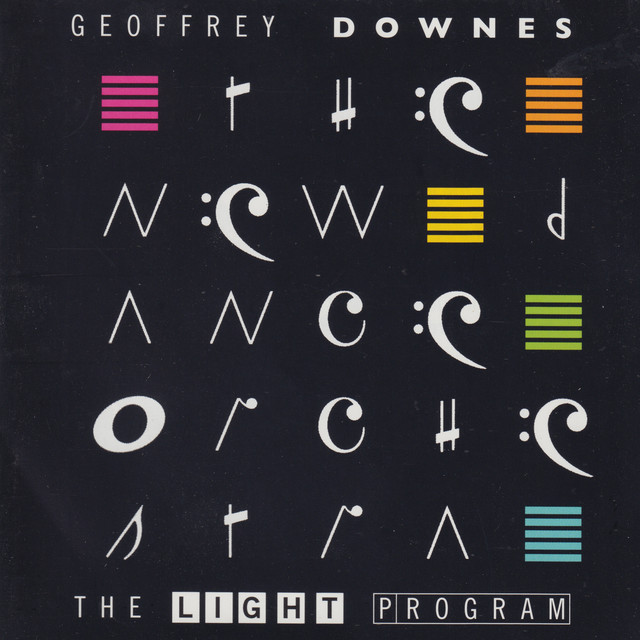
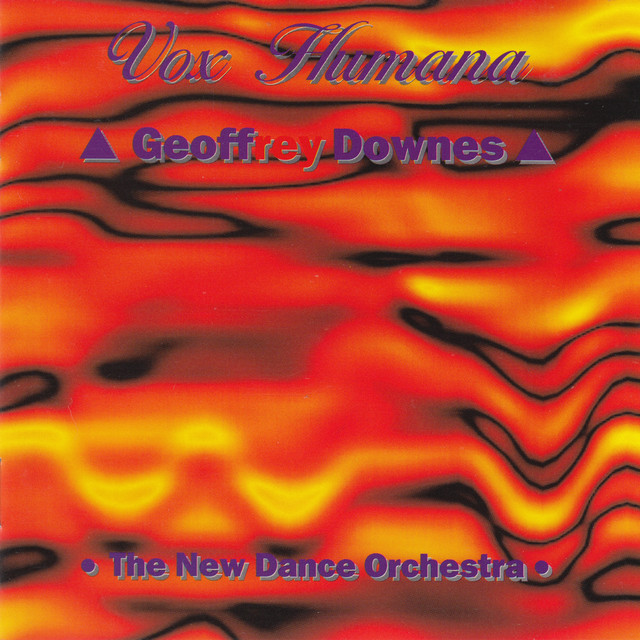
Album Credits
-
GTR · 2015
Producer -
Geoff Downes · 2015
Programmer -
Greg Lake · 2015
Programmer -
Geoff Downes · 2003
Engineer Producer -
Geoff Downes · 1999
Engineer Producer








.webp)