

Pricing and availability
We compare 600+ stores and found this item at 1 store. Prices updated .
Store
Reviews
Price




* Product prices and availability are updated by Equipboard every 24hrs and are subject to change. Equipboard may receive compensation for purchases made at participating retailers linked on this site. This compensation does not affect what products or prices are displayed, or the order of prices listed. For more information, please refer to our affiliate disclosure.
Description
Experience the legendary tone and vintage appeal of the Fender 6G6A/B Bassman, a staple in the world of bass amplification. Originally designed for bassists, this iconic amp stack quickly became a favorite among guitarists for its rich, warm sound and dynamic range. The 6G6A/B version is revered for its distinctive tube-driven circuitry, which delivers a robust and clear output that cuts through any mix. Its simplistic yet highly effective control layout allows for easy adjustments on the fly, making it a practical choice for both studio sessions and live performances.
The Fender 6G6A/B Bassman is equipped with dual 6L6 power tubes, providing the classic American clean tone that seamlessly transitions into smooth overdrive when pushed. Its dynamic response and tonal versatility make it a favorite among musicians who appreciate a pure and uncolored sound. Whether you're crafting the perfect bass line or exploring the amp's potential with a guitar, the Bassman delivers a sound that's both familiar and refreshingly unique.
Key Features:
- Tube-driven circuitry for warm, vintage tone
- Dual 6L6 power tubes for powerful output
- Simplistic control layout for ease of use
- Classic American clean tone with smooth overdrive
- Versatile for both bassists and guitarists
- Ideal for studio and live performances
Product specs
| Brand | Fender |
| Model | Bassman 6G6-A/B Brownface 50-Watt Guitar Head |
| Finish | Blonde |
| Year | 1962 - 1964 |
| Made In | United States |
| Categories | Bass Heads, Guitar Heads |
| Color Family | Tan |
| Direct Output | No Direct Output |
| Electronics | Tube |
| Impedance | 4 ohms |
| Model Family | Fender Bassman |
| Model Sub-Family | Fender Bassman Amp |
| Number of Channels | 2 Channels |
| Number of Inputs | 4 Inputs |
| Output Power (Watts) | 50 |
| Power Tube Type | 6L6 |
| Reverb | None |
| Series | Fender Vintage Brown / Blonde Amps |
FAQs
-
What are the tonal characteristics of the Fender 'Brownface' Bassman 6G6A/B?
-
The Fender 'Brownface' Bassman 6G6A/B is known for its warm, rich tones with a smooth overdrive. It offers a balanced response ideal for both bass and guitar, making it versatile for various genres.
-
Is the Fender 'Brownface' Bassman 6G6A/B suitable for live performances?
-
Yes, with its 50-watt output and robust tube-driven sound, the Bassman 6G6A/B is powerful enough for live performances, offering clarity and presence on stage.
-
How does the Fender 'Brownface' Bassman 6G6A/B handle pedals?
-
The Bassman 6G6A/B takes pedals exceptionally well, particularly overdrive and distortion pedals, enhancing its natural tube warmth and dynamic response.
-
What type of tubes does the Fender 'Brownface' Bassman 6G6A/B use?
-
The Bassman 6G6A/B utilizes 6L6 power tubes, contributing to its robust and classic Fender tone.
-
Can the Fender 'Brownface' Bassman 6G6A/B be used with electric guitars?
-
Absolutely, while originally designed for bass, the Bassman 6G6A/B is highly popular among guitarists for its exceptional tonal qualities and versatility.
Videos

Uncle Doug
Rare Brownface 1962 Fender 6G6A Bassman.....in for a Tune-Up
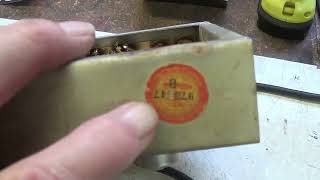
Rare Brownface 1962 Fender 6G6A Bassman.....in for a Tune-Up
Uncle Doug
Reviews
PROS
-
Authentic vintage tone that captures the essence of early '60s Fender amps
-
Dynamic breakup makes it ideal for blues and expressive playing
-
Versatile sound range from clean to filthy with pedal integration
-
Exceptional presence knob adds a unique sweetness to the tone
-
Can produce a powerful and commanding sound
CONS
-
Lacks built-in reverb, requiring an external reverb unit for those who desire it
-
Large size may not be convenient for all gigging situations
5.0 out of 5
Based on 2 Reviews and 7 Ratings

606
Just can’t be beat.
This amp is beyond compare when it comes to big sound. There is no reverb but you really don’t miss it, the cleans are so rich, so long as your playing is up to it, this amp will serve you well. Cranking this amp yields enough sound to rip your face clean of, and a bite worthy of a lion.


41029
AWESOME! There are 2 different blonde bassmans and I think they overlapped in '61, so is yours the 1st circuit with a tube rectifier or the solid state rectifier? The original 6L6es are still going? You lucky SOB~!
Yeah it is an original 61 blonde tolex with rectifier and original tubes all..so lucky :)

3485
Beautiful!
41029
awesome, though I am gonna say that when it comes to blonde bassmans I much prefer the 2nd generation SS recto version. It kills me to say I prefer SS rectification on an mp to a tube diode, but in this case I do. Not that there's anything wrong with the 1st version, its just that if you put the 2 versions side by side (which I have) the SS rectified one is just a little sweeter.... although if you are going to dime the amps the sag from the tube rectifier is nice for leads....
Artist usage
Add artist

In the interview he talks about using it on Wooden Ships.

.jpg)
.jpg?v=1783381987)

Actually a 1965. "It's just got a lot of character. It is fat and has that unmatched Fender sound. It stays clean, and breaks up in a nice way."


The Reverb listing confirms that Tom Hamilton uses a Fender 6G6A/B Bassman, as it features a Bassman head owned by Tom himself.

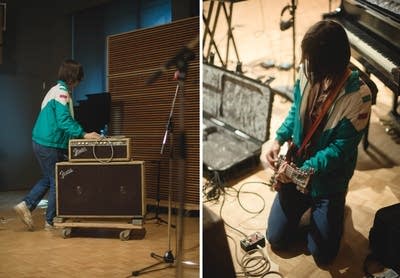
In a performance at The Current studio, Brian D'Addario is seen using a Fender 6G6A/B Bassman amplifier.

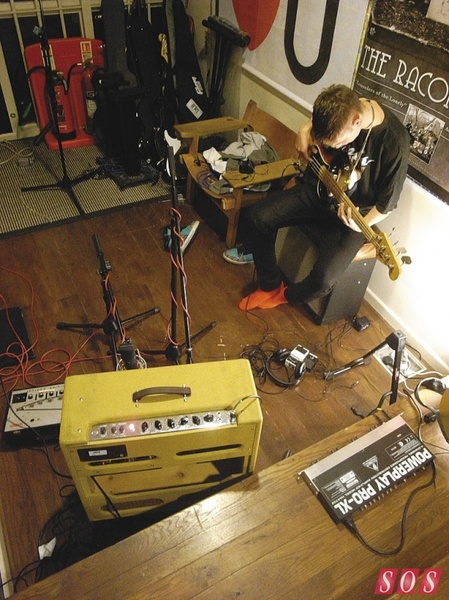
You can see in this picture Oliver playing his Fender Jazz Bass through a Fender Bassman.

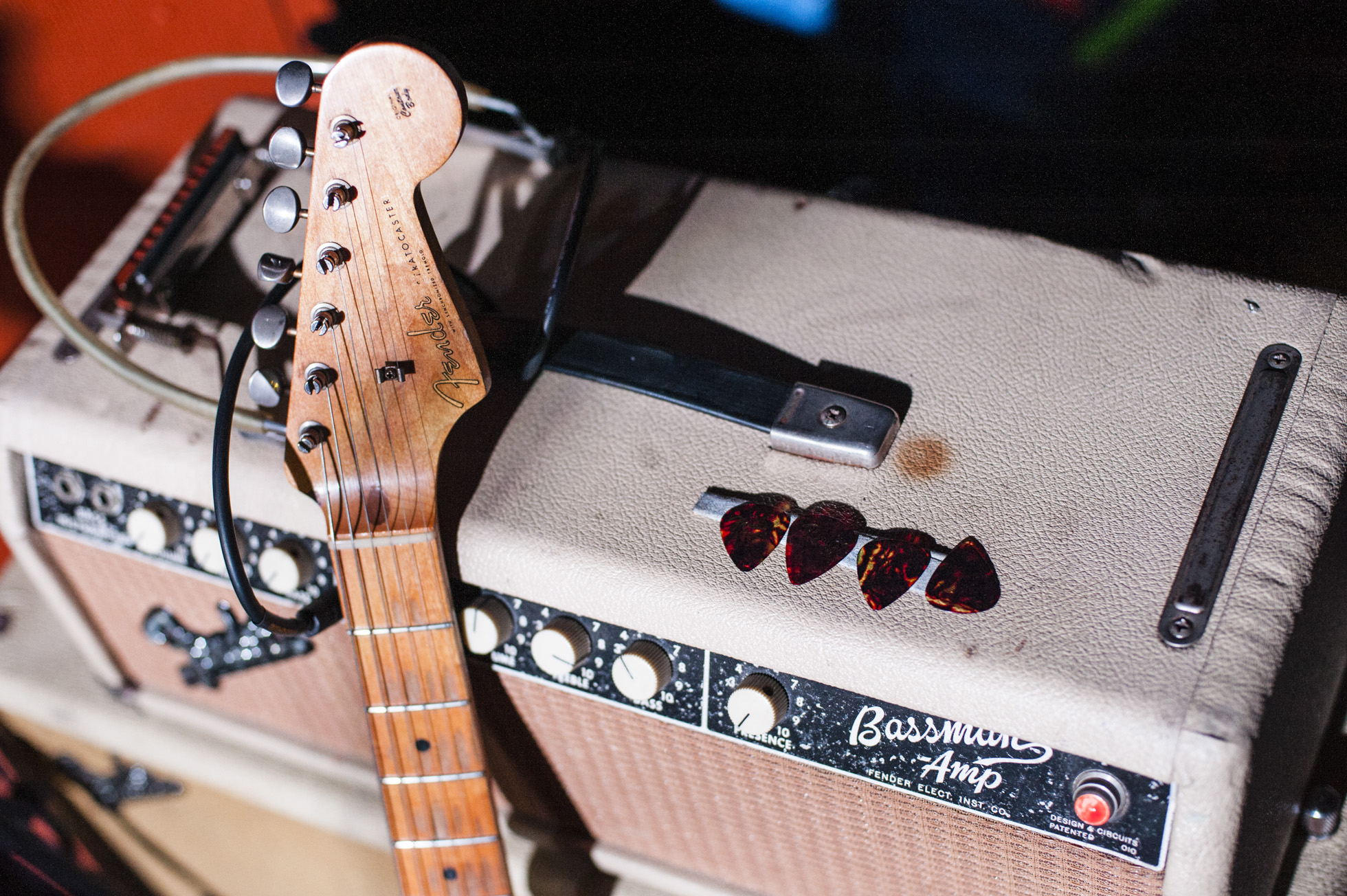
in these photos from a shoot for Guitarist Magazine a Blonde Fender Bassman can be seen.

.jpg)
In this photo which shows Cheney's gear, the Fender Bassman amp and cabinet can be seen behind Cheney.


In this video of 'Inifinite sun' you can see the amp at 0.39 At 0.50 you can see it being switched on


"It’s interesting: The only amp I have from the old days was my dad’s Bassman. Those weren’t used so much on bass, but I actually do use it on bass. Sometimes you don’t want such a big bass sound. It has those 10-inch speakers, which are really good for a punchy bass sound. It was made for bass, right?"

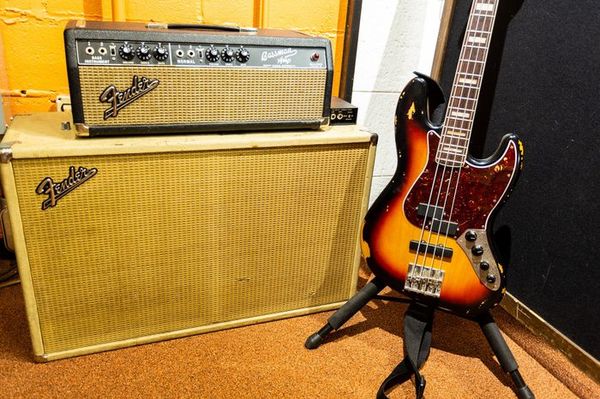
A 6G6 cabinet is featured in this March 2, 2019 al.com interview.
The resulting recorded tone is, “more in the bass and my hands,” iconic session musician David Hood says.
That said, the bass amplifier rig Hood used for his classic Muscle Shoals Sound Studios work is a Fender Bassman amp head and blonde Fender speaker cabinet.
In 2016, Muscle Shoals Sound reopened at original Sheffield location 3614 Jackson Hwy. and restored to retro ’60s/'70s prime. Hood’s rig was returned to the same spot it was during many vintage sessions. Against the studio wall, just left of the drum booth.
"My father was in the tire business and got hooked up with a purchasing-agent-type place who would connect you with people to buy things wholesale," Hood says. "They hooked us up with Manny's Music in New York, on 48th Street. It's no longer there, but it was a famous music store. I would call and order things from them. I could hardly talk to them because they spoke so fast, but I started buying amps and would sell them to somebody and buy another one, things like that."
(...) From Manny’s, Hood purchased the blonde cab, containing two 12-inch speakers, originally to use as an extension cabinet with the bass amp he was using. He ended up selling that amp. Now he had an extra cabinet. He then purchased a black Tolex-covered Bassman piggyback amp. “And I can’t remember why I did it, but I brought the blonde cabinet to 3614 (Jackson Hwy.) and we started recording that and using the black Bassman head with it, to monitor myself. Sometimes they’d mic it and sometimes we’d go direct. But I used it always as a monitor. In a studio full of loud guitars and keyboards and everything, you just can’t hear the bass well, even with the headphones. It’s getting where nowadays they have so many channels on the recording stuff they can use several channels for a bass. A long time ago you were lucky if you’d get one channel.”
The same interview states that an original 6G6 was used during Hood's days as a session musician for FAME Studios.
As a bassist, Hood is known for infectious nimble grooves and soulful touch. Earlier in his career, working at Muscle Shoals' FAME Studios on such R&B hits as Etta James' "Tell Mama," Hood used a house rig FAME producer/owner Rick Hall kept there. "It was one of the original Bassman piggyback amps that just had one 12-inch speaker, inside the cabinet," he recalls. Hood was part of the Muscle Shoals Rhythm Section, also featuring guitarist Jimmy Johnson, drummer Roger Hawkins and keyboardist Barry Beckett, later known as The Swampers, following a shout-out in Lynyrd Skynyrd's 1973 southern-rock hit "Sweet Home Alabama."
(...) Hood thinks he played his vintage Fender amp rig, the one now back at Muscle Shoals Sound, during classic sessions including Staple Singers’ soul hit “I’ll Take You There.” Again, that bass signal may have been recorded direct, instead of via a mic-ed amp, but he’s pretty sure he was playing through the amp too during the session. “Whatever it is,” he says, “it sounded good.”
The FAME stack is also mentioned in [this May 17, 2013 Bass Player interview(https://www.bassplayer.com/artists/hell-take-you-there-david-hoods-legacy-as-the-muscle-of-muscle-shoals), which discusses how it was recorded.
Hits by local favorites Sledge, Arthur Alexander, Clarence Carter, and others started to catch the attention of the national music industry, most notably Atlantic Records’ Jerry Wexler. Hood played trombone—not bass—on Aretha Franklin’s “I Never Loved a Man,” but he played bass on sessions for such R&B stalwarts as Wilson Pickett, Johnnie Taylor, and Etta James. He later played bass on Franklin’s “Call Me” and several other tracks.
“FAME had an old [Fender] Bassman amp that had only one speaker in it. We would record it with one of those old RCA 44 mics. When they learned about going direct, they started running me direct and miking me. Inevitably, they’d run out of tracks, so they would lose one of those. Usually the one they would keep was the direct track, so nowadays, I go direct. If I can, I like to have an amp, and they can mic it if they want.”


Album Usage
The Fender 'Brownface' Bassman 6G6A/B (1962-1964) has been featured on the following albums:
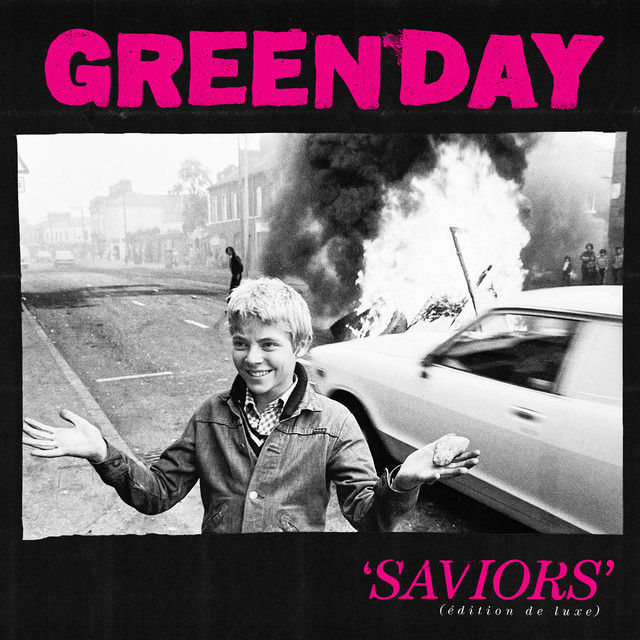
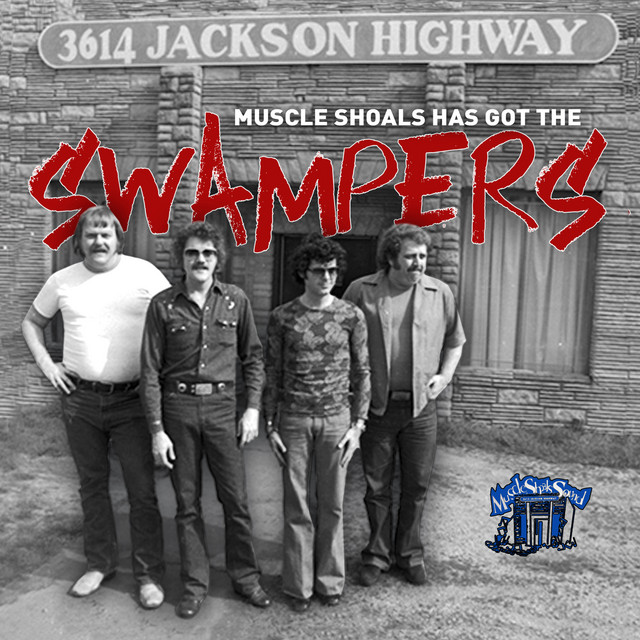

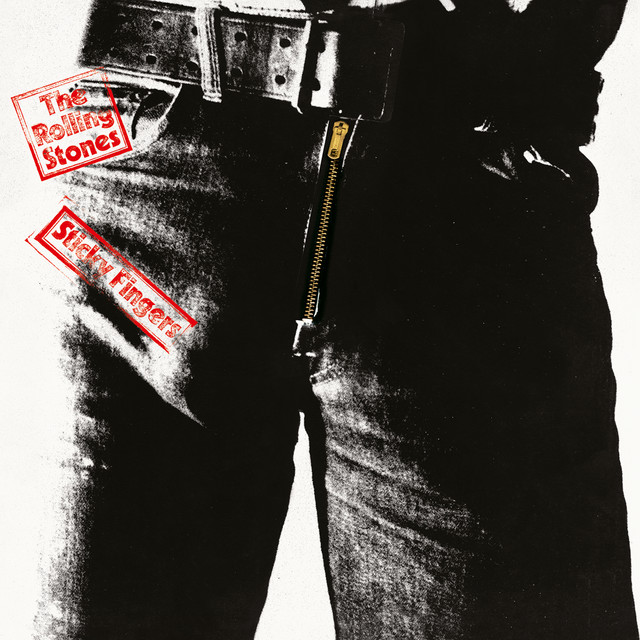
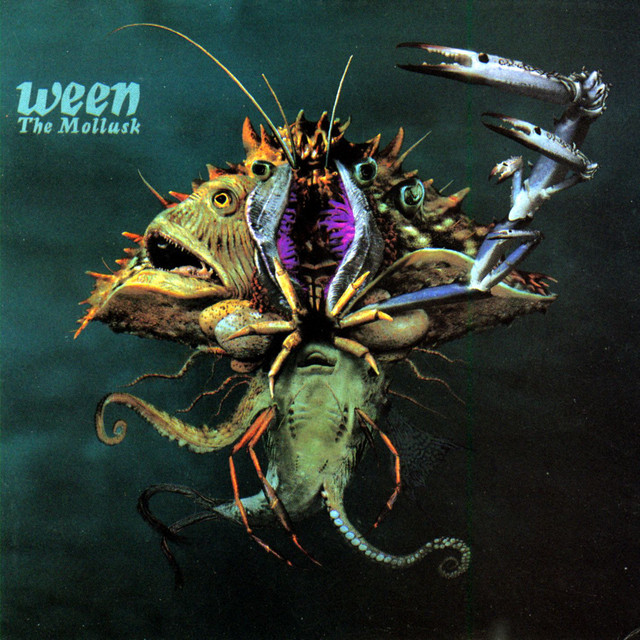

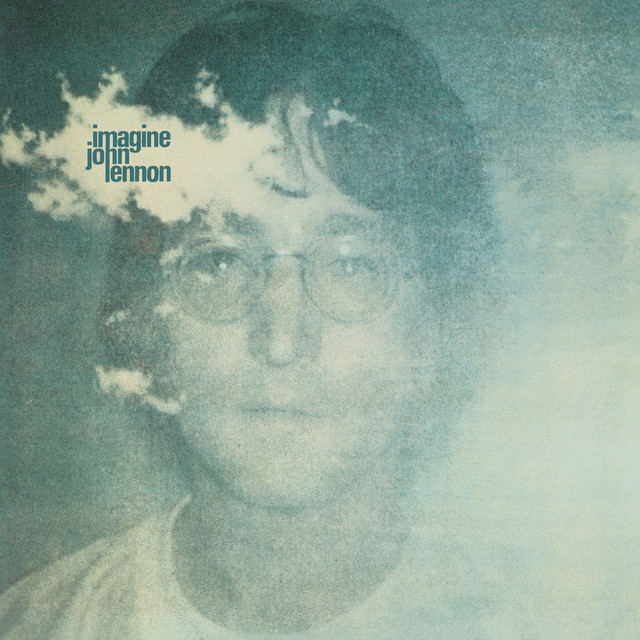
Genre Usage
Based on how artists on Equipboard use this gear, it is most commonly found in the following genres.
Used With
Based on how musicians on Equipboard use Fender 'Brownface' Bassman 6G6A/B (1962-1964), it is most commonly used with the following gear.


-s.webp?v=1782658580)


Similar
Add recommendation2 alternative and related items for Fender 'Brownface' Bassman 6G6A/B (1962-1964), curated by the Equipboard community.

$1,309.99 - $1,399.00
The tube front end of the amp is based on that coveted circuit from the 1960s, but with some decidedly modern features built in.
-m.webp?v=1783377888)
$2,099.00 - $2,799.00
The Fender Super Bassman gives you the best of vintage and modern. You get Fender's classic tube mojo - juiced with sophisticated technology such as Fender's very cool Automatic Bias that keeps you from spending time messing with your amp's tubes when you should be playing.
More Fender Bass Amplifier Stacks

$311.00 - $999.98
in Bass Amplifier Stacks Rank


$4,000.00
in Bass Amplifier Stacks Rank


$23.90 - $2,000.00
in Bass Amplifier Stacks Rank


$311.00 - $499.99
in Bass Amplifier Stacks Rank


$441.47 - $599.99
in Bass Amplifier Stacks Rank


$429.90
in Bass Amplifier Stacks Rank


$262.00
in Bass Amplifier Stacks Rank

$269.79 - $499.99
in Bass Amplifier Stacks Rank


$1,300.00
in Bass Amplifier Stacks Rank


in Bass Amplifier Stacks Rank


.jpeg?v=1783244342)


-m.webp?v=1754870060)


.png?v=1783244344)


Community setups


Most Popular Bass Amplifier Stacks
Most Popular Brands
-
Added to Equipboard on by
 chrislewistopher
Gear IQ 259
-


