

Pricing and availability




Average Price: $3,700
High-end/Boutique
$799
$2000+
Price Tier
Budget
Standard
High-end
* Product prices and availability are updated by Equipboard every 24hrs and are subject to change. Equipboard may receive compensation for purchases made at participating retailers linked on this site. This compensation does not affect what products or prices are displayed, or the order of prices listed. For more information, please refer to our affiliate disclosure.
Description
Discover the timeless charm of the Hammond A-100 Organ, a classic that brings the authentic sound of the golden era to your fingertips. With its rich heritage, the A-100 stands out in both aesthetics and performance. Crafted with meticulous attention to detail, this instrument offers an unparalleled musical experience for both enthusiasts and professional musicians. Its versatile sound palette, ranging from the deep, resonant bass to the shimmering highs, makes it a perfect fit for any genre. Whether you're creating soulful blues, energetic rock, or intricate classical pieces, the Hammond A-100 Organ delivers with unmatched authenticity and style.
Key Features:
- Variety of wood finishes including Mahogany, Cherry, and Walnut, allowing for a personal touch in your music studio.
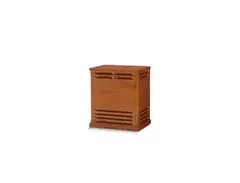
- Compatible with Leslie 122, 142, and 145 models, offering expansive sound manipulation capabilities.
- Authentic Hammond sound, perfect for various music genres from blues to rock.
- Versatile sound palette, capable of producing deep basses and shimmering highs.
Product specs
| Brand | Hammond |
| Model | A-100 Series Organ with Leslie Speaker |
| Finish | Natural |
| Year | 1959 - 1965 |
| Made In | United States |
| Categories | Organs |
| Analog / Digital | Analog |
| Key Size | Full Size |
| Keyboard Action | Synth Action |
| Number of Keys | 61 Keys |
FAQs
-
What are the main differences between the Hammond A-100 and the B-3 organ?
-
The Hammond A-100 is the home version of the B-3, featuring built-in speakers and reverb, and is designed with a variety of wood finishes for home use, unlike the B-3 which is more suited for professional settings.
-
Does the Hammond A-100 come with a Leslie speaker?
-
Yes, the Hammond A-100 is often paired with a Leslie speaker, which enhances its sound with the iconic rotating speaker effect, adding depth and richness to the organ's tone.
-
How many keys does the Hammond A-100 have, and what is the action type?
-
The Hammond A-100 features 61 full-size keys with synth action, providing a responsive and traditional organ feel.
-
Is the Hammond A-100 suitable for home use?
-
Yes, the Hammond A-100 was specifically designed for home use, featuring built-in speakers and reverb, making it a compact and self-contained option for residential spaces.
-
What is the weight of the Hammond A-100 organ?
-
The Hammond A-100 organ weighs approximately 350 lbs, which is important to consider if planning to move or install it in a specific location.
Videos

Jim Huss, Keyboard Exchange International
Comparing A-100, B3 and C3 Hammond Organs
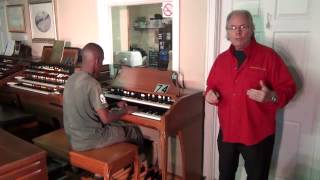
Comparing A-100, B3 and C3 Hammond Organs
Jim Huss, Keyboard Exchange International
Hammond A100 (B3) leslie minor blues

SjoerdHammond
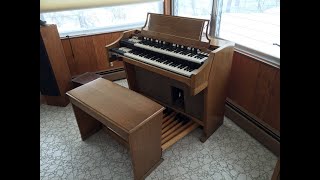
The Hammond A-100 Organ, History, How it Works, Maintenance, Operation and Features.

Glenn C. Koenig
A100 Demonstration at Hammond Organ store

Herve' Thomas
Reviews
Owner Insights
We analyzed real musician discussions from forums and Reddit to find what players love, question, and tweak about Hammond A-100 Organ.
Build quality
-
A-100 models manufactured post-1964 may have serial number-specific components, which can affect maintenance and repair strategies.
Source
Setup and maintenance
-
Regular dusting of drawbars with air spray is advised to maintain functionality and longevity.
Source -
Owners recommend using a wood platform under the organ to prevent oil from damaging carpeted flooring.
Source -
The E-100's power amp is prone to failure, and its tubes are expensive to replace, highlighting potential maintenance challenges.
Source -
Oiling is crucial for functionality, similar to a car engine; quality Hammond oil is recommended, giving ample time to flow through the tone generator.
Source -
After 1964, A-100 models used foam instead of felt seals in manuals, which can degrade and damage wiring; it's advisable to inspect and clean manual interiors.
Source -
Proper procedure involves holding the Start button for 8 seconds, then switching to Run; the Start button will spring back to the off position, which is normal.
Source -
Removing the foot pedals involves lifting them slightly at the edges and being cautious of the sharp springs.
Source -
Transporting the A-100 requires securing the tonewheel generator and keeping the Leslie upright to protect the motor mounts and belts.
Source
Features and functionality
Comparisons
-
The E-100 has fewer tone wheels than the A-100, using divider circuits for the lowest octave, impacting sound authenticity compared to the B-3/A-100.
Source -
The A-100 shares internal components with the B3/C3, making it superior to the L-100, despite external similarities like internal speaker placement.
Source
Other
-
It's important to replace old power cables, even if they appear functional, to prevent potential electrical issues.
Source
User experience
-
Owners emphasize the longevity and repairability of the A-100, noting that any necessary repairs are usually worth the investment.
Source
Value and pricing
-
An A-100 with a Leslie 145 in working condition is a strong deal at $1,500, considering the Leslie alone can resell for $800+.
Source
Use cases and applications
-
The Leslie 145, with its 6-pin input and compatibility with preamp pedals, is versatile for various instruments beyond the Hammond.
Source
4.5 out of 5
Based on 1 Review and 3 Ratings

420
Really good tonewheel organ
Given to me by a studio which was shutting its doors for the last time. Really nice tone, is apparently the same as the legendary B3 and has the same guts. But I will say my dad's C3 sounded much better than the junker which resides in the next room! But it has been a long time!

41029
ah, the Booker T organ, very udnerrated
Artist usage
Add artist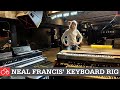
At 2:33 in the video, he plays his Hammond for the cameras.

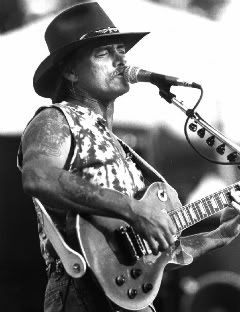
Mentioned in this September 15, 2008 post on the official Allman Brothers Band website forum.
Here is an excerpt from the first draft of Johnny's book:
"Duane was playing a Telly with a Strat neck and he and Gregg both had super Beetle Vox amps. I had an early '60s Fender Bassman amp Duane really liked so we took it out to California with us. As loud as we were playing at that time, the speakers in the amp were going and not quite loud enough so we put JBLs in it. I kept that amp until my friend, Butch Owens, borrowed it and it was stolen. He later replaced it with something as good as or maybe even better than what I had. It's a good amp and I still have it. I think it was one he got from Joe Walk. Paul played an A-100 with a leslie cut down to be portable. It wasn't a B-2 but it was close to it and we had a Wurlitzer piano that Gregg played. When Pete joined the band he played a Jazz bass with a custom amp. The amp belonged to a guy who lived in Decatur. . We had a Fender 12-string Gregg would use sometimes and maybe an acoustic/electric guitar. Gregg didn't play guitar very often but he wrote a lot of songs on one. He became friends with Jackson Browne when we were out there and Gregg learned a lot from him. I think they learned from each other. Gregg went through a folk phase with his writing but his style changed with different instruments. I've still got the Wurlitzer from the band and it has a story that came with it. Several of us went to a music store in L.A. and picked out this particular Wurlitzer for Paul to play since he was playing most of the Wurlitzer parts then. Actually, Gregg and Paul set up close together so they could swap between the Wurlitzer and B-3 when they needed to but Paul was primarily on the Wurlitzer. The salesman showed us how to hook it up to an amp which was essential because you couldn't play it off the little speaker that came in it. Once we figured it out, it sounded great. The Wurlitzer is still my favorite keyboard. Duane had borrowed a '59 gold top Les Paul from Tommy Compton, who still lives in Decatur, and he didn't want to give it back to Tommy. And Tommy definitely wanted it back. Eventually it worked around to Gregg trading the Wurlitzer for the guitar. The guitar was worth more than the piano but Tommy had a use for it and was trying to keep Duane from getting busted because Tommy's dad was ready to go after Duane to get the guitar back. So, the piano was sent back to Decatur and Duane kept the guitar. Of course that guitar would be worth a fortune now, certainly more than the piano is worth. Tommy eventually sold the piano to a guy who sold it to Eddie Hinton. After Eddie died in '95, his mother sent the piano back to the guy who'd sold it to Eddie and I bought it back from him a year or so later to use in my studio."

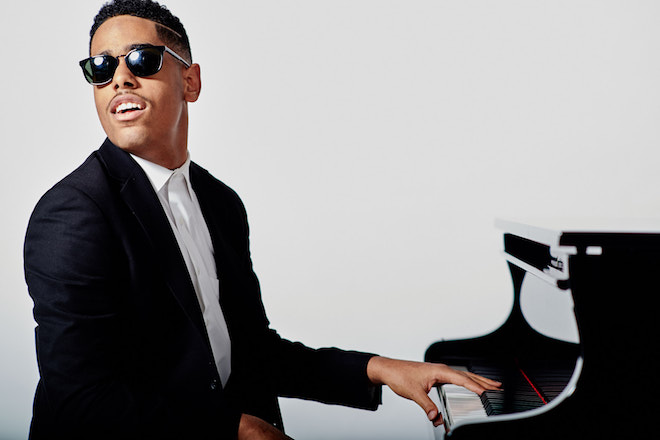
Mentioned this April 23, 2020 National Endowment for the Arts interview.
NEA: What led you to want to play the organ?
WHITAKER: I think I started playing at church, at the end of church services. My parents didn’t really want me to play it, probably because they thought it would be too loud. But my church pastor told them to let me play, and then friends gave me a small organ. After that I got a Hammond A100, then finally a portable Hammond B3, and a few others as well.
NEA: Just how portable is a portable Hammond B3?
WHITAKER: [Laughter.] Well it’s still pretty heavy but it’s definitely lighter than others.
Genre Usage
Based on how artists on Equipboard use this gear, it is most commonly found in the following genres.
Used With
Based on how musicians on Equipboard use Hammond A-100 Organ, it is most commonly used with the following gear.
-s.webp?v=1783177029)




More Hammond Organs

$3,179.29 - $3,900.00
in Organs Rank


$2,590.00 - $2,995.00
in Organs Rank


$3,900.00 - $10,320.00
in Organs Rank


$350.74 - $941.12
in Organs Rank


$999.00
in Organs Rank


$2,111.00 - $2,495.00
in Organs Rank

$3,179.29 - $10,320.00
in Organs Rank


$239.00 - $3,995.00
in Organs Rank


.png?v=1783303049)


$7,295.00 - $8,790.00
in Organs Rank


.jpeg?v=1783065966)


Accessories & Related Items


Community setups


Similar


Most Popular Organs
Most Popular Brands
-
Added to Equipboard on by
CcrunkadileGear IQ 44
-


