

Pricing and availability
We compare 600+ stores and found this item at 8 stores. Prices updated .
Store
Reviews
Price








Average Price: $6,462
High-end/Boutique
$100
$501+
Price Tier
Budget
Standard
High-end
Price History
Based on price data from 5 merchants for "Manley Massive Passive Stereo Tube EQ". Prices shown reflect NEW condition. Tracking began Apr 2, 2026.
* Product prices and availability are updated by Equipboard every 24hrs and are subject to change. Equipboard may receive compensation for purchases made at participating retailers linked on this site. This compensation does not affect what products or prices are displayed, or the order of prices listed. For more information, please refer to our affiliate disclosure.
Description
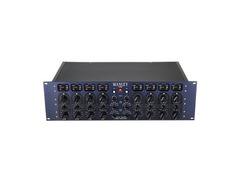
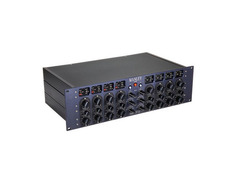
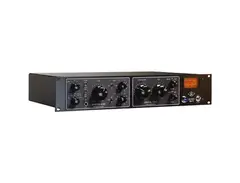
Step into the realm of high-end audio manipulation with the Manley Massive Passive Stereo Tube EQ. This two-channel, four-band equalizer is more than just an EQ, it's an artistic tool that helps shape your sound with natural, organic methods. The passive design uses only metal film resistors, film capacitors, and hand-wound inductors to sculpt your sound, much like a Pultec EQ on hyper-steroids.
The Manley Massive Passive is not just a device for tweaking frequencies, it's a creative instrument, built for artists with artistic goals. This EQ is designed for both the most radical EQ needs for tracking and the subtlest shadings for vocals and mastering. With twice as much EQ and half the coloration, Massive Passive delivers incredible high frequency boosts without sibilance problems and an unbelievable fatness without mud. This is EQ creativity at its best, with a few quirks and idiosyncrasies that will spark your audio adventure.
Key Features:
- Two-channel, four-band equalizer with additional high-pass and low-pass filters
- Passive tone-shaping design with metal film resistors, film capacitors and hand-wound inductors
- All-Passive tone sculpting circuitry
- Unique Shelf curves use the "bandwidth" control
- Overlapping and Interleaved Frequency choices
- Every band switchable to shelf or bell
- Vacuum tube make-up gain and line drivers
- Parallel symmetrical topology
- Premium components throughout
- HP and LP Filters plus gain trims
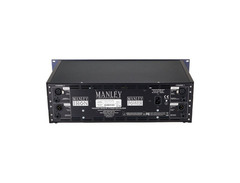
- Ins & Outs Balanced XLR & 1/4" (accepts unbalanced)
- Level +4 dBu nominal, internal switches for -10 operation
- Bypass Switch bypasses EQ & tube circuits (not hardwire)
- 44 Frequencies (roughly 1/4 octave spacing)
- Frequency Range: 22 Hz to 27 Khz
- EQ Boost/Cut Range : 20 dB boost, 20 dB cut
- Nominal Q range: 1.5 to 3 (uniquely active in shelf modes)
- Frequency Response: +/- 2 dB: 8 Hz to 60 KHz
- Maximum Output @ 1.5% THD +37 dBv; +26dBv @ 20 Hz
- THD & Noise (1KHz @ +4 dBu): 0.06%
- Noise Floor (referred to +4dBu): -85 dB (A Weight)
- Dynamic Range: 120 dB
- Tube Complement: 2 x 12AX7 EH, 4 x 6414 for serial MSMPX### after 2/2004
- Tube Complement: 2 x 5751, 4 x 6414 for serial MSMP### until 2/2004
- Power Consumption (120/240VAC): 72 watts
- Mains Voltage Frequency: 50~ 60Hz
- Size (3U): 19" x 5.25" x 10"
- Weight: Unit 21 lbs.
Owner's manual
Manley Massive Passive Stereo Tube EQ User ManualProduct specs
| Number of Channels | 2 |
| Tube | Yes |
| Bypass | Yes |
| Number of Bands | 4 |
| High Pass Filter | Yes |
| Low Pass Filter | Yes |
| Q Type | Variable |
| Boost/Cut Range | ±20 |
| Freq Range High | 560Hz-27kHz |
| Freq Range Hi-Mid | 220Hz-10kHz |
| Freq Range Lo-Mid | 82Hz-3900Hz |
| Freq Range Low | 22Hz-1000Hz |
| Inputs | 2 x XLR, 1 x 1/4" |
| Outputs | 2 x XLR, 1 x 1/4" |
| Frequency Response | 8Hz-60kHz (±2dB) |
| Rack Spaces | 3U |
| Power Source | Standard IEC AC Cable |
| Height | 5.25" |
| Depth | 10" |
| Width | 19" |
| Weight | 21 lbs. |
FAQs
-
What makes the Manley Massive Passive Stereo Tube EQ unique compared to other EQs?
-
The Manley Massive Passive features a tube-based design and passive EQ circuitry, offering a distinctive warm, musical sound. It provides four bands of EQ with variable Q and a wide frequency range, making it ideal for both subtle tonal shaping and broad sound sculpting.
-
Can the Manley Massive Passive Stereo Tube EQ be used for mastering?
-
Yes, the Manley Massive Passive is highly regarded for mastering due to its dual-channel design and precise control over the frequency spectrum. Its ability to add warmth and depth without harshness makes it a favorite among mastering engineers.
-
Does the Manley Massive Passive Stereo Tube EQ have a bypass function?
-
Yes, the Manley Massive Passive includes a bypass feature, allowing you to easily compare the processed and unprocessed signals to ensure the desired effect is achieved.
-
What are the connectivity options for the Manley Massive Passive Stereo Tube EQ?
-
The Manley Massive Passive offers balanced XLR and 1/4" inputs and outputs, providing compatibility with a wide range of professional audio equipment.
-
Is the Manley Massive Passive Stereo Tube EQ suitable for live sound applications?
-
While primarily designed for studio use, the Manley Massive Passive can be used in live sound environments. However, its 3U rack size and weight might make it less practical for mobile setups.
Videos

Universal Audio
Manley Massive Passive EQ Powered Plug-in Demo for UAD-2
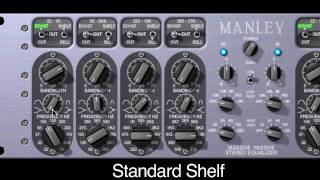
Manley Massive Passive EQ Powered Plug-in Demo for UAD-2
Universal Audio
Manley Massive Passive EQ Variable Mu Demo by Mick Guzauski - Sweetwater Sound

Sweetwater
Manley Massive Passive Sound Demo

Doug Jenkins
Plugin VS Hardware Manley Massive Passive

Thomas van Opstal
A-Z Of UAD - M Is For Manley

Production Expert
![Video thumbnail for How Brian Moncarz Uses The Manley Massive Passive As His 2 Bus EQ [Excerpt] by Puremix](https://img.youtube.com/vi/RCseoEsMP9A/mqdefault.jpg)
How Brian Moncarz Uses The Manley Massive Passive As His 2 Bus EQ [Excerpt]

Puremix
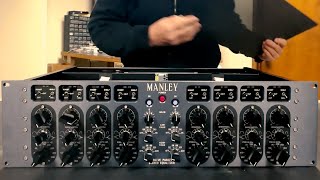
Let's Look Inside a Manley Massive Passive!

manleylabs
The History of the Manley Massive Passive
manleylabs
Manley - Massive Passive - KMR Demo Room

KMR Audio
Manley Massive Passive Overview - Manley Massive Passive Stereo Equalizer

American Musical Supply
Reviews
PROS
-
More sensitive to adjustments than its plugin version
-
Provides a wide, warm sound without noticeable coloration
-
Enhances dynamics and bass response effectively
-
Transparent, clean output with minimal coloration
-
Exceptional construction and precise control settings
-
Offers extensive adjustment options, suitable for various genres
-
Can significantly improve mix and mastering quality
-
Analog warmth and precision not matched by digital EQs
-
Solid build quality, serviceable design
-
Flexible, useful across tracking, mixing, and mastering stages
CONS
-
Significantly more expensive than other options
-
A VU meter for visual feedback would be beneficial
-
Requires a good warm-up for optimal performance
-
Some may find it too clean or transparent for certain applications
Owner Insights
We analyzed real musician discussions from forums and Reddit to find what players love, question, and tweak about Manley Massive Passive Stereo Tube EQ.
Features and functionality
Use cases and applications
-
The 4.7 kHz band is ideal for reducing harshness in guitars, drums, and synths, providing a smoother sound in pop-rock genres.
Source -
The 18 kHz low-pass filter can be used to enhance high frequencies, mimicking an "air band" effect while freeing up other EQ bands for different adjustments.
Source -
Employing different high-pass filter settings on each channel of the mix bus can increase stereo width and depth after tubes warm up, despite potential phase concerns.
Source -
Owners often use the UAD Massive Passive EQ for mastering or on the mix bus to perform cuts and boosts before transitioning to a more precise EQ like the FabFilter Pro-Q3.
Source
Comparisons
-
The Massive Passive is noted for its beautiful top end but can be "tubby" in the low frequencies; alternatives like the Curve Bender or API 5500 are preferred for mix bus clarity.
Source -
The Pulsar Massive is praised for its close emulation of the hardware Manley Massive Passive, with users suggesting turning off the curves display for a more authentic experience.
Source -
The AMEK EQ 200 is chosen less frequently than the Curve Bender and Massive Passive due to its display issues, despite its sound quality being appreciated for specific tasks.
Source -
The Pulsar Massive plugin is described as "pretty close" to the hardware version, implying a high level of fidelity in its emulation quality.
Source
User experience
-
Some users prefer the unbalanced outputs over the transformer outputs for a cleaner sound experience.
Source
Critic Reviews
5.0 out of 5
Based on 5 Reviews and 32 Ratings
A Rock Box That Loves To Dance
It's not surprising that in this day and age of digital daw's and fancy gui's the need for a piece of kit with character is mandatory. The MP is such a box where if you put anything through it's circuit without even twisting the eq it already sounds good. I used it on vintage drummachines like the 909 and 606. Even a Linndrum that I had on loan. Of course it brings more to the table and gives you loads of oopf, transients and smoothness, but what would you expect from a company where the head honcho (EveAnna Manley) is a bike riding baddass. This eq is the one I'd call if I ever got caught in a bar fight and wanted to make sure I needed to survive it..

165
One of the best EQs on the market.
One of the best EQs on the market. Warm, analog, precise, with lo-cut and hi-cut filters. Solid made. Good servicable. I use it a lot in recordings, like vocal recording, but it´s also main part when I create my and the systematic sounds sample libraries. In the final process it's also then part in the mastering, especially for the buttom and top end. Also everytime when somethings sounding too clean or too digital.


best eq emulation
I think it's one of the most successful of emulations eq uad ....hardware machine is even better but it's really a very good emulation

249
Artist usage
Add artist

Manley Massive Passive Stereo Tube EQ is one of the new items in Hardwell's new studio, as shown in this Facebook post.


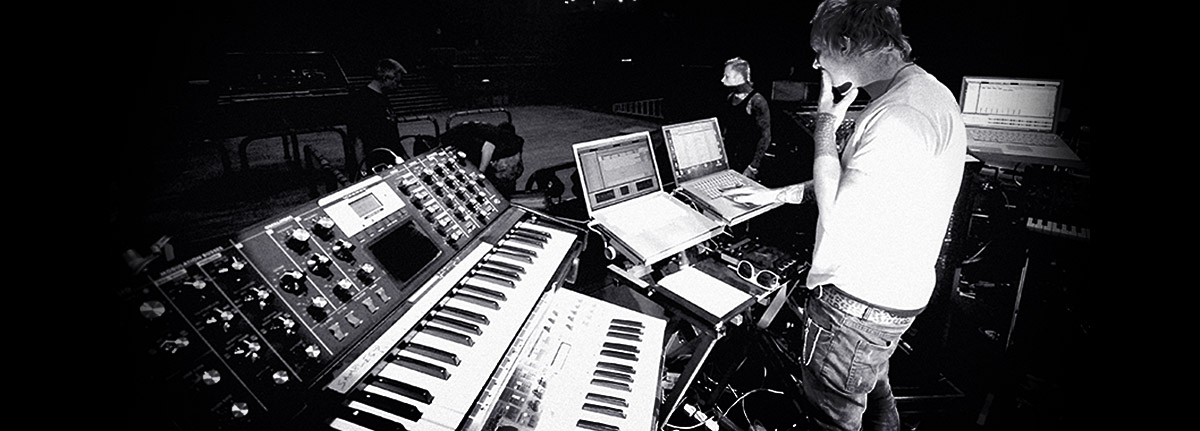
Seen in the picture of his outboard gear from the May 2018 Sound on Sound interview.


According to St Vincent's official Reverb shop, this was among one of the items that was sold in the shop.

.jpg)
"Mastering a new remix with Christopher Willits and Ryan at Overlap.org Studios in Oakland today. First time doing 16 channel analog summing (Neve 8816 + Manley Massive Passive), mix is sounding really wide, amazing the difference it makes."
-Scott Hansen (@iso50)


In this video at 27:51 he use manley massive.


Firebeatz list the Manley Massive Passive EQ in the list of their must-have UAD plugins.


Like, I bought the Manley Massive Passive, and it was beyond my skill set. The set frequencies were such that I couldn't figure it out. I just wanted one that said low, middle and treble, and maybe a sweepable mid.
.jpg?v=1784921365)
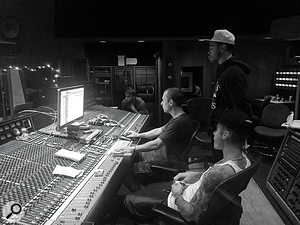
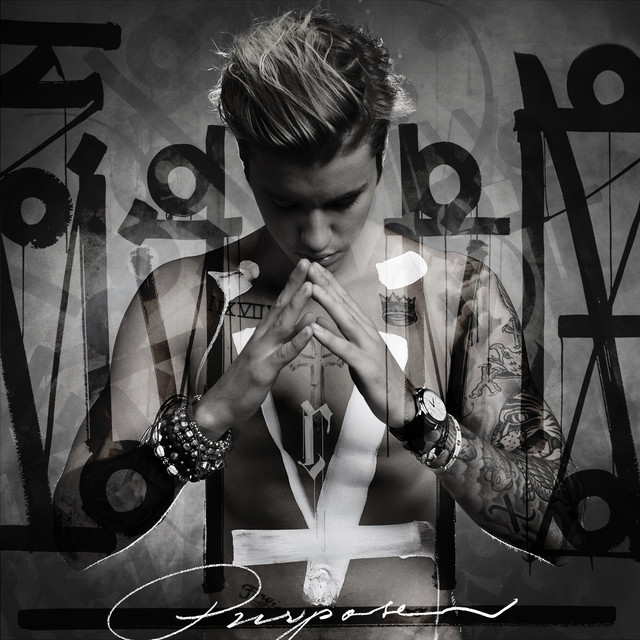
Used on Purpose, as stated by mix engineers Josh Gudwin and Andrew Wuepper in this May 2016 Sound on Sound interview about the mixing of the title track and others.
Gudwin picks out a few other interesting tracks, beginning with a vocal track named ‘vcls’. “That track contains a vocal sample that Blood made of Justin’s vocal. I’m just touching that with the LFO Tool for a bit of pumping, I take out some high frequencies with the Pro-Q 2, and then use the SoundToys Microshift for a slight pitch-shift/chorusing effect. ‘Sry1V’ below that is the vinyl sound in the track. ‘$JBU’ is the main lead vocal bus, on which I have the UAD 1176, Waves De-Esser, Manley Massive Passive, Metric Halo Channel Strip. The sends are to the generic aux tracks at the bottom of the sesion: verb, ping-pong delay, Dimension D. Below the lead vocal bus is the print track of a Bricasti outboard.”
Wuepper: “There are two tracks called ‘Bric’ around the main vocal bus; the one above is the print from the Bricasti effect that was used on the percussion, and the one below is the print of the Bricasti reverb on the vocal. Next are Josh’s vocal delays. Putting delays on audio snippets [ie. copying short vocal clips to new tracks and applying delays as inserts, rather than automating a send from the main vocal track] is a pretty interesting way of doing things. I’ve not seen anyone else do this, but it makes it easier for Josh to manipulate these delays and to go deeper into the effect. He can really fine tune the delay times and decay lengths and so on. Sometimes the feedback you get with plug-ins can act a little weird, and this approach allows him to have more control.”
Gudwin: “The five green tracks are all vocal throws and delays. I don’t like to automate delay throws via aux tracks. The top green track is the master track for the delays, ‘JB Throw All’, and it has a compressor and an SPL Vitalizer. The ‘1147’ delay track has the UAD Cooper Time Cube, with a quick ping-pong-y flutter delay that I use to widen, and the track called ‘1167’ has a basic eighth-note delay from the Echo Boy. The ‘A’ insert is Auto-Tune, but it’s not working on these tracks. When needed, our vocal tuning is normally done by Chris ‘Tek’ O’Ryan in Melodyne. I sometimes do it myself, if I have the time do it, in the stand-alone version.
“The blue vocal tracks below the vocal delay tracks are the main lead vocal comp tracks, and on many of them I have the UAD SSL Channel Strip, UAD LA-2A, and the Waves C6 multiband compressor, and sometimes also the Pro-Q 2 EQ. The ‘DLYP’ track has a delay pan effect, with the SoundToys Primal Tap delay and Panman auto-panner, SSL Channel Strip and the P&M Vinylizer. ‘White’ and ‘Master’ are printed reverbs recorded in two rooms at Henson. They are my main plug-in vocal reverbs, and the green tracks below are pitched with the Elastic Audio X-Form [in Pro Tools] and effected with the Waves H-Compressor for a pumping effect. I pitched the reverbs up an octave or two, and I mixed them in very low. The ‘PCM’ and ‘PC1’ tracks are prints from ping-pong delays from the Lexicon PCM42 outboard.
“Justin’s backing vocal tracks all go to the group track called ‘JBG1’, on which I have a Waves De-esser, an SSL Channel and the C6 multiband compressor, plus there are a number of delays and reverbs via the sends. Trevon’s backing vocals all go to ‘JBTR’, which has similar effects. I wanted to fill the song up a bit more, and sometimes it’s not the most enjoyable process for an artist to sing all these background parts. Plus a different vocalist will add a different texture to the song, as long as it complements the lead vocal and the record. As I mentioned, Julia added her vocals during the final mix in New York, and her group track also has the De-esser, SSl Channel and C6. Right at the bottom are some effects tracks, with the Dimension D and group delay throws, and so on.
(...) 'Love Yourself'
(...) Next are Justin’s vocals, with I overdubbed in New York. Almost all the regular vocal tracks have the UAD SSL Channel, LA2 and the Waves C6 multiband compressor. These three plug-ins work great on his vocals, so I tend to stick with them. Each of the vocal tracks has slightly different settings from them. They all go to Justin’s lead vocal bus above them, which has the FabFilter Pro-DS de-esser and the Pro-2 EQ. Justin’s lead vocals also go through the Bricasti, and the effect is printed. My own four backing vocals went through a vocal bus on which I had the SSL Channel, and a compressor, but they didn’t do much, nor did the sends. These vocals are very much in the background, I just wanted to add some texture really quickly. Finally, at the top of the session everything went through a Master track, on which I had the UAD SSL channel, mainly for compression set to mid-attack and auto-release — without drums you don’t need the slow attack and quick release — a Massey EQ, boosting 100Hz and 16kHz, a FabFilter Pro-L for level, and the Sonnox Oxford Inflator to add some sheen.”
'What Do You Mean?'
(...) “There were a few more complicated vocal effects, like the ‘JG FX’ track, on which I used the Vitalizer doing some spatial expanding, a UAD Fatso to thicken it up, and I then cut some low mids with an EQ, and used a de-esser. This effect track gave more depth to the vocal and made him sound more like an angel! Underneath that are two ‘Radio’ tracks [which sound like they could have come straight from Peter Gabriel’s ’80s Fairlight experiments]. I used Auto-Tune to pitch the vocals up, and then put on a SoundToys AlterBoy, which changed the formant, and then I’m filtering 350Hz and below.
“Below the ‘radio’ tracks are all my vocal delay tracks, in green as usual, with the bus for all delay throws at the top. One delay track, ‘Splaater’, is a flutter delay with Auto-Tune and the Cooper Time Cube, and the other two have the Waves H-Delay and SoundToys Echo Boy. They’re both quarter-note delays, but with different feels. Below the delay tracks are some ad lib tracks, and all the actual lead vocals, pulled out over several tracks. Most of them have my regular trio of UAD SSL Channel, LA2 and Waves C6 plug-ins, and all vocals are sent to the ‘JB Buss’, on which I have the FabFilter DS de-esser, a Manley EQ doing light cuts at 330Hz, 560Hz and 3kHz, and then a whole bunch of sends to my regular aux tracks at the bottom: a hall reverb, a plate reverb, a light quarter-inch delay, a light ping-pong delay and a Dimension D.
“Further down are four Justin backing vocal tracks, which go to a bus above them, ‘JBG1’, on which I have the SSL Channel, boosting highs and cutting lows and doing some heavy compression, a UAD 33609 compressor, and then the Waves Enigma [phaser/flanger] on a Mutron setting, adding some sweeping sounds. The sends are once again hall and plate reverbs, a quarter-note and a ping-pong delay and a UAD Roland Dimension D. Once Justin had decided to go with my rough mix, I spent another half hour on it, doing some EQ adjustments, and that was it.”


At 2:42 You can see his Manley Massive Passive.



.jpg)
Album Usage
The Manley Massive Passive Stereo Tube EQ has been featured on the following albums:


Genre Usage
Based on how artists on Equipboard use this gear, it is most commonly found in the following genres.
Used With
Based on how musicians on Equipboard use Manley Massive Passive Stereo Tube EQ, it is most commonly used with the following gear.


-s.webp?v=1784818713)
-s.webp?v=1784977309)


More Manley Effects Processors

$4,777.00 - $5,499.00
in Effects Processors Rank


$2,949.00 - $6,599.00
in Effects Processors Rank


$2,949.00 - $6,599.00
in Effects Processors Rank


$2,799.00 - $3,299.00


$6,990.00 - $8,399.00


$6,990.00 - $8,399.00


$2,999.00 - $4,999.00


$5,699.00 - $6,599.00


$1,500.00
in Effects Processors Rank


-m.webp?v=1784905111)
$600.00
in Effects Processors Rank


$189.00
in Effects Processors Rank


$1,799.00
in Effects Processors Rank


$1,549.00
in Effects Processors Rank


$1,999.00
in Effects Processors Rank


$749.99 - $833.00
in Effects Processors Rank


$149.00
in Effects Processors Rank


$1,450.00
in Effects Processors Rank


$3,799.00 - $4,985.00
in Effects Processors Rank


-m.webp?v=1784977309)
$40.00 - $2,999.00
in Effects Processors Rank

$1,153.00 - $2,635.00
in Effects Processors Rank


.jpg?v=1784917540)

$3,573.14 - $4,750.00
in Effects Processors Rank


$893.58 - $1,799.95
in Effects Processors Rank


$180.00
in Effects Processors Rank


$850.00
in Effects Processors Rank


$69.95
in Effects Processors Rank


$199.99 - $285.00
in Effects Processors Rank


Accessories & Related Items


-s.webp?v=1784977335)



Community setups


Similar


Gear Guides







Most Popular Effects Processors
Most Popular Brands
-
Added to Equipboard on by
 miggityfriggity
GearIQ 5535
-


