
By Gear Experts
Table of Contents

Equipboard
Equipboard is the world's largest community of artists and their gear. Read our review process.
We are reader-supported. When you buy through links on our site, we may earn an affiliate commission. Learn more.
Our Picks

Best for Professional Room Correction: The IK Multimedia iLoud MTM pairs sophisticated DSP technology with surprisingly powerful acoustic output, making it a leading choice for producers who need studio-grade accuracy without studio-grade space or treatment.
Read more


PreSonus Eris E4.5 BT-4.5" Near Field Studio Monitors with Bluetooth
Best Budget Option: The PreSonus Eris E4.5 delivers an impressive feature set and reliable monitoring performance at a fraction of the cost of high-end competitors, making professional sound accessible to producers just starting their journey.
Read more
Best for Desktop Integration: The JBL One Series 104 brings professional JBL engineering into an ultra-compact form factor that fits easily on a desk while delivering the neutral sound signature associated with the company’s studio monitors.
Read more
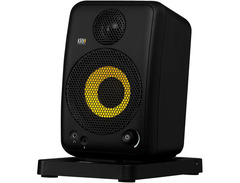
KRK GOAUX4 4-inch Powered Portable Studio Monitor Pair
Best for Mobile Production: The KRK GoAux 4 is a portable monitoring system designed for creators who need consistent reference sound while working in different locations. It includes automatic room correction, Bluetooth connectivity, and a carrying solution tailored for mobile producers.
Read more
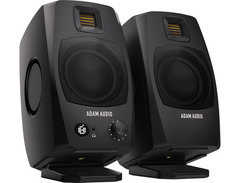
ADAM Audio D3V 3.5-inch Powered Studio Monitor Pair
Best for High-Frequency Detail: The Adam Audio D3V brings the company’s long-established Accelerated Ribbon Tweeter technology to a compact desktop format, offering exceptional clarity in the high-frequency range where electronic music often relies on precision and sparkle.
Read moreYour 808s hit perfectly in your headphones. Then you play the mix through your desktop speakers, and suddenly there's a bass boom that could wake up the entire neighborhood. You try checking on a friend's system, and the low end sounds completely different again. Welcome to the nightmare of mixing electronic music in an untreated bedroom with speakers. The problem isn't your ears or your production skills. It's that your room is lying to you about what's really happening in the low end.
The good news? You don't need to spend thousands on acoustic treatment or move to a bigger space. The solution is smarter monitoring. Modern compact studio monitors no longer rely solely on cabinet tuning or driver size - many now incorporate DSP voicing controls, boundary compensation, and precise driver engineering designed specifically for nearfield work in tight spaces.
This guide focuses exclusively on monitors designed for the realities of small room production. We're talking about speakers with footprints smaller than a hardback book, equipped with the acoustic intelligence to deliver honest sound even when placed against a wall in a 10×10 bedroom.
Quick Picks: Our Top Ultra-Compact Monitors
| Monitor Model | Footprint (H × W × D) | Max SPL | Key Feature |
|---|---|---|---|
| IK Multimedia iLoud MTM | 10.4" × 6.3" × 5.1" | 103 dB | ARC Room Calibration with Mic |
| PreSonus Eris E4.5 | 9.5" × 6.4" × 7.0" | 100 dB | Acoustic Space Switch |
| JBL One Series 104 | 9.7" × 6.0" × 4.9" | 104 dB (peak) | Coaxial Driver Design |
| KRK GoAux 4 | 8.07" × 5.35" × 5.51" | 102 dB (peak) | Auto ARC + Travel Case |
| Adam Audio D3V | 7.9" × 4.5" × 5.9" | 97 dB (peak) | D-ART Ribbon Tweeter |
The DSP Advantage for Small Room Producers
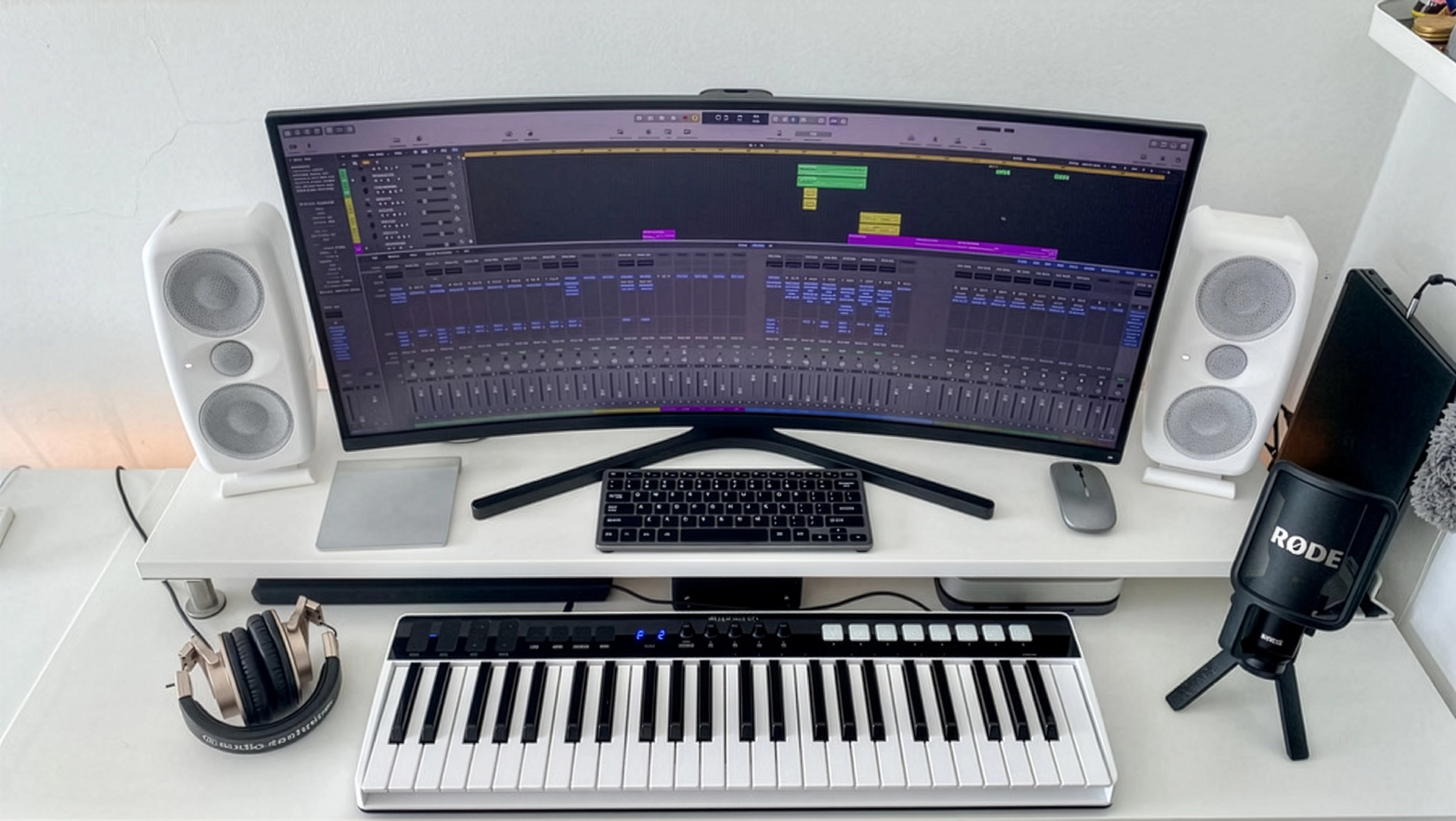
Before we get into specific models, we need to address why traditional monitor advice fails in bedroom studios. When you place any speaker in a small room, low frequencies interact with the walls to create standing waves. These are specific frequencies that either get massively boosted or completely cancelled out depending on where you're sitting. A standard 4-inch monitor playing a 60 Hz tone might measure 10 dB louder in one corner than another, just two feet away.
Older solutions required hiring an acoustician, buying thousands of dollars in bass traps, or learning complex room correction software. Modern monitors with built-in DSP skip all of that. They include a measurement microphone that analyzes your exact listening position, identifies which frequencies are being artificially boosted or cut by your room, and applies corrective EQ in real time. The IK Multimedia iLoud MTM pioneered this approach in the compact monitor category, and it remains the gold standard for producers who need professional accuracy without professional room treatment.
Why Bigger Isn't Better in Tight Spaces
Here's the counterintuitive truth about small rooms. A 5-inch woofer actually causes more problems than a well-designed 3.5-inch or 4-inch driver when you're mixing in a 10×10 bedroom. Larger woofers move more air and generate stronger low-frequency energy, which sounds impressive until you realize that energy is exciting every resonant mode in your untreated space. You're not hearing more accurate bass. You're hearing your room's bass problems amplified.
Compact monitors with smaller woofers produce controlled low-frequency output that stays within the capabilities of a small space. Combined with DSP correction and features like the Acoustic Space switches found on models like the PreSonus Eris E4.5, these speakers give you a more honest representation of your mix than oversized monitors ever could in the same environment.
The Nearfield Triangle in Minimal Space
Proper monitor placement matters even more when space is limited. The ideal setup forms an equilateral triangle between your two monitors and your listening position. If your speakers sit 1 meter apart, your head should be 1 meter from each speaker. This geometry ensures you're hearing direct sound from the drivers before reflected sound bounces off your walls.
In extremely tight spaces, you can shrink this triangle down considerably. Professional engineers often work with monitors placed just 3 to 4 feet apart when traveling or working in hotel rooms. Top producers and engineers rely on ultra-compact monitors like the iLoud MTM for critical mixing while traveling or referencing outside of their main studio. This represents the professional approach to portable sound, proving that small monitors can deliver touring-grade accuracy when positioned correctly.
The Best Ultra-Compact Studio Monitors for Small Rooms
The following monitors represent the best options for electronic music producers working in small spaces. Each has been selected for specific strengths, whether that's room correction technology, portability, budget value, or high-frequency detail. They're purpose-built monitoring tools designed to give you honest sound in challenging acoustic environments where larger monitors would create more problems than they solve.
IK Multimedia iLoud MTM
5.0 (4)
Studio-Grade Accuracy in Your Bedroom









Average Price: $293
Budget/Beginner
$300
$801+
Budget
Standard
High-end
- Compact size, great for small spaces
- Integrated ARC for easy room calibration
- Impressive bass response down to 40Hz in compact design
- Clear and balanced sound at lower volumes
- See 6 more
- Limited maximum volume before distortion or "chuffing" in bass
- Quality control issues, like coil whine in some units
- Automatic calibration may overcompensate, affecting some frequencies
- Some users report inadequate bass for specific music genres at higher volumes
- See 2 more
The Intelligence Behind the Sound
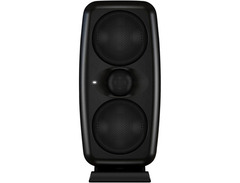
The iLoud MTM doesn’t just include room correction as a bonus feature. The entire speaker design revolves around delivering accurate sound in challenging acoustic environments. Its MTM configuration places a 1-inch back-chambered silk-dome tweeter between two 3.5-inch composite woofers, creating a controlled vertical dispersion pattern that reduces reflections from the desk and ceiling. This design is especially useful in desktop setups, which describe most bedroom studios.
What sets this monitor apart is its ARC (Auto Room Correction) system with the included measurement microphone. You place the mic at your listening position, run a brief calibration sweep, and the onboard DSP analyzes the acoustic response of your room. It then applies corrective EQ to address bass buildup from wall proximity, dips caused by room modes, and phase issues that affect stereo imaging. The correction is processed internally in real time, so it works with any audio source you connect.
Power That Defies Physics
Despite measuring just over 10 inches tall, each iLoud MTM houses a 100W Class-D bi-amplifier delivering 70W to the woofers and 30W to the tweeter. This produces a maximum SPL of 103 dB at 1 meter, matching or exceeding many 5-inch monitors in output. The frequency response extends from 40 Hz to 24 kHz, offering genuine low-end reach for a monitor of this size.
The excellent bass performance comes from a precision-tuned digital crossover and DSP-managed driver alignment. This ensures phase-coherent summing between drivers and allows the dual 3.5-inch woofers to produce controlled, accurate low end that avoids the muddiness common in small speakers.
Professional Credibility
Engineers who work with major artists - including well-known electronic and pop producers - regularly reference the iLoud MTM as a trusted mobile and secondary monitoring system. For mixes that need to translate across a wide range of playback devices, having a consistent and detailed nearfield reference is essential. The MTM's portability and DSP accuracy make it a strong candidate for this role.
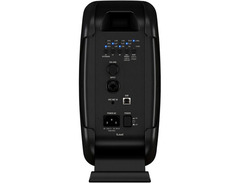
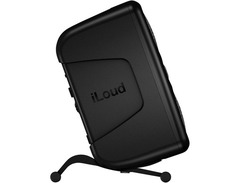
The rear panel offers additional tuning options beyond automatic calibration. You can adjust LF extension for speaker placement, apply LF and HF tilt to suit your room and preferences, and switch between -10 dBV and +4 dBu input sensitivity depending on your interface or mixer. The included tilting isolation base allows up to 20° of upward tilt, ensuring the tweeter aligns with your ears even on lower desks.
See how artists use this



PreSonus Eris E4.5 BT-4.5" Near Field Studio Monitors with Bluetooth
Exceptional Value Meets Real-World Usability

Average Price: $165
Budget/Beginner
$300
$801+
Budget
Standard
High-end
- Compact and easily portable for mobile production sessions
- Surprisingly good bass for their size, suitable for small spaces
- Clear, crisp highs with impressive midrange clarity
- Convenient front controls, including volume and headphone output
- See 5 more
- Cables included are too short for many setups
- Some users report rhythmic popping after a few years
- Bluetooth functionality may degrade over time
- Lacks the power for large rooms or parties
- See 1 more
Designed for Desktop Reality
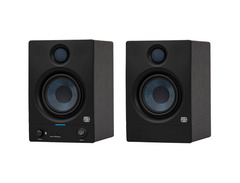
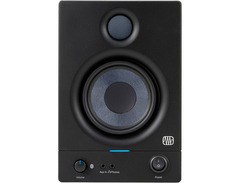
PreSonus built the Eris E4.5 specifically for producers who mix at a desk in untreated rooms. The 4.5-inch woven composite woofer provides controlled low-frequency reproduction suitable for small spaces. Above it, a 1-inch silk dome tweeter handles high frequencies with smooth detail that reduces listening fatigue during long sessions. The rear-firing acoustic port helps extend the bass response, and the cabinet design minimizes resonances that could color the sound.
The frequency response spans 70 Hz to 20 kHz, which covers the fundamental range needed for most music production, though it does not reach into deep sub-bass. The maximum SPL is 100 dB at 1 meter, which is appropriate for nearfield listening without overstressing the drivers. The system uses 25 watts of Class A/B amplification per speaker, providing clean and consistent output across the operating range.
Acoustic Space Control Without a Microphone
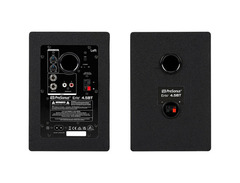
The standout feature for bedroom producers is the rear panel Acoustic Space switch. When monitors sit near walls, low frequencies become exaggerated. The Acoustic Space switch provides flat, -2 dB or -4 dB settings that reduce this buildup without requiring measurement tools. This makes it easier to maintain balanced bass in rooms where ideal placement is not possible.
Additional EQ controls include a high-frequency shelf offering ±6 dB of adjustment centered at 10 kHz and a midrange EQ offering ±6 dB of adjustment centered at 1 kHz. These allow users to compensate for room characteristics or personal listening preferences. A low-frequency cutoff switch provides flat, 80 Hz or 100 Hz settings with a 12 dB per octave slope, which is useful when integrating a subwoofer or reducing low-frequency rumble in difficult rooms.
Producer-Friendly Connectivity
The front panel houses a large volume knob along with a 1/8-inch headphone output and a 1/8-inch auxiliary input. This allows easy headphone referencing and quick playback from a phone or other device. The rear panel includes balanced 1/4-inch TRS inputs and unbalanced RCA inputs, ensuring compatibility with most audio interfaces and consumer gear.
YouTube producers and home studio owners often choose the Eris E4.5 for its balance of price, size and tuning flexibility. The front-facing controls are convenient when the monitors are placed against a wall. The crossover operates at 2.8 kHz, which keeps the transition between the woofer and tweeter smooth and consistent.
JBL 104 4.5" Studio Monitors
4.5 (2)
Sleek Design Meets Studio Heritage



Average Price: $169
Budget/Beginner
$300
$801+
Budget
Standard
High-end
Coaxial Driver Clarity
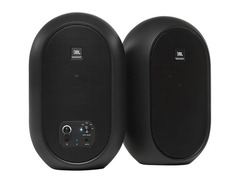
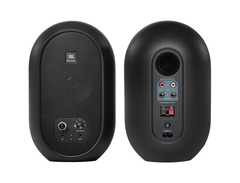
JBL designed the One Series 104 around a 4.5-inch coaxial driver that places a 0.75-inch soft-dome tweeter at the acoustic center of the woofer. This coaxial design behaves as a point source, helping to maintain consistent imaging and phase accuracy at close listening distances. This makes the 104 particularly effective for nearfield setups where the listener sits only a short distance from the speakers.
The integrated 60-watt Class-D amplifier supplies 30 watts to each speaker. Peak SPL reaches 104 dB, with typical continuous output around 92 dB at one meter. The frequency range is rated from 60 Hz to 20 kHz at the wider tolerance and approximately 88 Hz to 20 kHz at the tighter tolerance. The contoured low-frequency port supports bass extension without introducing excessive resonance, allowing the speaker to maintain the controlled sound JBL monitors are known for.
The Grotbox Reference Check
Many engineers rely on a compact, honest-sounding speaker to check how a mix will translate on everyday playback systems. The JBL 104 is well suited to this role because of its balanced tonality and focused midrange presentation. It reveals issues that might be concealed on larger or more flattering monitors, helping producers make decisions that hold up on laptops, earbuds, or small Bluetooth speakers.
JBL’s studio heritage is long established, and the One Series 104 reflects that lineage in a desktop-ready format. Its frequency response and phase behavior follow the same design principles found in JBL’s larger monitors. A first-order crossover at approximately 1725 Hz ensures a smooth handoff between woofer and tweeter with minimal phase shift and simplicity that suits a coaxial layout.
Connectivity and Placement
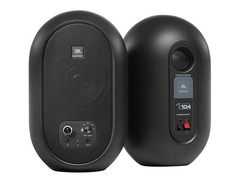
The rear panel includes dual 1/4-inch inputs, dual RCA inputs, and a 1/8-inch input, making the 104 compatible with interfaces, mixers, and consumer devices alike. The compact footprint, measuring 9.7 inches tall, 6 inches wide, and 4.9 inches deep, allows the speakers to fit comfortably on small desks or laptop-based production setups.
The cabinet and driver layout are optimized for desktop placement, reducing adverse interaction with nearby surfaces. Isolation pads still offer benefits, but the design minimizes coloration that can occur when speakers sit close to a desk. A front-panel volume control and a headphone output with automatic speaker muting add practical convenience for everyday production work.



KRK GOAUX4 4-inch Powered Portable Studio Monitor Pair
Travel-Ready Professional Monitoring

- Compact and portable, ideal for travel and small spaces
- High-quality, clear sound with impressive low-end handling
- Bluetooth connectivity for versatile use with different devices
- Includes Automatic Room Correction mic for optimized sound calibration
- See 5 more
- Automatic standby mode is bothersome with no option to disable
- Takes 10-15 seconds to wake from standby via USB
- No included USB Type B cable in the package
- Lack of software to control or adjust speaker settings
- See 2 more
Portable Without Compromise
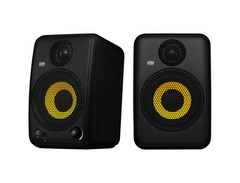
KRK designed the GoAux 4 for creators who need a monitoring setup that can travel easily without giving up the clarity expected from studio speakers. The system ships with adjustable desktop stands and a protective carry bag, making it simple to set up in hotel rooms, backstage spaces, or shared studios. Despite its compact size, it uses 4-inch woven glass-aramid woofers and 1-inch soft-dome tweeters, delivering a surprisingly full and controlled sound.
The GoAux 4 offers a usable frequency range extending from 65 Hz to 20 kHz (-3 dB), with low-frequency extension reaching to approximately 55 Hz (-10 dB). This provides enough depth for most electronic and beat-oriented work while keeping bass tight and manageable in small rooms. A 100W biamplified Class-D system powers the pair, with one speaker housing all amplification and the second connected via a speaker cable. The system is capable of high 90s dB SPL output in nearfield conditions, more than enough for editing, mixing, and referencing in small or temporary spaces.
Auto ARC Room Adaptation
A standout feature of the GoAux 4 is its Auto ARC room correction, which uses the included measurement microphone to tailor the monitors’ response to the acoustics of your current environment. This is especially practical for mobile producers who never know what kind of space they will be working in. Running the calibration routine provides a more balanced, reliable monitoring baseline, even in acoustically unpredictable rooms.
Manual tuning controls are also available. The rear-panel LF and HF adjustments allow you to refine the tonal balance when needed. The 2.5 kHz crossover provides smooth integration between the woofer and tweeter, keeping the sound cohesive whether you are working at low levels or pushing the system a bit harder.
Connectivity for Modern Workflows
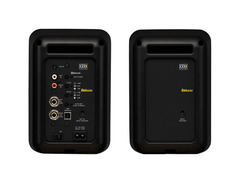
The GoAux 4 supports a broad range of connection types, making it easy to integrate into almost any setup. Alongside traditional wired options such as USB audio, 1/4-inch TRS, RCA, and 3.5mm aux, the system includes Bluetooth streaming for instant referencing from phones, tablets, or laptops without swapping cables.
Producers, DJs, and performers who regularly travel appreciate how quickly the system can be positioned and dialed in. The included stands let you achieve proper tweeter-height alignment, and the compact design keeps the monitoring footprint small. The wide horizontal dispersion provides a forgiving listening zone, which is particularly helpful in makeshift workspaces where ideal placement is not always possible.
See how artists use this


ADAM Audio D3V 3.5-inch Powered Studio Monitor Pair
Ribbon Tweeter Refinement

Average Price: $370
Standard/Professional
$300
$801+
Budget
Standard
High-end
- Exceptional bass depth for a compact size, rivaling larger monitors
- Crisp, clear highs without listener fatigue
- USB-C plug-and-play makes setup effortless
- Multi-functional front button simplifies control
- See 6 more
- Sensitive volume knob can unintentionally alter volume
- Automatic shut-off requires repeated knob presses to reactivate
- Slight noise when idle, potentially distracting
- Limited bit depth through USB-C input
- See 2 more
The D-ART Advantage
At the heart of the D3V is the 1.5-inch D-ART (Desktop Accelerated Ribbon Tweeter), a design derived from decades of Adam Audio’s ribbon technology research. The pleated diaphragm has an effective diameter of 1.9 inches and weighs just 0.085 grams, allowing it to react with exceptional speed. Its 5 to 1 velocity transform ratio increases air movement efficiency, contributing to the tweeter’s open, highly detailed sound.
The diaphragm area measures 2.8 square inches, and each unit is hand-folded before being paired with DSP-managed amplification. The monitor’s frequency response spans 48 Hz to 22.6 kHz at the -3 dB points, reaching 45 Hz to 23.2 kHz at -6 dB. The wide 120-degree horizontal and vertical dispersion creates a generous sweet spot, which is useful in small studios or desktop setups where placement flexibility matters.
Dual Radiator Bass Extension
Low end performance is strengthened by a compact but effective system: a 3.5-inch aluminum woofer supported by two 3.5-inch passive radiators on the cabinet’s sides. The combination extends bass down to 45 Hz at -6 dB. While the cabinet remains small, the radiators allow the woofer to deliver tighter and deeper bass than expected for its size.
The woofer is powered by 70 W RMS (80 W peak) and the tweeter by 30 W RMS (40 W peak). Total peak amplification reaches 240 W for the pair. Maximum peak SPL per speaker measures 97 dB at one meter, with 94 dB RMS averaged across the midrange.
DSP-Managed Precision
The D3V uses a DSP-controlled crossover at 4.0 kHz to maintain smooth transitions between the woofer and ribbon tweeter. This digital approach improves phase consistency and clarity. Internal processing runs at a 48 kHz sample rate with 24-bit conversion when using the analog inputs, ensuring clean reproduction across the frequency spectrum.
Modern Connectivity Options
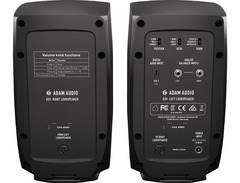
Connectivity includes two balanced 1/4-inch TRS inputs with 47 kOhm impedance and a maximum input level of +9 dBu. A USB-C port allows the speakers to function as a simple class-compliant USB audio interface at 16-bit depth, suitable for minimal setups. The front panel’s multi-function volume knob also controls a 3.5 mm headphone output for quick reference checks.
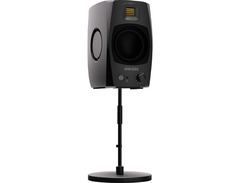
Rear-panel tuning controls allow adjustments for bass reinforcement, desk reflections, and overall treble balance, helping the monitors integrate into small or untreated rooms. The compact enclosure measures 200 mm tall, 115 mm wide, and 150 mm deep, or 240 mm tall with the included stand, making it a practical choice for tight workspaces.
Understanding Small Room Acoustics
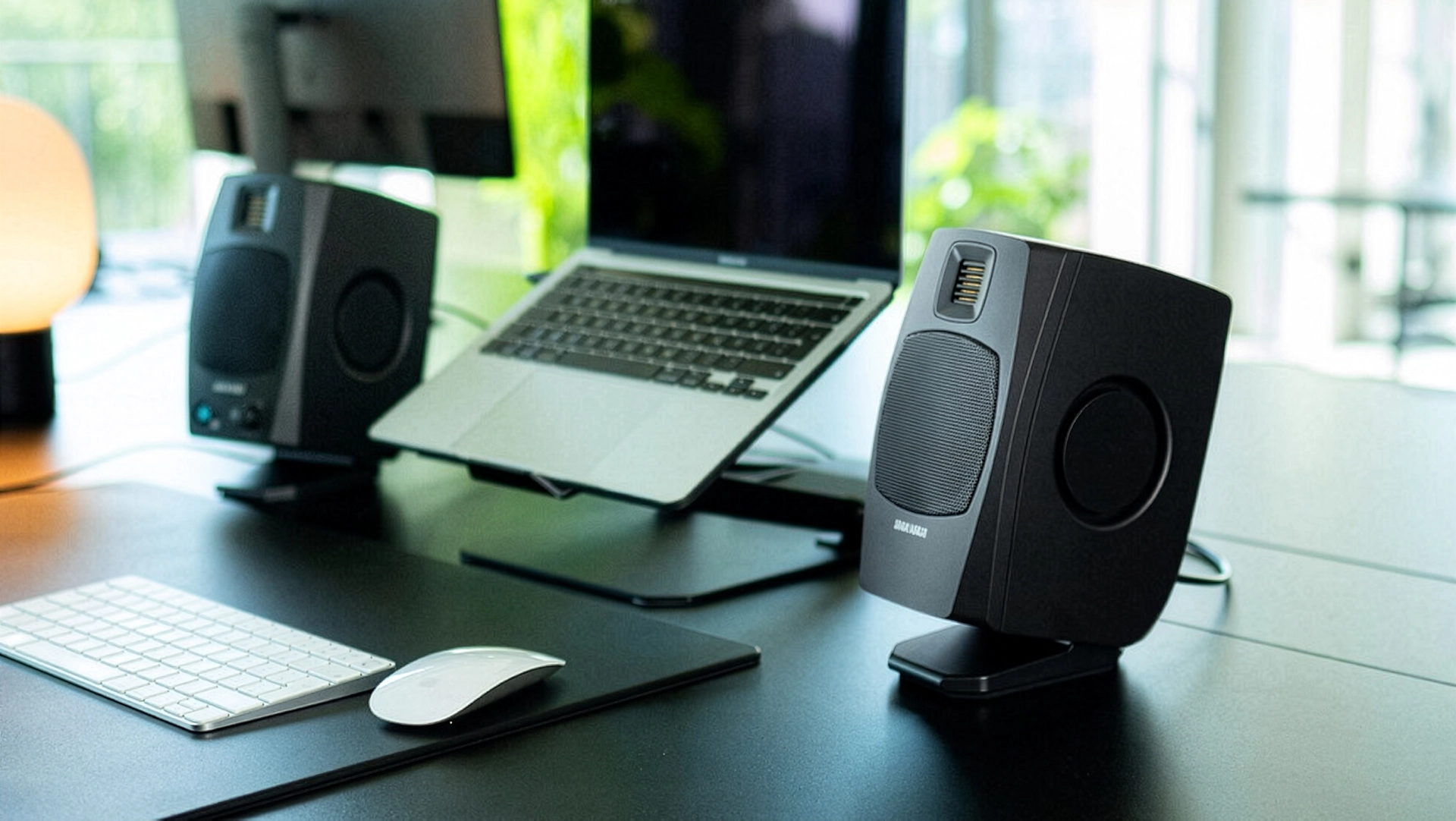
Even the best monitors can't completely overcome poor placement or severe acoustic problems. Understanding a few fundamental concepts about how sound behaves in small spaces will help you get the most from whichever monitors you choose.
The Standing Wave Problem
When low-frequency sound waves reflect between parallel walls, they create patterns of reinforcement and cancellation called standing waves or room modes. At certain frequencies, the reflected wave aligns with the outgoing wave, increasing the perceived volume. At other frequencies, the waves partially or almost completely cancel. In a typical 10×10 bedroom, the first axial room mode occurs around 56–57 Hz, and it can easily produce a boost anywhere from 6 to 12 dB, while higher modes (such as ~113 Hz) may be reduced depending on listening position.
This explains why your kick drum sounds earth-shaking when you mix, then vanishes on your friend's system. You're not hearing the actual level of the kick - you're hearing your room's resonance at that frequency. Monitors with built-in DSP correction like the IK Multimedia iLoud MTM or the KRK GoAux 4 can measure your listening position using their included calibration microphones and apply corrective EQ to flatten the speaker’s response at the mix position. This does not eliminate standing waves in the room, but it reduces how much those room modes distort what you hear while mixing.
Why Treatment Alone Isn't Enough
Traditional acoustic treatment using foam panels and bass traps can help control room reflections and reduce the severity of room modes, but it requires substantial coverage and correct placement to make a meaningful improvement. A few foam squares on the walls won't fix low-frequency problems in a small room. Effective control of bass frequencies typically requires thick broadband absorbers or full-size bass traps covering a significant portion of wall and ceiling surfaces - often more than most bedroom producers can realistically install.
DSP correction offers a faster and more accessible way to address monitoring accuracy at the listening position. Its goal isn’t to make the room sound great for general listening; it’s to make your monitoring position provide reliable, neutral information about your mix.
Isolation Pads Are Mandatory
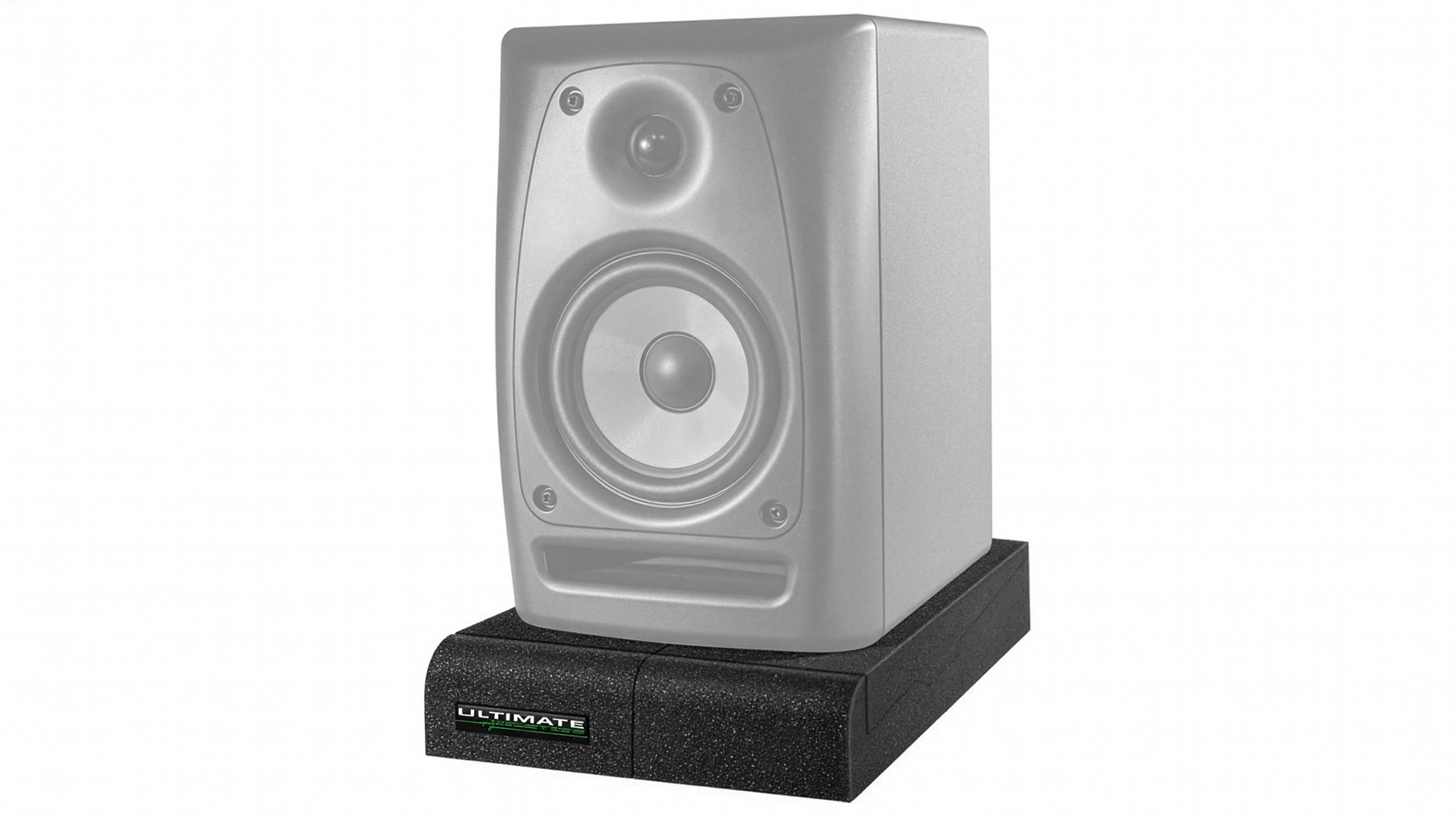
The single most important acoustic investment for desktop monitors isn't wall treatment - it’s isolation pads or stands that decouple your monitors from your desk surface. When monitors sit directly on a desk, cabinet vibrations transmit into the desk, turning it into a secondary vibrating surface that colors the sound.
This desk resonance affects bass and low-midrange frequencies in particular, creating muddiness and making accurate mixing difficult. Isolation pads use dense foam or rubber to absorb vibrations before they reach the desk, resulting in tighter bass and clearer mids.
Budget Acoustic Survival Strategies
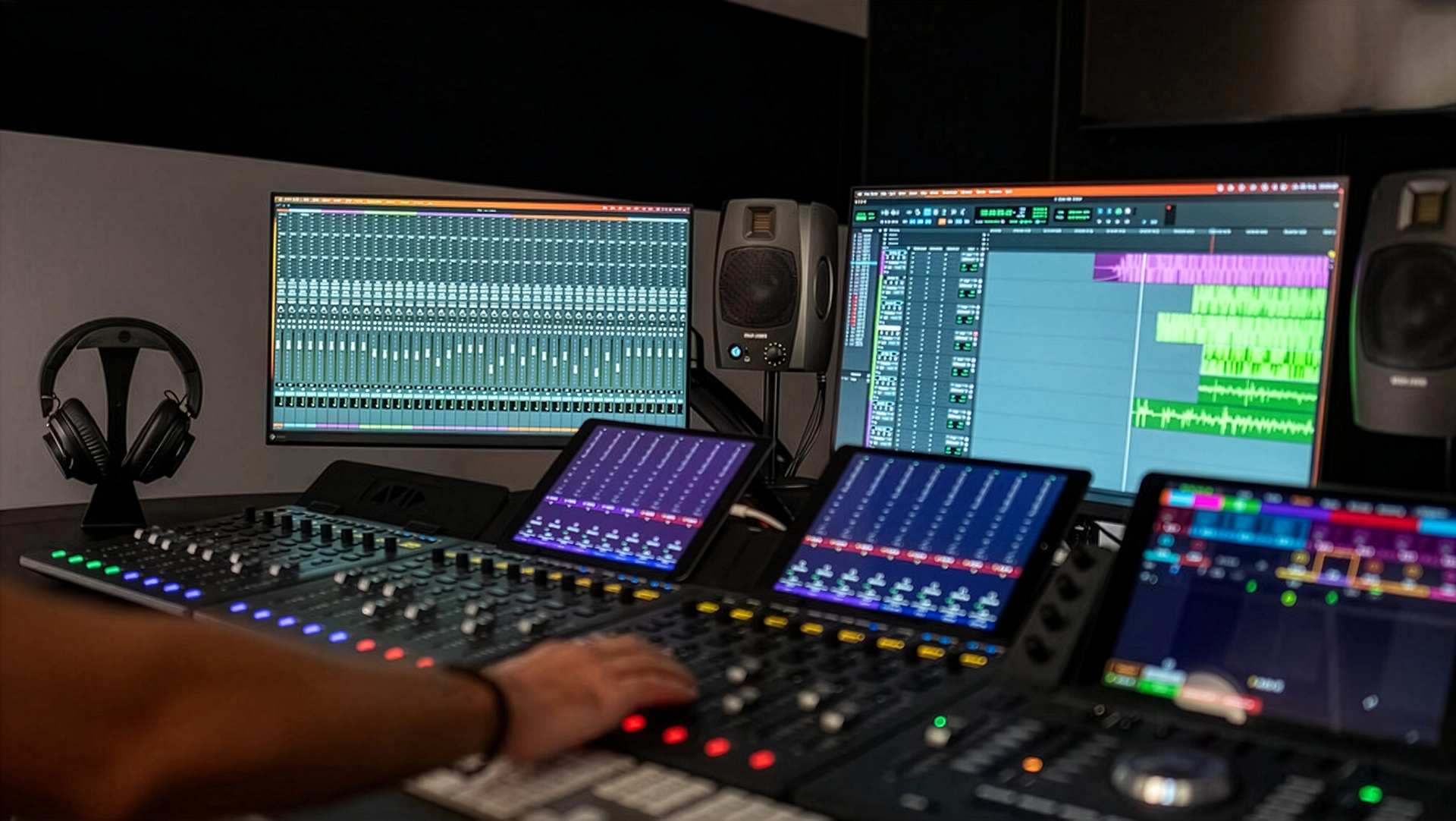
You don't need thousands of dollars in acoustic treatment to achieve usable monitoring in a small room. Strategic use of a few affordable solutions will get you most of the way there and allow your monitors to perform closer to their intended accuracy.
Finding and Treating Reflection Points
After standing waves, the next biggest issue is early reflections - sound bouncing off nearby walls and reaching your ears milliseconds after the direct sound. These reflections blur stereo imaging and smear transients, making mix decisions harder.
The mirror trick helps you locate these reflection points. Sit in your listening position while someone moves a mirror along the side walls. When you can see the speaker’s tweeter in the mirror, that spot reflects sound directly to your ears and should be treated. Typically, this results in one point on each side wall and additional points on the ceiling between you and the monitors.
Treating these four to six spots with broadband panels or even thick blankets improves clarity dramatically. Full-wall coverage isn’t necessary for addressing early reflections - hitting the correct points is what matters.
The Headphone Reference for Sub-Bass
Regardless of room correction or treatment, monitoring very low frequencies in a small untreated room is difficult. Standing waves become more extreme at lower frequencies, and most compact monitors roll off below 45–60 Hz.
A reliable approach is to make creative mix decisions on your monitors for mid- and high-frequency content, then check the sub-bass on high-quality headphones. Neutral open-back models like the Sennheiser HD 650, or closed-back options such as the Audio-Technica ATH-M50X, reproduce low frequencies without room interference. This hybrid workflow combines the spatial accuracy of monitors with the extended, room-independent bass response of headphones.
Nearfield Positioning Matters More Than Treatment
Before investing in acoustic treatment, optimize monitor placement. Nearfield setups reduce the ratio of reflected sound to direct sound. The equilateral triangle configuration - where the distance between the monitors equals the distance from each monitor to your head - helps ensure consistent imaging.
Keeping speakers 6 to 12 inches away from walls (when possible) reduces boundary bass buildup. Angle the monitors so they point directly at your ears, and use tilting bases or isolation pads to align the tweeters at ear height.
Finding Your Monitoring Solution
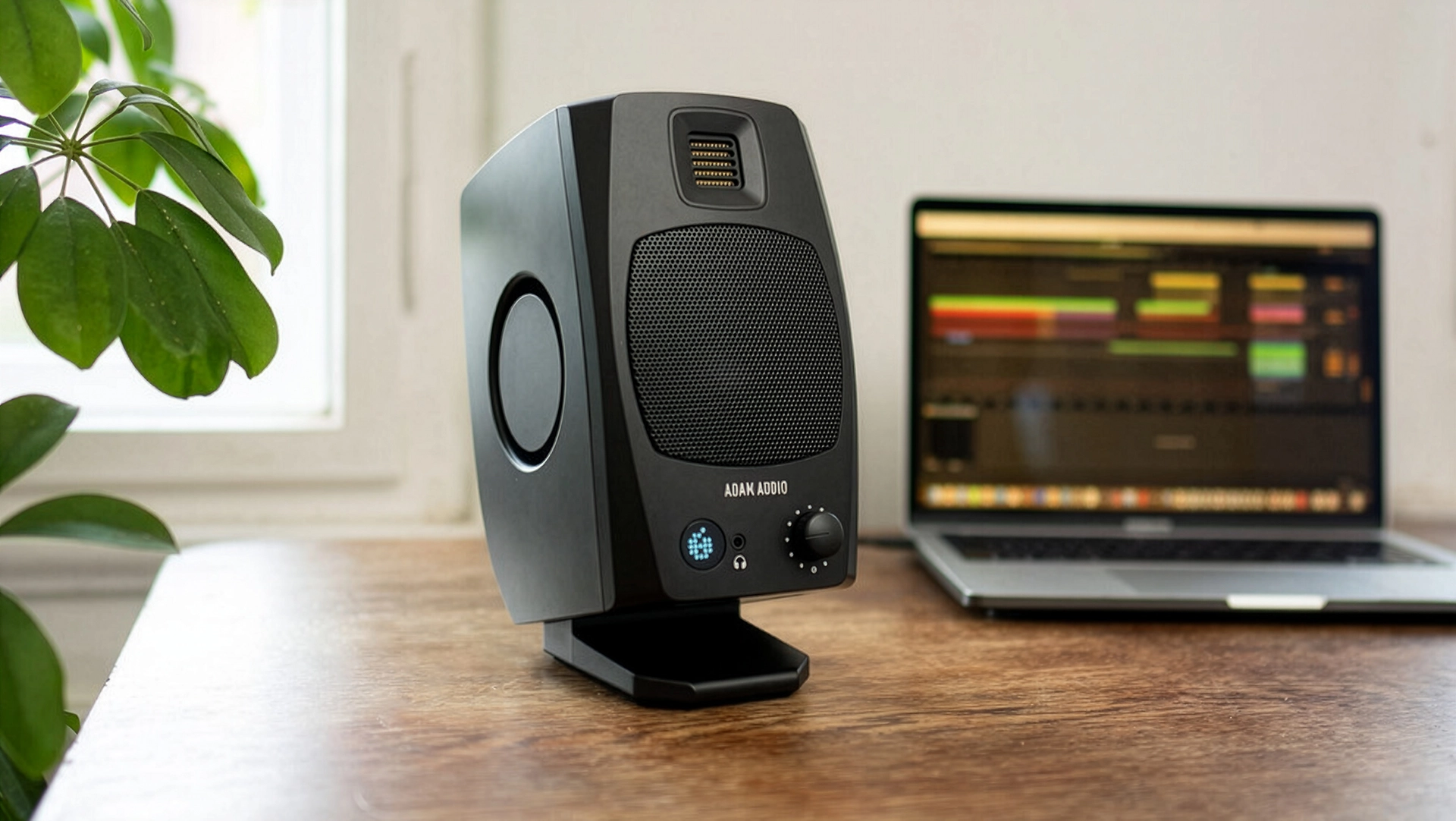
Electronic music production depends heavily on accurate low-frequency monitoring. Getting the relationship between the kick, bass, and sub energy correct is essential, but small untreated rooms make this challenging. Modern compact monitors with DSP have improved what’s possible for bedroom studios.
The IK Multimedia iLoud MTM remains a top choice for producers needing advanced calibration and wide-band accuracy in a compact form. Its ARC system provides precise correction tailored to the listening position. For mobile setups, the KRK GoAux 4 offers portable monitoring with built-in calibration.
Budget-minded producers benefit from the PreSonus Eris E4.5, which offers useful acoustic tuning controls, while the JBL One Series 104 provides neutral, compact nearfield monitoring. For those who want superior high-frequency detail, the Adam Audio D3V delivers ribbon-tweeter clarity in a desktop-friendly size.
The right choice depends on your room, workflow, and mixing priorities. But the core principle remains unchanged: in small rooms, accuracy beats size.
Top Ranked Active & Passive Monitors on Equipboard
-m.webp?v=1784559408)


About the authors
Giulio Chiarenza is the co-founder of Equipboard and a lifelong multi-instrumentalist with a deep passion for music gear. Born in Italy and raised in the U.S., he holds a Computer Science degree from The University of Texas at Austin and blends technical acumen with decades of hands-on experience across guitar, piano, drums, and electronic production. Early in his career, Giulio was signed to a San Francisco-based EDM label, releasing both remixes and original tracks. These days, he helps steer Equipboard’s vision while personally testing and reviewing gear. He's never too far from his go-to guitar: a vintage 1978 Fender Telecaster Custom. Read more
New in Active & Passive Monitors


$2,050.00 - $4,100.00








.webp)