
David Gilmour
Pink Floyd
David Gilmour's Gear



Gilmour uses the EMG EXG on his Red Strat. Used in conjunction with EMG SA pickups, the EXG creates a "smiling" EQ, boosting the bass and treble and cutting the midrange.
Find it on:


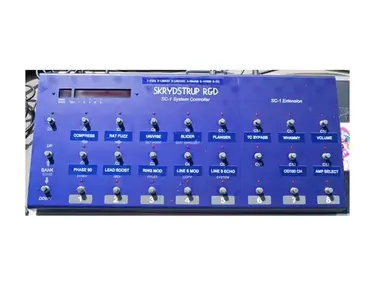
Used for Live at Pompeii.
Find it on:


Used for Gilmour's vocals on On An Island, as mentioned by sound engineer Andy Jackson in this July 2006 Sound on Sound article.
"Actually, it's very straightforward — voice — nice microphone, nice mic amp, nice compressor. There you go. For reverbs I tend to be old-school and use an EMT plate. I had a couple of plates and a Lexicon Hall — that was our palette. The vocal chain starts with that Sony tube mic with the heatsink on the side, the C800G, and it is the most fantastic microphone. We have a couple of those, one in the studio and one for David to use at home, which is another reason his demos sounded so good. That feeds an old Neumann V72 mic preamp and then EAR EQs and compressors like the ones I use here in my mastering system. I would compress his voice but only fairly gently with a tickle of 2:1, then maybe do that again on the mix. That's with the exception of the rock songs of course, which were completely mashed in a Fairchild! The thing is, David makes my life easy — stick him on the phone and he sounds great! He is not a difficult person to record — great technique and a great voice."
Find it on:

In a feature on The Worley Gig, David Gilmour's Smith Mellobar 10-String Guitar is highlighted in the collection. It appears in picture #13, positioned next to the Orange Gretsch, noted for its unique design within the collection.
Find it on:

Seen first used in 1985 during the Bryan Ferry set on Live Aid, David has used the Fender 112OB Extension Cabinets seen below his Fender Concerts. Used again in 1986 along with Pete Townshend during his "Deep End" Tour. It is speculated that it was also used during the Momentary Lapse of Reason recording as a Fender Concert was used for the intro of "Sorrow".
Find it on:


According to the Pete Cornish website, David Gilmour used the Pete Cornish SS-3 overdrive pedal in 2006.
Find it on:

The black Strat as it looked in 1976 following Gilmour’s substitution of the black DiMarzio FS-1 pickup. He added the neck with rosewood fretboard in June 1972, replacing the original maple neck.
Find it on:





His signature model has Fender Custom Shop Fat 50s single coil in the neck position
Find it on:

The Mesa/Boogie Studio Preamp can be seen in David Gilmour's rack during the Knebworth concert. Gilmour had previously had Mark I and Mark III heads in his rack and more than likely moved to the Studio Preamp around 1989 after the Venice concert.
Kit Rae documents Gilmour's use of the Studio Preamp on the Knebworth page of his David Gilmour Tone Building site.
Find it on:

In this YouTube video of "Take A Breath" (from "Live in Gdansk"), at 2:31, three Avalon U5 DI Preamplifiers can be seen in David Gilmour's effects rack. Another photo from Kit Rae's page "On an Island and 2006 Tour Lead Tones" shows two Avalon U5 units.
Find it on:



According to Gilmourish; "On several occasions during the Dark Side of the Moon tour in 1973-75 David is also seen using a Binson PE in addition to the Binson 2."
Find it on:

David Gilmour used a Fender 'Silverface' Twin Reverb (1972-1976) during the recording sessions for "The Dark Side of the Moon," as confirmed by Kit Rae on the "David Gilmour Tone Building" page.
Find it on:

David Gilmour used a Fender 'Silverface' Dual Showman Reverb amplifier during the recording sessions for "Wish You Were Here," as confirmed by Kit Rae in "David Gilmour Tone Building."
Find it on:

David Gilmour began incorporating the Fender '59 Bassman LTD into his live rig around 1991 and continued using it for session work through the early 2000s, as confirmed by Kit Rae in the resource "David Gilmour Tone Building" on Kitrae.
Find it on:

David Gilmour had two Dallas Arbiter Fuzzes (one blue with silicon transistors and one red with germanium transistors) shown in this photo from the Pompeii concert. As Gilmourish.com points out, these two fuzzes were used alternately on Pink Floyd's early albums, between 1968 and 1983 (https://www.gilmourish.com/?page_id=9919).
Find it on:

David Gilmour used a Vox Wah Pedal in 1973 before switching to a Cry Baby. You can see it next to his foot.
Find it on:


In 1974, David Gilmour replaced his Vox wah with a Thomas Organ Co. Cry Baby (Vox) Wah, as detailed by Bjorn on Gilmourish, the largest online resource for David Gilmour's tone.
Find it on:

David Gilmour used an Ernie Ball Volume Pedal, which was modified with a 10K pot to reduce high-end loss, during The Division Bell Tour and The Pulse. This information is supported by Kit Rae's detailed analysis in "David Gilmour Tone Building" on Kitrae's website.
Find it on:
-m.webp?v=1782831461)
David Gilmour used the Univox U-1095 Super-Fuzz during the 1993 recording sessions at Olympic Studios, as documented by Bjorn on Gilmourish, a comprehensive resource on Gilmour's tone.
Find it on:

David Gilmour used the Ibanez TS10 Tube Screamer Classic during the 1993 recording sessions at Olympic Studios, as detailed by Bjorn on Gilmourish, a comprehensive resource for David Gilmour's tone.
Find it on:

David Gilmour used the Tube Works 903 Blue Tube Enhancer during the 1993 recording sessions at Olympic Studios, as documented by Bjorn on Gilmourish, a leading resource on Gilmour's tone.
Find it on:
-m.webp?v=1783090873)
David Gilmour used the Tube Works 901 Real Tube Overdrive during the 1993 recording sessions at Olympic Studios, as documented by Bjorn on Gilmourish, the largest David Gilmour tone resource on the net.
Find it on:

David Gilmour used the Boss BF-1 Flanger during the 1993 recording sessions at Olympic Studios, as confirmed by Bjorn on Gilmourish, the largest David Gilmour tone resource on the net.
Find it on:

David Gilmour used the Roland AP-7 Jet Phaser during the 1993 recording sessions at Olympic Studios, as confirmed by Bjorn on Gilmourish, a prominent resource for information on Gilmour's guitar tone.
Find it on:

David Gilmour used the Demeter Amplification TRM-1 Tremulator during the 1993 recording sessions at Olympic Studios, as confirmed by Bjorn on Gilmourish, the largest David Gilmour tone resource on the net.
Find it on:
-m.webp?v=1783004999)
David Gilmour used a 1959 sunburst Fender Stratocaster with the maple neck from his Black Strat during the year 1972, as confirmed by Bjorn on Gilmourish, a comprehensive resource dedicated to David Gilmour's tone.
Find it on:

David Gilmour used the TC Electronic D-Two Delay during the 2015 recording sessions for his album "Rattle That Lock," as confirmed by Bjorn on Gilmourish.
Find it on:

David Gilmour used a Fulltone Deja Vibe during the 2015 recordings for "Rattle That Lock," as confirmed by Bjorn on Gilmourish.
Find it on:

David Gilmour used the Taylor NS74ce Grand Concert Cutaway Nylon-String Acoustic-Electric Guitar while recording "Rattle That Lock," as confirmed by Bjorn on Gilmourish.
Find it on:
-m.webp?v=1783203949)
David Gilmour used a Martin D-18 from 1945 during the 2015 "Rattle That Lock" sessions, as confirmed by Bjorn on Gilmourish.
Find it on:
This is a community-built gear list for David Gilmour.
- Find relevant music gear like Guitars, Amplifiers, Effects Pedals, and other instruments and add it to David Gilmour.
- The best places to look for gear usage are typically on the artist's social media, YouTube, live performance images, and interviews.
- To receive email updates when David Gilmour is seen with new gear, follow the artist.
Discography


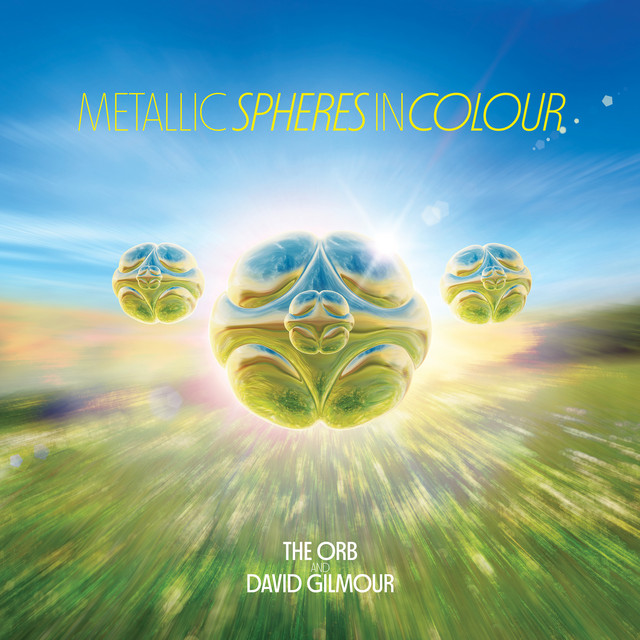
Album Credits
-

Between Two Points (Live from the Luck and Strange Concerts)
David Gilmour · 2025
Mixing Engineer Producer -

Wish You Were Here (Live from the Luck and Strange Concerts)
David Gilmour · 2025
Mixing Engineer Producer -

Luck and Strange (Live from the Luck and Strange Concerts)
David Gilmour · 2025
Mixing Engineer Producer -

Sorrow (Live from the Luck and Strange Concerts)
David Gilmour · 2025
Mixing Engineer Producer -

David Gilmour · 2025
Mixing Engineer Producer -

David Gilmour · 2024
Mixing Engineer Producer Programmer -

David Gilmour · 2024
Mixing Engineer Producer -

David Gilmour · 2024
Mixing Engineer Producer -
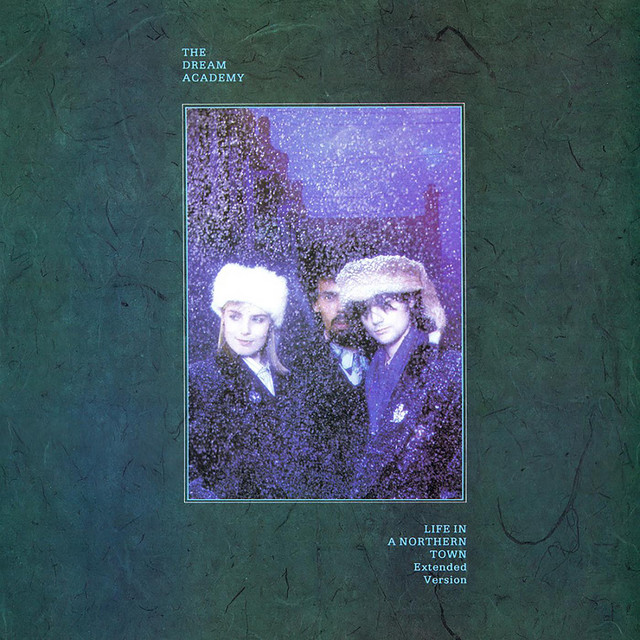
The Dream Academy · 2021
Producer -
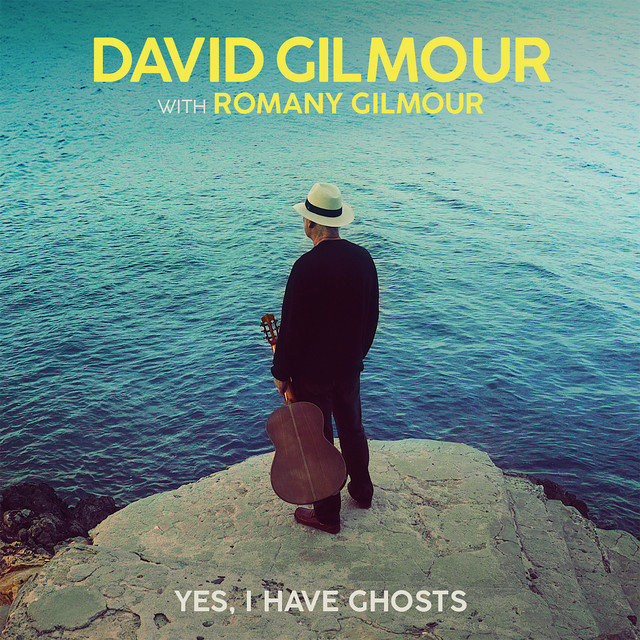
David Gilmour · 2020
Mixing Engineer Programmer -
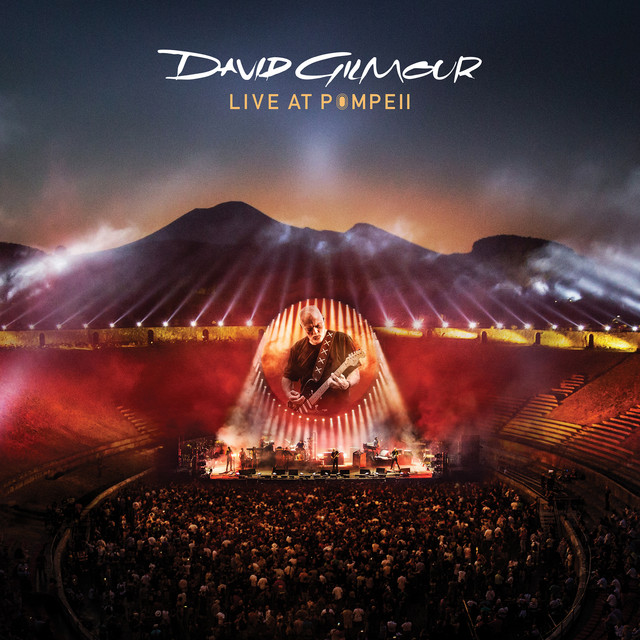
David Gilmour · 2017
Mixing Engineer Producer -
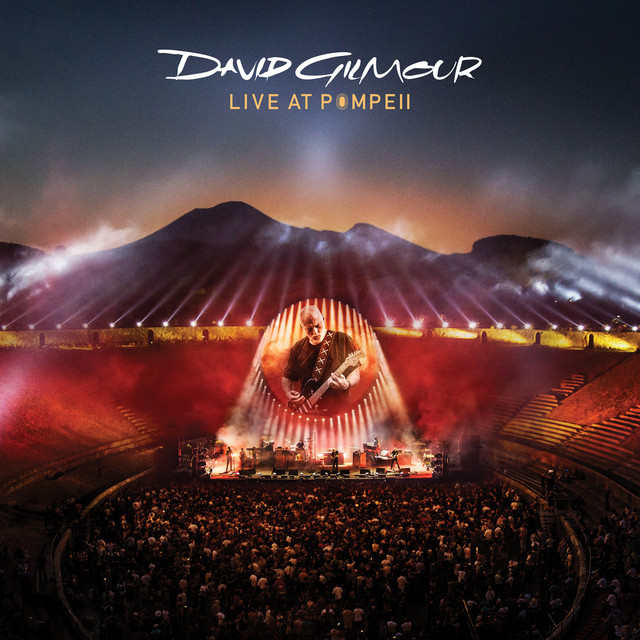
One of These Days (Live At Pompeii 2016)
David Gilmour · 2017
Mixing Engineer Producer
.jpeg?v=1783110732)

.jpeg?v=1783065966)



.webp)


