
Jack White
rock & blues multi‐instrumentalist, The White Stripes, Third Man Records
Genre
Credits
Genre
Credits
Jack White's Microphones


In the film "It Might Get Loud," Jack White explains that while he and a luthier from Seattle named Randy Parsons were designing a guitar for the Raconteurs tour, he had the idea to have Parsons put a Green Bullet Harmonica Mic in the guitar. This would allow White to just pull the mic out of the guitar and use it onstage. At about 1:35 in this video you actually see him using the microphone.
Find it on:


In this video, Jack White can be seen recording the vocals for "I'm Slowly Turning into You" at Blackbird Studio in Nashville using a Shure SM7B.
Find it on:

Seen here in 'It Might Get Loud' used as a vocal mic to get a bullet-mic-sort of sound. Usually he also uses these mics for guitar amps and as room mics, as mentioned by his engineer in a Sound On Sound article (http://www.soundonsound.com/sos/oct07/articles/insidetrack_1007.htm): "Jack loves the sound of ribbon microphones, so we used a lot of them, on guitar amps, vocals, and as room mics: Coles 4038, Royer 121, AEA R84. I would have six to 10 room mics up, and would chose a stereo pair from them."
Find it on:




Producer Vance Powell - “On Blunderbuss I also used the Neve 33609 and RCA BA6A and an Ampex MX35 four–channel tube mixer to record the drums, but these sessions happened so quickly that I did not have a lot of time to set things up. There was not a lot of upright bass this time, but when there was one, I’d use an RCA 44 and something higher up like the RCA BK5A [cardioid ribbon mic]. There was an African drum on ‘Would You Fight For My Love?’, which had an AEA R92, electric bass would have been DI and a Neumann U67 on the amp, with maybe some compression from the [Fairchild] 670. I recorded Jack’s acoustic guitar with an RCA 77DX, and his electric almost always goes through his 1963 Fender Vibroverb in front of which I placed a U67, which went into the Neve 1073 desk and then straight to tape. I did not record any of Jack’s vocals, other than on the song ‘Just One Drink’ because that was done entirely live. I used a Shure SM57 or 58 on his vocals for that, and Josh recorded the backing vocals.”
Find it on:


Producer Vance Powell - “On Blunderbuss I also used the Neve 33609 and RCA BA6A and an Ampex MX35 four–channel tube mixer to record the drums, but these sessions happened so quickly that I did not have a lot of time to set things up. There was not a lot of upright bass this time, but when there was one, I’d use an RCA 44 and something higher up like the RCA BK5A [cardioid ribbon mic]. There was an African drum on ‘Would You Fight For My Love?’, which had an AEA R92, electric bass would have been DI and a Neumann U67 on the amp, with maybe some compression from the [Fairchild] 670. I recorded Jack’s acoustic guitar with an RCA 77DX, and his electric almost always goes through his 1963 Fender Vibroverb in front of which I placed a U67, which went into the Neve 1073 desk and then straight to tape. I did not record any of Jack’s vocals, other than on the song ‘Just One Drink’ because that was done entirely live. I used a Shure SM57 or 58 on his vocals for that, and Josh recorded the backing vocals.”
Find it on:

Used for the guitar on Icky Thump, as stated by recording and mixing engineer Joe Chiccarelli in this October 2007 Sound on Sound interview.
“The Trident at Blackbird Studio D was used for monitoring, and also some guitar microphones, plus most of the room microphones. Some room mics went through an API 512, and a few through a crazy old RCA OP6 tube preamp. Most of the other close mics went through various Neve 1073, Brent Averill API 312 and Chandler TG2 preamps. Jack loves the sound of ribbon microphones, so we used a lot of them, on guitar amps, vocals, and as room mics: Coles 4038, Royer 121, AEA R84. I would have six to 10 room mics up, and would chose a stereo pair from them.
(...) “For the song ‘Icky Thump’ I had the Royer and an AEA on Jack’s two guitar amps, and a couple of U67s for room ambience. In a few cases I used the Shure SM7 guide vocal mic. Ribbons are prone to overloading, so we blew out four Coles mics on the guitar amps. Luckily Jack had several Coles 4038’s with him! The guitar mics went through Neve and Chandler preamps, and then always through an API 550A EQ, and then an 1176. The Univox sounded great acoustically in the room and was miked with a U87 across the room, going into a Chandler TG2 preamp and then some slight compression with an LA2A.
“Jack is very particular about his vocal sound, and it’s one of the things on the album that we really took a lot of time for. He is very sensitive to what he hears in the headphones, and he wanted something that gave him juice and was exciting to sing to. So every song had a different mic/preamp/compressor setup. Most of his vocals were recorded through an old RCA 77DX mic, but for some of them I used the Shure SM7 guide vocal mic. On the title song Jack’s vocals were recorded with a Telefunken U47, going into a Neve 1073 preamp and then into an 1176 compressor.”
This is restated by Chiccarelli in this October 1, 2007 Mix Online interview.
The Twin was one of two amps that Jack White used, the other being a rare Silvertone piggyback amp. Chiccarelli used an assortment of ribbon mics on the amps, including an AEA R84, a Royer 121 and a Coles. He would also put a Neumann 67 back in the room for ambient tracks. As far as outboard gear, Neve 1073 preamps and UREI 1176 compressor/limiters were typically used, with a Fairchild compressor also being employed occasionally.
Chiccarelli was careful with the track's loudness. “I don't record extra-hot levels to tape,” he explains. “I like to have headroom and the openness, so stuff was not overly distorted to tape. I prefer having the transience left intact, and if I need to overdrive something, I'll do it with an outboard box.”
Find it on:

On the official website of Placid Audio in the section Users, Jack White is the first name to appear on list.
Find it on:

Used for vocals on Icky Thump, as stated by recording and mixing engineer Joe Chiccarelli in this October 1, 2007 Mix Online interview.
Most of the vocals were recorded on a RCA 77DX ribbon microphone, but a U47 and an old Altec 633 salt shaker mic were also pressed into service. Processing, depending on the track, included a Telefunken V76 tube preamp, an 1176, an LA-3A, a Fairchild and a Chandler Limited EMI TG2 compressor. “Sometimes the vocal went through a guitar amp, sometimes through a Neve module with a preamp turned all the way up,” he says. “He's great about working the distortion, knowing how to sing to a certain microphone. He knows how to back way off and come way in when he needs to. The vocal is different on every single song."
The mic is Chicarelli's, being used on Chris Botti's A Thousand Kisses Deep and for this Tape Op review of Groove Tubes' VIPRE. In all three sources, Chicarelli does not specifcy whether the 633 is the A version or the C version. However, given the fame of the A version over the C version, one can suppose that Chiccarelli is referring to the A version.
Find it on:
-m.webp?v=1783231487)
In this live performance of the Dead Weather's 'Will There Be Enough Water', you can clearly see the mic at the 7:09 mark, used on Jack's Fender Twin Reverb guitar amp. It's a warm-sounding dynamic mic, similar to a ribbon mic, but much sturdier and thus better for taking on tour.
Find it on:

Used on the album "Lazaretto". I recorded Jack’s vocals mainly with a Shure SM57. Sometimes we used a Neumann U47, as well as an RCA 77D and a Shure SM7, and I often pushed his vocals hard through an 1176(...)
Find it on:


Jack White uses the AEA R44CX Ribbon Microphone in the studio, as seen in the YouTube video "Jack White - Temporary Ground" by rugr8ful2.
Find it on:

Used on the album 'Lazarettto'. "I recorded Jack’s vocals mainly with a Shure SM57. Sometimes we used a Neumann U47, as well as an RCA 77D and a Shure SM7, and I often pushed his vocals hard through an 1176(...)"
Find it on:

Used on the album 'Lazarettto'. "I recorded Jack’s vocals mainly with a Shure SM57. Sometimes we used a Neumann U47, as well as an RCA 77D and a Shure SM7, and I often pushed his vocals hard through an 1176(...)"
Find it on:

Used on the Elephant Tour for vocals, as stated by monitor engineer Matthew Kettle in this July 1, 2003 Mix Online interview.
The three vocals mics used by Jack are all Sennheiser Evolution 8651s. Kettle feels that the mics are well- suited to Jack's style of performance because they combine a great deal of gain before feedback with the open sound of a condenser mic. “[Jack] will work out howthe mic works so he can get weird off-axis and distance EQ effects,” Kettle explains. “He's very creative with all of his gear, and he'll take the idiosyncrasies of something and take advantage of it. He uses an effected mic that he likes to control on stage. He likes it to have this giant kind of vintage plate sound on it for a cavernous effect.”
Find it on:

Used for the guitar on Icky Thump, as stated by recording and mixing engineer Joe Chiccarelli in this October 2007 Sound on Sound interview.
“The Trident at Blackbird Studio D was used for monitoring, and also some guitar microphones, plus most of the room microphones. Some room mics went through an API 512, and a few through a crazy old RCA OP6 tube preamp. Most of the other close mics went through various Neve 1073, Brent Averill API 312 and Chandler TG2 preamps. Jack loves the sound of ribbon microphones, so we used a lot of them, on guitar amps, vocals, and as room mics: Coles 4038, Royer 121, AEA R84. I would have six to 10 room mics up, and would chose a stereo pair from them."
(...) “For the song ‘Icky Thump’ I had the Royer and an AEA on Jack’s two guitar amps, and a couple of U67s for room ambience. In a few cases I used the Shure SM7 guide vocal mic. Ribbons are prone to overloading, so we blew out four Coles mics on the guitar amps. Luckily Jack had several Coles 4038’s with him! The guitar mics went through Neve and Chandler preamps, and then always through an API 550A EQ, and then an 1176. The Univox sounded great acoustically in the room and was miked with a U87 across the room, going into a Chandler TG2 preamp and then some slight compression with an LA2A."
This is restated by Chiccarelli in this October 1, 2007 Mix Online interview.
The Twin was one of two amps that Jack White used, the other being a rare Silvertone piggyback amp. Chiccarelli used an assortment of ribbon mics on the amps, including an AEA R84, a Royer 121 and a Coles. He would also put a Neumann 67 back in the room for ambient tracks. As far as outboard gear, Neve 1073 preamps and UREI 1176 compressor/limiters were typically used, with a Fairchild compressor also being employed occasionally.
Find it on:
-m.webp?v=1783230248)
Used for the Univox J series organ on "Icky Thump", as stated by recording and mixing engineer Joe Chiccarelli in this October 2007 Sound on Sound interview.
"The synthesizer was an old 1959 Univox that he found in New Zealand. It’s a suitcase synth with a speaker built into it, no DI. It’s very reedy, very mid-rangy, and it sounded so good in the room that the ambience you hear on it is just the room ambience." (...) “I probably didn’t do much to that, because I liked the way it sounded on tape. So it was just a matter of balancing the level.” (...) "The Univox sounded great acoustically in the room and was miked with a U87 across the room, going into a Chandler TG2 preamp and then some slight compression with an LA2A."
This is restated by Chiccarelli in this October 1, 2007 Mix Online interview.
While the Stripes sound has its foundation in a guitar and drum combination, there were a handful of songs on Icky Thump that included some new instrument choices. For instance, the title track features a vintage Univox synthesizer that Jack White purchased in New Zealand. The keyboard doesn't have a direct out like most keyboards; it has a built in speaker, so Chiccarelli put an 87 about five feet away from it. “It had so much personality that you didn't want to put a mic inches away from it — you really wanted to capture how it sounded in the room.”
Find it on:

Producer Vance Powell - “On Blunderbuss I also used the Neve 33609 and RCA BA6A and an Ampex MX35 four–channel tube mixer to record the drums, but these sessions happened so quickly that I did not have a lot of time to set things up. There was not a lot of upright bass this time, but when there was one, I’d use an RCA 44 and something higher up like the RCA BK5A [cardioid ribbon mic]. There was an African drum on ‘Would You Fight For My Love?’, which had an AEA R92, electric bass would have been DI and a Neumann U67 on the amp, with maybe some compression from the [Fairchild] 670. I recorded Jack’s acoustic guitar with an RCA 77DX, and his electric almost always goes through his 1963 Fender Vibroverb in front of which I placed a U67, which went into the Neve 1073 desk and then straight to tape. I did not record any of Jack’s vocals, other than on the song ‘Just One Drink’ because that was done entirely live. I used a Shure SM57 or 58 on his vocals for that, and Josh recorded the backing vocals.”
Find it on:

Used on the album 'Lazaretto'. "I tend to like an RCA BK5B on Jack’s acoustic guitar, and occasionally an RCA 77, or an SM57 if everything else in the room was pretty loud."
Find it on:

Used for the vocals on "Icky Thump", as stated by recording and mixing engineer Joe Chiccarelli in this October 2007 Sound on Sound interview.
“Jack is very particular about his vocal sound, and it’s one of the things on the album that we really took a lot of time for. He is very sensitive to what he hears in the headphones, and he wanted something that gave him juice and was exciting to sing to. So every song had a different mic/preamp/compressor setup. Most of his vocals were recorded through an old RCA 77DX mic, but for some of them I used the Shure SM7 guide vocal mic. On the title song Jack’s vocals were recorded with a Telefunken U47, going into a Neve 1073 preamp and then into an 1176 compressor.”
This is restated by Chiccarelli in this October 1, 2007 Mix Online interview.
Most of the vocals were recorded on a RCA 77DX ribbon microphone, but a U47 and an old Altec 633 salt shaker mic were also pressed into service. Processing, depending on the track, included a Telefunken V76 tube preamp, an 1176, an LA-3A, a Fairchild and a Chandler Limited EMI TG2 compressor. “Sometimes the vocal went through a guitar amp, sometimes through a Neve module with a preamp turned all the way up,” he says. “He's great about working the distortion, knowing how to sing to a certain microphone. He knows how to back way off and come way in when he needs to. The vocal is different on every single song.
“There was no vocal comping,” Chiccarelli continues. “If he didn't like a line, we'd erase it and redo it. It was totally old school, like you're down to track 15 and that's the lead vocal track so make the performance count. A couple of songs were tricky, but he's really good about diving in and working really hard to get the stuff to be what he wants. He's fearless and that's a quality I always look for in an artist.”
Find it on:

Used for the Hammond B3 on "I'm Slowly Turning Into You" and "You Don't Know What Love Is (You Just Do as You're Told)", as stated by recording and mixing engineer Joe Chiccarelli in this October 1, 2007 Mix Online interview.
A pair of songs — “I'm Slowly Turning Into You” and “You Don't Know What Love Is (You Just Do as You're Told)” — show off Jack White's B3 talents. Chiccarelli miked the B3's Leslie with a tube U47 on the bottom and a pair of KM84s on top. He also had a U67 in the room to capture some of the organ's ambience. “Sometimes we took a direct out of the organ and sent that through a guitar amp to get a little more edge and bite,” he adds.
Find it on:

A pair was used on the Hammond B3 for "I'm Slowly Turning Into You" and "You Don't Know What Love Is (You Just Do What You're Told)", as stated by recording and mixing engineer Joe Chiccarelli in this October 1, 2007 Mix Online interview.
A pair of songs — “I'm Slowly Turning Into You” and “You Don't Know What Love Is (You Just Do as You're Told)” — show off Jack White's B3 talents. Chiccarelli miked the B3's Leslie with a tube U47 on the bottom and a pair of KM84s on top. He also had a U67 in the room to capture some of the organ's ambience. “Sometimes we took a direct out of the organ and sent that through a guitar amp to get a little more edge and bite,” he adds.
Find it on:
-m.webp?v=1783177589)
Used for vocals on Icky Thump, as stated by recording and mixing engineer Joe Chiccarelli in this October 1, 2007 Mix Online interview.
Most of the vocals were recorded on a RCA 77DX ribbon microphone, but a U47 and an old Altec 633 salt shaker mic were also pressed into service. Processing, depending on the track, included a Telefunken V76 tube preamp, an 1176, an LA-3A, a Fairchild and a Chandler Limited EMI TG2 compressor. “Sometimes the vocal went through a guitar amp, sometimes through a Neve module with a preamp turned all the way up,” he says. “He's great about working the distortion, knowing how to sing to a certain microphone. He knows how to back way off and come way in when he needs to. The vocal is different on every single song."
Find it on:

In this video, a producer who worked with Jim Diamond (producer of Jack White on the first album) says that this latter used Octava MK-219 on guitar amplifier.
Find it on:

Used for the mandolin and vocals on "Prickly Thorn, But Sweetly Worn", as stated by recording and mixing engineer Joe Chiccarelli in this October 1, 2007 Mix Online interview.
On the song “Prickly Thorn, But Sweetly Worn,” the band added bagpipes, mandolin, thigh slaps and hand percussion to the mix. “Meg did two different bass drum tracks, playing the bass drum with a mallet, and then the tracks switch between sections of the song. It started with a dead-er bass drum, then opened up to an almost parade drum sound,” he explains. “That song was interesting, because after we recorded it we decided that it didn't sound like it was done [live] in the studio enough. Jack is very keen on it sounding honest and like people in a room playing, so we took the mandolin and vocals and pumped them back through the studio loudspeakers and miked the room [with a C24 stereo mic].”
Find it on:
-m.webp?v=1783234837)
There are lots of videos online and photos from the 2022 supply chains issues tour indicating he is using a Shure SM58 microphone. He also used it in 2021 at the Third Man Records London performance along with the Warstic Headquarters Opening gig.
In 2012 this was also his main mic setup.
Jack said in an interview that microphone was the only one used for the White Stripes' second album De Stijl.
Find it on:
This is a community-built gear list for Jack White.
- Find relevant music gear like Microphones, Guitars, Amplifiers, Effects Pedals, Drum Sets, Cymbals, Snare Drums, Drumsticks, Pianos, Keyboards and Synthesizers, and other instruments and add it to Jack White.
- The best places to look for gear usage are typically on the artist's social media, YouTube, live performance images, and interviews.
- To receive email updates when Jack White is seen with new gear, follow the artist.
Discography

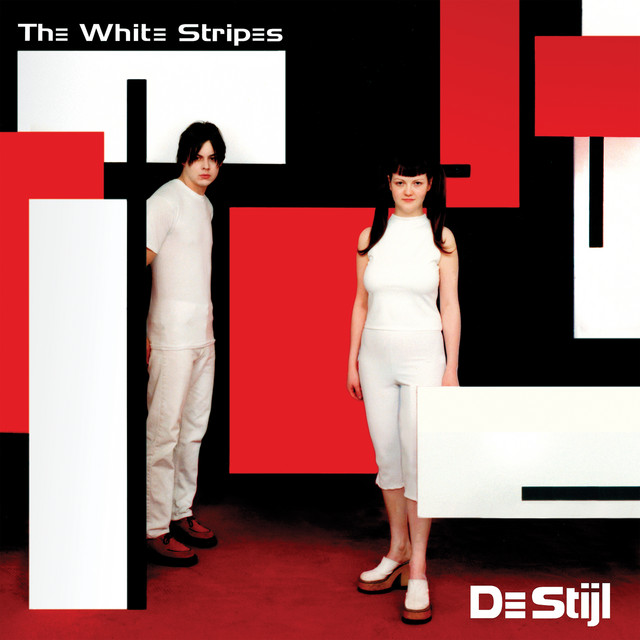
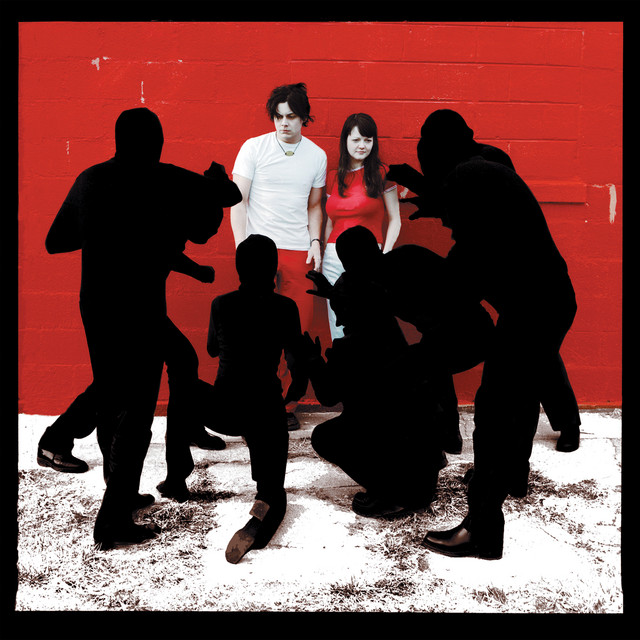
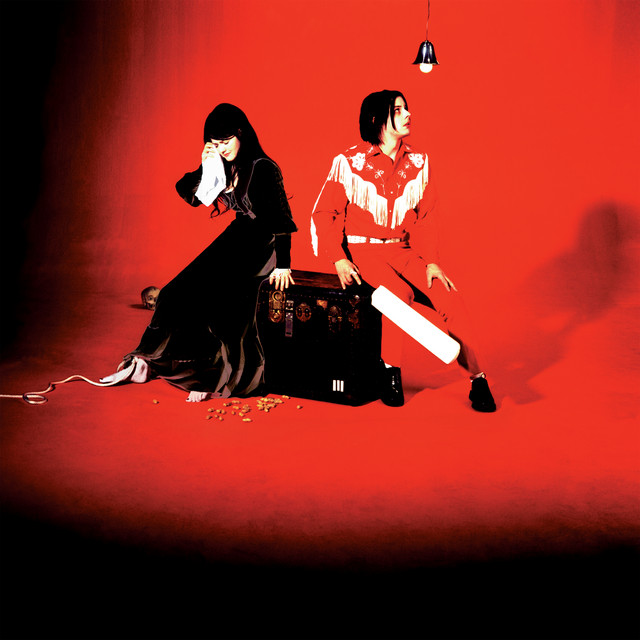

Album Credits
-

Jack White & Jack White · 2024
Mixing Engineer Producer -

Jack White & Jack White · 2022
Engineer Mixing Engineer Producer -
Jack White & Jack White · 2022
Engineer Mixing Engineer Producer -
Jack White & Jack White · 2018
Engineer Mixing Engineer Producer -
Soledad Brothers · 2017
Recording Engineer -
Killer Diller Blues (Music from The American Epic Sessions)
Alabama Shakes · 2017
Producer -
Jack White & Jack White · 2017
Producer -
Producer
-
Justice League (Original Motion Picture Soundtrack)
Danny Elfman · 2017
Mixing Engineer Producer -

Beyoncé · 2016
Producer -
You Are The Sunshine Of My Life
Jack White & Jack White · 2016
Producer -
Jack White & Jack White · 2014
Mixing Engineer Producer









.webp)