Joe Satriani
Role
Role
Joe Satriani's Gear
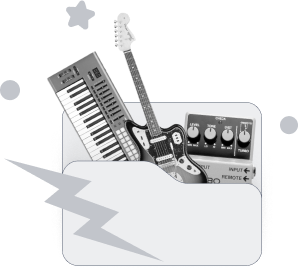


This Jack Deville Dark Echo delay pedal, once part of Joe Satriani's private collection, was sold through Reverb.com via Bananas at Large.
Find it on:


This Peavey Blue Marvel 8", 8 Ohms speaker, part of Joe Satriani's private collection, was sold on Reverb.com by Bananas at Large.
Find it on:

A P10R with a date code of SD414 and serial number of P10RC5888-6, owned by Satriani, was sold on Reverb.com via Bananas at Large.
Find it on:


Joe Satriani's private collection includes a Celestion Seventy 80 80W, 12" Guitar Speaker, as listed on Reverb.com by Bananas at Large.
Find it on:

This Fulltone Custom Shop That 80's Rack Chorus was part of Joe Satriani's private collection, as listed on Reverb.com through Bananas at Large.
Find it on:

A 2007 unit owned by Satriani was sold on Reverb.com via Bananas at Large.
Find it on:

A 1963 AC10 Twin with a serial number of 1341 (and its footswitch), owned by Satriani, was sold on Reverb.com via Bananas at Large.
Find it on:

Installed in Satriani's 1962 Brownface Fender Concert, which is listed for sale on Bananas at Large's website.
- Tubes: New pair Sovtek 5881 12AX7s mix of GE, Tung-sol and Chinese.
Find it on:

A 1960s P-Bass was used on "Ice 9", as stated in this February 17, 2017 Music Radar interview.
“On that one, I'm using a Boss DS-1 and the overdrive, OD-1, I think. I'm playing my ’60s P-Bass, but I think that's where the rhythm guitars are the DS-1, so they're a bit crunchier. For the solos, I believe it's a Rockman [headphone amp], and we just used one channel of the Rockman and put it up on the middle, flat and dry. I mean, that's about as dry as I've ever recorded. Simple legato technique and just crazy all over the place."
Find it on:


Featured in this November 16, 2011 Tumblr post.
Find it on:
-m.webp?v=1783177029)
Used on Engines of Creation, as stated by producer Eric Caudieux in Strange Beautiful Music: A Musical Memoir.
Throughout the recording of Engines, what we were doing was manipulating in the box all those guitars and whatever sounds we had. That was basically the cleanest path to be able to work with the sounds that Joe was giving me, going DI, or in the case of the amps, we’d go to the load box, into a mic pre, into the computer, and that would give me the cleanest path to basically go either to a synth—the Korg MS-20 or Minimoog—or into the computer to affect it even more with several plug-ins I had to completely change the sound. So that’s why it was so important to have the sound as direct and pure as we could.
Find it on:
-m.webp?v=1783289522)
Used for rhythm guitar and bass on Not of This Earth, as stated by producer John Cuniberti in Strange Beautiful Music: A Musical Memoir. Satriani later writes that a unit was acquired for Studio 21 and first used for Is There Love in Space?.
Not of This Earth
John Cuniberti: As far as effects pedals, Joe was primarily playing through his orange Boss DS-1 Distortion pedal and CE-2 Chorus and that was pretty much it. All the echo-delay types of effects—reverbs, chorusing—we did with outboard gear. Typically, I would use a Universal Audio 1176 limiter for rhythm guitars and bass, and a Universal Audio LA-2A limiter for melodies and occasionally solos. Because again, those were limiters you would use for a singer, and since Joe’s phrasing and playing and arranging were that way, I tended to use the same processors as I would if there were people singing. An LA-2A’s not unusual for lead vocals, so of course that’s what I’d use on Joe’s melodies.
Is There Love in Space?
Before reuniting with John Cuniberti, Matt Bissonette, and Jeff Campitelli to record Is There Love in Space?, I started recording the new songs at Studio 21, my home studio, trying once again to break my own style down and rebuild it into something new. I was deeper into Pro Tools now and having much more success and fun with it. The new record would feature quite a bit of compositional variety, with lyrical-sounding melodies and more angular-sounding solos—and two vocal tracks!
At Studio 21, I was using a Korg Triton DAW keyboard, Universal Audio 1176 and LA-2A compressor/limiters, an Empirical Labs EL8S, old API EQs, the Millennia Media STT-1 mic pre, and Palmer speaker simulators. For guitar amps I had an interesting collection: Soldano, Mesa Boogie, Cornford, Vox, Wells, and several vintage Marshalls. Added to that group was my new Peavey JSX prototype head. Everything just started to sound better!
Find it on:

Developed in collaboration with Satriani. The software was modeled on some of his own equipment.
Find it on:





In the official HD video for "Always With Me, Always With You" by Joe Satriani, he can be seen playing the Ibanez JS1 Joe Satriani Signature Guitar in both white and chrome finishes.
Find it on:
-m.webp?v=1783260056)
Used for the robot vocals and talkbox on "I Just Wanna Rock", as can be seen the mini-documentary of the recording of Professor Satchafunkilus and the Musterion of Rock starting at 3:52 and 4:41 respectively. Satriani explained the recording process in this September 25, 2008 Guitar World interview.
GW Tell me about how you recorded all of the voices on the soon-to-be audience-participation favorite “I Just Wanna Rock.”
SATRIANI [laughs] It wasn’t as easy as you would think. People assume recording large groups of people is no biggie: you just gather everybody ’round a mic and—boom!—you’re done. Not so. After three or four passes, if you’re trying to record a crowd, or if you’re trying to make what sounds like a crowd with multiple tracks, the vocals can get in the way of the music.
GW And the voice of the robot on that track?
SATRIANI That’s my voice, recorded three times and heavily distorted, going [in a robotic voice]: “What is your purpose?” That’s what the robot is saying to the crowd. I was using low-fi distortion, a SansAmp and a couple of different plug-ins to change the intensity of my voice. But on the part where the robot is getting into it and saying, “I wanna rock! I wanna rock with you!” I used my Talk Box. I’d been threatening to use my Talk Box for years, but I couldn’t remember how to position the tube in my mouth. So I called ZZ in the room and said, “You gotta help me figure out how to work this thing.”
GW I’m trying to imagine what goes through a 15-year-old’s head: “Aw, jeez. I gotta help my dad with his damn Talk Box!” Are you “cool dad” when this happens, or “dorky dad”?
SATRIANI [laughs] Dorky dad, definitely! Face it: the human race has to progress, and that means that the younger generation will always be cooler than their parents.
GW Even if their parents are in the next room playing with a Talk Box?
SATRIANI Especially if their parents are in the next room playing with a Talk Box! [laughs]
Find it on:


Quoted in the official product description.
"It's just the greatest book on pedals." - Joe Satriani
Find it on:

Mentioned in this August 10, 2019 Instagram reply.
R.I.P. Aspen Pittman. I purchased a Marshall Major from Aspen many years ago. He was indeed a gentleman and a legend.
Find it on:

He uses V.2 Vibe Machine according to DryBell .
Find it on:

On page 6 of the Music Radar interview linked above, Joe Satriani says... “My song Cryin’ is a performance that was recorded live in one take through a Zoom handheld device. That was an unusual recording, for sure! If someone heard it on Spotify, they’d never think it was a live performance going into a handheld Zoom, through an RCA cable onto a 24-track machine.
“Why did we do it? We weren’t thinking… we were simply recording! The point I’m trying to make is that sometimes a $50,000 Dumble might not work, but a $150 Zoom thing could sound brilliant. It just comes down to your hands, musicianship and inspiration.”
Find it on:

In this video you can spot the Voodoo Vibe Jr
"The Roger Mayer Voodoo Vibe is used for a solo in a song called 'Pyrrhic Victoria'."
Find it on:

“ I had this dream of finding that perfect Les Paul Custom for a long time, and it has always eluded me. But I picked this one up and my hand just fell in love with the neck. And it has that weird Les Paul Custom sound. “
Find it on:

Joe Satriani uses the Xotic Effects BB Preamp as part of his guitar rig. This is detailed in the Guitar Gear Finder guide by Aaron Matthies, which explores Satriani's tone, gear, and effects.
Find it on:

In this youtube video from Sammy Hagar you can see the tone master pro at the 17 second of the video when connecting the EVH Dunlop Cry baby Wah
Find it on:


According to DiMarzio's artists page, Joe Satriani uses DiMarzio DP151 PAF Pro Pickups.
Find it on:

According to DiMarzio's artists page, Joe Satriani uses DiMarzio DP188 Pro Track Pickups.
Find it on:



He is caught in this photo with a EVH guitar loaded with the Sustainiac pickup in the neck position .
Find it on:

Joe Satriani uses the IK Multimedia ToneX One, as confirmed in the YouTube video 4:48 titled "Making of TONEX Joe Satriani Amp Vault Signature Collection" by ikmultimedia.
Find it on:

Used for the "simulated train whistle" in the outro of "Dreaming Number Eleven", as stated by Satriani in the April 1989 Musician interview "The Devil And Joe Satriani" by Ted Drozdowski. In Strange Beautiful Music: A Musical Memoir (2014), Satriani recounts that it was his first effect pedal.
Musician, April 1989, “The Devil and Joe Satriani” by Ted Drozdowski
MUSICIAN: So the band first played about a year before the live songs on your new EP were recorded in June '88 at the California Theater in San Diego. Where did the title Dreaming #11 come from?
SATRIANI: It was actually the title of a song on my first EP. It was just one of those funny little phrases, like Surfing with the Alien, that pop into my head. I applied the title to a song on that EP that was a strange collection of sounds. It had an Allen wrench on the pick-ups for a kickdrum, slowed-down scratch for a snare, a sped-up tapping on the strings for a closed high-hat sound. I had all these percussion sounds generated just from a guitar plugged directly into the board. And on top of it I had bass, but it was actually a guitar, not even detuned, just playing popping bass. Then I had a rhythm guitar that sounded like an outgrowth of James Brown, but in retrospect it sounds more like what Prince got into with 'Kiss' and 'Sign o' the Times' and 'Alphabet Street' – that sort of dry guitar set-up. And I had this R&B guitar melody over it. The song ended in a simulated train whistle that I did with a Big Muff and a weird technique of pulling strings over other strings and then off the neck. That song was a collection of non sequiturs, and I thought 'The Crush of Love' and the three live songs on the new record didn't really have anything to do with each other. So Dreaming #11 applied.
Strange Beautiful Music: A Musical Memoir (2014)
Chapter 1, pg. 8
My first effects pedal was an Electro-Harmonix Big Muff Pie [sic] fuzz box that I bought through the mail after seeing an advertisement in Circus magazine, and it was the biggest, fattest fuzz ever created. This was the first of many pedals to come.
It was very confusing when I first played with these pedals because I had no idea how to use them, or how to make myself sound like Hendrix! There was no YouTube back then to instantly instruct you how to set things up, or on what sounds you could get out of a new piece of gear—you were pretty much on your own. After starting with the Big Muff, the next thing I got was a Maestro Phaser unit with the three buttons on it, and then the MXR, another phaser unit, and then a wah-wah pedal showed up eventually. I really didn’t have a whole bunch of pedal back then.
Chapter 5, pg. 50
On different moments on that record, I definitely needed distortion, and I think I had my original Big Muff Pi by Electro-Harmonix, which was still working at the time, and DS-1 and OD-1 pedals.
Find it on:

Listed among Satriani's gear in the April 1989 Musician interview "The Devil And Joe Satriani" by Ted Drozdowski.
SATCH'S BOOTY
WITH HIS band, Joe Satriani plays custom Ibanez guitars with DiMarzio pickups and D'Addario strings. His amplifiers are Marshalls, usually a pair of 100-watt heads driving two 4x12 cabinets. "The amps are run clean. I've got a compressor in-line but I don't really use it. I use an Ibanez digital reverb, some Ibanez digital delay, a Cry Baby, different distortion pedals and a Boss CE-1 chorus, the rack I have is really filled with a lot of back-up stuff: an extra chorus, a Randall amp/pre-amp that I can use if my pedals don't work, a t.c. electronic delay. It's really low-tech, inexpensive, cheap, simple."
With Jagger, Satriani plays a Strat: actually a hybrid of Fender, Tokai, DiMarzio and Ibanez parts with a 1954 Fender neck courtesy of Joe's guitar tech, Pierre de Beauport of New York City. His main amp's a Marshall, but there's a Roland JC-120 with a Boss delay tucked away for 'Midnight'. He also uses a t.c. 2290. "It's got all sorts of loops that allow you to program whole sections. So Pierre, who has a script, can just punch me in and out of these little patches so I can get louder or softer, or there'd be some delay. I wanted to keep the stage as clean as possible."
When he's writing, Satriani uses a four-track Tascam Porta-studio. "I've got some Rockman gear and an array of cheap pedals at home. That's about it. Plus a lot of basses, synthesizers, guitars and cassettes lying around."
Find it on:
This is a community-built gear list for Joe Satriani.
- Find relevant music gear like Guitars, Amplifiers, Effects Pedals, and other instruments and add it to Joe Satriani.
- The best places to look for gear usage are typically on the artist's social media, YouTube, live performance images, and interviews.
- To receive email updates when Joe Satriani is seen with new gear, follow the artist.
Discography
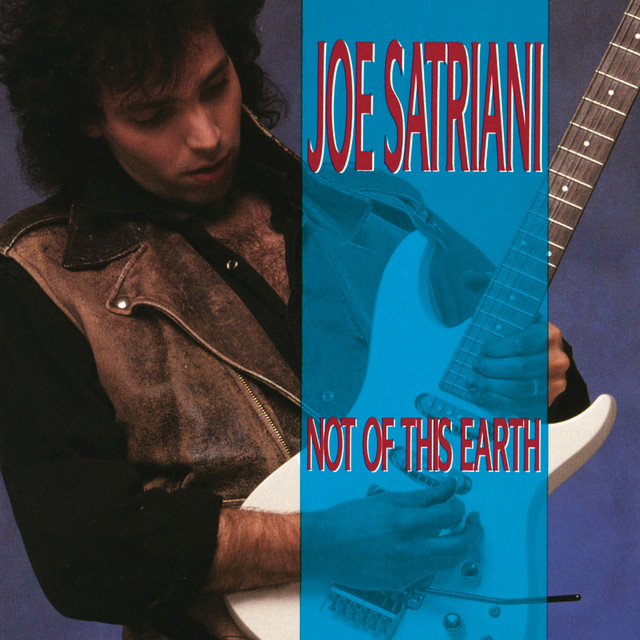

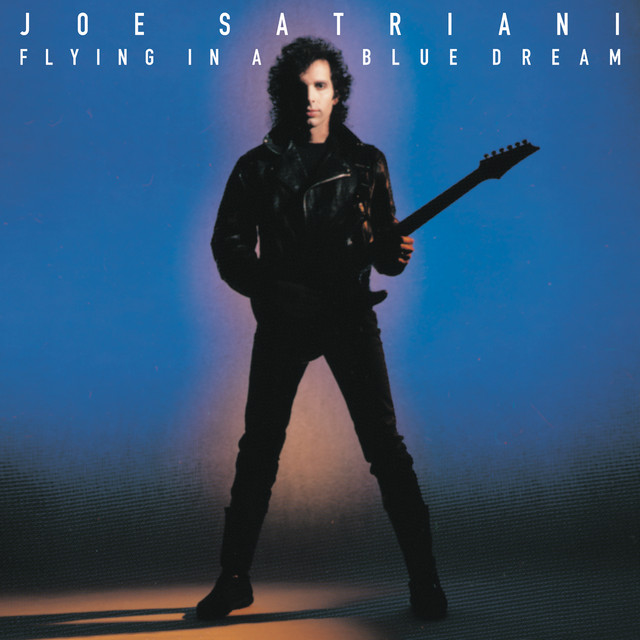
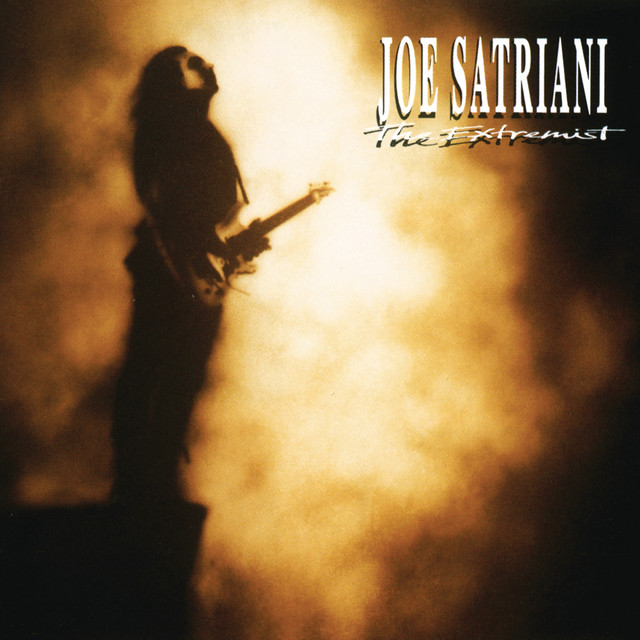
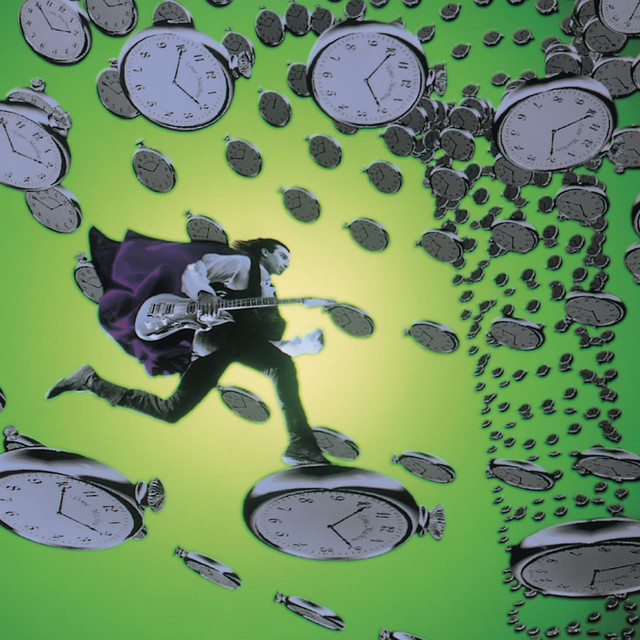
Album Credits
-
Always with Me, Always with You
Joe Satriani · 2024
Producer Programmer -
Joe Satriani · 2020
Producer Recording Engineer -
Bryan Beller · 2019
Recording Engineer -
Joe Satriani · 2018
Recording Engineer -
Joe Satriani · 2015
Producer -
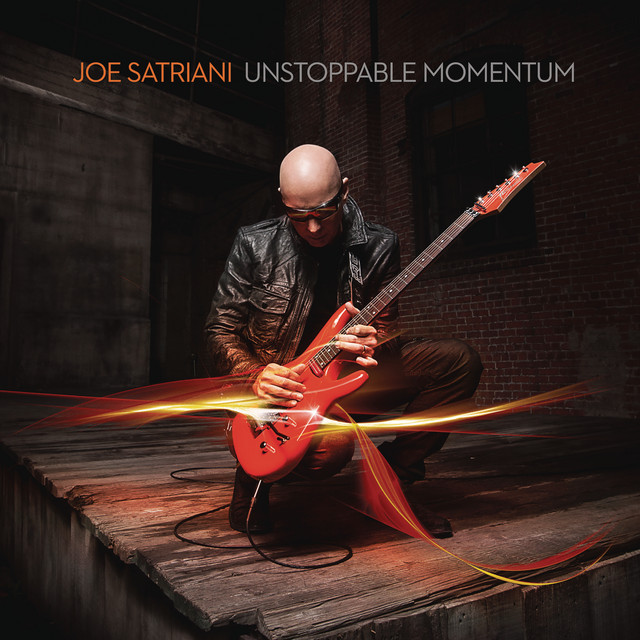
Joe Satriani · 2013
Producer -
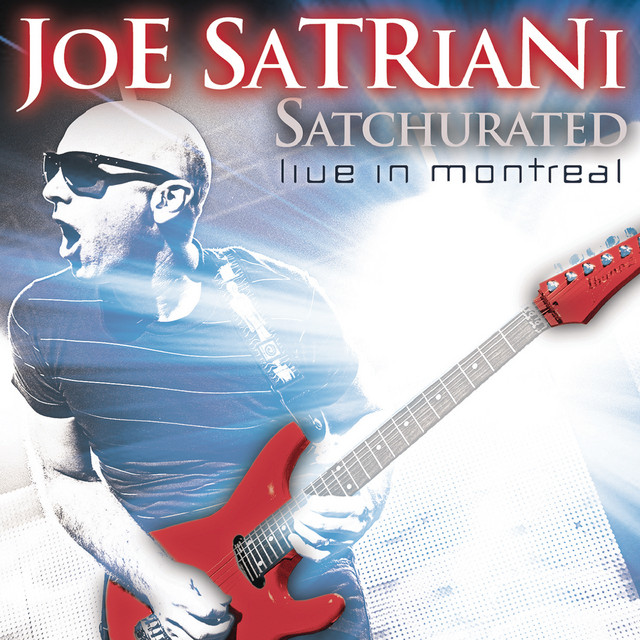
Joe Satriani · 2012
Producer -
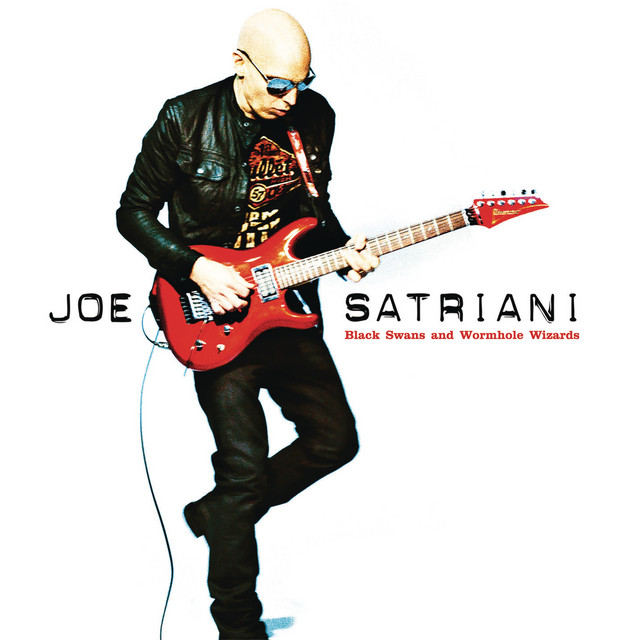
Black Swans and Wormhole Wizards
Joe Satriani · 2010
Producer -
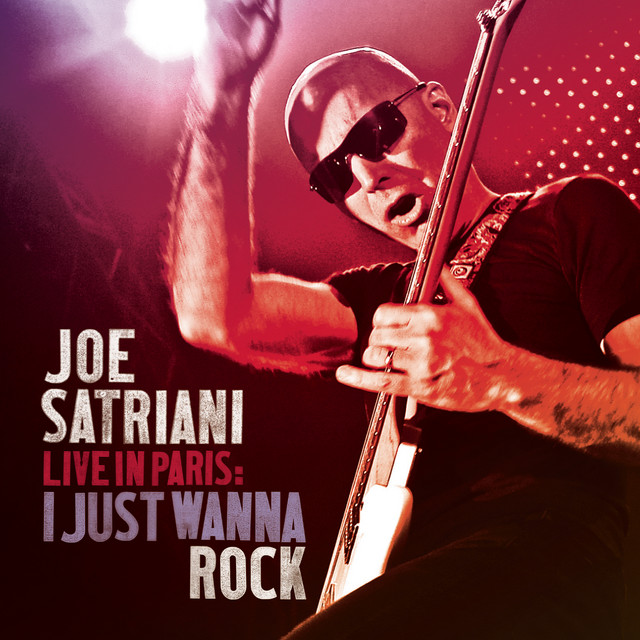
Live in Paris: I Just Wanna Rock
Joe Satriani · 2010
Producer -
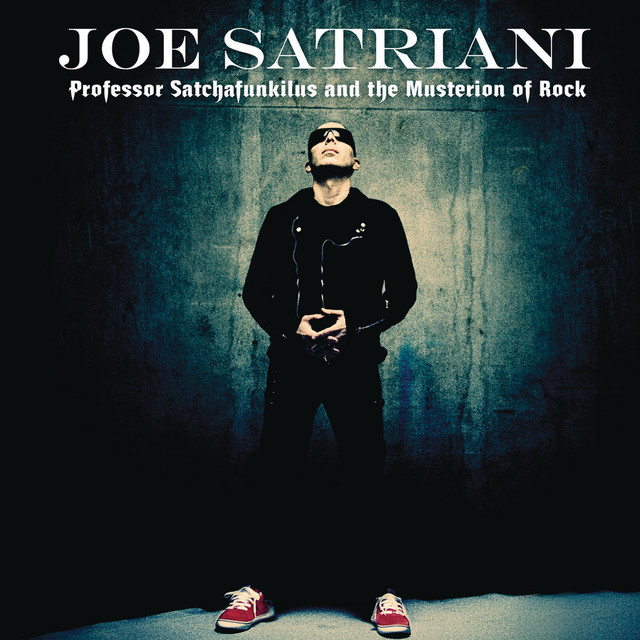
Professor Satchafunkilus and the Musterion of Rock
Joe Satriani · 2008
Mixing Engineer Producer -
Joe Satriani · 2006
Producer -
Joe Satriani · 2006
Engineer Producer