Martin Glover
Martin Glover
Role
Genre
Group
Credits
Role
Genre
Group
Credits
Martin Glover's Gear


You can see Martin Golver playing a black and white Rickenbacker 4003 in this picture.
Find it on:


In this picture you can see Martin Glover playing live with Killing Joke, with a Fender Precision Bass in his hands.
Find it on:


The other main features of both of Youth's studios are his TL Audio desks — the 12?channel M1 for London and the 32?channel VTC in Spain.
Find it on:


-m.webp?v=1784013619)
A Roland Juno 106 can be seen in Martin Glover's studio (photos 1, 2 and 6).
Find it on:

"I'm using Logic 8 on my Powerbook laptop for writing. I haven't used it yet on my main production rig, where I'm still using Logic 7.”
Find it on:

The other main features of both of Youth's studios are his TL Audio desks — the 12?channel M1 for London and the 32?channel VTC in Spain.
Find it on:
-m.webp?v=1783954643)
The London project studio houses a few of the vintage synths that Youth has collected over the years, including a Korg MS20.
Find it on:

Rack gear includes a Studio Electronics MIDIMini Minimoog clone.
Find it on:

A MicroKorg can be seen in Martin Glover's studio (first photo, top of rack).
Find it on:


An M-Audio Oxygen 8 can be seen in Martin Glover's studio (photos 2 and 3).
Find it on:

A Mac G5 box can be seen in his studio (second photo).
Find it on:

Youth professes an affection for analogue keyboards and a strong dislike of FM synthesis. "I don't like modern keyboards too much. I leave them to jingle writers. Those modern sounds are so associative of those advertising images that I prefer to stay well away from them. But of course they end up using your music anyway [laughs]." The only modern keyboard which has his approval is the Roland JD800, because of its "analogue versatility. It's hands-on, direct communication with the machine, rather than numerical, mathematical communication. You can change the sounds very quickly. One of the most important things with equipment is how much time they take to use and program." Hence the presence of keyboards like Alpha Juno 2, Juno 106, Oberheim OB-X (MIDI), SH101 + MCV, Korg MS1, Proteus, Proteus World, plus of course the JD800 in the main studio in the basement. There are also the well tested TR808 and 909, plus Akais S1000 and S1100.
Find it on:

Youth professes an affection for analogue keyboards and a strong dislike of FM synthesis. "I don't like modern keyboards too much. I leave them to jingle writers. Those modern sounds are so associative of those advertising images that I prefer to stay well away from them. But of course they end up using your music anyway [laughs]." The only modern keyboard which has his approval is the Roland JD800, because of its "analogue versatility. It's hands-on, direct communication with the machine, rather than numerical, mathematical communication. You can change the sounds very quickly. One of the most important things with equipment is how much time they take to use and program." Hence the presence of keyboards like Alpha Juno 2, Juno 106, Oberheim OB-X (MIDI), SH101 + MCV, Korg MS1, Proteus, Proteus World, plus of course the JD800 in the main studio in the basement. There are also the well tested TR808 and 909, plus Akais S1000 and S1100.
Find it on:

Youth professes an affection for analogue keyboards and a strong dislike of FM synthesis. "I don't like modern keyboards too much. I leave them to jingle writers. Those modern sounds are so associative of those advertising images that I prefer to stay well away from them. But of course they end up using your music anyway [laughs]." The only modern keyboard which has his approval is the Roland JD800, because of its "analogue versatility. It's hands-on, direct communication with the machine, rather than numerical, mathematical communication. You can change the sounds very quickly. One of the most important things with equipment is how much time they take to use and program." Hence the presence of keyboards like Alpha Juno 2, Juno 106, Oberheim OB-X (MIDI), SH101 + MCV, Korg MS1, Proteus, Proteus World, plus of course the JD800 in the main studio in the basement. There are also the well tested TR808 and 909, plus Akais S1000 and S1100.
Find it on:
-m.webp?v=1784013625)
Youth professes an affection for analogue keyboards and a strong dislike of FM synthesis. "I don't like modern keyboards too much. I leave them to jingle writers. Those modern sounds are so associative of those advertising images that I prefer to stay well away from them. But of course they end up using your music anyway [laughs]." The only modern keyboard which has his approval is the Roland JD800, because of its "analogue versatility. It's hands-on, direct communication with the machine, rather than numerical, mathematical communication. You can change the sounds very quickly. One of the most important things with equipment is how much time they take to use and program." Hence the presence of keyboards like Alpha Juno 2, Juno 106, Oberheim OB-X (MIDI), SH101 + MCV, Korg MS1, Proteus, Proteus World, plus of course the JD800 in the main studio in the basement. There are also the well tested TR808 and 909, plus Akais S1000 and S1100.
Find it on:

Youth professes an affection for analogue keyboards and a strong dislike of FM synthesis. "I don't like modern keyboards too much. I leave them to jingle writers. Those modern sounds are so associative of those advertising images that I prefer to stay well away from them. But of course they end up using your music anyway [laughs]." The only modern keyboard which has his approval is the Roland JD800, because of its "analogue versatility. It's hands-on, direct communication with the machine, rather than numerical, mathematical communication. You can change the sounds very quickly. One of the most important things with equipment is how much time they take to use and program." Hence the presence of keyboards like Alpha Juno 2, Juno 106, Oberheim OB-X (MIDI), SH101 + MCV, Korg MS1, Proteus, Proteus World, plus of course the JD800 in the main studio in the basement. There are also the well tested TR808 and 909, plus Akais S1000 and S1100.
Find it on:

Youth professes an affection for analogue keyboards and a strong dislike of FM synthesis. "I don't like modern keyboards too much. I leave them to jingle writers. Those modern sounds are so associative of those advertising images that I prefer to stay well away from them. But of course they end up using your music anyway [laughs]." The only modern keyboard which has his approval is the Roland JD800, because of its "analogue versatility. It's hands-on, direct communication with the machine, rather than numerical, mathematical communication. You can change the sounds very quickly. One of the most important things with equipment is how much time they take to use and program." Hence the presence of keyboards like Alpha Juno 2, Juno 106, Oberheim OB-X (MIDI), SH101 + MCV, Korg MS1, Proteus, Proteus World, plus of course the JD800 in the main studio in the basement. There are also the well tested TR808 and 909, plus Akais S1000 and S1100.
Find it on:
-m.webp?v=1783954635)
Youth professes an affection for analogue keyboards and a strong dislike of FM synthesis. "I don't like modern keyboards too much. I leave them to jingle writers. Those modern sounds are so associative of those advertising images that I prefer to stay well away from them. But of course they end up using your music anyway [laughs]." The only modern keyboard which has his approval is the Roland JD800, because of its "analogue versatility. It's hands-on, direct communication with the machine, rather than numerical, mathematical communication. You can change the sounds very quickly. One of the most important things with equipment is how much time they take to use and program." Hence the presence of keyboards like Alpha Juno 2, Juno 106, Oberheim OB-X (MIDI), SH101 + MCV, Korg MS1, Proteus, Proteus World, plus of course the JD800 in the main studio in the basement. There are also the well tested TR808 and 909, plus Akais S1000 and S1100.
Find it on:
-m.webp?v=1783954639)
Youth professes an affection for analogue keyboards and a strong dislike of FM synthesis. "I don't like modern keyboards too much. I leave them to jingle writers. Those modern sounds are so associative of those advertising images that I prefer to stay well away from them. But of course they end up using your music anyway [laughs]." The only modern keyboard which has his approval is the Roland JD800, because of its "analogue versatility. It's hands-on, direct communication with the machine, rather than numerical, mathematical communication. You can change the sounds very quickly. One of the most important things with equipment is how much time they take to use and program." Hence the presence of keyboards like Alpha Juno 2, Juno 106, Oberheim OB-X (MIDI), SH101 + MCV, Korg MS1, Proteus, Proteus World, plus of course the JD800 in the main studio in the basement. There are also the well tested TR808 and 909, plus Akais S1000 and S1100.
Find it on:

Youth, lyrically: "The S1000 and S1100 are probably the only pieces of equipment that I'm almost entirely satisfied with. I think they're probably the most beautiful invention in music ever. They're more fundamentally important than piano or guitar. To me they are like time machines. H.G. Wells would have had a heart attack if he'd seen them."
Find it on:

Youth, lyrically: "The S1000 and S1100 are probably the only pieces of equipment that I'm almost entirely satisfied with. I think they're probably the most beautiful invention in music ever. They're more fundamentally important than piano or guitar. To me they are like time machines. H.G. Wells would have had a heart attack if he'd seen them."
Find it on:

Still, he does touch earth again to say that he prefers the Atari (with Notator/Unitor software) because "it's the language that people use in London in all the bedrooms where all the real work is done. They use Ataris because they're cheap and they do the job. Macs are an elitist medium. They're only for people who can afford to buy them. I'm not interested in elitist languages. I'm interested in contemporary things that everybody uses. When a new Casio machine comes out, I buy it."
Find it on:

With these words Youth heaves himself to his feet and suggests that he takes me for a quick tour of the building before he gets back to work. First he shows me the DDA studio in the basement, which sports a Tascam analogue 24-track, Lexicons 480L and PCM70, an Akai/Linn MPC60, and Genelec and NS10 monitors. A visiting M1 is subjected to his derision, much to the amusement of the programmer. Upstairs he shows me the 16-track studio, home to a Tascam MSR16 and a Soundtracs PC series desk, and the small editing suite with its Macintosh and Soundtools digital editing. Finally there's the demo room, with a Tascam M312B desk, Atari, S1000, Midiverb II, SPX50D, NS10s', and, surprisingly, a DX7II. The latter instrument is being played by Jaz Coleman, who's making a gothic-sounding godawful racket together with Geordie Walker on electric guitar.
Find it on:

With these words Youth heaves himself to his feet and suggests that he takes me for a quick tour of the building before he gets back to work. First he shows me the DDA studio in the basement, which sports a Tascam analogue 24-track, Lexicons 480L and PCM70, an Akai/Linn MPC60, and Genelec and NS10 monitors. A visiting M1 is subjected to his derision, much to the amusement of the programmer. Upstairs he shows me the 16-track studio, home to a Tascam MSR16 and a Soundtracs PC series desk, and the small editing suite with its Macintosh and Soundtools digital editing. Finally there's the demo room, with a Tascam M312B desk, Atari, S1000, Midiverb II, SPX50D, NS10s', and, surprisingly, a DX7II. The latter instrument is being played by Jaz Coleman, who's making a gothic-sounding godawful racket together with Geordie Walker on electric guitar.
Find it on:

With these words Youth heaves himself to his feet and suggests that he takes me for a quick tour of the building before he gets back to work. First he shows me the DDA studio in the basement, which sports a Tascam analogue 24-track, Lexicons 480L and PCM70, an Akai/Linn MPC60, and Genelec and NS10 monitors. A visiting M1 is subjected to his derision, much to the amusement of the programmer. Upstairs he shows me the 16-track studio, home to a Tascam MSR16 and a Soundtracs PC series desk, and the small editing suite with its Macintosh and Soundtools digital editing. Finally there's the demo room, with a Tascam M312B desk, Atari, S1000, Midiverb II, SPX50D, NS10s', and, surprisingly, a DX7II. The latter instrument is being played by Jaz Coleman, who's making a gothic-sounding godawful racket together with Geordie Walker on electric guitar.
Find it on:

With these words Youth heaves himself to his feet and suggests that he takes me for a quick tour of the building before he gets back to work. First he shows me the DDA studio in the basement, which sports a Tascam analogue 24-track, Lexicons 480L and PCM70, an Akai/Linn MPC60, and Genelec and NS10 monitors. A visiting M1 is subjected to his derision, much to the amusement of the programmer. Upstairs he shows me the 16-track studio, home to a Tascam MSR16 and a Soundtracs PC series desk, and the small editing suite with its Macintosh and Soundtools digital editing. Finally there's the demo room, with a Tascam M312B desk, Atari, S1000, Midiverb II, SPX50D, NS10s', and, surprisingly, a DX7II. The latter instrument is being played by Jaz Coleman, who's making a gothic-sounding godawful racket together with Geordie Walker on electric guitar.
Find it on:

With these words Youth heaves himself to his feet and suggests that he takes me for a quick tour of the building before he gets back to work. First he shows me the DDA studio in the basement, which sports a Tascam analogue 24-track, Lexicons 480L and PCM70, an Akai/Linn MPC60, and Genelec and NS10 monitors. A visiting M1 is subjected to his derision, much to the amusement of the programmer. Upstairs he shows me the 16-track studio, home to a Tascam MSR16 and a Soundtracs PC series desk, and the small editing suite with its Macintosh and Soundtools digital editing. Finally there's the demo room, with a Tascam M312B desk, Atari, S1000, Midiverb II, SPX50D, NS10s', and, surprisingly, a DX7II. The latter instrument is being played by Jaz Coleman, who's making a gothic-sounding godawful racket together with Geordie Walker on electric guitar.
Find it on:

With these words Youth heaves himself to his feet and suggests that he takes me for a quick tour of the building before he gets back to work. First he shows me the DDA studio in the basement, which sports a Tascam analogue 24-track, Lexicons 480L and PCM70, an Akai/Linn MPC60, and Genelec and NS10 monitors. A visiting M1 is subjected to his derision, much to the amusement of the programmer. Upstairs he shows me the 16-track studio, home to a Tascam MSR16 and a Soundtracs PC series desk, and the small editing suite with its Macintosh and Soundtools digital editing. Finally there's the demo room, with a Tascam M312B desk, Atari, S1000, Midiverb II, SPX50D, NS10s', and, surprisingly, a DX7II. The latter instrument is being played by Jaz Coleman, who's making a gothic-sounding godawful racket together with Geordie Walker on electric guitar.
Find it on:

With these words Youth heaves himself to his feet and suggests that he takes me for a quick tour of the building before he gets back to work. First he shows me the DDA studio in the basement, which sports a Tascam analogue 24-track, Lexicons 480L and PCM70, an Akai/Linn MPC60, and Genelec and NS10 monitors. A visiting M1 is subjected to his derision, much to the amusement of the programmer. Upstairs he shows me the 16-track studio, home to a Tascam MSR16 and a Soundtracs PC series desk, and the small editing suite with its Macintosh and Soundtools digital editing. Finally there's the demo room, with a Tascam M312B desk, Atari, S1000, Midiverb II, SPX50D, NS10s', and, surprisingly, a DX7II. The latter instrument is being played by Jaz Coleman, who's making a gothic-sounding godawful racket together with Geordie Walker on electric guitar.
Find it on:

With these words Youth heaves himself to his feet and suggests that he takes me for a quick tour of the building before he gets back to work. First he shows me the DDA studio in the basement, which sports a Tascam analogue 24-track, Lexicons 480L and PCM70, an Akai/Linn MPC60, and Genelec and NS10 monitors. A visiting M1 is subjected to his derision, much to the amusement of the programmer. Upstairs he shows me the 16-track studio, home to a Tascam MSR16 and a Soundtracs PC series desk, and the small editing suite with its Macintosh and Soundtools digital editing. Finally there's the demo room, with a Tascam M312B desk, Atari, S1000, Midiverb II, SPX50D, NS10s', and, surprisingly, a DX7II. The latter instrument is being played by Jaz Coleman, who's making a gothic-sounding godawful racket together with Geordie Walker on electric guitar.
Find it on:
This is a community-built gear list for Martin Glover.
- Find relevant music gear like Bass Guitars, Amplifiers, Effects Pedals, Studio Equipment, Software Plugins and VSTs, Headphones, and other instruments and add it to Martin Glover.
- The best places to look for gear usage are typically on the artist's social media, YouTube, live performance images, and interviews.
- To receive email updates when Martin Glover is seen with new gear, follow the artist.
Discography
Dub Mix Specialists
1996
Freebird (Original Motion Picture Soundtrack)
2010

Celtic Vedic In Dub
2017
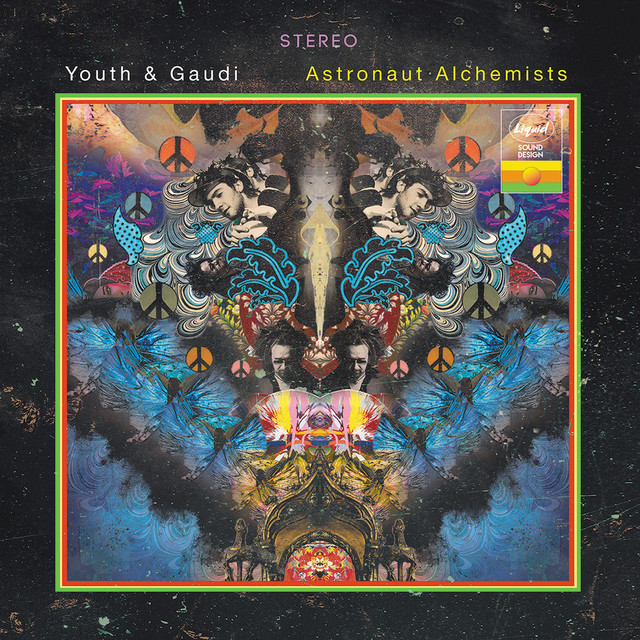
Astronaut Alchemists
2018
Journey (The Ambient Remixes)
2020
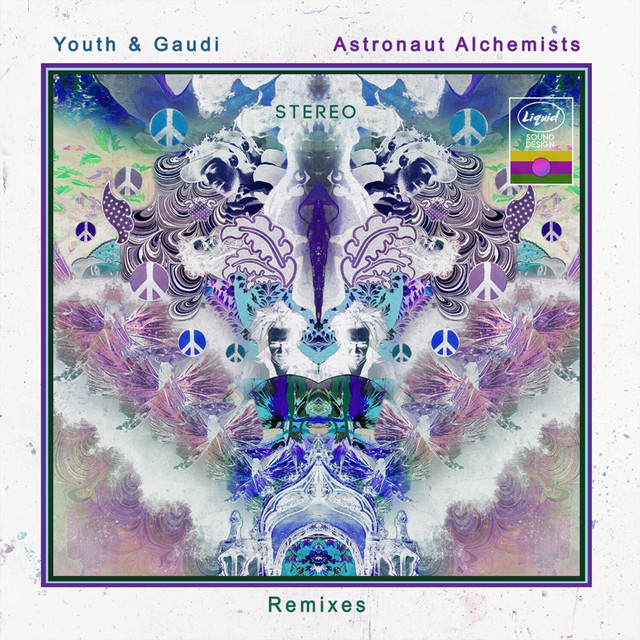
Astronaut Alchemists (Remixes)
2020
Vertigo (Extended Version)
2020
Electronic Manipulation
2020
Yoga Ambient (Remixes)
2020
Corpus Mei
2022
Stratosphere
2022
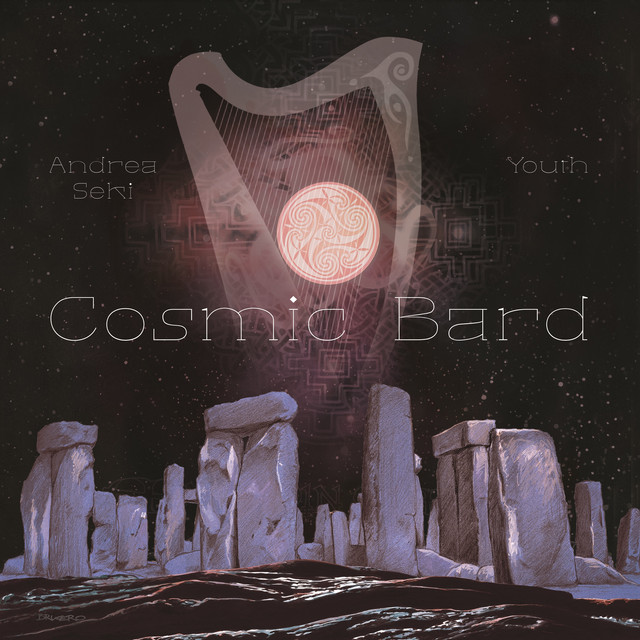
Cosmic Bard
2022
Album Credits
-

Ulver · 2020
Mixing Engineer -
Ulver · 2020
Mixing Engineer -
Ulver · 2020
Mixing Engineer -
Ulver · 2020
Mixing Engineer -
Astronaut Alchemists (Remixes)
Martin Glover & Gaudi · 2020
Producer -
Peter Murphy · 2014
Mixing Engineer Producer Programmer -
Urban Hymns (Super Deluxe / Remastered 2016)
The Verve · 1997
Producer