This page about Studio Electronics Midimoog is a stub. You can help improve it:


Pricing and availability




* Product prices and availability are updated by Equipboard every 24hrs and are subject to change. Equipboard may receive compensation for purchases made at participating retailers linked on this site. This compensation does not affect what products or prices are displayed, or the order of prices listed. For more information, please refer to our affiliate disclosure.
Description
The Studio Electronics Midimoog brings the legendary sound of the classic Minimoog Model D into the digital age, delivering vintage tones with modern precision. This sound module captures the essence of the iconic analog synthesizer, providing musicians with a unique blend of nostalgia and innovation. Ideal for both studio and live performances, the Midimoog is equipped with a versatile MIDI interface, allowing seamless integration with contemporary setups. Its analog signal path ensures that every note resonates with warmth and depth, reminiscent of the original Moog sound.
Perfect for synthesizer enthusiasts and professional musicians alike, the Midimoog offers a user-friendly interface that balances simplicity and functionality. The module features multiple oscillators, a classic ladder filter, and a range of modulation options, enabling artists to craft a diverse palette of sounds—from lush basses to soaring leads. Whether you're recreating the sounds of the past or exploring new sonic territories, the Studio Electronics Midimoog is your gateway to a world of musical possibilities.
Key Features:
- Authentic analog signal path for vintage sound quality
- Compatible with MIDI for modern integration
- Multiple oscillators for a wide range of tonal possibilities
- Classic ladder filter for rich, dynamic sound shaping
- Compact design ideal for both studio use and live performances
- Comprehensive modulation options for creative sound design
- Intuitive interface for easy navigation and control
Videos

Tim Shoebridge
Studio Electronics MIDIMOOG
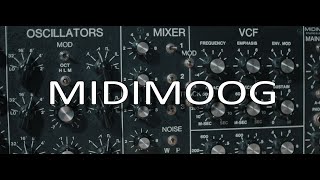
Studio Electronics MIDIMOOG
Tim Shoebridge
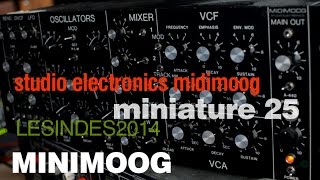
Studio Electronics Midimoog // MINIMOOG in the Box // miniature 25

LESINDES
Reviews
Owner Insights
We analyzed real musician discussions from forums and Reddit to find what players love, question, and tweak about Studio Electronics Midimoog.
Setup and maintenance
-
Owners faced internal setup issues with the Midimoog, which were challenging to resolve without professional intervention.
Source
Features and functionality
-
The Midimini, developed after original Minimoog parts became scarce, was built with Bob Moog's approval and is distinct from the retrofitted Minimoogs.
Source
Comparisons
-
The Midimini is distinct from the Roland SE-02, though they share some design inspirations.
Source
Value and pricing
-
Midimoogs are typically listed around $3,000, with unique studio lineage making them more valuable.
Source
User experience
-
Studio Electronics offers repair and customization services with no backlog, providing a reliable option for owners facing technical issues.
Source
5.0 out of 5
Based on 0 Reviews and 1 Rating
Artist usage
Add artist
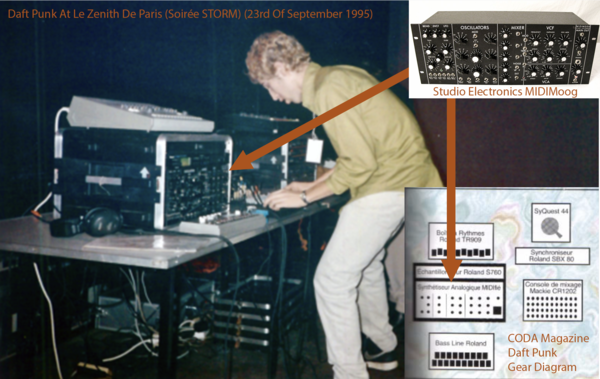
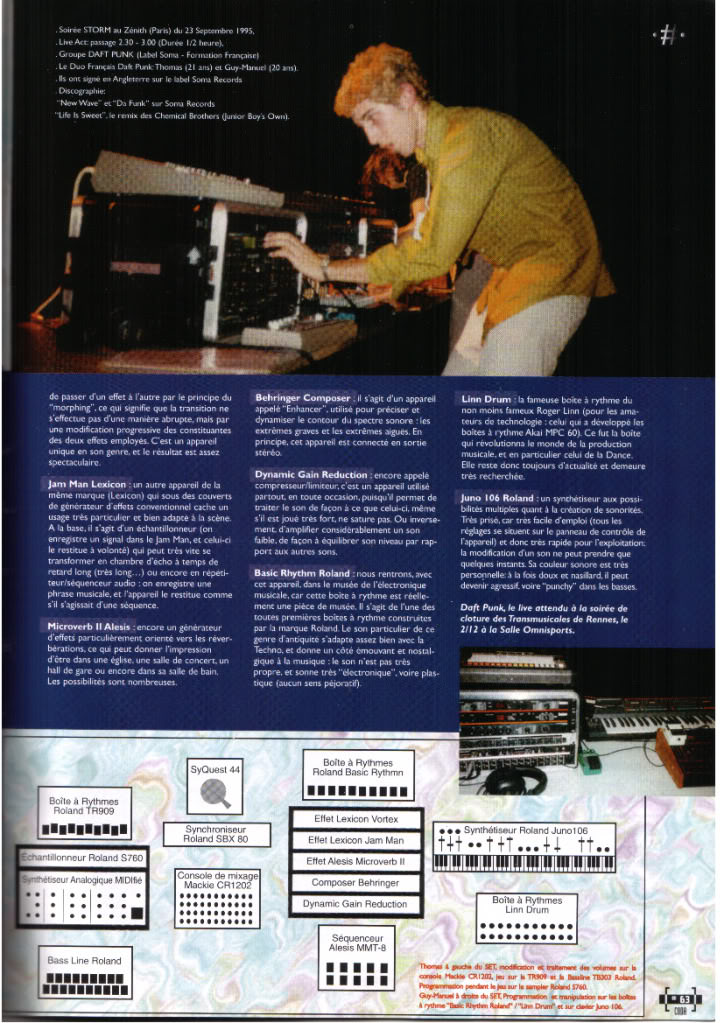
Per this photo dated 23rd of September 1995 and a late-'90s feature in CODA magazine, Daft Punk employed a Studio Electronics MIDIMoog as part of their live performance setup during the Homework era. Note that the rack shown in the CODA magazine diagram features a Roland S-760 rack sampler directly above the 4-unit high analog synth, mirroring the setup shown in the 1995 photograph. While the photo evidence may not be high-res, there were no other rack mounted analog synths of this size on the market in before or during this timeframe.


Paul McCartney is mentioned in the Hog Hill Mill Blog under "Keyboards & Samplers" as using the Studio Electronics Midimoog.


Mentioned on the Syro album packaging as one of the pieces of gear used on the recording of the album. Richard has 2 instances of the Midi Moog.


Used for every Depeche Mode record after Songs of Faith and Devotion. It was sold on Reverb.com in 2019 for charity.
This Studio Electronics MidiMoog Rack Synthesizer is from the private collection of Martin Gore, founding member of Depeche Mode.
SN: N/A. SUPER COOL. MidiMoog rack synthesizer. Some light rack wear. UK power cable. Will need a step down transformer.
This unit was used on all Depeche Mode recordings following Songs Of Faith & Devotion. Insane!
All items in The Official Martin Gore of Depeche Mode Reverb Shop ship fully insured with delivery confirmation and include a signed and embossed Certificate of Authenticity from Martin Gore.


"We used S1000s; Korg T3; Juno 106; Prophet V; Voyetra Eight (best sounding poly analogue, but hard to program); DX5; Moog Source; MIDI Moog; Roland SH101 (red); Roland TR909; MT32; D110; Mac SE; Mac IIex; Sound Tools for stereo mastering, with Up Beat and Pro 4 for sequencing, though we have now changed to another sequencing package as neither of the two used previously worked correctly, a situation which I find extremely annoying."


In the Sound on Sound article titled "UNSOUND RECORDINGS," Alan Wilder is listed as using the Studio Electronics Midimoog in his equipment setup for Recoil.


Klaus Schulze is associated with the Studio Electronics Midimoog, as listed on his official instruments page.


"Midi version of the original Mini Moog. Originally bought for Tony James to attach to his midi-capable WAL bass guitar, it was practically never used, and it's been in a cupboard since we got the SE1 units. No store or dump facility, and unstable tuning."


From the FAW page found on The Enigma Archive: "From the credits of various albums, it is known that Michael Cretu uses or has used the Waveframe 1000, Audi Frame Workstation, MIDIMoog, PPG System, Korg M1, C-Lab Notator, Takamine 6 and 12 String, Tom Anderson Electric Guitars, Otari DTR-900, Akai 900, Linn 9000, Prophet 2002, X-Pander, EMS Vocoder, DX-7, and Roland Super Jupiter."


Although boasting a lush sound, the album was recorded largely at Paul's Rhythm Ranch studio on a single tascam 16-track with a Studiomaster desk. Synths used include: Roland D-50, Akai S1000 and S3000, Kork M1R, Waldorf Microwave, Roland Super Jupiter module, Oberheim Matrix 1000, Yamaha TX802, Minimoog, MIDIMoog, Oberheim Two-Voice, Roland Jupiter 8 and SH-101.


Rack gear includes a Studio Electronics MIDIMini Minimoog clone.


During a studio tour with Future Music Magazine, Steve Mac says [@ 13:10] about his Studio Electronics Midi Moog:
“This is basically a real Minimoog but in a rack version which was made by Studio Electronics. This thing sounds absolutely massive. Just like a Minimoog, basically. It's got a few more controls on it, obviously because it's midi. You've got more aftertouch and things like that in the controls. We sort of always go to that for bass as well as the Roland SH-5. I love using the Midi Moog for sub-bass. The sine wave on it is absolutely huge. That's the Minimoog thing, you just press one of the keys and it shakes the room. It's just known for that."
Album Usage
The Studio Electronics Midimoog has been featured on the following albums:

Genre Usage
Based on how artists on Equipboard use this gear, it is most commonly found in the following genres.
Used With
Based on how musicians on Equipboard use Studio Electronics Midimoog, it is most commonly used with the following gear.



-s.webp?v=1784905108)



Similar
Add recommendation3 alternative and related items for Studio Electronics Midimoog, curated by the Equipboard community.

$3,299.00 - $4,099.00

$3,299.00

$404.99 - $819.99
A 3 oscillator analog SE-voiced synth w/ patch memory + an onboard sequencer. Pint-sized SE analog @ 1/10th the price.
More Studio Electronics Sound Modules


-m.webp?v=1784905256)
$320.50
in Sound Modules Rank


$170.00
in Sound Modules Rank

.png?v=1784755332)


$1,156.83 - $1,999.99
in Sound Modules Rank


$1,388.00
in Sound Modules Rank


$750.00
in Sound Modules Rank


$238.29
in Sound Modules Rank


$2,299.00 - $2,330.00
in Sound Modules Rank


$625.00
in Sound Modules Rank


$119.00
in Sound Modules Rank


$259.00
in Sound Modules Rank

.jpg?v=1784888431)


$550.00
in Sound Modules Rank


$3,900.00
in Sound Modules Rank

$4,999.99
in Sound Modules Rank


$400.00
in Sound Modules Rank


$1,211.75
in Sound Modules Rank


$101.27
in Sound Modules Rank


$75.00
in Sound Modules Rank


$175.00 - $289.00
in Sound Modules Rank


$49.99
in Sound Modules Rank


$139.00 - $1,500.00
in Sound Modules Rank


$4.75
in Sound Modules Rank


$500.00
in Sound Modules Rank


$669.84
in Sound Modules Rank

$209.00
in Sound Modules Rank


$2,099.00
in Sound Modules Rank


$400.00
in Sound Modules Rank


$506.36
in Sound Modules Rank


$700.00
in Sound Modules Rank


$41.10
in Sound Modules Rank


$291.90
in Sound Modules Rank


$200.00
in Sound Modules Rank


$375.00 - $1,299.99
in Sound Modules Rank


-m.webp?v=1784897697)
$323.00 - $489.00
in Sound Modules Rank


$107.23
in Sound Modules Rank


$30.00
in Sound Modules Rank
Community setups


Gear Guides





.webp)

Most Popular Sound Modules
Most Popular Brands
-
Added to Equipboard on by
 curbsitter
GearIQ 380
-


