


Pricing and availability
We compare 600+ stores and found this item at 1 store. Prices updated .
Store
Reviews
Price




Average Price: $189
Standard/Professional
$100
$501+
Price Tier
Budget
Standard
High-end
* Product prices and availability are updated by Equipboard every 24hrs and are subject to change. Equipboard may receive compensation for purchases made at participating retailers linked on this site. This compensation does not affect what products or prices are displayed, or the order of prices listed. For more information, please refer to our affiliate disclosure.
Description
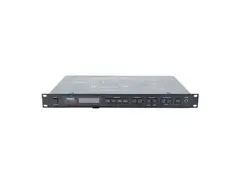
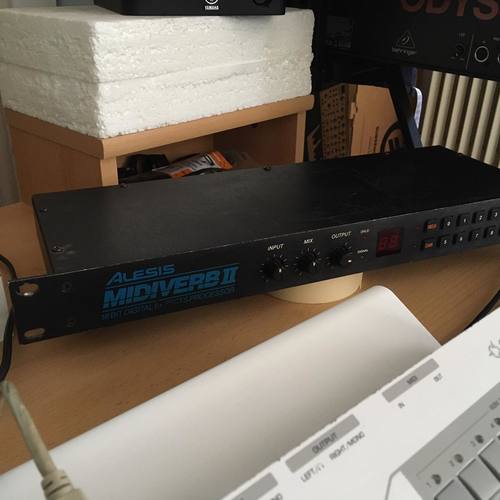
Introducing the Alesis Midiverb II, a cost-effective, rack-mountable powerhouse in the realm of reverb and multi-effects processing. This unit stands out with its swift recall function through user input or MIDI command, making it an indispensable tool for modern musicians. Its 16-bit processor and 16 kHz bandwidth ensure your sound stays crystal clear and true to your artistic vision.
Key Features:
- Rack-mountable design for easy integration into your set up
- User-friendly with instant recall via user input or MIDI command
- 16-bit processor for high-quality sound processing
- 16 kHz bandwidth for a wide range of sound frequencies
- Cost-effective solution for professional-grade reverb and multi-effects processing
Owner's manual
Alesis Midiverb II User ManualProduct specs
| Brand | Alesis |
| Model | Midiverb II 16-Bit Digital Effects Processor |
| Finish | Black |
| Year | 1990s |
| Categories | Reverb |
| Bit Depth | 16-bit |
| Electronics | Analog, Digital, Solid State |
| Format | 19-inch Rackmount |
| Number of Analog Inputs | 2 |
| Number of Analog Outputs | 2 |
| Number of Channels | 2 |
| Number of MIDI Inputs | 1 |
| Number of MIDI Outputs | 1 |
FAQs
-
What types of effects can the Alesis Midiverb II produce?
-
The Alesis Midiverb II offers a range of effects including reverb, chorus, flange, delay, and pitch shifting. It can also handle up to three simultaneous multieffects, making it versatile for various recording and live performance needs.
-
Is the Alesis Midiverb II suitable for live performances?
-
Yes, the Alesis Midiverb II is designed for both studio and live performance settings. Its rackmount format and durable build make it a reliable choice for musicians needing consistent effects processing on stage.
-
How can I connect the Alesis Midiverb II to my setup?
-
The Alesis Midiverb II features two analog inputs and outputs, along with MIDI input and output, allowing for easy integration into most studio and live performance setups. It can be connected to mixers, instruments, or other audio equipment requiring effects processing.
-
Does the Alesis Midiverb II support MIDI control?
-
Yes, the Alesis Midiverb II includes MIDI input and output, allowing you to control its effects settings and parameters via MIDI, enhancing its integration with other MIDI-compatible gear.
-
What is the bit depth of the Alesis Midiverb II?
-
The Alesis Midiverb II operates at a 16-bit depth, providing a good balance between sound quality and processing power for a wide range of audio applications.
Videos

Paul Graham (Guitar)
Alesis Midiverb 2 Demo
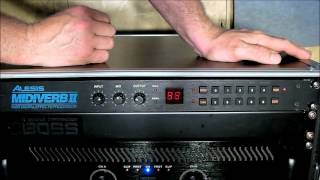
Alesis Midiverb 2 Demo
Paul Graham (Guitar)

Alesis MIDIVERB II | It's like liquid GOLD!

Espen Kraft
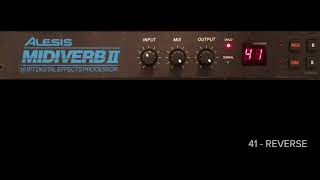
Demo :: Midiverb II on SH101 (Aphex Riff)

SOLON Music
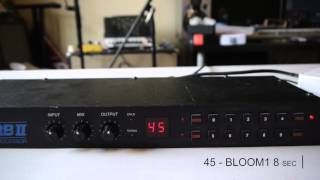
Alesis Midiverb 2 - Guitar Demo

JimijaymesGuitarist
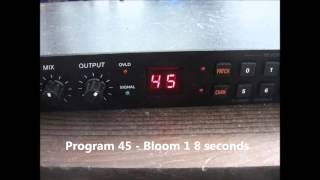
Alesis Midiverb II reverse reverb programs - Bloom, My Bloody Valentine

Soundbelch
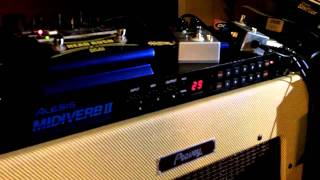
Alesis Midiverb II - Patch 29: 'XLarge Warm' Hall Reverb

TheColdNorthWind
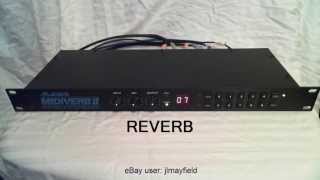
Alesis MIDIVERB II Digital Effects Processor Demo

Yon Yonson
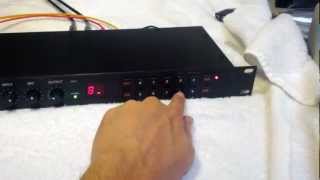
Alesis Midiverb 2

ymarcc
Why Shoegazers Love the Alesis Midiverb II | In Depth Film (Stereo)

pedal partners
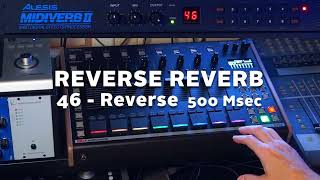
Alesis MidiVerb 2 is GOLD

Espen Kraft
Exploring the Alesis Midiverb II's Iconic 'Bloom' LIVE!

Vulture Culture
Alesis Midiverb II 16-Bit Digital Effects Processor Demo

Beyond Soup by Jaed Arzadon
ALESIS MIDIVERB II IRS! DEMO

PAST TO FUTURE
Reviews
PROS
-
Unique, characterful sounds perfect for 80s/90s nostalgia
-
Large variety of presets including lush reverbs and choruses
-
Uniquely integrated chip enhances efficiency and performance
-
Some presets capable of standing as their own instruments
-
Notably versatile, from subtle to extreme effects
-
Classic gated reverb sounds are particularly praised
-
Can achieve a "warm" analog feel to tracks
-
Simple to repair, enhancing longevity
CONS
-
Presets are not tweakable, limiting customization
-
Generates noise, which may not suit all tastes
-
High-end frequencies can be crunchy due to aliasing
-
Lacks an on/off switch, inconvenient for some users
-
Cannot edit effects parameters deeply, reducing flexibility
-
Some find it inferior to higher-end models like Lexicon 224 or AMS RMX16
Owner Insights
We analyzed real musician discussions from forums and Reddit to find what players love, question, and tweak about Alesis Midiverb II.
Features and functionality
-
The Alesis Midiverb II does not feature true bypass, meaning knob adjustments affect the dry signal even when effects are off.
Source -
Using a Boss LS2 can help manage volume discrepancies by setting the Midiverb II to full wet and controlling the return level for consistent output.
Source -
The Midiverb II can be integrated using a loop switcher like the LS-2 to create a bypass loop, allowing it to function like a pedal.
Source -
Patch 45, Bloom 1, is speculated to achieve a high blend effect similar to Shields' sound on certain tracks.
Source
Setup and maintenance
Use cases and applications
-
When used in high-volume live settings with amps like Marshalls, the volume increase from the Midiverb II is negligible due to the already high output.
Source -
In studio settings, issues like tone loss and volume discrepancies are less pronounced, making it more suitable for controlled environments.
Source -
Patch 34 is identified as the short gate effect used live by Kevin Shields during the "Loveless" tour, closely replicating his iconic sound.
Source -
The Midiverb II's Bloom patch is highlighted as closely resembling the intro sound of "Slow," suggesting its use in recreating the song's unique texture.
Source
Software and compatibility
-
A simple MIDI footswitch can effectively control the Alesis Midiverb II, despite its lack of true bypass functionality.
Source
Comparisons
-
The TC Electronic M300 and M-One are mentioned as cost-effective alternatives available for under $100, offering modern features.
Source -
The Midiverb II is described as offering a more "dull" tone compared to the brighter and more focused Yamaha SPX90.
Source -
The Yamaha SPX90 is noted for delivering an "airy" effect, whereas the Midiverb II imparts a metallic smear, particularly in chorus sections.
Source
Critic Reviews
4.5 out of 5
Based on 4 Reviews and 29 Ratings

395
a classic
it's a classic shoegazer tool for a reason. all preset and the only alesis rack reverb of that particular era with buttons. has these 2 or 3 presets that are hard to recreate with it siblings, notably the reverse patches. bit overpriced due to its famous users.


175
Lush 80s reverb at a reasonable price
The Alesis Midiverb II is a classic piece of equipment that has gone from being in the bedroom studio's of musicians to being well known and coveted for its lush reverbs and chorus patches. The Midiverb II gives you 100 presets of very 80s sounding effects from reverbs, to delays, to choruses. You sadly can't edit the parameters of the effects processor but the quality of the preset patches make up for it. Sure its not a Lexicon 224 or an AMS RMX16 but it gives you a unique sound that will set your sounds apart from others.
Pros: -Can be picked up relatively cheap -many classic reverbs including the classic gated reverb sounds -Simple to repair
Cons: -Only 100 presets which aren't tweakable -Can be a little noisy -High end is a little crunchy due to aliasing

41031
I accidentally posted this udner MIDIverb III originally
A friend gave me this along with my Roland MKS. I happen to have turned up the midi cabled remote control for this when I helped that guy clean out his home studio, it does not help you to program it.... basically all your editing is controlled by the input, mix and output knobs, the reverbs are super preset... I have heard you can program it from your PC via midi, why bother? It sounds just like the affordable and better-featured nano-verb to my ear... as soon as I figure out where I put this piece of garbage its getting sold. Definitely not in the same league as the quadraverbs I've had, and I do not like those much either.... but at least you can program those suckers if you are diligent about menu diving. It has 1 thing going for it and that's a cool reverse patch. In the cheap seats of old DSP racks I'll take the Yamaha SPX stuff over any alesis product any day of the week. But I sold my SPX90 too...

300
Nice selection, poor tone
- Great selection of effects
- Has the settings used by My Bloody Valentine (Reverse Reverb)
Ease of use
Destroys your tone
No on/off switch
Cannot adjust parameters / Can only use pre-sets
+/- Not the highest quality sounding unit, but can be great if that's what you're going for.
Artist usage
Add artist
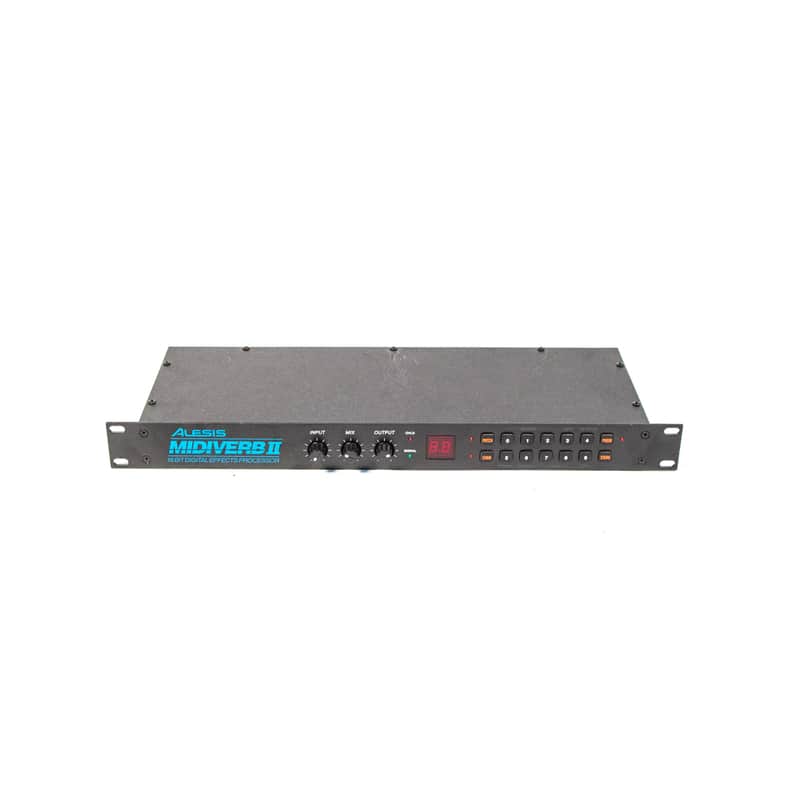
This Alesis Midiverb II is owned by Billy Corgan


""All I Need" from Isn't Anything by My Bloody Valentine
There was a drum machine beat just going like a heartbeat effect. I played an acoustic guitar to it and then it's basically an Alesis Midiverb II, it's the reverse reverb program. If I ever had a secret weapon it's the Alesis and the [Yamaha] SPX 90 and again, it's the reverse reverb program."


Buckethead has been using the Alesis Midiverb II since the 1990s, incorporating it in the effects loop of his EVH 5150 50-watt head. He often utilizes presets 98 and 99, as shown in the user-uploaded photo from Dmcdn.


This is an Alesis Midiverb II multi-effects processor. This is the piece of kit that Cressa would operate for Squire when the Roses played live.

10:32 In this video it has Phil showing his Alesis Midiverb 2

In this video, Phil Collen shows his rack rig which consists of two Alesis Midiverb II rack units.


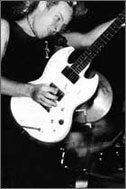
For the "Field Day" lp and tour, Brian played a 1967 Gibson Firebird 12 string, a 1988 Charvel Model 4 with EMG 81 pickups, and a 1986 Gibson SG with EMG 81 pickups. His amps were two Marshall 100-watt heads, four Marshall cabinets with 35-watt Celestion speakers, and a Roland JC-120. He also used an Alesis Midiverb 2, Roland SDE 1000 delay and Samson Stage Series wireless.


Per "Rock This Town" publication, special issue 1991:
In 1991, the setup was as follows: [Rock This Town special issue 1991]
Sound studio: Analog Synths: Roland System 100/100M/101 (+Roland Midi interface MPU-101);YAMAHA CS-40M (in the Take One video); Oberheim Matrix 1000; Digital Synths: Yamaha DX-7 (2); Ensonic VFX; Roland DDR30; Yamaha tg77; Korg Wavestation; Sequencer: Atari 1040 (Sequ. Cubase 2.0); Samplers: AkaiS9000 (2); AkaiS1000 (8Mg + Hard Drive Mfile 44); AkaiS1000PB (4Mg); Emulator II; akai 1100, e-mu Procussion, roland s-10 for live use @ the mixing desk; Effects: Lexicon 480L; Yamaha SPX90 II (2); Roland SRV-2000; Roland SDE-3000; Alesis Midiverb II; Alesis Quadraverb; ART DRX; spx 1000 (x2); Eventide h3000 se; Mixing: Table TAC Scorpion 32/16; Recorder TASCAM MS16 tracks; Recorder DAT Luxman; Speakers Yamaha NS 10M pro ATC SCM50; QUAD ampli (for NS-10M); Diverse: compressor/limiter, noise gate, parametric eq. Live: Backline: Akai S9000; Roland DDR30; Simons & Roland Pads; Emulator II; TASCAM238 8
Graphic Studio: Commodore Amiga 2500 (6Mg + Hard Drive 40Mg); Commodore Amiga 500; Digitizer SNAPSHOT; Camera Sony CCD V-200E; Laserprint NEC Silentwriter LC890; Monitor NEC Multisync 2A.


Future Sound of London equipment list from the August 1992 issue of Music Technology Magazine:
Instruments
Akai S612 Sampler + MD280 Disk Drive Akai S900 Sampler Akai S1000 Sampler w/8Mb memory E-mu Proteus/1 w/Protologic board Jen SX1000 Synth Roland D110 Synth Module Roland JX3P Synth Roland MC202 Monosynth Roland MKS50 Synth Module + PG300 Programmer Roland TB303 Bass Synth Roland TR606 Drum Machine Yamaha DS55 Synth Yamaha TX81Z
Effects
Alesis Quadraverb (x2) Alesis MIDIverb II BBE 422A Sonic Maximiser Bel Electronics BD80 Digital Delay Drawmer DS201 Dual Gate Fostex 3070 Compressor/Limiter Ibanez DM1100 Digital Delay Korg DRV1000 Digital Reverb Yamaha SPX90 Multi effects Processor
Recording
Aiwa HDX1 DAT Recorder Atari 1040ST Computer w/C-lab Creator software Fostex B16 Multitrack Groove MC2V MIDI/CV Converter Korg KMS30 Sync Unit Nakamichi 480Z Cassette Deck Sony DTC1000ES DAT Recorder Soundtracs CM4400 Mixing Desk Technics SL1200 Mk2 Turntable Yamaha NS10M Monitors

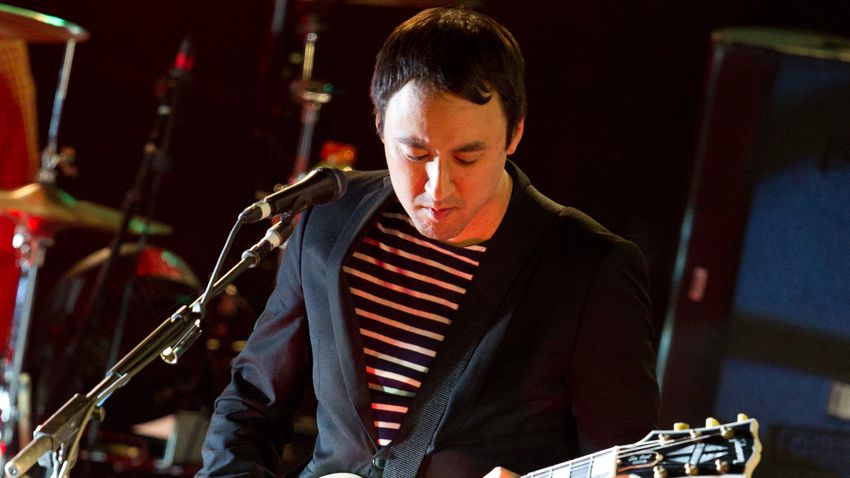
"In the effects loop of the preamp, I have the Eventide Time Factor, and I also have and an old Alesis MidiVerb 2, which I only use on preset 45, which is called the 'Bloom' setting. It's a reverse reverb kind of thing, and it's very beautiful."


You can see the Alesis midiverb 2 in his rig here, you can tell it is his rig from this photo: https://render.fineartamerica.com/images/rendered/default/print/5.5/8/break/images/artworkimages/medium/3/richard-patrick-of-nine-inch-nails-performing-in-raleigh-nc-david-ilzhoefer.jpg
Album Usage
The Alesis Midiverb II has been featured on the following albums:
Genre Usage
Based on how artists on Equipboard use this gear, it is most commonly found in the following genres.
Used With
Based on how musicians on Equipboard use Alesis Midiverb II, it is most commonly used with the following gear.


-s.webp?v=1784386879)

-s.webp?v=1784991521)


Community setups
Show yours



Similar
Add recommendation4 alternative and related items for Alesis Midiverb II, curated by the Equipboard community.

$65.32
Patches can be edited and respond to midi CC parameters on the Midiverb 3. Its also a bit cleaner sounding than the Midiverb 2.

Much more flexible than the Midiverb II and can do way more, and can mimic the sound of vintage reverb units.

$175.00
Similar tonality, same era, with the option to edit presets.

$131.83
More Alesis Effects Processors

$75.00
in Effects Processors Rank


$175.00
in Effects Processors Rank


$90.00
in Effects Processors Rank


-m.webp?v=1784991719)


$17.96 - $153.21


-m.webp?v=1768596786)


$1,500.00
in Effects Processors Rank


-m.webp?v=1784991531)
$599.00
in Effects Processors Rank


$1,799.00
in Effects Processors Rank


$1,549.00
in Effects Processors Rank


$1,999.00
in Effects Processors Rank


$749.99 - $833.00
in Effects Processors Rank


Accessories & Related Items


-s.webp?v=1784991719)

Gear Guides








Most Popular Effects Processors
Most Popular Brands


