
Matt Berry
Matt Berry's Gear


Mentioned in this December 2020 Sound on Sound interview.
Further remote instruction from Oldfield came when the multi‑instrumentalist appeared on Blue Peter in 1979, in a section filmed showing him multi‑layering, on 24‑track tape, his version of the show’s theme tune. “To then see him on Blue Peter,” Berry says, “where you actually saw him build it track‑by‑track, I had more of an understanding.”
Berry’s sole instrument at the time was a domestic Hammond organ, which his parents had bought him. To emulate Oldfield, he bought a Tascam 424 Portastudio and began layering up his own recordings, using the Hammond’s basic beatbox and feeding its various flute, strings and oboe sounds through cheap guitar effects pedals.
“They weren’t even Boss,” Berry points out. “They were Orion, and I had a stereo delay and a flanger. By that point I was obsessed with Oxygène by Jean‑Michel Jarre — mainly that string sound that I know now is a phased string sound. I thought that was an expensive keyboard that could make that sound. I didn’t realise it was a string synthesizer that was effected by a cheap guitar pedal. If I’d have found that out a lot earlier, my search would’ve been complete at age 14 or whatever.
Find it on:


Pictured in this December 2020 Sound on Sound interview.
The old and the new: an Arturia MatrixBrute has earned a place alongside Berry’s Minimoog Model D, digital Mellotron, and two ARP 2600 recreations.
Find it on:


A box for a DS-1 is pictured in this December 2020 Sound on Sound interview.
Find it on:

Mentioned in this December 2020 Sound on Sound interview.
“Barns Studio was my bedroom,” he laughs. “My mum and dad bought a very cheap, run‑down animal food barn and turned it into a house over time, and I had a room in this converted thing and that was my studio. My setup then had progressed slightly. I worked at Tesco, so I had a few quid. When I say a few quid… enough to spend on gear. I only spent my money on booze and musical equipment.”
Berry’s studio by this point was based around a Fostex R8 eight‑track reel‑to‑reel recorder. “I mean, looking back, the reel‑to‑reel was a pain in the arsehole,” he says, “but I didn’t know any different at the time and I loved how it sounded. It kind of sounded a lot more confident than the four‑track tape. Things like drums, when I used the R8, it kind of sounded like the real thing. I didn’t have enough room for the full kit. It was my cousin’s kit and we’d set up half of it.”
Effects‑wise, at the time, like most low‑budget home studio owners, Berry had an Alesis MIDIVerb. He was also given an AKG BX5, which ‑ incredibly, given its current status as a classic unit — he was warned wasn’t very good. “I was told it was spring and it was a load of shit, so you might not want to use it,” he explains. “So, I had this spring rackmount reverb that I was slightly embarrassed by at the time. It’s now one of my most prized possessions in my studio.”
Find it on:

Pictured in this December 2020 Sound on Sound interview.
For electric pianos and organs, Matt Berry favours his Orange and Fender guitar amps. He is also an avid pedal collector; the Small Stone Phase on the upper tier of his pedalboard was a gift from Jean‑Michel Jarre, who used it on his seminal Oxygène album.
Find it on:

Pictured in this December 2020 Sound on Sound interview.
For electric pianos and organs, Matt Berry favours his Orange and Fender guitar amps. He is also an avid pedal collector; the Small Stone Phase on the upper tier of his pedalboard was a gift from Jean‑Michel Jarre, who used it on his seminal Oxygène album.
Find it on:
-m.webp?v=1783203903)
Pictured in this December 2020 Sound on Sound interview and mentioned in this April 30, 2021 Guitar.com interview.
I couldn’t live without my…
“Boss Blues Driver. It’s a boring and frequent answer, I’m sure, but I reckon they struck gold with that pedal. I believe, in some way, it helps every one of my guitars. The second would be an Orange Tiny Terror for sure.”
Find it on:


-m.webp?v=1783203088)
Pictured in this December 2020 Sound on Sound interview.
For electric pianos and organs, Matt Berry favours his Orange and Fender guitar amps. He is also an avid pedal collector; the Small Stone Phase on the upper tier of his pedalboard was a gift from Jean‑Michel Jarre, who used it on his seminal Oxygène album.
Find it on:

Pictured in this December 2020 Sound on Sound interview.
For electric pianos and organs, Matt Berry favours his Orange and Fender guitar amps. He is also an avid pedal collector; the Small Stone Phase on the upper tier of his pedalboard was a gift from Jean‑Michel Jarre, who used it on his seminal Oxygène album.
Find it on:

Pictured in this December 2020 Sound on Sound interview.
For electric pianos and organs, Matt Berry favours his Orange and Fender guitar amps. He is also an avid pedal collector; the Small Stone Phase on the upper tier of his pedalboard was a gift from Jean‑Michel Jarre, who used it on his seminal Oxygène album.
Find it on:



Pictured in this December 2020 Sound on Sound interview.
For electric pianos and organs, Matt Berry favours his Orange and Fender guitar amps. He is also an avid pedal collector; the Small Stone Phase on the upper tier of his pedalboard was a gift from Jean‑Michel Jarre, who used it on his seminal Oxygène album.
Find it on:


Pictured in this December 2020 Sound on Sound interview.
For electric pianos and organs, Matt Berry favours his Orange and Fender guitar amps. He is also an avid pedal collector; the Small Stone Phase on the upper tier of his pedalboard was a gift from Jean‑Michel Jarre, who used it on his seminal Oxygène album.
Find it on:

Pictured in this December 2020 Sound on Sound interview.
For electric pianos and organs, Matt Berry favours his Orange and Fender guitar amps. He is also an avid pedal collector; the Small Stone Phase on the upper tier of his pedalboard was a gift from Jean‑Michel Jarre, who used it on his seminal Oxygène album.
Find it on:

Pictured in this December 2020 Sound on Sound interview.
For electric pianos and organs, Matt Berry favours his Orange and Fender guitar amps. He is also an avid pedal collector; the Small Stone Phase on the upper tier of his pedalboard was a gift from Jean‑Michel Jarre, who used it on his seminal Oxygène album.
Find it on:

Pictured in this December 2020 Sound on Sound interview.
For electric pianos and organs, Matt Berry favours his Orange and Fender guitar amps. He is also an avid pedal collector; the Small Stone Phase on the upper tier of his pedalboard was a gift from Jean‑Michel Jarre, who used it on his seminal Oxygène album.
Find it on:

Pictured in this December 2020 Sound on Sound interview.
For electric pianos and organs, Matt Berry favours his Orange and Fender guitar amps. He is also an avid pedal collector; the Small Stone Phase on the upper tier of his pedalboard was a gift from Jean‑Michel Jarre, who used it on his seminal Oxygène album.
Find it on:

Used for The Small Hours, as mentioned in this December 2020 Sound on Sound interview.
Only for one album, 2016’s The Small Hours, has Matt Berry ventured outside of his own recording setup, tracking the album at Rimshot Studios in Kent using the facility’s 1966‑built 10‑channel Decca desk and Studer A827 two‑inch 24‑track.
“I just wanted to do something different for different’s sake,” he says. “It was worth it for the experience of going to a studio with your songs, but I don’t know whether I’d do that again. I enjoy controlling the whole thing in my own time. I did it just to see what it would be like, and it was worth it ’cause I got a relationship going with [studio owner] Mike Thorne. He’s got fantastic ears and he masters all of my stuff.”
Find it on:

One is visible in this October 2, 2010 photo from Future Music, while two can be seen on the back cover of Music for Insomniacs Part IV. It is also mentioned in this December 2020 Sound on Sound interview.
Around the same time, Berry began collecting then‑unfashionable analogue synths, picking them up incredibly cheaply through classified ads. “I got a [Yamaha] CS‑60 for 200 quid,” he marvels. “I got a CS‑10 and a load of analogue synths. What was always quite funny was that there’d be things like ‘Jupiter‑8. Will swap for a DX7’. You think, ‘Well, you fucking wouldn’t do that now.’
“But for me it was amazing. I wanted analogue synths because I’d seen Jean‑Michel Jarre surrounded by these keyboards that had loads of knobs, dials and sliders. That was the coolest sound. I didn’t think there was anything cool about a DX7.”
Find it on:

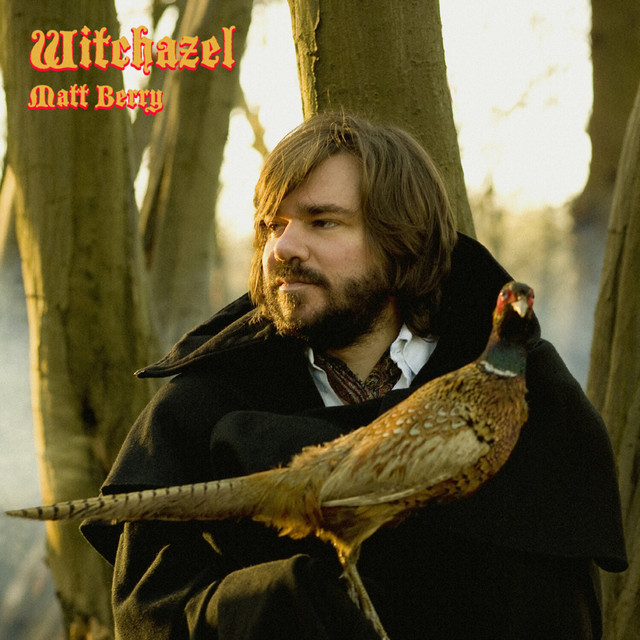
Used for Witchazel, as mentioned in this December 2020 Sound on Sound interview.
In fact, Witchazel was recorded in Berry’s two‑roomed flat in London and found him exploring a DAW for the first time in the shape of GarageBand. “I enjoyed recording that more than most of the albums,” he says. “It was such a sort of magical experience because of what you could do technically with GarageBand. The speed of it obviously suited me because I’m impatient.
“But I still had that sensibility of tape where you must be bold and stick to your guns. Tape was expensive if you didn’t have any money, so you had to make use of the tape. And I kind of applied that to GarageBand even though I didn’t need to. If I started a song, I had to finish it, or at least kind of mark it to be used later on or something. I didn’t waste time and effort.”
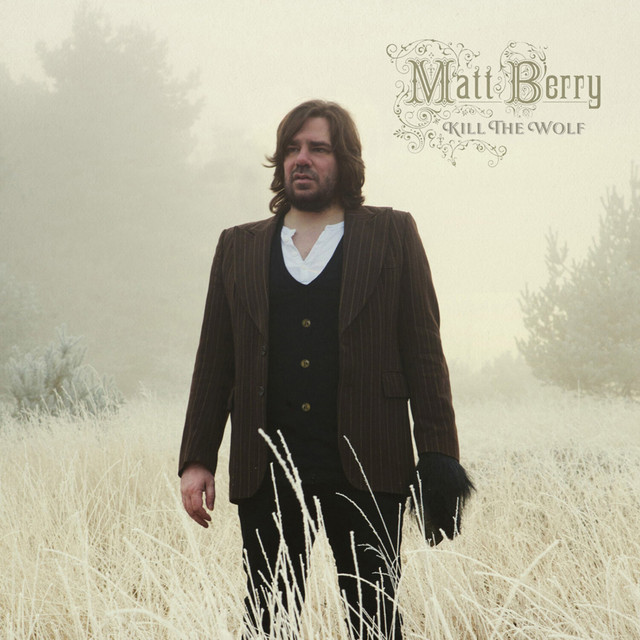
(...) These days, based in his studio just outside London, Matt Berry uses Logic as his DAW, having made the move from GarageBand during the sessions for Kill The Wolf.
Find it on:

Used for Witchazel, as mentioned in this December 2020 Sound on Sound interview.
Berry played almost all of the instruments on Witchazel, apart from the drums, played by James Stapleton, and recorded in the living room, using a pair of ADK condenser mics.
“Facing the drum kit, I just had one at head height right, and one at head height left, either side of his kit,” he recalls. “I kept it as basic as possible. I’d try and nail whole takes. I still do that now because of feel, and you want it to sound like it was sort of one idea. I would always push to get one take where everything kind of kicked off in the right place.”
Key to the sound of the album was GForce’s M‑Tron plug‑in, modelled on the Mellotron. “It was just the best, because I can’t play brass instruments and I didn’t have a vibraphone. But I didn’t want sampled brass or vibraphone. I wanted it to sound authentic, which is where the Mellotron comes in. It has its own atmosphere. So, if there’s an instrument that I can’t play, like a flute or something, I would never go for a preset or a sample, I would go for the Mellotron.”
Find it on:


Mentioned and pictured in this December 2020 Sound on Sound interview.
These days, based in his studio just outside London, Matt Berry uses Logic as his DAW, having made the move from GarageBand during the sessions for Kill The Wolf.
Find it on:

Pictured in this December 2020 Sound on Sound interview.
In addition, all of Berry’s other keyboards, such as his Wurlitzer electric piano and his Hammond and Farfisa organs are typically fed through guitar amps before going into the Midas. “There’s a load of [Shure] SM57s pointed at Orange and Fender speakers,” he says. “Just so you get that kind of sound. There’s things in here that I don’t want to DI. I want those to have the air around them.”
Find it on:

A Univox SR-95 is pictured and discussed in this December 2020 Sound on Sound interview.
Berry had in the ’90s also collected similarly unfashionable drum machines. “One of the first things that I wanted was a Korg Mini Pops [7] because of Jean‑Michel Jarre,” he recalls. “And I got two of those, for like, 100 quid. And I got a [Roland] CR‑78 [CompuRhythm] for, I think, £250. ’Cause back then no one wanted that. It was this big sort of wooden box, it wasn’t portable and it kind of looked like a microwave, I suppose, compared to small drum machines then.” The appeal for him of these beatboxes, he says, was the warmth of the sounds. “Yeah, they’ve got natural compression and stuff. You don’t need to add a lot. They kind of have all their warmth.”
Find it on:

Pictured in this December 2020 Sound on Sound interview.
For electric pianos and organs, Matt Berry favours his Orange and Fender guitar amps. He is also an avid pedal collector; the Small Stone Phase on the upper tier of his pedalboard was a gift from Jean‑Michel Jarre, who used it on his seminal Oxygène album.
Find it on:

Pictured in this December 2020 Sound on Sound interview.
Find it on:
-m.webp?v=1783177017)
Mentioned and pictured in this December 2020 Sound on Sound interview.
For preamps, Berry uses a Neve 1073DPA and a Joe Meek VC1Q Studio Channel, along with his UA Apollo. For his main microphones, he generally chooses between a Neumann U87 and a Rode K2.
Find it on:

Mentioned and pictured in this December 2020 Sound on Sound interview.
For preamps, Berry uses a Neve 1073DPA and a Joe Meek VC1Q Studio Channel, along with his UA Apollo. For his main microphones, he generally chooses between a Neumann U87 and a Rode K2.
Find it on:

Mentioned and pictured in this December 2020 Sound on Sound interview.
For preamps, Berry uses a Neve 1073DPA and a Joe Meek VC1Q Studio Channel, along with his UA Apollo. For his main microphones, he generally chooses between a Neumann U87 and a Rode K2.
Find it on:

Mentioned in this December 2020 Sound on Sound interview.
For preamps, Berry uses a Neve 1073DPA and a Joe Meek VC1Q Studio Channel, along with his UA Apollo. For his main microphones, he generally chooses between a Neumann U87 and a Rode K2.
“I think the Rode mics are as good as any tube mics if you want that sort of grittier tube sound. The K2, they’re only 500 quid, but they sound the knackers. For most things I use a Neumann U87, because it’s very versatile. Plus, I do a lot of voiceovers here, so it has to be the same one that they have in all the facilities in Soho.”
Find it on:

Pictured in this December 2020 Sound on Sound interview.
Find it on:
This is a community-built gear list for Matt Berry.
- Find relevant music gear like Microphones, Guitars, Amplifiers, Effects Pedals, Pianos, Keyboards and Synthesizers, and other instruments and add it to Matt Berry.
- The best places to look for gear usage are typically on the artist's social media, YouTube, live performance images, and interviews.
- To receive email updates when Matt Berry is seen with new gear, follow the artist.
-
Added to Equipboard on by
 harrymatcham
Gear IQ 297
-
Updated
Discography
Witchazel
2011
Kill the Wolf
2013
Music for Insomniacs
2014
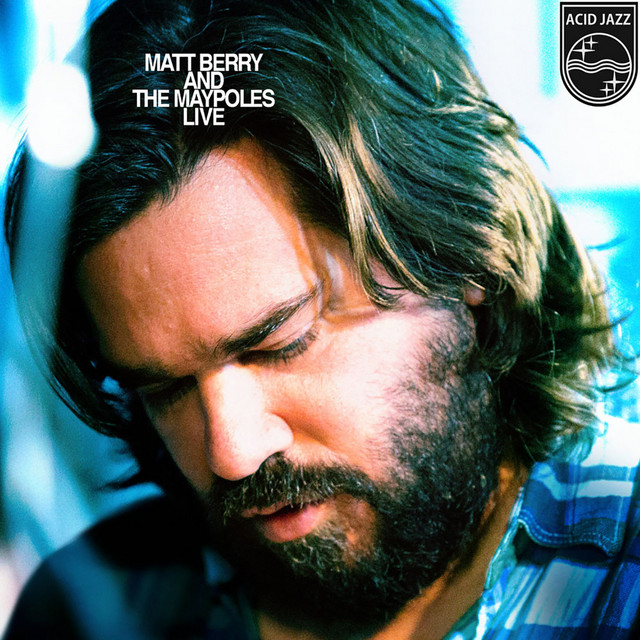
Matt Berry and the Maypoles Live
2015
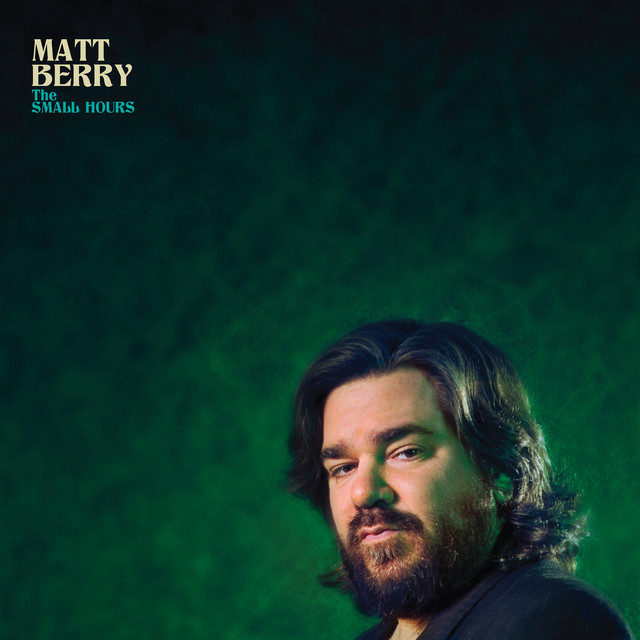
The Small Hours
2016
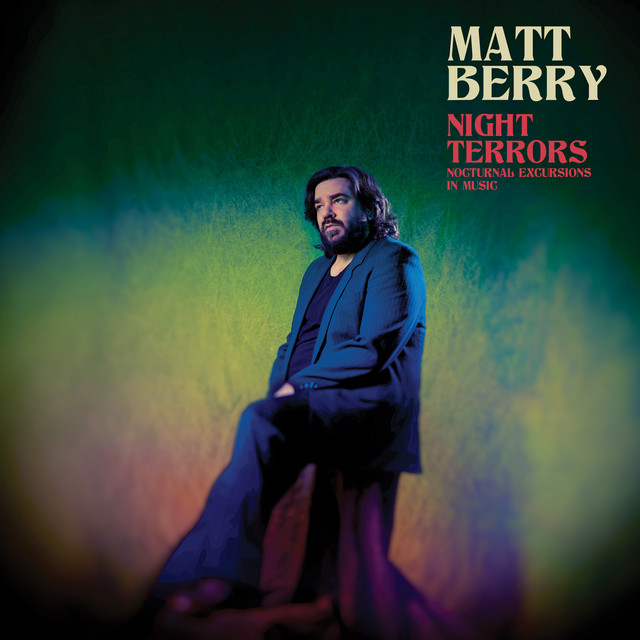
Night Terrors
2017

Television Themes
2018
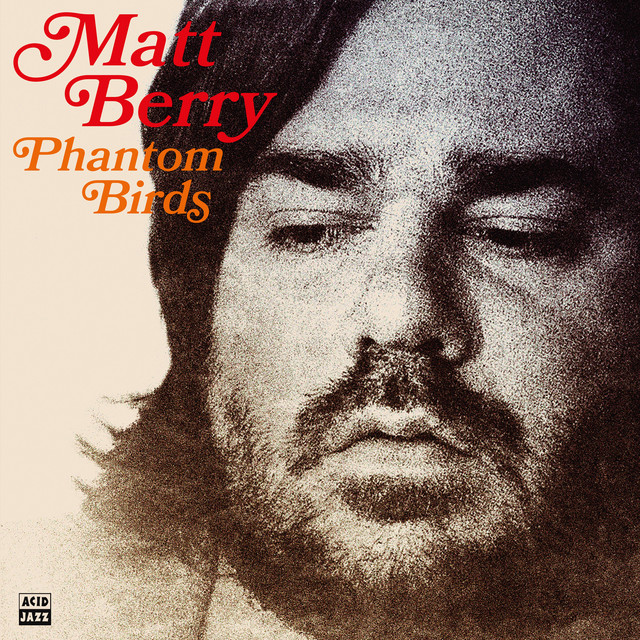
Phantom Birds
2020
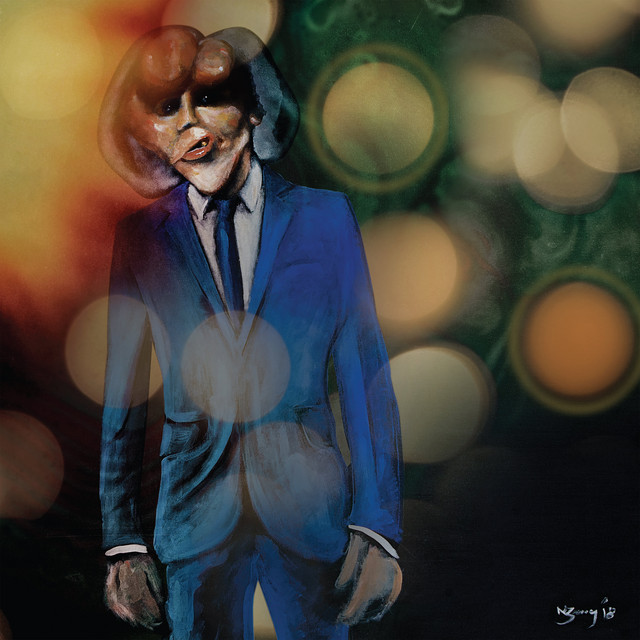
The Blue Elephant
2021
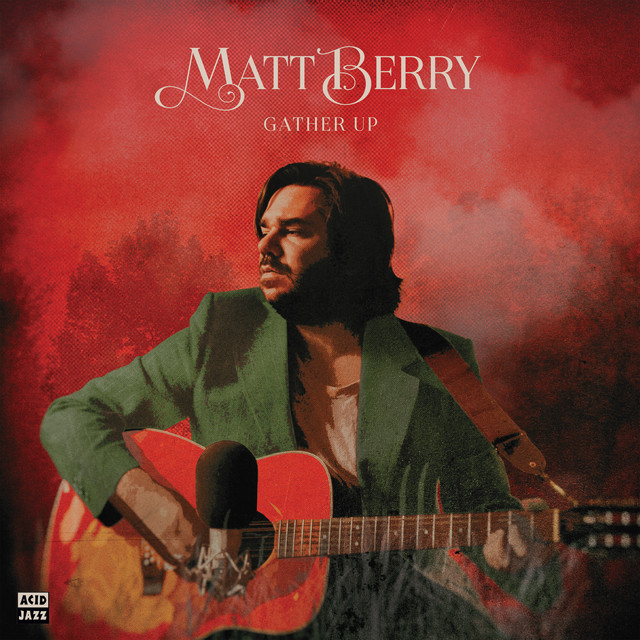
Gather Up (Ten Years On Acid Jazz)
2021
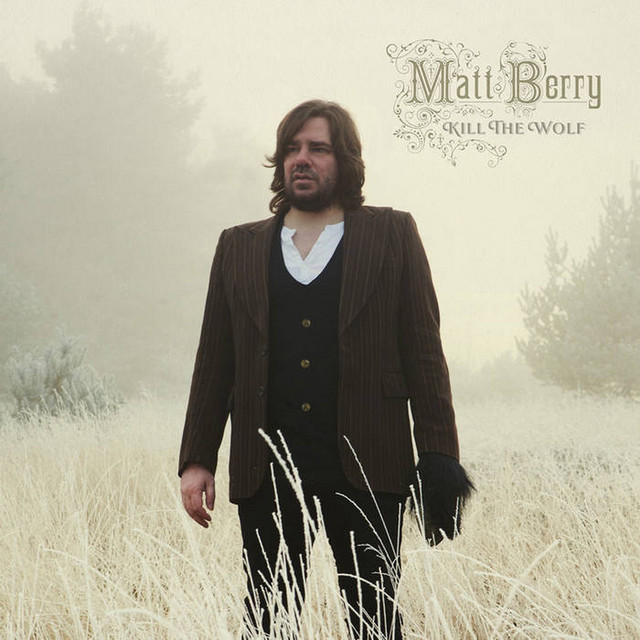
Kill The Wolf (10th Anniversary Deluxe)
2023
Simplicity
2023












.webp)