

Pricing and availability
We compare 600+ stores and found this item at 1 store. Prices updated .
Store
Reviews
Price




Average Price: $82
Budget/Beginner
$100
$251+
Price Tier
Budget
Standard
High-end
* Product prices and availability are updated by Equipboard every 24hrs and are subject to change. Equipboard may receive compensation for purchases made at participating retailers linked on this site. This compensation does not affect what products or prices are displayed, or the order of prices listed. For more information, please refer to our affiliate disclosure.
Description
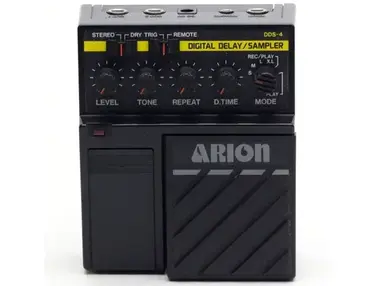
Dive into the lush, analog echoes of the past with the Arion SAD-1 Stereo Delay, a gem that brings the warmth of vintage delay right to your pedalboard. Perfect for guitarists who crave that classic sound with a modern twist, this pedal offers stereo outputs for expansive soundscapes and an intuitive control set including delay, depth, and feedback. Whether you're layering subtle echoes or going for a full-on atmospheric vibe, the SAD-1 stands out as a reliable and inspirational tool in any musician's arsenal. Its simplicity and effectiveness make it a must-have for both studio recordings and live performances. Rediscover the magic of analog delay with this compact, yet powerful pedal.
Key Features:
- Stereo outputs for immersive sound experiences
- Analog delay offers warmth and character
- Easy-to-use controls: Delay, Depth, and Feedback
- Ideal for both studio and live settings
- Compact design fits any pedalboard
Product specs
| Brand | Arion |
| Model | SAD-1 Stereo Delay |
| Finish | Yellow |
| Year | 1980s |
| Made In | Japan |
| Categories | Delay Pedals |
| Pedal Format | Standard |
FAQs
-
What are the key features of the Arion SAD-1 Stereo Delay?
-
The Arion SAD-1 Stereo Delay is known for its warm, analog delay tones and stereo output capabilities, which allow for expansive soundscapes. It features controls for delay time, feedback, and mix, providing versatile sound shaping.
-
Is the Arion SAD-1 Stereo Delay suitable for live performances?
-
Yes, the Arion SAD-1 is well-suited for live performances due to its robust construction and intuitive controls, allowing for quick adjustments and reliable operation on stage.
-
How does the Arion SAD-1 Stereo Delay differ from mono delay pedals?
-
The Arion SAD-1 offers stereo outputs, providing distinct delay signals for left and right channels, creating a wider and more immersive soundstage compared to mono delay pedals, which output a single delay signal.
-
Can the Arion SAD-1 Stereo Delay be used with other instruments besides guitar?
-
Yes, the Arion SAD-1 can be used with various instruments such as keyboards and bass guitars, offering versatile delay effects suitable for different sound sources.
-
What power supply is required for the Arion SAD-1 Stereo Delay?
-
The Arion SAD-1 typically requires a 9V DC power supply, which is standard for many pedalboards, ensuring easy integration into your existing setup.
Videos

Karl Verkade
Arion SAD-1 Delay Capabilities Demo
Arion SAD-1 Delay Capabilities Demo
Karl Verkade
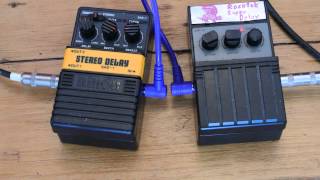
Vintage Delay Shootout Arion SAD-1 vs SoaringTortoise Modified Rocktek ADR-01

soaringtortoise

Arion SAD-1 at 9v and 12v

guitarded71
Dual delay with TC Electronic Flashback & Arion SAD-1

SurfGreenTelecaster
Reviews
PROS
-
Delivers warm analog delays reminiscent of vintage tape echoes
-
Capable of self-oscillation for creative soundscapes
-
Durable enough for home, studio, and local gigging
-
Stays relevant and functional on pedalboards for decades
-
Comparatively affordable against rising prices of vintage units
CONS
-
Plastic enclosure may not inspire confidence for heavy touring
-
Some may find its design and technology outdated compared to modern high-tech devices
Owner Insights
We analyzed real musician discussions from forums and Reddit to find what players love, question, and tweak about Arion SAD-1 Stereo Delay.
Build quality
-
Owners note Arion pedals may have missing knobs and battery covers, indicating durability issues, but still provide good sound quality for the price.
Source
Features and functionality
-
The Arion SAD-1 Delay is praised for its "fun self-oscillating scream" effect, useful for creating unique sound textures similar to Tom Morello or Public Enemy styles.
Source -
The Arion SAD-1 Delay is noted for its unique implementation of the MN3005 chip, providing a distinct vintage delay sound.
Source
Comparisons
-
Arion pedals are described as less durable but sonically preferable to Behringer's Boss-clone line, placing them in a niche between Rocktek and DoD pedals of the same era.
Source -
Arion SAD-1 is compared to classic analog delay units like the Ibanez AD-80, highlighting its clean yet musical sound profile.
Source
User experience
-
Multiple users report that Arion pedals from the 80s, despite their plastic build, maintain a cult following due to their distinctive sound, even if they lack modern durability.
Source -
Owners appreciate the pedal's ability to self-oscillate musically, making it versatile for creative soundscapes in electronic and rock genres.
Source
Value and pricing
-
The Arion SAD-1 Delay, without the original battery cover, is estimated to be worth around $80, reflecting its appeal as a budget-friendly collectible.
Source
4.0 out of 5
Based on 1 Review and 5 Ratings

Artist usage
Add artist

Grant uses an Arion Stereo Delay pedal for his Feeder era music. You can tell it's a SAD-1 because of the yellow plastic under the tape.


Mentioned in this December 2020 Sound on Sound interview.
Further remote instruction from Oldfield came when the multi‑instrumentalist appeared on Blue Peter in 1979, in a section filmed showing him multi‑layering, on 24‑track tape, his version of the show’s theme tune. “To then see him on Blue Peter,” Berry says, “where you actually saw him build it track‑by‑track, I had more of an understanding.”
Berry’s sole instrument at the time was a domestic Hammond organ, which his parents had bought him. To emulate Oldfield, he bought a Tascam 424 Portastudio and began layering up his own recordings, using the Hammond’s basic beatbox and feeding its various flute, strings and oboe sounds through cheap guitar effects pedals.
“They weren’t even Boss,” Berry points out. “They were Orion, and I had a stereo delay and a flanger. By that point I was obsessed with Oxygène by Jean‑Michel Jarre — mainly that string sound that I know now is a phased string sound. I thought that was an expensive keyboard that could make that sound. I didn’t realise it was a string synthesizer that was effected by a cheap guitar pedal. If I’d have found that out a lot earlier, my search would’ve been complete at age 14 or whatever.
Genre Usage
Based on how artists on Equipboard use this gear, it is most commonly found in the following genres.
Used With
Based on how musicians on Equipboard use Arion SAD-1 Stereo Delay, it is most commonly used with the following gear.

-s.webp?v=1784818682)
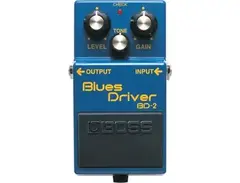
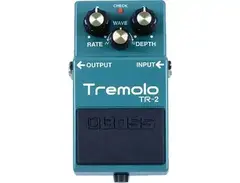


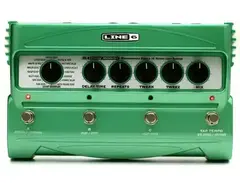
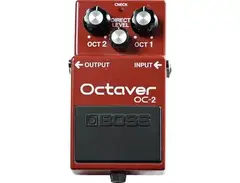

More Arion Delay Effects Pedals


-m.webp?v=1784818682)
$12.95
in Delay Effects Pedals Rank


$249.00 - $379.99
in Delay Effects Pedals Rank


$196.00
in Delay Effects Pedals Rank


$150.00 - $179.00
in Delay Effects Pedals Rank


$399.00 - $449.00
in Delay Effects Pedals Rank

$399.00 - $449.00
in Delay Effects Pedals Rank


$128.00 - $153.99
in Delay Effects Pedals Rank


$90.00
in Delay Effects Pedals Rank


$89.00
in Delay Effects Pedals Rank


$72.00
in Delay Effects Pedals Rank


$154.50 - $197.99
in Delay Effects Pedals Rank


$382.00 - $499.00
in Delay Effects Pedals Rank

.jpeg?v=1784809643)


$356.96 - $389.69
in Delay Effects Pedals Rank


$323.87 - $553.30
in Delay Effects Pedals Rank


$80.00 - $158.00
in Delay Effects Pedals Rank


$125.00 - $176.00
in Delay Effects Pedals Rank


$99.00
in Delay Effects Pedals Rank


$86.71
in Delay Effects Pedals Rank


$123.99 - $170.21
in Delay Effects Pedals Rank


$135.00 - $166.00
in Delay Effects Pedals Rank


$65.00
in Delay Effects Pedals Rank


$163.86
in Delay Effects Pedals Rank


$229.99 - $250.00
in Delay Effects Pedals Rank


$329.99 - $406.99
in Delay Effects Pedals Rank


$207.02 - $235.00
in Delay Effects Pedals Rank

$99.00 - $129.00
in Delay Effects Pedals Rank


-m.webp?v=1784818716)
$119.99
in Delay Effects Pedals Rank


$184.34 - $250.90
in Delay Effects Pedals Rank


$150.00
in Delay Effects Pedals Rank


$389.00 - $429.00
in Delay Effects Pedals Rank


$208.00 - $259.02
in Delay Effects Pedals Rank


$199.00
in Delay Effects Pedals Rank


$155.08 - $194.10
in Delay Effects Pedals Rank


$225.00 - $252.20
in Delay Effects Pedals Rank


$120.00
in Delay Effects Pedals Rank


$199.00 - $230.00
in Delay Effects Pedals Rank


Accessories & Related Items


Community setups


Similar


Gear Guides






Most Popular Delay Effects Pedals
Most Popular Brands
-
Added to Equipboard on by
 ford_cosby
GearIQ 88
-


