Paul Hardcastle
Genre
Group
Genre
Group
Paul Hardcastle's Keyboards and Synthesizers


According to this article, Paul Hardcastle had a Prophet 5, which he used extensively on "19".
Find it on:


A Kurzweil Micro Piano is left permanently set to preset 32, which is a nice pad, and for conventional piano sounds,
Find it on:


In a video by AnalogSynthMuseum, Paul Hardcastle is shown using the E-Mu Emulator II to create his iconic track "19."
Find it on:

In the YouTube video by AnalogSynthMuseum, Paul Hardcastle is shown using the Roland Jupiter-8 synthesizer during the creation of his track "19."
Find it on:

Paul Hardcastle used the NED Synclavier II for his album "40 Years." This synthesizer, known for its pristine sound quality, contrasts with the warmer, analog feel of Hardcastle's earlier work. The source photo provides evidence of his use of the Synclavier during this period.
Find it on:

"If one record had a profound bearing at the beginning of my career then it was He's The Greatest Dancer by Sister Sledge. I bought this little Korg 700S and I used to play along to that in my room. Then I swapped that for a Korg Delta and got a couple of little chord books... C major... A min... I thought yeeahh! I'm there! This is it! A riff! Then I got involved in this band. I didn't really know that they didn't want me for my expert keyboard playing — they wanted me for my ideas."
Find it on:

"If one record had a profound bearing at the beginning of my career then it was He's The Greatest Dancer by Sister Sledge. I bought this little Korg 700S and I used to play along to that in my room. Then I swapped that for a Korg Delta and got a couple of little chord books... C major... A min... I thought yeeahh! I'm there! This is it! A riff! Then I got involved in this band. I didn't really know that they didn't want me for my expert keyboard playing — they wanted me for my ideas."
Find it on:

The fact is we're not really interested in Paul Hardcastle's tormented conscience. We want to know what gear he's got. So it's up to the spare bedroom to take in the-hardware. The first thing you trip over is a Linn LM-1, followed swiftly by a DX7, JX8P, Emulator II, Prophet 5, Mini Moog and the ACES desk along the back wall.
Find it on:

The fact is we're not really interested in Paul Hardcastle's tormented conscience. We want to know what gear he's got. So it's up to the spare bedroom to take in the-hardware. The first thing you trip over is a Linn LM-1, followed swiftly by a DX7, JX8P, Emulator II, Prophet 5, Mini Moog and the ACES desk along the back wall.
Find it on:

The fact is we're not really interested in Paul Hardcastle's tormented conscience. We want to know what gear he's got. So it's up to the spare bedroom to take in the-hardware. The first thing you trip over is a Linn LM-1, followed swiftly by a DX7, JX8P, Emulator II, Prophet 5, Mini Moog and the ACES desk along the back wall.
Find it on:

The studio that gives Hardcastle this freedom is located in a low building in his enormous back garden ("mind the Rottweiler", he warns our photographer as he scouts for exterior locations). The control room, dominated by an AMR24 console, looks in on a small live area (used mostly for vocals), and against its left-hand wall is the Synclavier, run in conjunction with a Mac IIex. On top of the Synclavier sits a Korg Wavestation. "I use the Wavestation for its sounds, and as another controller keyboard — the Synclavier has a weighted keyboard, which isn't right for everything."
Find it on:

Moving on, a rack of modules provides a fair range of sounds to back up the Synclavier. One of the newest additions is an Emu Procussion, below which are a Roland MKS70, MIDIMoog ("it still goes out of tune; I was told it wouldn't"), Oberheim Matrix 6R, Korg DVP1, a slot for a Yamaha G10 guitar controller unit ("great with the TX802"), Roland D110, Roland P330, Yamaha TX81Z ("great for little clavs and so on"), and a Roland Planet P ("actually, I don't think I even turn that on any more").
Find it on:

Moving on, a rack of modules provides a fair range of sounds to back up the Synclavier. One of the newest additions is an Emu Procussion, below which are a Roland MKS70, MIDIMoog ("it still goes out of tune; I was told it wouldn't"), Oberheim Matrix 6R, Korg DVP1, a slot for a Yamaha G10 guitar controller unit ("great with the TX802"), Roland D110, Roland P330, Yamaha TX81Z ("great for little clavs and so on"), and a Roland Planet P ("actually, I don't think I even turn that on any more").
Find it on:

Moving on, a rack of modules provides a fair range of sounds to back up the Synclavier. One of the newest additions is an Emu Procussion, below which are a Roland MKS70, MIDIMoog ("it still goes out of tune; I was told it wouldn't"), Oberheim Matrix 6R, Korg DVP1, a slot for a Yamaha G10 guitar controller unit ("great with the TX802"), Roland D110, Roland P330, Yamaha TX81Z ("great for little clavs and so on"), and a Roland Planet P ("actually, I don't think I even turn that on any more").
Find it on:

Moving on, a rack of modules provides a fair range of sounds to back up the Synclavier. One of the newest additions is an Emu Procussion, below which are a Roland MKS70, MIDIMoog ("it still goes out of tune; I was told it wouldn't"), Oberheim Matrix 6R, Korg DVP1, a slot for a Yamaha G10 guitar controller unit ("great with the TX802"), Roland D110, Roland P330, Yamaha TX81Z ("great for little clavs and so on"), and a Roland Planet P ("actually, I don't think I even turn that on any more").
Find it on:

Moving on, a rack of modules provides a fair range of sounds to back up the Synclavier. One of the newest additions is an Emu Procussion, below which are a Roland MKS70, MIDIMoog ("it still goes out of tune; I was told it wouldn't"), Oberheim Matrix 6R, Korg DVP1, a slot for a Yamaha G10 guitar controller unit ("great with the TX802"), Roland D110, Roland P330, Yamaha TX81Z ("great for little clavs and so on"), and a Roland Planet P ("actually, I don't think I even turn that on any more").
Find it on:

Moving on, a rack of modules provides a fair range of sounds to back up the Synclavier. One of the newest additions is an Emu Procussion, below which are a Roland MKS70, MIDIMoog ("it still goes out of tune; I was told it wouldn't"), Oberheim Matrix 6R, Korg DVP1, a slot for a Yamaha G10 guitar controller unit ("great with the TX802"), Roland D110, Roland P330, Yamaha TX81Z ("great for little clavs and so on"), and a Roland Planet P ("actually, I don't think I even turn that on any more").
Find it on:
-m.webp?v=1783349885)
There's also a small selection of old analogue keyboards: a late-model Prophet V with a MIDI retrofit, a Roland SH101, and a Juno 6. "I use the SH101 for bass sounds a lot, and it's MIDI'd up via a Groove convertor."
Find it on:

There's also a small selection of old analogue keyboards: a late-model Prophet V with a MIDI retrofit, a Roland SH101, and a Juno 6. "I use the SH101 for bass sounds a lot, and it's MIDI'd up via a Groove convertor."
Find it on:

Hardcastle is not, it emerges, a big fan of programming digital parameter access synths. "Sometimes I've sat around for five or six hours programming a new synth, and then thought 'sod it, I'm not interested in the song any more'. It's taken the feel out of programming; it drives me mad. That's why I became one of the preset boys." It's also why a JD800 has recently taken residence in his studio. "If I'm looking for a sound I can do it in real time on the JD800, which is very different from some other instruments. I think a lot of people are going to copy that; they certainly should. The way you have to look at it is this: if I've got a song to write, is it worth my time programming that Matrix 6R when I could earn the money, in the time that I programmed it, to go out and buy a different synth."
Find it on:

"I already have a number of synth modules, many of which I use mainly for specific sounds. The Kurzweil K2500R has got great sounds and is a good all‑round workhorse, while the Korg 01R gets used for more ethereal parts. I've also got a Wavestation SR that has a few interesting textural sounds in it, and to be honest, I've actually named tracks after its patch names! My Emu Morpheus is usually left set to its Vibes patch."
Find it on:

"I already have a number of synth modules, many of which I use mainly for specific sounds. The Kurzweil K2500R has got great sounds and is a good all‑round workhorse, while the Korg 01R gets used for more ethereal parts. I've also got a Wavestation SR that has a few interesting textural sounds in it, and to be honest, I've actually named tracks after its patch names! My Emu Morpheus is usually left set to its Vibes patch.
Find it on:

"I already have a number of synth modules, many of which I use mainly for specific sounds. The Kurzweil K2500R has got great sounds and is a good all‑round workhorse, while the Korg 01R gets used for more ethereal parts. I've also got a Wavestation SR that has a few interesting textural sounds in it, and to be honest, I've actually named tracks after its patch names! My Emu Morpheus is usually left set to its Vibes patch."
Find it on:

"I already have a number of synth modules, many of which I use mainly for specific sounds. The Kurzweil K2500R has got great sounds and is a good all‑round workhorse, while the Korg 01R gets used for more ethereal parts. I've also got a Wavestation SR that has a few interesting textural sounds in it, and to be honest, I've actually named tracks after its patch names! My Emu Morpheus is usually left set to its Vibes patch."
Find it on:

"I love the old TX802 FM module because it can create all those classic FM sounds, and of course, I have a JV2080 which has its own character and is expandable. I have the World card in there for the ethnic instruments, but I buy expander cards and then forget what I've got — it's terrible really! There's also the Roland Super JV, which is great for vocal Oohs and Aahs, and below that is an R8 that I don't think I've used for years."
Find it on:

"The M1R gets used for its Bottle Bell patch, but I have to say that I'm a bit disappointed by Studio Electronics' MIDIMini analogue synth, as the tuning drifts quite badly. However, I also have their SE1 analogue synth which is great for bass. Surprisingly, the little Peavey Spectrum Bass also has some great bass sounds that I use — patches three and four. My Vintage Keys is only used occasionally, mainly for the Wurlitzer piano, while the Korg X3 is left set to patch 10, a kind of Rhodes sound. The JV1080 also has a lovely electric piano sound on it, but I'm a bit disappointed with the Technics WSA1R as it doesn't have many really usable sounds. I've just bough a Yamaha CS2X for a bit of fun, for sequencing and so on, and the Trinity I still like."
Find it on:

"The M1R gets used for its Bottle Bell patch, but I have to say that I'm a bit disappointed by Studio Electronics' MIDIMini analogue synth, as the tuning drifts quite badly. However, I also have their SE1 analogue synth which is great for bass. Surprisingly, the little Peavey Spectrum Bass also has some great bass sounds that I use — patches three and four. My Vintage Keys is only used occasionally, mainly for the Wurlitzer piano, while the Korg X3 is left set to patch 10, a kind of Rhodes sound. The JV1080 also has a lovely electric piano sound on it, but I'm a bit disappointed with the Technics WSA1R as it doesn't have many really usable sounds. I've just bough a Yamaha CS2X for a bit of fun, for sequencing and so on, and the Trinity I still like."
Find it on:

"The M1R gets used for its Bottle Bell patch, but I have to say that I'm a bit disappointed by Studio Electronics' MIDIMini analogue synth, as the tuning drifts quite badly. However, I also have their SE1 analogue synth which is great for bass. Surprisingly, the little Peavey Spectrum Bass also has some great bass sounds that I use — patches three and four. My Vintage Keys is only used occasionally, mainly for the Wurlitzer piano, while the Korg X3 is left set to patch 10, a kind of Rhodes sound. The JV1080 also has a lovely electric piano sound on it, but I'm a bit disappointed with the Technics WSA1R as it doesn't have many really usable sounds. I've just bough a Yamaha CS2X for a bit of fun, for sequencing and so on, and the Trinity I still like."
Find it on:

"The M1R gets used for its Bottle Bell patch, but I have to say that I'm a bit disappointed by Studio Electronics' MIDIMini analogue synth, as the tuning drifts quite badly. However, I also have their SE1 analogue synth which is great for bass. Surprisingly, the little Peavey Spectrum Bass also has some great bass sounds that I use — patches three and four. My Vintage Keys is only used occasionally, mainly for the Wurlitzer piano, while the Korg X3 is left set to patch 10, a kind of Rhodes sound. The JV1080 also has a lovely electric piano sound on it, but I'm a bit disappointed with the Technics WSA1R as it doesn't have many really usable sounds. I've just bough a Yamaha CS2X for a bit of fun, for sequencing and so on, and the Trinity I still like."
Find it on:


"The M1R gets used for its Bottle Bell patch, but I have to say that I'm a bit disappointed by Studio Electronics' MIDIMini analogue synth, as the tuning drifts quite badly. However, I also have their SE1 analogue synth which is great for bass. Surprisingly, the little Peavey Spectrum Bass also has some great bass sounds that I use — patches three and four. My Vintage Keys is only used occasionally, mainly for the Wurlitzer piano, while the Korg X3 is left set to patch 10, a kind of Rhodes sound. The JV1080 also has a lovely electric piano sound on it, but I'm a bit disappointed with the Technics WSA1R as it doesn't have many really usable sounds. I've just bough a Yamaha CS2X for a bit of fun, for sequencing and so on, and the Trinity I still like."
Find it on:
This is a community-built gear list for Paul Hardcastle.
- Find relevant music gear like Pianos, Keyboards and Synthesizers, Microphones, Software Plugins and VSTs, Instruments, Studio Equipment, Headphones, and other instruments and add it to Paul Hardcastle.
- The best places to look for gear usage are typically on the artist's social media, YouTube, live performance images, and interviews.
- To receive email updates when Paul Hardcastle is seen with new gear, follow the artist.
-
Added to Equipboard on by
 vn223
vn223Gear IQ 2565
-
Updated
Discography

Album Credits
-
Nineteen And Beyond: Paul Hardcastle 1984-1988
Paul Hardcastle · 2023
Producer -
Paul Hardcastle · 2014
Mixing Engineer Producer -
Paul Hardcastle · 1999
Producer -
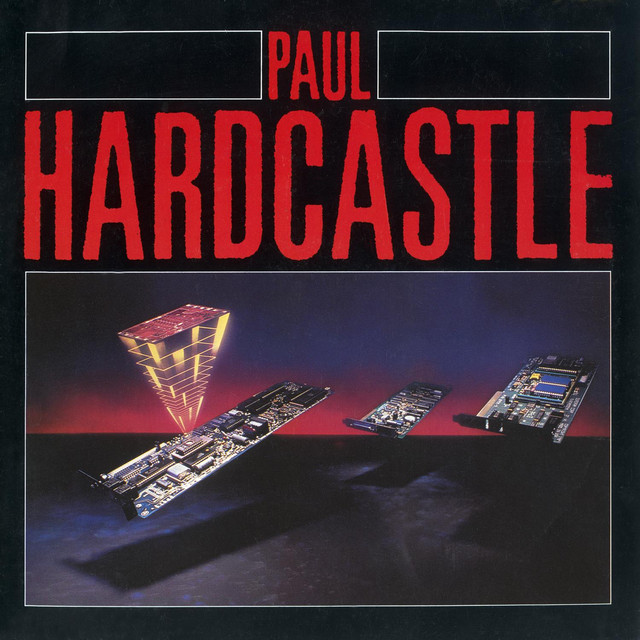
Paul Hardcastle · 1985
Producer