


Pricing and availability
We compare 600+ stores and found this item at 1 store. Prices updated .




* Product prices and availability are updated by Equipboard every 24hrs and are subject to change. Equipboard may receive compensation for purchases made at participating retailers linked on this site. This compensation does not affect what products or prices are displayed, or the order of prices listed. For more information, please refer to our affiliate disclosure.
Description
Rack version of the Korg M1
The M1 was and still is a popular and widely used digital synthesizer and music workstation. The M1 features built-in AI Synthesis for full digital generation and processing using 4MB of PCM sampled and synthesized waveforms which can be shaped using analog-style editing. The M1 is capable of creating acoustic instruments with clarity, nice digital sounds and good buzzy techno sounds. The M1 is sort of like a workstation-version of the Roland D-50.
In addition to its acclaimed sound, it has a somewhat sophisticated 8-track sequencer. It holds 10 songs and 100 patterns and up to 7,700 notes, and offers full quantizing and editing. Full MIDI implementation suites the M1 ideally for studio production and MIDI system use. Up to 8 parts of multitimbrality with the 8 track sequencer makes for a powerful machine. Add to that a host of digital multi-effects and you've got one of the most widely and professionally used Korg synthesizers around.
Polyphony - 16 voices Oscillators - 4MB PCM waveforms (144 multisampled sounds) Effects - Digital multi-effects: reverb, delay, overdrive, EQ, chorus, rotary speaker, and more. Filter - VDF: Variable Digital Lowpass Filter, velocity sensitive (non-resonant) VCA - VDA: Variable Digital Amplifier; 3 independent 4-stage ADSR envelope generators Keyboard - 61 keys with Velocity, Aftertouch, Multi, Layer, Split modes Memory - 100 patches Control - MIDI (8 parts) Date Produced - 1988-94
Product specs
| Brand | Korg |
| Model | M1R Rackmount Workstation Synthesizer |
| Finish | Black |
| Year | 1990s |
| Categories | Digital Synthesizers, Rackmount Synths |
| Analog / Digital | Digital |
| MIDI I/O | MIDI Input, MIDI Output, MIDI Through |
| Polyphony | 16 Voices |
FAQs
-
What kind of sounds can I expect from the Korg M1R?
-
The Korg M1R is known for its iconic digital sounds, including lush pads, punchy basses, and realistic acoustic instruments, which were groundbreaking in the late '80s and '90s.
-
Is the Korg M1R polyphonic, and if so, how many voices does it support?
-
Yes, the Korg M1R is polyphonic and supports 16 voices, allowing for complex sound layering and rich textures.
-
What are the MIDI connectivity options available on the Korg M1R?
-
The Korg M1R offers MIDI Input, Output, and Through, providing robust connectivity for integration with other MIDI-compatible gear.
-
How does the Korg M1R differ from the original Korg M1 keyboard?
-
The Korg M1R is a rackmount version of the original M1 keyboard, offering the same sound engine and features without the integrated keyboard, making it ideal for studio rack setups.
-
Can the Korg M1R be used with modern DAWs?
-
Yes, the Korg M1R can be integrated with modern DAWs using its MIDI capabilities, although some additional setup may be required for seamless operation.
Videos

Tiago Mallen
KORG M1r - Review by Tiago Mallen (Test factory sounds) #korg
KORG M1r - Review by Tiago Mallen (Test factory sounds) #korg
Tiago Mallen
Korg M1R | Factory Presets Preview

Simon Le Grec
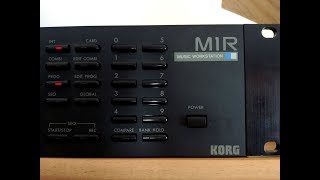
Best Ambient Synth Shootout #71: Korg M1R - Song 1

Christian's Sonic Spaces
Reviews
Owner Insights
We analyzed real musician discussions from forums and Reddit to find what players love, question, and tweak about Korg M1R.
Features and functionality
-
The M1R shares the same 100 sounds and 100 combos as the M1 keyboard, with deep dive editing being cumbersome.
Source -
The M1R lacks a joystick, unlike the M1 keyboard, which may affect hands-on control during live performances.
Source -
Surprisingly, the M1R includes a sequencer, a rare feature for rack-mounted synthesizers, which can be advantageous for live or solo performances.
Source
Mods and upgrades
-
The Korg RE1 controller significantly enhances the M3R, allowing for live effects tweaking and providing a more versatile experience.
Source
Software and compatibility
Comparisons
-
The M1R is considered dull next to the Korg 01/W, which offers more interesting waveshaping capabilities.
Source -
The M1R retains the same sound engine as the M1 and can use the same data cards, maintaining sound consistency across both models.
Source -
The N1R, often cheaper than the M1R, offers additional waveforms but lacks the unique "strange windchimes" sound of the M1R.
Source
Use cases and applications
-
The M1R is noted for adding digital pads and textures, ideal for music styles like Bal Sagoth, using it alongside gear like the XP50 for orchestration.
Source -
Users experimenting with pop/rock or solo shows may find the M1R's sequencer beneficial for integrating into live settings without relying on external sequencing gear.
Source
Setup and maintenance
Critic Reviews
4.5 out of 5
Based on 0 Reviews and 10 Ratings
Artist usage
Add artist

Excerpt from an interview with Dr. Fink and Rosie Gaines “ What other keyboards do you play in the show? Gaines: I only use that piano and a D-50 onstage, although there’s about eight racks behind me, with [Korg] M1Rs and other stuff”.


Korg M1r is included in the equipment list.


The Body Bags score was composed using Digital Performer software running on a Macintosh Iicx computer. Sampling was done with an Emulator IIIxp and a Forat F16. Other electronic instruments include Hammond B3, Wurlitzer electric piano, MicroMoog, Roland MKS80, D550, Prophet VS, Yamaha DX and TX series, EMU Proteus 1 and 2, Korg M1r and M1rex, and an AKAI 612.
The score was digitally recorded using Alesis ADATs and BRC and John Hardy microphone preamps. Microphones included AKG414, Shure VP88 and SM57. The music was mixed on a custom Speck Electronics model 62 console. Signal processors used include: Behringer MDX 2000, SNR 802, DBX165a, B&B and Troisi cq, Dyna-Mite, Aphex expander gates, Lexicon and Yamaha Reverbs, Zoom, TC and Korg delays. Additional DSP and editing done in Sound Designer/Sound Tools. -John Carpenter


For Very they used: Korg M1Rs Akai S1000s Akai S3000s Roland S770 E-mu Systems Proteuses Oberheim Matrix 1000 Roland MKS80s Roland MKS50s PPG Waveterm Roland JD800 Roland Juno 106 Sequential Circuits Prophet V Roland R70 Fairlight CMI Macintosh running Notator Logic Dynaudio monitors This is according to Music Technology magazine (Dec 1993)


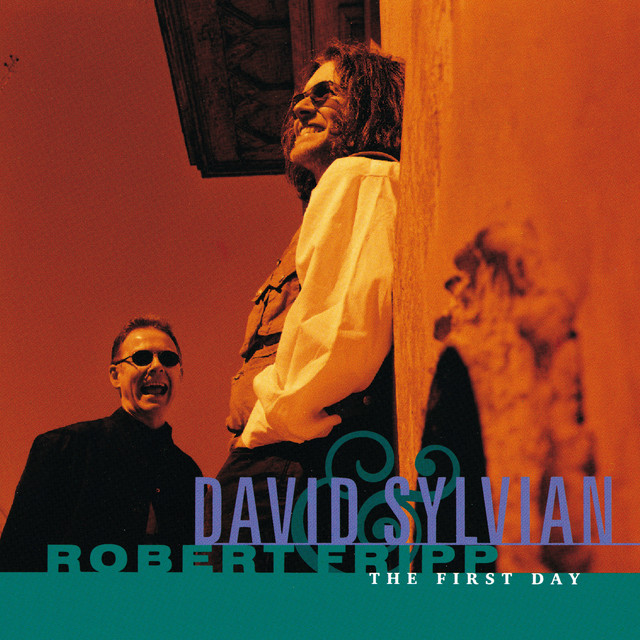
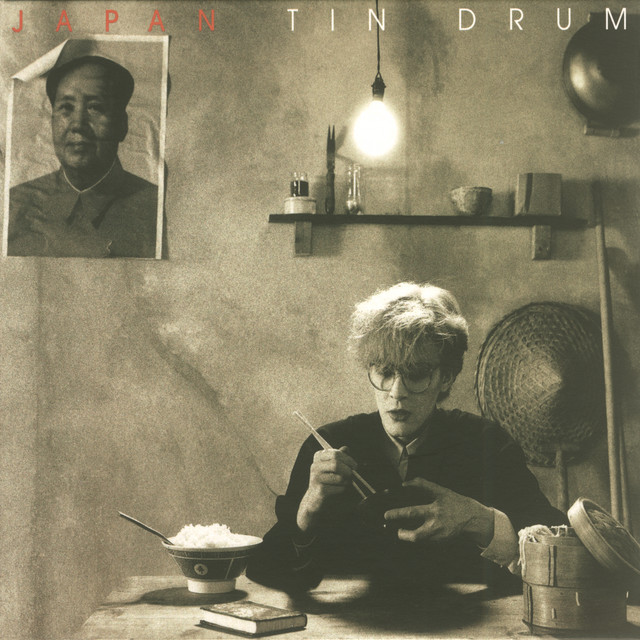
In the Sound on Sound article "David Sylvian: Recording Tin Drum & The First Day," David Sylvian discusses using the Korg M1R sound module, as mentioned in the 14th paragraph, 4th line.


Harry Gregson-Williams's LA studio complex, Wavecrest Music, commenced operations in Venice Beach in August 2003, and comprises three floors of editing suites, mix rooms and a live room, as well as Harry's own studio on the top level. This houses the following gear:
Sequencing and digital audio
*Steinberg Cubase SX and Ableton Live running on dual 3.6GHz Xeon server with 4GB RAM, two RME HD*SP 9652 soundcards, 75GB mirrored SATA system drives and 400GB mirrored SATA audio/sample storage drives. MIDI is streamed over LAN to Gigastudio PCs, and an Emagic Unitor 8 and AMT8 are used for hardware synths. *Pro Tools HD Accel system running on dual 2GHz Apple G5, with one 192 Analog and seven 192 Digital interfaces.
Samplers
*14x Emu E4X. *24x Roland S760. *7x 3.0GHz Pentium 4 PCs with 80GB SATA system drives, RME HDSP 9652 soundcards and 250GB SATA sound drives with custom and commercial sound libraries, running Tascam Gigastudio 3.
Software synths and plug-ins
*Arturia ARP 2600, Minimoog V and CS80. *Antares Filter and Auto-Tune. *Applied Acoustics Lounge Lizard. *Gmedia Imposcar and Oddity. *GRM Tools. *Korg Legacy Collection. *Native Instruments Absynth 3, Battery 2, FM7, Kontakt 2, Pro 53, Reaktor 4. *Ohm Force Ohm Boyz. *Spectrasonics Stylus RMX, Atmosphere and Trilogy. *Steinberg D'Cota, X-Phraze, Virtual Guitarist, VG Electric Edition, Groove Agent and Halion.
Hardware synths
*Access Virus, Indigo 2 and Redback. *Clavia Nord Rack, Nord 3 KB and Nord Modular. *Korg Trinity Pro X, Wavestation A/D and M1R. *Novation Supernova II Pro. *Roland JP8080, JD990, JV1080 and MKS80. *Studio Electronics SE1, ATC1 and Omega 8. *Waldorf Q, Microwave II, Microwave XT and Pulse.
Recording, mixing & outboard
*Avalon 727 preamp. *Eventide DSP4000 effects. *Lexicon PCM80 and 90 reverbs. *Quested HQ108 speakers in 5.1 setup. *5x Yamaha 02R digital mixers.


A Korg M1R can be seen in a photo of Zawinul's equipment.


Included in Andy McCluskey's equipment list, published in a 1993 issue of Sound on Sound.
.jpg?v=1783461063)

The Korg M1r can be seen in the rackmounts just by Josh's knee.


Although boasting a lush sound, the album was recorded largely at Paul's Rhythm Ranch studio on a single tascam 16-track with a Studiomaster desk. Synths used include: Roland D-50, Akai S1000 and S3000, Kork M1R, Waldorf Microwave, Roland Super Jupiter module, Oberheim Matrix 1000, Yamaha TX802, Minimoog, MIDIMoog, Oberheim Two-Voice, Roland Jupiter 8 and SH-101.


Album Usage
The Korg M1R has been featured on the following albums:


Genre Usage
Based on how artists on Equipboard use this gear, it is most commonly found in the following genres.
Used With
Based on how musicians on Equipboard use Korg M1R, it is most commonly used with the following gear.




Community setups
Show yours

More Korg Sound Modules

$495.00
in Sound Modules Rank


$292.24
in Sound Modules Rank


$405.09
in Sound Modules Rank


$238.56 - $388.00
in Sound Modules Rank

$700.00
in Sound Modules Rank


$699.99
in Sound Modules Rank


$115.00
in Sound Modules Rank


$231.87
in Sound Modules Rank


-m.webp?v=1783695571)
$350.00
in Sound Modules Rank


$192.63
in Sound Modules Rank


$1,250.00 - $1,999.99
in Sound Modules Rank


$1,450.00
in Sound Modules Rank


$845.00
in Sound Modules Rank


$298.20
in Sound Modules Rank


$2,299.00 - $2,330.00
in Sound Modules Rank


$630.00
in Sound Modules Rank


$119.00
in Sound Modules Rank

$258.00
in Sound Modules Rank

.jpg?v=1783715824)


$550.00
in Sound Modules Rank


$3,900.00
in Sound Modules Rank


$4,999.99
in Sound Modules Rank


$1,457.56
in Sound Modules Rank


$65.55
in Sound Modules Rank


$75.00
in Sound Modules Rank


$175.00 - $289.00
in Sound Modules Rank


$49.99
in Sound Modules Rank


$139.00 - $1,500.00
in Sound Modules Rank


$4.76
in Sound Modules Rank


$504.04
in Sound Modules Rank


Similar


Most Popular Sound Modules
Most Popular Brands
-
Added to Equipboard on by
 bubbajones
Gear IQ 1312
-


