

Pricing and availability
We compare 600+ stores and found this item at 1 store. Prices updated .
Store
Reviews
Price




* Product prices and availability are updated by Equipboard every 24hrs and are subject to change. Equipboard may receive compensation for purchases made at participating retailers linked on this site. This compensation does not affect what products or prices are displayed, or the order of prices listed. For more information, please refer to our affiliate disclosure.
Description
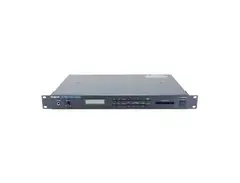
Experience a fusion of classic sound and modern versatility with the Roland D-110, an iconic member of the D-series sound modules. Noted for its Linear Arithmetic (LA) synthesis, the D-110 offers an intriguing combination of sampled attack transients and synthesized waveforms, paving the way for unique sound creation. This sound module is designed for musicians who appreciate the distinctive timbres that defined the late '80s and early '90s, making it a perfect addition for both retro enthusiasts and contemporary sound designers looking to add a vintage twist to their compositions.
The D-110 is equipped with multi-timbral capabilities, allowing you to play multiple sounds simultaneously across different channels, which is ideal for complex arrangements and live performances. Its comprehensive MIDI implementation ensures seamless integration with modern setups, providing a bridge from the past to the present. With a wide array of onboard sounds, from punchy basses to sweeping pads, this sound module meets diverse musical needs, whether you’re producing a synth-heavy track or adding layers to an orchestral piece.
Key Features:
- Linear Arithmetic (LA) synthesis for unique sound creation
- Multi-timbral capability supporting up to 8 parts for complex arrangements
- Wide range of onboard sounds, including bass, pads, and orchestral tones
- Comprehensive MIDI implementation for easy integration with modern setups
- Classic sound module from the late '80s, perfect for retro and contemporary music production
Product specs
| Brand | Roland |
| Model | D-110 Multi Timbral Sound Module |
| Finish | Black |
| Year | 1988 - 1991 |
| Made In | Japan |
| Categories | Digital Synthesizers, Rackmount Synths |
| Analog / Digital | Digital |
| MIDI I/O | MIDI Input, MIDI Output, MIDI Through |
| Polyphony | 32 Voices |
FAQs
-
What are the key features of the Roland D-110 sound module?
-
The Roland D-110 is a digital multi-timbral sound module with 32-voice polyphony, designed for use in a rackmount format. It features MIDI input, output, and through connections, making it versatile for integration into various MIDI setups.
-
How does the Roland D-110 compare to the Roland MT-32?
-
The Roland D-110 offers improved PCM samples and more of them compared to the MT-32, along with multi-timbral capabilities, making it more suitable for complex arrangements and professional use.
-
Is the Roland D-110 suitable for live performances?
-
The Roland D-110, with its rackmount design and robust MIDI capabilities, is well-suited for live performances, especially when used as part of a larger MIDI setup to access its diverse sound palette.
-
Can the Roland D-110 be used with modern DAWs?
-
Yes, the Roland D-110 can be integrated into modern DAWs via MIDI, allowing users to access its sounds and features in contemporary digital audio workstations.
-
What type of sounds can I expect from the Roland D-110?
-
The Roland D-110 provides a range of digital sounds, including synthesizer tones and PCM samples, suitable for various musical genres, from pop to electronic music.
Videos

wolfgang S vukan
Roland D-110 (D-10/D-20) - 64 User Presets Demo
Roland D-110 (D-10/D-20) - 64 User Presets Demo
wolfgang S vukan
Bad Gear - Roland D-110 - 80s Sound In A Box???

AudioPilz
Roland D-110 synthesizer module patches and tunes

Synthcomp
Roland D-110 Synthesizer Demo Songs

Sound Programming
Roland D-110 patches and tunes vol 2
Synthcomp
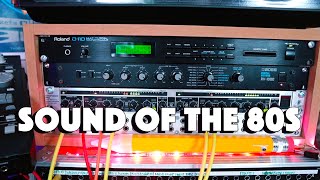
Why I bought a Roland D-110 in 2022. Most frustrating synth ever, or 80s gem?

Stephen McLeod
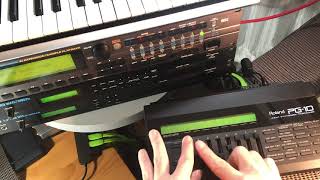
Roland D-110 and PG-10

Takashi Sasaki
Reviews
PROS
-
Unique MIDI sound module for easy controller integration
-
Wide variety of sounds, including synthier options
-
Integrated power cable for convenience
-
Supports complex configurations: PCM, DCOs, and external reverb/PCM cards
-
Offers mixed timbres for creative sound design
-
Can operate without a full studio setup
CONS
-
Heavy and bulky, unexpected for some users
-
Initial learning curve for navigation and sound categorization
-
Manual in French, challenging for non-French speakers
-
Some sounds, like piano, can feel unauthentic
-
Low line output necessitates a high-level pre-amp
-
Noticeable noise in output signal
Owner Insights
We analyzed real musician discussions from forums and Reddit to find what players love, question, and tweak about Roland D-110.
Features and functionality
-
The Roland D-110's menu has a multi-layered structure, with buttons progressing from top-level menus on the left to deeper settings on the right.
Source -
The D-110 offers a rich synth engine with the ability to layer up to 8 different timbres, allowing for significant sound flexibility.
Source -
The D-110 has multi outputs, which can be advantageous for separating sounds in a mix.
Source
Setup and maintenance
-
Owners report that the tact switches on the D-110 are prone to failure over time, likely due to the age of the units.
Source
Mods and upgrades
Comparisons
-
Users find the D-110's whimsical synth sounds reminiscent of the CZ-101, filling a unique niche that more modern synths like the Ultranova and JV880 lack.
Source -
The JV-880 and JV-1080 are noted as easier to program and superior for realistic sounds compared to the D-110, which excels in early 90s electronic music timbres.
Source -
The D-110 lacks real-time editing capabilities even with the PG-10 controller, requiring planning due to limited parameter visibility.
Source
Use cases and applications
User experience
Software and compatibility
3.5 out of 5
Based on 4 Reviews and 23 Ratings

340
Really good ethereal 80's sounds, aslo a massive ballache to use.
I'm a bedroom musician that likes hardware music production (synths, samplers, etc...) i've been making music for 7 years at the time of writing this.
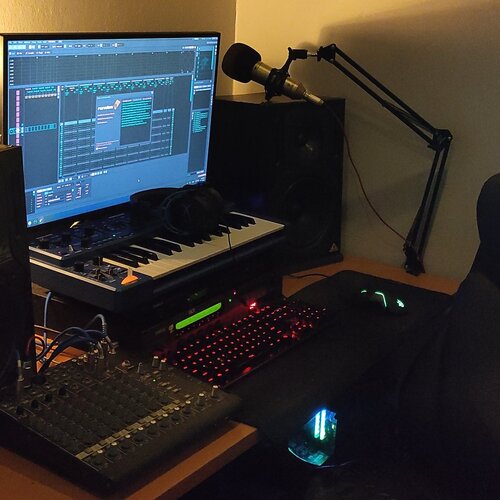
I have sort of a love and hate relationship with this piece of kit, part of me is happy i bought it since it does have some really nice and high quality sounds, the other part of me is pissed they only gave us a 16x2 LCD the likes of which can be seen in a cheap scientific calculator and 16 buttons to tweak over 2000 parameters. I've used it in a few tracks, it can be heard doing the melodic bit on my track "FPSzky - Sublime" which is available on streaming services if you wish to hear what this synth sounds like.
Pros: 1- Really nice-sounding synth for how cheap you can get it for. 2- Signature Roland sound from the 80's, similar to the sought-after Roland D-50. 3- Uses Roland's "Linear Arithmetic" synthesis, made to compete with the DX7 and can be heard on the aforementioned D-50. 4- Solid build quality. 5- Multiple outputs.
Cons: 1- Tiny display, not appropriate given how complex this instrument is. 2- Only 16 buttons to navigate around the UI and tweak over 2000 parameters. 3- Frustrating to use.
Gets a 3 out of 5 stars from me, it sounds great but unfortunately it its a nightmare to use, i highly recommend using a sysex editor like edisyn if you plan on buying one of these.
TLDR: Great sounds, a nightmare to program. Using a sysex editor is highly advised.
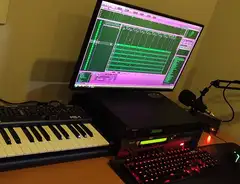
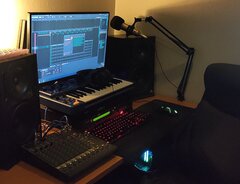


900
Nice L.A. Synthesizer, a little bit tricky when to program but got nice Synth-type of sounds
L.A. Synthesis sports a couple of PCM generator alongside with two analog-like DCOs two PCM and two DCO can be linked up into a voice, Rack version play 8 voices at the time, that can be routed on the 6 separate outputs, Reverb and PCM Card complete the pack to create a nice backup or creative synth

422
Little Roland
Interesting sounds, I bought it with his big brother the D550. The low line output requires an high level pre-amp and it is a little bit noisy.
Artist usage
Add artist

"We used S1000s; Korg T3; Juno 106; Prophet V; Voyetra Eight (best sounding poly analogue, but hard to program); DX5; Moog Source; MIDI Moog; Roland SH101 (red); Roland TR909; MT32; D110; Mac SE; Mac IIex; Sound Tools for stereo mastering, with Up Beat and Pro 4 for sequencing, though we have now changed to another sequencing package as neither of the two used previously worked correctly, a situation which I find extremely annoying."


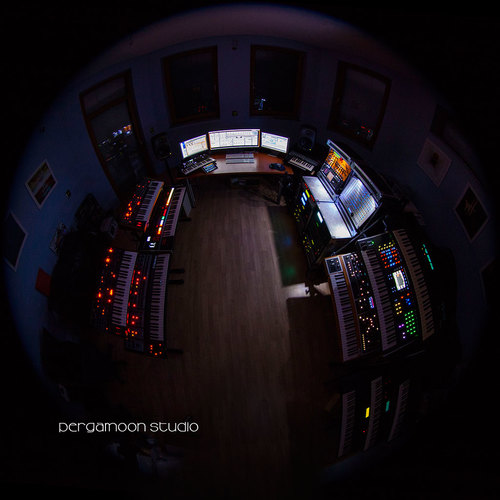
Studio buffs tend to forget that modern recording studios are imposing and disorientating places for the average lay person. The technology seems to be surpassed in complexity only by military and space hardware, and Mark King's 'home' studio is certainly state of the art, as the above listing indicates. There's also a Macintosh SE30 with Performer software, an SRC SMPTE-to-MIDI convertor, Adams Smith Zeta 3, NS 10 and Tannoy DTM8 monitors, and two Otari MTR90 24-track recorders with 48 tracks of Dolby SR. Sound sources include a DX7, Roland D110 and 550, Yamaha TX816, Juno 60, Emu III and Emax, Casio CZ101, plus an Akai-Linn MPC60 workstation and a DDrum 2 drum sampler.


Future Sound of London equipment list from the August 1992 issue of Music Technology Magazine:
Instruments
Akai S612 Sampler + MD280 Disk Drive Akai S900 Sampler Akai S1000 Sampler w/8Mb memory E-mu Proteus/1 w/Protologic board Jen SX1000 Synth Roland D110 Synth Module Roland JX3P Synth Roland MC202 Monosynth Roland MKS50 Synth Module + PG300 Programmer Roland TB303 Bass Synth Roland TR606 Drum Machine Yamaha DS55 Synth Yamaha TX81Z
Effects
Alesis Quadraverb (x2) Alesis MIDIverb II BBE 422A Sonic Maximiser Bel Electronics BD80 Digital Delay Drawmer DS201 Dual Gate Fostex 3070 Compressor/Limiter Ibanez DM1100 Digital Delay Korg DRV1000 Digital Reverb Yamaha SPX90 Multi effects Processor
Recording
Aiwa HDX1 DAT Recorder Atari 1040ST Computer w/C-lab Creator software Fostex B16 Multitrack Groove MC2V MIDI/CV Converter Korg KMS30 Sync Unit Nakamichi 480Z Cassette Deck Sony DTC1000ES DAT Recorder Soundtracs CM4400 Mixing Desk Technics SL1200 Mk2 Turntable Yamaha NS10M Monitors


"I've got a Roland D110 which I never use because it's such a pain to operate. It's a multi-function button nightmare, that machine, so it just sits there dormant in the rack."

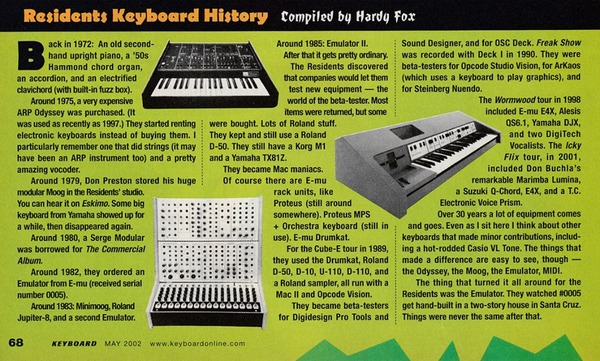
Mentioned in a May 2002 Keyboard magazine article by Hardy Fox.
For the Cube-E tour in 1989, they used the Drumkat, Roland D-50, D-10, U-110, D-110, and a Roland sampler, all run with a Mac II and Opcode Vision.


As cited in the gear list of this May '92 feature in Music Tech magazine


Composer David Wise confirmed the use of Roland D-110, stating, "We had Roland Kit like D110's / U220's / Soundcanvas and much more. I'm sure we might have emulated the odd patch here and there."


Moving on, a rack of modules provides a fair range of sounds to back up the Synclavier. One of the newest additions is an Emu Procussion, below which are a Roland MKS70, MIDIMoog ("it still goes out of tune; I was told it wouldn't"), Oberheim Matrix 6R, Korg DVP1, a slot for a Yamaha G10 guitar controller unit ("great with the TX802"), Roland D110, Roland P330, Yamaha TX81Z ("great for little clavs and so on"), and a Roland Planet P ("actually, I don't think I even turn that on any more").

Eric Persing has had a unique and influential relationship with Roland Corp for two decades. He started as a product demonstrator in 1984, showing some of Roland's first MIDI instruments. He quickly became involved in the R&D side with Roland Japan, earning the title "Chief Sound Designer", and began contributing his design ideas, real-world studio experience and sound design expertise. Persing's skills have left their mark on countless classic Roland instruments.
He is the originator of many legendary Roland sounds that have become part of the vocabulary and lexicon of musical sound. These include the Factory D-50 sounds such as Fantasia, Soundtrack and Digital Native Dance, a majority of the JV/XP/XV series Classics, all the Factory JD-800 sounds, the original Juno "Hoover" sound and thousands of others.
Here is a partial list of the Roland instruments that Eric has contributed his sound design, sampling and design consulting skills:
Juno-106 Alpha Juno 1&2 JX-3P JX-8P JX-10 Jupiter 6 Super Jupiter D-50 D-550 D-110 D-10 D-20 D-70 MT-32 U-110 U-20 U-220 Sound Canvas JD-800 JD-990 JV-80 JV-90 JV-1000 JV-1080 JV-2080 XP-10 XP-50 XP-60 XP-80 XV-3080 XV-5050 XV-5080 Fantom JP-8000 JP-8080 S-10 S-220 S-50 S-550 S-770 S-760 S-750 MC-303 MC-500 MC-505 VP-9000 MSQ-700 MSQ-100 MKS-20 MKS-30 MKS-50 MKS-70 MKS-80 R-8 R-5 DR-660 DR-770 R-70 V-Drums V-Drums expansion board SRV-2000 DEP-5 RSP-550 R-880 SRV-330 SE-50 SE-70 VS-880 VS-1680 SR-JV series expansion boards SRX series expansion boards Sound Canvas Project series CD-ROM libraries Archives series CD-ROM libraries Composers series CD-ROM libraries

Michael Hädrich confirms the use of the Roland D-110 in his current setup, as stated in a Reddit AMA.


The March '95 Sound On Sound article lists studio gear that was used by this artist. This is mentioned 13th in gear list

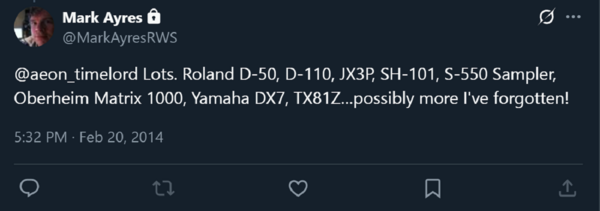
Album Usage
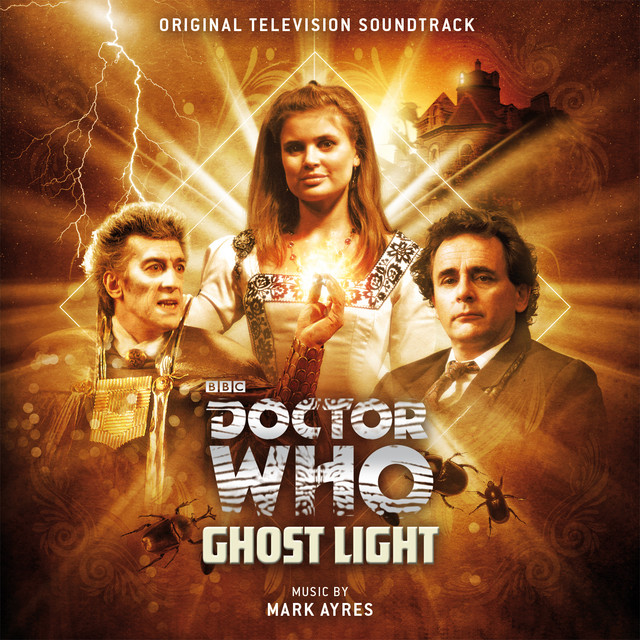
The Roland D-110 has been featured on the following albums:
Genre Usage
Based on how artists on Equipboard use this gear, it is most commonly found in the following genres.
Used With
Based on how musicians on Equipboard use Roland D-110, it is most commonly used with the following gear.


-s.webp?v=1785164368)

Community setups
Show yours

Similar
Add recommendation1 alternative for Roland D-110, curated by the Equipboard community.

$200.00
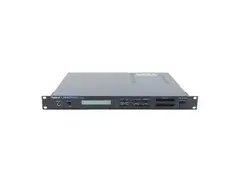
The D-20 is a lot easier to use than the d110, it aslo has an 8-track sequencer built in, and has more buttons than the d110 for easier operation. The only downside is that it keeps the same 16x2 display.
More Roland Sound Modules
-m.webp?v=1785164486)
$319.49
in Sound Modules Rank


$1,250.00 - $1,999.99
in Sound Modules Rank


$1,089.99
in Sound Modules Rank


$237.54
in Sound Modules Rank


$575.00
in Sound Modules Rank


$119.00
in Sound Modules Rank


$550.00
in Sound Modules Rank


$3,900.00
in Sound Modules Rank


$1,210.97
in Sound Modules Rank


$499.76
in Sound Modules Rank


$209.00
in Sound Modules Rank


$200.00
in Sound Modules Rank


$30.00
in Sound Modules Rank


$330.00
in Sound Modules Rank


$349.00
in Sound Modules Rank


$583.16
in Sound Modules Rank


$100.00
in Sound Modules Rank


$59.38
in Sound Modules Rank


$1,699.99
in Sound Modules Rank


$200.00
in Sound Modules Rank


$625.87
in Sound Modules Rank


$160.00
in Sound Modules Rank


$160.00
in Sound Modules Rank


$125.17
in Sound Modules Rank


$15.00
in Sound Modules Rank


$2,248.00 - $2,899.99
in Sound Modules Rank

$1,043.11
in Sound Modules Rank


$1,460.36
in Sound Modules Rank


-m.webp?v=1784876535)


Accessories & Related Items



Gear Guides






.webp)

Most Popular Sound Modules
Most Popular Brands
-
Added to Equipboard on by
 jeromy
GearIQ 238
-


