Paul Robb
Genre
Credits
Genre
Credits
Paul Robb's Studio Equipment



"I also have a Roland MKS50 and a Yamaha TX81Z, which I used to hate because it has those weird little bird harmonics on every single sound. But there are sounds on it that are just so great that you take them for granted, like the Alto Sax sound."
Find it on:


"I love Ensoniq Mirage sounds, and I've just bought the Roland Super JX module, and I like that a lot, there are so many sounds that are classics and that the new synths can't do. It's so rich; for pad sounds and horn sounds you can't beat it."
Find it on:

Included in his studio are synthesizers such as the Roland MKS-70, two MKS-50s, a MKS-80 and D-50; Yamaha TX-81Z; four Oberheim Matrix 1000s, E-mu Orbit and Morpheus, and a Casio VZ-10M. Sample players include Kurzweil 1000AX+, Roland U-110, Oberheim DPX-1, E-mu Proformance Piano and Proteus (as well as the Proteus 2 and 3), Alesis NanoBass and samplers, including a Casio FZ-10M, two Akai S-1000s and three Akai CD-3000s. He also turns to E-mu Procussion, Roland R-8M, Alesis DM-5, Roland BD-1 and a Roland SPD-11 for drum sounds.
Find it on:

Included in his studio are synthesizers such as the Roland MKS-70, two MKS-50s, a MKS-80 and D-50; Yamaha TX-81Z; four Oberheim Matrix 1000s, E-mu Orbit and Morpheus, and a Casio VZ-10M. Sample players include Kurzweil 1000AX+, Roland U-110, Oberheim DPX-1, E-mu Proformance Piano and Proteus (as well as the Proteus 2 and 3), Alesis NanoBass and samplers, including a Casio FZ-10M, two Akai S-1000s and three Akai CD-3000s. He also turns to E-mu Procussion, Roland R-8M, Alesis DM-5, Roland BD-1 and a Roland SPD-11 for drum sounds.
Find it on:


One thing conspicuously absent from Robb's studio is a hard disk recording system. Sure he has the standard arsenal of rackmount modules, including Yamaha SPX90, Lexicon LXP-1 and just about the entire E-mu Proteus family, but he's got the hardware and not their plug-in counterparts.
Find it on:

List of drum samplers at Paul Robb's studio:
Akai S1000 (x2). Akai CD3000 (x3). Akai S6000. "I'm replacing the older samplers with the new S6000 right now!" Casio FZ10. "It's an 8‑bit clunky old thing which I keep because I have a large library of bizarre old samples that I did before sampling was very popular. Some of them are so oddball that sometimes they're perfect for when I get stuck — I load a disk at random and it'll give me an idea."
Find it on:

List of effects at Paul Robb's studio:
Aphex Type C2 Exciter. BBE 462 Sonic Maximiser enhancer. Drawmer DL241 dual compressor. "I generally strap this across the stereo buss. At some point I'd like to get a better compressor, though." Boss SE50. Boss SE70. "I primarily use these for distortion." Digitech VFX Valve FX. "This is an awesome distortion box. It's so bright it will rip your head off." Ensoniq DP/2. "I also use this primarily for distortion. All four of my distortion boxes [Digitech Valve FX, Roland SE50 and SE70, Ensoniq DP2] are absolutely critical to me. They're indispensable. I rarely use synthesizers anymore without running them through a guitar box." Eventide H3000 multi‑effects. FMR Audio RNC1773 Really Nice Compressor (x3). "These are my new favourite boxes. They make them in Texas, and they're incredibly cheap — 179 dollars, I think it was. But they're great, and on a par with the Drawmer compressor." Focusrite Red 2 Dual EQ. "It's mostly just gorgeous looking! Everyone who comes in here notices it. It looks like a piece of candy, you just want to bite on it. The thing is, it's so intimidating to look at, you really can't tell if it's any good or not — it doesn't need to be any good! I like it, though it's not quite good enough to strap across the whole mix: the EQ3D is on a par, even though it's half the price." Focusrite Red 7 Voice Channel. "This has a mic pre, a compressor, an enhancer and a de‑esser in it, which we use for recording vocals." Lexicon MPX1 multi‑effects. Lexicon PCM70 multi‑effects. Nightpro EQ3D filter. Peavey Analog Filter. "I actually very rarely use this. I've run some loops through it to make them sound crunchy and lo‑fi and it works OK. These techno people use outboard filters all the time — it's just that this one isn't a particularly good one, and I can't justify spending a grand on something like the Waldorf DPole or the Mutator." Roland SDE1000. "I just use this for simple delays." Roland SRV2000 reverb. SPL Vitalizer. "I think this is a lot more popular in Britain than it is here. I like it, but it has so much background hiss that I can only use it in loud noisy music. The great thing about it is the way it spreads the stereo fields, it's got some kind of phase." TC Electronic M2000 multi‑effects. Yamaha SPX90 multi‑effects. "This was the first effects box I ever bought and it's totally on its last legs. I keep it for its stereo split program, because it sounds so grainy and nice."
Find it on:

"The heart of my studio is an IBM AT clone, which I usually run Voyetra Sequencer Plus software on", he says, "and then I have modules - I don't have any big old keyboard synths any more. I use a Casio FZ10M sampler, which sounds great, but it's very strange to use. I've just discovered that if you save a whole keyboard setup, you cannot just call up one sound from that to add it to another bank. You have to call up the whole bank. I'm sure there's a way to get around it, but the manual... One of the great features is that it does have editing facilities built in, so you don't need to buy a computer for that. But again, if I can't figure out how to use it, it's not going to be much help."
Find it on:

To work up his scoring assignments Robb has assembled a home studio-he calls it the Wreck Room-that blends the old school MIDI gear he started with back in 1987 and some more up-to-date recording devices. For example, in the midst of a Mackie 32*8 board and two 24*E expanders is a 286 PC that runs his vintage main sequencing program.
Find it on:

One thing conspicuously absent from Robb's studio is a hard disk recording system. Sure he has the standard arsenal of rackmount modules, including Yamaha SPX90, Lexicon LXP-1 and just about the entire E-mu Proteus family, but he's got the hardware and not their plug-in counterparts.
Find it on:

Included in his studio are synthesizers such as the Roland MKS-70, two MKS-50s, a MKS-80 and D-50; Yamaha TX-81Z; four Oberheim Matrix 1000s, E-mu Orbit and Morpheus, and a Casio VZ-10M. Sample players include Kurzweil 1000AX+, Roland U-110, Oberheim DPX-1, E-mu Proformance Piano and Proteus (as well as the Proteus 2 and 3), Alesis NanoBass and samplers, including a Casio FZ-10M, two Akai S-1000s and three Akai CD-3000s. He also turns to E-mu Procussion, Roland R-8M, Alesis DM-5, Roland BD-1 and a Roland SPD-11 for drum sounds.
Find it on:

Included in his studio are synthesizers such as the Roland MKS-70, two MKS-50s, a MKS-80 and D-50; Yamaha TX-81Z; four Oberheim Matrix 1000s, E-mu Orbit and Morpheus, and a Casio VZ-10M. Sample players include Kurzweil 1000AX+, Roland U-110, Oberheim DPX-1, E-mu Proformance Piano and Proteus (as well as the Proteus 2 and 3), Alesis NanoBass and samplers, including a Casio FZ-10M, two Akai S-1000s and three Akai CD-3000s. He also turns to E-mu Procussion, Roland R-8M, Alesis DM-5, Roland BD-1 and a Roland SPD-11 for drum sounds.
Find it on:

Included in his studio are synthesizers such as the Roland MKS-70, two MKS-50s, a MKS-80 and D-50; Yamaha TX-81Z; four Oberheim Matrix 1000s, E-mu Orbit and Morpheus, and a Casio VZ-10M. Sample players include Kurzweil 1000AX+, Roland U-110, Oberheim DPX-1, E-mu Proformance Piano and Proteus (as well as the Proteus 2 and 3), Alesis NanoBass and samplers, including a Casio FZ-10M, two Akai S-1000s and three Akai CD-3000s. He also turns to E-mu Procussion, Roland R-8M, Alesis DM-5, Roland BD-1 and a Roland SPD-11 for drum sounds.
Find it on:

Included in his studio are synthesizers such as the Roland MKS-70, two MKS-50s, a MKS-80 and D-50; Yamaha TX-81Z; four Oberheim Matrix 1000s, E-mu Orbit and Morpheus, and a Casio VZ-10M. Sample players include Kurzweil 1000AX+, Roland U-110, Oberheim DPX-1, E-mu Proformance Piano and Proteus (as well as the Proteus 2 and 3), Alesis NanoBass and samplers, including a Casio FZ-10M, two Akai S-1000s and three Akai CD-3000s. He also turns to E-mu Procussion, Roland R-8M, Alesis DM-5, Roland BD-1 and a Roland SPD-11 for drum sounds.
Find it on:

Opcode 128X MIDI interface. "I wasn't crazy about getting into the world of MIDI interfaces, because up until only last year, I used the Yamaha C1, which has built‑in 8‑port MIDI as well as SMPTE read and write. I was using 8‑port MIDI when people didn't even know what a MIDI port was! It was just rock solid, nothing ever went wrong."
Find it on:

List of effects at Paul Robb's studio:
Aphex Type C2 Exciter. BBE 462 Sonic Maximiser enhancer. Drawmer DL241 dual compressor. "I generally strap this across the stereo buss. At some point I'd like to get a better compressor, though." Boss SE50. Boss SE70. "I primarily use these for distortion." Digitech VFX Valve FX. "This is an awesome distortion box. It's so bright it will rip your head off." Ensoniq DP/2. "I also use this primarily for distortion. All four of my distortion boxes [Digitech Valve FX, Roland SE50 and SE70, Ensoniq DP2] are absolutely critical to me. They're indispensable. I rarely use synthesizers anymore without running them through a guitar box." Eventide H3000 multi‑effects. FMR Audio RNC1773 Really Nice Compressor (x3). "These are my new favourite boxes. They make them in Texas, and they're incredibly cheap — 179 dollars, I think it was. But they're great, and on a par with the Drawmer compressor." Focusrite Red 2 Dual EQ. "It's mostly just gorgeous looking! Everyone who comes in here notices it. It looks like a piece of candy, you just want to bite on it. The thing is, it's so intimidating to look at, you really can't tell if it's any good or not — it doesn't need to be any good! I like it, though it's not quite good enough to strap across the whole mix: the EQ3D is on a par, even though it's half the price." Focusrite Red 7 Voice Channel. "This has a mic pre, a compressor, an enhancer and a de‑esser in it, which we use for recording vocals." Lexicon MPX1 multi‑effects. Lexicon PCM70 multi‑effects. Nightpro EQ3D filter. Peavey Analog Filter. "I actually very rarely use this. I've run some loops through it to make them sound crunchy and lo‑fi and it works OK. These techno people use outboard filters all the time — it's just that this one isn't a particularly good one, and I can't justify spending a grand on something like the Waldorf DPole or the Mutator." Roland SDE1000. "I just use this for simple delays." Roland SRV2000 reverb. SPL Vitalizer. "I think this is a lot more popular in Britain than it is here. I like it, but it has so much background hiss that I can only use it in loud noisy music. The great thing about it is the way it spreads the stereo fields, it's got some kind of phase." TC Electronic M2000 multi‑effects. Yamaha SPX90 multi‑effects. "This was the first effects box I ever bought and it's totally on its last legs. I keep it for its stereo split program, because it sounds so grainy and nice."
Find it on:



List of effects at Paul Robb's studio:
Aphex Type C2 Exciter. BBE 462 Sonic Maximiser enhancer. Drawmer DL241 dual compressor. "I generally strap this across the stereo buss. At some point I'd like to get a better compressor, though." Boss SE50. Boss SE70. "I primarily use these for distortion." Digitech VFX Valve FX. "This is an awesome distortion box. It's so bright it will rip your head off." Ensoniq DP/2. "I also use this primarily for distortion. All four of my distortion boxes [Digitech Valve FX, Roland SE50 and SE70, Ensoniq DP2] are absolutely critical to me. They're indispensable. I rarely use synthesizers anymore without running them through a guitar box." Eventide H3000 multi‑effects. FMR Audio RNC1773 Really Nice Compressor (x3). "These are my new favourite boxes. They make them in Texas, and they're incredibly cheap — 179 dollars, I think it was. But they're great, and on a par with the Drawmer compressor." Focusrite Red 2 Dual EQ. "It's mostly just gorgeous looking! Everyone who comes in here notices it. It looks like a piece of candy, you just want to bite on it. The thing is, it's so intimidating to look at, you really can't tell if it's any good or not — it doesn't need to be any good! I like it, though it's not quite good enough to strap across the whole mix: the EQ3D is on a par, even though it's half the price." Focusrite Red 7 Voice Channel. "This has a mic pre, a compressor, an enhancer and a de‑esser in it, which we use for recording vocals." Lexicon MPX1 multi‑effects. Lexicon PCM70 multi‑effects. Nightpro EQ3D filter. Peavey Analog Filter. "I actually very rarely use this. I've run some loops through it to make them sound crunchy and lo‑fi and it works OK. These techno people use outboard filters all the time — it's just that this one isn't a particularly good one, and I can't justify spending a grand on something like the Waldorf DPole or the Mutator." Roland SDE1000. "I just use this for simple delays." Roland SRV2000 reverb. SPL Vitalizer. "I think this is a lot more popular in Britain than it is here. I like it, but it has so much background hiss that I can only use it in loud noisy music. The great thing about it is the way it spreads the stereo fields, it's got some kind of phase." TC Electronic M2000 multi‑effects. Yamaha SPX90 multi‑effects. "This was the first effects box I ever bought and it's totally on its last legs. I keep it for its stereo split program, because it sounds so grainy and nice."
Find it on:

List of effects at Paul Robb's studio:
Aphex Type C2 Exciter. BBE 462 Sonic Maximiser enhancer. Drawmer DL241 dual compressor. "I generally strap this across the stereo buss. At some point I'd like to get a better compressor, though." Boss SE50. Boss SE70. "I primarily use these for distortion." Digitech VFX Valve FX. "This is an awesome distortion box. It's so bright it will rip your head off." Ensoniq DP/2. "I also use this primarily for distortion. All four of my distortion boxes [Digitech Valve FX, Roland SE50 and SE70, Ensoniq DP2] are absolutely critical to me. They're indispensable. I rarely use synthesizers anymore without running them through a guitar box." Eventide H3000 multi‑effects. FMR Audio RNC1773 Really Nice Compressor (x3). "These are my new favourite boxes. They make them in Texas, and they're incredibly cheap — 179 dollars, I think it was. But they're great, and on a par with the Drawmer compressor." Focusrite Red 2 Dual EQ. "It's mostly just gorgeous looking! Everyone who comes in here notices it. It looks like a piece of candy, you just want to bite on it. The thing is, it's so intimidating to look at, you really can't tell if it's any good or not — it doesn't need to be any good! I like it, though it's not quite good enough to strap across the whole mix: the EQ3D is on a par, even though it's half the price." Focusrite Red 7 Voice Channel. "This has a mic pre, a compressor, an enhancer and a de‑esser in it, which we use for recording vocals." Lexicon MPX1 multi‑effects. Lexicon PCM70 multi‑effects. Nightpro EQ3D filter. Peavey Analog Filter. "I actually very rarely use this. I've run some loops through it to make them sound crunchy and lo‑fi and it works OK. These techno people use outboard filters all the time — it's just that this one isn't a particularly good one, and I can't justify spending a grand on something like the Waldorf DPole or the Mutator." Roland SDE1000. "I just use this for simple delays." Roland SRV2000 reverb. SPL Vitalizer. "I think this is a lot more popular in Britain than it is here. I like it, but it has so much background hiss that I can only use it in loud noisy music. The great thing about it is the way it spreads the stereo fields, it's got some kind of phase." TC Electronic M2000 multi‑effects. Yamaha SPX90 multi‑effects. "This was the first effects box I ever bought and it's totally on its last legs. I keep it for its stereo split program, because it sounds so grainy and nice."
Find it on:

List of effects at Paul Robb's studio:
Aphex Type C2 Exciter. BBE 462 Sonic Maximiser enhancer. Drawmer DL241 dual compressor. "I generally strap this across the stereo buss. At some point I'd like to get a better compressor, though." Boss SE50. Boss SE70. "I primarily use these for distortion." Digitech VFX Valve FX. "This is an awesome distortion box. It's so bright it will rip your head off." Ensoniq DP/2. "I also use this primarily for distortion. All four of my distortion boxes [Digitech Valve FX, Roland SE50 and SE70, Ensoniq DP2] are absolutely critical to me. They're indispensable. I rarely use synthesizers anymore without running them through a guitar box." Eventide H3000 multi‑effects. FMR Audio RNC1773 Really Nice Compressor (x3). "These are my new favourite boxes. They make them in Texas, and they're incredibly cheap — 179 dollars, I think it was. But they're great, and on a par with the Drawmer compressor." Focusrite Red 2 Dual EQ. "It's mostly just gorgeous looking! Everyone who comes in here notices it. It looks like a piece of candy, you just want to bite on it. The thing is, it's so intimidating to look at, you really can't tell if it's any good or not — it doesn't need to be any good! I like it, though it's not quite good enough to strap across the whole mix: the EQ3D is on a par, even though it's half the price." Focusrite Red 7 Voice Channel. "This has a mic pre, a compressor, an enhancer and a de‑esser in it, which we use for recording vocals." Lexicon MPX1 multi‑effects. Lexicon PCM70 multi‑effects. Nightpro EQ3D filter. Peavey Analog Filter. "I actually very rarely use this. I've run some loops through it to make them sound crunchy and lo‑fi and it works OK. These techno people use outboard filters all the time — it's just that this one isn't a particularly good one, and I can't justify spending a grand on something like the Waldorf DPole or the Mutator." Roland SDE1000. "I just use this for simple delays." Roland SRV2000 reverb. SPL Vitalizer. "I think this is a lot more popular in Britain than it is here. I like it, but it has so much background hiss that I can only use it in loud noisy music. The great thing about it is the way it spreads the stereo fields, it's got some kind of phase." TC Electronic M2000 multi‑effects. Yamaha SPX90 multi‑effects. "This was the first effects box I ever bought and it's totally on its last legs. I keep it for its stereo split program, because it sounds so grainy and nice."
Find it on:

List of effects at Paul Robb's studio:
Aphex Type C2 Exciter. BBE 462 Sonic Maximiser enhancer. Drawmer DL241 dual compressor. "I generally strap this across the stereo buss. At some point I'd like to get a better compressor, though." Boss SE50. Boss SE70. "I primarily use these for distortion." Digitech VFX Valve FX. "This is an awesome distortion box. It's so bright it will rip your head off." Ensoniq DP/2. "I also use this primarily for distortion. All four of my distortion boxes [Digitech Valve FX, Roland SE50 and SE70, Ensoniq DP2] are absolutely critical to me. They're indispensable. I rarely use synthesizers anymore without running them through a guitar box." Eventide H3000 multi‑effects. FMR Audio RNC1773 Really Nice Compressor (x3). "These are my new favourite boxes. They make them in Texas, and they're incredibly cheap — 179 dollars, I think it was. But they're great, and on a par with the Drawmer compressor." Focusrite Red 2 Dual EQ. "It's mostly just gorgeous looking! Everyone who comes in here notices it. It looks like a piece of candy, you just want to bite on it. The thing is, it's so intimidating to look at, you really can't tell if it's any good or not — it doesn't need to be any good! I like it, though it's not quite good enough to strap across the whole mix: the EQ3D is on a par, even though it's half the price." Focusrite Red 7 Voice Channel. "This has a mic pre, a compressor, an enhancer and a de‑esser in it, which we use for recording vocals." Lexicon MPX1 multi‑effects. Lexicon PCM70 multi‑effects. Nightpro EQ3D filter. Peavey Analog Filter. "I actually very rarely use this. I've run some loops through it to make them sound crunchy and lo‑fi and it works OK. These techno people use outboard filters all the time — it's just that this one isn't a particularly good one, and I can't justify spending a grand on something like the Waldorf DPole or the Mutator." Roland SDE1000. "I just use this for simple delays." Roland SRV2000 reverb. SPL Vitalizer. "I think this is a lot more popular in Britain than it is here. I like it, but it has so much background hiss that I can only use it in loud noisy music. The great thing about it is the way it spreads the stereo fields, it's got some kind of phase." TC Electronic M2000 multi‑effects. Yamaha SPX90 multi‑effects. "This was the first effects box I ever bought and it's totally on its last legs. I keep it for its stereo split program, because it sounds so grainy and nice."
Find it on:

List of effects at Paul Robb's studio:
Aphex Type C2 Exciter. BBE 462 Sonic Maximiser enhancer. Drawmer DL241 dual compressor. "I generally strap this across the stereo buss. At some point I'd like to get a better compressor, though." Boss SE50. Boss SE70. "I primarily use these for distortion." Digitech VFX Valve FX. "This is an awesome distortion box. It's so bright it will rip your head off." Ensoniq DP/2. "I also use this primarily for distortion. All four of my distortion boxes [Digitech Valve FX, Roland SE50 and SE70, Ensoniq DP2] are absolutely critical to me. They're indispensable. I rarely use synthesizers anymore without running them through a guitar box." Eventide H3000 multi‑effects. FMR Audio RNC1773 Really Nice Compressor (x3). "These are my new favourite boxes. They make them in Texas, and they're incredibly cheap — 179 dollars, I think it was. But they're great, and on a par with the Drawmer compressor." Focusrite Red 2 Dual EQ. "It's mostly just gorgeous looking! Everyone who comes in here notices it. It looks like a piece of candy, you just want to bite on it. The thing is, it's so intimidating to look at, you really can't tell if it's any good or not — it doesn't need to be any good! I like it, though it's not quite good enough to strap across the whole mix: the EQ3D is on a par, even though it's half the price." Focusrite Red 7 Voice Channel. "This has a mic pre, a compressor, an enhancer and a de‑esser in it, which we use for recording vocals." Lexicon MPX1 multi‑effects. Lexicon PCM70 multi‑effects. Nightpro EQ3D filter. Peavey Analog Filter. "I actually very rarely use this. I've run some loops through it to make them sound crunchy and lo‑fi and it works OK. These techno people use outboard filters all the time — it's just that this one isn't a particularly good one, and I can't justify spending a grand on something like the Waldorf DPole or the Mutator." Roland SDE1000. "I just use this for simple delays." Roland SRV2000 reverb. SPL Vitalizer. "I think this is a lot more popular in Britain than it is here. I like it, but it has so much background hiss that I can only use it in loud noisy music. The great thing about it is the way it spreads the stereo fields, it's got some kind of phase." TC Electronic M2000 multi‑effects. Yamaha SPX90 multi‑effects. "This was the first effects box I ever bought and it's totally on its last legs. I keep it for its stereo split program, because it sounds so grainy and nice."
Find it on:


List of effects at Paul Robb's studio:
Aphex Type C2 Exciter. BBE 462 Sonic Maximiser enhancer. Drawmer DL241 dual compressor. "I generally strap this across the stereo buss. At some point I'd like to get a better compressor, though." Boss SE50. Boss SE70. "I primarily use these for distortion." Digitech VFX Valve FX. "This is an awesome distortion box. It's so bright it will rip your head off." Ensoniq DP/2. "I also use this primarily for distortion. All four of my distortion boxes [Digitech Valve FX, Roland SE50 and SE70, Ensoniq DP2] are absolutely critical to me. They're indispensable. I rarely use synthesizers anymore without running them through a guitar box." Eventide H3000 multi‑effects. FMR Audio RNC1773 Really Nice Compressor (x3). "These are my new favourite boxes. They make them in Texas, and they're incredibly cheap — 179 dollars, I think it was. But they're great, and on a par with the Drawmer compressor." Focusrite Red 2 Dual EQ. "It's mostly just gorgeous looking! Everyone who comes in here notices it. It looks like a piece of candy, you just want to bite on it. The thing is, it's so intimidating to look at, you really can't tell if it's any good or not — it doesn't need to be any good! I like it, though it's not quite good enough to strap across the whole mix: the EQ3D is on a par, even though it's half the price." Focusrite Red 7 Voice Channel. "This has a mic pre, a compressor, an enhancer and a de‑esser in it, which we use for recording vocals." Lexicon MPX1 multi‑effects. Lexicon PCM70 multi‑effects. Nightpro EQ3D filter. Peavey Analog Filter. "I actually very rarely use this. I've run some loops through it to make them sound crunchy and lo‑fi and it works OK. These techno people use outboard filters all the time — it's just that this one isn't a particularly good one, and I can't justify spending a grand on something like the Waldorf DPole or the Mutator." Roland SDE1000. "I just use this for simple delays." Roland SRV2000 reverb. SPL Vitalizer. "I think this is a lot more popular in Britain than it is here. I like it, but it has so much background hiss that I can only use it in loud noisy music. The great thing about it is the way it spreads the stereo fields, it's got some kind of phase." TC Electronic M2000 multi‑effects. Yamaha SPX90 multi‑effects. "This was the first effects box I ever bought and it's totally on its last legs. I keep it for its stereo split program, because it sounds so grainy and nice."
Find it on:

List of effects at Paul Robb's studio:
Aphex Type C2 Exciter. BBE 462 Sonic Maximiser enhancer. Drawmer DL241 dual compressor. "I generally strap this across the stereo buss. At some point I'd like to get a better compressor, though." Boss SE50. Boss SE70. "I primarily use these for distortion." Digitech VFX Valve FX. "This is an awesome distortion box. It's so bright it will rip your head off." Ensoniq DP/2. "I also use this primarily for distortion. All four of my distortion boxes [Digitech Valve FX, Roland SE50 and SE70, Ensoniq DP2] are absolutely critical to me. They're indispensable. I rarely use synthesizers anymore without running them through a guitar box." Eventide H3000 multi‑effects. FMR Audio RNC1773 Really Nice Compressor (x3). "These are my new favourite boxes. They make them in Texas, and they're incredibly cheap — 179 dollars, I think it was. But they're great, and on a par with the Drawmer compressor." Focusrite Red 2 Dual EQ. "It's mostly just gorgeous looking! Everyone who comes in here notices it. It looks like a piece of candy, you just want to bite on it. The thing is, it's so intimidating to look at, you really can't tell if it's any good or not — it doesn't need to be any good! I like it, though it's not quite good enough to strap across the whole mix: the EQ3D is on a par, even though it's half the price." Focusrite Red 7 Voice Channel. "This has a mic pre, a compressor, an enhancer and a de‑esser in it, which we use for recording vocals." Lexicon MPX1 multi‑effects. Lexicon PCM70 multi‑effects. Nightpro EQ3D filter. Peavey Analog Filter. "I actually very rarely use this. I've run some loops through it to make them sound crunchy and lo‑fi and it works OK. These techno people use outboard filters all the time — it's just that this one isn't a particularly good one, and I can't justify spending a grand on something like the Waldorf DPole or the Mutator." Roland SDE1000. "I just use this for simple delays." Roland SRV2000 reverb. SPL Vitalizer. "I think this is a lot more popular in Britain than it is here. I like it, but it has so much background hiss that I can only use it in loud noisy music. The great thing about it is the way it spreads the stereo fields, it's got some kind of phase." TC Electronic M2000 multi‑effects. Yamaha SPX90 multi‑effects. "This was the first effects box I ever bought and it's totally on its last legs. I keep it for its stereo split program, because it sounds so grainy and nice."
Find it on:

List of effects at Paul Robb's studio:
Aphex Type C2 Exciter. BBE 462 Sonic Maximiser enhancer. Drawmer DL241 dual compressor. "I generally strap this across the stereo buss. At some point I'd like to get a better compressor, though." Boss SE50. Boss SE70. "I primarily use these for distortion." Digitech VFX Valve FX. "This is an awesome distortion box. It's so bright it will rip your head off." Ensoniq DP/2. "I also use this primarily for distortion. All four of my distortion boxes [Digitech Valve FX, Roland SE50 and SE70, Ensoniq DP2] are absolutely critical to me. They're indispensable. I rarely use synthesizers anymore without running them through a guitar box." Eventide H3000 multi‑effects. FMR Audio RNC1773 Really Nice Compressor (x3). "These are my new favourite boxes. They make them in Texas, and they're incredibly cheap — 179 dollars, I think it was. But they're great, and on a par with the Drawmer compressor." Focusrite Red 2 Dual EQ. "It's mostly just gorgeous looking! Everyone who comes in here notices it. It looks like a piece of candy, you just want to bite on it. The thing is, it's so intimidating to look at, you really can't tell if it's any good or not — it doesn't need to be any good! I like it, though it's not quite good enough to strap across the whole mix: the EQ3D is on a par, even though it's half the price." Focusrite Red 7 Voice Channel. "This has a mic pre, a compressor, an enhancer and a de‑esser in it, which we use for recording vocals." Lexicon MPX1 multi‑effects. Lexicon PCM70 multi‑effects. Nightpro EQ3D filter. Peavey Analog Filter. "I actually very rarely use this. I've run some loops through it to make them sound crunchy and lo‑fi and it works OK. These techno people use outboard filters all the time — it's just that this one isn't a particularly good one, and I can't justify spending a grand on something like the Waldorf DPole or the Mutator." Roland SDE1000. "I just use this for simple delays." Roland SRV2000 reverb. SPL Vitalizer. "I think this is a lot more popular in Britain than it is here. I like it, but it has so much background hiss that I can only use it in loud noisy music. The great thing about it is the way it spreads the stereo fields, it's got some kind of phase." TC Electronic M2000 multi‑effects. Yamaha SPX90 multi‑effects. "This was the first effects box I ever bought and it's totally on its last legs. I keep it for its stereo split program, because it sounds so grainy and nice."
Find it on:
-m.webp?v=1782917976)
List of effects at Paul Robb's studio:
Aphex Type C2 Exciter. BBE 462 Sonic Maximiser enhancer. Drawmer DL241 dual compressor. "I generally strap this across the stereo buss. At some point I'd like to get a better compressor, though." Boss SE50. Boss SE70. "I primarily use these for distortion." Digitech VFX Valve FX. "This is an awesome distortion box. It's so bright it will rip your head off." Ensoniq DP/2. "I also use this primarily for distortion. All four of my distortion boxes [Digitech Valve FX, Roland SE50 and SE70, Ensoniq DP2] are absolutely critical to me. They're indispensable. I rarely use synthesizers anymore without running them through a guitar box." Eventide H3000 multi‑effects. FMR Audio RNC1773 Really Nice Compressor (x3). "These are my new favourite boxes. They make them in Texas, and they're incredibly cheap — 179 dollars, I think it was. But they're great, and on a par with the Drawmer compressor." Focusrite Red 2 Dual EQ. "It's mostly just gorgeous looking! Everyone who comes in here notices it. It looks like a piece of candy, you just want to bite on it. The thing is, it's so intimidating to look at, you really can't tell if it's any good or not — it doesn't need to be any good! I like it, though it's not quite good enough to strap across the whole mix: the EQ3D is on a par, even though it's half the price." Focusrite Red 7 Voice Channel. "This has a mic pre, a compressor, an enhancer and a de‑esser in it, which we use for recording vocals." Lexicon MPX1 multi‑effects. Lexicon PCM70 multi‑effects. Nightpro EQ3D filter. Peavey Analog Filter. "I actually very rarely use this. I've run some loops through it to make them sound crunchy and lo‑fi and it works OK. These techno people use outboard filters all the time — it's just that this one isn't a particularly good one, and I can't justify spending a grand on something like the Waldorf DPole or the Mutator." Roland SDE1000. "I just use this for simple delays." Roland SRV2000 reverb. SPL Vitalizer. "I think this is a lot more popular in Britain than it is here. I like it, but it has so much background hiss that I can only use it in loud noisy music. The great thing about it is the way it spreads the stereo fields, it's got some kind of phase." TC Electronic M2000 multi‑effects. Yamaha SPX90 multi‑effects. "This was the first effects box I ever bought and it's totally on its last legs. I keep it for its stereo split program, because it sounds so grainy and nice."
Find it on:

List of effects at Paul Robb's studio:
Aphex Type C2 Exciter. BBE 462 Sonic Maximiser enhancer. Drawmer DL241 dual compressor. "I generally strap this across the stereo buss. At some point I'd like to get a better compressor, though." Boss SE50. Boss SE70. "I primarily use these for distortion." Digitech VFX Valve FX. "This is an awesome distortion box. It's so bright it will rip your head off." Ensoniq DP/2. "I also use this primarily for distortion. All four of my distortion boxes [Digitech Valve FX, Roland SE50 and SE70, Ensoniq DP2] are absolutely critical to me. They're indispensable. I rarely use synthesizers anymore without running them through a guitar box." Eventide H3000 multi‑effects. FMR Audio RNC1773 Really Nice Compressor (x3). "These are my new favourite boxes. They make them in Texas, and they're incredibly cheap — 179 dollars, I think it was. But they're great, and on a par with the Drawmer compressor." Focusrite Red 2 Dual EQ. "It's mostly just gorgeous looking! Everyone who comes in here notices it. It looks like a piece of candy, you just want to bite on it. The thing is, it's so intimidating to look at, you really can't tell if it's any good or not — it doesn't need to be any good! I like it, though it's not quite good enough to strap across the whole mix: the EQ3D is on a par, even though it's half the price." Focusrite Red 7 Voice Channel. "This has a mic pre, a compressor, an enhancer and a de‑esser in it, which we use for recording vocals." Lexicon MPX1 multi‑effects. Lexicon PCM70 multi‑effects. Nightpro EQ3D filter. Peavey Analog Filter. "I actually very rarely use this. I've run some loops through it to make them sound crunchy and lo‑fi and it works OK. These techno people use outboard filters all the time — it's just that this one isn't a particularly good one, and I can't justify spending a grand on something like the Waldorf DPole or the Mutator." Roland SDE1000. "I just use this for simple delays." Roland SRV2000 reverb. SPL Vitalizer. "I think this is a lot more popular in Britain than it is here. I like it, but it has so much background hiss that I can only use it in loud noisy music. The great thing about it is the way it spreads the stereo fields, it's got some kind of phase." TC Electronic M2000 multi‑effects. Yamaha SPX90 multi‑effects. "This was the first effects box I ever bought and it's totally on its last legs. I keep it for its stereo split program, because it sounds so grainy and nice."
Find it on:

List of effects at Paul Robb's studio:
Aphex Type C2 Exciter. BBE 462 Sonic Maximiser enhancer. Drawmer DL241 dual compressor. "I generally strap this across the stereo buss. At some point I'd like to get a better compressor, though." Boss SE50. Boss SE70. "I primarily use these for distortion." Digitech VFX Valve FX. "This is an awesome distortion box. It's so bright it will rip your head off." Ensoniq DP/2. "I also use this primarily for distortion. All four of my distortion boxes [Digitech Valve FX, Roland SE50 and SE70, Ensoniq DP2] are absolutely critical to me. They're indispensable. I rarely use synthesizers anymore without running them through a guitar box." Eventide H3000 multi‑effects. FMR Audio RNC1773 Really Nice Compressor (x3). "These are my new favourite boxes. They make them in Texas, and they're incredibly cheap — 179 dollars, I think it was. But they're great, and on a par with the Drawmer compressor." Focusrite Red 2 Dual EQ. "It's mostly just gorgeous looking! Everyone who comes in here notices it. It looks like a piece of candy, you just want to bite on it. The thing is, it's so intimidating to look at, you really can't tell if it's any good or not — it doesn't need to be any good! I like it, though it's not quite good enough to strap across the whole mix: the EQ3D is on a par, even though it's half the price." Focusrite Red 7 Voice Channel. "This has a mic pre, a compressor, an enhancer and a de‑esser in it, which we use for recording vocals." Lexicon MPX1 multi‑effects. Lexicon PCM70 multi‑effects. Nightpro EQ3D filter. Peavey Analog Filter. "I actually very rarely use this. I've run some loops through it to make them sound crunchy and lo‑fi and it works OK. These techno people use outboard filters all the time — it's just that this one isn't a particularly good one, and I can't justify spending a grand on something like the Waldorf DPole or the Mutator." Roland SDE1000. "I just use this for simple delays." Roland SRV2000 reverb. SPL Vitalizer. "I think this is a lot more popular in Britain than it is here. I like it, but it has so much background hiss that I can only use it in loud noisy music. The great thing about it is the way it spreads the stereo fields, it's got some kind of phase." TC Electronic M2000 multi‑effects. Yamaha SPX90 multi‑effects. "This was the first effects box I ever bought and it's totally on its last legs. I keep it for its stereo split program, because it sounds so grainy and nice."
Find it on:

List of effects at Paul Robb's studio:
Aphex Type C2 Exciter. BBE 462 Sonic Maximiser enhancer. Drawmer DL241 dual compressor. "I generally strap this across the stereo buss. At some point I'd like to get a better compressor, though." Boss SE50. Boss SE70. "I primarily use these for distortion." Digitech VFX Valve FX. "This is an awesome distortion box. It's so bright it will rip your head off." Ensoniq DP/2. "I also use this primarily for distortion. All four of my distortion boxes [Digitech Valve FX, Roland SE50 and SE70, Ensoniq DP2] are absolutely critical to me. They're indispensable. I rarely use synthesizers anymore without running them through a guitar box." Eventide H3000 multi‑effects. FMR Audio RNC1773 Really Nice Compressor (x3). "These are my new favourite boxes. They make them in Texas, and they're incredibly cheap — 179 dollars, I think it was. But they're great, and on a par with the Drawmer compressor." Focusrite Red 2 Dual EQ. "It's mostly just gorgeous looking! Everyone who comes in here notices it. It looks like a piece of candy, you just want to bite on it. The thing is, it's so intimidating to look at, you really can't tell if it's any good or not — it doesn't need to be any good! I like it, though it's not quite good enough to strap across the whole mix: the EQ3D is on a par, even though it's half the price." Focusrite Red 7 Voice Channel. "This has a mic pre, a compressor, an enhancer and a de‑esser in it, which we use for recording vocals." Lexicon MPX1 multi‑effects. Lexicon PCM70 multi‑effects. Nightpro EQ3D filter. Peavey Analog Filter. "I actually very rarely use this. I've run some loops through it to make them sound crunchy and lo‑fi and it works OK. These techno people use outboard filters all the time — it's just that this one isn't a particularly good one, and I can't justify spending a grand on something like the Waldorf DPole or the Mutator." Roland SDE1000. "I just use this for simple delays." Roland SRV2000 reverb. SPL Vitalizer. "I think this is a lot more popular in Britain than it is here. I like it, but it has so much background hiss that I can only use it in loud noisy music. The great thing about it is the way it spreads the stereo fields, it's got some kind of phase." TC Electronic M2000 multi‑effects. Yamaha SPX90 multi‑effects. "This was the first effects box I ever bought and it's totally on its last legs. I keep it for its stereo split program, because it sounds so grainy and nice."
Find it on:

List of recording gear at Paul Robb's studio:
Mackie 32:8 mixing desk. Tascam DA88 digital multitrack (x3). Sony VO5800 3/4‑inch video deck. Sony DAT. Panasonic SV3800 DAT. Genelec monitors. HHB CD recorder. "This is my most important piece in the whole place. Everyone loves it because now I send out my work on CD instead of cassette."
Find it on:

List of recording gear at Paul Robb's studio:
Mackie 32:8 mixing desk. Tascam DA88 digital multitrack (x3). Sony VO5800 3/4‑inch video deck. Sony DAT. Panasonic SV3800 DAT. Genelec monitors. HHB CD recorder. "This is my most important piece in the whole place. Everyone loves it because now I send out my work on CD instead of cassette."
Find it on:
This is a community-built gear list for Paul Robb.
- Find relevant music gear like Pianos, Keyboards and Synthesizers, Microphones, Software Plugins and VSTs, Instruments, Studio Equipment, Headphones, and other instruments and add it to Paul Robb.
- The best places to look for gear usage are typically on the artist's social media, YouTube, live performance images, and interviews.
- To receive email updates when Paul Robb is seen with new gear, follow the artist.
Album Credits
-
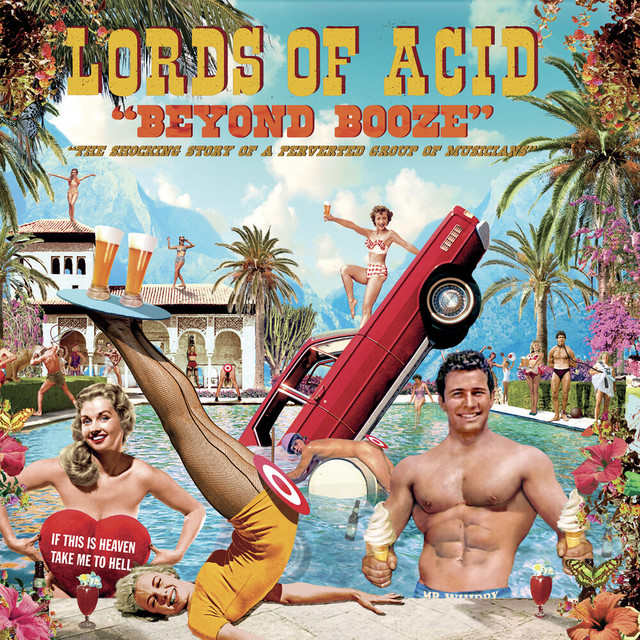
Lords of Acid · 2022
Producer