Squarepusher
Role
Genre
Role
Genre
Squarepusher's Gear


"Having said that, it's still more convenient to use multitracking software, and the reality is that my tape recorder is not here. The majority of the Shobaleader record was done in Nuendo, but I try to do as little in a computer?based multitrack as possible," Tom says, in this article.
Find it on:


"Jenkinson seems to prefer having a desk at the centre of his studio, a role which is currently occupied by a Euphonix CS3000," reads the caption to this photo, found in this article.
Find it on:

In this Sound On Sound interview (Jumble Sale Studio section), upon detailing and explaining how he made his own spring reverb, he mentions that the AKG BX-15 and AKG BX-20 spring reverb units were also extensively used on the album "Hello Everything". Quote from Tom himself: "The reverb uses four pairs of Accutronics type 1, 4, 8 and 9 springs. The stereo input stages incorporate a soft-clip circuit, high shelving EQ and spring selectors that send the input to a given pair of springs. There are four output stages to which the springs can be assigned. Each output stage has signal invert, volume and pan controls. The springs can be used in parallel or series, where one spring signal is fed into another. The circuit grounding uses star topology. It was used extensively on the album Hello Everything, in conjunction with my AKG BX15 and BX20 reverbs. It is clearly audible at the starts of 'Bubble Life', 'Circlewave' and 'Plotinus'.”
Find it on:

In this Sound On Sound interview, on the "Jumble Sale Studio" section, a bunch of Jenkinson's gear is mentioned. Among them, the Dynaudio M1. Two instances of this item can be seen on the second picture of this interview's photo gallery. The subtitle reads: "Tom Jenkinson's living room: not your average home studio." The item is mentioned in this fragment: "It's a ragtag collection of stuff, and there's no discernible overall 'vintage' rationale behind the collection as a whole. The most significant pieces are a Roland TR909, TB303, SH101, V?Synth XT and V?Bass 99, Neve 1073 mic pre, AKG BX15 spring reverb, TC Electronics D2 delay, DBX 1066, a self?made mechanical reverb, Tom Jenkinson's custom?made spring reverb: "The reverb uses four pairs of Accutronics type 1, 4, 8 and 9 springs. The stereo input stages incorporate a soft-clip circuit, high shelving EQ and spring selectors that send the input to a given pair of springs. There are four output stages to which the springs can be assigned. Each output stage has signal invert, volume and pan controls. The springs can be used in parallel or series, where one spring signal is fed into another. The circuit grounding uses star topology. It was used extensively on the album Hello Everything, in conjunction with my AKG BX15 and BX20 reverbs. It is clearly audible at the starts of 'Bubble Life', 'Circlewave' and 'Plotinus'.” Tom Jenkinson's custom?made spring reverb: "The reverb uses four pairs of Accutronics type 1, 4, 8 and 9 springs. The stereo input stages incorporate a soft-clip circuit, high shelving EQ and spring selectors that send the input to a given pair of springs. There are four output stages to which the springs can be assigned. Each output stage has signal invert, volume and pan controls. The springs can be used in parallel or series, where one spring signal is fed into another. The circuit grounding uses star topology. It was used extensively on the album Hello Everything, in conjunction with my AKG BX15 and BX20 reverbs. It is clearly audible at the starts of 'Bubble Life', 'Circlewave' and 'Plotinus'.” Axon AX100 MIDI bass module, MOTU 24I/O audio interface, Dynaudio Acoustics M1 monitors, Yamaha CS80, TX81Z and FS1R synths and QY700 sequencer. A huge amount of gear has also been and gone, like the Yamaha VSS80 8?bit toy keyboard sampler shown in some late '90s television footage of Jenkinson."
Find it on:

In this Sound On Sound interview there is a picture that shows 2 of Jenkinson's basses side by side. It is the 3rd picture of the interview's gallery. The six-string bass at the right reads "ZOOT BASS" at the headstock. Mike Walsh is the luthier responsible for the construction of the Zoot basses.
If you wish to have more info, take a look at the zoot basses' website: http://www.zootbass.com/
Find it on:

This 1996 interview offers a pretty close look at Tom Jenkinson's "full time residential studio", as he refers to it. At 1:32 into this video, his Roland TR-606 is shown with what appears to be a custom Squarepusher sticker on it.
Find it on:

The album cover for "Buzz Canner" by Tom Jenkinson's alias "Chaos A.D." features what appears to be a TEAC A-3300SX reel-to-reel recorder, likely used by Squarepusher during his 1994 and 1995 recordings.
Find it on:

Right at the intro of the video, behind Tom we can see a lot of gear in a rack. One of those pieces is the Tascam CD-RW2000. It can be clearly spotted in the 0:19 mark, in which, from the top to the bottom, it is the 4th unit.
Find it on:

This picture has a nice picture of some of Jenkinson's rack gear. In this particular shot, the Roland VB-99 can be seen at the top, followed by the V-Synth XT and the MOTU 24 I/O. The blue piece at the bottom, however, is none other than the MOTU 828 MK1.
Find it on:

In this The Creators Project documentary called "Meet Squarepusher", 1:09 into the video, a really old and abandoned Boss DR-55 can be spotted in Tom Jenkinson's house.
Find it on:

In this Digital Trends interview, Tom Jenkinson explains the process of producing, as well as what was used in his album Damogen Furies besides his own software, now titled System 4. He mentions the RME MADIface XT as a piece of gear used in this process.
Find it on:


During a 2015 performance with Shobaleader One at Concorde 2, Squarepusher was photographed using a Bongo 6-String electric bass. Notable for its unique 4-band EQ knobs and rounded design, this bass was captured in a photo shared by BrightonSource on Twitter.
Find it on:

Squarepusher uses the Roland GK-3B Divided Bass Pickup, as seen in a Twitter post by Studio_85UK, which highlights his performance at Concorde 2. Additionally, an interview with Sound on Sound mentions his use of the Axon AX100 MIDI bass module, further illustrating his integration of advanced gear in his setup.
Find it on:

In the "Old School" section of this interview, Jenkinson explains his experiences with recording mediums throughout the years. According to Tom Jenkinson himself, "[...] As for recording, I used tape recorders exclusively until 2001. I first had a Fostex M80 quarter-inch eight-track, and in the late '90s I obtained a half-inch Tascam MSR16. I still use that, though it's being repaired at the moment. I have to say that I'm not obsessive about it. Recording to tape, or to a computer-based multitrack, is a means to an end. I mix and match now. I've used Sonic Foundry's Vegas, and more recently Nuendo, but I don't endorse or recommend them. There's no love in it for me, they really are just tools."
Find it on:

This piece of equipment makes some appearences during this 2001 interview video. The most notable shots, which even shows Tom operating it, occur in the 1:42 and 1:54 marks.
Find it on:

This MIDI controller can be spotted 0:12 into this video. At the left portion of the screen, there's a rack with an Eventide DSP4000 on the top position (black knob, white keys/numpad). In the piece that is found under it, there can be spotted 4 horizontal rows of knobs, and "Doepfer" written at the bottom right of the unit. This camera angle still reveals other few letters written on the piece: "[...]oller". All these evidences point to the Doepfer Drehbank MIDI Controller.
Find it on:

This interview contains in-studio pictures taken from Tom Jenkinson himself. One of those pictures, precisely the third one, reveals this RME 32-channel Digital/Analog Interface.
Find it on:




-m.webp?v=1783177029)
In the documentary "Meet Squarepusher" from The Creators Project, previously unseen footage of Tom Jenkinson's studio from various periods (such as his 1995, 2000 and more recent setups) are revealed. If the video gets paused precisely in the 3:05 mark, there's a synth in the background that strongly resembles the MS-20. And since the MS-20 Mini was only released in 2013, it can only be the original one.
Find it on:


In the documentary "Meet Squarepusher" from The Creators Project, previously unseen footage of Tom Jenkinson's studio from various periods (such as his 1995, 2000 and more recent setups) are revealed. If the video gets paused around the 3:06 mark, there are two effect units that can be spotted. One of them is what appears to be a modified Roland Space Echo RE-201 (as hinted by the extra black knobs on the top right portion of the unit), and sitting on top of it is the Musitronics Mu-Tron III.
Find it on:

According to the interviewer, the pictures that appear on this interview were taken by Tom Jenkinson himself. The 6th picture in particular reveals a lot of Jenkinson's rack gear. Among them, below some sort of 'white box', the BSS Audio AR-416 4 Channel Active DI Box can be spotted along with 4 different colored cables plugged into it.
Find it on:

In the YouTube video titled "Squarepusher Iambic 9 Poetry~Bass solo~Tetra-Sync Live In Japan 2015," Squarepusher is seen playing an Ibanez SR5006. This bass guitar was featured during the "Damogen Furies" live tour, marking a departure from his usual Zoot Bass with its distinct body shape and pickup positioning.
Find it on:


In this Sound On Sound interview, on the "Jumble Sale Studio" section, a bunch of Jenkinson's gear is mentioned. Among them, the Neve 1073 Mic Preamp. "It's a ragtag collection of stuff, and there's no discernible overall 'vintage' rationale behind the collection as a whole. The most significant pieces are a Roland TR909, TB303, SH101, V-Synth XT and V-Bass 99, Neve 1073 mic pre, AKG BX15 spring reverb, TC Electronics D2 delay, DBX 1066, a self?made mechanical reverb, Tom Jenkinson's custom?made spring reverb."
However, it is not specified that the item that Tom uses is actually the Neve 1073 DPD, which can be spotted in the interview's second picture, right under the fan.
Find it on:

In this Sound On Sound interview (Jumble Sale Studio section), upon detailing and explaining how he made his own spring reverb, he mentions that the AKG BX-15 and AKG BX-20 spring reverb units were also extensively used on the album "Hello Everything". He even specifies certain tracks. Quote from Tom himself: "The reverb uses four pairs of Accutronics type 1, 4, 8 and 9 springs. The stereo input stages incorporate a soft-clip circuit, high shelving EQ and spring selectors that send the input to a given pair of springs. There are four output stages to which the springs can be assigned. Each output stage has signal invert, volume and pan controls. The springs can be used in parallel or series, where one spring signal is fed into another. The circuit grounding uses star topology. It was used extensively on the album Hello Everything, in conjunction with my AKG BX15 and BX20 reverbs. It is clearly audible at the starts of 'Bubble Life', 'Circlewave' and 'Plotinus'.”
Find it on:

On this 2006 The Guardian interview, it reads: "These days Jenkinson favours 'a custom-made six-string bass I had made by Mike at Iceni Music. It's a toss-up between that and my Warwick 6, which is like a tree trunk with strings. The best four-string I had was a Music Man Sabre.' "
The custom-made six-string bass he refers to is the Zoot Bass, made by Mike Walsh. The 4 string is the Ernie Ball Music Man Classic Sabre. Among bass forums, the Warwick six string is commonly believed to be a modified Corvette Bubinga 6.
This page (http://www.guitarporn.co.uk/post/3369857993/squarepusher-and-warwick-corvette) says: "Squarepusher and modified 6-String Warwick Corvette Bass. Tom Jenkinson is an incredible bassist, and is shown here with his heavily modified Warwick Corvette."
This bass forum page (http://forum.bass-arena.com/threads/squarepusher-playing-a-corvette.7835/) has speculations about an extra pickup: "that looks like a bubinga corvette, right ? seems like it has an additional neck pickup...", "Looks like bubinga 6 string with black hardware... maybe a NT? I bet the extra pickup is a MIDI pickup too..." and "It's a regular bubinga Corvette 6 string with a midi pickup."
Find it on:

This jam session video reveals lots of pieces of gear on Jenkinson's studio prior to his 2008 tour with Alex Thomas. Hanging on the wall is a Westone Thunder II Fretless Bass, right next to the Rickenbacker 4001. Go to the 2:09 mark for an example of a good shot.
Find it on:

On the 4th picture of this Sound On Sound interview's photo gallery (quick link to it: http://dt7v1i9vyp3mf.cloudfront.net/styles/news_large/s3/imagelibrary/S/Sq_04.jpg?FJWDrszhVCYZoz7AyanIBRkc_WklqCie=&itok=RqQrtYnL) , there is a mixer next to the drum kit. Through careful comparison, one can conclude that the mixer is the Mackie CR1604-VLZ.
Find it on:

This 1996 interview offers a pretty close look at Tom Jenkinson's "full time residential studio", as he refers to it. At 2:00 into this video, his Roland TR-707 can be spotted at the background with what appears to be a Roland Memory Cartridge present on the 707's respective slot.
This particular piece of gear already visually appeared in his work previously. Tom also released a record under the alias "Chaos A.D". The album is named "Buzz Caner", and features a pretty curious cover (link: http://quimby.gnus.org/circus/jukebox.php?image=display.jpg&group=Chaos%20A.D.&album=Buzz%20Caner). At the top left portion of it, there is a photograph of a guy (presumably Tom) tweaking a Roland TB-303. In this photograph, the 707 can also be spotted, along with what possibly is a 101 behind it.
Find it on:

This is the 4th picture in Tom's Sound On Sound interview's photo gallery. It shows a part of Tom's home studio. Right next to the laptop, this model of a Gallien Krueger Bass Amplifier can be spotted.
Find it on:

This is the 4th picture in Tom's Sound On Sound interview's photo gallery. It shows a part of Tom's home studio. Right underneath the Eventide Orville Harmonizer Unit (which is under the laptop), the AH200 Laney Amplifier model can be spotted.
Find it on:

Right at the intro of the video, behind Tom we can see a lot of gear in a rack. One of those pieces is the Tascam DA-20 mkII. From the top to the bottom, it is the 3rd unit.
Find it on:
This is a community-built gear list for Squarepusher.
- Find relevant music gear like Bass Guitars, Amplifiers, Effects Pedals, Studio Equipment, Software Plugins and VSTs, Headphones, and other instruments and add it to Squarepusher.
- The best places to look for gear usage are typically on the artist's social media, YouTube, live performance images, and interviews.
- To receive email updates when Squarepusher is seen with new gear, follow the artist.
-
Added to Equipboard on by
 odysseyeurobeat
Gear IQ 1709
-
Updated
Discography
Album Credits
-
GoGo Penguin · 2021
Producer -
Squarepusher · 2009
Producer -
Squarepusher · 2009
Producer -
Squarepusher · 2008
Producer -
Squarepusher · 2004
Producer -
Squarepusher · 2001
Producer -
Squarepusher · 1999
Producer -
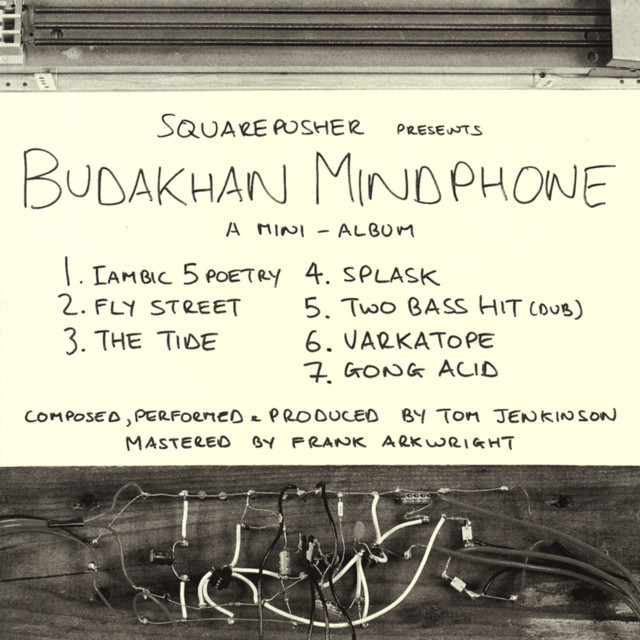
Squarepusher · 1999
Producer -
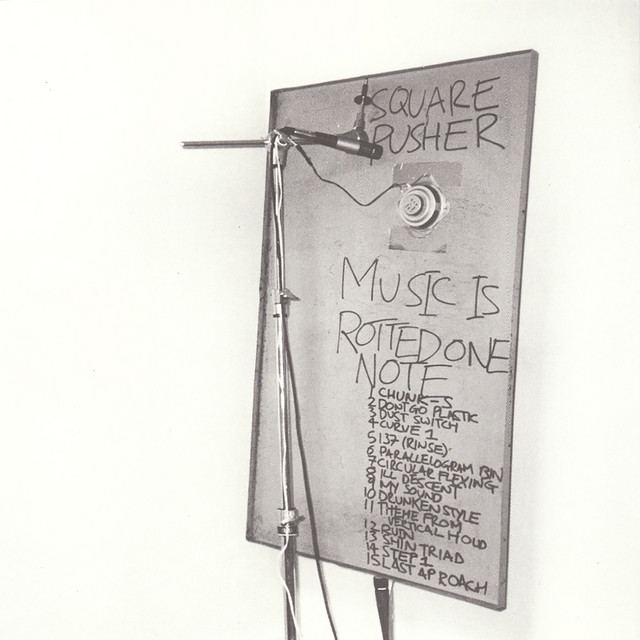
Squarepusher · 1998
Producer -
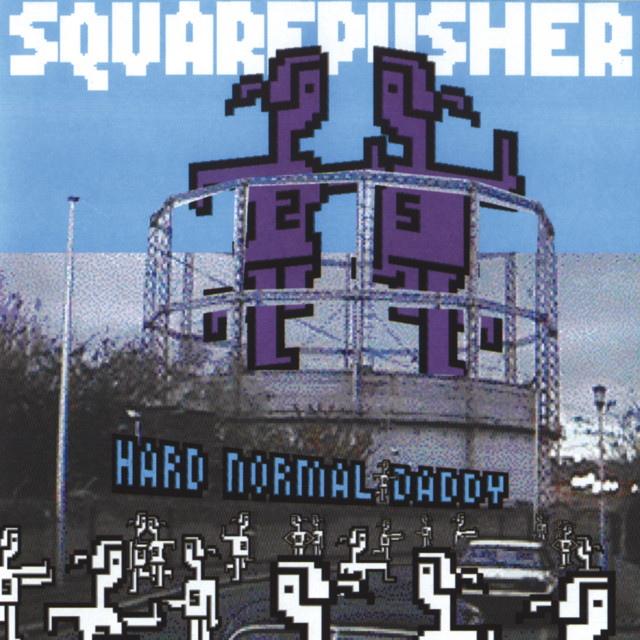
Squarepusher · 1997
Producer -
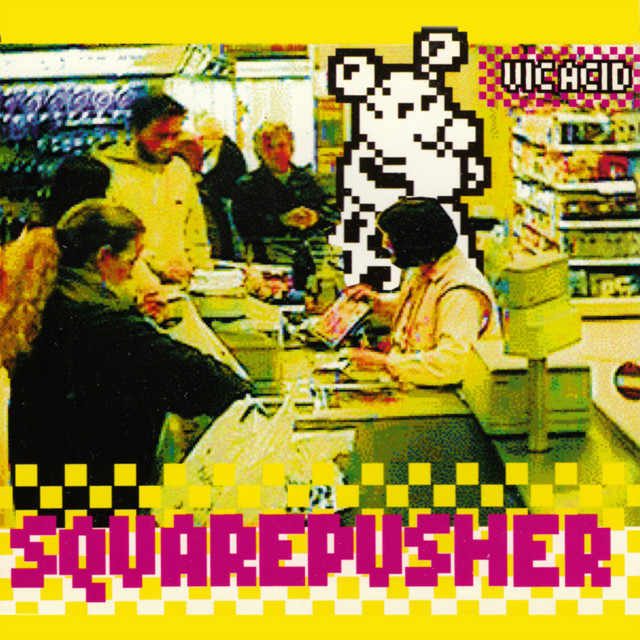
Squarepusher · 1997
Producer -
Funki Porcini · 1996
Producer





.webp)