This page about Dynaudio Acoustics M1 is a stub. You can help improve it:


Pricing and availability




* Product prices and availability are updated by Equipboard every 24hrs and are subject to change. Equipboard may receive compensation for purchases made at participating retailers linked on this site. This compensation does not affect what products or prices are displayed, or the order of prices listed. For more information, please refer to our affiliate disclosure.
Description
As the result of a long-term research project, analyzing the essential requirements of engineers working for long periods of time at high levels in front of a mixing console, the M1 is targeted first and foremost, at music mixing applications.
The M1 is a quality reference tool which can transform almost any large console monitoring environment into one worthy of the digital era. Frequency response is 50Hz to 20Hz, and long terms SPLs of 122dB can be achieved at 1.25m. When coupled with one or two Dynaudio subwoofers, the M1 is transformed into a full blooded main monitoring system which is flat from 35Hz to 20Hz, and is capable of delivering very high SPLs in mixing position.
Specifically designed for mounting on or above the meter bridge on the console, the trapezoidal M1 has a frequency response tailored to compensate for the interference effects in the low and mid frequency regions caused by the console surface. It is the very first monitor to even approach a flat response in this complex and specific application, and provides dramatic improvements to the engineering environment in virtually any kind of control room. Due to an excellent phase response, the stereo field is of a clarity and precision absolutely essential to accurate mixing, and the M1 can comfortably generate the kind of levels and frequency response normally associated with much larger systems.
The M1 is a "High Energy" monitor, and every component has been designed for both quality of reproduction and extreme reliability. Each driver can comfortably handle 1000W transient with no degradation of signal or components, leading to an outstanding dynamic response when coupled with suitable amplifier. Distortion products are typically 15dB lower than so called reference monitors in current use - ensuring that the soundfield is highly accurate, and that "ear fatigue" is virtually eliminated.


Reviews
Owner Insights
We analyzed real musician discussions from forums and Reddit to find what players love, question, and tweak about Dynaudio Acoustics M1.
Setup and maintenance
-
Acoustic treatment, including bass traps and addressing first reflection points, is recommended for optimal sound quality with Dynaudio M1 monitors.
Source -
It's recommended to pair Dynaudio M1 monitors with amplifiers that deliver stable current under all loads, with at least 90W per speaker for optimal performance.
Source
Features and functionality
-
Pairing Dynaudio M1 monitors with a Bryston 9B SST amplifier forms an effective combination for hybrid/live studio setups.
Source
Comparisons
-
Dynaudio M1 monitors are noted for their neutrality and lifelike tone, unlike more analytical speakers like KEF or B&W, which may emphasize detail but lose the music's 'soul.'
Source -
Compared to Genelecs, Dynaudio monitors are preferred for general-purpose mixing due to their accurate representation of real-world sound, despite not being as detailed.
Source
User experience
-
Owners appreciate the Dynaudio M1 for making even poorly recorded music from the 70s engaging, thanks to their balanced and neutral sound profile.
Source
Based on 0 Reviews and 0 Ratings
Artist usage
Add artist

Autechre utilized the Dynaudio M1 studio monitors, as detailed in the Autechre Gear List on Mikebaas.

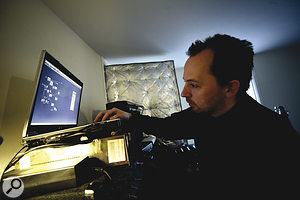
In this Sound On Sound interview, on the "Jumble Sale Studio" section, a bunch of Jenkinson's gear is mentioned. Among them, the Dynaudio M1. Two instances of this item can be seen on the second picture of this interview's photo gallery. The subtitle reads: "Tom Jenkinson's living room: not your average home studio." The item is mentioned in this fragment: "It's a ragtag collection of stuff, and there's no discernible overall 'vintage' rationale behind the collection as a whole. The most significant pieces are a Roland TR909, TB303, SH101, V?Synth XT and V?Bass 99, Neve 1073 mic pre, AKG BX15 spring reverb, TC Electronics D2 delay, DBX 1066, a self?made mechanical reverb, Tom Jenkinson's custom?made spring reverb: "The reverb uses four pairs of Accutronics type 1, 4, 8 and 9 springs. The stereo input stages incorporate a soft-clip circuit, high shelving EQ and spring selectors that send the input to a given pair of springs. There are four output stages to which the springs can be assigned. Each output stage has signal invert, volume and pan controls. The springs can be used in parallel or series, where one spring signal is fed into another. The circuit grounding uses star topology. It was used extensively on the album Hello Everything, in conjunction with my AKG BX15 and BX20 reverbs. It is clearly audible at the starts of 'Bubble Life', 'Circlewave' and 'Plotinus'.” Tom Jenkinson's custom?made spring reverb: "The reverb uses four pairs of Accutronics type 1, 4, 8 and 9 springs. The stereo input stages incorporate a soft-clip circuit, high shelving EQ and spring selectors that send the input to a given pair of springs. There are four output stages to which the springs can be assigned. Each output stage has signal invert, volume and pan controls. The springs can be used in parallel or series, where one spring signal is fed into another. The circuit grounding uses star topology. It was used extensively on the album Hello Everything, in conjunction with my AKG BX15 and BX20 reverbs. It is clearly audible at the starts of 'Bubble Life', 'Circlewave' and 'Plotinus'.” Axon AX100 MIDI bass module, MOTU 24I/O audio interface, Dynaudio Acoustics M1 monitors, Yamaha CS80, TX81Z and FS1R synths and QY700 sequencer. A huge amount of gear has also been and gone, like the Yamaha VSS80 8?bit toy keyboard sampler shown in some late '90s television footage of Jenkinson."


List of equipment in George Michael's studio, from the July 1996 issue of Sound on Sound:
RECORDING
AKG LSM50 cube monitors Aphex Expressor compressor Denon tape deck * Dynaudio Acoustics M1 monitors Lexicon PCM80 effects Lexicon LXP15 effects Mackie 32*8 32:8:2 8‑buss console Otari RADAR 24‑track hard disk recorders (x2) Tascam DA20 DAT * Yamaha NS10 monitors
SOUNDS
Akai S3000i samplers (x2) Akai S3200 sampler * Emu Procussion percussion module Emu Vintage Keys Plus module Emu Ultra Proteus synth module Korg Prophecy keyboard synth Korg Trinity Plus keyboard synth Kurzweil K2000 sampler/synth Roland JV1080 synth module Roland Juno 106 analogue keyboard synth Roland Vintage Synth MVS1 sound module Studio Electronics SE1 synth module * Yamaha SY77 keyboard synth Yamaha TG500 synth module
MISCELLANEOUS
DAC hard drive * Opcode Studio 4 MIDI interface (x2) Powermaster drive *


Album Usage
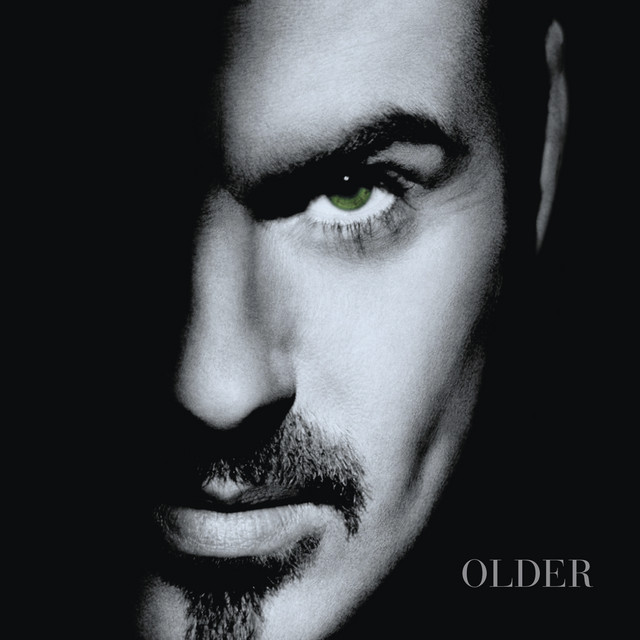
The Dynaudio Acoustics M1 has been featured on the following albums:

Genre Usage
Based on how artists on Equipboard use this gear, it is most commonly found in the following genres.
Used With
Based on how musicians on Equipboard use Dynaudio Acoustics M1, it is most commonly used with the following gear.


-s.webp?v=1783692024)

More Dynaudio Acoustics Active & Passive Monitors


-m.webp?v=1783609063)
$299.99
in Active & Passive Monitors Rank


$243.50 - $398.99
in Active & Passive Monitors Rank


$539.99 - $2,588.00
in Active & Passive Monitors Rank


$199.99
in Active & Passive Monitors Rank


$142.25 - $199.99
in Active & Passive Monitors Rank


-m.webp?v=1783692116)
$769.00 - $1,699.99
in Active & Passive Monitors Rank


-m.webp?v=1783692088)
$203.04 - $594.98
in Active & Passive Monitors Rank
.jpg?v=1783563119)


$259.00 - $545.00
in Active & Passive Monitors Rank


$299.99
in Active & Passive Monitors Rank


$277.00 - $398.99
in Active & Passive Monitors Rank


$640.00 - $1,898.00
in Active & Passive Monitors Rank


$1,781.49 - $4,998.00
in Active & Passive Monitors Rank


$180.00
in Active & Passive Monitors Rank


$229.00 - $349.99
in Active & Passive Monitors Rank


$159.99
in Active & Passive Monitors Rank


$276.00 - $599.99
in Active & Passive Monitors Rank

.jpg?v=1783050953)

$629.00 - $949.00
in Active & Passive Monitors Rank

$555.00 - $1,248.82
in Active & Passive Monitors Rank


$1,047.95
in Active & Passive Monitors Rank


$196.00 - $349.99
in Active & Passive Monitors Rank


$124.99 - $209.00
in Active & Passive Monitors Rank


$179.00 - $482.48
in Active & Passive Monitors Rank


$142.00 - $190.62
in Active & Passive Monitors Rank


$162.00 - $385.00
in Active & Passive Monitors Rank


in Active & Passive Monitors Rank


$849.99 - $1,699.98
in Active & Passive Monitors Rank


$199.00 - $399.00
in Active & Passive Monitors Rank


$1,781.49 - $4,998.00
in Active & Passive Monitors Rank


$119.00 - $359.00
in Active & Passive Monitors Rank


$156.50 - $979.97
in Active & Passive Monitors Rank


$115.00 - $579.99
in Active & Passive Monitors Rank


$200.00
in Active & Passive Monitors Rank


Community setups


Similar


Gear Guides







Most Popular Active & Passive Monitors
Most Popular Brands
-
Added to Equipboard on by
 davirodrigues97
Gear IQ 4767
-


