Stephen Duffy
Role
Genre
Group
Credits
Role
Genre
Group
Credits
Stephen Duffy's Gear


"I was working in a small recording studio in AIR Lyndhurst in what used to be studio manager's office," recalls Duffy. "I had recorded at AIR off and on over the years, and had mixed Looking For A Day In The Night there in 1999. Following that, the room became available and they offered it to me. I installed a Pro Tools Digi 001, and a G4 with Logic, and a Yamaha 02R desk and some bits and pieces I had collected over the years, and for the next three or four years I'd go there every day to work on music. Out of that time came Lilac 6, the Devils album Dark Circles [Duffy's collaboration with Duran Duran's Nick Rhodes], and Keep Going [Duffy's most recent solo album].
Find it on:


"I was working in a small recording studio in AIR Lyndhurst in what used to be studio manager's office," recalls Duffy. "I had recorded at AIR off and on over the years, and had mixed Looking For A Day In The Night there in 1999. Following that, the room became available and they offered it to me. I installed a Pro Tools Digi 001, and a G4 with Logic, and a Yamaha 02R desk and some bits and pieces I had collected over the years, and for the next three or four years I'd go there every day to work on music. Out of that time came Lilac 6, the Devils album Dark Circles [Duffy's collaboration with Duran Duran's Nick Rhodes], and Keep Going [Duffy's most recent solo album].
Find it on:

"I was working in a small recording studio in AIR Lyndhurst in what used to be studio manager's office," recalls Duffy. "I had recorded at AIR off and on over the years, and had mixed Looking For A Day In The Night there in 1999. Following that, the room became available and they offered it to me. I installed a Pro Tools Digi 001, and a G4 with Logic, and a Yamaha 02R desk and some bits and pieces I had collected over the years, and for the next three or four years I'd go there every day to work on music. Out of that time came Lilac 6, the Devils album Dark Circles [Duffy's collaboration with Duran Duran's Nick Rhodes], and Keep Going [Duffy's most recent solo album].
Find it on:

'Ghosts' "This song started off by me messing around with a Linn Drum. I programmed something reminiscent of 'Running Up That Hill' by Kate Bush, which ended up being completely changed. I think that the 'Electronic Sequential Keyboards' I'm credited as playing is a Roland JV5080."
Find it on:

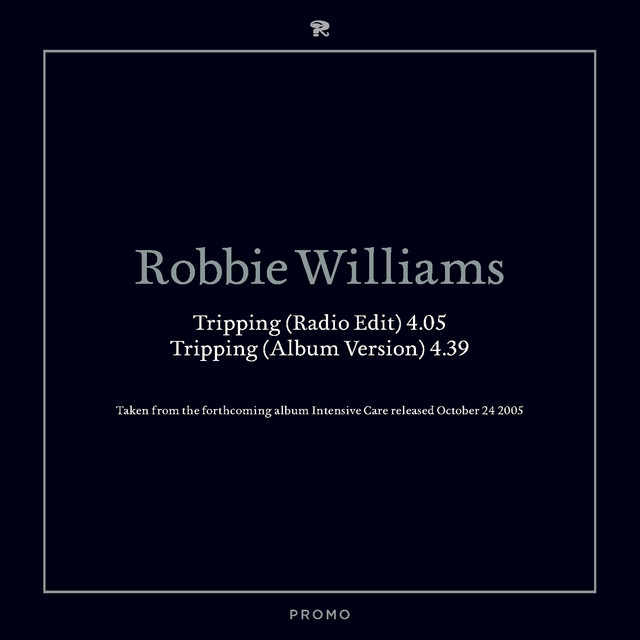
'Tripping' "That was written in LA in the end of 2003, and getting it right took months. One of the first things Rob wrote when he picked up a bass was the bassline to 'Tripping'. We had this Daft Punk drum-machine line going on and he played this bass line, and immediately we had a song. I wrote the 'want you to love me' section, and I was thinking that it sounded really nice and melodic, but immediately Rob trumped me with the falsetto line, which was, of course, a much better hook. We used a Waldorf Q for the bubbling sequential thing underneath the track. It was the only time that machine worked. But it had served its purpose."
Find it on:

'Spread Your Wings' "We started that on a Juno 60 and a Linn Drum. We'd gone out and bought stuff that day and went mad on it, using every sound we had at our disposal. The transformation from that to what it became was amazing. In the end Jebin Bruni came into Henson for an afternoon and played ARP String Ensemble and Chamberlin. I met him working with Aimee Mann and Marianne Faithful. Robert and I had done most of the keyboards, so wanted to get a fresh player, and I thought it would be interesting to get somebody in who is used to playing these kind of cranky old keyboards."
Find it on:

'Sin Sin Sin' "This was the first song we ever wrote, and it basically started off as a bass drum doing fours and a bass sequence in eights over the top of it. He sang the whole of the first verse over the top of that, just like that. It was quite incredible. The sequenced section that you can still hear started off as a Reason sound, and then I added the Roland XV5080, and added an SH101 sound and perhaps a Prophet 5 to give it a little bit more of a gritty, gnarly texture. I messed around with that sound quite a lot. We changed the speed of the song many times, and the Reason sound became so strange and deconstructed that it became part of the song."
Find it on:
-m.webp?v=1783781985)
'Sin Sin Sin' "This was the first song we ever wrote, and it basically started off as a bass drum doing fours and a bass sequence in eights over the top of it. He sang the whole of the first verse over the top of that, just like that. It was quite incredible. The sequenced section that you can still hear started off as a Reason sound, and then I added the Roland XV5080, and added an SH101 sound and perhaps a Prophet 5 to give it a little bit more of a gritty, gnarly texture. I messed around with that sound quite a lot. We changed the speed of the song many times, and the Reason sound became so strange and deconstructed that it became part of the song."
Find it on:

The keyboard rig Stephen Duffy is using on Robbie Williams' world tour is based around a Korg Triton Extreme workstation and CX3 tonewheel organ emulator.
Find it on:

The keyboard rig Stephen Duffy is using on Robbie Williams' world tour is based around a Korg Triton Extreme workstation and CX3 tonewheel organ emulator.
Find it on:

pace considerations — Duffy's room at AIR was fairly small — dictated much of the equipment that he and Williams used during this early writing period. In addition to Duffy's guitars the duo mainly used a couple of keyboards, among them a Clavia Nord Lead, and Logic soft synths and plug-ins. "My little room wasn't large enough to have loads of keyboards set up," says Duffy, "so we used soft synths like [Spectrasonics] Stylus, Trilogy and Atmosphere, [NI] Reaktor, Logic 's ESX24 sampler and instruments, mostly the EVP88 Rhodes. Other soft synths we used a lot were the Moog Modular synth and the M-Tron Mellotron plug-in."
Find it on:


pace considerations — Duffy's room at AIR was fairly small — dictated much of the equipment that he and Williams used during this early writing period. In addition to Duffy's guitars the duo mainly used a couple of keyboards, among them a Clavia Nord Lead, and Logic soft synths and plug-ins. "My little room wasn't large enough to have loads of keyboards set up," says Duffy, "so we used soft synths like [Spectrasonics] Stylus, Trilogy and Atmosphere, [NI] Reaktor, Logic 's ESX24 sampler and instruments, mostly the EVP88 Rhodes. Other soft synths we used a lot were the Moog Modular synth and the M-Tron Mellotron plug-in."
Find it on:

pace considerations — Duffy's room at AIR was fairly small — dictated much of the equipment that he and Williams used during this early writing period. In addition to Duffy's guitars the duo mainly used a couple of keyboards, among them a Clavia Nord Lead, and Logic soft synths and plug-ins. "My little room wasn't large enough to have loads of keyboards set up," says Duffy, "so we used soft synths like [Spectrasonics] Stylus, Trilogy and Atmosphere, [NI] Reaktor, Logic 's ESX24 sampler and instruments, mostly the EVP88 Rhodes. Other soft synths we used a lot were the Moog Modular synth and the M-Tron Mellotron plug-in."
Find it on:
-m.webp?v=1783834893)
pace considerations — Duffy's room at AIR was fairly small — dictated much of the equipment that he and Williams used during this early writing period. In addition to Duffy's guitars the duo mainly used a couple of keyboards, among them a Clavia Nord Lead, and Logic soft synths and plug-ins. "My little room wasn't large enough to have loads of keyboards set up," says Duffy, "so we used soft synths like [Spectrasonics] Stylus, Trilogy and Atmosphere, [NI] Reaktor, Logic 's ESX24 sampler and instruments, mostly the EVP88 Rhodes. Other soft synths we used a lot were the Moog Modular synth and the M-Tron Mellotron plug-in."
Find it on:

pace considerations — Duffy's room at AIR was fairly small — dictated much of the equipment that he and Williams used during this early writing period. In addition to Duffy's guitars the duo mainly used a couple of keyboards, among them a Clavia Nord Lead, and Logic soft synths and plug-ins. "My little room wasn't large enough to have loads of keyboards set up," says Duffy, "so we used soft synths like [Spectrasonics] Stylus, Trilogy and Atmosphere, [NI] Reaktor, Logic 's ESX24 sampler and instruments, mostly the EVP88 Rhodes. Other soft synths we used a lot were the Moog Modular synth and the M-Tron Mellotron plug-in."
Find it on:

pace considerations — Duffy's room at AIR was fairly small — dictated much of the equipment that he and Williams used during this early writing period. In addition to Duffy's guitars the duo mainly used a couple of keyboards, among them a Clavia Nord Lead, and Logic soft synths and plug-ins. "My little room wasn't large enough to have loads of keyboards set up," says Duffy, "so we used soft synths like [Spectrasonics] Stylus, Trilogy and Atmosphere, [NI] Reaktor, Logic 's ESX24 sampler and instruments, mostly the EVP88 Rhodes. Other soft synths we used a lot were the Moog Modular synth and the M-Tron Mellotron plug-in."
Find it on:

pace considerations — Duffy's room at AIR was fairly small — dictated much of the equipment that he and Williams used during this early writing period. In addition to Duffy's guitars the duo mainly used a couple of keyboards, among them a Clavia Nord Lead, and Logic soft synths and plug-ins. "My little room wasn't large enough to have loads of keyboards set up," says Duffy, "so we used soft synths like [Spectrasonics] Stylus, Trilogy and Atmosphere, [NI] Reaktor, Logic 's ESX24 sampler and instruments, mostly the EVP88 Rhodes. Other soft synths we used a lot were the Moog Modular synth and the M-Tron Mellotron plug-in."
Find it on:


"In the end the studio consisted of a 48-channel Pro Tools HD system running on a G4 with one Prism AD8 converter, a Yamaha 02R96 desk, which we soon got rid of, plus things like an Apogee PSX 100, Lexicon 960, Eventide H3000 and other outboard equipment. There was another G4 for Logic Audio with an RME interface to connect digitally to Pro Tools. We transferred everything we'd done on my Digi 001 to Rob's HD system and, in the end, also everything that we did in Logic."
Find it on:


"In the end the studio consisted of a 48-channel Pro Tools HD system running on a G4 with one Prism AD8 converter, a Yamaha 02R96 desk, which we soon got rid of, plus things like an Apogee PSX 100, Lexicon 960, Eventide H3000 and other outboard equipment. There was another G4 for Logic Audio with an RME interface to connect digitally to Pro Tools. We transferred everything we'd done on my Digi 001 to Rob's HD system and, in the end, also everything that we did in Logic."
Find it on:

"In the end the studio consisted of a 48-channel Pro Tools HD system running on a G4 with one Prism AD8 converter, a Yamaha 02R96 desk, which we soon got rid of, plus things like an Apogee PSX 100, Lexicon 960, Eventide H3000 and other outboard equipment. There was another G4 for Logic Audio with an RME interface to connect digitally to Pro Tools. We transferred everything we'd done on my Digi 001 to Rob's HD system and, in the end, also everything that we did in Logic."
Find it on:

"In the end the studio consisted of a 48-channel Pro Tools HD system running on a G4 with one Prism AD8 converter, a Yamaha 02R96 desk, which we soon got rid of, plus things like an Apogee PSX 100, Lexicon 960, Eventide H3000 and other outboard equipment. There was another G4 for Logic Audio with an RME interface to connect digitally to Pro Tools. We transferred everything we'd done on my Digi 001 to Rob's HD system and, in the end, also everything that we did in Logic.
Find it on:

"In the end the studio consisted of a 48-channel Pro Tools HD system running on a G4 with one Prism AD8 converter, a Yamaha 02R96 desk, which we soon got rid of, plus things like an Apogee PSX 100, Lexicon 960, Eventide H3000 and other outboard equipment. There was another G4 for Logic Audio with an RME interface to connect digitally to Pro Tools. We transferred everything we'd done on my Digi 001 to Rob's HD system and, in the end, also everything that we did in Logic."
Find it on:

"We used quite a lot of strange old pieces of gear that we would not have chosen ourselves. We had, for instance, an ad hoc microphone set up, a vintage AKG C12, with Neve 1073 mic preamp and EQ, which often went through a valve Teletronix LA2A compressor when recording vocals and acoustic guitars. It was not a microphone I would have chosen, but it sounded good to me. Rob also had a Roland JV5080 and a Yamaha Motif that someone had once bought for him, still boxed up. These were not boxes I'd ever looked at before."
Find it on:


"We used quite a lot of strange old pieces of gear that we would not have chosen ourselves. We had, for instance, an ad hoc microphone set up, a vintage AKG C12, with Neve 1073 mic preamp and EQ, which often went through a valve Teletronix LA2A compressor when recording vocals and acoustic guitars. It was not a microphone I would have chosen, but it sounded good to me. Rob also had a Roland JV5080 and a Yamaha Motif that someone had once bought for him, still boxed up. These were not boxes I'd ever looked at before."
Find it on:

"We used quite a lot of strange old pieces of gear that we would not have chosen ourselves. We had, for instance, an ad hoc microphone set up, a vintage AKG C12, with Neve 1073 mic preamp and EQ, which often went through a valve Teletronix LA2A compressor when recording vocals and acoustic guitars. It was not a microphone I would have chosen, but it sounded good to me. Rob also had a Roland JV5080 and a Yamaha Motif that someone had once bought for him, still boxed up. These were not boxes I'd ever looked at before."
Find it on:

"During our time in LA, Rob and I went out to junk shops and so on," recalls Duffy, "and bought a lot of vintage analogue gear, like a Juno 60, Prophet 5, Wurlitzer, Mellotron, and Linn Drum. I also bought an ARP String Ensemble on eBay because it has the sound of those early Roxy Music albums. Rob was really into having a kind of 1980s sound. People have suggested that it came from me, since I had a synthesizer hit record in the mid '80s, but Rob was referencing New Order and the Human League and bands like that. I would never have come up with those ideas. Of course, for me it was helpful that I'd had been working with Junos and Jupiters and so on with the Tintin records in the early 1980s."
Find it on:

"During our time in LA, Rob and I went out to junk shops and so on," recalls Duffy, "and bought a lot of vintage analogue gear, like a Juno 60, Prophet 5, Wurlitzer, Mellotron, and Linn Drum. I also bought an ARP String Ensemble on eBay because it has the sound of those early Roxy Music albums. Rob was really into having a kind of 1980s sound. People have suggested that it came from me, since I had a synthesizer hit record in the mid '80s, but Rob was referencing New Order and the Human League and bands like that. I would never have come up with those ideas. Of course, for me it was helpful that I'd had been working with Junos and Jupiters and so on with the Tintin records in the early 1980s."
Find it on:

"We did not go to tape at any point," explains Duffy. "It just didn't occur to any of us that we should use analogue tape. I got into Pro Tools during the recording of Keep Going, mainly to try and see how analogue one could make it, and I found that it sounded very good indeed. I recorded Looking For A Day In The Night on an Akai MG1214 analogue 12-track, which had a Betamax-like cassette in it, as well as a built-in mixing desk. I couldn't tell whether Day In The Night or Keep Going was analogue or digital, or vice versa. Obviously HD offers a sonic improvement, but with people turning to MP3, that's quite meaningless. Yet you can't knock it. Everyone is so on love with their iPod, that it's bringing people back to music. So people are falling in love with music again, and this means it's a very healthy time for music."
Find it on:
This is a community-built gear list for Stephen Duffy.
- Find relevant music gear like Microphones, and other instruments and add it to Stephen Duffy.
- The best places to look for gear usage are typically on the artist's social media, YouTube, live performance images, and interviews.
- To receive email updates when Stephen Duffy is seen with new gear, follow the artist.
Discography
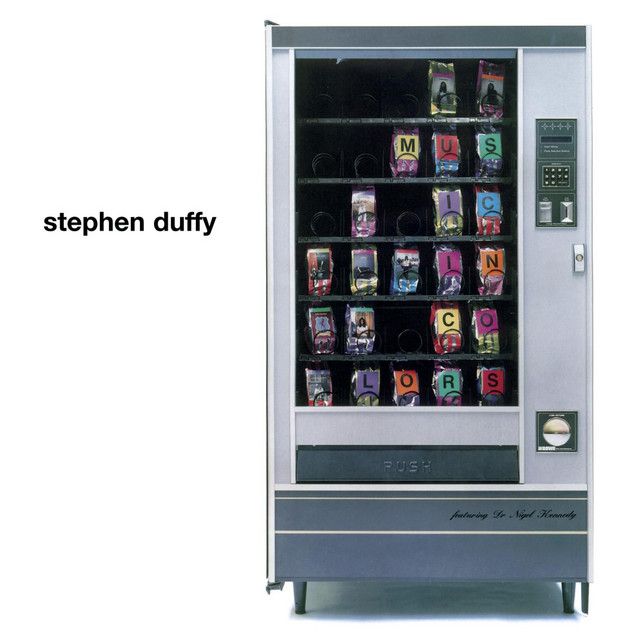
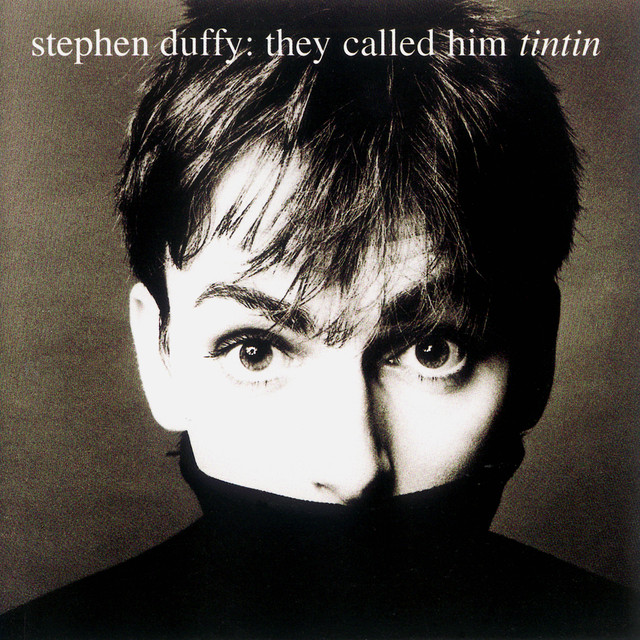
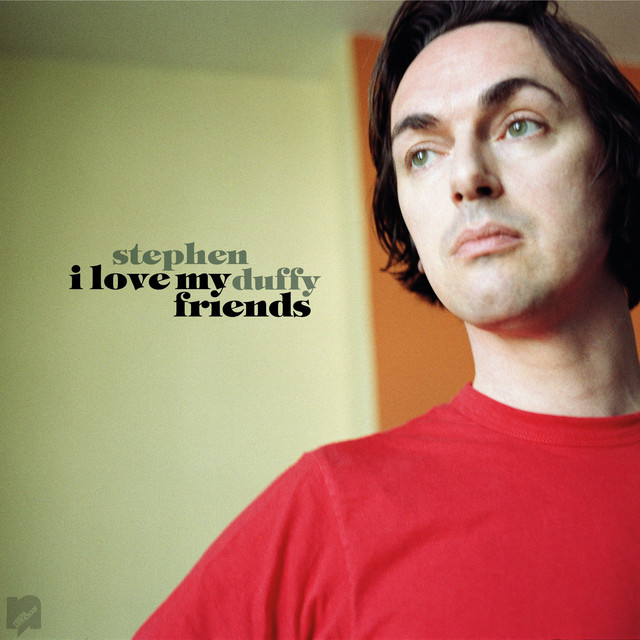
Album Credits
-
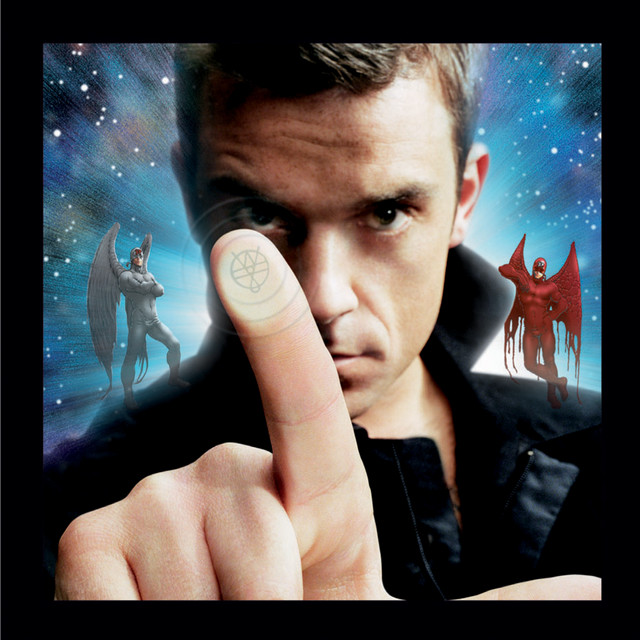
Robbie Williams · 2005
Engineer Producer -
Robbie Williams · 2005
Engineer Producer -
Robbie Williams · 2005
Engineer Producer