

Pricing and availability
We compare 600+ stores and found this item at 1 store. Prices updated .
Store
Reviews
Price




Average Price: $2,256
High-end/Boutique
$100
$501+
Price Tier
Budget
Standard
High-end
* Product prices and availability are updated by Equipboard every 24hrs and are subject to change. Equipboard may receive compensation for purchases made at participating retailers linked on this site. This compensation does not affect what products or prices are displayed, or the order of prices listed. For more information, please refer to our affiliate disclosure.
Description
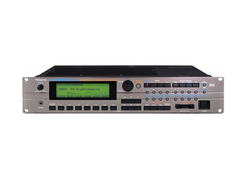
Unleash the full potential of your studio recordings with the Lexicon 960L, a powerhouse in the realm of effects processors. Revered for its unparalleled sound quality, this processor is a staple in professional studios worldwide. The 960L is engineered to deliver rich, immersive reverb effects, allowing musicians and producers to craft soundscapes that are both intricate and expansive. With a reputation for reliability and precision, it offers a broad palette of sonic possibilities to elevate any recording project.
Equipped with cutting-edge technology, the Lexicon 960L features multiple reverb algorithms that provide a diverse range of textures and depths. Its intuitive interface ensures that both seasoned professionals and ambitious newcomers can navigate its capabilities with ease. The processor's highly flexible architecture allows for detailed customization, enabling users to tailor the sound to their exact specifications. Whether you're looking to add subtle depth to a vocal track or create an atmospheric backdrop for a film score, the Lexicon 960L delivers with precision and clarity.
Key Features:
- State-of-the-art reverb algorithms for versatile sound shaping
- Intuitive user interface for easy operation
- Flexible architecture for detailed sound customization
- Renowned for its professional-grade sound quality
- Suitable for a variety of studio recording applications
Product specs
| Brand | Lexicon |
| Model | 960L Digital Effects System with LARC 2 |
| Finish | Black with White Remote |
| Year | 2000s |
| Categories | Multi-Effect |
FAQs
-
What makes the Lexicon 960L stand out among other effects processors?
-
The Lexicon 960L is renowned for its high-quality reverb and multi-effects capabilities, offering unparalleled audio clarity and depth. Its flexible architecture allows for extensive customization, making it a top choice for professional studios.
-
How does the LARC 2 remote enhance the Lexicon 960L's functionality?
-
The LARC 2 remote provides intuitive control over the 960L's parameters, allowing users to easily navigate and adjust settings from a distance, which is ideal for studio environments.
-
Is the Lexicon 960L compatible with modern digital audio workstations (DAWs)?
-
Yes, the Lexicon 960L is designed to integrate seamlessly with most modern DAWs, offering digital and analog connectivity options to suit various studio setups.
-
What types of effects can be produced with the Lexicon 960L?
-
The Lexicon 960L offers a wide range of effects, including high-quality reverb, delay, modulation, and pitch shifting, providing versatile options for sound design and mixing.
-
Can the Lexicon 960L be used for live performances?
-
While primarily designed for studio use, the Lexicon 960L can be utilized in live settings, offering robust effects processing capabilities that enhance live sound production.


Reviews
Owner Insights
We analyzed real musician discussions from forums and Reddit to find what players love, question, and tweak about Lexicon 960L.
Features and functionality
-
The Lexicon 960L is praised for its luxurious mixing experience and incredible sound quality, making it a standout in high-end FX processors.
Source
Use cases and applications
-
A setup involving a Circle Three Designs fly rack, Eaton lithium UPS, and Focusrite Rednet D16R II for AES to Dante conversion is recommended for a high-end portable rig.
Source
Value and pricing
-
Owners suggest the purchase is more about enhancing mixing pleasure than financial return, indicating high satisfaction despite the steep investment.
Source
Critic Reviews
5.0 out of 5
Based on 0 Reviews and 1 Rating
Artist usage
Add artist

Used for the drums on Echoes, Silence, Patience & Grace, as stated by mix engineer Rich Costey in this March 2008 Sound on Sound interview.
Drums: Quad 8 310, Pultec EQP1, API 550a, Neve 33609, API 2500, Lexicon 960, Urei 1176, Smart C2, SPL Transient Designer, room mics
"I had just gotten some Quad 8 310 EQs before I began the Foo Fighters project, and I found that cranking the s[**]t out of the mid-range with the Quads helped the drums quite a lot. On most of the album the bass and snare drum went through the Quad 8s, with severe amounts of mid-range added. Quad 8 grew out of Electrodyne and was very popular in the 1970s, particularly with film companies. I obtained some channels that came out of the Motown Sunrise console and they're basically three bands of EQ and a mic pre and output level, and the Q gets tighter as you push it up. The Quad 8s are a little bit rounder and warmer-sounding than similar API modules. I also used the Pultec EQP1 and API 550a on the bass drum.
"I had a bunch of different side-chain compressors on the drums that would change from song to song. On some songs it would be the Smart C2, medium ratio and fast recovery, on others the Neve 33609, the Urei 1176, the API 2500 or the Empirical Labs Distressor, and the SPL Transient Designer on toms. You can use the SPL to lengthen the sound of the toms. I don't compress all the drums at the same time, I'll compress individual parts and mix the compressed sound in with the natural sound of the drums. There was relatively little compression implemented on the drums in this song, because the band didn't care for it. They wanted the drums to sound more raw.
"Throughout the album mix I might have used a bit of Lexicon 960 on the drums for reverb, but the room mics — amongst them a heavily compressed foldback microphone — were so good that I tended to use those. I tend to like room mics that are on the darker side. If they're too bright, you can't turn them up very loud because you then also get all kinds of messy cymbal noises. One other thing to note is the drums that come in after the intro of the song. When the whole band is slamming accents like that, you want to make the drums sound very aggressive, and this meant pushing room mics, pushing compression mics and so forth. As I said, there were a lot of rides."

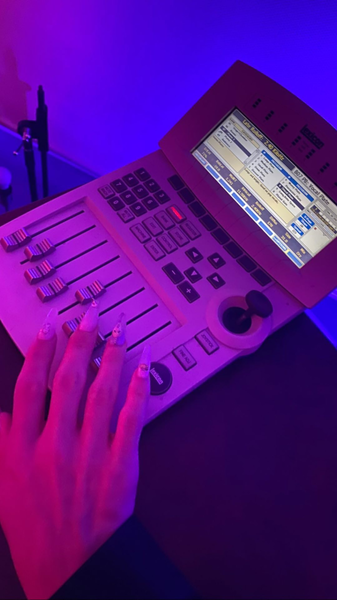
Photo from a instagram story. Arca's hand (screm nail art) can be seen.

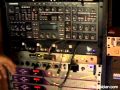
In this video at 2:06 we can see Lexicon 960L Digital Effects System


The Lexicon 960L appears on the right side of the picture.


A studio is nothing without equipment. In A.R.T. Studio the following top shelf music gear (and some personal favorites of Michael) were available:
Custom built AMEK Digital mixing console Audio Frame Workstation and Waveframe 1000 (old at the time, very important for the Enigma sound) Custom built studio controller by Quested Acoustics Protools system hardware Emagic Logic Audio Platinum software. Sample cell (Software sampler) Steinberg’s Halion External Midi modules and hardware: Lexicon 480 and 960 (reverb) Yamaha REV1, REV7 and REV9, Eventide Reverb Dynacord DRP20. MIDIMoog, PPG System, Korg M1, C-Lab Notator Takamine 6 and 12 String Guitars Tom Anderson Electric Guitars Otari DTR-900 Akai 900 Linn 9000 Prophet 2002 X-Pander EMS Vocoder DX-7 Roland MKS-80 «Super Jupiter», Roland V-Synth, Korg OASYS Korg Karma And, of course, a PC-based Studio Sampler. This is, after all, sample heavy music!


Serge Tsai on the production of Shakira's "Hips Don't Lie": "'I recorded Shakira with a Telefunken Elam 251 through a Neve 1073 mic pre, no EQ on the return in the mix, and only an LA2A on the insert. The reverb on her vocals was the S777, set to the small hall in the Concertgebouw in Amsterdam. There were certain words on which she didn't want any reverb, so we had to automate the reverb send on the SSL. The main reverb in the track was a delayed plate from the 960L, used in moderation. I don't like things that are overwhelmed by reverb. And I tell you one thing, I have not heard a plug-in sound as good as the 960L. It's a crazy box.'"


In a photo shared on Facebook, John Christian's studio setup includes the Lexicon 960L, visible on the SSL Duality desk in the background.


Kenji Kawai uses the Lexicon 960L reverb, as confirmed on his official website under the profile section.


"In the end the studio consisted of a 48-channel Pro Tools HD system running on a G4 with one Prism AD8 converter, a Yamaha 02R96 desk, which we soon got rid of, plus things like an Apogee PSX 100, Lexicon 960, Eventide H3000 and other outboard equipment. There was another G4 for Logic Audio with an RME interface to connect digitally to Pro Tools. We transferred everything we'd done on my Digi 001 to Rob's HD system and, in the end, also everything that we did in Logic."

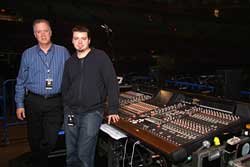
Used for vocals on the Awake Tour, as specified by FOH engineer Mickey Beck in this May 1, 2007 Mix Online interview.
Are you using onboard effects with the digital board?
Beck: As far as effects, I use the internal effects mainly for delays, backing vocals and orchestra. Basically, any effect that needs to change from song to song. The main effects processor is the Lexicon 960L configured into four stereo engines for use on Josh’s vocal, drums, percussion and featured strings. The ins and outs are routed digitally via AES-EBU. The Lexicon 960L is easily the sweetest-sounding effects processor I have ever heard, while at the same time being easy to get out of it exactly what you want. The vocal chain consists of an XTA D2 dynamic EQ and an Avalon 737 mic pre/compressor/EQ.


Album Usage
The Lexicon 960L has been featured on the following albums:

Genre Usage
Based on how artists on Equipboard use this gear, it is most commonly found in the following genres.
Used With
Based on how musicians on Equipboard use Lexicon 960L, it is most commonly used with the following gear.




-s.webp?v=1783695400)

More Lexicon Effects Processors

$680.00 - $1,799.95
in Effects Processors Rank


$125.00
in Effects Processors Rank


$66.00
in Effects Processors Rank


in Effects Processors Rank


$3,411.45
in Effects Processors Rank


$1,799.99
in Effects Processors Rank


$236.47 - $1,016.83
in Effects Processors Rank


-m.webp?v=1782227096)


-m.webp?v=1783696008)


-m.webp?v=1783695511)


$1,093.40 - $4,120.00


Accessories & Related Items

-s.webp?v=1783609625)


Community setups


Similar


Most Popular Effects Processors
Most Popular Brands
-
Added to Equipboard on by
 sio
sioGear IQ 707
-


