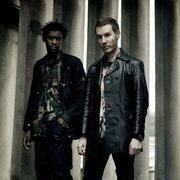
UNKLE
Role
Genre
Group
Role
Genre
Group
UNKLE's Gear
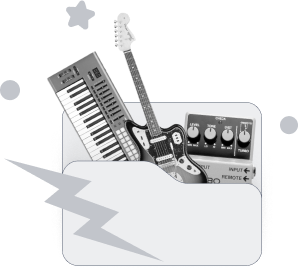


we can see him playing the Roland System 8 at 2.50mn
Find it on:


Steve: “Ableton is god and all the tempos are coming from that. Basically, in Logic, Ableton, and pretty much all of the DAWs, the MIDI clock source is a bit unreliable. So this is a pretty new bit of kit.
“You have a little plugin in your DAW that allows the Multiclock to know what BPM it’s using. Then it spits out four MIDI clocks, so the two DJ samplers and the analogue synth are clocked to Ableton and when the BPM changes within Ableton the samplers change BPM as well. Then I’m using a Moogerfooger analogue delay and an RV-5 digital reverb for additional effects.”
Find it on:


-m.webp?v=1781452987)
James. “The MS-20 has been a staple-diet for UNKLE. I’ve been using it since Never, Never, Land, so at least 18 years. It’s just got wicked bass sounds and I’ve always loved Moog for the bass side of things.
Find it on:


"We just did a tour of Asia and Australia," reveals File, "and James has a residency at [London club] Fabric. We may cut stuff up bar-by-bar and add percussion and sounds, which we can mute in and out when we're playing live. For instance, in 'Tomorrow Never Knows' by The Beatles, only the first two bars are instrumental, so we work a lot with those two bars, and loop them for quite a while with extra percussion. When you're in a club you can't go straight into songs, you need to give people a groove and take them into the songs slowly. We also take Zip disks of sounds with us, and all our effects, like reverb and so on, come through the KAOSS Pad."
Find it on:


File and Lavelle set up their studio in East London and called it Dos-Shot. File continued his work with his acoustic guitar and MPC2000 programming techniques, while Lavelle continued to contribute samples and conceptual ideas. The studio's Pro Tools rig was a then-top-of-the-range Mac-based TDM system, and in addition to the MPC2000 they retained an Emu 64000, and also had a Korg MS2000 and MS20. Meanwhile, says File, "mates would bring in loads of things. Pro Tools was the hub of everything, and we had every plug-in available going. On the Atari everything was in MIDI, which is great for beats and samples. But working with audio in Tools gave me so many options, I couldn't believe it."
Find it on:

Visible on stage in some live pictures
Find it on:

UNKLE uses the Pioneer DJM-900 Nexus Mixer, as shown in a Facebook post by James Lavelle.
Find it on:
-m.webp?v=1781622115)
james lavelle cites the Roland TR808 at 0:15mn as one of its first gear
Find it on:

James Lavelle of UNKLE mentions the Roland TB-303 at 0:15 as one of his first pieces of gear, as highlighted by Roland.
Find it on:

Steve Weston: “The main bulk of it’s in Ableton, so we’re triggering stems from all of the UNKLE tunes, which are then going into James’s mixer so he can do his DJ thing and put samples over the top. And then we’ve got samples going into his Pioneer CDJs and mixer
Find it on:
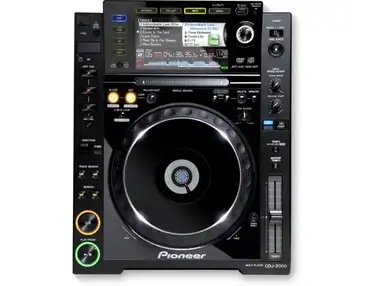
James: “I’m running two CDJs off a USB stick and have loads of weird samples coming through it- it’s more of a tactile thing from my DJ playing role.
“The samples are all going through a Pioneer mixer and I’m also using a lot of the effects from the mixer. If you equate it to a guitarist, the Pioneers are my Gibson – they’re my instrument.”
Find it on:

Steve: “I’m actually running the MS-20 and the Little Phatty through a Space Echo. They’re both mono, so I’m just going in left and right and it’s coming out the same.
“The Little Phatty is a great mono synth - Moog is a little bit more sweet-sounding I guess. The Moog has presets as well, so I can flick to different sounds really quickly, whereas the MS-20 has to be reprogrammed and the sound doesn’t change that much throughout the set.”
Find it on:

James: “I like the simplicity of my workstation and the Roland sampling drum pads allow me to use some kicks and get some bottom end. I just like to keep it quite simple and not get overly bogged down in millions of different possibilities, and the SPDSX is great for that.”
Find it on:

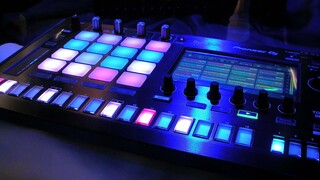
James: “I’m also using this new Dave Smith SP-16 Pioneer DJ Sampler, which I’m running a load of sounds through and using a bit like an Akai MPC. It’s got additional rhythms that I can add into the mix and vocal samples that are chopped up MPC-style. It’s full of stuff that I’ve sampled from films and vocal recordings.”
Find it on:

James: “I’m using the AS-1 analogue synthesizer for running a lot of bassline stuff and filtering.”
Steve: “I’m also using the Toraiz [AS-1] and doing a similar thing. The AS-1 has got the same synth engine as the Prophet 08 that Dave Smith made, except this is mono. It’s got a little ribbon keyboard and we’re sending the MIDI notes out of Ableton into it via a MIDI connection.”
Find it on:

Steve: “For this set, I’m using some Juno sounds and an organ sound from the System-8. The Akai MPD32 is a MIDI controller that’s hooked up to Ableton. It’s got some white noise samples and a few from the UNKLE track Heaven, so the way I’ve got the filters set up in Ableton I can get some toned white noise effects.
Find it on:

Steve: “We’re running the Ableton Push just to trigger off some clips. The MIDI Fighter is from a San Francisco company. It’s got 16 rotary encoders, but they’ve got push buttons as well. It works with anything, and I’ve MIDI mapped it in Ableton to do whatever I want it to do. Again, cut-offs, reverbs, delays or even volumes for fading drum loops in or out.”
Find it on:

Steve: “We’re running the Ableton Push just to trigger off some clips. The MIDI Fighter is from a San Francisco company. It’s got 16 rotary encoders, but they’ve got push buttons as well. It works with anything, and I’ve MIDI mapped it in Ableton to do whatever I want it to do. Again, cut-offs, reverbs, delays or even volumes for fading drum loops in or out.”
Find it on:



“You have a little plugin in your DAW that allows the Multiclock to know what BPM it’s using. Then it spits out four MIDI clocks, so the two DJ samplers and the analogue synth are clocked to Ableton and when the BPM changes within Ableton the samplers change BPM as well. Then I’m using a Moogerfooger analogue delay and an RV-5 digital reverb for additional effects.”
Find it on:

“You have a little plugin in your DAW that allows the Multiclock to know what BPM it’s using. Then it spits out four MIDI clocks, so the two DJ samplers and the analogue synth are clocked to Ableton and when the BPM changes within Ableton the samplers change BPM as well. Then I’m using a Moogerfooger analogue delay and an RV-5 digital reverb for additional effects.”
Find it on:
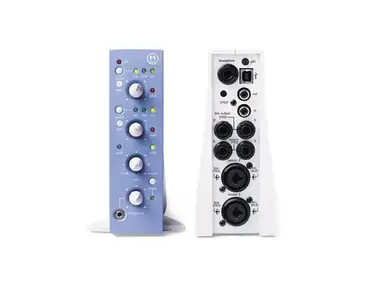
A lot of the pre-editing is now done in File's Apple laptop with Digidesign's M Box and Pro Tools LE, "which is 24-track and as much as I need. After which we'll go into the Strongroom to spend two days finishing off there. We stick the mixes on CD-R, while many of our samples will be coming off the MPC2000."
Find it on:

A lot of the pre-editing is now done in File's Apple laptop with Digidesign's M Box and Pro Tools LE, "which is 24-track and as much as I need. After which we'll go into the Strongroom to spend two days finishing off there. We stick the mixes on CD-R, while many of our samples will be coming off the MPC2000."
Find it on:


A lot of the pre-editing is now done in File's Apple laptop with Digidesign's M Box and Pro Tools LE, "which is 24-track and as much as I need. After which we'll go into the Strongroom to spend two days finishing off there. We stick the mixes on CD-R, while many of our samples will be coming off the MPC2000."
Find it on:
-m.webp?v=1781622128)
File and Lavelle set up their studio in East London and called it Dos-Shot. File continued his work with his acoustic guitar and MPC2000 programming techniques, while Lavelle continued to contribute samples and conceptual ideas. The studio's Pro Tools rig was a then-top-of-the-range Mac-based TDM system, and in addition to the MPC2000 they retained an Emu 64000, and also had a Korg MS2000 and MS20. Meanwhile, says File, "mates would bring in loads of things. Pro Tools was the hub of everything, and we had every plug-in available going. On the Atari everything was in MIDI, which is great for beats and samples. But working with audio in Tools gave me so many options, I couldn't believe it."
Find it on:

For all Lavelle's non-hands-on non-musicianship, he is credited as playing Mellotron on 'What Are You To Me?'. "That was the first live recording session we had," explains Richard File. "Ant and James and I just had a writing week and I was really inspired and we had come up with 'What Are You To Me?' and 'In A State'. On 'What Are You To Me?' I was playing guitar, and we had a bassist and a drummer and a guitarist, and James was playing a Mellotron through a Space Echo, and manipulated the filter.
Find it on:
This is a community-built gear list for UNKLE.
- Find relevant music gear like Studio Equipment, Software Plugins and VSTs, Headphones, and other instruments and add it to UNKLE.
- The best places to look for gear usage are typically on the artist's social media, YouTube, live performance images, and interviews.
- To receive email updates when UNKLE is seen with new gear, follow the artist.
-
Added to Equipboard on by
 debbands
Gear IQ 340
-
Updated
Discography
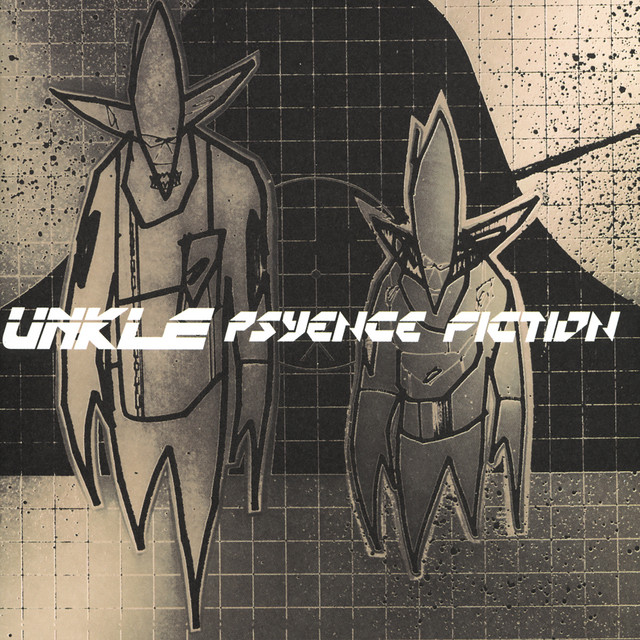
Psyence Fiction
1998
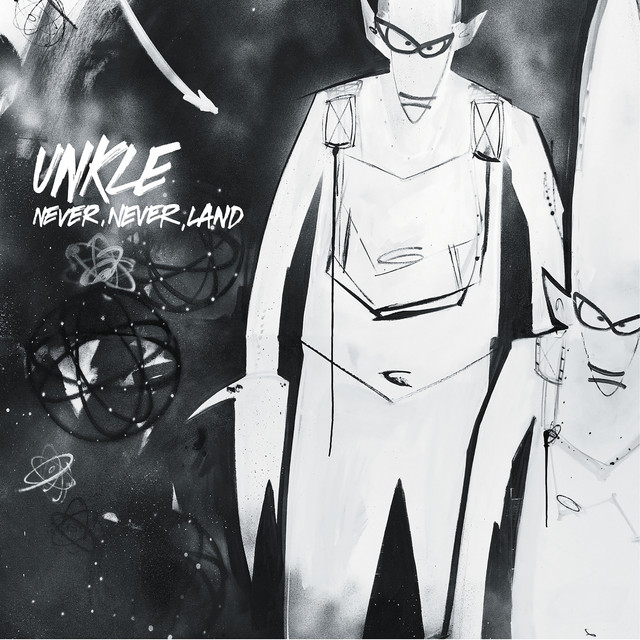
Never, Never, Land
2003
War Stories
2007
Hold My Hand Remixes
2008
End Titles . . . Stories for Film
2008
Remix Stories (Volume One)
2008
End Titles... Redux
2008
Where Did The Night Fall: Another Night Out
2010
Heavy Drug (Surrender Sounds Mix: The Remixes)
2010
Where Did the Night Fall
2010
The Answer - Remixes
2010
Unkle Sounds, Vol. 1
2012
Album Credits
-
UNKLE · 2022
Producer -
Lupe Fiasco · 2007
Producer -
Ian Brown · 2005
Producer -
UNKLE · 1998
Producer Recording Engineer