Bob Weir
Bob Weir's Gear



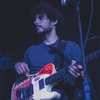
As can be seen in the photograph of Bob Weir, he used the 1965 Gibson ES-345 TDC. The color of his guitar was "Cherry Red". When Weir was asked about this guitar in an interview from August 2013, the guitarist said: "From about 1968 to '71 I used a Gibson ES-345, until I switched to a Gibson SG." The ES-345 TDC was first introduced in 1959. Bob's guitar originally came with a gold finish Bigsby vibrato, which was later replaced with a trapeze tailpiece.
Find it on:


In this photo from the Grateful Dead's 1974 tour, rhythm guitarist Bob Weir can be seen playing a Gibson ES-335 with a tobacco sunburst finish. In video footage from the band's performance at the Winterland Ballroom from October 17, 1974, at the 4:59 mark Bob is seen playing the solo to "China Cat Sunflower" on the guitar.
Find it on:





Bob Wier used a 1970s Martin D-28 acoustic guitar for "unplugged" sessions at home and during live performances. In August of 2013 Weir noted: "I ran away from home to cowboy for a summer and make enough money to buy a Martin D-28 from a pawn-shop."
Find it on:

In a 2013 interview, Bob Weir shared his journey with electric guitars, mentioning his early use of a Gretsch Chet Atkins model. An image from The Warlocks' performance at Magoo's Pizza Parlor in Palo Alto, CA, on May 5, 1965, shows Weir playing a Gretsch Tennessean, identified by its thicker body and dual switches on the upper shoulder.
Find it on:

“A fun, really flexible little amp for low-volume situations, like playin’ electric along with acoustic instruments….” Quoted on Bob's official Orange artist page.
Find it on:


Bob Weir uses the Alvarez Yairi WY-1, known as his signature model, featuring a solid AA grade Western Red Cedar top, rosewood back and sides, a mahogany neck, Gotoh tuners, ebony bridge pins, and the System 650 B-Band electronics. This information is detailed in Peter Schu's article "The Gear of The Grateful Dead" on Reverb.
Find it on:


Bob Weir's Ibanez 2681 Artist Signature Professional, produced in the mid to late '70s, was a unique design emerging from the "lawsuit era." This guitar is discussed in detail on the Grateful Dead Music Forum, highlighting Weir's association with this model.
Find it on:

In the late 1970s, Bob Weir frequently used the Ibanez BWM1 Bob Weir Cowboy Fancy guitar, as shown in a user-uploaded photo on Jimicrowley.
Find it on:

Here you can see Bob with his Blue Modulus
Find it on:

According to Pigtronix's website, Bob Weir uses an Envelope Phaser.
Find it on:

Bob Weir of the Grateful Dead can be seen playing a Rickenbacker 365 in several photos posted by the Grateful Dead official website and Facebook page. The one included here was taken at a Debutante Ball they played on September 2, 1966, in which Bob's sister Wendy was in attendance. Another image, taken during the band's gig at the opening of the new North Face Ski Shop in Berkeley, CA on October 26, 1966, shows Bob playing the Rickenbacker next to Jerry Garcia. Bob can also be seen playing the Rickenbacker in footage of the Dead's performance at the Human Be-In on January 14, 1967 at Golden Gate Park in San Francisco.
Find it on:

Bob Weir's newest signature model with D'Angelico. Used in solo projects and with Dead and Co.
Find it on:

Bob's new signature guitar as it's says: "Co-designed with American music legend Bob Weir, the all-new Bob Weir Premier SS is a landmark addition to his legacy of innovation. Featuring a compact tremolo system for maximum performance, push/pull tone knobs for coil tapping, and a master volume knob for total control, the Bob Weir SS offers remarkable versatility. Available only in the all-new Stone custom finish, with a full centerblock for sustain and resonance."
Find it on:

You can see Bob's GE7 in this picture of his board
Find it on:

You can see Bob's Fishman Platinum Preamp in this picture of his board.
Find it on:

In an interview from August 2013, Bob Weir said, he "found a really nice 1944 Martin 000-21 in a pawnshop for less than $100".
Find it on:

In this picture, Bob Weir uses the 1959 Gibson ES-335TD in Sunburst finish. In an interview with Premier Guitar magazine, the guitarist said:
"It was my first time in Nashville—I think it was around 1970—and I went to Gruhn Guitars there—great guitar shop. I was just nosing around, playing a few guitars, and one of the guys in there was watching me—and he said, “You ought to look at this guitar.” He pulled it off of a rack, and I played it and fell in love with it. It was 350 bucks. Back then that was a lot of money—it was a couple months’ rent—but I had to have it. It’s worth a couple hundred times that now—it still has all the original parts. It’s pretty much the holy grail of thin-body guitars.
I was immediately drawn to the feel of it. I also liked the way it sounded, but I loved the feel—loved the neck, which is relatively slim for a Gibson. Sonically I can do just about anything. It’s not going to sound like a single-coil guitar—it’s definitely a Gibson—but that said, it can get bright, real bright. In fact, I generally play it pretty bright. It has wonderful balance. The tone isn’t real tubby. Sometimes Gibsons have a sort of tubby tone, but not so with this particular guitar. And it works well both in the studio and live—it’s good no matter where you plug it in."
Find it on:

According to Pigtronix's website, Bob Weir uses an Echolution delay.
Find it on:

You can see Bob using his signature Pigtronix Real Deal Acoustic Preamp pedal in this picture of his board.
Find it on:

According to rack photos in his gear, Weir has Line 6 POD Pro.
Find it on:

Listed on Bob's official Keeley artist page.
Find it on:

You can see Bob's Strymon Brigadier dBucket delay in this picture of his board.
Find it on:


According to rack photos in his gear, Weir has Shure UHF-R wireless microphone system.
Find it on:

As Seen in Sunshine Daydream located on Weir's stack of amps.
Find it on:

In this video (https://www.youtube.com/watch?v=jEA_VV_6xBY) Bobby is seen with a very old Martin 000-15. While there is no other footage of him playing this specific guitar, it seems like this one has seen a lot!
Find it on:

Bob Weir, the guitarist and composer known for his work in bands like The Grateful Dead, Wolf Brothers, Ratdog, and Dead & Co., is confirmed to have used the Gibson Les Paul Standard (1961 SG) with a sideways vibrola. This is evidenced by photographs shared on the Grateful Dead's official website and Facebook pages, dated from 1972 and 1973, where Weir is visibly playing the instrument. Although there is an instance from around 1969 showing Weir alongside Jerry Garcia and Phil Lesh each playing SG-style Gibsons, it wasn't until 1973 that he began using the 1961 Gibson SG Standard more regularly in performances.
Find it on:

During the Grateful Dead's performance at Columbia University on May 3, 1968, rhythm guitarist Bob Weir was documented playing a Guild Starfire IV, featuring a natural finish and gold hardware. This evidence is confirmed through visual inspection at the 2:32 mark in a video posted by davidaron60 on YouTube, titled "Grateful Dead - 05-03-1968 Columbia U. (video)", and sourced from archival Grateful Dead concert footage. This specific performance is notable not only for its historical context, including the band's covert entry onto the campus amidst student protests, but also for showcasing Weir's instrument choice during this period.
Find it on:

Bob Weir, the rhythm guitarist of Grateful Dead, is confirmed to have used a Gibson Les Paul Custom Electric Guitar. This is substantiated by an image showing him playing a black Les Paul Custom, distinguished by its gold hardware, during the period between 1970 and 1972. The image serves as direct visual evidence of Weir's use of this specific guitar model.
Find it on:
-m.webp?v=1784876468)
The verifiable evidence that Bob Weir, the rhythm guitarist of the Grateful Dead, utilized a Fender Telecaster during their performance in Central Park on May 5, 1968, is substantiated by a photograph capturing him playing the instrument.
Find it on:


In the video provided by Christopher Hazard on YouTube, titled "Grateful Dead [2024 1080p HD Remaster] September 18, 1990 - Madison Square Garden, New York, NY," Bob Weir is clearly seen playing a Modulus Graphite Black Knife Stratocaster. This evidence directly confirms the usage of the specific guitar model by the artist during this performance.
Find it on:
This is a community-built gear list for Bob Weir.
- Find relevant music gear like Guitars, Amplifiers, Effects Pedals, Software Plugins and VSTs, Keyboards and Synthesizers, Instruments, and other instruments and add it to Bob Weir.
- The best places to look for gear usage are typically on the artist's social media, YouTube, live performance images, and interviews.
- To receive email updates when Bob Weir is seen with new gear, follow the artist.
Discography

Album Credits
-

Bobby Weir & Wolf Bros: Live in Colorado
Bob Weir · 2022
Producer -
Bob Weir · 2016
Producer -
Fall 1989: The Long Island Sound
Jerry Garcia Band · 2013
Producer -
Bob Weir · 1972
Recording Engineer