Dave Grohl
Genre
Credits
Genre
Credits
Guitars 57
Amplifiers 25
Effects Pedals 28
Drum Sets 25
Cymbals 16
Drumsticks 5
Snare Drums 5
Microphones 19
Software Plugins and VSTs 5
Studio Monitors 1
Strings 1
Drum Hardware 19
Studio Equipment 9
Bass Guitars 9
Music Accessories 7
Keyboards and Synthesizers 6
Headphones 1
Pianos 1
Other Gear 5
Dave Grohl's Gear



Inspired by one of his favorite guitars, the Gibson Trini Lopez, Dave Grohl also uses the Gibson DG-335 Electric Guitar which comes in a Pelham Blue color. Dave bought his first Trini Lopez from me ~ just mentioning that for fun.
Find it on:


"This guitar, I've made every single Foo Fighters record with it. This one. This is a fucking beautiful guitar. I saw this in a guitar shop in Bethesda, Maryland. I think it was 1992 or '93 or something like that, I was still in Nirvana when I bought it. I thought it was unusual because it looks like a Gibson ES 335 except that it has diamond-shaped F-holes and has this different headstock on it. And I didn't really know anything about Trini Lopez the artist when I bought it. But this fucking thing, this is the sound of the Foo Fighters - this guitar. On every record I might use other guitars every now and then, but for the most part it's just this," says guitarist Dave Grohl about his Gibson Trini Lopez Standard Reissue Electric Guitar.
Find it on:


When asked what was the fundamental guitar-sound recipe for the album, There's Nothing Left to Lose, musician Dave Grohl answered: "We focused on not using too many distortion pedals, and went for a cleaner, fatter, more natural overdrive. We used a Vox AC30 for pretty much everything on the record, tweaking the sound so that it broke up nicely when played loud.... We wanted to move back to that huge, warm, sludgy sound and get something a little more garagey -- not something so well-produced and pristine. So rather than play through a distortion pedal and an amp with its volume at 5, we wouldn't use a pedal at all." After being asked if there is any trick to recording natural guitar sounds Dave Grohl explained, "The best way to get a natural guitar sound is to eliminate all pedals and find an amp that has a lot of range. With an AC30, for example, you can go clean, dirty, bright, or fat. It's just the amplifier and the guitar -- the most basic combination." Dave Grohl uses the Vox AC30 amp head in a 2x12 combo.
Find it on:


"Sometimes we'd double a track using an old Pro Co Rat, and then hard-pan the parts so that a super-distorted guitar was in the left channel and a grindy guitar was in the right. Then we'd sprinkle in lots of clean guitar overdubs," explains Foo Fighters guitarist Dave Grohl about the Pro Co RAT Distortion Pedal.
Find it on:

Dave Grohl uses the Mesa Boogie Dual Rectifier mainly for creating dirty sounds. This is by contrast where “Dave insists upon using the Vox AC-30s for his clean sounds – even though all the road crew hates the way they break-up onstage,” says a Foo Fighters guitar tech.
Find it on:
-m.webp?v=1784804581)
Dave Grohl uses an MXR M-101 Phase 90 Pedal in his pedalboard. His MXR Phase 90 is hooked to both the Boss DM-2 Analog Delay pedal and the Whirlwind A/B Selector. The phase 90 can be seen at 3:31 throughout the performance.
Find it on:

"I'm looking at this beautiful Epiphone," says Dave Grohl of the Foo Fighters while playing on a Epiphone Texan 1958 Acoustic Guitar.
Find it on:

Dave Grohl uses the Hiwatt Custom 100 Amplifier Head during live performances, particularly following the release of "Wasting Light," as seen in the Foo Fighters' live session at Studio 606 on YouTube.
Find it on:

In the music video for the Foo Fighters song "Monkey Wrench," Dave Grohl can be seen playing a Gretsch White Falcon electric guitar. Shots of the guitar can be seen sporadically throughout the video.
Find it on:

"In addition, Grohl -- who played all the guitar parts on Nothing Left -- abandoned ..... Amps: Vox AC30, Mesa/Boogie Maverick and Heartbreaker, Fender Twin."
Find it on:


-m.webp?v=1784818789)
Used in the early days of Foo Fighters, as stated by guitar tech Earnie Bailey in this August 21, 2017 Effects Bay interview.
What was the typical set up for Dave in those days?
A ProCo Turbo Rat into a 100 watt Marshall JCM800, a black Gibson Explorer, an 80’s tobacco Sunburst Les Paul Standard and a white Les Paul Custom is the earliest setup I can recall. A Boss DM-2 delay and MXR Micro Amp were added around the time of the second album.
Find it on:



A pic of his pedalboard next to a Tu2, phase 90 and whirlwind selector box
Find it on:

In an interview with Chris Shiflett, he talks about the gear they use. He mentions that Dave grohl turned up and used a Tonemaster
Find it on:

Joe Beebe, Grohl's guitar tech says, “I use D’Addario EXL 115s, but I throw the bottom two strings away and I replace them with a .42 for the A-string and a .60 for the E-string... [Dave] is such a hard player; he’s a chainsaw live! He was breaking strings a lot, so I had to beef up the gauges a bunch and I also have to raise the action on him, otherwise he’s hitting the strings so hard all it would do is buzz all day long!”
Find it on:

Used with Foo Fighters "around the time of the second album", as stated by guitar tech Earnie Bailey in this August 21, 2017 Effects Bay interview.
What was the typical set up for Dave in those days?
A ProCo Turbo Rat into a 100 watt Marshall JCM800, a black Gibson Explorer, an 80’s tobacco Sunburst Les Paul Standard and a white Les Paul Custom is the earliest setup I can recall. A Boss DM-2 delay and MXR Micro Amp were added around the time of the second album.
Find it on:

In this photo taken from their "Intimate Irving Plaza Show", Dave can clearly be seen standing behind a Fender Hot Rod.
Find it on:


"In 'Headwires' the high, picking part in the middle eight is an SG through the Memory Man," says Dave Grohl in reference to the Gibson SG Electric Guitar. Dave Grohl uses Drop-A tuning in this case.
Find it on:

In this source Ian Beveridge lists what mics were used by FooFighters for the "In Your Honor" tour - "I've wanted to try a 431 on Dave's vocals for a long time," reveals longtime monitor engineer Ian Beveridge.
Find it on:
-m.webp?v=1784804860)
One of the most popular videos of Dave on YouTube is one in which he sings Elton John’s “Tiny Dancer”. The guitar he used was a Martin D-28.
Find it on:

"The main riff used in 'Headwires' is on an Explorer playing through the Memory Man and the Vox, and the harmonics were done with the same setup," mentions Foo Fighters's lead guitarist, Dave Grohl, in reference to the Gibson Explorer electric guitar.
Find it on:

In this photo, Dave Grohl is seen playing a Fender Telecaster Custom. The pickup configuration can be clearly seen, which identifies it as a Tele Custom. The black and white photo makes it hard to say what the finish is with certainty, but it appears to be black with a black pickguard.
Find it on:

The rig that Grohl and, of course, Beebe now swears by on stage is much simpler than the one Beebe inherited: a four-channel Mesa Boogie Road King head with a 4 x 12 Mesa Boogie cab, three pedals — a Boss DD-3 delay, an MXR Phase 90 and Boss TU-2 tuner — and a Shure UHF-R wireless system with “auto-assigning belt packs.” “I got rid of the extra amps,” says Beebe. “Before, when he [Grohl] wanted a cleaner sound, the A/B box would get a signal from the Vox AC30, which sounded great. When he wanted a dirty sound, he would go to the Mesa Boogie, and there was a Marshall that was in the mix every once in a while. I got rid of that and I bought a three-channel amp at the time, and now we use four-channel amps, so I can get a wide range of tones and sounds. I like the Mesa Boogie Road Kings because 1) they sound good, and 2) they’re bullet-proof. We’ve dropped our racks off the loading docks, and when you fire them up to see if they work, they actually sound better! And they’re a big company that have a lot of gear in every country and you get a lot of support. If I need anything, they really take care of us!” - Joe Beebe (Grohl's Guitar tech)
Find it on:

The EP Boost can be seen sitting next to the Digital Delay during the 2020 SNL performance
Find it on:

Asked about any tricks to recording natural guitar sounds, guitarist Dave Grohl replied, "As far as micing the amps, we used a Shure SM57. That's usually the mic they use on the amps when you play live, so why not use it in the studio as well?"
Find it on:

"I didn't use it much on the record, but I pull it out live. RDs are awesome. It's like holding a kitchen table over your chest and having it scream like a jet airplane. I like that they're really heavy and can sound fat or bright. They're kind of nasty guitars - played through a Boogie Rectifier, they sound completely insane," mentions Foo Fighters lead guitarist Dave Grohl in reference to the Gibson RD Standard Electric Guitar.
Find it on:

Dave Grohl used the Gibson Les Paul Dale Earnhardt Jr. guitar on stage when his band Foo Fighters played Rock in Rio Lisboa in 2004.
Find it on:

In Tenacious D and the Pick of Destiny Dave Grohl plays a Dimebag Darrel signature Washburn Dime 333 Dimebolt guitar. This guitar was played at the 2000 Big Day Out festival in Melbourne. You can see this guitar at 11:07
Find it on:

Whenever guitarist Dave Grohl wants to create a dirty sound he uses several Mesa/Boogie 4x12 Rectifier Standard Cabs to transmit it.
Find it on:

Dave Grohl can be seen playing the Dan Armstrong guitar in this photo.
Find it on:

Dave Grohl used the Dunlop Tortex Standard 1.14mm pick during his early years with the Foo Fighters, as evidenced by a photo from Radio.
Find it on:
This is a community-built gear list for Dave Grohl.
- Find relevant music gear like Guitars, Amplifiers, Effects Pedals, Drum Sets, Cymbals, Snare Drums, Drumsticks, and other instruments and add it to Dave Grohl.
- The best places to look for gear usage are typically on the artist's social media, YouTube, live performance images, and interviews.
- To receive email updates when Dave Grohl is seen with new gear, follow the artist.
Album Credits
-
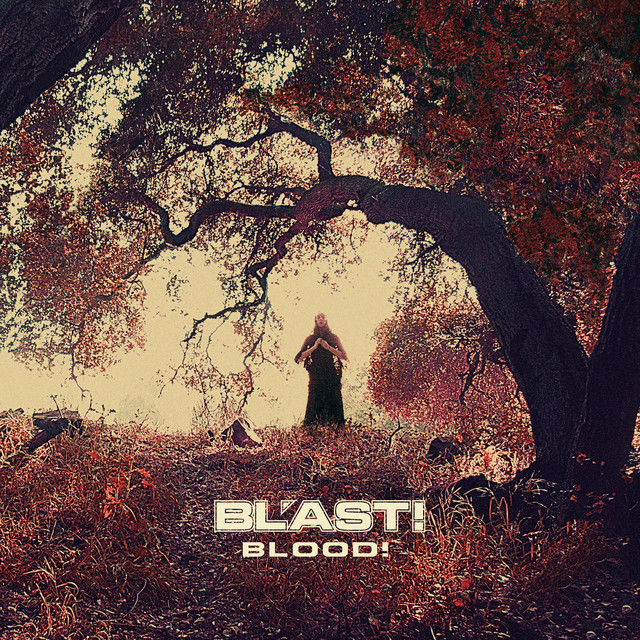
Bl'ast! · 2013
Mixing Engineer -
Ghost · 2013
Producer


.jpeg?v=1784809643)