This page about Fender Subsonic Baritone Stratocaster is a stub. You can help improve it:


Pricing and availability




* Product prices and availability are updated by Equipboard every 24hrs and are subject to change. Equipboard may receive compensation for purchases made at participating retailers linked on this site. This compensation does not affect what products or prices are displayed, or the order of prices listed. For more information, please refer to our affiliate disclosure.
Description
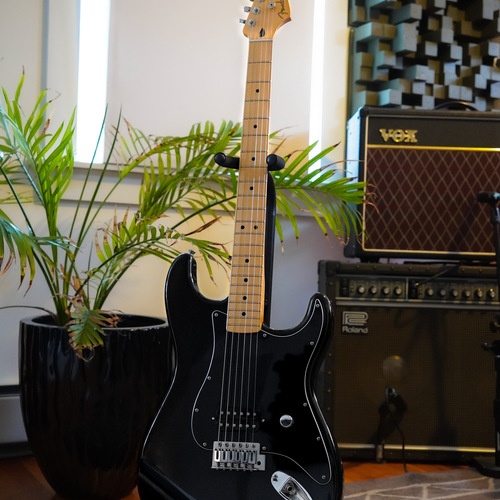
Plug into a world of deep tonal exploration with the Fender Subsonic Baritone Stratocaster, a guitar crafted for musicians who crave extended range and versatility. Designed to bridge the gap between a standard guitar and a bass, this baritone Stratocaster is perfect for those seeking to venture into lower tunings without sacrificing playability or comfort. Its 27-inch scale length allows for a robust low end, making it an ideal companion for genres that demand depth, such as metal, jazz, or surf rock.
Built on the iconic Stratocaster body, this baritone guitar features a sleek C-shaped neck that provides a familiar feel while accommodating the extended range. The trio of single-coil pickups delivers the classic Fender tone, with crisp highs and a full-bodied midrange that complements its bass-like low end. The five-way pickup selector switch offers excellent tonal variety, allowing you to find the perfect sound for any musical scenario. Whether you're laying down heavy riffs or exploring rich, melodic lines, this instrument is engineered to inspire.
Key Features:
- 27-inch scale length for lower tunings
- C-shaped neck for comfortable playing
- Three single-coil pickups for classic Fender tone
- Five-way pickup selector for tonal versatility
- Iconic Stratocaster body shape
Videos

Xander Raymond Charles
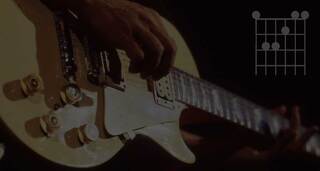
MY NEW BARITONE STRAT!
MY NEW BARITONE STRAT!
Xander Raymond Charles
Reviews
Owner Insights
We analyzed real musician discussions from forums and Reddit to find what players love, question, and tweak about Fender Subsonic Baritone Stratocaster.
Setup and maintenance
-
Owners recommend using thicker strings, around 13-62 gauge, for tuning to drop B or C with the 27” scale for optimal performance.
Source -
Strings may feel slinkier on a 27" scale compared to a 28-5/8", similar to the difference between Gibson's and Fender's standard scales.
Source -
Ensuring the saddle's adjustability is key when converting necks to accommodate different scale lengths.
Source
Mods and upgrades
-
A modified Fender Player Tele HH with Mojotone Tomahawk pickups and a custom Emerson wiring harness pairs well with the Subsonic baritone neck.
Source
Comparisons
Use cases and applications
-
The Subsonic neck is effectively used to convert a standard Jazzmaster into a baritone, maintaining existing high-quality pickups and killswitch setups.
Source
User experience
-
Enthusiasts find the neck conversion process straightforward, with reports of seamless integration and enhanced playability in baritone tuning.
Source
Based on 0 Reviews and 0 Ratings
Artist usage
Add artist
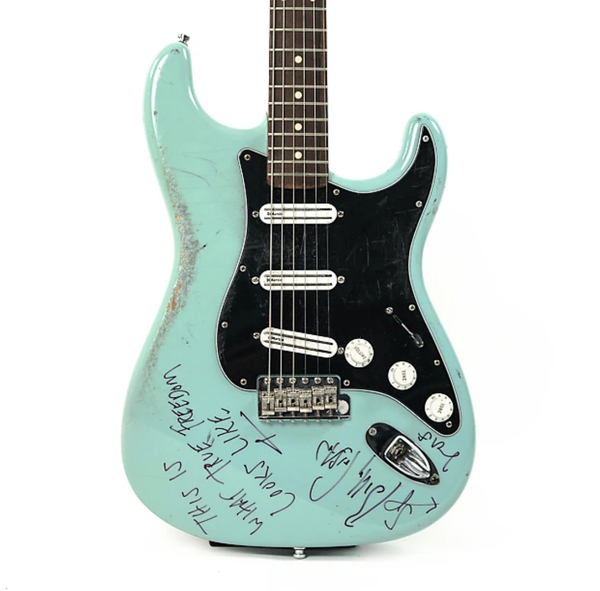
Billy used a Fender Subsonic during the Zeitgeist tour, tuned to C# standard for "That's the Way (My Love Is)" and "Neverlost".


Sonic Youth's website states:
"Used by Lee: 2001-2007 2001 -- EEBEBB (Sympathy for the Strawberry, The Empty Page) 2002 -- EEBEBB (Sympathy for the Strawberry, The Empty Page) 2003 -- EEBEBB (Sympathy for the Strawberry, The Empty Page, Peace Attack) 2004 -- EEBEBB (The Empty Page, Peace Attack) 2005 -- EEBEBB (The Empty Page, Peace Attack) 2007 -- EEBEBB (The Empty Page) NOTES:
A Fender Subsonic first used on some new tunes in October 2001 (though it could have been used earlier, for all I know). This gtr is traditionally tuned down to BEADGB (like a 6-string 7-string) but Lee uses a tuning specific to E's and B's. Green body (not as blue as the picture looks!) 2 single-coils, humbucker in bridge Rosewood fretboard White pickguard 3 knobs Apple sticker Gauges: .054 .054 .026 .026 .017 .017 Listed as "subsonic" on 2002 set lists."

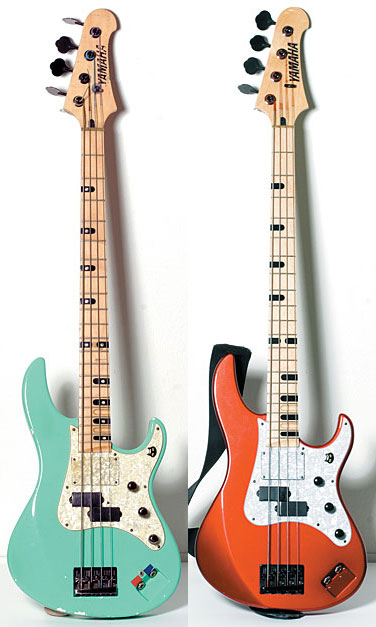
In this February 2010 issue of Vintage Guitar Sheehan states that he two Fender Subsonic Baritone Guitars, one of which Sheehan claims, was given to him by Kid Rock's guitar player
Billy Sheehan
New Music, Old-School Basses
-Lisa Sharken
Among rock bassists, Billy Sheehan has been a standout in four decades. Whether with Talas in the ’70s, tapping toe-to-toe with Steve Vai in the ’80s incarnation of David Lee Roth’s band, or forming the chart-topping Mr. Big in the ’90s, his name has always been right there with the elite.
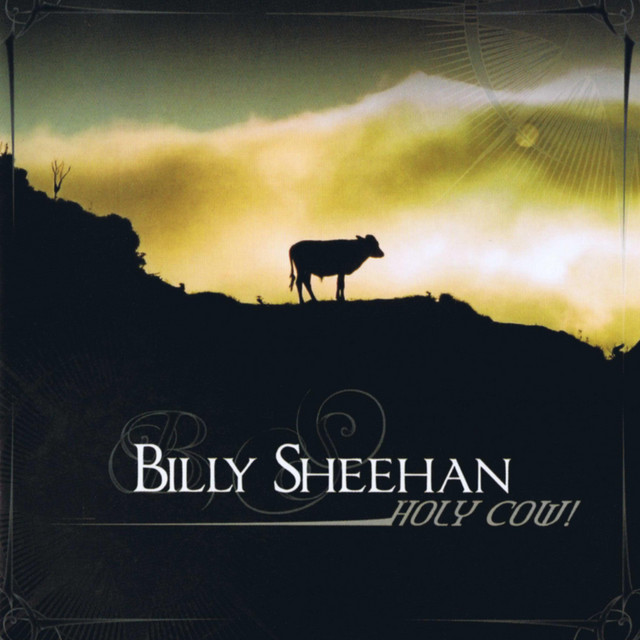
Having recently completed his third solo disc, Holy Cow!, Sheehan sat with Vintage Guitar to discuss the album and how collaborating with Paul Gilbert sparked a Mr. Big reunion. Also eager to show off some eye candy, Sheehan invited VG to check out his favorite instruments, including the Fender Precision Bass which had been his main squeeze through his tenure with Talas and later served as the springboard for his signature Yamaha Attitude. Sheehan also harbors a special love for baritone instruments, which have become the musical foundation for his solo work.
[Vintage Guitar]: Holy Cow! has a heavier sound and feel than material you’ve written in the past.
[Billy Sheehan]: Absolutely. I think it’s always what I’m going for. But to get that heaviness – the “heavy-osity,” as Woody Allen would put it – requires a bit of fine-tuning. People who dismiss really heavy bands don’t understand that does not come easily; it’s coordination of disparate factors, because mixing by frequency is a lost art. An instrument in one frequency should not be stepping on an instrument of a similar frequency. You have to either EQ them out of each other’s way or record them out of each other’s way to start with. It’s a very important thing that inadvertently happened on a lot of great records before they were really paying attention to it. But later, when they were trying to figure out how those records were made, we realized that Hendrix’s guitar doesn’t have a lot of low-end. It’s kind of midrangey, bright, and beautiful. So the rest of the track has all kinds of room to sit in. On AC/DC Back In Black, you’ve got the super-deep, heavy bass and drums – heavy as all creation – and the perfectly punctuated upper-mid guitar stabs, and then a voice way over the top of everything. A guy with a low voice wouldn’t have worked at all for AC/DC.
So when I’m doing this, I allow each instrument to sit properly in the mix and create a nice, heavy sonic wall, not just a blast of noise.
[VG]: How did the writing and recording compare to making your previous solo albums?
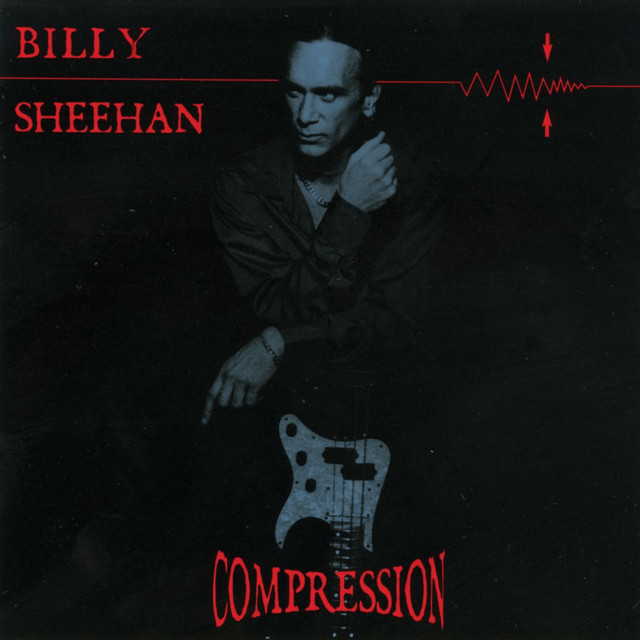
[BS]: Well, it becomes less of a challenge as I become more experienced. Compression was a total roll of the dice. I didn’t know what I was doing. I still go back and listen to that album, and I still like it because it was just completely by chance. I learned alot making Cosmic Troubadour because it was really just me, the drummer, and the two guys I use in the studio. I liked it, but I also like to have more people in the stew. I usually don’t like it when a guy does a solo record and has so many guests you’re not sure whose record it is. Cosmic Troubadour was kind of a way for me to just say, “This is just me and a drummer.” But now that I’ve done that, it’s time to have guests. So for me, the greatest challenge was to write songs I really like. Sometimes there’s a huge cringe factor, where I don’t know if I want to play this for anyone else. I wanted to not have that happen; I wanted to have them hear my voice and the songwriting.
[VG]: Were certain instruments an inspiration for writing songs?
[BS]: Playing and singing with baritone six- and 12-strings has always been a big inspiration. I started doing solo stuff because I got one. It moved me in that direction. One of my most cherished possessions is an odd-shaped semi-hollow from Yamaha. The guy who made it made one for himself and one for me – they’re the only two that exist. The neck is unfinished wood, so it has a great feel, and it’s all birdseye. This guy did a great job.
I’ve got a bunch of baritone guitars. One I like most is a Veillette. Joe Veillette has some of the most beautiful and incredible instruments. In the early ’80s, Talas recorded in Woodstock, and John Sebastian came down and played baritone guitar on a piece. It was a Veillette-Citron baritone, and it was in the shape of the old Guild, with a built-in stand. I remember how awesome it was, how cool he was, and how incredible that guitar sounded. That was Joe’s original baritone. Later, I bought one and sent it to Joe to put on a different tailpiece. It was a fixed tailpiece with the pins in it like an acoustic guitar. If you put an adjustable bridge on, and a higher-output pickup, like a DiMarzio. That’s a great guitar. It’s way smaller scale than the Yamaha, almost guitar-scale.
Then there are a bunch of other things. I got a couple of Fender Subsonic Strats, one from the Custom Shop and one from Kid Rock’s guitar player. But one guitar that figured prominently on the new record was a $100 Fender Squier Strat a friend gave me as a present. It’s got a fixed bridge, and I’ve had it for ages. I left the factory strings and pickups on it and tuned it down to baritone pitch. So it has .010s tuned down, and just flopping around on there! But through a loud distortion tone, it sounds unbelievable. Billy Gibbons used it on the album, and from the moment he touched it and we heard it through speakers, that unmistakable tone [came from] his hands!
I’ve also got a Taylor 12 and a couple of great Alvarez-Yairi baritones, and that range works better for me. So I started writing. I know it’s an expensive way to get inspired, but if you lose your inspiration, you have to find another one. In a pinch, it does help when something new comes along. I’m not an instrument whore. I’ve got a lot of instruments, but all of them mean something to me.
Most of the guitars I have are utility instruments. I just got rid of two I wasn’t using, and I’ve gotten rid of others. I hate to see them sitting around and not being used, especially if it’s a nice instrument somebody could be using to make music. Generally, I use what I have. My newest guitar is by XOX Audio Tools. It’s called The Handle, and is made of carbon fiber. They made a baritone version that weighs about eight ounces, and it’s amazing – super-light, super-strong, and has great tone.
[VG]: Did you use a Yamaha Attitude for recording the new album?
[BS]: Yes, usually the red one. The funny thing is that my red ones used to be green. My favorite green one broke onstage at a show in England; I slipped, fell hard, and the bass went first. The bass gave its life for me! My backup was a red one, and it’s my main bass now. There’s also a black one I strung B, E, A, D. It’s the bass I used on Steve’s record and a bunch of stuff I’ve needed low-bass tone for. You’d normally use a five- or six-string for that, but I set up a four-string for it.
[VG]: What were you playing through?
[BS]: SVT-4 Pros with Pierce preamps direct through Avalon 737 and Radial JDB Class A direct boxes, which are great. They have so many extra ins and outs, which is great because with hard-disc recording and multiple inputs, we’re not stuck to 24 tracks. I can run a straight, unaffected, normal bass tone to do whatever we want with. But then we’ve also got the mic’ed signal, the direct signal, and the bass going through the Avalon. So in the event we have a problem with the tonality of a bass fitting into a track, we have options.
[VG]: How did you go about constructing the tracks?
[VG]: I didn’t have a specific plan. On some things, I did guitar first, and on others, bass first. But for the most part, bass was done later rather than earlier. Most of the time, you do drums, then bass, then everything else. I wanted to get a “band” feel, so if I didn’t hear what else was going on – no rhythm guitar or lead, and no scratch vocals – there’s nothing for me to work on. I could do with just bass and drums, but I prefer to hear the whole track so I can fit my bass in better and know when to pull back and when to push forward. So a lot of times I would do a scratch track, record everything else, then go back and re-do the bass as if it had never happened. One of the goals was to make it sound more like a band than one guy tracking one thing at a time. I would respond to things I did on guitar in a different way if a part was already there compared to if I try to imagine it in my head. I don’t like that uniformity from track to track. Some producers don’t like when the snare drum sounds way different on one track. I think it’s good! Let’s have some life, some variation, and some color, rather than just some marketing-generated uniformity.
[VG]: What was your amp setup for recording guitars and the baritones?
[BS]: I had a Mesa/Boogie combo with a single 12” speaker where you can switch between five-watt and 50 watts. We had that mic’ed with an AKG 414 in the other room, and went direct, just in case. The amp sounded great. I turned it down to five watts and had a THD Hot Plate on it because I really wanted to pull it down. At five watts, it’s loud, and we took it down just a touch.
The guitars and baritones went direct and through a Line 6 Pod. I have one of the older first-generation rackmount Pods. I don’t know if it’s how I have it hooked up or if it’s just the gear itself, but it sounds great. I used the blackface Fender setting.
[VG]: There are a variety of guitars on the album. What were the main ones?
[BS]: The blue Subsonic Strat and the Yamaha baritone 12-string were the two main instruments. The others are “nodes of inspiration.” I’ll have little spots where I’ll pick one up to play for a while, and I’ll always come up with some new thing. There are six guitars and six to eight basses around me, and they all have different personalities. They all take me in a different direction. It’s like being in a room full of people with varying moods. I’ll pick up my Robin Octave guitar, and it’ll take me in a certain direction. I used that one on “Cell Towers” for the really high mandolin-sounding part. It’s a great little guitar, especially with .008s. I purchased one in ’85 and fell in love with it, then somebody stole it. Robin was kind enough to replace it. It is such a usable guitar because the body is full size and the neck is full width, but it’s as if you had a neck capo’d at the 12th fret. I think it was tuned B to B because E to E was a bit overwhelming on the strings. I tuned it to fit with the baritone, but two octaves higher.
[VG]: You’re a longtime Rotosound-string guy. What do you use on the various guitars?
[BS]: Rotosounds; for Strats, I got a bunch of different gauges. I’d write the gauge on a piece of tape, because sometimes you get a guitar singing, then forget which strings are on it. On the baritone Strat I have .013, .017, .026 plain, .034, .044, and .056. Then I have four sets of strings for the Yamaha, and I change them very seldom because I never get too sweaty, so they stay pretty clean.
[VG]: Which songs from the album stand out as favorites?
[BS]: It’s hard to say, but the track which Paul Gilbert played on, “Dynamic Exhilarator,” was incredible. The way the solo is structured I think is just classically done. It launches, then gets more exciting and more exciting, and goes over the top and explodes. Then part two comes along, and he moves it to a higher level and moves it to a yet higher level, then explodes. It’s brilliantly done. I took tracks to Paul’s studio, and we used one of his new Marshall combos. I’m not sure which of his guitars he used, but I think it was an old Ibanez SG. That’s definitely one of my favorite tracks, but the Billy Gibbons track, “A Lit’l Bit’l Do It To Ya Ev’ry Time,” was truly one of the greatest honors I’ve ever had in my career, flat out. To know Billy, or just to have ever met him, would have been enough. But to have him lay a track down… I had tears in my eyes. I couldn’t believe it! I love that guy so much. I love his playing, his tone… he’s an icon. I couldn’t possibly have more regard for him. He just came by, laid it down, and we hung out. He’s a joy to work with and his tone just killed on this song.
[VG]: You also had Dug Pinnick on lead vocals for “Turning Point” and Simone Sello on guitar for “Two People Can’t Keep A Secret.”
[BS]: Dug’s voice is one of the best ever. He came down and nailed it. I would have loved to have had him play bass, but we were in a time crunch. I love his playing and tone, his approach, and his personality.
Simone Sello is a friend who did most of the production work with me, other than mixing. I’ve worked with him from the beginning of my solo studio stuff. He configured my studio and bails me out when I get lost in software. When he does edits or checks sounds, it’s just a couple of clicks and it’s done. He’s also a great player, so as a surprise, I asked him to lay down a solo. He couldn’t believe I wanted him to play.
[VG]: Talk about how the Mr. Big reunion came about.
[BS]: Well, making the new album was the first time I’d worked or jammed with Paul in years, and we had a ball! So we jammed at House Of Blues; Richie Kotzen [who replaced Gilbert in the late ’90s] and Pat Torpey [Mr. Big drummer] were there, so we got up and played together, and the place went nuts. Afterward, we thought, “I wish Eric [Martin, vocalist] would have been here. That would have been cool!” So e-mails started floating around, and the good thing about the reunion is nobody offered us money to do it. We did it because we wanted to play together. We got together for dinner, played, and laughed our asses off about all shenanigans and everything we’d been through. And we decided we should play together again. Then we were offered a tour in Japan.
[VG]: Is it a full-fledged reunion or just this tour?
[BS]: We’re going to do whatever is enjoyable – no pressure – and results in great music. Those are some of the key points. To be in the situation we were in toward the end of the band… things got unpleasant. The record company people were being a bunch of jerks, and the pressure of having to play, and having to play all the time… it didn’t help. We were forced into situations where the band was designed to explode, and we’ll never allow that to happen again. It’ll be easy, it’ll be fun, it’ll be enjoyable, where everybody can have a good time. If not, then we won’t do it. We’re not going to slug it out in a bunch of s**holes, driving around in a van. It’s not that we think we’re better than anyone, but we’ve paid our dues. We’ll have an enjoyable time, and we want the audience to get their money’s worth. We want to be up there and have the smiles on everyone’s faces – in the audience and in the band – be real. That’s the most important thing.
If we would have never played together again, but still had dinner and hung out together, I would’ve been completely satisfied. But playing together couldn’t make me happier. To finally sit with Paul, Pat, and Eric, and just have a great time being friends like we were in ’88, ’89, and through the early ’90s… that was worth the price of admission right there. But we do happen to be playing again, which is even better!
[VG]: Will Niacin be back in action soon?
[BS]: Probably for a new record. We’re writing now. It’ll be our sixth record, which is pretty cool.
[VG]: Talk about the guitars in your collection and their significance. Let’s start with the two old Fender Precision basses.
[BS]: I call one [P-Bass] The Wife and the other The Wife’s Sister. The Wife is from around 1970, and was new when I bought it. It used to be sunburst, and the finish came off on its own – that’s all natural wear. The bass is actually salty from soaking in my brine sweat for years! It’s still going, and still the standard by which all others are judged. I leave it in the closet now because it’s my most important instrument. There are washers holding the pickguard together; the original pickguard was smashed, but I molded a piece of another pickguard to hold its pieces in place, and used washers to hold them on. It has dual output and an original Gibson EB-0 pickup from around ’72. I chiseled a hole in the body and put the pickup in it. I do know a little about woodworking, but you’d never know it by looking at that bass! And I didn’t know how to wire it, but I got the pickup in and wired each pickup separately into two outputs because I didn’t know how to wire both pickups to one. I have photos of it in the early days with Talas, when it still had a full finish. It originally had a rosewood fingerboard, but I saw Tim Bogert on the back cover of Beck, Bogert and Appice, and he had what I thought was a Telecaster Bass neck on his P-Bass. So I went out and bought a Telecaster Bass and put the neck on my P-Bass, because I wanted to be like Tim Bogert. When I became friends with him, I found out it wasn’t a Telecaster Bass, it was just the headstock on a prototype Fender made for him. But I love the ’68 Tele neck because it’s just a giant. The neck on the Attitude bass is modeled after that neck – they’re big, fat, fine, and beautiful.
The Wife’s Sister is from around ’76 and was also purchased new. It’s still sunburst with a black pickguard, and I swapped out the neck for a ’68 Tele Bass neck. It has the DiMarzio version of the EB-0 – my first DiMarzio – which is what I use on my Attitude bass, too. They have a wider tonal range. They still do super-deep low-end, but they also do other things. The EB-0 pickup basically does one thing great. The DiMarzio does a couple of things very, very well. So I opted for that. Both pickups are DiMarzios. I think the P-Bass pickup on The Wife is a DiMarzio, because I removed the original pickups early on. I’ve gone through a couple on that one.
[VG]: The Wife has scalloped frets, as well. What inspired you to scallop?
[BS]: That was my first attempt at scalloping. I did it with a Dremel. A friend who was a John McLaughlin fan in the ’70s had a Les Paul that was scalloped. I didn’t want to [scallop the entire fretboard], so I thought, “Why don’t I scallop those last couple of frets halfway across?” I didn’t need it on the E and the A strings because I never bend them. So the last five are scalloped on all Attitude basses. They’re smaller, too, because they’re a little more accurate in the higher register.
[VG]: How did your relationship with Yamaha begin?
[BS]: I had my first meeting with them around Christmas in ’84, and we started working on the Attitude in ’89 or ’90. I worked with Rich Lasner, who designed Steve Vai’s guitar at Ibanez and recently did the Line 6 guitar. Leo Knapp was the designer. I remember trying one onstage during the first Mr. Big tour, then I used it for most of the next record and Lean Into It.
[VG]: Was the reddish-blue BB3000S with the pink headstock a prototype for the Attitude?
[BS]: That’s the original Rose Blue BB Series bass Yamaha made for me. I used it on the Roth tour, the first Mr. Big tour, I recorded with it on Skyscraper and the first Mr. Big album, though I might have used my Fender, too. Before I made the full switch from my P-Basses, that was my other backup. But the body of a BB is just a little wider than I’m used to, so it would touch me about a half inch higher, and throw me off. The Attitude bass is more P-Bass-like, so it felt more at home.
[VG]: When did you use the Attitude basses?
[BS]: I’ve had a bunch of basses with LED fretboards by Sims Custom, in London. I call the one “9/11” because I had it with me in Japan on 9/11. It’s from the very first run of Attitude basses, when they modified the neck-to-body joint to make it all wood. It was the first prototype color for that bass. The first generation were the red and the blue with the opposite-color fret markers. The second generation were the Sea Foam green and black. The third generation, which is a available now, are Lava Red and black. The doubleneck Attitude is also an older instrument. It has one neck tuned B, E, A, D and the other is E, A, D, G. I used it on the Steve Vai tour.
[VG]: Which Yamaha has the a double-blade neck humbucker, P-Bass-style middle pickup, oval inlays, and rosewood fingerboard?
[BS]: That’s the new BB 714, which is a tribute to that original pink Yamaha. The BB was an important line for Yamaha, and they wanted a newer version. So we decided to do the neck-position pickup to give it that super-deep low-end like my Attitude bass. The basses sound and play great, and they’re rock-solid.
[VG]: Tell us about the older Höfner and Epiphone semi-hollow four-strings.
[BS]: I got the Höfner from the Bass Centre in London. I wanted to buy a Höfner bass, but the Beatles ones were thousands of dollars. I saw this on the wall for $150 and it’s very similar to the one Stuart Sutcliffe played, but with pickups like the McCartney bass. It’s all original except for the pickguard, and I think it’s got the original strings on it. It sounds like the real deal – very Höfner-esque!
The Epiphone four-string has the black nylon tapewound strings like Paul Samwell-Smith from the Yardbirds used to use. That’s why I got that bass, and why I have those strings on it. It’s so awesome.
[VG]: Which are some of your favorite acoustic basses and baritones.
[BS]: The transluscent-red Yamaha with the f-holes is beautiful. For some reason, they discontinued that model, then every other manufacturer made a bass almost exactly like it. They make one with the split f-holes called a BEX, and it sounds wonderful, plays like a dream. I’ve got two or three of them.
The red Yamaha 12-string baritone is a hand-made a work of art – a spectacular piece. The black Alvarez 4000 acoustic/electric is a great-sounding, great-playing bass. It sounds like a grand piano.
The Yamaha custom shop built me a 12-string semi-hollow electric with a blue quilted maple top. It has a BEX body, and the neck is bigger than on any other bass I have. I also have a Danelectro Hodad baritone I used on the solo for “Three Days Blind” on Compression. It’s really Gibbons-ish. I also have a Music Man Silhouette baritone, and it’s a spectacular instrument.
[VG]: Do you like to visit music stores and hunt for gear while you’re on tour?
[BS]: Oh, I love that! You never know what you’re going to find. In the old days, you could go to guitar stores and actually find stuff. A lot of the stuff now is modern made-in-China crap. One of the greatest music stores in the world is TrueTone Music, in Santa Monica.
I always love going to guitar stores. There’s a store in Sweden or Copenhagen that has the most amazing collection of old Höfner basses you’ve ever seen in your life. There are a couple of stores like that in Europe. There’s one in Doncaster, England, too. I forgot the name, but they’ve got floors of great stuff. I don’t know how it is lately, but The House of Guitars, in Rochester, used to have great stuff. I wish I could go back in time and buy the whole store! And I’ve bought so many things through the little ads in the back of Vintage Guitar, like a Blackstone Mosfet Overdrive, which is a great distortion box! I love all of the Keeley stuff… There are so many great things I found in VG.


Pete has one in an HH and another in HSS configuration.


Album Usage
The Fender Subsonic Baritone Stratocaster has been featured on the following albums:
Genre Usage
Based on how artists on Equipboard use this gear, it is most commonly found in the following genres.
Used With
Based on how musicians on Equipboard use Fender Subsonic Baritone Stratocaster, it is most commonly used with the following gear.

Community setups
Show yours
Similar
Add recommendation1 alternative for Fender Subsonic Baritone Stratocaster, curated by the Equipboard community.

More Fender Extended Range Guitars

$1,500.00
in Extended Range Guitars Rank


.png?v=1783959784)

$925.00
in Extended Range Guitars Rank


$2,205.91
in Extended Range Guitars Rank


$2,199.99
in Extended Range Guitars Rank


$1,199.00
in Extended Range Guitars Rank


.jpg?v=1783959895)


$2,299.00 - $3,590.00
in Extended Range Guitars Rank


$549.00 - $629.00
in Extended Range Guitars Rank


$549.00 - $599.00
in Extended Range Guitars Rank


$499.99 - $531.00
in Extended Range Guitars Rank


$4,299.99 - $7,999.00
in Extended Range Guitars Rank


$700.00
in Extended Range Guitars Rank


$1,690.00
in Extended Range Guitars Rank


$236.00 - $269.99
in Extended Range Guitars Rank


$1,899.99 - $2,999.00
in Extended Range Guitars Rank


$1,899.99 - $2,999.00
in Extended Range Guitars Rank


$1,699.00 - $1,769.00
in Extended Range Guitars Rank


$429.99 - $449.00
in Extended Range Guitars Rank


-m.webp?v=1784041372)
$437.00 - $499.99
in Extended Range Guitars Rank


$189.00
in Extended Range Guitars Rank


-m.webp?v=1784041493)
$1,499.00 - $2,111.00
in Extended Range Guitars Rank


in Extended Range Guitars Rank
.jpg?v=1783959167)


$300.00
in Extended Range Guitars Rank


$329.99 - $366.00
in Extended Range Guitars Rank


$599.00
in Extended Range Guitars Rank


$1,079.10 - $1,249.00
in Extended Range Guitars Rank
.jpeg?v=1783959895)


$549.00 - $649.00
in Extended Range Guitars Rank


$1,659.00 - $2,299.00
in Extended Range Guitars Rank


Gear Guides







Most Popular Extended Range Guitars
Most Popular Brands
-
Added to Equipboard on by
 austinmw
GearIQ 5227
-


