This page about Regvlvs Raphael is a stub. You can help improve it:


Pricing and availability




* Product prices and availability are updated by Equipboard every 24hrs and are subject to change. Equipboard may receive compensation for purchases made at participating retailers linked on this site. This compensation does not affect what products or prices are displayed, or the order of prices listed. For more information, please refer to our affiliate disclosure.
Description
This is a guitar model called Raphael, made by Regvlvs, a brazilian obscure audio brand from 1965 to 1969. This guitar is kinda famous in Brazil since it was used by Sergio Dias, guitar player from Os Mutantes. His older brother, Claudio Cesar Dias Baptista (aka CCDB), was a luthier and created this model design by commission by his friend Raphael Villardi to be, in his words, "the most perfect guitar in the world". The guitar is known as "Regvlvs" or "Golden Guitar" in Brazil, even though the model was called 'Raphael' in Regvlvs ads and manuals. This guitar was also called "Golden Guitar" (even in some ads) not because of the golden hardware, but rather because the body would be entirely shielded in the inside with gold foils. It also prevents mold and insects. Also, the only parts of this guitar which were not entirely made by CCDB himself were the electric components, but these were also modified to include more connectors between the effect pedals and the pickups.
CCDB gave Sergio Dias the Regvlvs Raphael prototype, which became famous because of a little plaque on the back of the guitar that had a curse written on it, made by CCDB in a publicity stunt. The plaque said that "anyone who didn't "respect" the instrument (tried to copied it or tried to steal it from its owner) would be "persecuted by evil forces"". Dias stated that the guitar was robbed once in a tour in 1971, and it came back a week after because the robbers got scared of the curse.
He planned to make a hollowbody guitar and created the concept of a guitar based on a violin, so the body would vibrate more. But, at the same time he had to account for the feedback that it would create, what could compromise the guitar's sound at loud performances. So he highered the neck angle (this guitar has a 11º neck angle like violins; in comparison, a Gibson Les Paul has a 3º angle) and compensate the additional vibration using a layered top in Pau Marfim wood. The neck also used Pau Marfim (Agonandra brasiliensis) and the scale was made in Brazilian Rosewood.
This guitar was definitely not a normal one. It was ENTIRELY made by hand and used very specific parts and measures. For instance, it used a 25.9" scale, to increase string pressure and therefore, to improve the vibrational transmission from the bridge to the guitar top, according to CCDB. The metal hardware was all made out of brass, and then gold-plated. Some guitars used a cheaper finish, with chrome plated hardware. It uses a tremolo bridge very similar to a Bigsby B6. Its design was heavily inspired by the Guild Duane Eddy (DE-400 or DE-500). It is almost a copy, but it's a double-cutaway guitar. The scale used the “T-Zone tempered treble" created by Gretsch: starting at the 12th fret, all the frets were angled one degree sharp.
The electronic circuit in this guitar is very interesting: it uses a Jazzmaster/Jaguar kind of logic of having two circuits in one, but also with many more features. This guitar has two low-impedance magnetic pickups and one piezo pickup, which could be used together (in the guitar's stereo output) or just one of them. It also had a built-in fuzz and a built-in treble booster. The fuzz would be connected to the bridge magnetic pickup, so you could use the regular knobs to use the clean sound of the guitar and switch to the fuzz sound using the bridge only - just like the rhythm circuit of a Jazzmaster, but with a built-in effect and using the opposite pickup. So you could use a very "warm" hollowbody sound and switch to a very agressive fuzz sound in seconds, with nothing needed besides the guitar. And of course, a 9V battery (or 4 AA). A true 60's model.
CCDB made about 30 'Raphael' (some say 31) models from '66 to '69, including in these 30: the guitar version (6-string, 25.9" scale), the bass version (4-string, 35.4" scale) and a bass-guitar version (6-string, 30" scale), just like a Bass VI. All of them would use a built-in fuzz, while the bass version had a 'Bass Booster' and the guitar had a 'Treble Booster'.
Videos

Bb6music
A GUITARRA DE OURO - REGULUS-RAPHAEL [OS MUTANTES]
![Video thumbnail for A GUITARRA DE OURO - REGULUS-RAPHAEL [OS MUTANTES] by Bb6music](https://img.youtube.com/vi/Sxl4z36p4JE/mqdefault.jpg)
A GUITARRA DE OURO - REGULUS-RAPHAEL [OS MUTANTES]
Bb6music
Reviews
5.0 out of 5
Based on 0 Reviews and 1 Rating
Artist usage
Add artist
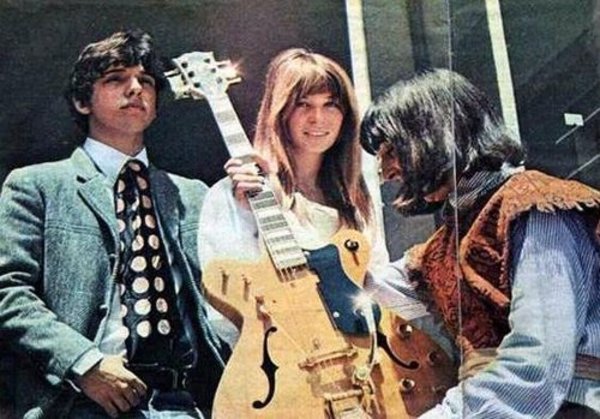
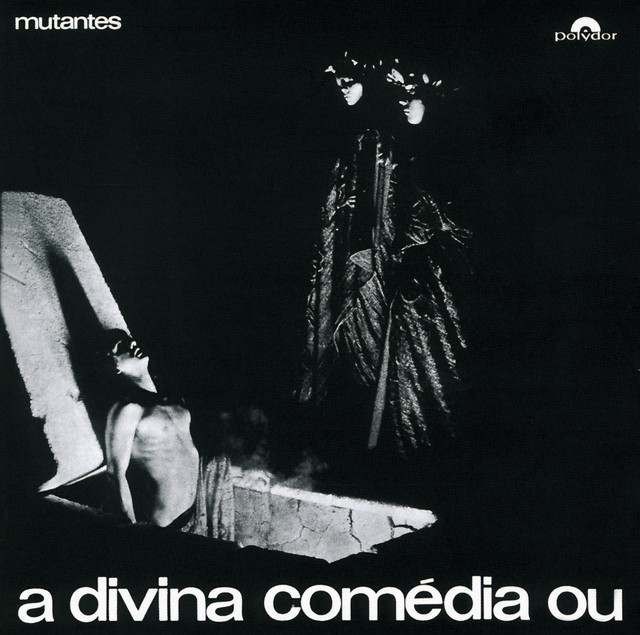
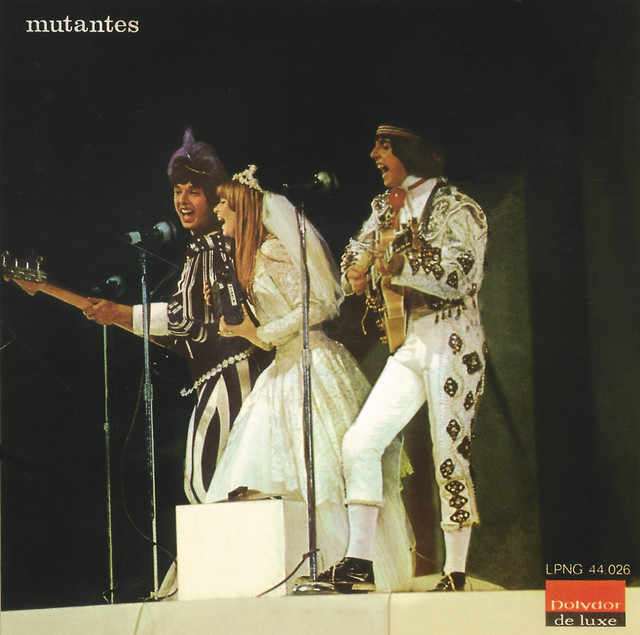
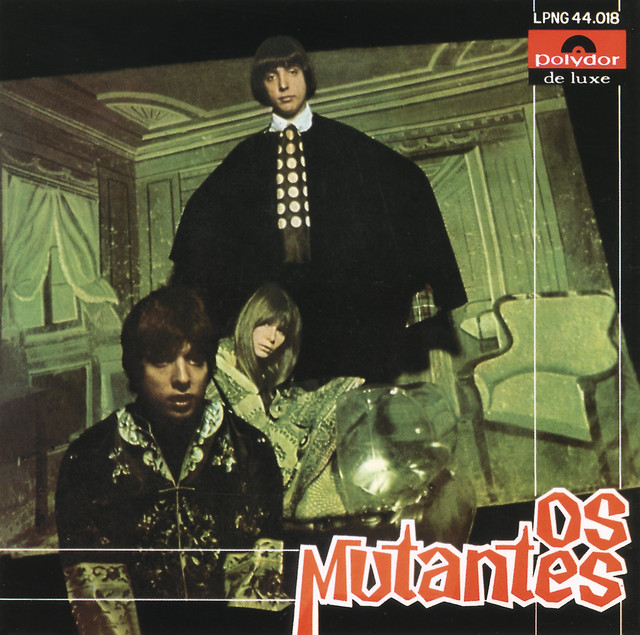
Sergio Dias got the Regvlvs Raphael prototype as a gift by Claudio Cesar Dias Baptista (CCDB), in 1966. He used this guitar in every Os Mutantes gig and studio record from around 1967 to 1971, when he sold this guitar to Henrique Bartsch, to pay for a trip to the United States. This guitar can be seen at the cover of Tropicalia (1968), Mutantes (1969) and the back cover of Jardim Eletrico (1971).
Album Usage
The Regvlvs Raphael has been featured on the following albums:


Genre Usage
Based on how artists on Equipboard use this gear, it is most commonly found in the following genres.
More Regvlvs Hollowbody Electric Guitars
-m.webp?v=1784439945)
$549.00 - $706.78
in Hollowbody Electric Guitars Rank


-m.webp?v=1784386644)
$722.00 - $813.11
in Hollowbody Electric Guitars Rank


-m.webp?v=1784386724)
$544.00
in Hollowbody Electric Guitars Rank


$3,999.99 - $4,299.99
in Hollowbody Electric Guitars Rank


-m.webp?v=1784333723)
$460.00
in Hollowbody Electric Guitars Rank

.png?v=1784329102)

-m.webp?v=1784439347)
$1,850.00 - $3,799.99
in Hollowbody Electric Guitars Rank


$705.94 - $925.00
in Hollowbody Electric Guitars Rank


$890.00 - $1,059.00
in Hollowbody Electric Guitars Rank

.jpg?v=1783959268)


$890.00 - $999.99
in Hollowbody Electric Guitars Rank


$5,970.00 - $7,001.83
in Hollowbody Electric Guitars Rank


$2,095.00 - $3,799.99
in Hollowbody Electric Guitars Rank

.png?v=1784414220)

$699.00 - $799.00
in Hollowbody Electric Guitars Rank


$2,385.37 - $3,999.99
in Hollowbody Electric Guitars Rank


$1,329.00 - $5,199.00
in Hollowbody Electric Guitars Rank


-m.webp?v=1784439666)
$1,525.00 - $1,899.99
in Hollowbody Electric Guitars Rank


$4,299.00 - $6,750.00
in Hollowbody Electric Guitars Rank

$2,194.45 - $2,699.00
in Hollowbody Electric Guitars Rank

$562.50 - $849.99
in Hollowbody Electric Guitars Rank


$817.53 - $999.00
in Hollowbody Electric Guitars Rank

.jpeg?v=1770759918)

$890.00 - $999.99
in Hollowbody Electric Guitars Rank


-m.webp?v=1784331952)
$2,404.00
in Hollowbody Electric Guitars Rank


$1,169.99 - $1,599.00
in Hollowbody Electric Guitars Rank


$874.65 - $1,019.00
in Hollowbody Electric Guitars Rank


$967.05 - $1,599.99
in Hollowbody Electric Guitars Rank


$499.99
in Hollowbody Electric Guitars Rank

$2,159.99 - $2,899.99
in Hollowbody Electric Guitars Rank

$3,999.99 - $4,299.99
in Hollowbody Electric Guitars Rank


$11,500.00
in Hollowbody Electric Guitars Rank

.png?v=1784409024)


$3,250.00 - $3,899.99
in Hollowbody Electric Guitars Rank

$449.99 - $766.12
in Hollowbody Electric Guitars Rank

$2,119.00
in Hollowbody Electric Guitars Rank

$849.99 - $899.99
in Hollowbody Electric Guitars Rank

$4,499.00
in Hollowbody Electric Guitars Rank


$799.99
in Hollowbody Electric Guitars Rank


$750.00
in Hollowbody Electric Guitars Rank


.jpg?v=1784329102)


$400.00
in Hollowbody Electric Guitars Rank
Community setups


Similar


Gear Guides







Most Popular Hollowbody Electric Guitars
Most Popular Brands
-
Added to Equipboard on by
 alejandro_villalba
GearIQ 2564
-


