Table of Contents

Equipboard
Equipboard is the world's largest community of artists and their gear. Read our review process.
We are reader-supported. When you buy through links on our site, we may earn an affiliate commission. Learn more.
Our Picks

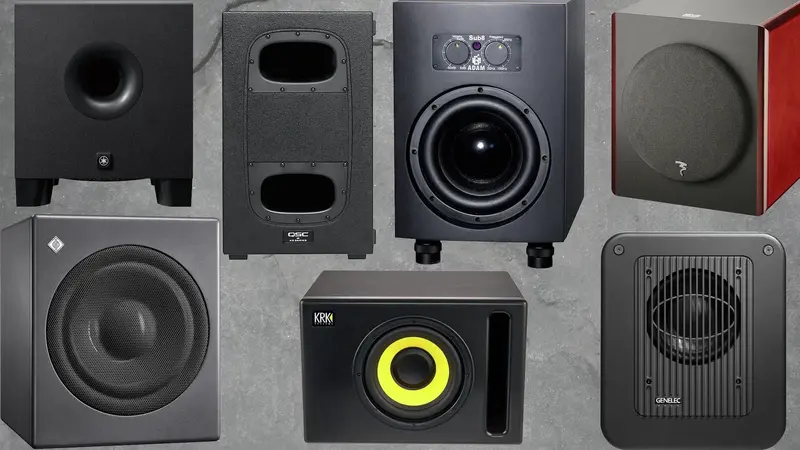
KRK S8.4 8" Powered Studio Subwoofer
Best Budget Pick: The KRK S8.4 delivers remarkable performance at an accessible price point, making proper bass reproduction attainable for producers on limited budgets.
Read more


Best for Small Home Studios: The Yamaha HS8S blends the iconic accuracy of the HS series with substantial low-end extension in a package that works beautifully in modest spaces.
Read more
Best All-Around Option: The Adam Audio Sub8 offers remarkable versatility with its precise sound character and flexible connectivity options that suit various applications.
Read more-l.webp?v=1783864846)
Best for Professional Applications: The Genelec 7350A represents the pinnacle of monitoring precision with its intelligent room adaptation and uncompromising build quality.
Read more


Best for Audiophile Listening: The Focal Sub6 elevates critical listening with its extraordinary definition and musicality, revealing low-frequency subtleties lesser subwoofers miss entirely.
Read more
Best for Professional Studios: The Neumann KH 750 takes monitor-grade precision to new depths with its sophisticated DSP and impeccable German engineering.
Read more
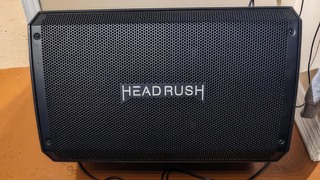
QSC KS112 2000W 12 inch Powered Subwoofer
Best for Live Performance: The QSC KS112 combines road-ready durability with impressive output in a compact, portable package that works for venues of all sizes.
Read moreEver notice how movie theaters shake your entire body during intense action scenes? Or how that bass line in your favorite song hits differently when played on a great sound system? That's the power of a quality subwoofer at work. Whether you're producing tracks in your home studio, watching movies, or just enjoying music, the right subwoofer can transform your listening experience completely.
This guide will help you choose the best subwoofer for your setup, no matter your goals or budget. We'll break down everything from technical specifications to practical considerations, ensuring you make an informed decision that elevates your sound without breaking the bank or annoying your neighbors.
What Does a Subwoofer Do?
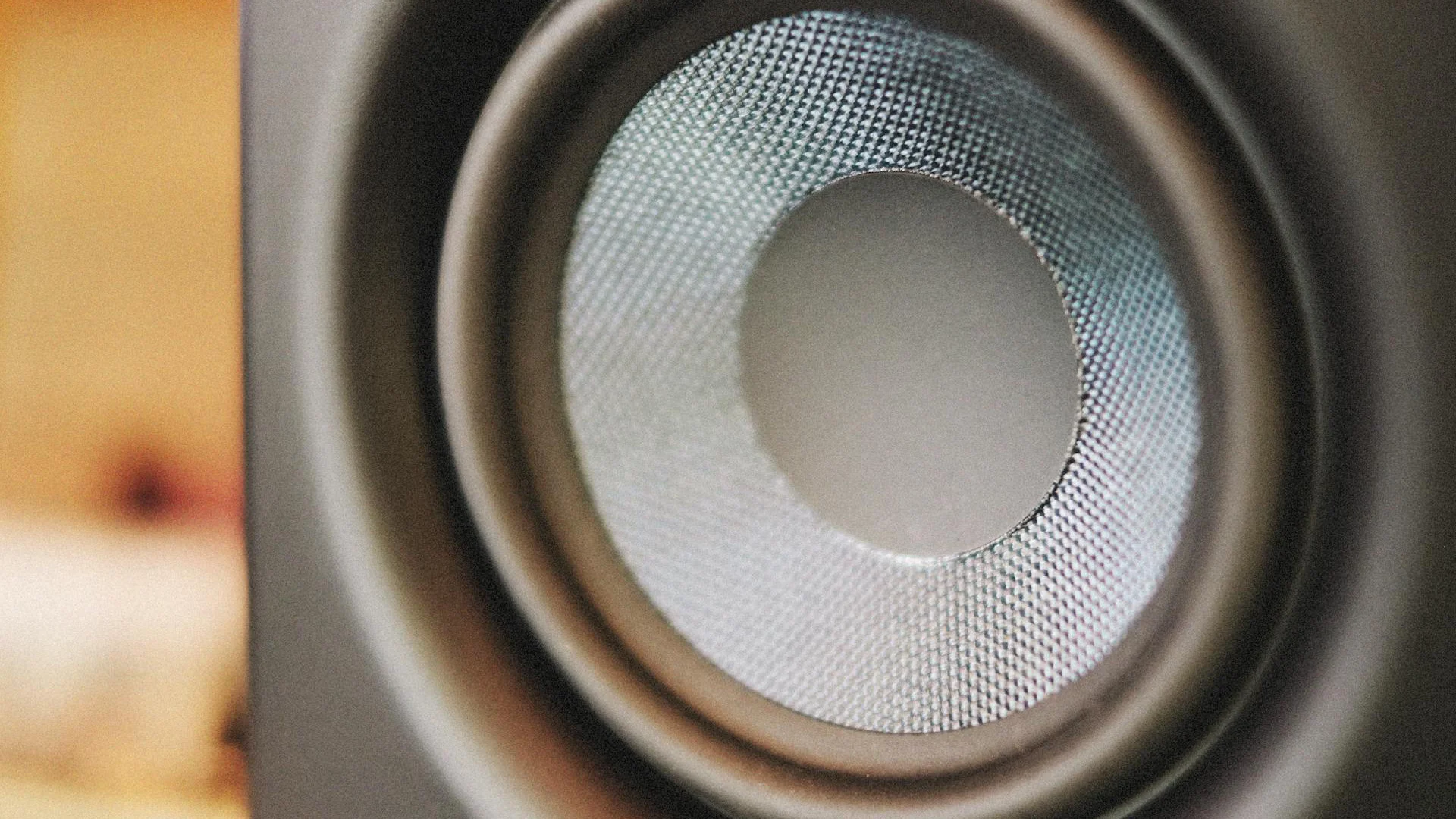
A subwoofer is a speaker designed specifically for low-frequency audio reproduction, usually below 100Hz. While your regular speakers might play sounds across the entire frequency spectrum, they often struggle with the deepest bass notes. That's where subwoofers come in, handling those growling bass guitars, booming kick drums, rumbling movie explosions, and other low-end sounds that add richness and dimension to audio.
Think of your audio system like a team: your main speakers handle the melody and most instruments, while the subwoofer works exclusively on the foundation. This specialization allows each component to excel at its specific job rather than trying to do everything adequately.
Adding a dedicated subwoofer to your setup offers several advantages:
Enhanced listening experience: By accurately reproducing low frequencies, subwoofers add depth and realism to music, movies, and games. You don't just hear the bass; you feel it.
Improved main speaker performance: When your main speakers aren't straining to produce low frequencies, they can focus on delivering clearer mids and highs with less distortion.
Better mixing decisions: For producers and engineers, a subwoofer reveals low-frequency content that might otherwise go unnoticed, helping you create more balanced mixes that translate well across different playback systems.
Increased system headroom: By offloading bass reproduction to a dedicated unit, your overall system gains efficiency and can play louder without distorting.
Key Factors to Consider
Choosing the right subwoofer involves understanding several important factors. Let's break these down into manageable nuggets to help narrow your search.
Use Case
The perfect subwoofer for a recording studio might be completely different from one ideal for a home theater or live performance rig. Your primary use will dictate many other considerations.
Studio Mixing
For production work, accuracy trumps volume. You'll want a subwoofer that delivers precise, tight bass without exaggeration. Look for models specifically marketed as "studio" or "reference" subwoofers. They should have flat frequency response and minimal distortion to ensure your mixes translate accurately to other systems.
Home Listening
For casual music enjoyment, you have more flexibility. While accuracy is still important, you might prefer a subwoofer that adds a pleasant warmth or "weight" to your music. Many audiophile-oriented subwoofers balance accuracy with an engaging listening experience.
Home Theater
Movie soundtracks often contain dramatic bass effects that extend to very low frequencies. A home theater subwoofer should be capable of handling these demanding passages without distortion, potentially reaching lower frequencies than music-focused models.
Live Performance
Gigging musicians and DJs need subwoofers that can deliver substantial volume while withstanding the rigors of transport and setup. Durability, portability, and raw output power become more important considerations.
Room Size
The physical space where you'll use your subwoofer plays a crucial role in your selection. Using an undersized subwoofer in a large room is like trying to fill a swimming pool with a garden hose; it simply can't provide enough output for the space.
Small Rooms (under 150 sq ft): In compact spaces like bedrooms or small home studios, an 8" or 10" subwoofer typically provides sufficient bass without overwhelming the room. Too much subwoofer in a small space creates boomy, muddy bass that obscures rather than complements.
Medium Rooms (150-300 sq ft): Living rooms and mid-sized studios generally pair well with 10" or 12" subwoofers that offer more output capability while maintaining control.
Large Rooms (over 300 sq ft): Spacious areas require subwoofers with serious output capability. Look for 12" or larger drivers, higher power ratings, and possibly multiple subwoofers to evenly distribute bass throughout the space.
Power and Wattage
When examining power specifications, you'll encounter two different measurements that can be confusing:
RMS Power: This represents continuous power handling and gives you the most realistic indication of a subwoofer's capabilities. Think of RMS as the power a subwoofer can handle during normal, everyday use. This is the more important number to consider.
Peak Power: This measures maximum power handling during short bursts. While impressive on paper, peak power ratings are less relevant to real-world performance. Manufacturers sometimes inflate these numbers for marketing purposes.
For home listening or small studios, subwoofers with 100-300 watts RMS generally provide sufficient output. Larger spaces or more demanding applications might require 300-1000+ watts RMS.
Frequency Range
The frequency range specification tells you how low (and sometimes how high) a subwoofer can play. For most users, the lower limit is more important, as it indicates how much genuine deep bass you can expect.
Most music contains bass content down to about 30-40Hz, while movie effects sometimes extend below 20Hz. A subwoofer that reaches 20-25Hz will reproduce virtually all audio content, though subwoofers with higher low-frequency limits (30-35Hz) still handle most musical bass effectively.
The upper frequency range (often around 150-200Hz) matters for proper integration with your main speakers.
Driver Size
The physical diameter of the subwoofer's cone affects its capabilities:
8" Drivers: Offer precise, articulate bass that works well for music production in smaller spaces. They excel at reproducing fast bass lines with clarity but may not deliver the deepest notes.
10" Drivers: Provide a good balance between precision and depth, making them versatile for both studio and home use in medium-sized rooms.
12" Drivers: Deliver more powerful low-end extension, suitable for larger rooms and applications requiring substantial bass output like home theaters.
15"+ Drivers: Generate maximum output and lowest frequencies but require more space and power. These are typically found in dedicated home theaters, large venues, or professional applications.
Enclosure Type
The cabinet design significantly impacts how a subwoofer performs:
Sealed Enclosures
Also called "acoustic suspension" designs, these closed boxes provide tight, accurate bass with excellent transient response. They tend to roll off more gradually at lower frequencies, maintaining composure even when pushed hard. They're often preferred for critical listening and studio applications where precision matters more than maximum output.
Ported Enclosures
These incorporate a port or vent that enhances efficiency and low-frequency output. They can play louder with the same power input but may sacrifice some precision, especially near the port tuning frequency. They're popular for home theater and general listening where impact and volume are priorities.
Passive Radiator Designs
These use an unpowered "passive" cone alongside the active driver to extend bass response without a traditional port. They offer a middle ground between sealed and ported designs in many respects.
Bandpass Enclosures
These complex designs place the driver between two chambers to boost output within a specific frequency range. They can deliver impressive volume but often at the expense of accuracy, making them less common in high-quality audio applications.
Connectivity
Ensuring your subwoofer can properly connect to your existing equipment is essential. Different connection types serve different systems:
XLR: Professional balanced connections found on studio equipment. They reject noise and allow for longer cable runs without signal degradation. Ideal for studio environments.
TRS/Quarter-inch: Another balanced connection option common in studio gear, particularly on more affordable equipment.
RCA: Unbalanced connections found on consumer audio equipment like AV receivers. Most home audio subwoofers offer these connections.
Speaker Level: Some subwoofers accept direct connections from amplifier outputs, useful when integrating with systems that lack dedicated subwoofer outputs.
Wireless: A growing number of subwoofers offer wireless connectivity options, which can simplify placement in difficult rooms.
Controls and Features
Modern subwoofers include various controls that significantly impact integration with your existing system. The adjustable crossover lets you determine precisely where your main speakers hand off bass duties to the subwoofer, ensuring seamless frequency response across your system. Phase controls align the subwoofer's output timing with your main speakers, preventing cancellation issues that weaken bass response. Most quality subwoofers include independent volume controls for balancing bass levels with your main speakers, creating a cohesive sound. Many models now feature energy-saving auto-standby functionality that activates during periods of inactivity. Higher-end options might include room correction capabilities, remote controls for adjustment from your listening position, and multiple savable presets for different content types like music, movies, and gaming.
Budget Considerations
Subwoofers span various price ranges, each offering different performance levels. Entry-level models ($100-$300) provide basic bass reinforcement suitable for casual listening in smaller spaces, though they may have limitations in build quality and precision. Mid-range options ($300-$700) deliver significant improvements in sound quality and features, with most home users finding their sweet spot in this category. High-end subwoofers ($700-$1,500) offer professional-grade performance with refined sound reproduction and advanced features appropriate for serious home theaters and studios. Premium models ($1,500+) employ the finest materials and cutting-edge technology for exceptional performance in professional installations and audiophile systems. While higher investment typically yields improvements in distortion levels, bass extension, and overall refinement, diminishing returns apply beyond the mid-range price point.
Common Subwoofer Mistakes to Avoid
Even the finest subwoofer won't perform well if implemented poorly. Here are common mistakes to avoid:
Choosing the Wrong Size for Your Space
Buying an overpowered subwoofer for a small room creates more problems than benefits. The excessive bass energy can create boomy, muddy sound that masks musical details rather than enhancing your listening experience. Conversely, an undersized subwoofer in a large space will strain to fill the room, potentially leading to distortion as you increase the volume trying to compensate.
Neglecting Room Placement
Subwoofer placement dramatically affects performance. Corners amplify bass output but can exaggerate room resonances. The standard "crawl test" remains the most reliable method for finding optimal placement: temporarily place the subwoofer at your listening position, then crawl around the room's perimeter listening for where the bass sounds smoothest and most balanced. That spot becomes your subwoofer location.
Incorrect Crossover Settings
Setting the crossover frequency too high makes bass locatable rather than omnidirectional, defeating the integrated soundstage you're trying to create. Setting it too low creates a gap in your frequency response where neither the main speakers nor the subwoofer adequately covers certain frequencies. Generally, the crossover should be set at or slightly below the point where your main speakers naturally roll off their bass response.
Improper Level Calibration
A properly calibrated subwoofer should seamlessly blend with your main speakers, not call attention to itself. Many users set their subwoofers too loud, creating an unbalanced sound where the bass overpowers other elements. The goal is integration, not domination; you should notice your subwoofer most when you turn it off and suddenly miss the foundation it was providing.
Ignoring Phase Alignment
When your subwoofer and main speakers operate out of phase, they can partially cancel each other out in the crossover region. This creates weak, inconsistent bass. Experiment with your phase control while playing bass-heavy content, listening for the setting that produces the fullest, most consistent low end.
Over-relying on Bass During Mixing
For studio applications, an improperly calibrated subwoofer leads to poor mix decisions. If your monitoring system exaggerates bass, you'll compensate by reducing low frequencies in your mix, resulting in thin-sounding productions on other systems. Conversely, if your subwoofer is anemic, you'll boost bass too much, creating boomy mixes. Regular reference checks on different systems help avoid these pitfalls.
Top Subwoofers
Let's look at top performers for different needs and situations. These recommendations are based on extensive research, user feedback, and performance characteristics.
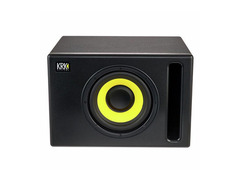
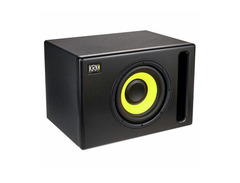
KRK S8.4 8" Powered Studio Subwoofer
5.0 (1)
The Compact Powerhouse









Average Price: $359
Budget/Beginner
$599
$1500+
Budget
Standard
High-end
- Compact size fits perfectly in small to medium rooms
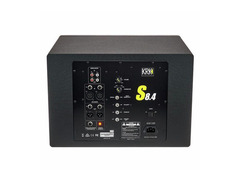
- Multiple inputs with selectable crossover frequencies for versatility
- Tight, punchy lows without port noise or resonances
- Sturdy build quality and solid construction
- See 4 more
- Bass not as clean as some higher-end models
- Heavier and taller than expected, may require additional space
- Packaging can be prone to damage during shipping
The fourth-generation KRK S8.4 offers significant improvements over its predecessors, with upgraded amplification and refined acoustics that outperform expectations at its price point. Its intelligent design focuses on delivering maximum value where it matters most.
Performance Characteristics
The S8.4 produces tight, defined bass with exceptional transient response that captures fast-moving bass lines and kick drums with clarity. While not extending to the lowest octaves like more expensive options, it covers the critical range where most musical content lives with admirable accuracy. The redesigned Class D amplifier provides clean power with improved efficiency over previous generations.
Practical Features
Front-panel controls for volume and crossover frequency allow easy adjustments without awkward reaching behind the unit. The auto-standby feature conserves energy during inactive periods without requiring manual switching. Multiple input options including both balanced and unbalanced connections accommodate various studio setups, from professional interfaces to consumer-grade equipment.
Integration Capabilities
Designed to complement KRK's popular Rokit monitors, the S8.4 includes phase and polarity controls that facilitate proper blending with any monitoring system. The continuously variable crossover lets users dial in the perfect transition point, ensuring seamless frequency response across the full audio spectrum.


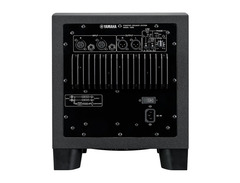
Yamaha HS8S
5.0 (26)
The Precision Performer


Average Price: $430
Budget/Beginner
$599
$1500+
Budget
Standard
High-end
- Significant improvement in low-end detail when paired with Yamaha HS5 or HS7
- Smooth and rich sound, once properly tweaked
- Extends low-end frequency range down to about 30Hz
- High-quality build and materials, weighs over 30 pounds
- See 6 more
- Requires careful room treatment and placement for optimal performance
- Can produce rattling sounds at frequencies below 32Hz
- Overpowering in small spaces if not finely tuned
- Lacks a bypass pedal option
- See 1 more
The Yamaha HS8S continues the legacy of the famous white-coned monitors, delivering controlled bass response that helps producers make informed decisions. Its thoughtful design provides accurate low-frequency reproduction without overwhelming smaller rooms.
Sound Signature
The HS8S extends the famous Yamaha "truth" philosophy into the low-frequency domain. Rather than flattering your productions with enhanced bass, it reveals exactly what's happening below 100Hz. This honesty proves invaluable when making critical mix decisions, particularly for genres where bass balance makes or breaks a track. The tight, controlled response avoids the bloated sound that can mask problems in your low end.
Design and Features
An 8-inch front-firing woofer powered by a 150-watt amplifier provides ample output for near to mid-field monitoring applications. The continuously variable high and low-cut filters allow precise integration with HS series monitors or other studio speakers. Three balanced input options (XLR and TRS) alongside level controls facilitate flexible studio setups without requiring additional outboard gear.
Room-Friendly Operation
The relatively compact dimensions and front-ported design make the HS8S more forgiving of placement limitations than many alternatives. This consideration proves especially valuable in home studios where acoustic treatment and optimal speaker positioning often face practical constraints. The included feet effectively decouple the subwoofer from the floor, reducing unwanted vibration transfer.
See how artists use this








.jpg)
ADAM Audio Sub8
4.5 (8)
The Balanced Solution

Average Price: $934
Standard/Professional
$599
$1500+
Budget
Standard
High-end
- Exceptional sound depth and detail at lower volumes with ribbon tweeter
- Accurate and tight bass that enhances low-frequency mixes
- Compact design that fits well in various studio setups
- Seamless integration with ADAM Audio monitors for a cohesive sound
- See 5 more
- Known issues with quality control in newer subwoofer models
- Intermittent crackling and popping sounds reported by some users
- Auto-standby feature may not function properly at lower volumes
- Loose-fitting PCB board in knobs can cause rattling
- See 1 more
The Adam Audio Sub8 balances professional performance with practical considerations, making it suitable for both critical listening and content creation. Its thoughtful design focuses on accurate reproduction without sacrificing musicality, appealing to both audio professionals and discerning enthusiasts.
Sound Characteristics
The Sub8 delivers articulate bass with excellent definition, revealing subtle details in complex low-frequency content. Its 8.5-inch woofer strikes an ideal balance between output capability and control, providing enough extension for most applications while maintaining the fast response necessary for accurate monitoring. The 160-watt PWM amplifier supplies clean power without coloration, preserving the neutrality required for professional applications.
Control and Connectivity
The included wireless remote allows adjusting volume and crossover settings from the listening position, facilitating accurate calibration without constant trips to the subwoofer itself. This seemingly small convenience significantly improves the setup process, especially in situations where optimal listening and subwoofer positions don't allow easy access to rear-panel controls. Multiple input options ensure compatibility with both professional and consumer equipment.
Placement Flexibility
Unlike subwoofers that perform well only in specific positions, the Sub8's controlled dispersion and phase adjustment capabilities allow successful integration in various room configurations. This adaptability proves particularly valuable in multipurpose spaces where dedicated acoustic optimization remains impractical. The front-firing design permits placement near walls without the dramatic bass loading that affects rear-ported designs.
See how artists use this
.jpg?v=1783852350)





.jpg)


Genelec 7350A
5.0 (4)
The Reference Standard
-s.webp?v=1783864846)
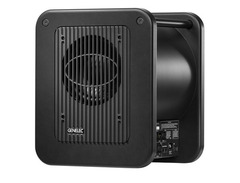
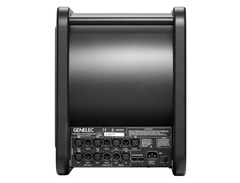
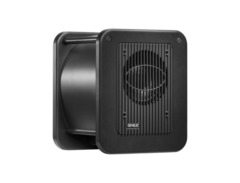
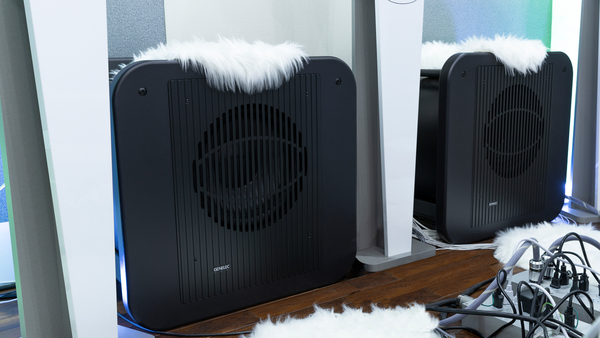
The Genelec 7350A incorporates decades of professional monitoring expertise into a compact yet powerful package suitable for demanding production environments. Its intelligent features solve real-world acoustic problems while delivering the transparency essential for critical listening tasks.
Smart Active Monitoring
The 7350A's standout feature is its SAM (Smart Active Monitoring) system, which analyzes room acoustics and automatically adjusts performance to compensate for problematic reflections and standing waves. This integration with Genelec's GLM software creates a precisely calibrated monitoring environment without requiring extensive acoustic treatment, particularly valuable in less-than-ideal spaces.
Sonic Performance
A proprietary spiral enclosure design eliminates internal standing waves while minimizing cabinet vibration, resulting in exceptionally clean bass reproduction. The 8-inch woofer delivers remarkable extension considering its modest size, with usable response reaching well below 30Hz. Sophisticated amplification provides ample headroom while maintaining the neutrality essential for professional applications.
Professional Integration
Beyond its acoustic capabilities, the 7350A includes comprehensive I/O options designed for professional workflows. Both analog and AES/EBU digital inputs accommodate various production environments, while the managed bass detection system works in tandem with Genelec monitors to create a coherent, full-range monitoring solution. These integration features save valuable studio time that would otherwise be spent on manual calibration.
See how artists use this







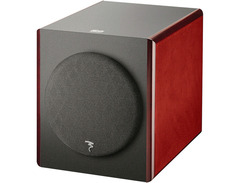
Focal Sub6
5.0 (4)
The Audiophile's Choice

Average Price: $1,443
Standard/Professional
$599
$1500+
Budget
Standard
High-end
- Provides clean, fast, and accurate bass without overwhelming the mix
- Significantly enhances the monitoring experience, revealing hidden details
- Perfectly complements Focal Solo6 and Twin6, maintaining sound coherence
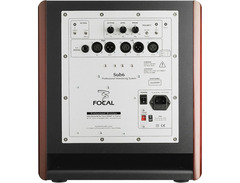
- Highly adjustable with volume, phase, and hi-cut filter settings
- See 4 more
- Grill design could be improved; recommended to remove
- Expensive purchase that may not fit all budgets
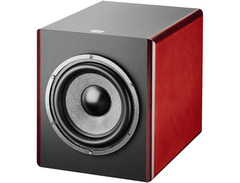
The Focal Sub6 represents the convergence of professional monitoring precision with audiophile sensibilities. Its sophisticated design prioritizes musical enjoyment alongside technical accuracy, making it ideal for critical listening scenarios where emotional connection matters alongside analytical clarity.
Sound Quality
The Sub6 reproduces bass with remarkable nuance and texture, revealing the artistic intent behind low-frequency content. Its 11-inch woofer offers the perfect balance between the nimbleness of smaller drivers and the authority of larger ones. Bass notes start and stop with exceptional precision, avoiding the smearing effect that plagues lesser subwoofers. This controlled yet musical presentation complements audiophile speaker systems without drawing attention to itself.
Technical Excellence
Custom-designed amplification and BASH technology ensure clean, linear power delivery across the frequency range. The carefully tuned bass reflex enclosure extends response while maintaining transient accuracy, a combination few subwoofers achieve successfully. Variable settings allow tailoring the sound to specific rooms and systems, ensuring optimal performance in various environments.
Aesthetic Consideration
Unlike utilitarian studio subwoofers, the Sub6 features elegant design that complements high-end living spaces. Available in multiple premium finishes, it satisfies visual demands alongside sonic ones, an important consideration for systems that reside in carefully curated environments rather than dedicated studio spaces.


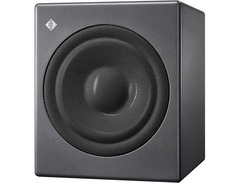
Neumann KH 750
5.0 (1)
The Studio Cornerstone

Average Price: $1,922
High-end/Boutique
$599
$1500+
Budget
Standard
High-end
- Exceptionally precise and tight sound, comparable to high-end reference systems.
- DSP integration enhances system cohesion and room correction.
- Ideal low-end extension for Neumann KH series monitors.
- Produces detailed and visceral deep bass without unwanted resonance.
- See 4 more
- Setup software is limited to newer Apple iPads, excluding older devices and other platforms.
- Initial calibration issues reported, requiring software updates for resolution.
- MA-1 software crashes on Windows 10, though generally easy to use.
- Requires an Ethernet connection for network integration.
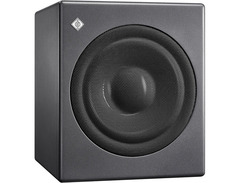
The Neumann KH 750 combines compact dimensions with extraordinary performance, making it ideal for professional environments where accuracy is non-negotiable. This 10-inch powerhouse delivers reference-quality bass that reveals every nuance in your productions.
Performance
The KH 750 reproduces low frequencies with remarkable neutrality and definition. Its mathematically modeled bass reflex system and powerful Class D amplification work together to deliver controlled, detailed bass without the exaggeration that can lead to poor mixing decisions. The subwoofer maintains its composure even during complex, dynamic passages, providing consistent performance regardless of playback level.
Connectivity and Integration
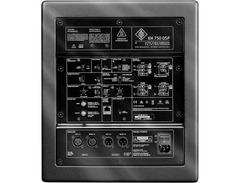
With both analog and digital inputs, the KH 750 integrates seamlessly into professional setups. Its four-position acoustical control adapts the subwoofer's response to various placement scenarios, while the flexible bass management system allows precise matching with your main monitors. The built-in delay feature solves time alignment issues that plague many studio subwoofer installations.
Build Quality
Constructed to meet Neumann's legendary standards, the KH 750 features robust internal bracing and premium components throughout. Its compact footprint belies the substantial engineering within, allowing placement flexibility without sacrificing performance. Every detail, from the rigid cabinet to the sophisticated electronics, reflects the uncompromising approach that has made Neumann a studio standard.

QSC KS112 2000W 12 inch Powered Subwoofer
The Performance Workhorse

The QSC KS112 answers the demanding requirements of live sound reinforcement with thoughtful engineering and professional-grade construction. Its intelligent design balances performance with practical considerations critical for touring applications.
Power and Projection
With 2000 watts of peak power and a carefully optimized enclosure, the KS112 produces impressive output levels that cut through in live environments. The 12-inch driver delivers punchy bass that maintains definition even at high volumes, providing the impact necessary for everything from spoken word reinforcement to electronic dance music. Advanced DSP prevents thermal overload during extended use, maintaining consistent performance throughout lengthy performances.
Portability Considerations
Despite its substantial output capabilities, the KS112 features ergonomic handles and a manageable weight that facilitates transportation between venues. Its durable exterior withstands the inevitable bumps and scrapes of road use without compromising structural integrity. When every pound and cubic inch matters in a touring vehicle, these practical considerations prove as important as sonic performance.
Versatile Application
Thoughtful features like cardioid deployment capability allow controlling bass dispersion in challenging acoustic environments. This advanced functionality, typically found only in more expensive systems, helps solve common problems like excessive stage rumble or feedback during live performances. The integrated pole socket facilitates various configuration options, including elevated placement above full-range speakers.
Recommendations: What Subwoofer Should You Get?
| Use Case | Recommended Model | Ideal For |
|---|---|---|
| Small Home Studios | Yamaha HS8S | Producers working in smaller spaces who need accurate bass without overwhelming the room |
| Professional Studios | Neumann KH 750 | Engineers and producers requiring reference-quality bass reproduction for critical listening |
| Budget Pick | KRK S8.4 | Entry-level producers and home users seeking improved bass on a limited budget |
| Audiophile Listening | Focal Sub6 | Discerning listeners who prioritize musical enjoyment alongside technical accuracy |
| Live Performance | QSC KS112 | Gigging musicians, DJs, and sound engineers requiring portable power and durability |
| All-Around Option | Adam Audio Sub8 | Users needing versatility for both content creation and entertainment purposes |
| Professional Applications | Genelec 7350A | Studios requiring advanced room adaptation capabilities and uncompromising quality |
Conclusion
Selecting the right subwoofer ultimately depends on understanding your specific needs, space constraints, and budget. The perfect subwoofer for a professional recording studio differs dramatically from one ideal for a home theater or portable DJ system.
Remember that proper setup matters as much as the subwoofer itself. Take time to experiment with placement, carefully adjust crossover settings, and calibrate levels for your specific room and system. A thoughtfully integrated subwoofer doesn't call attention to itself but rather creates a seamless, full-range listening experience where the bass feels like a natural extension of your main speakers.
Top Ranked Studio Subwoofers on Equipboard


$999.00 - $1,699.99
4.5 (5)
4.5 (5)

About the authors

S. Jino is an accomplished multi-instrumentalist and music producer based in Kolkata, India, distinguished by his self-taught mastery and unique blend of technical acumen and musical performance. His extensive experience was forged through hands-on dedication, starting with the full restoration of a broken guitar. Jino's capabilities span keyboards, pedals, and advanced digital production, reflecting a comprehensive skill set developed independently. As a significant contributor to the music scene, Jino regularly performs with worship bands and college ensembles. He has also established himself as a reliable and authoritative professional in freelance mixing, mastering, and original music creation. Inspired by the innovative sounds of Brian May and David Gilmour, and influenced by Kolkata's vibrant metal community, Jino is committed to the intricate art of vintage gear restoration and the continuous exploration of music and technology fusion. His current professional setup, featuring a meticulously restored nameless guitar, a Fender Player Strat, and a Boss Katana 50. Read more
New in Studio Subwoofers


$549.99 - $639.00
in Studio Subwoofers Rank


$5,995.00
in Studio Subwoofers Rank