

By Gear Experts
Table of Contents

Equipboard
Equipboard is the world's largest community of artists and their gear. Read our review process.
We are reader-supported. When you buy through links on our site, we may earn an affiliate commission. Learn more.
Our Picks

Pedaltrain Nano Plus Pedalboard
Most popular pedalboards in the world. Rails system is ingenious and keeps the board clutter-free. Expansive range available to suit any size pedal collection - from the affordable Nano to the behemoth Terra 42.
Read more


Very clever pedal mounting system with plates eliminated the need for Velcro and lets you make full use of pedalboard real estate.
Read more
Pedalboard and case combo. Very nice upgrade to an old Boss classic, with some minor caveats.
Read more
Another pedalboard option built into a hard case, with a 1700mA power supply. Because of its width & layout it can accomodate plenty of pedals.
Read more


SKB Cases PS-8 Powered Pedalboard
Straightforward all-Velcro pedalboard at a very good price point, with an integrated 500mA power supply. Perfect for small pedal collections.
Read more
Gator Cases G-TOUR Pedal Board
The 3 models in the lineup offer sm/lg/xl sized boards that are extremely simple, and come in nearly indestructible tour-worthy cases.
Read moreIn this guide, we'll help you research and buy your guitar pedal board. Whether you are a first time buyer just beginning your pedal collection, a seasoned veteran looking to upgrade your existing pedalboard, or just pedalboard-curious, we'll guide you through the process!
What Is a Guitar Pedalboard?
In its most basic form, a pedal board is essentially a flat surface that serves to hold your guitar effects pedals in place. Guitarists typically have a variety of pedals - from a tuner to a reverb pedal to fuzz pedals and much much more. If you think of your pedals like pieces of a jigsaw puzzle, the pedalboard is the table the puzzle is built on. The pedalboard allows you to configure the pedals, chain them together, power them, easily take them from one gig to the next, and make sure they stay put.
Why Do You Need a Pedalboard?
Once you've accumulated 3 or 4 guitar pedals, it's a good time to begin shopping for a pedalboard. Let's talk about some of the reasons a board is a good investment:
Stability - Whether you’re just starting out with a few effects pedals or have a collection of dozens, you will want a sturdy, portable surface where you can configure them once and not have to worry about it again. We’ve all been in the situation where our pedals are moving around all over the place, getting pulled around by guitar cables, or you accidentally kick one across the room.
Power Supply - Your pedals all need to be powered. Without a pedalboard chances are you are messing with a bunch of different power supplies. Some pedalboards come with their own power supply, which means you will simply need just one power outlet to power your entire board. Others provide a dedicated slot where you can tuck away your pedal power supply.
Portability - Having all your effects pedals together in one place and easily portable is one of the best parts of investing in a good pedalboard. You might be thinking “I don’t play any gigs, why would I need one?” Well, even if you don't gig, your home studio just feels 100 times more organized with a pedalboard. Your pedals will be arranged in aesthetically pleasing right angles, and your mess of cables will become nice and tidy. If you do play gigs or jam with your friends, having your pedals on a pedalboard makes your setup super portable and more compact. When you get to your gig or your friend’s house, you simply lay down your pedal board, plug your guitar in, and you are good to go!
Versatility - Pedal boards come in all sorts of shapes and sizes. There are models available to suit all budget ranges, and more importantly different sizes of pedal collections. You can always start out with a small pedalboard, and as your collection of effects pedals grows bigger, you can sell it on eBay or Reverb (or trade it in to your local guitar shop) and buy a bigger one!
Protection - Guitar effects pedals are not cheap. The average price of one pedal is around $150, but you could spend up to $800 for a rare/boutique/vintage pedal! No matter how many pedals are in your collection, chances are you’re at least looking at hundreds of dollars worth of equipment. And even though certain pedals like Boss for example are known for being built extra-tough, a pedalboard with a cover or a case provides protection and peace of mind. Keep in mind that not all pedalboards come with a case or cover, so you might need to buy one separately.
Types of Pedalboards
There are essentially two main types of pedalboards you can buy:
- A "One size fits all" board or
- A pedalboard from a manufacturer that offers a more modular system
Let's talk about the pros and cons of each:
"One size fits all" - These types of boards are generally more suitable for beginners. With them you don't necessarily have to do as much thinking or configuring. The Boss BCB-30X and Boss BCB-90X are good examples of this type of pedalboard. These types of boards tend to have fewer size options to choose from, sometimes are integrated into a hardshell case to maximize portability, and may have power supplies built in. In the Boss example, the 30X is your "small" option and does not come with a power supply, while the 90X is the "medium/large" option and does come with integrated power. The great thing about a "One size fits all" board is that there are less variables to think about. Say you have a maximum of 5 or 6 pedals and none of them have outlandish power requirements - you simply secure them to the board, plug in power, and you're done! Another advantage is that these kinds of pedalboards tend to have pretty budget-friendly price tags.
Modular - In this case the word modular is a bit misleading, since it implies you can add pieces to the pedalboard as needed. What we mean by modular this is there are manufacturers (like Pedaltrain) that offer the same basic pedalboard in numerous different width, length, and height configurations. You can get a Pedaltrain Nano if all you need is room for 4 pedals, or a Pedaltrain Terra if you have dozens of pedals to mount for a permanent studio installation. Obviosuly the price increases as the pedalboard gets larger, and in many cases with the modular option you need to figure out the best placement for your pedal power supply. And speaking of placement, the way the pedals mount to the board will differ between manufacturers. Since this is a more pro option, there's more to think about and plan ahead.
The Ever-Evolving Pedalboard: A Guitarist's Puzzle
When it comes to pedalboards, it's important to understand that they're often a work in progress. While there are guitarists who set up their board once and never touch it again, most of us find that our pedalboards change over time. Our tastes evolve, we discover new pedals, and our collections grow or shrink. This ongoing adjustment can make the pedalboard feel like a puzzle that's never quite finished.
Imagine getting a new pedal that's slightly larger than your others, or maybe it has jacks on the top instead of the sides. These small changes can prompt you to rethink your entire setup. Especially if you use a modular pedalboard like a Pedaltrain, you'll need to spend some time planning your cable routing for both signal and power. Using zip ties, Velcro, and other organizational tools becomes essential to keep everything tidy and functional.
One of the biggest considerations is power. If your pedalboard doesn’t come with a built-in power supply (and most modular ones don’t), selecting the right power supply can be a project on its own. And as your pedal collection changes, you might find yourself needing to rethink your power supply to accommodate new additions.
All of this means that owning a pedalboard is an ongoing hobby! You can set it once and forget about it, but most of us will enjoy the process of tinkering and making adjustments. It’s part of the fun of being a guitarist or bassist – constantly experimenting and finding the perfect setup that works for you. So, embrace the journey and enjoy the endless possibilities that come with owning a pedalboard.
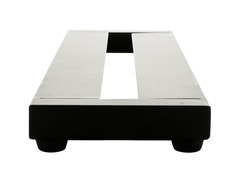
Pedaltrain Nano Plus Pedalboard
5.0 (35)






Average Price: $98
Budget/Beginner
$129
$250+
Budget
Standard
High-end
- Perfect size for small pedal setups, fits 4-6 pedals
- Lightweight yet durable construction
- Quality Velcro and cables included
- Comes with a sturdy, well-padded carrying case
- See 5 more
- Supplied feet too small, limiting underboard power supply space
- Soft case zipper fragile, offers limited protection
- Height too low for certain power supplies without modification
- Case can be a tight fit, challenging with pedal overhang/power leads
- See 1 more
Pedaltrain has set the industry standard when it comes to modular pedalboard systems. Professional touring musicians rely on Pedaltrain boards the world over, and for good reason. They have lightweight metal frames, yet are built to withstand the rigors of touring and take a beating.
The reason they're as popular as they are is because of how many options they offer - no less than a dozen different models across five series. Between the five series and the names of the pedalboards within each one, things can get a little confusing. Luckily, their website helps by splitting them out into 3 categories that make more sense:
- Ultraportable (up to 5 pedals)
- Standard (6-12 pedals)
- Big Rigs (12 pedals and up)
Nearly every Pedaltrain model offers the option of a soft zippered case, or tour-worthy hard case. Here's a handy chart which will help you select the perfect Pedaltrain model for your pedal collection:

Hook-and-loop (aka Velcro) is included with every Pedaltrain board; you attach one side to the underside of your pedals, and the other to the pedalboard's rails. You can use the rails to route all your cables and maintain and very clean and tidy looking board. They even include zip ties to tame any remaining unruly cables. You can mount a power supply underneath, though you'll have to make sure that your power supply fits under your chosen Pedaltrain board if you opt for the smaller flat ones (if you have any doubts they're pretty good about answering power supply questions).
In this short video by Pedaltrain, they give you an idea of how easy it is to set up your pedalboard:
Bottom Line: Pedaltrain pedalboards are hard to beat, provided you don't mind fastening your pedals down with Velcro. Whether you're looking for an entry-level pedalboard or you're a veteran with a monster rig, they've got plenty of options. They are also priced very reasonably, and the inclusion of a case is very nice.
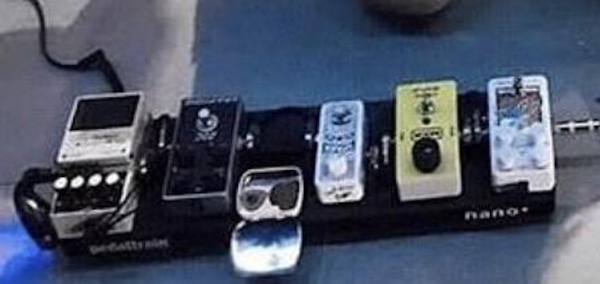
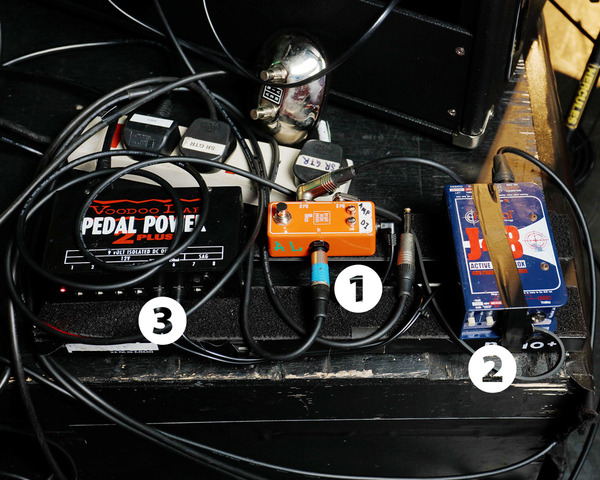
See how artists use this




.jpg)



Temple DUO 24
4.5 (6)


Average Price: $137
Standard/Professional
$129
$250+
Budget
Standard
High-end
- High-quality construction; made with top-shelf materials
- Lightweight and portable, ideal for travel
- Customizable with modular audio and power options
- Simplifies setup, potentially saving significant time
- See 4 more
- Quick-release plates can be costly
- Limited space underneath for larger power supplies
- Cable passthroughs may not align well with certain pedal layouts
- Pedal plate system can be frustrating and limiting
- See 1 more
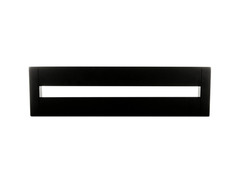
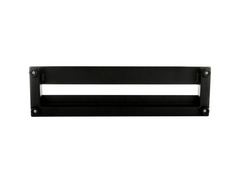
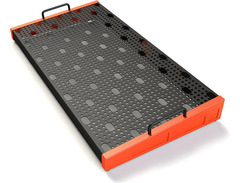
Canada-made Temple Audio pedalboards give you more possibilities to organize your pedals than any other board on this list. The most notable thing about Templeboards is the amazingly designed plate, which comes drilled with screw holes. The entire pedalboard is full of these screw holes, so you can place any size and shape of pedal virtually anywhere on the surface of the board. There's no need for adhesives like Velcro or tape, as you position each pedal individually with thumb-screw mounting plates. This system keeps the pedalboard really tidy and gives you plenty of flexibility.
This video runs through a basic setup of a Templeboard:
Another amazing thing about this pedalboard and the screw holes is that you can mount pedals and other devices on both sides of the plate. All Temple pedalboards are slanted, so the bottom side has a ground clearance between 1.25 and 2.25 inches; plenty of clearance to mount your power supply underneath.
They offer 7 sizes in the lineup, with the most popular one being the DUO 24 since it's pretty compact (roughly 1 ft. tall x 2 ft. wide) yet can house 10-12 pedals.
| Model | Width | Depth |
|---|---|---|
| SOLO 18 | 18.0in (458mm) | 8.5in (216mm) |
| DUO 17 | 17.0in (432mm) | 12.5in (318mm) |
| DUO 24 | 24.5in (622mm) | 12.5in (318mm) |
| DUO 34 | 34.0in (864mm) | 12.5in (318mm) |
| TRIO 21 | 21.0in (533mm) | 16.5in (420mm) |
| TRIO 28 | 28.2in (718mm) | 16.5in (420mm) |
| TRIO 43 | 43.2in (1098mm) | 16.5in (420mm) |
Besides functionality and practicality, Temple Audio pedalboards feature an impressive build quality. They're sturdy and lightweight due to being constructed of rigid high-grade aluminium, and feature quality handles and side rails. The side rails come in your choice of Temple Red, Vintage White, or Gunmetal Grey. You can also get custom colored rails for an additional $50.
Bottom Line: The Templeboard mounting system is pretty ingenious. However, unlike Pedaltrain which includes a travel case and velcro, the Temple Audio mounting plates and thumb screws are sold separately, as are their soft travel cases and hard flight cases. This makes them a slightly worse value than Pedaltrain, so it really comes down to which mounting system you prefer.
See how artists use this


Boss BCB-90X
5.0 (1)




Average Price: $253
High-end/Boutique
$129
$250+
Budget
Standard
High-end
- Increased space for up to ten pedals enhances usability
- Built-in power supply simplifies setup, eliminates need for additional power strips
- Hardshell case offers superior protection compared to soft cases
- Sleek, low profile design for discreet storage under furniture
- See 6 more
- Does not come with patch cables, contrary to previous models
- Foam insert customization can be challenging and aesthetically unpleasing
- Power cable routing can be problematic
- Precut foam favors BOSS pedals, making it less adaptable for others
- See 3 more
Available Sizes: Boss BCB-30X, Boss BCB-90X, Boss BCB-1000
Taking lessons from its predecessor the BCB-60, the Boss BCB-90X reintroduces itself with a promise of practicality and durability - and it's mostly successful.
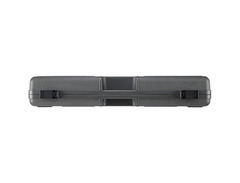
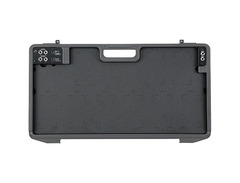
Upon unboxing, we were immediately impressed by the build quality. For starters, note that this is a pedalboard integrated into a hardshell case. The BCB-90X exudes sturdiness, aligning well with Boss's reputation for reliability. The protective case feels robust, ready to take on the rigors of travel and performance. However, the foam insert system - designed to securely hold pedals without Velcro - proved to be a bit of a mixed bag. While it does keep pedals snug, cutting the foam to fit different pedal shapes can be cumbersome, and any significant reconfiguration requires new foam pieces, which adds to long-term costs.
Feature-wise, the BCB-90X shines. The integrated power supply and increased pedal space are major upgrades from the BCB-60. We found it easy to switch out pedals, a boon for those of us who like to experiment with our setups. However, the absence of included patch cables, a staple in older models, was a letdown and added to the initial setup cost.
In terms of value, the BCB-90X is a mixed proposition. While it's more expensive than previous models, its durability and convenience may justify the price for serious musicians. Yet, those upgrading from the BCB-60 might feel the sting of the missing accessories and higher price point.
Bottom Line: The Boss BCB-90X is ideal for gigging musicians needing a reliable and adaptable pedalboard. However, if you're on a tight budget or frequently swap out pedals, be prepared for some extra costs and minor frustrations.
Behringer Pedal Board PB600
4.5 (14)

- Smart layout accommodates 6 mid-sized pedals efficiently
- Robust case design offers durability and good looks
- Enhances pedal organization, reducing clutter
- Versatile and considered an industry standard
- See 5 more
- Could benefit from better quality cables
- Metal clasps for the lid could be higher quality
- Some issues with screws (broken or cross-threaded) reported
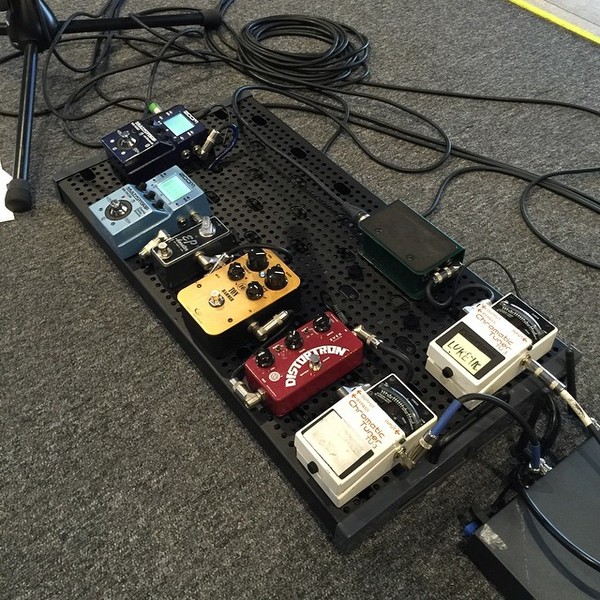
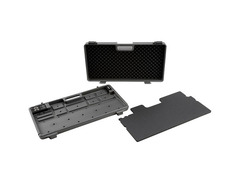
The Behringer PB600 pedalboard is a great value in the world of permanent-hard-cases. The PB600 comes with a built in power supply, mono and stereo outputs, and space for up to 6 regular sized stomp boxes (and possibly more if you get creative). All the components sit in a permanent hard-shell case with noticeably more room than some of its other peers. Its long "hotdog" design offers a lot of surface area for some oversized pedals as well. For a visual of what this board is capable of, here's an example configuration:
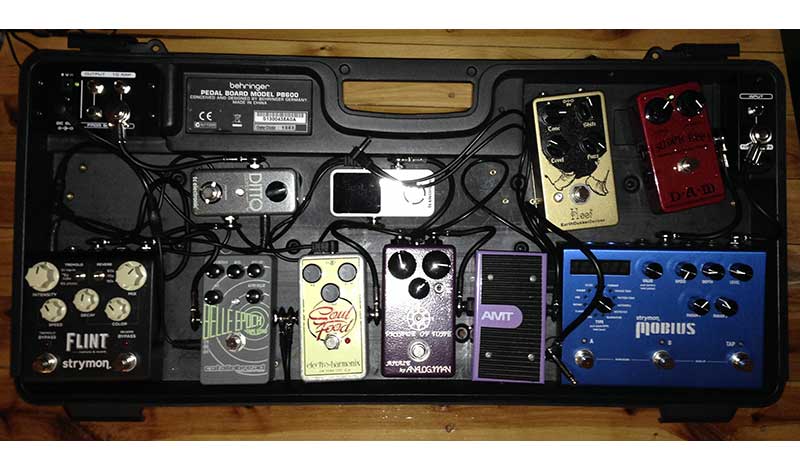
The hardcase is durable; the plastic is surprisingly thick and provides excellent protection from bumps along the way. Inside the case, pedals are held in place by foam padding which can be cut to accomodate awkwardly-shaped pedals.
The built in power supply provides a generous 1.7 A of power along with a daisy chain power cable for 6 pedals. Stereo outputs are a nice bonus, as is the inclusion of 1/4" patch cables.
Bottom Line: The Behringer PB600 is an attractive looking board and quite functional. It's a direct competitor to the Boss BCB-60, and improves on the Boss by providing 700mA more power for your pedals. It's a nice solution for beginners, and will survive a wild night almost anywhere. If you have a small to moderate stage rig, this board is a great option.
SKB Cases PS-8 Powered Pedalboard
4.5 (10)

Average Price: $185
Standard/Professional
$129
$250+
Budget
Standard
High-end
- Affordable and practical for budget-conscious musicians
- Easy to set up and customize
- Compact and lightweight for portability
- Sufficient space for multiple pedals, including larger ones
- See 5 more
- Included power supply often causes noise and hum
- Carry bag and zippers lack durability and protection
- Velcro loses stickiness, causing pedals to shift
- Power cables are awkwardly long and get tangled
- See 5 more
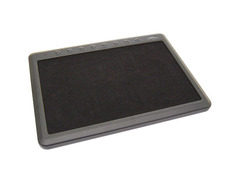
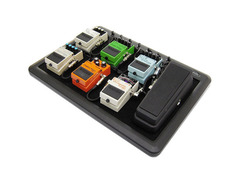
The SKB PS-8 is a straightforward pedalboard at a very good price point. The unique thing about its design is that all components exist internally to keep the top of the board sleek and uncluttered. The power supply lies buried deep in the heart of the board to give you added space on top.
Another unique feature of the PS-8 is that the entire surface of the board itself is covered with Velcro. This gives you a lot of area to work with, and you can arrange up to 8 standard sized pedals in any shape or pattern your heart desires.
The built-in power supply (9V DC providing 500mA) makes things easier, but we've heard from some folks that it can produce a buzz or hum in venues with poor wiring. Luckily it can be replaced with another power supply quite easily.
The included ballistic nylon gig bag is nice overall, but we wouldn't mind if it was a little more reinforced.
Bottom Line: All in all, the PS-8 is hard to beat for the price. If you have any power-hungry digital pedals, they might eat up the power supply's available 500mA rather quickly, so that's something to watch out for. Otherwise if you just want a clean and basic solution that's essentially a large Velcro pad with built-in power, this pedalboard fits the bill.
Gator Cases G-TOUR Pedal Board
5.0 (2)

Average Price: $244
Standard/Professional
$129
$250+
Budget
Standard
High-end
- Extremely sturdy construction provides top-notch protection for pedals
- Built-in wheels and multiple handles make transportation easy
- Shock-absorbing cushion inside keeps pedals safe during transport
- Plenty of room underneath the board for cables and other accessories
- See 6 more
- Heavy, especially when loaded with pedals
- Limited space for mounting power supplies underneath the board
- No pre-drilled holes for routing wires under the board
- Velcro strips require a lot of pressure to secure pedals, which can be cumbersome
- See 1 more
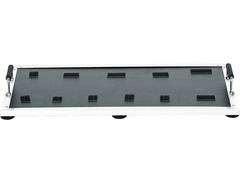
Here's one for the road warriors. The Gator Cases G-TOUR is a very simple pedalboard sitting in a very heavy-duty case. The case is really the main selling point here, which should come at no surprise since the folks at Gator know how to make very tour-worthy cases.
The Gator Cases G-TOUR lineup has 3 models: small, large, and extra-large, sized as follows:
| Model | Width | Depth |
|---|---|---|
| G-TOUR Small | 17in | 11in |
| G-TOUR Large | 24in | 11in |
| G-TOUR Extra-Large | 34in | 17in |
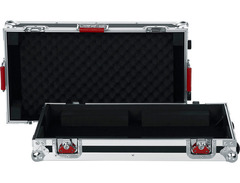
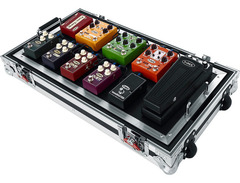
There are three pieces to this pedalboard/case combo: the top and bottom halves of the case, and the pedalboard itself which is just a flat surface with a very subtle downward angle. You can keep the pedalboard tucked inside one half of the case, or take it out and lay it on the floor by itself.
The pedalboard surface itself is as no-frills as they come. There is no included power supply, and no rails or slots for cable management. It truly is just a flat surface. Pedals can be secured to the board using Velcro. They include a small roll of 3M Dual Lock, which is great stuff.
While intuitive pedal mounting and cable routing is not its forte, you can make it your own by drilling your own holes if needed.
The price tag of the Gator Cases G-TOUR is rather steep, and what you are paying for here is the great design and ruggedness of the case. This thing looks and feels bulletproof, and it'll protect your precious pedal collection from anything you can throw at it. It's quite hefty, and fortunately the large and extra-large versions have wheels.
Inside, the case has a soft eggshell cushion on top which presses against your pedals when closed, protecting delicate components and keeping things from moving around.
Bottom Line: While we absolutely love this case + pedalboard combo, we must caution you that it's not for everyone. The price tag is a bit high, and you are definitely paying for the heavy-duty nature of the case. This is not the pedalboard to get if you're just looking for a home setup. Also keep in mind that you'll have to get a bit creative when it comes to routing and managing your cables, and there's no clever place to mount a power supply. If you can live with all that and demand the toughest case around to protect your pedals, the Gator Cases G-TOUR pedalboard is it.

A Note About Pedalboard Velcro...
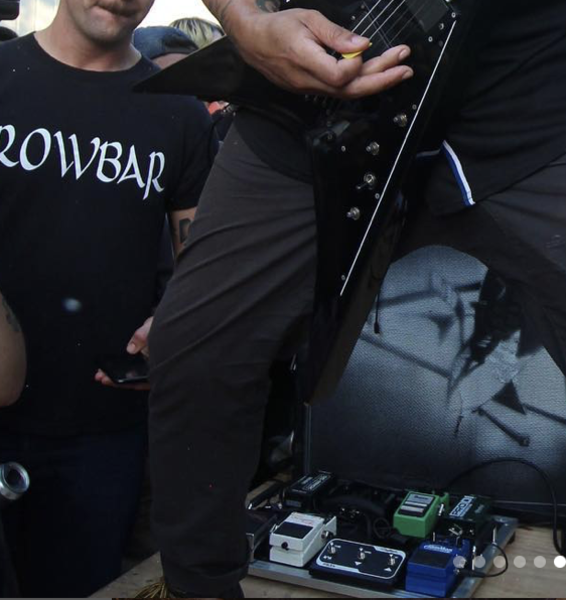
Several of the recommended pedalboards above come with Velcro strips to hold your guitar/bass effects pedals in place. One of the boards even has its entire surface covered in Velcro. Unfortunately, Velcro alone won't do the trick. Between guitar effect pedals that may weigh a lot, Velcro losing its "gripping" power, and your pedalboard being tossed around, there is a danger of your expensive pedals becoming detached from the pedal board surface.
To solve this issue, a company called Godlyke has made a Power-Grip Pedal Tape, which serves as a Velcro alternative to mount your pedals to your board. It looks like this:
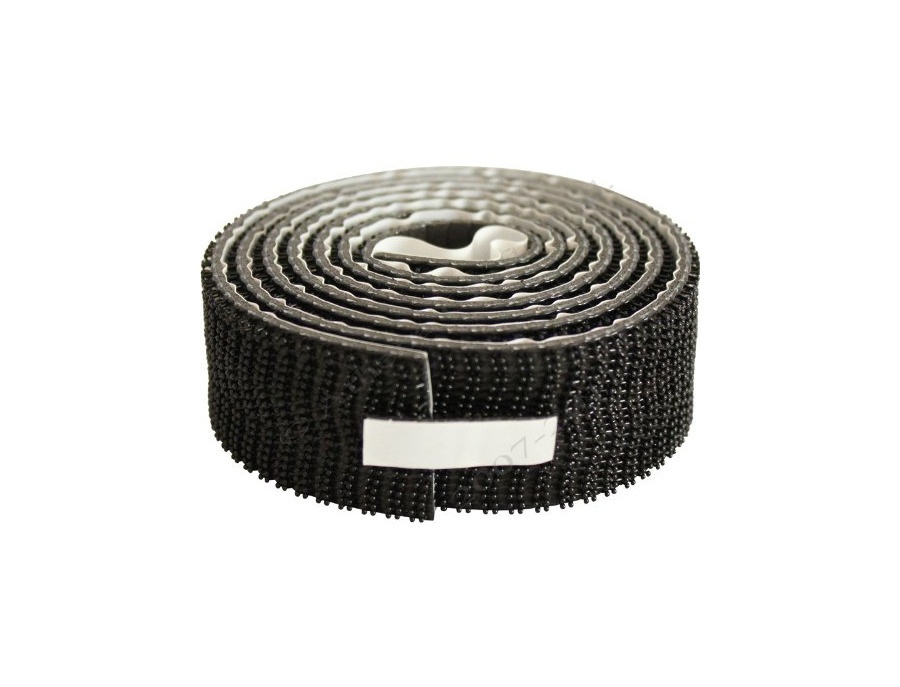
Once we made the switch from Velcro to Power-Grip Pedal Tape we never looked back. The grip it provides is so strong, it needs a screwdriver to be taken apart! This means you might have to put a little more elbow grease into taking your pedals off to rearrange them, but the added security and sturdiness that Power-Grip Pedal Tape provides is well worth it. It works great, and is a nice replacement to normal Velcro. Check it out for sure.
Top Ranked Pedalboards on Equipboard


-m.webp?v=1784213881)


Recent updates
Jun 26, 2024
We've audited this article and replaced the Boss BCB-60 with the newer Boss BCB-90X. We also removed the RockBoard Tres 3.1 due to lack of availability.
About the authors
Michael R. Pierce is the co-founder of Equipboard and a lifelong musician with over 25 years of experience as a guitarist and gear enthusiast. He blends solid music theory chops (thanks to formal training in guitar, piano, and trumpet) with real-world experience, always exploring and experimenting across genres like rock, blues, and hip-hop. Michael launched Equipboard in 2013 after graduating from The University of Texas at Austin, leveraging his unique blend of musical passion, technological acumen, and community building. His current go-to rig features a Fender American Original ‘50s Telecaster, Analogman King of Tone, Strymon Flint, and a Fender ‘57 Custom Champ. Read more
Giulio Chiarenza is the co-founder of Equipboard and a lifelong multi-instrumentalist with a deep passion for music gear. Born in Italy and raised in the U.S., he holds a Computer Science degree from The University of Texas at Austin and blends technical acumen with decades of hands-on experience across guitar, piano, drums, and electronic production. Early in his career, Giulio was signed to a San Francisco-based EDM label, releasing both remixes and original tracks. These days, he helps steer Equipboard’s vision while personally testing and reviewing gear. He's never too far from his go-to guitar: a vintage 1978 Fender Telecaster Custom. Read more
Comments
Sign Up or Log In to add comments

4934
We've audited this article and replaced the Boss BCB-60 with the newer Boss BCB-90X. We also removed the RockBoard Tres 3.1 due to lack of availability.






.webp)
.webp)