6 Best Pedal Power Supplies: Proven Power Providers


By Gear Experts

By Gear Experts
Table of Contents

Equipboard
Equipboard is the world's largest community of artists and their gear. Read our review process.
We are reader-supported. When you buy through links on our site, we may earn an affiliate commission. Learn more.
Our Picks

With rugged reliability, eight isolated outputs, and the versatility to satisfy just about any pedal's power requirement it's hard to recommend a better pedal power supply.
Read more


Visual Sound 1 SPOT Combo Pack
This budget friendly solution lets you daisy-chain your pedals together while only taking up a single power outlet. With its very budget-friendly price tag, this is an ideal solution for "bedroom guitarist" on a budget or if some hum and noise in your signal chain doesn't bother you.
Read more
Walrus Audio Canvas 8 Pedal Power Supply
Sleek design and build, delivers clean power to 8 pedals, but the brilliance is in the details. USB-C port included to charge your phone, and super helpful LED indicators throughout.
Read more
T-Rex Engineering Fuel Tank Junior
This well-built and compact unit by T-Rex has plenty of power for a maximum of 5 pedals. The Fuel Tank Junior is rock solid and dead quiet. If you want the cleanest power for your pedals but don’t quite have enough saved up for the Voodoo Lab, this is the one to get.
Read more

With 12 outputs and the ability to handle the most power-hungry pedals, the 1 SPOT Pro CS12 is versatile and a solid choice for large pedal setups.
Read more
Strymon's Zuma is the flagship of an expandable modular system which can grow with your needs and powers even the most power-hungry pedals with 500mA outputs.
Read moreIn this guide, we’re focusing on the best power supply to power your guitar and bass pedals. For a topic that seems relatively simple on the surface, choosing how to power your effects pedals actually has quite a bit of depth, and examining your pedal power situation as well as understanding your options can make all the difference between a very high quality “clean” signal, and a signal riddled with unwanted noise and hum. In this guide we’ll do some teaching, then make our recommendations for the best pedal power supplies.
The Basics: Why You Need a Power Supply for your Guitar Pedals
Let’s go through the main benefits for an effects pedal power supply:
- You’re sick of using batteries to power your pedals. Your pedals suck them dry before you’ve had time to buy new ones, and you don’t want to chance a dead battery at an inopportune time (like a live performance).
- Your current pedal power setup is a mess. You have two or three times as many cables as you have pedals, your pedal board is a spaghetti mess, and you’ve long run out of power outlets.
- There are unwanted noise issues in your signal chain. An unruly pedal in your setup is causing a hum, and your daisy chain of power is making it worse.
- Your different pedals have differing power requirements. You want a rig that just works and don’t want to constantly keep track of which pedals need what voltage.
As you can see, things can get complicated in a hurry. The right solution can ensure your pedal chain has adequate power and can accommodate any future pedals, your tone is clean and free of noise and hum, and your setup is nice and tidy regardless of if you’re a touring musician, or play at home for fun.
Pedal Power, Explained
There are several different factors you will have to consider to make sure your power supply and pedals play well together.
Voltage – It is critical to match the voltage from your pedal power supply to the voltage your pedals are designed for. Warning: If you power your pedals with a higher voltage than they were designed for, you will destroy your pedals! Also, if you have a pedal that was designed to work at a higher voltage, and you power it at a lower voltage, you will compress the sound. Pay attention to your pedals voltage needs, as many power supplies will have designated voltage outputs and others will have selectable voltage outputs.
Current – Make sure each output is capable of handling the draw, measured in milliamps (mA), of the pedal or pedals the output is powering. Look up the draw of your pedals and remember to consider the capacity of the power supply as a whole and per output, especially if you are powering more than one pedal from a single output. For these reasons, it is ideal to know your power requirements in advance of looking for a power supply, or at least estimate your future needs for your pedal board build. Keep in mind, analog pedals will generally have a much lower current draw than digital pedals, and the amount of current each pedal requires can vary dramatically. Also, we recommend having a healthy buffer in terms of power supply capacity over what your projected needs are to be confident the supply will be work appropriately and to give you some flexibility should your needs change over time.
Polarity – Alternating Current (AC) alternates polarity while Direct Current (DC) has a negative and a positive. Most pedals are DC center negative, although there are some popular exceptions. Make sure you consult your pedals instruction manuals to find out the polarity of your pedals.
Isolation – Unfortunately, if you use one output or a supply that is not isolated to power multiple pedals, sometimes you will get noise as a result. This is common when using digital pedals while daisy chaining. Ideally, isolate the power to all of your pedals, although solutions with fully isolated outputs tend to cost more. Generally, you can get away with combining power for certain types of pedals, like overdrives, from one output without noise. However, combining power from one output is usually not recommended for digital pedals and certain other pedal categories as they are more prone to noise. Isolation also can make your pedals sound more consistent than daisy chaining.
Other than that, make sure you have enough outputs to power your pedals and you should be able to select a good power supply for your needs.
Here's what you need to know:
- 90% of pedals require 9V DC, for which you can use a 9V DC “wall wart” power adapter or a 9 volt battery. Some pedals require more voltage; typically 12, 18, or 24 volts.
- If you daisy chain a bunch of pedals powered by a single adapter, make sure the sum of their current draw doesn’t exceed what the power adapter can provide.
- Don’t mix up AC and DC!
Pedal Power Supply Options
First of all you should know that there is no one perfect, best, or perfect one-size-fits-all solution. Each solution has pros and cons, and the one you choose will depend on your personal needs, what your current setup looks like, and of course your budget. In this guide we hope to arm you with the knowledge to properly diagnose your power needs, and make the best choice for you.
Battery Power
It’s important to understand that in terms of delivering clean power and minimizing noise and hum, the battery is best!
A chemical reaction inside the battery generates Direct Current, and the flow of current is as smooth and steady as it gets, having not gone through any conversion. That, and the battery is all by itself - it has a one-to-one relationship with your pedal, and is not being sent through any kind of chain.
On the plus side, batteries are the best kind of power for your pedals. The con is that you always need to buy news ones and carry around spares, and some pedals (like looper pedals) will deplete batteries extremely quickly. You also have to crack open your pedals each time you need to change the battery. Of all the guitarists and bassists we’ve ever met, about zero of them opt for a battery-only solution. It’s simply too impractical for most scenarios.
The Daisy Chain
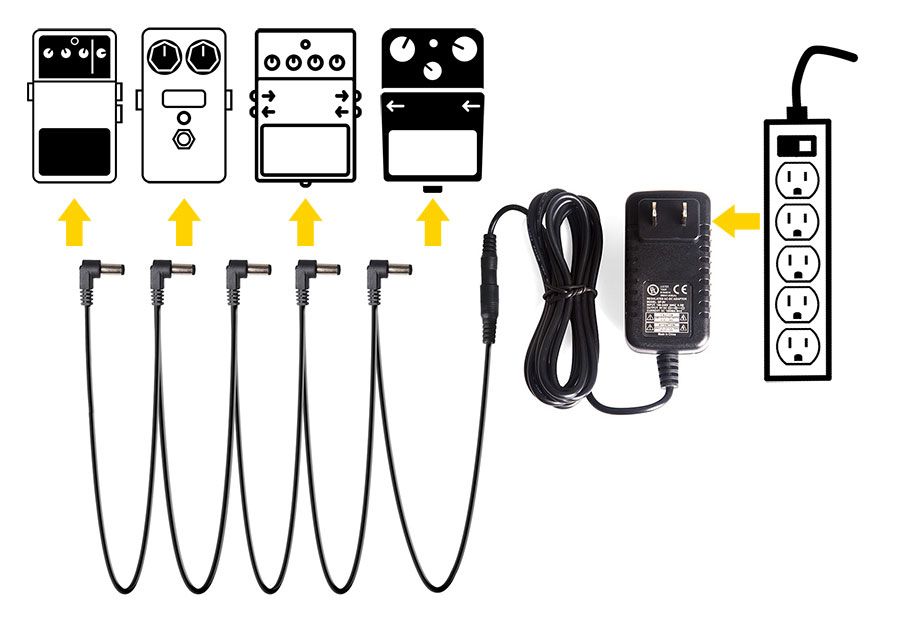
Daisy chaining is convenient, since you plug in a single power adapter into your power strip (thus only taking up one spot), and then you daisy chain as needed, with the same power cable providing power to all your pedals. This means no more dealing with dead batteries, no need for a long power strip, no need to carry around a wall wart for each pedal, and clean and tidy cable management, all at a fairly low cost.
When using a daisy chain to power multiple pedals, problematic noise due to ground loops is a common side effect. So, if powering all your pedals with batteries is on one end of the spectrum, using daisy chained power is on the other. If you compare the cost of a daisy chain setup to that of replacing batteries, the daisy chain solution will pay for itself many times over. It’s a great solution for small pedalboard setups, and pedals with uniform voltage requirements and relatively low current draws. It’s also a great budget option, but you might have to tolerate a noisy setup until you can save up for a better solution, which brings us to the next option.
Isolated Power Supplies
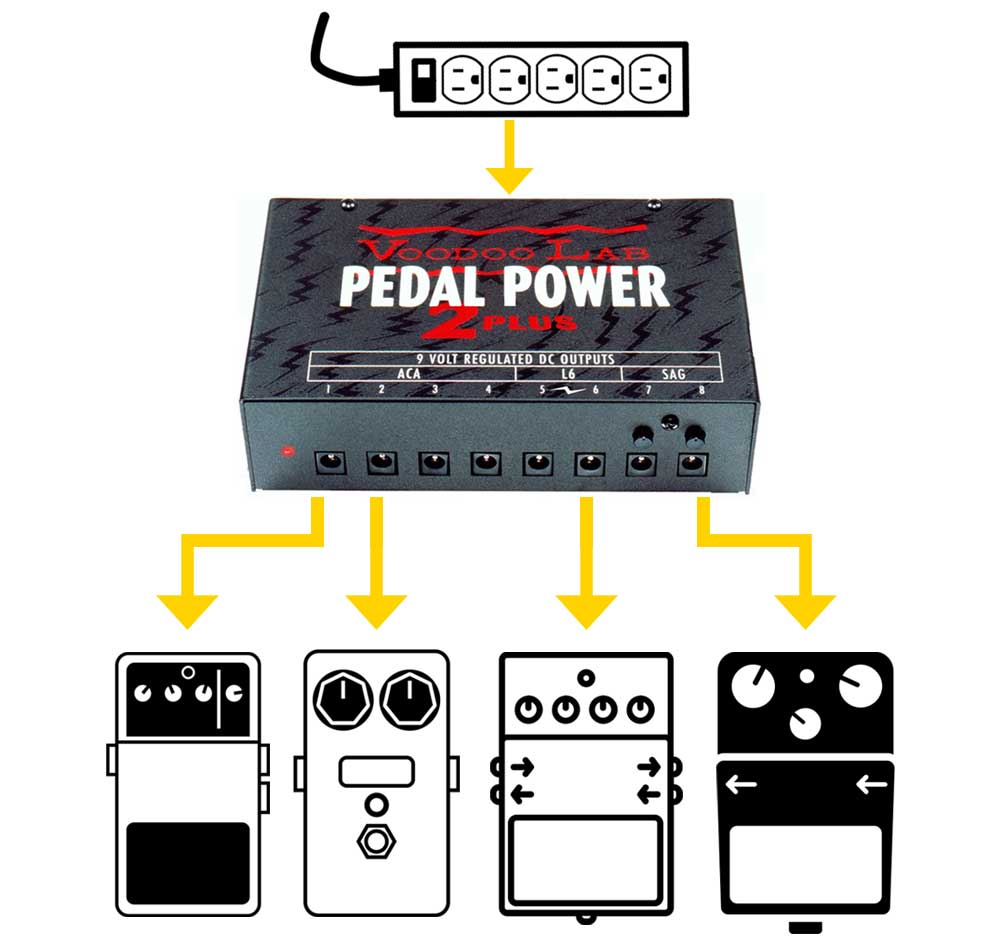
We can all agree that the best of both worlds would be the clean isolation of battery power, but the convenience of a daisy chain solution. This is where an isolated power supply comes in. The barrier to entry here is price, since these power supplies can cost a pretty penny. This is without a doubt the most sought after solution by touring pro guitarists and bassists.
MusicRadar offers a nice description of what an isolated power supply does:
An isolated power supply uses a transformer to keep each of its outlets completely electrically isolated, offering a separate clean power path to each pedal rather than a daisy-chain set-up, where the power flows from one pedal to the next.
Keeping each pedal’s power isolated from other pedals mitigates the noise and hum issues of a daisy chained setup. Isolated power supplies have numerous other advantages. They often include ways to power a variety of pedals, accommodating various voltages, AC and DC requirements, and even special features like voltage “sag” to emulate dying batteries (which some vintage wah, overdrive, and fuzz pedals respond well to).
Isolated power supplies also offer the advantage of portability, since they can oftentimes be tucked neatly underneath pedalboards. The majority of professional guitarists opt for an isolated power supply solution, since it’s really the best when it comes to portability, reliability, and convenience. An isolated power supply is decidedly the priciest of all the options, but in our research the majority of people advise saving up for one if possible.
In our case, testing consisted of seeing the power supplies for ourselves, examining the build quality, hooking up a few pedals and firing them up to make sure everything works accordingly.
We sincerely hope this is helpful and helps you not only learn about pedal power, but also make an informed buying decision.
Voodoo Lab Pedal Power 2 PLUS
5.0 (306)
Quiet, reliable power for up to 8 effects pedals.







- Isolated outputs reduce crosstalk and noise
- Powers a wide range of pedal voltages (9V, 12V, 18V)
- Durable and well-built, withstands abuse
- Low/no grounding noise, even in less ideal venues
- See 6 more
- Expensive compared to some other options
- Limited high current outputs (only 2 ports with 250mA)
- Some compatibility issues with specific pedalboard placements
- Wah pedal interference issue reported
- See 1 more
The Voodoo Lab Pedal Power 2+ Power Supply has become a bit of the industry standard workhorse when it comes to powering pedals. This is a true isolated power supply, eliminating the noise and hum that would ordinarily be brought about by ground loops or interaction between pedals.
The U.S.A.-made Voodoo Lab Pedal Power 2+ weighs roughly 2 lbs. and measures about 6 inches wide by 3.5 inches deep, with a height of 1.8 inches. This power supply is used and trusted on stages all over the world.
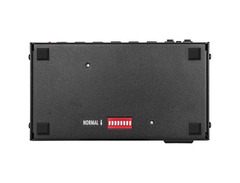
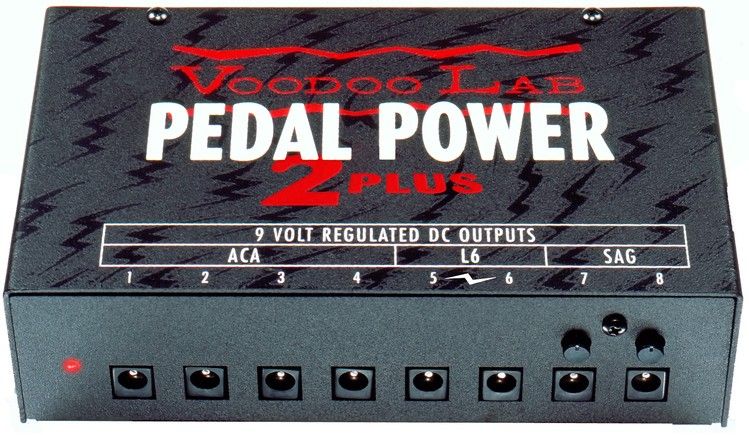
What you’re essentially getting here is power supply with eight outputs that are completely isolated, meaning that for “basic” use you can use it to power eight of your battery-operated effects pedals. Each of the eight inputs can be modified via a dip switch at the bottom of the unit, which allows the outputs to accommodate nearly any voltage/current combo. The outputs are laid out as follows:
All eight inputs can handle your straightforward 9V Boss PSA style pedal.
Inputs 1, 2, 3, and 4 can be switched to handle 12V Boss ACA pedals, and deliver 100mA current.
Outputs 5 and 6 can handle pedals with higher current requirement (250mA), and the DIP switch lets you pick between powering Boss Twin pedals, or Line 6 Modeling pedals.
Outputs 7 and 8 handle standard 9V pedals, and available controls let you “Sag” the voltage from 9V down to about 4V, emulating a dying battery for those vintage wah, overdrive, and fuzz pedals that work well with that.
There is a courtesy AC outlet , which is convenient if you have any effects that require AC power.
The Voodoo Lab Pedal Power 2+ can actually handle even more pedal types. If you have a pedal that requires 18V, you can purchase this Voodoo Lab PPY 18V Y cable to combine two 9V outputs to create an 18V supply. You can even join together two 12V outputs to power a 24V pedal.
We won’t go through every single voltage and current combination the Pedal Power 2+ can handle in this review, but if you want specifics, check the manual on Vodoo Lab's site.
The versatility the Voodoo Lab Pedal Power 2+ offers is only part of the reason for its popularity. The other, arguably more important part is that by providing isolated outputs, you’re assured of a clean, hiss-free signal.
Bottom Line: All in all it’s very difficult not to recommend the Pedal Power 2+. It might be one of the best purchases you could make for your sound, serving as the solid backbone and delivering clean power to your pedal collection.
See how artists use this







Visual Sound 1 SPOT Combo Pack
4.5 (43)
An inexpensive way to power your pedals.




- Eliminates hum and noise, even with multiple pedals
- Saves money on batteries with efficient power supply
- Flexible daisy chain reaches front to side mount pedals easily
- Durable, with users reporting years of reliable use
- See 6 more
- Wall plug may fit loosely in socket
- Daisy chain plugs can be bulky, affecting pedalboard layout
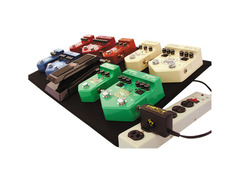
Luckily, a very economical solution exists that will allow you to power all of your pedals, and not have to carry around a bag full of batteries, or multiple adapters and a power strip. This solution (which we talked about above) is a daisy chain, and the most popular one is the Truetone 1 SPOT (for those of you that may have heard it by a different name, the company used to be called Visual Sound). The Truetone 1 SPOT comes in two primary configurations: one is the Truetone 1 SPOT 9V DC Adapter by itself by itself. The other is the combo pack, which is the one we’ll refer to more since it’s an all-in-one solution that comes with everything you need.
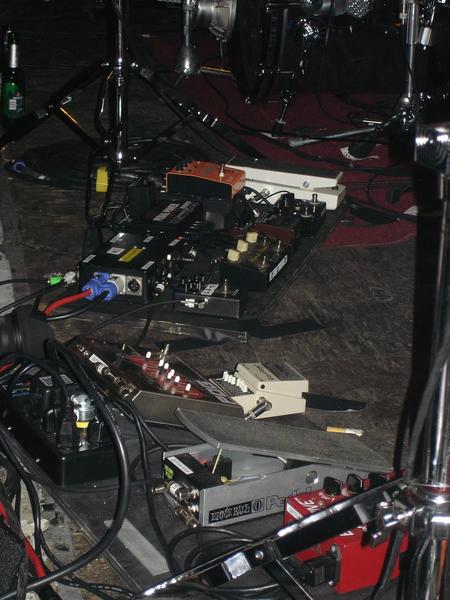
The 1 SPOT is very straightforward. You have a 9 volt power supply, which is the only thing you have to plug into an outlet. It only takes up this one spot, hence the name of the product. From there, you have a multi-plug cable with eight barrel connectors chained to each other, each of which can be used to power a pedal (you have about 10 ft. to play with which should be plenty). For convenience, an L6 converter is included to power Line 6 modeling pedals, as well as 3.5mm and Battery Clip Converters to power vintage style pedals.
Earlier, we talked about how the sum of the current your pedals draw cannot exceed that of the power adapter. This is definitely true with the 1 SPOT. Luckily, it can handle an ample 1700 mA, which is enough for a medium-sized pedalboard (provided you’re not using a bunch of current-hungry digital delay pedals).
While we love the ease of use of the Truetone 1 SPOT, at this low price you are making some compromises. For one, it’s not as versatile as some other power supplies. You can power the most common pedals with it, provided they are 9vDC. The 1 SPOT won’t be able to handle 12V, 18V, or 24V pedals, as well as any pedals that require AC instead of DC.
Because you aren’t isolating the power going to each of your pedals, the 1 SPOT is prone to noise and ground loop hum. It’s hit and miss, however, with roughly 50-60% of 1 SPOT users complaining about noise issues. Some users deem the noise unacceptable, while many accept this is the price to pay for paying such a low price for this power supply.
Bottom Line: While it’s certainly not perfect, it’s great that a solution like this exists and is very accessible. It’s certainly good *enough*, and will solve power issues for 80% of pedals out there (the vast majority of pedals are 9vDC). As far as experiencing annoying noise issues, it will be hit or miss, and largely depend on the pedals you are powering with it and how they interact with each other. If we generalize, we can recommend the 1 SPOT daisy chain as a nice solution to any guitarist on a serious budget, or for a backup pedalboard. If you have a more serious setup, perform live, or for any reason cannot tolerate noise/hum and want to feed your pedals the cleanest power, we would recommend looking at an entry level isolated pedal power supply instead. Still, the 1 SPOT is reliable, and an amazing value.
See how artists use this

.jpg)


Walrus Audio Canvas 8 Pedal Power Supply

- Isolated power drastically reduces hum and noise even under high gain
- Slim profile fits easily under most pedal boards
- Solid construction ensures durability and longevity
- Each outlet provides a reliable 500 mA power supply
- See 4 more
- Printed instructions are not included, only accessible via QR code
- Main power cable plugs in like a regular pedal, which might be inconvenient
- Supplied effects cables can wear out quickly with frequent use
- Power brick lacks mounting hardware, unlike the distribution hub
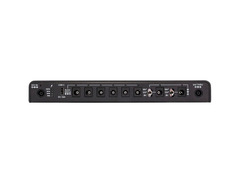
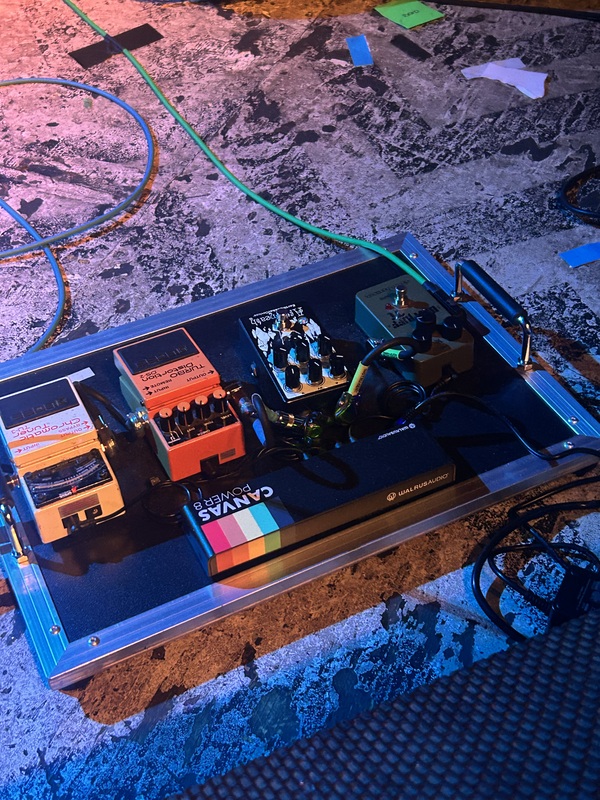
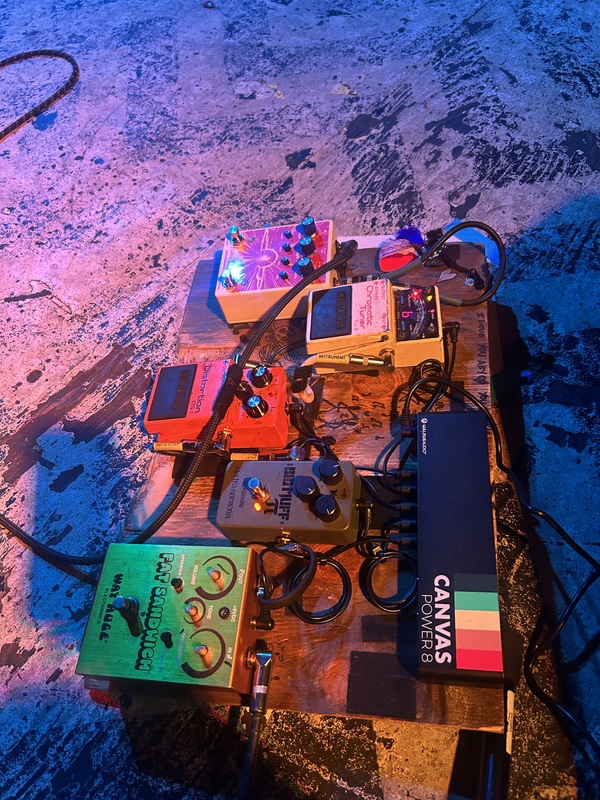
These days Walrus Audio is making it hard for us not to be super fans of them. Even “unsexy” stuff like pedal power supplies, they seem to nail it. We got our hands on the Walrus Canvas Power 8 with 8 power outputs (they also make a Power 5, 15, and 22, depending if your pedal collection is smaller or larger).
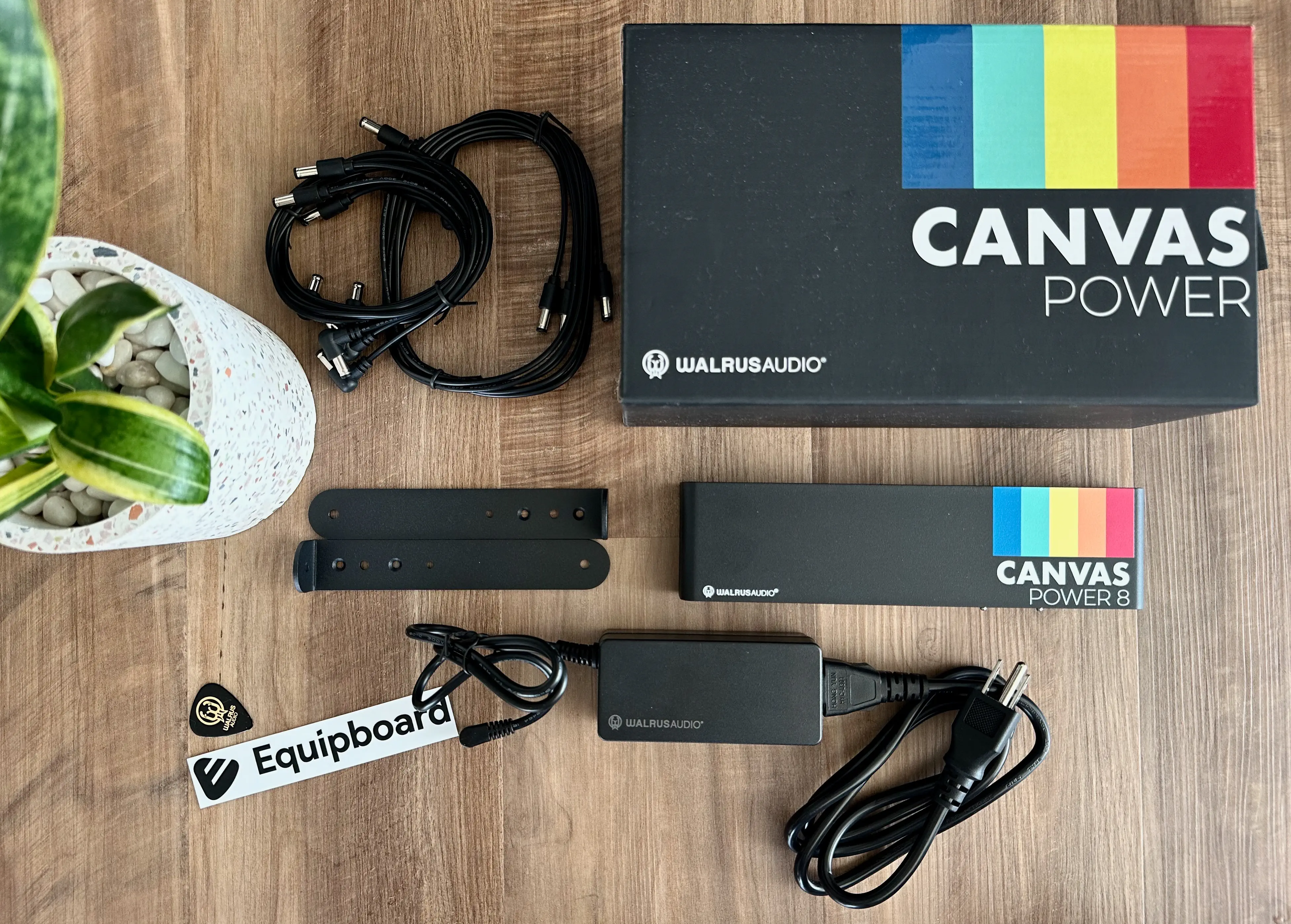
Unboxing the sleek packaging reveals the power supply, main power cable, mounting brackets, and several pedal power cables. Walrus gets the little details right, since these cables have a small right-angled plug on the pedal side to save space (if you’ve ever attempted a pedalboard build you know every little bit of space counts). It goes without saying that everything here feels built to last.
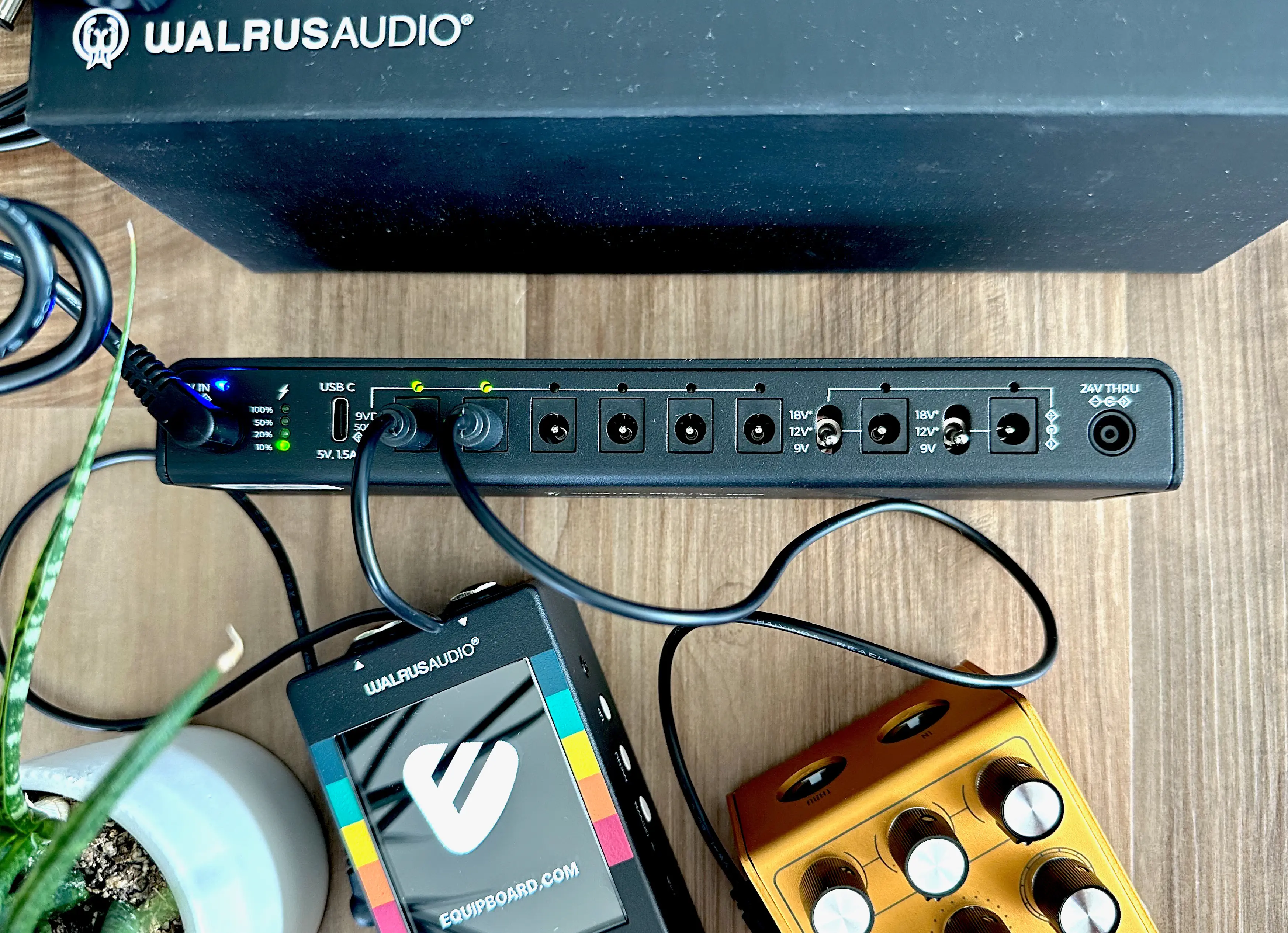
Scanning the back panel left to right, there’s a VERY cool LED power meter which shows you roughly how much power is being consumed. This is absolutely brilliant, especially if you don’t want to manually add up the power consumption of your pedals.
There’s a USB-C port, so you can charge your phone while playing. Again, a super thoughtful feature for the modern age.
Then there are the power outputs, each with its own LED letting you know that output is sending power. On the Canvas Power 8 two of the outputs are switchable between 9v/12v/18v for those thirsty pedals of yours. The 24V THRU lets you daisy chain this power supply with another Canvas Power supply, for when your pedal collection grows and you run out of power.
In terms of actual operation, no problems whatsoever. This powered our pedals flawlessly with no noise or hum.
Bottom Line: Again, with this power supply it all comes down to the little details. We would put this one head-to-head with a Strymon Zuma, and while the Zuma has one additional power output, the Walrus Canvas Power 8 is simply designed better. They both do the job of delivering clean, isolated power to your pedals. But the Walrus has the power consumption and operation LEDs, and the super useful USB-C port. Walrus for the win.
See how artists use this
T-Rex Engineering Fuel Tank Junior
4.5 (61)
A reasonably priced way to deliver clean isolated power to your pedals.


- Eliminates electrical hum, enhancing pedalboard noise performance
- Compact size with five 9V isolated outputs, ideal for small setups
- Durable build quality, described as built "like a tank"
- Noiseless operation, even with multiple pedals connected
- See 4 more
- May not power certain boutique pedals effectively
- Power-hungry pedals like some echo/delay units may not function properly
- Some units shipped without all included power cables
- Not regulated, which may affect performance with specific pedals
The T-Rex Engineering Fuel Tank Junior is a very nice and compact isolated power supply solution that can power five effects pedals via its five outputs. It’s light and compact, and best of all, it is reasonably priced.
T-Rex Engineering is a great company, and they manufacture several boutique guitar effects pedals people know and love. The Fuel Tank Junior weighs in at about 1 lb. and measures around 4 inches wide x 3 inches deep x 1.4 inches tall.
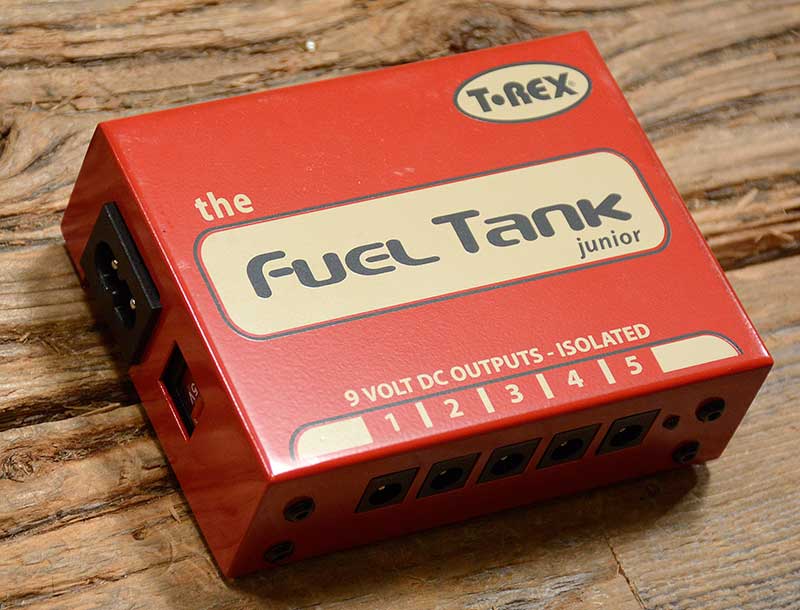
The T-Rex Fuel Tank Junior is best suited for those with relatively uncomplicated pedal power needs, and powering a smaller pedal collection. The Fuel Tank Junior has 5 isolated 9 Volt DC outputs, each delivering 120mA. What this basically means is that if you want to take advantage of the isolation, you can power one pedal per each output, which means the Fuel Tank Junior can handle a maximum of five pedals. That is, provided each of those five pedals accepts 9V, and draws no more than 120 mA of current.
If you have a pedal that needs 18 volts (and consumes no more than 120 mA), you can buy the T-Rex voltage doubler cable which lets you use two of the Fuel Tank Junior’s outputs and combine them for 18 volts (9+9=18). It’s a bummer that you have to sacrifice two outputs to power a single pedal, but at least you have the ability. But, again, make sure your 18V pedal does not consume more than 120 mA, otherwise you cannot use the Fuel Tank Junior for it. Also, you unfortunately cannot power 12 volt pedals with this unit.
If you love the idea of the T-Rex Fuel Tank Junior but need to power more than five pedals, you can of course daisy chain off of a single output (so long as all the pedals you’re plugging into this daisy chain are 9V, and the TOTAL current draw is less than 120 mA). The problem with this, as with any other daisy chain, is that you lose the benefits of isolation, since you’re sharing power amongst multiple pedals.
The Fuel Tank Junior is absolutely rock solid with dead quiet operation. Meaning, this thing delivers exactly what a high-quality isolated power supply should.
If you absolutely love T-Rex Engineering but find the Fuel Tank Junior limiting, you need either the Fuel Tank Classic or FuelTank Chameleon (but now you’re looking at significantly higher price tags). If only the best clean & isolated power will do for your coveted guitar and bass pedals, but you don’t quite have enough saved up for the Voodoo Lab, we strongly recommend this compact unit from T-Rex Engineering.
Bottom Line: We love this power supply as a very reasonably priced way to deliver clean isolated power to your pedals.
See how artists use this







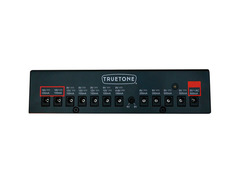
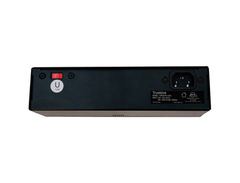
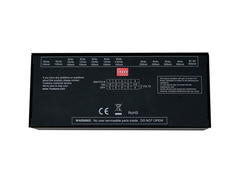
Truetone 1 Spot Pro CS12
5.0 (51)
The 1 SPOT Pro Series features 3 power supplies that work internationally and have switchable voltage outputs.

- Powers high-demand pedals easily, including HX Stomp
- Eliminates noise from pedalboards, even in homes with dirty power
- Comes with all necessary cables and connectors for immediate setup
- Each port can output more power than rated, adding flexibility
- See 6 more
- Installation under certain pedalboard models can be challenging
- Some users may find the mounting brackets incompatible or difficult to fit
- Included power cables may not be long enough for larger boards
- Does not include a voltage doubler for 24V pedals
- See 1 more
The Truetone 1 SPOT Pro series. Truetone is the company behind the very popular 1 SPOT daisy chain solution, and the 1 SPOT Pro Pro Series is their premium power supply line. Here is the 1 SPOT Pro story straight from Truetone's Bob Weil:
If we were going to make [a power brick], we were going to do it our way and have features that nobody else could offer. As pedal designs changed and it became more common for digital pedals to require isolation and for others to need something other than 9Vdc, I finally saw a reason for us to design a power brick.
These power bricks offer six, seven, or twelve isolated outputs for clean, noise-free operation of your pedals.
What really makes these special is that they use Truetone's "Worldwide Input Voltage" so that you can use it anywhere on planet earth. If you travel internationally, this is a big benefit.
Another thing that sets the 1SPOT Pro series is switchable voltage. It is so easy to toggle between different voltages and really comes in handy if you have pedals that operate at various voltages.
If you don’t need the 18 volt DC outputs, you can use Truetone’s 18V To 9V converter cable to convert them, thus gaining more 9V outputs.
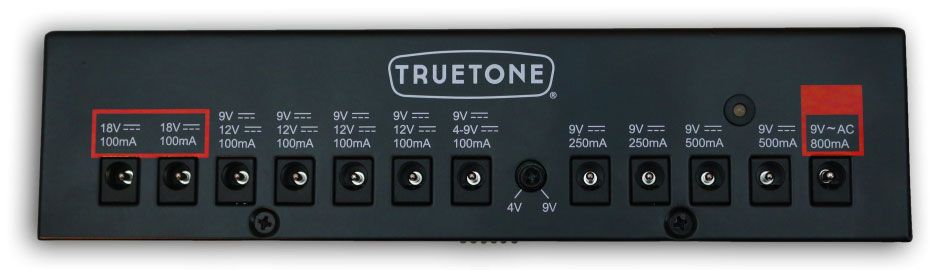
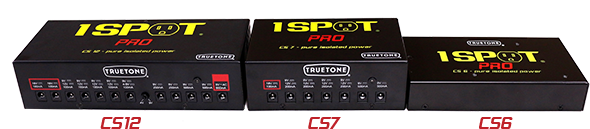
The 1 SPOT Pro line comes in three options; the low-profile 6-output CS6 (1600mA max output), the CS7 (1900mA max output), and the full featured CS12 (3000mA max output).
Tthe Truetone 1 SPOT Pro series does exactly what it needs to. All three options provide clean, isolated power to up to twelve pedals. Truetone includes color coded power cables of varying length to allow you to keep your pedalboard wiring nice and neat. You also get some adapters to accommodate pedals with different power inputs.
Another nice feature of the 1 SPOT Pro Series is the inclusion of mounting brackets and and self threading screws, although we wish the brackets were more universal instead of being purpose-made for Pedaltrain pedalboards. Mounting these supplies to Pedaltrain boards is easy and straightforward.
Bottom Line: The Truetone 1 SPOT Pro Series are quality built power bricks that handle almost anything you can throw at them. The fact that they work internationally with different pedal voltages make them very convenient and functional.
See how artists use this



.jpg)


Strymon Zuma
5.0 (38)
A modular expandable system to fit any need with powerful 500mA outputs.


- Compatible with international power without needing adapters
- Silent operation, eliminating background noise and hum
- High current output per outlet (500mA), suitable for power-hungry pedals
- Offers 9V, 12V, and 18V outputs, catering to a variety of pedal requirements
- See 6 more
- Lacks an on/off switch, requiring unplugging to power down
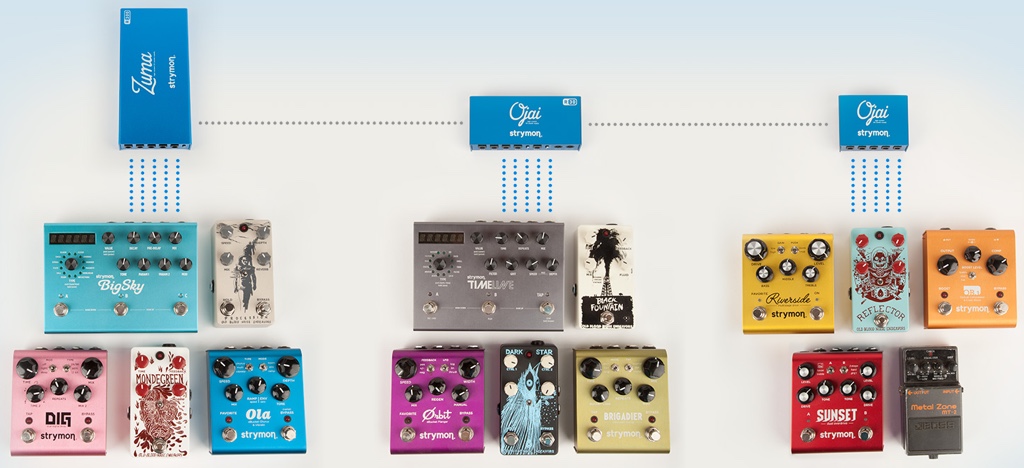
The Strymon Zuma and Ojai power supply family is actually an expandable system developed by Strymon. The flagship model is the Zuma, which has 9 total outputs, 2 of which are adjustable to 9,12, or 18 volts.
You can expand from a Zuma as your power needs grow, or start with the smaller 5-output Ojai and expand from there. The Zuma and Ojai also both come in low profile models if you have a flat board, but you will lose one adjustable output when opting for the low profile versions. Which will work best for you will depend on the shape of your board and placement to see if the traditional shape or low profile form will work better as well as how many adjustable voltage outputs you need.
The modularity of the system is brilliant, as you can connect up to 6 Ojais to the Zuma unit, which could power 39 pedals!
What really distinguishes the Strymon power supplies is the high current of each of the outputs. Each 9V output supplies 500mA , which will power almost any pedal out there, including all the popular digital options from Strymon. This option will be really appealing to players that already own or aspire to own BigSky reverbs, Timeline delays, Mobius, or any other power hungry digital pedal.
As with all Strymon products, it has a sleek brushed anodized aluminum finish. In fact, Strymon went to great lengths when designing these supplies so that no screws are visible on the top of the power supplies.
Bottom Line: Strymon has created a modular system that allows you to mix and match supplies for whatever needs you have or may arise. Furthermore, these units can handle high-powered pedals with ease, as every 9V output supplies an ample 500mA. That makes these options some of the most powerful supplies available.
See how artists use this





Top Ranked Effects Pedal Accessories on Equipboard


Recent updates
Jul 02, 2024
Removed the Pedaltrain Volto 3 as it's no longer available, and no longer an option we feel should be recommended.
Jun 30, 2024
Replaced the Walrus Audio Phoenix with the Walrus Audio Canvas, as the Phoenix is unavailable new. The Canvas series appears to be the successor and is better in just about every way.
About the authors
Michael R. Pierce is the co-founder of Equipboard and a lifelong musician with over 25 years of experience as a guitarist and gear enthusiast. He blends solid music theory chops (thanks to formal training in guitar, piano, and trumpet) with real-world experience, always exploring and experimenting across genres like rock, blues, and hip-hop. Michael launched Equipboard in 2013 after graduating from The University of Texas at Austin, leveraging his unique blend of musical passion, technological acumen, and community building. His current go-to rig features a Fender American Original ‘50s Telecaster, Analogman King of Tone, Strymon Flint, and a Fender ‘57 Custom Champ. Read more
Giulio Chiarenza is the co-founder of Equipboard and a lifelong multi-instrumentalist with a deep passion for music gear. Born in Italy and raised in the U.S., he holds a Computer Science degree from The University of Texas at Austin and blends technical acumen with decades of hands-on experience across guitar, piano, drums, and electronic production. Early in his career, Giulio was signed to a San Francisco-based EDM label, releasing both remixes and original tracks. These days, he helps steer Equipboard’s vision while personally testing and reviewing gear. He's never too far from his go-to guitar: a vintage 1978 Fender Telecaster Custom. Read more
Comments
Sign Up or Log In to add comments

12239
I would have to disagree with the top spot on this article. The Yankee is considered THE best power supply out. It simply has too many different selections to compete with. Yankees are built like tanks and can even be set to show the exact voltage you are getting, and the exact voltage you want to get.
96
I have a EH Octavix. It is variable from 9 to 24volt. Would any of these power bricks be able to support that? I have also been looking at the MXR M238 ISO-Brick Power Supply Unit .
.jpg?v=1784931632)
37855
@adamharvey67 The Voodoo Lab Pedal Power 2+ lets you join two 12V outputs which will allow you to power your EHX Octavix set to 24V mode. You'll just need the correct Voltage Doubling Cable, as you can see here. The only thing is I'm not certain if your Octavix needs a 2.1mm Straight Barrel Plug, or a 2.5mm Straight Barrel Plug. Find that out so you can get the right one. I think the 2.1mm will work.
30
You can combine a OneSpot with a 3-out daisy chain and a pair of GigRig Isolators. $69 per Isolator, $20 for the OneSpot, and a couple bucks for the daisy chain. Gives you nine isolated 9v outlets (four per Isolator plus one on the chain) while weighing very little and taking up very little space.

4934
Replaced the Walrus Audio Phoenix with the Walrus Audio Canvas, as the Phoenix is unavailable new. The Canvas series appears to be the successor and is better in just about every way.
4934
Removed the Pedaltrain Volto 3 as it's no longer available, and no longer an option we feel should be recommended.
New in Effects Pedal Accessories


$171.00 - $215.00
in Effects Pedal Accessories Rank


$235.00 - $253.00


.jpg)



.jpg)

.jpg)